Cloves are one of the oldest traded spices in the world. Native exclusively to five small volcanic islands of the Moluccas archipelago (Ternate, Tidore, Bacan, Moti and Makian, in present-day northern Indonesia), they were for millennia the object of a secret trade and a jealously guarded monopoly, before becoming the direct cause of some of the most brutal colonial wars in history.
The earliest archaeological evidence dates back to around 1721 BCE: cloves were found at the Syrian site of Tell Atrib, in Mesopotamia. In China, under the Han dynasty (around 200 BCE), officials of the imperial court were required to chew cloves before being received by the Emperor, to guarantee fresh breath. In India, classical Ayurvedic texts have integrated them for at least 2,000 years. In Europe, they appear as early as the first century CE in the writings of Pliny the Elder, and cloves were found in the pantry of a house during the excavations of Pompeii (the city buried by Vesuvius in 79 CE), proving that long-distance trade already existed in Roman times.
The Afo tree of Ternate: how the Dutch monopoly was broken
At the heart of the island of Ternate stood a venerable clove tree nicknamed 'Afo I', estimated to be several centuries old. In 1770, the French missionary and entrepreneur Pierre Poivre (yes, that really was his name) managed to smuggle seeds from this tree out of the Moluccas, at a time when the Dutch had made such a crime punishable by death. These seeds were planted on Mauritius, then redistributed to Réunion, the Seychelles and Zanzibar. The Zanzibar archipelago received its first clove trees in 1818 and became the world's leading producer a century later.
The clove trade is truly the story of globalization through violence. For millennia, the inhabitants of the Moluccas held the absolute monopoly on this production: planting a clove tree at the birth of every child and maintaining commercial relations with China, India and the Arab world through intermediaries who jealously guarded the secret of the spice's origin.
The Portuguese were the first Europeans to reach the Moluccas in 1511, breaking this ancestral secret. But it was the Dutch East India Company (VOC), from 1605 onwards, that established the most brutal monopoly in the history of the global spice trade. Dutch soldiers systematically burned every clove tree outside their main island of Ambon. Unauthorized cultivation or trade in cloves was punishable by death. To maintain high prices, the VOC periodically organised the destruction of its own surplus stocks; a policy of stunning modernity that oil cartels would reinvent 350 years later.
The VOC and the Moluccas massacre
The history of cloves is among the bloodiest of the spice trade. On the neighbouring island of Banda, the Dutch governor Jan Pieterszoon Coen had nearly all 15,000 inhabitants exterminated to seize the monopoly on nutmeg. Whole communities were massacred across the archipelago for attempting to resist the monopoly. These events are recognised by some historians as one of the first commercial genocides in modern history.
The cultivation of cloves in India dates back to the early days of Arab trade on the Malabar Coast. Clove trees were introduced to Kerala and Karnataka as early as the first centuries CE, brought by Arab merchants who frequented the ports of Calicut (Kozhikode) and Cochin. Kerala is now one of the main producers of cloves in India, a cultivation tradition passed down from generation to generation on the Malabar Coast for more than a thousand years.
Did you know?
- Cloves were so precious that in 15th-century England, a pound of cloves cost the equivalent of five days' labour of a skilled craftsman
- In Indonesia, kretek (clove cigarettes) represent 90% of the tobacco market and consume nearly 50% of the world's clove production
- The Dutch burned their own clove stocks to keep prices high; a principle that oil cartels would reinvent centuries later
- The Sultan of Zanzibar kept cloves perpetually burning in his palaces, a fragrant tradition maintained until the 20th century
- The Islamic sultanates of Ternate and Tidore, which controlled the global clove trade before the arrival of Europeans, were among the first political entities to own a worldwide maritime trade territory
- Clove essential oil was used during the Black Death in the 14th century: doctors filled their bird-beak-shaped masks with cloves and other aromatics
- If a flower bud is not harvested and opens, it produces a beautiful cream-white flower with many stamens; these unharvested flowers, once dried with their small fruit, are called 'mother of cloves' and constitute a secondary spice in Indonesia and India
Cloves across languages
| Language | Name |
|---|
| French | Clou de girofle |
| Hindi / Urdu | Laung (लौंग) / Lavang |
| Malayalam (Kerala) | Grambu (ഗ്രാമ്പൂ) / Karayampu |
| Tamil | Kirambu (கிராம்பு) / Lavangam |
| Kannada | Lavanga (ಲವಂಗ) |
| Sanskrit | Lavanga (लवंग) / Devakusuma |
| Bengali | Lobongo (লবঙ্গ) |
| Arabic | Qarnfil (قرنفل) |
| English | Clove |
| Portuguese | Cravo-da-índia |
| Spanish | Clavo de olor |
| Indonesian (Bahasa) | Cengkeh |
| Swahili | Karafuu |
| German | Gewürznelke |
| Botanical Latin | Syzygium aromaticum (L.) Merr. & L.M. Perry |
The etymology of the word 'clove' is a fascinating linguistic journey. The French 'girofle' comes from the Greek karyophyllon, composed of karyon (nut, kernel) and phyllon (leaf), passed into medieval Latin as caryophyllum, then into Old French before becoming 'giroflier'. The same Greek word also gave its name to the carnation (Dianthus caryophyllus), explaining why in several languages the same term designates both the spice and the carnation flower. The English word clove comes from an entirely different path: it derives from the Latin clavus (metal nail), a direct reference to the shape of the dried flower bud. The Indian languages (laung, lavanga) preserve an older word also found in 'lavender', a root referring to the notion of purification and fragrance.
| Characteristic | Detail |
|---|
| Latin name | Syzygium aromaticum (L.) Merr. & L.M. Perry |
| Botanical family | Myrtaceae, the same family as eucalyptus, guava and myrtle |
| Local names | Grambu (Malayalam) / Laung (Hindi) / Cengkeh (Indonesian) |
| Part used | Dried flower bud (harvested before the flower opens) |
| Dominant compound | Eugenol: 72 to 90% of the essential oil |
| Essential oil content | 14 to 20% of dry buds |
| Harvest | By hand, twice a year, before the buds open |
| First production | 4 years after planting, full productivity at 15 years |
| Maximum yield | Up to 34 kg of dry buds per tree per year |
| Drying | In the sun for 4 to 5 days (the bud turns from pink-red to dark brown) |
| Unexpected use | 50% of global production goes into kretek cigarettes in Indonesia |
The clove tree (Syzygium aromaticum) is a strictly coastal tropical tree. Unlike cardamom which thrives at altitude, it requires low, humid and well-drained areas, cultivated at maximum altitudes of 200 metres above sea level. Its preference for rich volcanic soils and coastal zones has shaped the geographical history of this trade.
The great terroirs of cloves
- Indonesia (Moluccas + Sulawesi): historical cradle and world's leading producer by volume. But Indonesia exports only 10 to 15% of its production; the rest being absorbed by the local kretek cigarette industry. Maluku province remains symbolically central, but the Sulawesi islands collectively produce more than 40% of national output
- Tanzania (Zanzibar + Pemba island): world's second-largest producer. The island of Pemba is covered with clove trees; visitors can smell the spice from their boats as they approach the island. The Zanzibar archipelago was the world's leading producer for more than a century after Pierre Poivre introduced the plants in 1818
- Madagascar: world's third-largest producer, production growing strongly. The Sambava region is considered to produce the cloves richest in eugenol, alongside those of northern Indonesia
- Sri Lanka: traditional production on the west coast, often grown alongside Ceylon cinnamon, black pepper and cardamom in mixed gardens
- Comoros: small Indian Ocean archipelago with notable quality production
- India: Kerala (Malabar Coast): traditional cultivation in mixed spice gardens of the Thrissur, Kottayam, Kollam and Kozhikode districts. Artisanal production, cloves recognized for their exceptional aromatic intensity
- India: Karnataka: mainly in the coastal districts of South Kannada and Udupi
Kerala cloves: a thousand-year-old cultivation preserved
In Kerala, clove trees are not the subject of massive plantations but grow in mixed spice gardens, alongside pepper vines, cinnamon, cardamom and nutmeg. This traditional polyculture, inherited from the practices of the gatherer-cultivators of the Malabar Coast, produces cloves of remarkable aromatic quality. Keralan clove trees are generally older and larger than the trees of the industrial plantations of Zanzibar or Indonesia, which gives them a higher essential oil concentration. Production is low in volume but premium in quality.
| Producing country | Production / Feature |
|---|
| Indonesia | ~120,000 t/year (world #1, 75% consumed as kretek) |
| Madagascar | ~25,000 t/year (#1 exporter, Sambava premium) |
| Tanzania (Zanzibar + Pemba) | ~8,000 t/year (premium quality) |
| Comoros | ~3,000 t/year |
| Sri Lanka | ~3,000 t/year (mixed gardens) |
| India (Kerala + Karnataka) | ~1,500 t/year (domestic consumption, artisanal quality) |
Botany
The clove tree is a medium-sized evergreen belonging to the Myrtaceae family, the same family as eucalyptus, guava, feijoa and allspice (Pimenta dioica). It is a family characterized by the richness of its essential oils and its flowers with many stamens.
The tree reaches 8 to 12 metres in plantations, up to 20 metres in natural forest. Its leaves are simple, opposite, elliptical (8 to 12 cm), glossy green and very aromatic when pressed, speckled with oil glands visible against the light. The tree begins to produce after 4 years, only reaches full productivity between 15 and 20 years, and can produce for more than 50 years; some hundred-year-old specimens still produce generously.
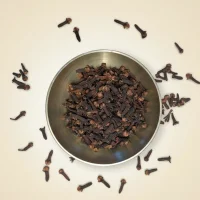
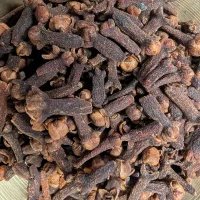
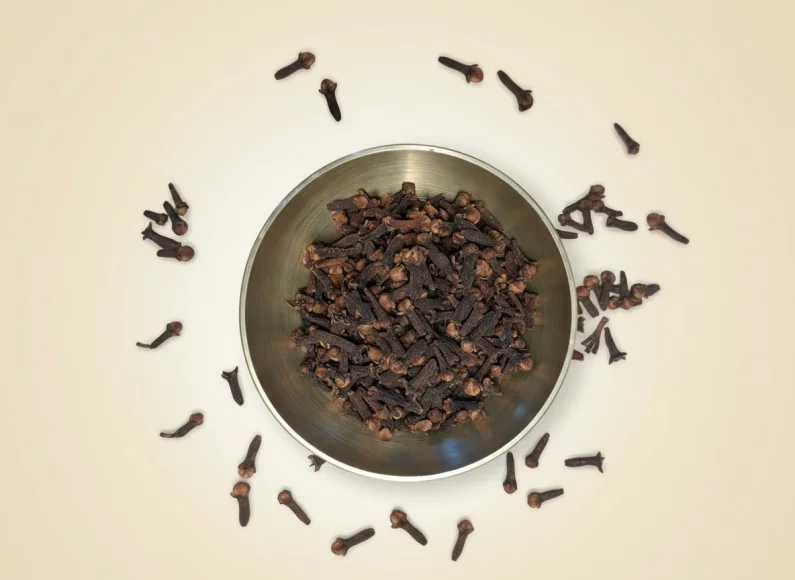
What we call a 'clove' is the flower bud of the clove tree, hand-picked just before it opens, when it is still closed and pink-red in colour. It is at this precise stage that eugenol concentration is at its peak. A bud that opens produces a cream-white flower with many stamens, but loses 80% of its commercial value.
From harvest to clove: the transformation process
The clusters of buds are detached by hand or with small hooks, then the buds are separated from the stems in the field. Sun-drying takes 4 to 5 days, the buds turn from pink-red to the characteristic dark brown, losing about 70% of their weight in water. Quality cloves are dried naturally without additives: browning is a natural process of enzymatic oxidation. Grading distinguishes whole buds (the most prized form) from stems, 'mother of cloves' and fragments, destined for grinding or oil extraction.
Cloves possess one of the most powerful, complex and immediately recognizable aromatic profiles in the world of spices. Their aroma is at once warm and almost medicinal, sweet and penetrating, floral and slightly peppery, a complexity explained by the exceptional richness of their essential oil composition.
Eugenol represents 72 to 90% of the essential oil of dried buds, one of the highest dominance ratios found in spices. Other significant compounds are eugenyl acetate (5 to 15%), beta-caryophyllene (1 to 5%), vanillin (traces) and crataegolic acid.
| Aromatic note | Description |
|---|
| First olfactory impression | Warm, deep, almost overwhelming: reminiscent of the apothecary, Marseille soap, gingerbread |
| Heart notes | Deep woody, warm vanilla, soft pepper, distant floral notes (hyacinth, carnation) |
| Base notes | Light camphor, soft and lasting spicy warmth, slightly astringent phenolic note |
| In the mouth (crunched clove) | Intense and sudden warmth, light tongue numbing: mild eugenol anaesthesia, then a long and complex aroma |
| In long cooking | Eugenol is relatively heat-stable: cloves hold up well in long cooking, their aroma blends and integrates without disappearing |
| In infusion (mulled wine, chai) | Rounded, vanilla-like aroma, gingerbread: one of the best vehicles for the complexity of cloves |
A quality clove, pressed between the fingers, should leave an oily trace and release a powerful, warm and slightly sweet aroma. The French word 'girofle' shares its root with 'gillyflower' (and 'clove pink'), a kinship explained by the floral notes common to both plants.
Eugenol: the molecule that explains everything
Eugenol (C10H12O2) is a phenylpropanoid found in many aromatic plants but always at concentrations far lower than in cloves. It is what gives cloves their characteristic almost pharmaceutical quality; it has been used as a local anaesthetic in dentistry since the 19th century under the name ZOE (Zinc Oxide Eugenol), a dental cement still used today. In cooking, it creates the specific warmth of cloves, different from chilli (capsaicin) and pepper (piperine).
Quality test: the water test
Drop a clove into a glass of water. A good-quality clove, rich in essential oil, sinks vertically, 'head' downwards, its density being greater than 1 g/cm³ thanks to its high eugenol content. If it floats flat at the surface, it has lost too much essential oil and will be poorly aromatic.
Cloves are one of the spices whose power demands the greatest respect for dosage. A single clove can perfume a litre of liquid. Two cloves too many in a delicate preparation can entirely dominate it. This is a spice of depth and warmth, to be used with precision rather than with generosity.
In Indian cuisine: fundamental uses
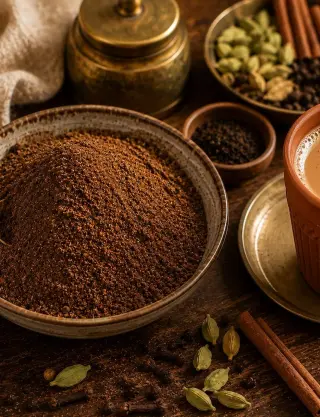
- In garam masala: an essential component of warmth and depth, always in small quantities because cloves can easily dominate the blend
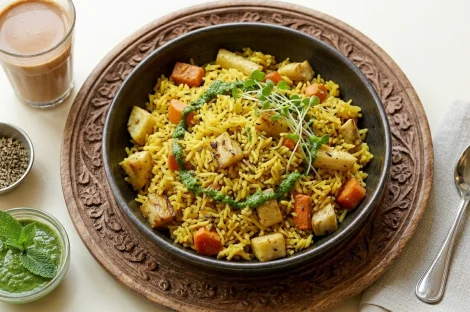
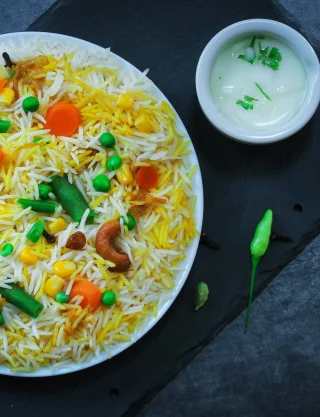
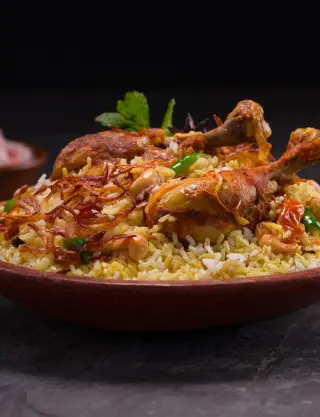
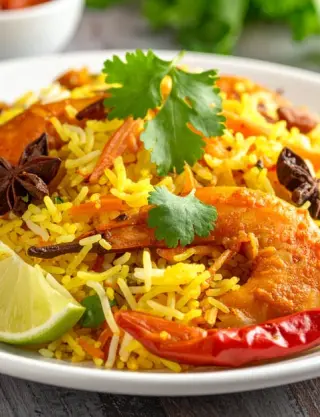
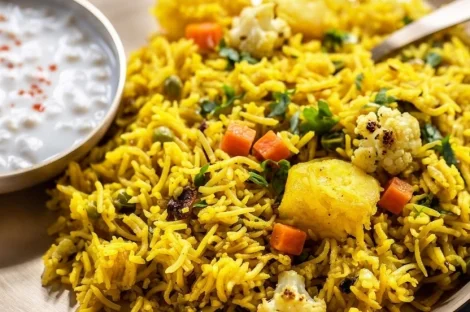
- In biryani: 2 to 3 whole cloves in hot ghee at the start of cooking, their aroma slowly impregnates the rice and the meat
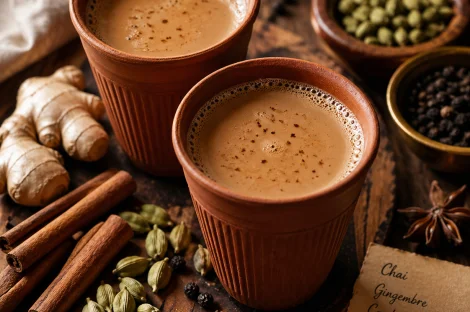
- In masala chai: 1 to 2 cloves per 4 cups, contributing the characteristic warmth and roundness
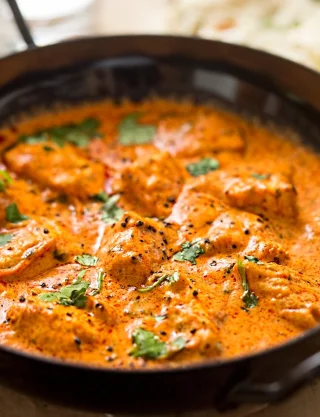
- In rich meat curries (rogan josh, nihari, korma): whole cloves added at the start of cooking in oil or ghee
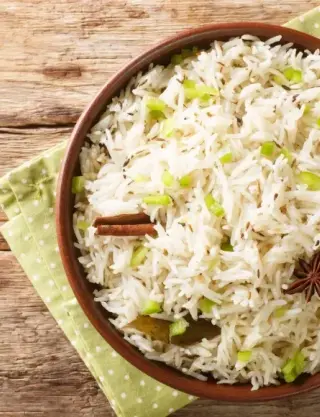
- In pulao rice: 3 to 4 cloves with cinnamon and cardamom in hot oil before adding the rice
- In meat marinades: a few crushed cloves in a yoghurt, ginger, garlic and spice mixture
- In rich dals: occasional use in long-cooked black lentil or chickpea dals
- In kheer and milk-based desserts: 1 whole clove removed before serving brings a warm and deep note
- In pickles and chutneys: a natural preservative thanks to its antimicrobial properties
In French and European cuisine
- Mulled wine and hypocras: cloves are one of the founding spices of medieval European mulled wine: 3 to 4 cloves per bottle
- Pot-au-feu and beef broth: the classic French recipe incorporates 2 to 3 cloves stuck into an onion; eugenol remarkably enriches broths
- Studded onion (oignon clouté): a classic French technique: stick the onion with cloves before plunging it into the broth
- Pain d'épices: with cinnamon, nutmeg, anise and ginger, one of the five spices of Alsatian gingerbread
- Apple, pear or quince compote: 1 whole clove during cooking; remove before serving
- Terrine and country pâté: cloves are part of the French 'quatre-épices' (cloves, pepper, nutmeg, ginger)
- Alsatian choucroute: a few cloves during cooking bring warmth and depth
- Bitter orange or cherry jam: the clove-citrus pairing is particularly remarkable
- Lamb tagine with prunes: the clove-prune pairing is a classic of Franco-Moroccan cuisine
- Spiced hot chocolate: with cinnamon and cardamom: 1 clove per 2 cups
Notable pairings
- Apple and cloves: the most classic pairing: apple pie, compote, baked apples
- Onion and cloves: the studded onion is a pillar of French cuisine
- Chocolate and cloves: a powerful and sophisticated pairing for intense desserts
- Lamb and cloves: a few cloves in a roast leg or braised shoulder
- Beetroot and cloves: cloves magnify the earthy sweetness of beetroot
- Squash and cloves: in autumn soups and velouté
Techniques of use
- Whole in long cooking: for broths, curries, biryanis; remove before serving
- Crushed in a mortar: releases essential oil more quickly; for marinades and short cooking
- Ground: for spice blends, pastries, desserts; the powder is very powerful, dose with care
- Infused in hot fat: the tadka technique: a few seconds in hot oil or ghee releases the fat-soluble compounds
- Infused in hot liquid (wine, milk, water): for drinks and desserts; never boil for a long time, volatile aromatic compounds evaporate
Watch the dosage
Cloves are extremely concentrated. Excess makes a dish bitter and overpowering, with a numbing sensation in the mouth. Always start with 1 to 2 cloves for a dish serving 4. Remove whole cloves before serving; biting into a clove by accident is a very unpleasant experience. It is impossible to correct a clove-overdosed dish.
Cloves are one of the best scientifically documented medicinal plants. Their main active compound, eugenol, has been classified as a substance generally recognized as safe (GRAS) by the World Health Organization. Hundreds of studies have explored its properties. The convergence of results is remarkable: cloves are one of the natural substances with the broadest and best-established properties known.
Eugenol represents 72 to 90% of the essential oil according to Kew Science and PMC/NIH sources. Other significant bioactive compounds are eugenyl acetate (5–15%), beta-caryophyllene (1–5%), tannins (gallic acid, gallotannic acid), flavonoids (eugenin, isoquercitrin, rhamnetin) and oleanolic acid.
Documented properties
- Analgesic and local anaesthetic: the most famous and best-documented property. Eugenol blocks sodium and calcium ion channels in sensory neurons, the same mechanism as some local anaesthetics. A 2006 clinical trial on 73 adults showed that clove gel was as effective as benzocaine (the standard topical anaesthetic) at reducing the pain of dental injections
- Anti-inflammatory: eugenol inhibits the expression of the cyclooxygenase-2 (COX-2) enzyme in macrophages, exactly the same biological mechanism as non-steroidal anti-inflammatories like ibuprofen. It also suppresses the production of pro-inflammatory cytokines (TNF-alpha, IL-6) and modulates the NF-κB pathway
- Broad-spectrum antimicrobial: efficacy documented against E. coli, Salmonella typhimurium, Staphylococcus aureus, Listeria monocytogenes and certain MRSA strains (methicillin-resistant Staphylococcus aureus). Antifungal activity established against Candida albicans. These properties explain the traditional use of cloves as a food preservative before refrigeration
- Exceptional antioxidant: ORAC value (Oxygen Radical Absorbance Capacity) of 290,283 per 100 g, one of the highest of all known plants, far above turmeric and cinnamon
- Hepatoprotective: studies suggest that clove extracts protect the liver against toxin-induced damage, by reducing markers of liver inflammation (ALT, AST)
- Potential glycaemic regulator: a compound isolated from cloves, nigricin, seems to influence the way cells process sugar, suggesting a possible improvement in insulin sensitivity
- Digestive: stimulates the secretion of digestive enzymes, reduces bloating, nausea and flatulence
- Antiparasitic: traditionally used against intestinal parasites
Cloves in dentistry: a millennia-long partnership
The history of cloves and dentistry is one of the longest and most consistent in the entire natural pharmacopoeia. It is the only spice whose therapeutic use has been adopted by modern scientific dentistry uninterrupted since Antiquity.
- 13th century: Arab and Indian dentists used clove oil for cavities and pain
- 1837: discovery of ZOE cement (Zinc Oxide Eugenol), an antiseptic material that became a worldwide standard for temporary dental fillings
- Today: ZOE cement is still used in root canal treatments and as a base for permanent cements. Clove oil is available in French pharmacies as an adjunctive treatment for dental pain in adults and children over 2 years old
Precautions of use
Cloves are safe at usual culinary doses. By contrast, the concentrated essential oil is a dermocaustic: it must never be applied pure to the skin or mucous membranes and must be heavily diluted (1–2% in a vegetable oil). Ingesting pure essential oil can be toxic to the liver and kidneys, particularly in children. Eugenol can potentiate the effects of anticoagulants (warfarin, high-dose aspirin); consult a doctor if under treatment. Not recommended at medicinal doses for pregnant women and children under 6.
Nutritional values (per 1 tablespoon / 6 g)
| Component | Content |
|---|
| Eugenol | 72 to 90% of the essential oil |
| Essential oil | 14 to 20% of dry weight |
| Eugenyl acetate | 5 to 15% of the essential oil |
| Beta-caryophyllene | 1 to 5% of the essential oil |
| Vitamins | C, K, B6, riboflavin |
| Minerals | Manganese (excellent source), calcium, magnesium, iron |
| Fibre | ~2 g |
| Calories | ~18 kcal |
How to recognize a good clove
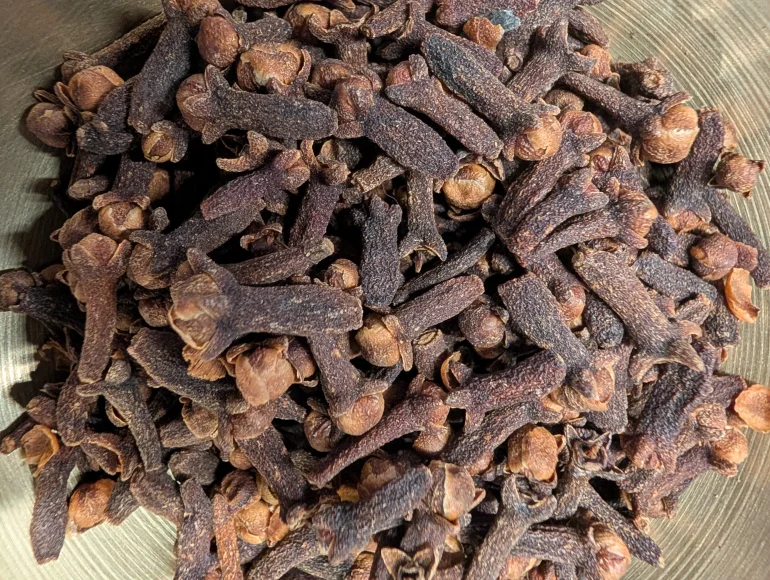
- Appearance: whole cloves, dark and uniform brown, with the round head well developed and the stem long. Cloves whose head has opened (flower burst) have lost much of their essential oil
- The float test: a quality clove sinks in water, its density being greater than 1 thanks to its high essential oil content. A clove that floats is low in eugenol and of poor quality
- Aroma: when the bag is opened, the aroma should be immediately powerful, warm and complex. A weak or dusty aroma signals old or poorly preserved cloves
- Texture: when pressing a clove between the fingers, a trace of oil should appear, a sign of high eugenol content. A brittle, dry clove has lost its essential oil
- Origin: cloves from the Moluccas (Indonesia), Madagascar (Sambava) and Kerala are recognized as the richest in eugenol
- Whole rather than ground: clove powder loses its essential oils far faster than whole buds
Storage tips
- Store whole cloves in an airtight glass jar, away from light, moisture and heat
- Never store in a plastic container: eugenol is a powerful organic solvent that can migrate into plastic and alter both taste and composition
- Never store above the stove: heat and steam accelerate the evaporation of the essential oil
- Optimal shelf life: 1 to 2 years for whole cloves well preserved; after 2 years, the aroma gradually fades
- Once ground: 6 months maximum, as eugenol and volatile terpenes evaporate quickly
- Grind at the last moment in a mortar or spice mill
- Sign of degradation: colour turning grey, weak aroma, dry and brittle texture with no trace of oil
How many cloves should I use in a recipe?
Cloves are extremely powerful: a single bud can perfume 1 litre of liquid. As a general rule: 2 to 3 whole cloves for a curry or biryani serving 4; 1 clove stuck into an onion for a 2-litre pot-au-feu or broth; 3 to 4 cloves per bottle of mulled wine or per litre of chai. For ground cloves in baking: 1/4 teaspoon maximum for a preparation serving 4 to 6. Always start with the minimum dose: it is impossible to correct a clove-overdosed dish.
Can cloves be used directly on a painful tooth?
Yes, with precautions. Clove oil is available in French pharmacies as an adjunctive treatment for dental pain in adults and children over 2 years old. For an adult: place 1 to 2 drops of oil diluted in a vegetable oil (never pure) on a cotton swab and apply to the painful area for a few minutes. A whole clove chewed slowly can also bring temporary relief. Warning: pure oil is a dermocaustic that burns mucous membranes. A consultation with a dentist remains essential; cloves provide temporary relief but do not treat the cause.
How do you tell a quality clove?
The most reliable test is the float test: drop your cloves into a glass of water. A premium-quality clove sinks immediately, as its eugenol content gives it a density above 1 g/cm³. A clove that floats is poor in essential oil. Visually, prefer whole, glossy dark-brown cloves with a well-rounded head; avoid cloves whose flower has opened, are too dry or greyish. When lightly pressed between the fingers, a trace of oil should appear.
What is the difference between cloves from Indonesia, Madagascar and Kerala?
Botanically identical (Syzygium aromaticum), these three origins differ in terroir, growing and drying methods. Cloves from the Moluccas (Indonesia) and the Sambava region (Madagascar) are recognized as the richest in eugenol, between 80 and 90% of the essential oil. Kerala cloves are grown in traditional mixed gardens, often with older trees, which gives them a particular aromatic richness appreciated by connoisseurs.
Are cloves suitable for vegetarian and vegan cooking?
Absolutely: cloves are a pure plant spice, with no animal derivative whatsoever. They are naturally gluten-free, free of major allergens and perfectly suit any dietary regime. They are even a central ingredient of Indian vegetarian cuisine; Brahmanic and Jain cooking relies on aromatic spices such as cloves to bring depth and complexity to dishes.
Why shouldn't cloves be stored in plastic?
Eugenol is a powerful organic solvent that can migrate into plastics and alter both the taste of the spice and the composition of the container. Always prefer an airtight glass jar, away from light and heat. Whole cloves keep for 1 to 2 years in good conditions, compared with 6 months maximum once ground.





 Rice
Rice