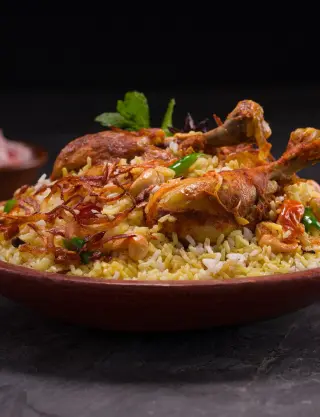
 Made in Alsace
Discover our Malabar-style Prawn Biryani kit, a perfect balance between the creaminess of coconut milk and aromatic herbs. Star anise, cloves, cinnamon and cardamom for a rare and unforgettable experience.
Ready for shipping, delivery time 3-10 business days
Delivery from €4.80 at Mondial Relay pickup points.


Accompaniments
This dish will combine well with the following products.
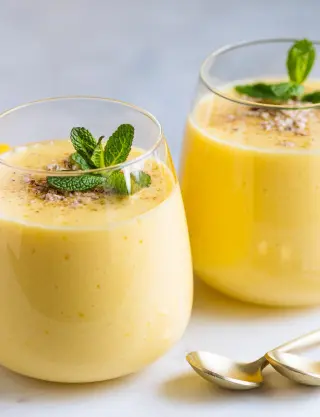
Mango Lassi


Shrimp Biryani
A Journey on the Spice Route. Forget the classic biryani you know. Our version, inspired by the coastal region, is a true ode to freshness. We've swapped yogurt for rich coconut milk, creating a creamy backdrop for the rice and shrimp.
But it's the aroma that will captivate you first: an explosion of green herbs enhanced by the noble character of whole spices: star anise for depth, cardamom and cloves for warmth, and cinnamon and mace for sweetness. A one-of-a-kind dish, ready to become your go-to favorite.
Our Shrimp Biryani Kit
We provide you with all the spices and dry ingredients needed to prepare this dish in this kit, which is hand-prepared to order to guarantee unmatched freshness.
You will need to purchase the necessary fresh ingredients from your local grocery store. We strongly believe in the importance of healthy, locally sourced food, so we recommend purchasing these fresh products from a local store near you.
As some of these spices are not grown in France, we import them directly from India via our carefully selected partners in accordance with fair trade principles.
To find out more about where our spices come from, please don't hesitate to contact us. We will be happy to answer all your questions!
Your ready-to-cook kit contains the ingredients listed below as well as a simple and practical recipe sheet, so that this dish is the best you have ever tasted.
-
 The coconut tree is native to the coastal regions of India and Southeast Asia. Coconut, either fresh or grated, is a staple in South Indian cuisine. It is used in curries, chutneys, and desserts, providing a rich, creamy texture and a slightly sweet flavor.
Grated coconut
-
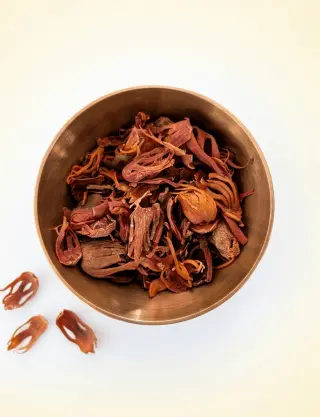
 Mace is the red covering that surrounds the nutmeg seed. This precious spice, native to the Banda Islands in Indonesia, is used in Mughlai and Kashmiri cuisines for its warm, slightly sweet notes. Mace is an ingredient in garam masala and flavors royal biryanis, kormas, and refined desserts.
Mace
-
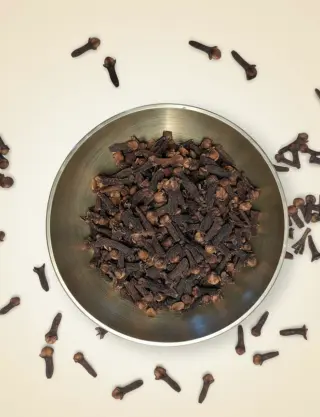
 Cloves are native to the Maluku Islands of Indonesia but have been a highly prized spice in India for centuries. Cloves have a strong, pungent, and sweet aroma. They are used whole in rice dishes and curries, and are also a key ingredient in many spice blends, including garam masala.
Cloves
-
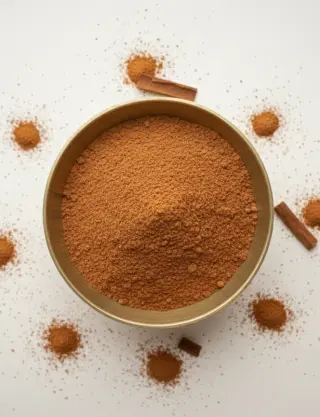
 Cinnamon is a spice obtained from the inner bark of several tree species from the genus Cinnamomum. Cinnamon is used mainly as an aromatic condiment and flavouring additive in a wide variety of cuisines, sweet and savoury dishes, biscuits, breakfast cereals, snack foods, bagels, teas, hot chocolate and traditional foods. The aroma and flavour of cinnamon derive from its essential oil and principal component, cinnamaldehyde, as well as numerous other constituents, including eugenol.
Cinnamon
-
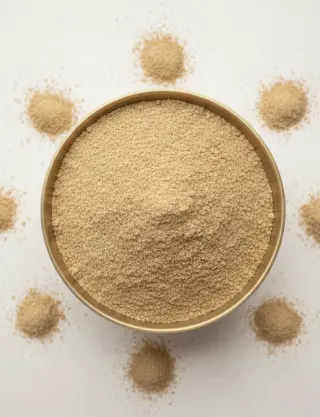
 Coriander is one of the oldest spices, with evidence of its cultivation in India for thousands of years. The seeds have a warm, citrusy flavor. They are often toasted and ground into a powder, which is a staple in almost every Indian curry powder. It provides a mellow, background flavor that balances other spices.
Coriander powder
-
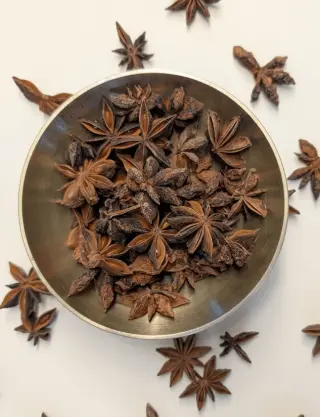
 Native to Vietnam and Southern China, star anise has been used in Indian cooking for many years, likely arriving via trade routes. Star anise has a strong licorice flavor and is a key component of garam masala and other spice blends. It is often used whole to flavor biryani and other rich, meaty dishes.
Star anise
-
 Indian whole dried red chillies can be used entirely or make into a powder along with other spices to give a specific aroma and taste. They are used in multiple dishes ranging from tadka to gravies and many other dishes. It is one of the most commonly used spice in indian cuisine.
Whole dried red chillies
-
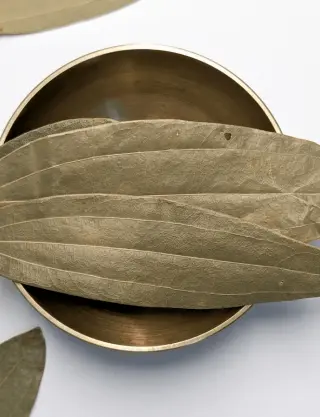
 The Indian bay leaf comes from a different tree than the European variety. It is native to the Himalayan region and has been a part of Indian cooking for a very long time. It imparts a mild, cinnamon-like aroma to dishes. It is most commonly used whole and added to the oil at the start of cooking to flavor rice, stews, and a variety of curries.
Bay leaf
-
 The lush, green mountains of Southern India are the native home of green cardamom. It is known as the "Queen of Spices." Cardamom has a sweet, floral, and highly aromatic flavor. Green pods are used whole in savory rice dishes like biryani and curries. The seeds are ground and used in desserts like kheer, and to flavor chai tea.
Cardamom
-
 As the name suggests, these chillies are a specific variety cultivated in the Kashmir region of India. Prized for their vibrant red color and mild heat, they are used to add a beautiful red hue to dishes without making them excessively spicy. They are essential for dishes like rogan josh, tandoori chicken, and various curries.
Kashmiri red chili powder
-
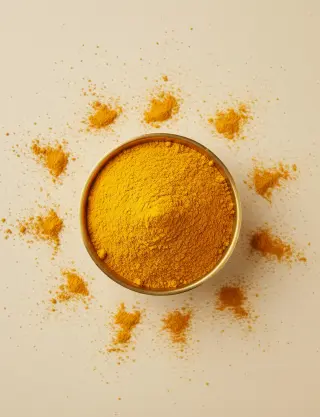
 Turmeric or Curcuma longa is a flowering plant in the ginger family Zingiberaceae. It is a perennial, rhizomatous, herbaceous plant native to the Indian subcontinent and Southeast Asia that requires temperatures between 20 and 30 °C (68 and 86 °F) and high annual rainfall to thrive. Plants are gathered each year for their rhizomes, some for propagation in the following season and some for consumption or dyeing.
Turmeric
The recipe requires the following ingredients that are not included in your kit, we recommend buying these ingredients locally.
-
 Shrimp are highly valued in coastal Indian cuisines, particularly in Kerala, Bengal, and Goa. Popular preparations include Kerala's coconut milk prawn curry, Bengal's creamy chingri malai curry, and Goa's spicy prawn balchão. Shrimp are also used in coastal biryanis and fried rice dishes.
Shrimp/Prawn
-

Mixer
-
 Coconut milk is an essential ingredient in South Indian and Kerala cuisine. Obtained by pressing grated coconut flesh, it brings a characteristic creaminess and sweetness to coastal curries. It is used in Kerala fish curry, stews, and many desserts like payasam.
Coconut milk
-

Pot
-
 Mint is a refreshing aromatic herb highly valued in Indian cuisine. It is the key ingredient in pudina chutney, a green sauce served with many dishes and snacks. Mint also flavors biryanis, raitas (spiced yogurt), and refreshing drinks like jaljeera and chaas (salted lassi).
Mint
-
 Fresh coriander, also called cilantro, is the most widely used aromatic herb in Indian cuisine. Its green, fragrant leaves bring incomparable freshness to dishes. Used as a final garnish on curries, biryanis, and chaats, it is also the main ingredient in green chutney (pudina chutney) served with samosas and pakoras.
Coriander leaves
-
 Tomatoes, although introduced relatively recently to India by the Portuguese, have become a fundamental ingredient in modern Indian cuisine. They provide acidity, color, and body to curries. Tomatoes are used fresh, pureed, or canned to create the rich, flavorful sauces characteristic of dishes like butter chicken or tikka masala.
Tomatoes
-
 Salt is an indispensable flavor enhancer in Indian cuisine. Besides regular table salt, India also uses kala namak (black salt), a volcanic salt with a distinctive sulfurous taste, used in chaat masala and refreshing drinks. Himalayan pink salt, mined from Pakistan, is also highly prized for its purity and minerals.
Salt
-
 Oil is an essential base ingredient in Indian cooking. Different oils are used depending on the region: mustard oil in the north and east, coconut oil in the south, and peanut oil in the west. Oil serves as the base for tadka (tempering), a technique where spices are fried in hot oil to release their aromas before being added to dishes.
Oil
-
 Ghee, or clarified butter, is an ancient ingredient in Indian cuisine that has been used for millennia. Made by melting butter to remove water and milk proteins, ghee has a high smoke point and a rich, nutty flavor. In Ayurvedic tradition, it is considered beneficial for digestion and health. Ghee is used for cooking, frying, and enriching dishes like dal, rice, and Indian desserts.
Ghee
-
 Ginger is native to the rainforests of Maritime Southeast Asia and is one of the first spices to have been exported from Asia. It was introduced to India very early in its history and has been cultivated there for thousands of years, becoming an integral part of both its cuisine and traditional medicine, Ayurveda. Ginger is a foundational ingredient in Indian cooking. It is a key component of the aromatic paste known as ginger-garlic paste, which forms the flavor base for countless curries, dals, and marinades. It provides a pungent, spicy, and warm flavor. Fresh ginger is also grated or julienned and added to stir-fries, and is famously used to make a soothing and spicy chai (tea).
Ginger
-
 Garlic's origins are traced back to Central Asia, where it was first cultivated. It spread from there to the Middle East and then to South Asia, becoming a staple in Indian diets since ancient times. Garlic is another essential aromatic in Indian cooking. It is most often used alongside ginger and onion to create the rich, sautéed base (bhuna) for a wide array of dishes. It provides a savory, sharp, and slightly spicy flavor that is a must-have for meat dishes, vegetable curries, and dals. It is also a key ingredient in many Indian pickles and chutneys.
Garlic
-
 Onions in general are believed to have originated in Central Asia. They have been cultivated in India for a very long time, with red onions being one of the most common and popular varieties grown across the country. Red onions are a staple in almost every Indian kitchen. They form the base of the gravy for most curries and sauces, providing a sweet, savory, and aromatic foundation when sautéed. They are also used extensively in their raw form. Thinly sliced red onions are a common garnish and a key ingredient in fresh salads, raitas, and chutneys, where their crisp texture and sharp flavor provide a perfect contrast to rich and spicy foods.
Red onion
-
 Basmati rice is an aromatic long-grain rice variety that originated in the foothills of the Himalayas in India and Pakistan. Known for its nutty aroma and long, slender grains, it is the preferred rice for many Indian dishes, including biryani, pulao, and as an accompaniment to curries.
Basmati rice
-
 Chillies were brought to India by the Portuguese, but green chillies have since become a fundamental part of the cuisine. Used to provide fresh heat and a sharp flavor, green chillies are a primary source of spiciness in Indian cooking. They can be sliced and added directly to curries, sauces, or fried alongside other spices in a Tadka.
Green chili
Table Indienne est une jeune entreprise à votre écoute, contactez nous si vous pensez que nous devrions inclure ces ingrédients dans nos kits ou bien vous les proposer en option.
| Directly selected smallholder producers | Yes |
| Cooking time | 90 minutes |
| Level of difficulty | Expert |
| Spice level | Strong |
| Number of servings | 4 |
| Possible traces of allergens | Preparation contains : shellfish, cashew nuts, milk |
| Made in Alsace | Yes |
Translated from French
Translated from French
Translated from French

Mihika's note
This Shrimp Biryani is specially dedicated to those who melt for the marriage of coconut, juicy prawns and the fresh herbs of the coast! This dish is a one-way ticket to the Indian shores: it perfectly captures that magical alliance between an intensely fragrant rice, the sweetness of coconut and the punch of local spices. Pure seaside escape! 🦐🥥🌊
Mihika Mahakal
Founder, Table Indienne
Spices from this kit available on our website
These spices used in this kit are available individually on our website

Learn more
According to the historian Lizzie Collingham, biryani was born from the meeting of Persian pilaf and the Indian cooking of spiced rice, but its exact origins remain debated. What is certain is that it never stopped: carried by merchants, courts and communities, it took on a different face in every region. Yet the principle is simple. Two main techniques are distinguished: pakki (“cooked”) biryani, where the elements are cooked separately and then layered, and kacchi (“raw”), where the layers are sealed in a pot and cook slowly in their own steam, dum cooking.
Where does the border with pulao lie? According to Sohail Hashmi, pilau is simpler, while biryani has more sauce, often cooks for longer and leaves a layer of scorched rice at the bottom. For Colleen Taylor Sen, pilau is generally a side dish cooked in a single pot, whereas biryani is a festive centrepiece whose rice and meat are often cooked apart.
On the Malabar coast
On India’s south-west coast, the biryani tradition runs through the Mappila, the Muslim community of Kerala. According to the historian M. G. S. Narayanan, its earliest members descend from the children born of unions between non-Muslim Arab traders and local women. Thalassery, a major spice export port, was a meeting place for European, Arab and Malabar cultures. Malabar biryani comes in two main styles, those of Kozhikode and Thalassery, made with mutton, fish, chicken, eggs or shrimp depending on the household. Where does it come from? Sources differ: the influence of the Muslim rulers of Mysore and Arcot, Mughal and Persian routes, or kinship with the mandi of Hadramawt. It is best seen as an open file.
Our version is inspired by the coast, without claiming to reproduce a specific recipe: yogurt gives way to coconut milk, which provides a creamy setting for the rice and shrimp. Coconut milk does, in fact, appear in some versions of Malabar biryani.
A dish that travels
Outside India, biryani has produced a whole family of relatives. In Indonesia, nasi kebuli is a spiced rice cooked in goat broth, milk and ghee; it was created by Arab Indonesians descended from Hadhrami migrants, and its name is said to come from the pulao of Kabul. In Myanmar, danpauk is a festive dish, notably at weddings. In Thailand, khao mhok is served with fried garlic and a sour green sauce. In the Persian Gulf, biryani is usually made with saffron and chicken. The dish has travelled widely with South Asian diasporas.
Whole spices
This biryani rests on whole spices, which give the rice a deep fragrance. Star anise, native to southern China and Vietnam, goes into biryani and masala chai in some regions of the subcontinent, and into the garam masala of Kerala.
Did you know?
Star anise has no botanical link with green anise: the two plants owe their aroma to the same molecule, anethole. And mace is the red aril of the nutmeg: the same nut therefore gives two spices, which are found here in a single dish.
| Characteristic | Detail |
|---|---|
| Style | Coastal biryani, inspired by the shoreline |
| Base | Coconut milk, in place of yogurt |
| Fragrance | Green herbs and whole spices |
| Cooking | About 90 minutes, for 4 people |
| Ingredients to add | The fresh ingredients, to buy near you |
Our kit is prepared by hand, to order, to guarantee its freshness. It contains the spices (star anise, cardamom, clove, cinnamon, mace, turmeric, ground coriander, Kashmiri chilli, dried red chilli, bay leaf) and grated coconut; you bring the shrimp, coconut milk, basmati rice, onion, garlic, ginger, green chilli, mint, coriander, tomatoes, oil or ghee and salt, preferably from a local shop. Some of the spices, which do not grow in France, are imported directly from India through our partners.
The whole spices of this biryani
| Spice | Role in the dish |
|---|---|
| Star anise | Depth |
| Green cardamom and clove | Warmth |
| Cinnamon and mace | Sweetness |
The first fragrance is that of green herbs, fresh and lively, before the whole spices arrive in the background. The coconut milk rounds everything off: the rice is creamy and soft, without the acidity of yogurt, and the shrimp keep their natural sweetness.
Whole spices give a deeper and more diffuse fragrance than ground ones: star anise brings depth, cardamom and clove warmth, cinnamon and mace sweetness.
Preparing the kit
- Allow about 90 minutes, for 4 people
- For the fresh ingredients to buy, the quantities and the precise method, follow the instructions in the kit
- Shrimp generally cook very quickly: avoid keeping them on the heat too long, so that they stay tender
Getting the slow steam cooking right
- Close the pot well to keep the steam in, with a well-fitting lid
- Cook over low heat without lifting the lid
- Let it rest before serving, then stir gently
What to serve it with
A wedge of lime, a cucumber salad or a raita freshen this creamy dish nicely. To compare, also try our chicken biryani, softer and more fragrant, in the Lucknow style, or the vegetable pulao, which is simpler. A good basmati rice remains the best ally.
Storage advice
- Keep the pouch closed, somewhere dry, away from heat, light and humidity
- The kit is prepared to order: use it without leaving it too long, following the instructions on the pouch
- Once the pouch is open, reseal it well to preserve the fragrance of the spices
Allergens
This preparation contains crustaceans, cashew nuts and milk. If you have any allergies, check the label on the pouch and let us know your allergens when you place your order.
Why coconut milk rather than yogurt?
Our recipe is inspired by the coastal region and replaces yogurt, classic in many biryanis, with coconut milk, which gives a creamy setting to the rice and shrimp. Coconut milk does appear in some versions of Malabar biryani.
What is the difference between biryani and pulao?
Both are from the same family. Pulao is simpler and often a side dish; biryani is a festive dish, richer in sauce and spices, with the rice and meat often cooked apart.
What does dum cooking mean?
It is slow steam cooking: the pot is sealed tightly and the dish cooks slowly in its own steam.
Does this kit contain allergens?
Yes: the preparation contains crustaceans, cashew nuts and milk. Check the label on the pouch and tell us your allergens when you place your order.
Is star anise anise?
Not in the botanical sense. Star anise and green anise are two different plants, but they owe their fragrance to the same molecule, anethole.
What is the difference between kacchi and pakki biryani?
In pakki (“cooked”) biryani, the ingredients are cooked separately and then layered. In kacchi (“raw”) biryani, the layers are sealed in a pot and cook slowly together, in their own steam.
-
According to the historian Lizzie Collingham, biryani was born from the meeting of Persian pilaf and the Indian cooking of spiced rice, but its exact origins remain debated. What is certain is that it never stopped: carried by merchants, courts and communities, it took on a different face in every region. Yet the principle is simple. Two main techniques are distinguished: pakki (“cooked”) biryani, where the elements are cooked separately and then layered, and kacchi (“raw”), where the layers are sealed in a pot and cook slowly in their own steam, dum cooking.
Where does the border with pulao lie? According to Sohail Hashmi, pilau is simpler, while biryani has more sauce, often cooks for longer and leaves a layer of scorched rice at the bottom. For Colleen Taylor Sen, pilau is generally a side dish cooked in a single pot, whereas biryani is a festive centrepiece whose rice and meat are often cooked apart.
On the Malabar coast
On India’s south-west coast, the biryani tradition runs through the Mappila, the Muslim community of Kerala. According to the historian M. G. S. Narayanan, its earliest members descend from the children born of unions between non-Muslim Arab traders and local women. Thalassery, a major spice export port, was a meeting place for European, Arab and Malabar cultures. Malabar biryani comes in two main styles, those of Kozhikode and Thalassery, made with mutton, fish, chicken, eggs or shrimp depending on the household. Where does it come from? Sources differ: the influence of the Muslim rulers of Mysore and Arcot, Mughal and Persian routes, or kinship with the mandi of Hadramawt. It is best seen as an open file.
Our version is inspired by the coast, without claiming to reproduce a specific recipe: yogurt gives way to coconut milk, which provides a creamy setting for the rice and shrimp. Coconut milk does, in fact, appear in some versions of Malabar biryani.
A dish that travels
Outside India, biryani has produced a whole family of relatives. In Indonesia, nasi kebuli is a spiced rice cooked in goat broth, milk and ghee; it was created by Arab Indonesians descended from Hadhrami migrants, and its name is said to come from the pulao of Kabul. In Myanmar, danpauk is a festive dish, notably at weddings. In Thailand, khao mhok is served with fried garlic and a sour green sauce. In the Persian Gulf, biryani is usually made with saffron and chicken. The dish has travelled widely with South Asian diasporas.
Whole spices
This biryani rests on whole spices, which give the rice a deep fragrance. Star anise, native to southern China and Vietnam, goes into biryani and masala chai in some regions of the subcontinent, and into the garam masala of Kerala.
Did you know?
Star anise has no botanical link with green anise: the two plants owe their aroma to the same molecule, anethole. And mace is the red aril of the nutmeg: the same nut therefore gives two spices, which are found here in a single dish.
-
Characteristic Detail Style Coastal biryani, inspired by the shoreline Base Coconut milk, in place of yogurt Fragrance Green herbs and whole spices Cooking About 90 minutes, for 4 people Ingredients to add The fresh ingredients, to buy near you Our kit is prepared by hand, to order, to guarantee its freshness. It contains the spices (star anise, cardamom, clove, cinnamon, mace, turmeric, ground coriander, Kashmiri chilli, dried red chilli, bay leaf) and grated coconut; you bring the shrimp, coconut milk, basmati rice, onion, garlic, ginger, green chilli, mint, coriander, tomatoes, oil or ghee and salt, preferably from a local shop. Some of the spices, which do not grow in France, are imported directly from India through our partners.
The whole spices of this biryani
Spice Role in the dish Star anise Depth Green cardamom and clove Warmth Cinnamon and mace Sweetness -
The first fragrance is that of green herbs, fresh and lively, before the whole spices arrive in the background. The coconut milk rounds everything off: the rice is creamy and soft, without the acidity of yogurt, and the shrimp keep their natural sweetness.
Whole spices give a deeper and more diffuse fragrance than ground ones: star anise brings depth, cardamom and clove warmth, cinnamon and mace sweetness.
-
Preparing the kit
- Allow about 90 minutes, for 4 people
- For the fresh ingredients to buy, the quantities and the precise method, follow the instructions in the kit
- Shrimp generally cook very quickly: avoid keeping them on the heat too long, so that they stay tender
Getting the slow steam cooking right
- Close the pot well to keep the steam in, with a well-fitting lid
- Cook over low heat without lifting the lid
- Let it rest before serving, then stir gently
What to serve it with
A wedge of lime, a cucumber salad or a raita freshen this creamy dish nicely. To compare, also try our chicken biryani, softer and more fragrant, in the Lucknow style, or the vegetable pulao, which is simpler. A good basmati rice remains the best ally.
-
Storage advice
- Keep the pouch closed, somewhere dry, away from heat, light and humidity
- The kit is prepared to order: use it without leaving it too long, following the instructions on the pouch
- Once the pouch is open, reseal it well to preserve the fragrance of the spices
Allergens
This preparation contains crustaceans, cashew nuts and milk. If you have any allergies, check the label on the pouch and let us know your allergens when you place your order.
-
Why coconut milk rather than yogurt?
Our recipe is inspired by the coastal region and replaces yogurt, classic in many biryanis, with coconut milk, which gives a creamy setting to the rice and shrimp. Coconut milk does appear in some versions of Malabar biryani.
What is the difference between biryani and pulao?
Both are from the same family. Pulao is simpler and often a side dish; biryani is a festive dish, richer in sauce and spices, with the rice and meat often cooked apart.
What does dum cooking mean?
It is slow steam cooking: the pot is sealed tightly and the dish cooks slowly in its own steam.
Does this kit contain allergens?
Yes: the preparation contains crustaceans, cashew nuts and milk. Check the label on the pouch and tell us your allergens when you place your order.
Is star anise anise?
Not in the botanical sense. Star anise and green anise are two different plants, but they owe their fragrance to the same molecule, anethole.
What is the difference between kacchi and pakki biryani?
In pakki (“cooked”) biryani, the ingredients are cooked separately and then layered. In kacchi (“raw”) biryani, the layers are sealed in a pot and cook slowly together, in their own steam.
Why we created a Shrimp Biryani kit?

Anti-waste
Have you always wanted to cook Indian dishes, but never knew where to buy all the spices, or what to do if the result is not good? We are here to answer this problem with our kit! No need to buy spices that you will never use again, we only put the necessary amount of spices in your kit.
Authentic flavors
Our spices come directly from India. They are carefully selected to give you an authentic flavor.
Step-by-step recipe and instructions
We know well that Indian recipes can be difficult to understand. We provide you with step-by-step instructions and recipes to ensure you prepare the best possible version of the dish every time!

Demystifying the facts
Do Indians use the famous "curry"?
Check out our blog article to discover why curry doesn't really exist in India.
Why buy all these spices when I can just use curry?
Check out our blog article to discover the wide variety of spices used in India.
Questions & Answers
1Bonjour, pourriez-vous me communiquer les quantités de chaque ingrédient à rajouter au biryani aux crevettes svp ? Par avance merci 🙂
Bonjour Florence, toutes les quantités sont indiquées dans la recette fournie avec notre kit « biryani aux crevettes ». Par exemple, nous recommandons 300 à 400 g de crevettes. Bien cordialement
Thank you! Your question has been sent. Mihika will answer soon and you will receive an email.

Shrimp Biryani
You might also like
Chicken Korma
Vegetable korma