Coriander (Coriandrum sativum) is among the very first spices used by humanity. Coriander seeds have been found in the Nahal Hemar cave in Israel, dating back more than 8,000 years, making them one of the world's oldest known traces of a condiment. Sanskrit texts mention it under the name dhanyaka as early as 1500 BCE.
In ancient Egypt, coriander featured among funerary offerings. Seeds were discovered in the tomb of Tutankhamun (1323 BCE), a sign of the high value attributed to it. The Ebers Papyrus (c. 1550 BCE), one of the oldest known medical treatises, prescribes it as a digestive and anti-inflammatory remedy.
Coriander in the Bible
Coriander is one of the rare spices mentioned in the Bible. In Exodus (16:31), manna (the miraculous food sent to the Hebrews in the desert) is described as resembling 'coriander seed, white, and the taste of it was like wafers made with honey'. This comparison reflects how familiar ancient peoples were with this seed.
The Greeks and Romans made abundant use of it. Hippocrates recommended it for its medicinal virtues. Apicius included it in many recipes of his De re coquinaria. The word 'coriander' itself comes from the Greek koriannon, possibly derived from koris (bug), in reference to the peculiar smell of fresh leaves, a feature that still divides lovers of fresh cilantro today.
In the Middle Ages, coriander was one of the most common spices in Europe. Unlike pepper or nutmeg, it was accessible to every social class. Charlemagne ordered its cultivation in the imperial gardens through the capitulary De Villis (c. 795). Apothecaries used it to prepare dragees: sugar-coated seeds sold as sweets and digestives.
Spanish and Portuguese colonists introduced it to Latin America in the 15th and 16th centuries, where it became a pillar of Mexican and Peruvian cuisines. In India, it has never ceased to be cultivated since Antiquity; Rajasthan is today the world's leading producer.
Did you know?
- Coriander seeds and fresh leaves (cilantro) have radically different aromatic profiles; some people love the leaves while others detest them (a genetic predisposition linked to the OR6A2 gene)
- Coriander is cited in the One Thousand and One Nights as an aphrodisiac
- In India, coriander seeds are called dhania and form, along with cumin, the most fundamental spice duo of Indian cooking
- Belgian brewers have used coriander seeds in the making of witbier (white beer) since the 15th century
- Coriander is one of the five spices of the Chinese 'wu xiang fen' blend (five-spice powder)
- It is one of the rare plants whose every part is edible: seeds, leaves, stems and roots
- In France, coriander is a traditional ingredient of dry sausage and many charcuterie products
Coriander across languages
| Language | Name |
|---|
| French | Coriandre (seeds) / Coriandre fraîche (leaves) |
| Hindi | Dhania (धनिया): seeds: Sabut Dhania, powder: Dhania Powder |
| Sanskrit | Dhanyaka (धान्यक) |
| Tamil | Kothamalli (கொத்தமல்லி) |
| Malayalam (Kerala) | Malli (മല്ലി) |
| English | Coriander (seeds) / Cilantro (leaves, American usage) |
| Spanish | Cilantro / Culantro |
| Arabic | Kuzbara (كزبرة) |
| German | Koriander |
| Botanical Latin | Coriandrum sativum L. |
The word 'coriander' travelled from Sanskrit dhanyaka to Greek koriannon, then to Latin coriandrum. In English, a distinction has settled in between coriander (the seeds) and cilantro (the leaves, from Spanish). This linguistic separation reflects the aromatic reality: seeds and leaves are so different that they are treated as two distinct ingredients in most cuisines.
| Characteristic | Detail |
|---|
| Latin name | Coriandrum sativum L. |
| Botanical family | Apiaceae, the same family as cumin, fennel, parsley and carrot |
| Local names | Dhania (Hindi) / Malli (Malayalam) / Kothamalli (Tamil) |
| Part used | Dried seeds, ground into powder |
| Main aromatic compound | Linalool (60 to 80% of the essential oil) |
| Essential oil content | 0.3 to 1.0% of the seed weight |
| Harvest | March to May (rabi harvest), seeds picked at full maturity |
| Drying | Naturally in the sun (5 to 7 days) before grinding |
India is by far the world's leading producer of coriander, with around 500,000 to 700,000 tonnes per year, more than 60% of world production. Rajasthan dominates Indian output, followed by Madhya Pradesh, Gujarat and Andhra Pradesh. The city of Kota, in Rajasthan, is considered the global capital of coriander.
Coriander is a cool-season (rabi) crop in India, sown between October and November and harvested between March and May. It requires a dry climate with moderate temperatures (15 to 25°C) during seed maturation, conditions that Rajasthan naturally offers.
The terroir that makes the difference
- Semi-arid climate of Rajasthan: cool nights and hot days concentrate essential oils in the seeds
- Sandy and calcareous soil, well-drained; coriander does not tolerate excess water
- Low rainfall (300 to 600 mm/year): moderate water stress intensifies the aromatic profile
- Intense sunshine: essential for the biosynthesis of linalool, the main aromatic compound
- Thousand-year-old tradition of cultivation and varietal selection by Rajasthani farmers
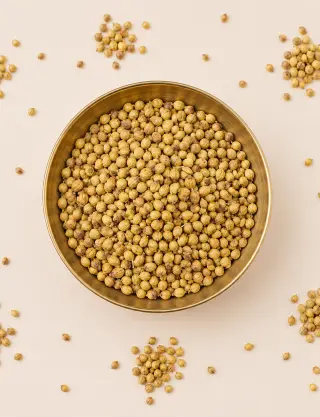
The quality of coriander depends largely on the moment of harvest. The seeds must be picked at full maturity, when their colour turns from green to golden brown. Harvesting too early produces bitter seeds low in linalool; harvesting too late leads to shattering (seeds falling to the ground). Grinding is done after complete drying to guarantee a homogeneous and aromatic powder.
Two types of seeds
There are two main botanical types of coriander seeds, distinguished by their size and aromatic profile:
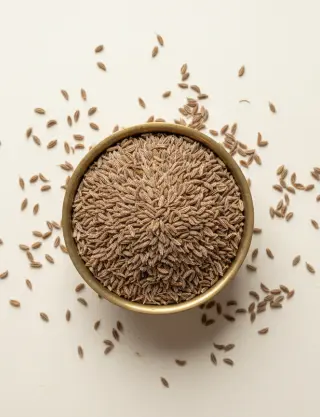
- European type (var. vulgare): large seeds (3 to 5 mm), lower essential oil content (0.1 to 0.35%). Grown in Europe, North Africa, the Americas.
- Indian type (var. microcarpum): small seeds (1.5 to 3 mm), higher essential oil content (0.3 to 1.0%), more intense aromatic profile. Grown in India and Southeast Asia.
| Producing country | Production / Specificity |
|---|
| India (Rajasthan, Madhya Pradesh) | ~600,000 t/year, leading global producer and exporter |
| Morocco | ~40,000 t/year, European variety, mild and floral |
| Russia / Ukraine | ~30,000 t/year, mainly for essential oil extraction |
| Romania / Bulgaria | ~15,000 t/year, European quality |
| Mexico / Guatemala | ~10,000 t/year, local culinary use (cilantro and seeds) |
Botany
Coriander (Coriandrum sativum) is an annual herbaceous plant of the Apiaceae family, which also includes cumin, fennel, dill, parsley and carrot. It grows to 30 to 60 cm in height and produces small white or pinkish flowers arranged in umbels.
The plant is remarkable in that every part of it is edible:
- The seeds (technically dry fruits, mericarps): used whole or ground as a spice
- The leaves (cilantro): a fresh aromatic herb with a flavour radically different from the seeds
- The stems and roots: used in Thai cuisine (base of curry pastes)
Seeds vs leaves: two aromatic worlds
Coriander seeds contain mainly linalool (sweet, floral, lemony), while fresh leaves contain aldehydes (decanal, dodecanal) responsible for their 'soapy' taste that some people detest. These are truly two distinct spices from the same plant.
Ground coriander offers a soft, rounded and remarkably versatile aromatic profile. It is a background spice rather than a finishing spice, it brings depth without ever overpowering the other flavours in a dish.
Aromatic profile
| Note | Description |
|---|
| Top note | Lemony, fresh, zesty: reminiscent of lemon and orange |
| Heart note | Floral, soft, slightly sweet: thanks to linalool |
| Base note | Woody, earthy, warm: with a light hazelnut touch |
| In the mouth | No piquant heat: rounded softness, light astringency |
Linalool, which makes up 60 to 80% of the essential oil in the seeds, is the same compound found in lavender, basil and rosewood. It is what gives ground coriander its characteristic floral sweetness, so different from the lively herbaceousness of fresh leaves.
Aromatic pairings
Ground coriander is one of the easiest spices to pair. It naturally goes with:
- Cumin: the cumin-coriander duo is the foundation of Indian cuisine, often in a 1:2 ratio (cumin:coriander)
- Turmeric: together they form the base of every curry
- Cinnamon: in sweet-and-savoury blends and tagines
- Ginger: for amplified freshness
- Chilli: the sweetness of coriander tempers the heat of chilli
- Fennel: same botanical family, a natural complementarity
Chef's tip
Lightly toast the whole seeds dry in a pan before grinding them, 2 to 3 minutes over medium heat, until a hazelnut aroma develops. This step activates the aromatic compounds and produces a far more fragrant powder than simply grinding raw. Let cool before grinding in a mortar or spice mill.
Ground coriander is probably the most consumed spice in the world by volume. In India, it goes into virtually every cooked dish. In North Africa, the Middle East and Latin America, it is just as omnipresent. Its mildness makes it compatible with almost any ingredient.
In Indian cuisine
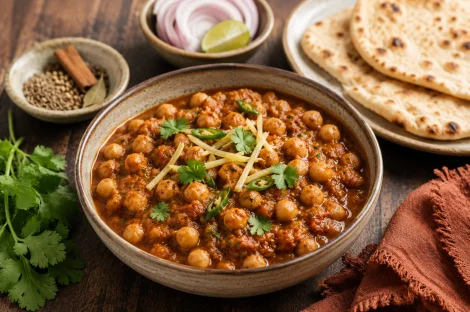
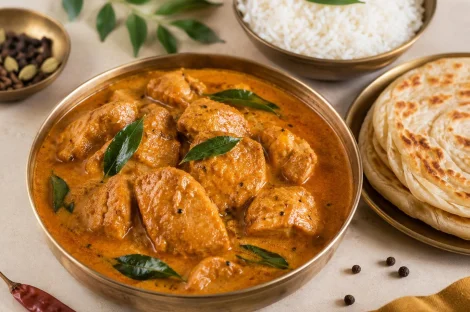
- Base of every curry: with cumin and turmeric, coriander forms the fundamental trio, added early in cooking, after the onions
- In garam masala: a major component, often the largest by proportion
- In dals: brings roundness and depth to lentils and legumes
- In marinades (masalas): for tandoori chicken, tikka, kebabs, mixed with yoghurt and other spices
- In chutneys: coriander-mint chutneys, tamarind chutneys
- In sambar and rasam: spicy South Indian soups, coriander is toasted with other spices for 'sambar podi'
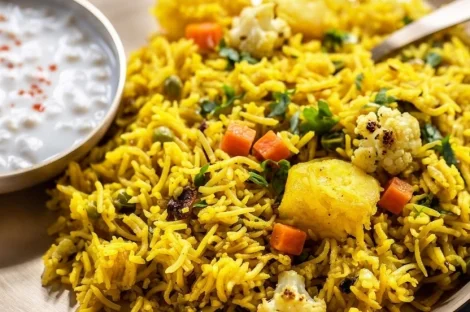
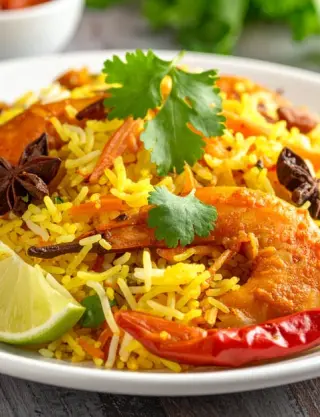
- In biryanis and pulaos: flavours the rice and the meat layers
In North African and Middle Eastern cuisine
- In Moroccan tagines: coriander, cumin, ginger and saffron: the classic quartet
- In ras el hanout: a complex blend in which coriander is an essential component
- In merguez: coriander, alongside cumin and chilli, defines the taste of merguez
- In falafel: mixed with chickpeas and herbs
- In chermoula: a Moroccan marinade for fish and seafood
- In Egyptian dukkah: toasted seeds crushed with hazelnuts and sesame
In French and European cuisine
- In dry sausage: coriander is the signature spice of many French sausages, along with pepper
- In pâtés and terrines: brings a subtle floral note to charcuterie
- In vegetable marinades: cornichons, pickles, coriander seeds are a classic
- In Belgian white beers: witbier: coriander and bitter orange peel are the traditional aromatics
- In pain d'épices: paired with cinnamon and anise
- In compotes and jams: a pinch subtly enhances cooked fruit
Spice blends containing coriander
| Blend | Origin | Role of coriander |
|---|
| Garam masala | North India | Main component, brings softness and roundness |
| Curry powder | India / Anglo-Indian adaptation | Aromatic base (often 25 to 40% of the blend) |
| Ras el hanout | Morocco | Structuring component of the blend |
| Baharat | Middle East | Floral and citrus note |
| Berbere | Ethiopia | Softens the heat of chilli |
| Sambar podi | South India | Toasted, base of the blend |
| Dukkah | Egypt | Crushed seeds, texture and aroma |
Coriander has been used as a medicinal plant for more than 3,500 years. The Ebers Papyrus (Egypt, c. 1550 BCE) lists it among digestive remedies. In Ayurvedic medicine, coriander seeds are classified among the 'tridoshic' plants, meaning that they balance the three doshas (Vata, Pitta and Kapha), a rare property.
The main active compound is linalool, a monoterpene with well-documented anxiolytic, anti-inflammatory and antimicrobial properties. The seeds also contain flavonoids (quercetin, kaempferol) and phenolic acids with antioxidant effects.
Documented properties
- Digestive and carminative: stimulates the secretion of digestive enzymes and reduces bloating; an infusion of coriander seeds is a universal traditional remedy for colic and flatulence
- Anti-inflammatory: linalool inhibits pro-inflammatory mediators (COX-2, TNF-α)
- Antimicrobial: activity demonstrated against Salmonella, E. coli and Candida albicans; the seeds were historically used to preserve food
- Hypoglycaemic: studies suggest that coriander stimulates insulin secretion and improves cell sensitivity to insulin; traditionally used in India to accompany type 2 diabetes
- Cholesterol-lowering: can help reduce total cholesterol and triglycerides
- Anxiolytic: linalool has calming effects on the central nervous system, a property shared with lavender
- Antioxidant: flavonoids protect cells against oxidative stress
- Heavy-metal chelator: preliminary research suggests that coriander could help eliminate certain heavy metals from the body
Precautions of use
Coriander is generally very well tolerated. At very high doses, it can have a mild sedative effect. People allergic to plants of the Apiaceae family (fennel, carrot, celery, dill) may show cross-sensitivity. Pregnant women should avoid concentrated therapeutic doses (essential oil); normal culinary use poses no problem.
Nutritional values (per 1 tablespoon / 5 g)
| Component | Content |
|---|
| Linalool | 60 to 80% of the essential oil |
| Essential oil | 0.3 to 1.0% (linalool, geraniol, camphor, limonene) |
| Protein | ~0.6 g |
| Fibre | ~2.1 g |
| Vitamins | A, C, K, B1, B2, B3 |
| Minerals | Iron, manganese, magnesium, calcium, phosphorus |
| Calories | ~15 kcal |
Traditional remedy: coriander water
In India, the infusion of coriander seeds (dhania ka pani) is a common household remedy. Soak a tablespoon of seeds in 250 ml of water overnight, strain in the morning and drink on an empty stomach. This remedy is used to improve digestion, reduce bloating and support hydration.
How to recognize a good ground coriander
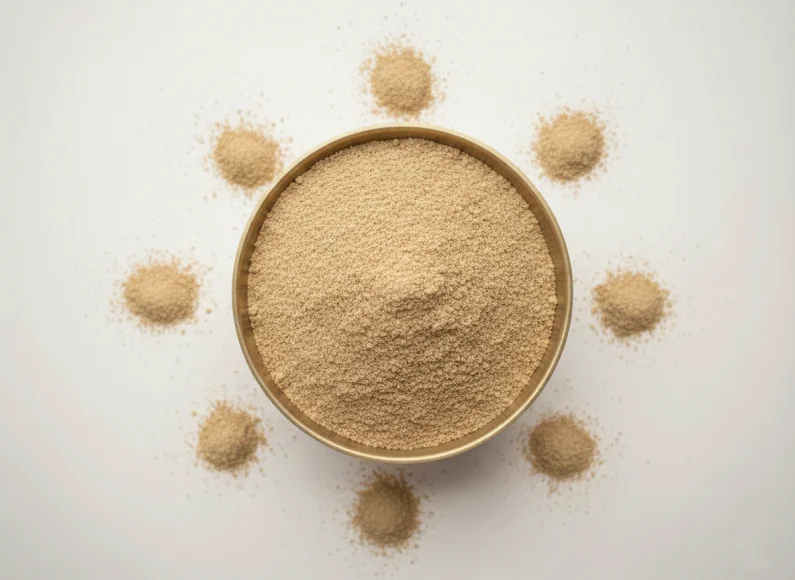
- Colour: light brown-green to golden brown; a greyish or very dark colour indicates an old or poorly preserved product
- Aroma: an immediately lemony, floral and soft fragrance when the bag is opened; if the smell is weak or earthy without freshness, the powder is stale
- Texture: fine and homogeneous powder, without lumps; lumps indicate exposure to humidity
- Taste: soft and lemony flavour, without excessive bitterness; strong bitterness can indicate too early a harvest
- Origin mentioned: a serious producer always indicates the country of origin and ideally the region
Storage tips
- Store in an airtight glass jar, away from light, heat and moisture
- Never store above the stove: heat rapidly degrades linalool
- Optimal shelf life: 6 to 8 months as powder; 1 to 2 years as whole seeds
- For maximum freshness, buy whole seeds and grind them as needed
- Sign of degradation: loss of the lemony aroma, dull colour, flat and merely earthy taste
Storage trick
Ground coriander loses its aroma faster than most other ground spices. To extend its freshness, you can keep the whole seeds in the freezer in an airtight bag; they will keep for up to 3 years without significant loss. Take them out, toast them and grind them just before use.
What is the difference between ground coriander and fresh coriander (cilantro)?
These are two parts of the same plant (Coriandrum sativum), but their aromatic profiles are radically different. The seeds (and their powder) are dominated by linalool, which gives a soft, lemony and floral taste. The fresh leaves contain aldehydes responsible for a herbaceous flavour that some people perceive as soapy (a genetic predisposition). In cooking, they are not interchangeable.
Can ground coriander be replaced with whole seeds?
Yes, but adjust the quantity: use about 1.5 times more whole seeds than powder (whole seeds release less aroma). For optimal results, toast the seeds dry in a pan for 2-3 minutes, let cool, then grind in a mortar or spice mill.
Why are coriander and cumin always paired in Indian cooking?
The coriander-cumin duo (dhania-jeera) is the foundation of Indian cuisine. Coriander brings softness, roundness and citrus notes, while cumin brings warmth, depth and earthy notes. Together, they create a complete aromatic balance. The classic ratio is 2 parts coriander to 1 part cumin.
Is ground coriander suitable for people who hate fresh cilantro?
Yes, absolutely. Aversion to fresh coriander is linked to the aldehydes present in the leaves (perceived as soapy by carriers of the OR6A2 gene). The seeds and the powder contain mainly linalool, a completely different compound. Most people who hate the leaves enjoy the seeds without any problem.
How do you use ground coriander in a dish?
Ground coriander is generally added at the start or middle of cooking, after the onions and before the liquids. It needs heat to release its aromas. For a classic Indian curry, count 1 to 2 teaspoons per portion. It pairs particularly well with cumin, turmeric, ginger and chilli.








 Gravy Dishes