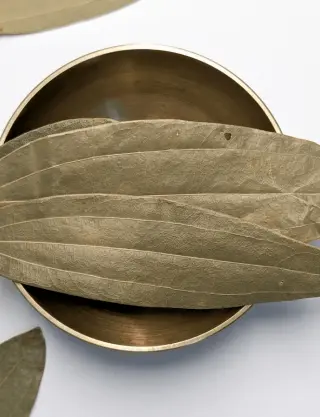
Mustard is one of the oldest cultivated spices in the world. Mustard seeds have been found at archaeological sites in the Indus Valley dating back 3,000 years BCE. Sanskrit texts (notably the Vedas) mention mustard (sarshapa) among the first plants cultivated on the Indian subcontinent, both for its aromatic seeds and for the oil extracted by cold pressing.
In the Ayurvedic tradition, mustard seeds have held a central place for more than 3,000 years. Charaka and Sushruta, the two greatest physicians of ancient India, prescribed them for joint pain, respiratory congestion and digestive disorders. Mustard oil (sarson ka tel) was and remains the traditional cooking oil of northern India.
One seed, a universal parable
The mustard seed is the most famous metaphor of smallness in sacred texts around the world. In the Gospels, Jesus compares the Kingdom of Heaven to 'a mustard seed, the smallest of all seeds, that becomes a tree'. The Buddha uses the same image in the Khuddaka Nikaya. And in the Qur'an, the mustard seed symbolises the absolute precision of the divine scale.
The Romans knew mustard well: Pliny the Elder cites it in his Natural History in the 1st century. But it was in Gaul that mustard took a decisive turn. In the 13th century, the vinegar-and-mustard makers of Dijon began grinding brown mustard seeds with verjuice (the juice of unripe grapes). Dijon mustard was born, and it uses precisely the same species as the one cultivated in India: Brassica juncea.
The mustard trade between India and Europe is attested as early as the Middle Ages. Arab merchants carried the black and brown mustard seeds of Rajasthan to the Mediterranean ports. But unlike pepper or cinnamon, mustard never commanded exorbitant prices: it grew too easily in all climates to become an object of speculation.
In the 19th century, the British colonisation of India transformed mustard cultivation into an industry: Rajasthan and Gujarat became the world's mustard granaries. Today, India remains the leading world producer of mustard seeds, with more than 9 million tonnes per year, and mustard is the country's third oilseed crop after soybean and groundnut.
Did you know?
- The mustard seed is quoted in the sacred texts of five major religions: Hinduism, Buddhism, Christianity, Islam and Jainism
- Dijon mustard (the emblematic product of French gastronomy) is made from Brassica juncea, the Indian brown mustard
- India produces more than 40% of the world's mustard seeds
- In India, the yellow mustard flower (sarson ka phool) is the symbol of spring in Punjab: fields of mustard in bloom are an iconic sight
- The English word 'mustard' comes from the Latin mustum ardens (burning must), because the Romans mixed the ground seeds with grape must
- Mustard oil is the traditional cooking oil of 500 million people in northern and eastern India
- Mustard seeds release their pungency only when crushed or chewed; left whole, they are nearly neutral
- A mustard-flour poultice was the universal remedy for colds and bronchitis in Europe until the 20th century
Mustard seeds across languages
| Language | Name |
|---|
| French | Graines de moutarde |
| Hindi | Rai / Sarson (राई / सरसों) |
| Bengali | Shorshe (সর্ষে) |
| Tamil | Kadugu (கடுகு) |
| Malayalam (Kerala) | Kaduku (കടുക്) |
| Kannada | Sasive (ಸಾಸಿವೆ) |
| Sanskrit | Sarshapa (सर्षप) |
| English | Mustard Seeds |
| German | Senfkörner |
| Arabic | Habb al-khardal (حب الخردل) |
| Botanical Latin | Brassica juncea (L.) Czern. |
The French word 'moutarde' comes from the Latin mustum ardens (literally 'burning must'), because the Romans ground the seeds in grape must to temper their pungency. The Hindi term rai specifically designates the small brown seeds used for tadka, while sarson refers to the whole plant, also grown for its leaves (sarson ka saag) and its oil.
| Characteristic | Detail |
|---|
| Latin name | Brassica juncea (L.) Czern. (brown) / Brassica nigra (L.) Koch (black) |
| Botanical family | Brassicaceae, the family of cabbage and rapeseed |
| Local names | Rai / Sarson (Hindi) / Kadugu (Tamil) / Shorshe (Bengali) |
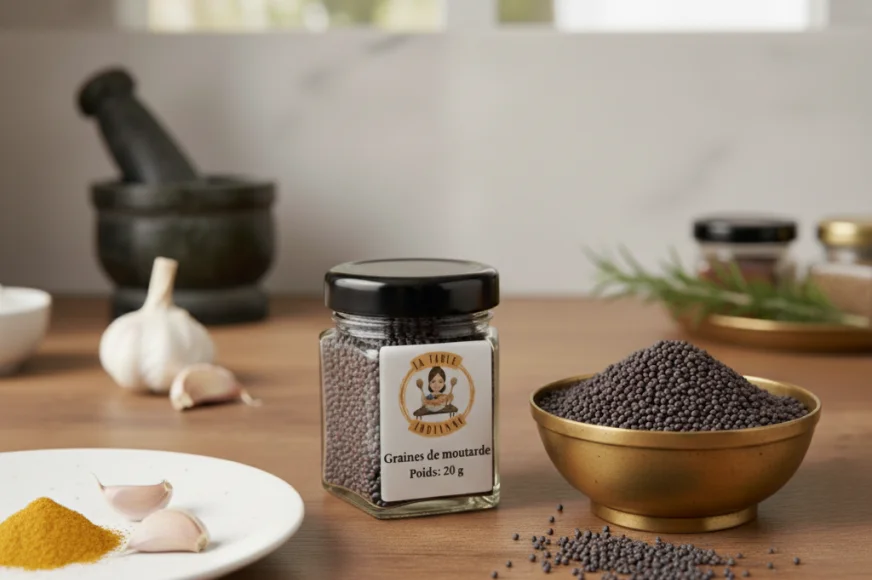
| Part used | Dried seeds (1 to 2 mm in diameter) |
| Main varieties | Brown (B. juncea), Black (B. nigra), Yellow (Sinapis alba) |
| Pungent compound | Sinigrin → allyl isothiocyanate (released by grinding/chewing) |
| Harvest | February to March, winter crop (rabi) sown in October-November |
| Oil content | 28 to 36% fixed oil (rich in omega-3) |
Mustard is a plant of the Brassicaceae family, the same family as cabbage, broccoli, rapeseed and radish. Originally from the Himalayan region, it spread very early throughout Asia, North Africa and Mediterranean Europe. India is today the leading world producer, with Rajasthan, Madhya Pradesh, Gujarat and Haryana as the main producing states.
Three mustards, three profiles
There are three main species of mustard cultivated around the world, with very distinct profiles:
| Species | Colour | Pungency | Main use |
|---|
| Brassica juncea | Reddish brown | Strong, penetrating | Indian tadka, Dijon mustard, mustard oil |
| Brassica nigra | Deep black | Very strong, sharp | Bengali panch phoron, southern Indian cuisine |
| Sinapis alba | Pale yellow | Mild, tangy | American yellow mustard, marinades |
Brown seeds (Brassica juncea) are the most common in Indian cooking and form the bulk of Rajasthan's output. They have largely replaced black seeds (Brassica nigra) in commercial cultivation, because the plant is easier to harvest mechanically: black mustard pods shatter before harvest, making manual reaping mandatory.
The terroir of Rajasthan
- Semi-arid climate with dry, cool winters: ideal conditions for mustard cultivation
- Sandy to loamy soils, well drained, with a slightly alkaline pH
- Temperatures of 15 to 25 °C during the growing season (November to February)
- Low rainfall: mustard is a drought-tolerant crop, perfectly suited to the Thar Desert
- Rabi (winter) cultivation: sown in October-November, harvested in February-March
Rajasthan alone accounts for about 45% of Indian mustard production. The districts of Bharatpur, Alwar, Jaipur and Sawai Madhopur are the main production basins. Cultivation is mainly rainfed, without irrigation, which concentrates the aromas in the seeds.
| Producing country | Production / Characteristic |
|---|
| India (Rajasthan, MP, Gujarat) | ~9 million t/year, world's leading producer |
| Canada | ~250,000 t/year, mainly yellow and oriental |
| Nepal | ~200,000 t/year, Himalayan brown mustard |
| Ukraine / Russia | ~150,000 t/year, brown and yellow mustard |
| Myanmar | ~100,000 t/year, brown mustard |
Botany
Brassica juncea is an annual herbaceous plant that grows 60 cm to 1.5 metres tall. Its bright yellow flowers, gathered in terminal clusters, turn the fields of Rajasthan into a golden sea between December and February, an agricultural spectacle that has become a cultural symbol of northern India.
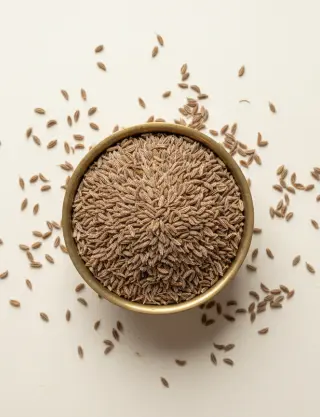
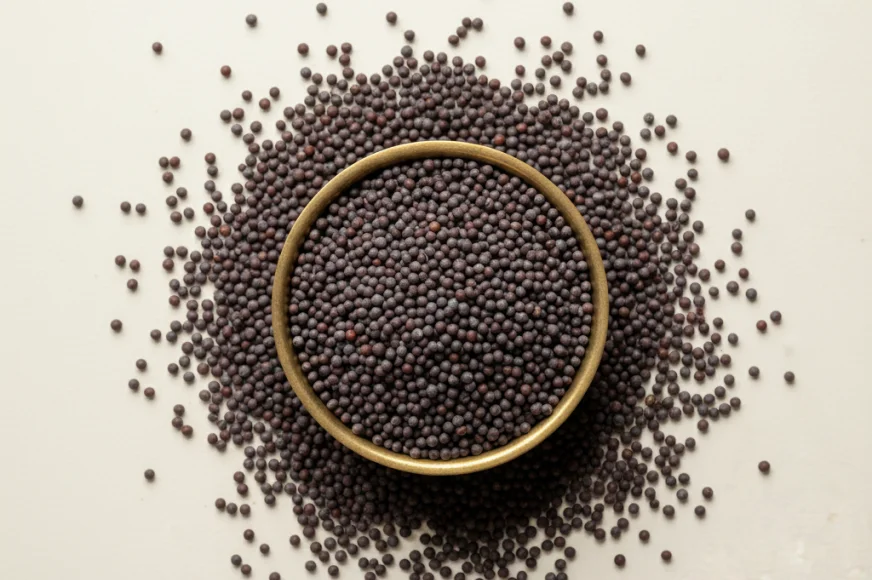
The seeds form in siliques (elongated pods) containing 10 to 20 seeds each. Each seed measures 1 to 2 mm in diameter and has a smooth tegument coloured reddish-brown to dark brown.
The chemistry of pungency
Whole, intact mustard seeds have almost no taste. Grinding or chewing triggers everything: the enzyme myrosinase comes into contact with the glucosinolate sinigrin, releasing allyl isothiocyanate: the compound responsible for the rising pungent sensation in the nose so characteristic of mustard. This mechanism is a plant defence system against herbivores.
Mustard seeds offer a fascinating aromatic profile that transforms radically depending on the method of preparation. Whole and raw, they are nearly neutral. But as soon as they are popped in hot oil, they release a deep, enveloping toasted-hazelnut aroma: the magic of tadka.
| Preparation | Aromatic profile |
|---|
| Whole raw seeds | Almost neutral, slightly bitter and earthy |
| Dry-roasted seeds | Hazelnut, slightly smoky, mild and aromatic |
| Tadka (in hot oil) | Intense hazelnut, sweet notes, enveloping fragrance, the seeds pop and crackle |
| Dry-ground seeds | Pungency rising to the nose, volatile heat, notes of horseradish |
| Ground seeds + water | Very sharp pungency (enzymatic reaction), biting, rises to the nose, fades in 15-20 min |
| Ground seeds + vinegar | Stabilised pungency, preservative acidity, the base of condiment mustard |
Chef's tip
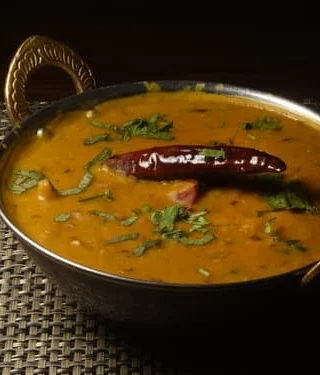
For the perfect tadka: heat oil (or ghee) over medium-high until very hot but not smoking, then add the mustard seeds. Cover immediately: they pop like popcorn! Wait for the crackling to slow down (5 to 10 seconds), then add the other spices (curry leaves, cumin, dried chillies). The tadka is poured hot over the finished dish: dal, sambar, chutney, raita.
Differences between brown, black and yellow mustard
- Brown mustard (Brassica juncea): sharp, penetrating pungency, pronounced hazelnut aroma. The most versatile: equally good in tadka and as a condiment
- Black mustard (Brassica nigra): the most pungent of the three, with a sharper, earthier flavour. Preferred in Bengali panch phoron and in certain southern Indian recipes
- Yellow mustard (Sinapis alba): the mildest, with a tangy and gently pungent flavour. Used in American mustard and in marinades. Rare in Indian cooking
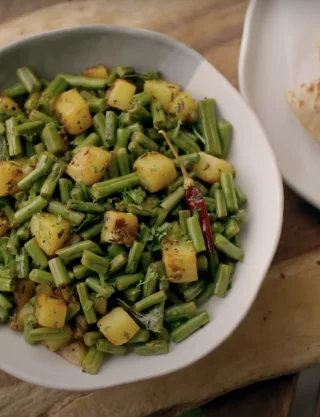
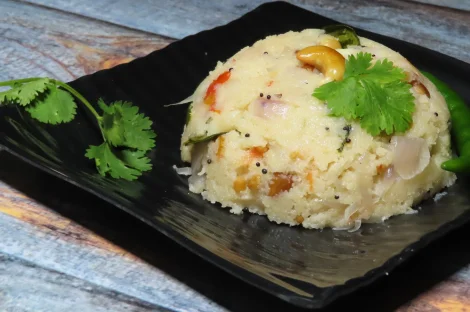
In Indian cooking, mustard seeds are not a condiment: they are a fundamental gesture. Tadka (also called chaunk, tempering or baghaar) is the technique of popping the seeds in burning oil or ghee to release their fat-soluble aromas. It is the starting point (or the finishing touch) of hundreds of Indian dishes.
In Indian cuisine
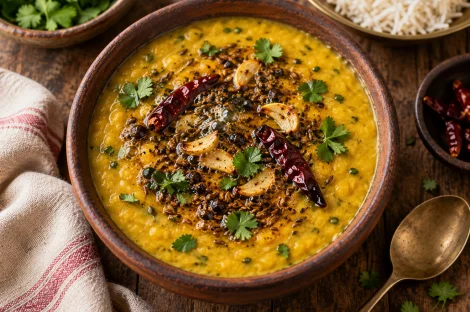
- Tadka / Tempering (rai ka tadka): mustard seeds pop in hot oil, releasing their nutty aroma. The base of southern Indian tadka, poured over dals, sambars and rasams
- Bengali panch phoron: a blend of five whole spices in equal parts: mustard, cumin, fenugreek, nigella and fennel. The signature of Bengali cuisine
- Pickles (achaar): ground mustard seeds are the key ingredient of Indian achars: they bring pungency, bitterness and preservative power
- Southern chutneys: coconut chutney, tomato chutney, always begun with a mustard tadka
- Bengali mustard paste (kashundi): mustard seeds fermented with vinegar and spices, an emblematic Bengali condiment
- Sarson ka saag: mustard leaves (sarson) slow-cooked with spinach and served with makki ki roti, an iconic Punjabi dish
- Mustard oil: the traditional cooking oil of northern and eastern India, with its characteristic pungent taste
- Rassam / Sambar: mustard tadka is essential in these two pillars of Tamil and Kerala cuisine
In French and European cuisine
- Dijon mustard: Brassica juncea seeds ground with verjuice, the French condiment par excellence, born in the 13th century
- Whole-grain mustard: partially ground seeds, with a grainy texture, ideal in vinaigrettes and with charcuterie
- Vinaigrettes: mustard naturally emulsifies oil and vinegar: it is the secret binder of any good dressing
- Sauces for meat: mustard sauce for rabbit, pork, roast chicken, a classic of Burgundian cuisine
- Marinades: ground seeds tenderise meat thanks to proteolytic enzymes
- Anglo-Saxon pickles: yellow and brown mustard seeds are essential in piccalilli and pickled onions
- Bread and pretzels: whole seeds folded into the dough or scattered on the crust
Spice pairings
| Pairing | Use |
|---|
| Mustard + cumin + curry leaves | Classic southern Indian tadka |
| Mustard + turmeric + chilli | Base of achars (Indian pickles) |
| Mustard + fenugreek + nigella + fennel + cumin | Bengali panch phoron |
| Mustard + asafoetida + curry leaves | Tempering for dals and sambars |
| Mustard + coriander seeds + turmeric | Marinades for fish |
Mustard seeds have been used in Ayurvedic medicine for more than 3,000 years, classified as a 'hot' spice (ushna virya) that stimulates metabolism and dissolves toxins. Modern science has largely confirmed these traditional properties, identifying glucosinolates and isothiocyanates as the main bioactive compounds.
Documented properties
- Anti-inflammatory: isothiocyanates (notably allyl isothiocyanate) inhibit inflammatory mediators. Promising studies on arthritis and joint pain
- Anticancer: the glucosinolates of the Brassicaceae family are associated with a reduced risk of gastrointestinal cancers in many epidemiological studies
- Rich in omega-3: mustard oil contains 6 to 12% alpha-linolenic acid (ALA), an essential omega-3 fatty acid beneficial for cardiovascular health
- Source of selenium: an antioxidant mineral essential for thyroid function and the immune system
- Digestive: stimulates the secretion of saliva and gastric juices, promotes the digestion of fatty foods
- Antibacterial: allyl isothiocyanate has documented antimicrobial properties: which is why mustard is traditionally used as a preservative in achars
- Decongestant: as a poultice (sinapism), mustard flour was the traditional European remedy for bronchitis and lung congestion
- Circulatory: applied externally, mustard oil stimulates blood circulation, the basis of Ayurvedic winter massage
Precautions for use
Mustard oil contains erucic acid, the excessive consumption of which is discouraged (European regulations). Mustard poultices should not be left on the skin for more than 15 minutes: risk of burns. People allergic to Brassicaceae (cabbage, broccoli, rapeseed) may present a cross-allergy to mustard seeds. Mustard is one of the 14 major allergens requiring mandatory declaration in the EU.
Nutritional values (per 1 tablespoon / 10 g)
| Component | Content |
|---|
| Glucosinolates (sinigrin) | ~60 to 100 µmol/g |
| Fixed oil | 28 to 36% (rich in omega-3 and omega-6) |
| Protein | ~2.5 g |
| Fibre | ~1.2 g |
| Selenium | ~20 µg (36% of RDI) |
| Magnesium | ~37 mg (9% of RDI) |
| Iron | ~1 mg (6% of RDI) |
| Vitamins | B1, B6, E, K, folate |
| Calories | ~53 kcal |
How to recognise good mustard seeds
- Colour: uniformly reddish-brown seeds (brown) or deep black (black): discoloured or dull seeds indicate an old product
- Size: round, even seeds, 1 to 2 mm in diameter, without debris or dust
- Aroma: crushed between the fingers, they should release a hazelnut smell and a pungency rising to the nose: an odourless seed has lost its properties
- Crackle: good mustard seeds crackle vigorously and pop in hot oil: if they do not crackle, they are too old
- Stated origin: a serious supplier indicates the species (Brassica juncea or nigra) and the provenance
Storage advice
- Store in an airtight glass jar, away from light, heat and moisture
- Never store above the stove: heat and steam degrade the glucosinolates
- Optimal shelf life: 1 to 2 years as whole seeds; 6 months at most once ground
- Whole seeds keep their properties far longer than the powder: the enzyme myrosinase remains inactive as long as the seed is intact
- Signs of decline: no aroma when crushed, dull colour, no crackle in hot oil
What is the difference between brown, black and yellow mustard?
The three varieties come from different botanical species. Brown (Brassica juncea) is the most common in Indian cooking: sharp pungency and nutty aroma. Black (Brassica nigra) is the most pungent, used in Bengali panch phoron. Yellow (Sinapis alba) is the mildest, used for American mustard. In Indian cooking, brown or black is used almost exclusively.
Why do mustard seeds crackle in hot oil?
The seeds contain a small amount of residual moisture. When they are dropped into very hot oil (180-200 °C), this moisture instantly turns to steam, which bursts the seed coat: hence the crackling. The process releases the essential oils and the toasted-hazelnut aromas characteristic of tadka.
Does Dijon mustard use the same seeds as Indian cuisine?
Yes! Dijon mustard is made from Brassica juncea, exactly the same species as the brown mustard used in India. The difference lies in the preparation: in India, the seeds are used whole in tadka or ground for achars, whereas in Dijon they are finely ground with verjuice (the juice of unripe grapes) or vinegar.
Can black mustard seeds be replaced by brown ones in recipes?
Yes, it is the most common replacement. Brown seeds (Brassica juncea) have largely replaced black ones in commercial production. The taste is very close: the brown ones are slightly less pungent but more aromatic. In a tadka or a panch phoron, the substitution is almost seamless.
How do you make a perfect mustard tadka?
Heat 2 tablespoons of oil or ghee over medium-high heat. Add 1 teaspoon of mustard seeds and cover immediately (they fly out!). When the crackling slows down (5-10 seconds), add the curry leaves, cumin and dried chillies. Pour the lot over your dal, sambar or vegetables, the final sizzle is part of the dish.








 Dry Dishes