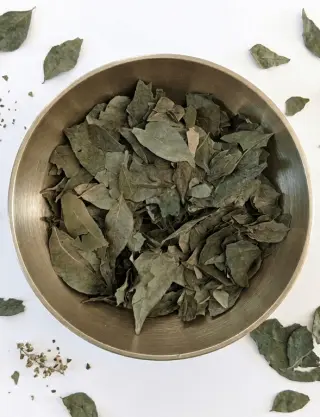
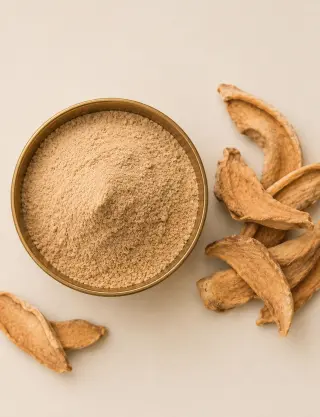
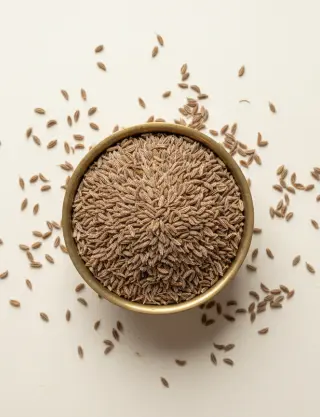
Fenugreek (Trigonella foenum-graecum) is one of the oldest cultivated plants in the world. Carbonised seeds have been found at archaeological sites in Iraq dating to 4,000 BCE, and the plant is mentioned in the Egyptian Ebers Papyrus (c. 1,550 BCE), one of the earliest known medical treatises.
The name "kasuri methi" originates in the town of Kasur, an ancient city of Punjab: today in Pakistan, some fifty kilometres from Lahore. Kasur was historically renowned for the exceptional quality of its dried fenugreek leaves. The trade in these fragrant leaves flourished along the caravan routes of the subcontinent, until the town's name became synonymous with the product itself.
The secret ingredient of Indian restaurants
Ask any Indian chef why your homemade butter chicken never tastes quite like the restaurant version, and the answer will almost always be the same: kasuri methi. That handful of dried leaves, crushed between the palms and added in the final 30 seconds of cooking, brings the characteristic aromatic depth that no other spice can match.
In Sanskrit, fenugreek is called methika, a term that gave rise to "methi" in Hindi and the other Indo-Aryan languages. The classical Ayurvedic texts (the Charaka Samhita and the Sushruta Samhita) mention it abundantly as a galactagogue plant (stimulating milk production) and digestive aid. Tradition has Indian new mothers consuming methi-based preparations in the weeks following childbirth.
The ancient Greeks also knew the plant: its Latin name foenum-graecum literally means "Greek hay". The Romans used it as fodder for cattle and as an aromatic plant. In the Middle Ages, Emperor Charlemagne ordered its cultivation in the imperial gardens through the capitulary De Villis (812 CE).
In Mughal cuisine, kasuri methi became an indispensable ingredient from the 16th century onward. The cooks of the Mughal court incorporated it into kormas, biryanis and naans. It is this culinary tradition that would give rise, centuries later, to the famous methi naan found today in Indian restaurants around the world.
Did you know?
- The botanical name Trigonella refers to the triangular shape of the plant's flowers
- Fenugreek is a legume (Fabaceae family): it fixes nitrogen in the soil and is used as a green manure between two crops
- In ancient Egypt, fenugreek seeds were mixed with honey for embalming the dead
- Roman gladiators consumed fenugreek before combat to increase their strength and stamina
- In Yemen, fenugreek is the main ingredient of hilbeh, a spiced foam served with nearly every meal
- Fenugreek is the natural source of diosgenin, a precursor used in pharmacology for the synthesis of steroid hormones
- In India, fresh methi leaves are a leafy vegetable consumed daily: kasuri methi is the dried, concentrated version
Kasuri methi across languages
| Language | Name |
|---|
| French | Feuilles de fenugrec séchées / Kasuri methi |
| Hindi | Kasuri Methi (कसूरी मेथी) |
| Urdu | Kasuri Methi (قصوری میتھی) |
| Punjabi | Methi Patte (ਮੇਥੀ ਪੱਤੇ) |
| Sanskrit | Methika (मेथिका) |
| Tamil | Venthaya Keerai (வெந்தய கீரை) |
| English | Dried Fenugreek Leaves |
| Arabic | Hulba (حلبة) |
| Persian | Shanbalileh (شنبلیله) |
| German | Getrocknete Bockshornkleeblätter |
| Botanical Latin | Trigonella foenum-graecum L. |
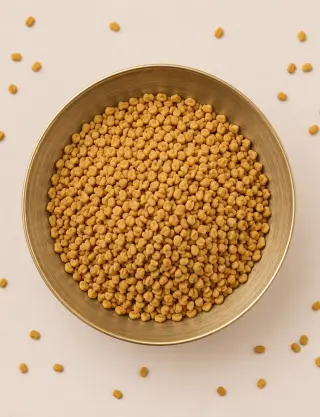
The French word "fenugrec" comes from the Latin foenum-graecum (Greek hay), because the Romans imported this plant from Greece to feed their livestock. In Hindi, methi refers at once to the plant, its fresh leaves and its seeds: it is the prefix kasuri that specifies that we are dealing with leaves dried in the Kasur manner. This distinction is essential: fenugreek seeds (methi dana) and dried leaves (kasuri methi) are two spices with very different flavour profiles.
| Characteristic | Detail |
|---|
| Latin name | Trigonella foenum-graecum L. |
| Botanical family | Fabaceae, subfamily Papilionoideae |
| Local names | Kasuri Methi (Hindi) / Methi Patte (Punjabi) |
| Part used | Dried leaves (not to be confused with the seeds) |
| Plant type | Annual herb, 30 to 60 cm in height |
| Main growing regions | Rajasthan, Gujarat, Madhya Pradesh, Punjab |
| Harvest | November to March (cool-season / rabi crop) |
| Drying | In the shade to preserve colour and aroma |
| Yield | ~1 kg of dried leaves from 8 to 10 kg of fresh leaves |
Rajasthan is by far India's leading producer of kasuri methi. The districts of Sikar, Nagaur, Jodhpur and Jaipur account for the bulk of production. The semi-arid climate of Rajasthan (cool, dry winters with a marked thermal swing) is paradoxically ideal for fenugreek: moderate water stress concentrates aromatic compounds in the leaves, giving them a more intense fragrance than in more humid regions.
Kasuri methi from Rajasthan is considered the finest in the world. Rajasthani farmers grow fenugreek in rotation with wheat, millet and mustard: a traditional agricultural system that naturally enriches the soil thanks to the plant's nitrogen-fixing properties.
The terroir that makes the difference
- Semi-arid climate: winter temperatures of 5 to 25°C, ideal for slow growth that concentrates the aromas
- Sandy, well-drained soil: fenugreek does not tolerate waterlogging; the light soils of Rajasthan suit it perfectly
- Low rainfall: 300 to 600 mm per year; controlled irrigation prevents the development of fungal disease
- Intense sunshine: natural drying is facilitated by the dry, sunny climate
- Nitrogen fixation: like all legumes, fenugreek enriches the soil with nitrogen thanks to its root nodules; a beneficial crop for the plots
Botany
Fenugreek (Trigonella foenum-graecum) is an annual herbaceous plant in the Fabaceae family: the same family as lentils, chickpeas and soya. The plant reaches 30 to 60 cm in height and produces trifoliate leaves (three leaflets per leaf), small white or yellowish flowers, and elongated pods containing 10 to 20 hard, angular seeds.
In India, fenugreek is grown both for:
- Its fresh leaves (methi saag): a very popular green vegetable, eaten in curries, parathas and salads
- Its dried leaves (kasuri methi): the finishing herb, our subject
- Its seeds (methi dana): a bitter spice used in pickles, curry powders and Bengali panch phoron
Do not confuse seeds and leaves
Fenugreek seeds (methi dana) and dried leaves (kasuri methi) are two distinct spices with very different uses. The seeds are intensely bitter and are added at the start of cooking in hot oil. The dried leaves are more subtle and are always added at the end. They are not interchangeable.
| Producing state | Share of production / particularity |
|---|
| Rajasthan | ~80% of national production, premium quality |
| Gujarat | ~8%, mainly for the seeds |
| Madhya Pradesh | ~5%, mixed leaf/seed cultivation |
| Punjab | ~3%, historic birthplace of kasuri methi |
| Uttar Pradesh | ~2%, local consumption |
Kasuri methi has a unique and instantly recognisable aromatic profile. It is a sweet-bitter, herbaceous fragrance, with notes of maple syrup and freshly cut hay, that brings an umami depth difficult to achieve any other way. It is precisely this complexity that makes kasuri methi an irreplaceable ingredient in North Indian cooking.
| Dimension | Description |
|---|
| Main aroma | Maple syrup, light caramel, dry hay, captivating and warm |
| Secondary notes | Herbaceous, faintly celery-like, toasted hazelnut |
| Bitterness | Subtle and pleasant, it mellows during cooking and in creamy sauces |
| Texture | Light and friable, easily reduced to powder between the palms |
| Umami | Brings a savoury depth comparable to kombu or parmesan |
| Persistence | The aroma lingers on the palate, evolving toward nutty notes |
The chef's gesture: crushing between the palms
Never drop kasuri methi straight into the dish. Take a generous pinch, place it in the hollow of your palm, and rub your hands vigorously together over the pan. This gesture breaks open the plant cells and instantly releases the essential oils. The aroma that wafts up is the sign that the magic is working. Always add in the final 30 seconds of cooking.
The molecule responsible for the characteristic maple-syrup aroma is sotolon (or sotolone), a compound also found in maple syrup itself, in the vin jaune of the Jura, in sherry and in certain aged sakes. It is this compound that makes kasuri methi an aromatic bridge between Indian cuisine and flavours the Western palate recognises intuitively.
Kasuri methi is above all a finishing aromatic herb. Unlike most Indian spices, which are added at the start of cooking, kasuri methi only reveals its full potential when added in the very final moments: crushed between the palms and sprinkled over the dish just before serving.
The great classics of Indian cuisine
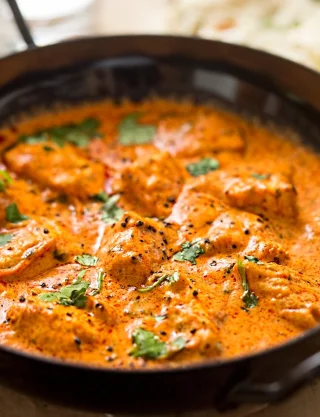
- Butter Chicken (Murgh Makhani): the iconic use; a tablespoon crushed into the tomato-cream sauce at the end of cooking. It is the ingredient that lifts the dish from "good" to "exceptional"
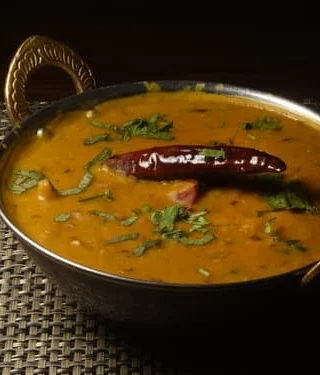
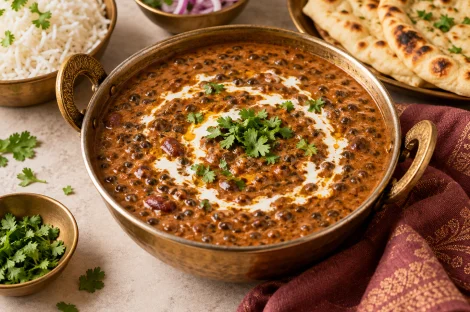
- Dal Makhani: the creamy black lentils of Punjab; kasuri methi is added in the last 5 minutes of simmering
- Paneer Butter Masala: indispensable in this rich Indian-cheese sauce
- Shahi Paneer: kasuri methi brings the royal (shahi) touch to this Mughal curry
- Malai Kofta: in the creamy sauce that envelops the paneer-and-potato dumplings
- Methi Naan: kneaded directly into the naan dough; a restaurant classic
- Methi Paratha: flatbread stuffed with fenugreek leaves; a popular breakfast in Punjab and Rajasthan
- Methi Thepla: Gujarati flatbreads with methi leaves; the quintessential Indian travel snack
- Aloo Methi: potatoes sautéed with fenugreek; a simple and savoury everyday recipe
- Korma: Mughal kormas incorporate kasuri methi for its aromatic depth
Beyond Indian cuisine
- Creamy sauces: add a pinch to cream-, butter- or cheese-based sauces; kasuri methi pairs remarkably well with fat
- Legume soups: a pinch in a soup of lentils, split peas or chickpeas brings unexpected depth
- Breads and focaccias: incorporate it into bread dough for a subtle herbaceous note
- Poultry marinades: yoghurt + kasuri methi + spices = an easy tandoori-inspired marinade
- Roasted vegetables: sprinkle over roasted sweet potatoes, carrots or cauliflower as they come out of the oven
- Scrambled eggs: a pinch of kasuri methi in buttery scrambled eggs; a simple yet transformed breakfast
The three golden rules of kasuri methi
1. Always at the end of cooking: add it in the final 30 seconds to 2 minutes. Prolonged cooking destroys its volatile aromas.
2. Always crushed between the palms: this gesture releases the essential oils locked inside the dried leaves.
3. Always with a fat: butter, cream, ghee or oil capture and diffuse the fat-soluble aromas of kasuri methi.
Fenugreek is one of the most extensively studied plants in modern phytotherapy, with more than 2,500 peer-reviewed publications. In Ayurvedic medicine, it is classified among the rasayana (regenerative) and vajikarana (tonic) plants. The dried leaves retain a good share of the active principles of the fresh plant.
Documented properties
- Galactagogue: fenugreek is one of the most widely used natural galactagogues in the world; it stimulates breast-milk production. Clinical studies show a significant increase in milk volume in nursing mothers. This has been a traditional use across South Asia for millennia
- Blood-sugar regulation: the soluble fibres (galactomannans) of fenugreek slow carbohydrate absorption and improve insulin sensitivity. Several clinical studies show a reduction in fasting glucose in patients with type 2 diabetes
- Rich in iron: fenugreek leaves are a plant-based source of non-heme iron; an ally against anaemia, particularly relevant in vegetarian diets
- Digestive: the mucilages contained in the leaves soothe the digestive mucosa and promote intestinal transit
- Anti-inflammatory: the flavonoids and saponins of fenugreek display documented anti-inflammatory properties
- Cholesterol: the steroidal saponins (diosgenin) and soluble fibres contribute to reducing LDL cholesterol and triglycerides
- Antioxidant: rich in polyphenols, flavonoids and vitamins C and A, fenugreek protects cells against oxidative stress
Precautions for use
Fenugreek is not recommended during pregnancy (it can stimulate uterine contractions), but is traditionally recommended after childbirth to promote lactation. Those on antidiabetic or anticoagulant medication should consult their doctor before high consumption. Fenugreek can also produce a characteristic body odour (due to sotolon) when consumed in large quantities.
Nutritional values (per 1 tablespoon / 3 g of dried leaves)
| Component | Content |
|---|
| Fibre | ~0.8 g (including galactomannans) |
| Protein | ~0.7 g |
| Iron | ~1 mg (around 6% of RDI) |
| Calcium | ~5 mg |
| Vitamins | A, C, B6, folate |
| Active compounds | Sotolon, diosgenin, trigonelline, 4-hydroxy-isoleucine |
| Calories | ~9 kcal |
How to recognise a good kasuri methi
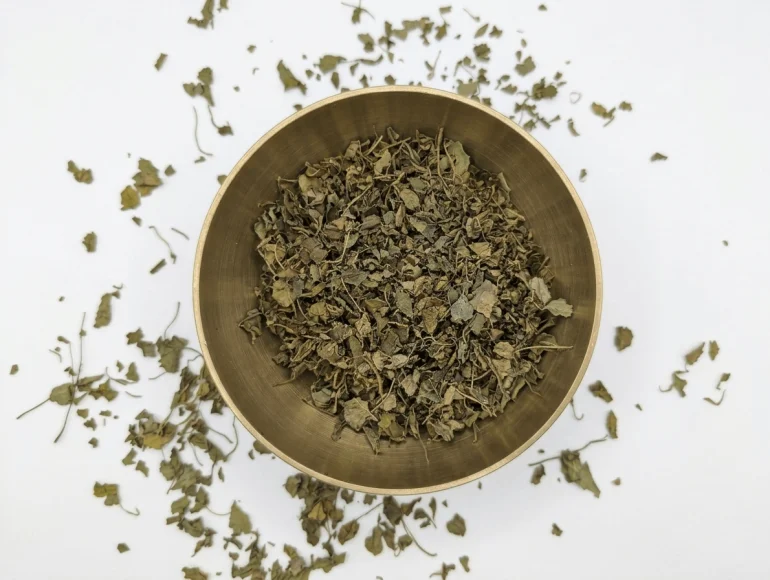
- Colour: olive green to deep green; yellowish or brownish leaves indicate sun-drying (aroma loss) or a product that is too old
- Aroma: when you open the pouch, an intense fragrance of dry hay and maple syrup should release immediately; if the scent is faint, the product has lost its essential oils
- Texture: whole leaves or large pieces, light and friable; not reduced to powder or compacted into a solid block
- Purity: absence of thick stems, dust or debris; a good kasuri methi consists mainly of leaves
- Origin stated: favour a kasuri methi from Rajasthan, renowned for its superior quality
Storage tips
- Store in an airtight container (glass jar or resealable zip pouch), away from light and humidity
- Never store above the stove: heat and steam rapidly degrade the aromas
- Do not refrigerate: condensation from repeated opening introduces moisture and causes mould to develop
- Optimal shelf life: 6 to 12 months for optimal aroma; up to 18 months if perfectly stored, but aromatic intensity gradually fades
- Signs of degradation: loss of the characteristic maple-syrup aroma, colour turning brown, flat taste with no pleasant bitterness
- Tip: before crushing the leaves between your palms, warm them for 10 seconds in a dry pan over medium heat; this reawakens the aromas of a slightly aged kasuri methi
What is the difference between kasuri methi and fenugreek seeds (methi dana)?
They are two very different spices from the same plant. Kasuri methi refers to the dried leaves: sweet-bitter aroma, maple-syrup notes, used as a finishing touch. Fenugreek seeds (methi dana) are hard, intensely bitter, and used at the start of cooking in hot oil. They are not interchangeable.
How should kasuri methi be used in a curry?
Take one or two tablespoons of leaves, place them in the hollow of your palm and rub your hands vigorously together over the dish. Always add at the very end of cooking: in the final 30 seconds to 2 minutes maximum. Prolonged cooking destroys the volatile aromas.
Why does my homemade butter chicken not taste the same as in the restaurant?
In 9 cases out of 10, the answer is kasuri methi. Indian restaurants systematically add a good tablespoon of crushed kasuri methi to their butter chicken at the end of cooking. This is the ingredient that brings the aromatic depth and umami characteristic of the dish.
Can kasuri methi be replaced with anything else?
Unfortunately, no spice exactly reproduces the profile of kasuri methi. In a pinch, you can try a mix of dried celery and parsley, but the result will be very different. Kasuri methi really is a unique ingredient: which is why it is worth always having a jar in the spice cupboard.
Is kasuri methi good for breastfeeding?
Fenugreek is one of the most widely used natural galactagogues in the world. Ayurvedic tradition has recommended it for millennia to stimulate breast-milk production, and several modern clinical studies confirm this effect. It is, however, not recommended during pregnancy. Consult your doctor or midwife for personalised advice.









 Gravy Dishes