Caraway is one of the oldest known spices in Europe. Carbonised caraway seeds have been found at Swiss Neolithic sites dating back to 3,000 BCE, attesting to a very ancient food or medicinal use on the European continent. The Egyptians used it too: caraway remains have been identified in pharaonic tombs.
The Greeks and Romans knew caraway well. The Greek physician Dioscorides mentions it in the 1st century in his De Materia Medica as a remedy for digestive disorders. The Roman gastronome Apicius uses it in several of his recipes, notably with vegetables and sauces. The Romans called it careum or carum, a name some link to the region of Caria in Asia Minor.
Caraway or cumin? The great French confusion
In French, caraway is often called ''cumin des prés'' (meadow cumin), ''cumin des montagnes'' (mountain cumin) or ''faux cumin'' (false cumin), perpetuating a stubborn confusion with true cumin (Cuminum cyminum). Yet these are radically different spices: caraway is dominated by carvone (fresh, anise-like notes), whereas cumin contains cuminaldehyde (warm, earthy notes). In German (Kümmel) and Dutch (karwij), the distinction is clearer. This confusion barely exists in the Germanic and Scandinavian countries, where caraway is an everyday spice.
In the Middle Ages, caraway occupied a central place in European cooking and medicine. Hildegard of Bingen, in the 12th century, recommended it in her writings to ease digestion and soothe colic. In the Germanic and Scandinavian countryside, caraway was sown around houses and in fields to ward off evil spirits: a superstition that speaks to the spice's symbolic importance in popular culture.
It is in Alsace and the Germanic regions that caraway took deepest root in the culinary tradition. It became inseparable from sauerkraut, Munster cheese, kugelhopf and many cured-meat products. In Scandinavia, it flavours aquavit, the national spirit, as well as rye breads and cheeses. In Tunisia and the Maghreb, caraway is part of harissa and traditional spice blends.
Did you know?
- Caraway is one of the rare spices predominantly grown in Europe, notably in the Netherlands, Germany, Poland and Finland. Unlike most spices, which come from Asia or Africa
- In the Middle Ages, caraway was believed to prevent objects from being stolen; people slipped it into chests and wardrobes
- Scandinavian aquavit, the traditional spirit flavoured with caraway, literally means ''water of life'' in Latin (aqua vitae)
- The Netherlands is historically the world's leading producer of caraway. The Dutch word karwij is the origin of the English term caraway
- Shakespeare mentions caraway in Henry IV: Falstaff is invited to eat a ''pippin with caraway'' (an apple with caraway seeds)
- In Germanic folk medicine, caraway water (Kümmelwasser) is the first remedy given to infants for colic
- Caraway is a biennial plant: it only produces its seeds in the second year of growth, which makes it a crop demanding patience
- Carvone, caraway's main compound, exists in two mirror forms (enantiomers): d-carvone in caraway (fresh, anise-like) and l-carvone in spearmint (mentholated)
Caraway across languages
| Language | Name |
|---|
| French | Carvi, Cumin des prés (misleading) |
| German | Kümmel |
| Dutch | Karwij |
| English | Caraway |
| Swedish | Kummin |
| Norwegian | Karve |
| Finnish | Kumina |
| Arabic | Karawya (كراوية) |
| Hindi | Shahi jeera (शाही जीरा): ''royal cumin'' |
| Hungarian | Kömény |
| Spanish | Alcaravea |
| Botanical Latin | Carum carvi L. |
The name ''caraway'' derives from the Arabic karawya (كراوية), which itself is thought to come from the Greek karon. The English term caraway comes from the Dutch karwij, a sign of the Netherlands' historical importance in the caraway trade. In German, Kümmel refers exclusively to caraway and not to cumin, which is called Kreuzkümmel (''cross cumin''). This Germanic linguistic distinction is evidence of caraway's deep roots in the culinary culture of Central Europe.
| Characteristic | Detail |
|---|
| Botanical name | Carum carvi L. |
| Family | Apiaceae (formerly Umbelliferae) |
| Common names | Caraway, meadow cumin, Vosges anise, false anise |
| Part used | Dry fruit (diachene), improperly called a "seed" |
| Main aromatic compound | d-carvone (50 to 65% of the essential oil) |
| Other notable compound | d-limonene (30 to 45%) |
| Growing cycle | Biennial: sown in year 1, harvested in year 2 |
| Harvest | June to August (Northern Hemisphere) |
Caraway is a remarkable plant in the world of spices: it is one of the rare aromatics cultivated mainly in Europe, in temperate climates. Unlike pepper, cinnamon or turmeric, which demand tropical heat, caraway thrives in the plains and hills of northern and central Europe, where winters are cold and summers moderate.
The Netherlands is historically the cradle of commercial caraway cultivation. As early as the 17th century, the Dutch polders produced considerable quantities of caraway for export. Today, production has spread to Germany, Poland, Finland, Canada and Egypt, but European seeds remain the most renowned for their high carvone content.
The terroir that makes the difference
- Temperate continental climate: caraway needs a cold winter (vernalisation) to flower and produce its seeds in the second year
- Soil: clay to silty-clay, deep, well-drained, rich in organic matter; Dutch polder soils are ideal
- Sunlight: full sun required during the flowering and fruit-ripening stage (June–July)
- Moderate rainfall: 400 to 700 mm/year (excessive moisture promotes fungal diseases)
- Altitude: from 0 to 1,500 metres. Wild caraway grows in the mountain meadows of the Alps and the Vosges
| Producing country | Production / characteristics |
|---|
| Netherlands | Leading historical producer: reference quality, high carvone content |
| Finland | Strongly growing production: annual varieties adapted to the Nordic climate |
| Poland, Germany | Major Central European production |
| Canada (Saskatchewan) | Major North American producer |
| Egypt | Significant production (varieties adapted to warm climates) |
| India (Rajasthan, Gujarat) | Local production, smaller seeds, slightly different profile |
Botany
Carum carvi is a biennial herbaceous plant of the Apiaceae family (formerly Umbelliferae), the same family as cumin, fennel, dill, coriander and parsley. It reaches 30 to 80 cm in height and has finely divided leaves reminiscent of those of the carrot.
In the first year, the plant forms a rosette of basal leaves and develops a fleshy taproot, sometimes eaten as a root vegetable in Nordic cuisines. In the second year, it sends up an erect stem bearing umbels of small white-to-pink flowers, which produce the fruits.
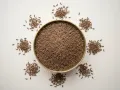
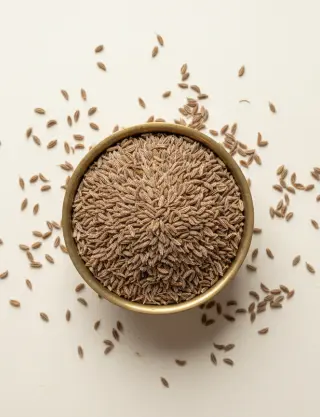
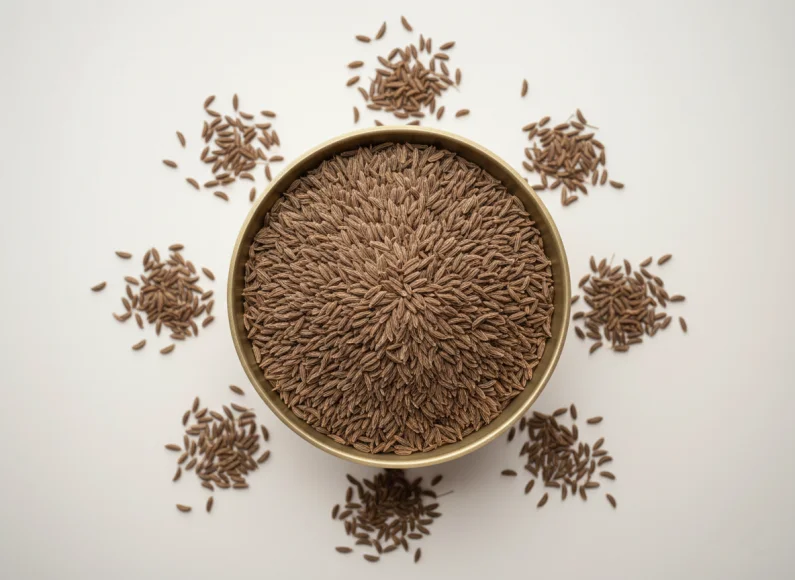
The "seeds" of caraway are in fact diachenes, dry fruits which split at maturity into two elongated, arched, dark-brown mericarps striped with 5 lighter ribs. Each mericarp measures 3 to 6 mm long. It is in the secretory canals between the ribs that the carvone-rich essential oil is concentrated.
Caraway, cumin, nigella: how to tell them apart visually
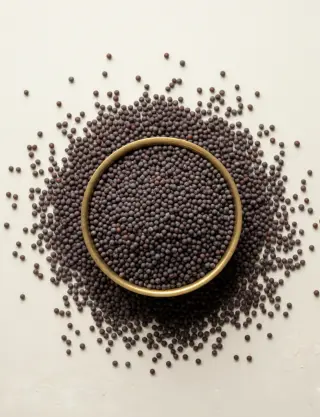
Caraway has arched, dark-brown seeds with 5 clear, well-defined ribs. Cumin (Cuminum cyminum) has more elongated seeds, lighter and more yellowish, with longitudinal striations and a warm, earthy fragrance. Nigella (Nigella sativa), sometimes also called "black cumin", has angular, black seeds with a peppery taste. These three spices, though frequently confused, belong to different botanical genera.
Caraway offers a unique aromatic profile, often described as a cross between anise, fennel and mint. Its olfactory signature is immediately recognisable: fresh, slightly sweet, with a camphoraceous edge and a discreet warmth in the background. It is d-carvone, its main compound, that gives it this distinctive aromatic identity.
| Aromatic note | Description |
|---|
| Top note | Fresh, anise-like, lightly citrusy (limonene) |
| Heart note | Sweet, warm, herbaceous, reminiscent of dill and fennel |
| Base note | Slightly earthy, peppery, persistent |
| On the palate | Anise-fresh, slight bitterness, mentholated and warm aftertaste |
Caraway vs cumin: two radically different profiles
| Criterion | Caraway (Carum carvi) | Cumin (Cuminum cyminum) |
|---|
| Main compound | d-carvone (50–65%) | Cuminaldehyde (25–35%) |
| Olfactory profile | Fresh, anise-like, mentholated | Warm, earthy, slightly smoky |
| Intensity | Delicate, subtle | Powerful, penetrating |
| Native cuisine | Central Europe, Scandinavia, Alsace | India, Middle East, Mexico |
| Interchangeable? | No. They are radically different despite the confusion of their names |
Chef's tip
To fully release caraway's aromas, lightly crush the seeds in a mortar or dry-toast them for 1 to 2 minutes in a hot pan before adding. Caraway releases its essential oils into fats: add it at the start of cooking to butter, lard or oil for maximum flavour. In sauerkraut or braised dishes, it can cook for a long time without becoming bitter.
Caraway is a spice deeply rooted in the culinary traditions of Central Europe, Scandinavia and North Africa. Its fresh, anise-like fragrance makes it a natural companion to cabbages, braised meats, strong cheeses, rye breads and spirits.
In Alsatian and Germanic cuisine
- Choucroute garnie: caraway is the indispensable spice of Alsatian sauerkraut; it perfumes the fermented cabbage and aids its digestion. Use 1 to 2 teaspoons per 1 kg of sauerkraut.
- Munster with caraway: in Alsace, Munster cheese is traditionally served with caraway seeds (locally called ''cumin''), a legendary pairing
- Savoury kugelhopf: the Alsatian savoury brioche with bacon and caraway, served as an aperitif
- Bibeleskäs: the Alsatian fresh cheese seasoned with caraway, shallots and chives
- Flammekueche: some Alsatian variants add caraway to the dough or topping
- Cured meats: sausages, knacks, smoked bacon. Caraway has accompanied Germanic charcuterie for centuries
- Kartoffelsalat: the German potato salad with caraway
In Scandinavian cuisine
- Aquavit: the Scandinavian spirit is traditionally flavoured with caraway, with its signature aroma completed by dill and fennel
- Rye bread (Finnish ruisleipä, Danish rugbrød): caraway seeds perfume the dough and the crust
- Gravlax: the Scandinavian cured salmon sometimes includes caraway
- Caraway cheeses: Norwegian Kuminost and Danish Havarti with caraway are classics
- Cabbage soup: caraway is systematically added to cabbage soups across Scandinavia
In Eastern European cuisine
- Hungarian goulash: alongside paprika, caraway is the foundational spice of goulash, bringing freshness and balance to this powerful stew
- Sauerkraut: the fermented cabbage of Central Europe, always perfumed with caraway
- Polish rye bread: caraway is omnipresent in Eastern European bread-making
- Beetroot soup (borscht): some traditional recipes include caraway
- Tvaroh / tvarůžky cheese: Czech cheeses flavoured with caraway
In North African cuisine
- Tunisian harissa: caraway is a traditional ingredient in many Tunisian harissas, lending a fresh note that balances the heat of the chillies
- Tabil: a Tunisian spice blend based on coriander, caraway, garlic and chilli
- Méchouia: the Tunisian grilled vegetable salad, scented with caraway
- Breads and flatbreads: caraway flavours traditional breads across the Maghreb
Sweet pairings and drinks
- Caraway seed cake: a traditional British pastry, popular in the Victorian era
- Kümmel: a Northern European liqueur flavoured with caraway, popular in Germany and the Netherlands
- Apple compote: a few caraway seeds in apple compote create a subtle and original pairing
- Biscuits and crackers: caraway seeds sprinkled on crackers are a classic Central European aperitif
Caraway has been used since antiquity as a digestive remedy. European, Ayurvedic and Arabic traditional medicines all consider it one of the best natural carminatives: plants that prevent and relieve intestinal gas and bloating.
The main active compound is d-carvone, a monoterpene that makes up 50 to 65% of caraway's essential oil. d-limonene (30 to 45%) rounds out the pharmacological profile with its own anti-inflammatory and gastroprotective properties.
Documented properties
- Carminative: caraway is one of the most effective carminatives in the European pharmacopoeia. Carvone relaxes the smooth muscle of the digestive tract, prevents spasms and helps expel gas. This is why it traditionally accompanies fermentable foods (cabbage, sauerkraut, pulses).
- Antispasmodic: carvone inhibits the involuntary contractions of the smooth intestinal muscles, relieving cramps and colic; in Germany, caraway water (Kümmelwasser) is a classic remedy for infant colic
- Digestive: stimulates the secretion of gastric juices, bile and pancreatic enzymes, helping to digest heavy and fatty meals
- Antibacterial: caraway essential oil shows activity against Helicobacter pylori, Escherichia coli and Staphylococcus aureus
- Antifungal: efficacy demonstrated against Candida albicans and several food moulds
- Anti-inflammatory: carvone and limonene inhibit the production of pro-inflammatory mediators
- Galactagogue: in traditional European and Arabic medicine, caraway infusions are recommended to stimulate milk production
- Antioxidant: the phenolic compounds in caraway protect cells from oxidative stress
Why caraway always accompanies cabbage
The caraway-cabbage pairing is no culinary accident; it is a piece of empirical wisdom millennia old. Cabbage and sauerkraut produce gas during intestinal fermentation. Carvone relaxes the intestinal muscles and prevents bloating. The same principle is why caraway accompanies strong cheeses and fatty meats in Germanic cuisines: it helps digest heavy foods.
Precautions of use
Caraway essential oil, which is highly concentrated, is not recommended for pregnant women, children under 3 years old or people with liver disorders. In normal culinary use (whole or ground seeds), caraway poses no known risk. People allergic to Apiaceae (celery, carrot, fennel, dill) may show a cross-sensitivity.
Nutritional values (per 1 tablespoon / 6 g of caraway seeds)
| Component | Content |
|---|
| d-carvone | 50 to 65% of the essential oil |
| d-limonene | 30 to 45% of the essential oil |
| Total essential oil | 3 to 7% of the dry weight |
| Vitamins | A, C, E, B1, B2, B3, B6 |
| Minerals | Iron, calcium, magnesium, phosphorus, potassium, zinc |
| Fibre | ~2.3 g |
| Calories | ~22 kcal |
How to recognise good caraway
- Colour: uniform dark brown with clearly marked lighter ribs; greyish or discoloured seeds indicate ageing
- Shape: arched, elongated seeds (3 to 6 mm), with 5 distinct longitudinal ribs. Avoid batches containing many broken seeds or dust.
- Aroma: a fresh, anise-like and slightly mentholated fragrance when rubbed between the fingers: if the odour is faint or rancid, the seeds are too old
- Taste: a fresh, slightly sweet flavour with a camphoraceous edge and a warm aftertaste. A flat or bitter taste indicates degradation of the essential oils.
- Origin: favour European seeds (Netherlands, Germany, Poland, Finland) for their higher carvone content
Storage tips
- Store whole seeds in an airtight glass jar, away from direct light, heat and moisture
- Grind only at the time of use, as essential oils evaporate rapidly after grinding
- Optimal shelf life: 2 to 3 years as whole seeds; 3 to 6 months once ground
- Store at room temperature (18 to 22°C); do not refrigerate, as fridge moisture degrades the aromas
- Signs of degradation: weakened aroma, dull colour, flat taste without the characteristic freshness
What is the difference between caraway and cumin?
These are two completely different spices despite the frequent French confusion (caraway is sometimes called ''cumin des prés''). Caraway (Carum carvi) is dominated by carvone, with a fresh, anise-like and mentholated profile. Cumin (Cuminum cyminum) contains cuminaldehyde, with a warm, earthy and slightly smoky profile. They are not interchangeable in cooking.
Can caraway be replaced with cumin in a recipe?
No, the two spices have radically different aromatic profiles. Substituting cumin for caraway in a sauerkraut or a goulash will give a result far removed from the original recipe. If you don't have caraway, a mix of fennel and dill seeds will come closer than cumin.
Why is caraway put in sauerkraut?
Caraway traditionally accompanies sauerkraut for two reasons: taste (its fresh, anise-like fragrance balances the acidity of fermented cabbage) and digestion (carvone is a powerful carminative that prevents bloating caused by the intestinal fermentation of cabbage). It is an empirical pairing validated by centuries of use.
Is caraway the same as black cumin (nigella)?
No. Caraway (Carum carvi), cumin (Cuminum cyminum) and nigella or black cumin (Nigella sativa) are three entirely distinct spices from different botanical families. The confusion comes from popular names and rough translations between languages. Nigella has a peppery, slightly bitter taste, unrelated to caraway's anise-like profile.
How do you use caraway with Munster?
Traditionally in Alsace, aged Munster is served with caraway seeds on the side in a small dish. Each diner sprinkles some on their portion to taste. The seeds can be lightly crushed in a mortar to release more aroma. The pairing works because caraway's freshness balances the cheese's power.
Does caraway grow in France?
Yes, caraway grows naturally in France, particularly in the mountain meadows of the Vosges, the Alps and the Massif Central, where it is sometimes called ''anis des Vosges''. It can also be grown in a home garden; it is a biennial plant that flowers and produces seeds in the second year. It prefers well-drained soils and full sun.




 Rice
Rice