Cumin (Cuminum cyminum) is one of the oldest spices cultivated by humankind. Cumin seeds have been found at archaeological sites in Syria dating back more than 4,000 years BCE. Ancient Egypt used it in multiple ways: as a culinary spice, an embalming ingredient and a funerary offering. Cumin seeds have been discovered in pharaonic tombs, notably from the New Kingdom period.
Cumin is mentioned in the Bible: in the book of Isaiah (28:25-27), the prophet describes the threshing techniques used for cumin, and in the Gospel of Matthew (23:23), Jesus reproaches the Pharisees for scrupulously tithing cumin while neglecting justice. This biblical mention testifies to the spice's considerable value in antiquity.
Cumin, trade currency and symbol of fidelity
In ancient Rome, cumin had a double reputation. The Romans used it as a daily condiment but also as a symbol of stinginess: a miser was called a cumini sector ('cumin splitter'). Pliny the Elder reports that students consumed it to look pale and convince their teachers they had been studying all night. In the Middle Ages, in certain regions of Europe, cumin symbolised marital fidelity: soldiers took with them cumin bread offered by their wives.
The ancient Greeks kept cumin on the table as we keep salt and pepper today. Hippocrates recommended it as a digestive remedy. The Arab physician Ibn al-Baitar (13th century) devoted a long passage to it in his Treatise on Simples, praising its carminative and stomachic properties.
It was via the Arab trade routes that cumin spread to India, where it became absolutely indispensable. Ayurveda calls it jeeraka, literally 'the one that helps digestion', and incorporates it into countless medicinal preparations. The Spanish brought it to the New World in the 16th century, where it became a pillar of Mexican and Tex-Mex cuisine.
Today, India dominates the global cumin market, producing about 70% of the world's supply, mostly in the state of Rajasthan. Cumin is the second most consumed spice in the world after black pepper.
Did you know?
- Cumin is the second most consumed spice in the world after black pepper
- Cumin seeds have been found in pharaonic tombs dating back more than 3,000 years
- In ancient Rome, a miser was nicknamed a cumini sector, a 'cumin splitter'
- Cumin is mentioned twice in the Bible (Isaiah and Matthew)
- India produces and consumes around 70% of the world's cumin
- Cumin and caraway are often confused, but they are two distinct botanical species (Cuminum cyminum vs Carum carvi)
- In India, cumin water (jeera pani) is the most widespread folk digestive remedy
- Cumin contains more iron per gram than calf's liver
Cumin across languages
| Language | Name |
|---|
| French | Cumin |
| Hindi | Jeera (जीरा) |
| Sanskrit | Jeeraka (जीरक), 'the digester' |
| Tamil | Jeerakam (சீரகம்) |
| Malayalam (Kerala) | Jeerakam (ജീരകം) |
| Arabic | Kammun (كمون) |
| English | Cumin |
| Spanish | Comino |
| German | Kreuzkümmel |
| Turkish | Kimyon |
| Botanical Latin | Cuminum cyminum L. |
The French word 'cumin' comes from the Latin cuminum, itself borrowed from the Greek kyminon, which derives from the Akkadian kamūnu. German clearly distinguishes cumin (Kreuzkümmel, literally 'cross caraway') from caraway (Kümmel), a distinction French does not always make, a frequent source of confusion. In India, the name jeera is so closely associated with everyday cooking that it has become a synonym for basic seasoning.
| Characteristic | Detail |
|---|
| Latin name | Cuminum cyminum L. |
| Botanical family | Apiaceae, the same family as parsley, carrot and fennel |
| Local names | Jeera (Hindi) / Jeerakam (Malayalam, Tamil) |
| Part used | Dried seeds (dry fruits, technically mericarps) |
| Key compound | Cuminaldehyde (25 to 35% of the essential oil) |
| Main varieties | White cumin (common), black cumin (Kala jeera / Bunium persicum) |
| Harvest | February to April (Rajasthan), 100 to 120 days after sowing |
| Yield | 400 to 650 kg per hectare depending on conditions |
Cumin is an annual herbaceous plant that thrives in semi-arid, hot climates. Unlike tropical spices that require humidity and shade, cumin needs intense sunshine, heat and well-drained soil. It is a plant of dry terroirs: the best harvests come from regions with moderate rainfall.
India is by far the leading producer worldwide, accounting for about 70% of global output. Within India, Rajasthan dominates, followed by Gujarat. The districts of Jodhpur, Barmer, Jaisalmer and Nagaur in Rajasthan form the heart of India's 'cumin belt'.
The terroir that makes the difference
- Semi-arid climate: cumin needs 300 to 600 mm of rain per year; too much moisture causes fungal diseases
- Temperatures of 25 to 30 °C during growth, with cool nights (10 to 15 °C) during ripening
- Sandy to sandy-loam soil, well drained, slightly alkaline (pH 7 to 8)
- Intense sunshine: the plant requires a minimum of 10 to 12 hours of daylight
- Moderate altitude: 200 to 800 metres in Rajasthan, up to 2,000 metres in certain Iranian regions
| Producing country | Production / Characteristics |
|---|
| India (Rajasthan, Gujarat) | ~70% of world production, number one in quality and volume |
| Syria | Historical terroir of origin, reduced production due to conflict |
| Turkey | High-quality cumin, significant exports |
| Iran | Black cumin (Bunium persicum), a rare and highly aromatic variety |
| Egypt | Ancient production, Nile cumin |
| Mexico | Growing production for the North American market |
Botany
Cumin (Cuminum cyminum) is an annual herbaceous plant in the Apiaceae family, the same as parsley, carrot, fennel and coriander. The plant reaches 30 to 50 cm in height, with fine, branching stems carrying highly divided, thread-like leaves.
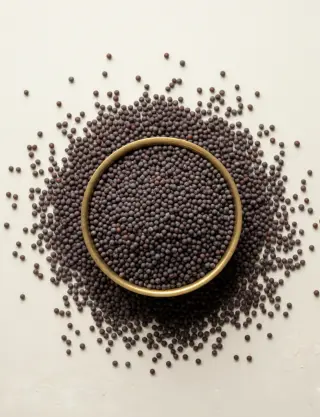
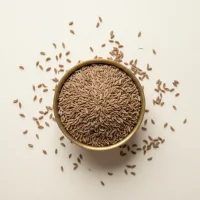
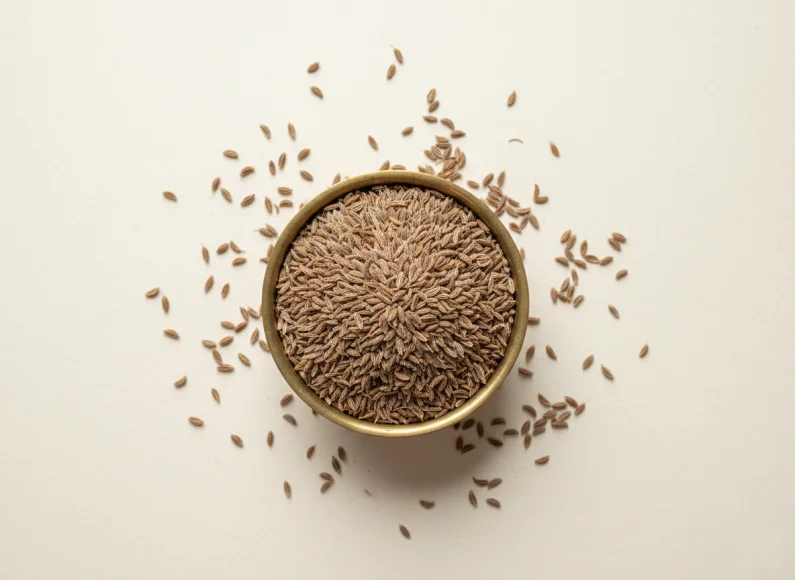
The flowers, small and white to pinkish, appear in umbels: the parasol-shaped inflorescences typical of the Apiaceae. The seeds (technically mericarps, i.e. dry half-fruits) are oblong, slightly curved, marked with longitudinal ridges, and measure 4 to 6 mm in length.
Do not confuse cumin with caraway
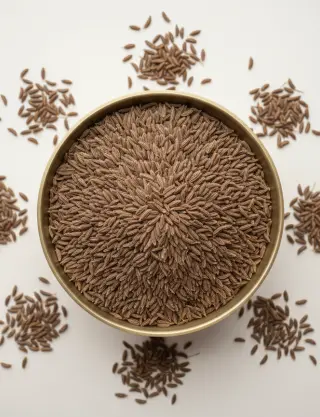
Cumin (Cuminum cyminum) and caraway (Carum carvi) are two distinct species in the same family. Their seeds look similar but their aromatic profiles are very different. Cumin is warm, earthy and smoky; caraway is fresher, anise-like and mentholated. In Alsace, the 'cumin' of traditional recipes actually refers to caraway. Indian black cumin (Bunium persicum, kala jeera) is yet another species, with a more delicate and complex perfume.
Cumin has a powerful and immediately recognisable aromatic profile: warm, earthy, slightly smoky, with hints of toasted hazelnut and a touch of bitterness on the finish. It is a spice of character that leaves its imprint on dishes. The compound responsible for this distinctive aroma is cuminaldehyde, which accounts for 25 to 35% of the essential oil.
| Form | Aromatic profile |
|---|
| Whole raw seeds | Discreet aroma, earthy and vegetal notes, slight bitterness. The aromatic potential is dormant. |
| Dry-roasted seeds | Spectacular transformation: warm, smoky aroma, toasted hazelnut, earthy depth. Dry-roasting releases the aromatic compounds and reduces bitterness. |
| Seeds in tadka (hot oil) | Instant aromatic explosion: intense smoky, woody notes of toasted bread. The oil captures and spreads the fat-soluble aromas throughout the dish. |
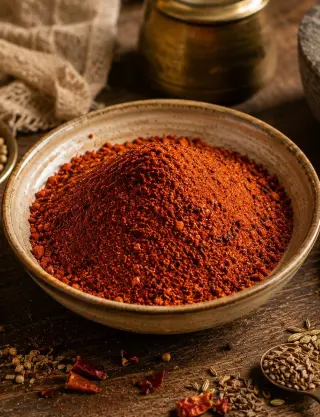
| Ground cumin | Immediate, intense aroma that fades quickly. Earthy notes dominate, with enveloping warmth and a slight sharpness. |
| Black cumin (kala jeera) | More delicate and complex than white cumin: notes of soft smoke, mushroom, truffle, with unusual elegance. |
Chef's tip
Always dry-roast your cumin seeds in a hot pan for 1 to 2 minutes before grinding them: the aroma is multiplied tenfold. The seeds should brown slightly and give off a fragrance of toasted hazelnut. Take care: a few seconds too long and cumin turns bitter. Remove from the heat as soon as the fragrance rises. For an exceptional ground cumin, dry-roast and crush in the mortar just before use.
Cumin is a fundamental spice in at least three great world culinary traditions: Indian, Mexican and North African. Its versatility is remarkable: it works equally well in vegetarian dishes, meats, pulses, cheeses and even certain pastries.
In Indian cuisine
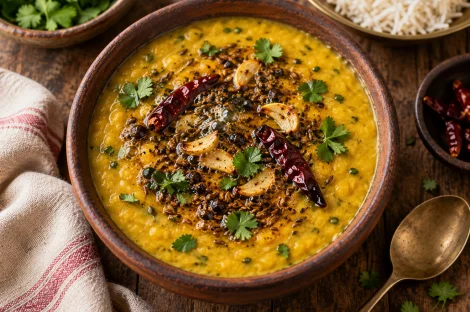
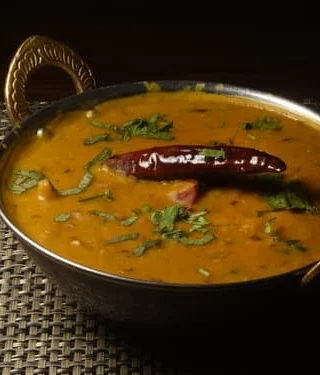
- In tadka (tempering): the most emblematic technique: cumin seeds poured into hot ghee or oil crackle within seconds and perfume the entire base of the dish (dal, curry, rice)
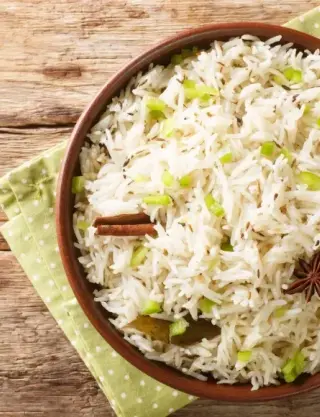
- Jeera rice: basmati rice perfumed with cumin tempered in ghee, the most popular accompaniment in northern India
- In masalas: a central component of Garam Masala, panch phoron (Bengali) and most Indian spice blends
- Jeera pani / Jaljeera: a refreshing digestive drink made of water, roasted cumin, mint and lemon, the folk remedy par excellence
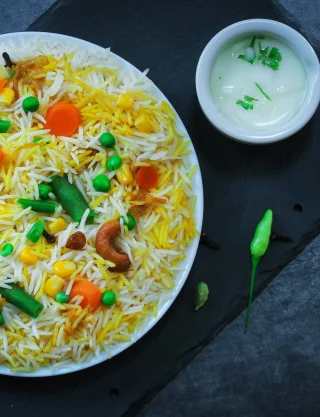
- Cumin raita: yoghurt with roasted cumin, a classic accompaniment to biryanis and spicy dishes
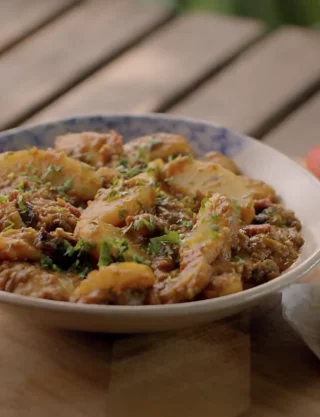
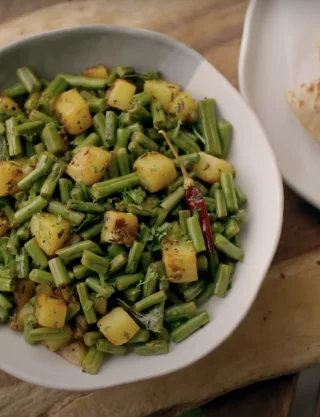
- Aloo jeera: sautéed potatoes with cumin, an everyday dish in millions of Indian homes
In Mexican and Tex-Mex cuisine
- Chili con carne: cumin is the signature spice, alongside chilli: no authentic chili without cumin
- Tacos and burritos: in the seasoning of ground meats and beans
- Guacamole: a pinch of cumin enhances the aromatic profile of avocado
- Enchiladas: in both the red sauce and the filling
In North African and Middle Eastern cuisine
- Couscous: an essential spice in the vegetable broth and the meat
- Merguez: cumin, along with chilli and coriander, is the key spice in this sausage
- Ras el hanout: cumin features in the composition of this emblematic blend
- Harira: the traditional Moroccan Ramadan soup is perfumed with cumin
- Falafel and hummus: cumin gives these Levantine classics their distinctive character
- Kefta: meatballs spiced with cumin and coriander
In European cuisine
- Dutch cheeses: cumin Gouda (komijnekaas) is a centuries-old Dutch tradition
- Cumin Munster: a classic Alsatian pairing (technically with caraway, but cumin also works)
- Cumin bread: a baking tradition of Central Europe and the Middle East
- Pulses: lentils, chickpeas, beans: cumin elevates all pulses
Cumin is one of the most thoroughly documented medicinal plants in traditional pharmacopoeias. Ayurveda ranks it among the most beneficial spices for digestion: its Sanskrit name, jeeraka, literally means 'the one that helps digestion'. Traditional Arab medicine (Tibb-e-Unani) and traditional Chinese medicine have also used it for centuries.
The main active compound is cuminaldehyde (4-isopropylbenzaldehyde), which accounts for 25 to 35% of the essential oil and is responsible for most of cumin's therapeutic properties.
Documented properties
- Digestive: stimulates the secretion of pancreatic enzymes and bile: recommended for bloating, gas, heaviness of the stomach and dyspepsia. Cumin water (jeera pani) is the most popular home digestive remedy in India
- Rich in iron: cumin contains around 66 mg of iron per 100 g; a single teaspoon (2 g) provides more than 1.3 mg of iron, about 7% of the recommended daily intake. Particularly useful in vegetarian diets
- Anti-diabetic: several clinical studies have shown a significant reduction in fasting blood glucose and glycated haemoglobin (HbA1c) in type 2 diabetic patients who regularly consume cumin
- Lipid-lowering: studies have demonstrated a reduction in total cholesterol and triglycerides in subjects consuming 3 g of cumin per day for 8 weeks
- Antioxidant: the phenolic compounds in cumin (apigenin, luteolin) neutralise free radicals
- Antimicrobial: cuminaldehyde shows antibacterial and antifungal activity demonstrated in vitro
- Galactagogue: traditionally used in India to stimulate lactation in breastfeeding women
- Weight loss: a clinical study (2014) showed that supplementation of 3 g of cumin per day for 3 months significantly reduced body weight, BMI and waist circumference in overweight women
Precautions for use
Cumin is considered very safe at culinary doses. At very high doses (concentrated essential oil), it may have photosensitising effects. Not advised in large therapeutic quantities during pregnancy (potential emmenagogue effect). People undergoing anti-diabetic treatment should monitor their blood glucose if consuming large amounts.
Nutritional values (per 1 tablespoon / 6 g)
| Component | Content |
|---|
| Cuminaldehyde | 25 to 35% of the essential oil |
| Essential oil | 2 to 5% (cuminaldehyde, cymene, terpineol) |
| Iron | ~4 mg (22% of RDI) |
| Manganese | ~0.2 mg (10% of RDI) |
| Calcium | ~56 mg |
| Magnesium | ~22 mg |
| Vitamins | A, C, E, B1, B6 |
| Fibre | ~0.6 g |
| Protein | ~1.1 g |
| Calories | ~22 kcal |
How to recognise good cumin
- Colour: seeds of a uniform greenish-brown: a brown that is too dark, or discoloured seeds, suggests prolonged storage or poor drying
- Aroma: fresh cumin releases a warm, earthy and clearly aromatic perfume as soon as the pouch is opened: if the aroma is faint or rancid, the seeds are old
- Shape: oblong, whole, unbroken seeds with fine longitudinal ridges
- Cleanliness: no dust, foreign seeds or stem debris, a sign of careful sorting
- Stated origin: a serious supplier always specifies the provenance (India, Rajasthan, Gujarat)
- Whole seeds: always prefer whole seeds to pre-ground cumin, which quickly loses its aromas
Storage advice
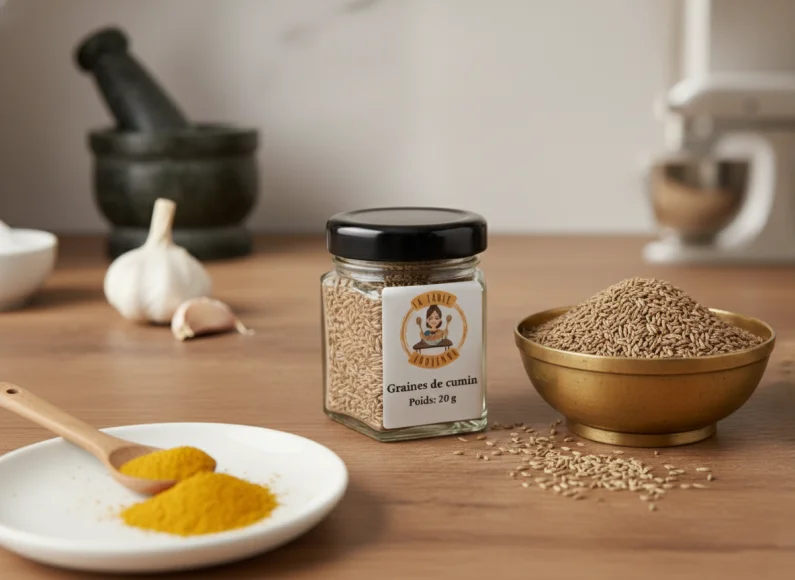
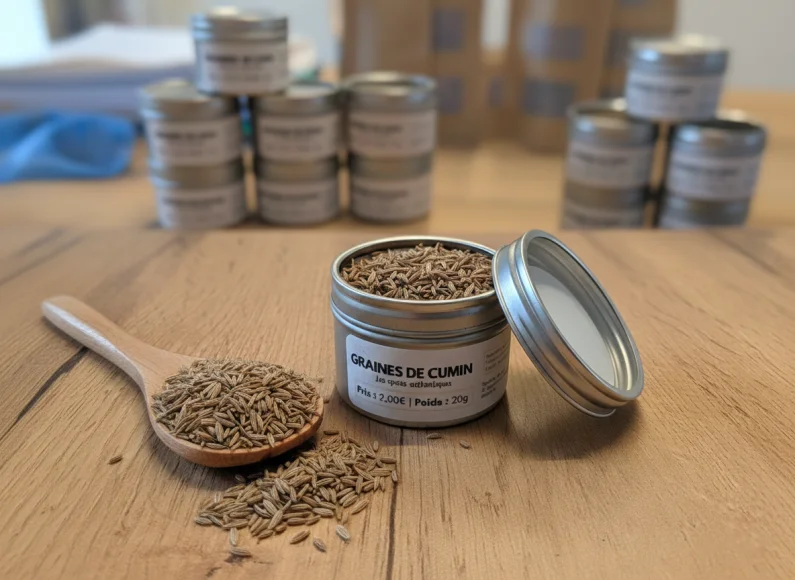
- Store whole seeds in an airtight glass jar, away from light, heat and moisture
- Do not store above the stove: heat and steam degrade the essential oils
- Optimal shelf life: 1 to 2 years for whole seeds; 3 to 6 months at most once ground
- Dry-roast and grind only the quantity needed, just before use, for maximum aroma
- Signs of decline: weakened aroma, a flat and dusty taste, loss of the characteristic smoky note
Storage tip
To extend the shelf life of ground cumin, you can keep it in the refrigerator in an airtight container. Whole seeds, on the other hand, keep very well at room temperature. If you do not use ground cumin often, it is better to buy whole seeds and dry-roast and grind them as needed.
What is the difference between cumin and caraway?
Cumin (Cuminum cyminum) and caraway (Carum carvi) are two distinct species in the Apiaceae family. Their seeds look similar but their aromas are very different: cumin is warm, earthy and smoky, while caraway is fresher, anise-like and mentholated. In Alsace and Central Europe, the word 'cumin' often refers to caraway in traditional recipes, which keeps the confusion alive.
Should cumin be dry-roasted before use?
Dry-roasting is not mandatory, but it is strongly recommended. It transforms the aromatic profile: the seeds shift from green and bitter notes to warm, smoky, toasted-hazelnut notes. Heat the seeds in a dry pan over medium heat for 1 to 2 minutes, until they brown slightly and release their fragrance.
Is cumin good for digestion?
Yes, it is one of cumin's best-documented properties. It stimulates the secretion of digestive enzymes and bile, relieving bloating, gas and heaviness of the stomach. In India, cumin water (jeera pani), an infusion of cumin seeds in hot water, is the most popular home digestive remedy, used daily by millions of people.
Does cumin really contain a lot of iron?
Yes, cumin is exceptionally rich in iron: around 66 mg per 100 g. A single teaspoon (2 g) provides about 1.3 mg of iron, or 7% of the recommended daily intake. It is a particularly valuable source of iron in vegetarian diets. Paired with vitamin C (lemon, tomato), its absorption is enhanced further.
How do you use cumin in tadka?
Tadka (tempering) is the Indian technique that makes cumin shine. Heat ghee or oil in a small pan until very hot. Add a teaspoon of cumin seeds: they should crackle immediately. After 10 to 15 seconds, when they brown, pour the lot over your dal, curry or vegetables. The hot oil captures and spreads the fat-soluble aromas throughout the dish.








 Drinks