Unlike ground coriander (a relatively recent product of industrial spice processing), the whole seed is the form in which this plant was consumed for almost the whole of its history. Before mechanical mills existed, every household, from Mesopotamia to India, toasted and ground its own seeds just before cooking. It is this age-old practice, far more than shop-bought powder, that we set out to revive.
Assyrian cuneiform tablets dating to the 7th century BCE already mention coriander among the plants grown in the royal gardens of Nineveh. The Romans, meanwhile, discovered a use specific to whole seeds: meat preservation. In his Natural History, Pliny the Elder describes a method of rubbing meat with crushed whole coriander seeds and vinegar to preserve it for several days in hot climates: a use impossible to replicate with powder, which loses its preservative power almost as soon as it is milled.
The seeds that travelled the caravan routes
On the trade routes linking Arabia to India, whole coriander seeds had a decisive advantage over powder: their intact husk protected them from moisture, oxidation and insects during months of travel by camel caravan. Merchants therefore never carried ground coriander: only whole seeds, milled on arrival, as needed. This trading logic, more than two thousand years old, remains strikingly relevant today: it is exactly why it still pays to buy your spices whole.
In India, this habit never disappeared. In traditional home cooking, shop-bought coriander powder is treated as a last resort: cooks who care about the quality of their masalas keep a jar of whole seeds and a small grinder, toasting and grinding their dhania as the week's needs arise. It is this practice (not simple gourmet refinement) that explains why "old-fashioned" curries smell so different from industrial ones.
Did you know?
- Whole coriander seeds are alive: unlike powder, they can germinate and grow into a coriander plant if you sow them: a natural freshness indicator no powder can offer
- Each seed is technically a schizocarp: a fused double fruit that splits into two mericarps when crushed, each holding its own pocket of essential oil
- Belgian witbier brewers never use ground coriander, only lightly cracked seeds: powder clouds the beer and releases its aroma too quickly during brewing
- In Indian pickles (achar), whole or coarsely crushed seeds are always used: powder clouds the brine and shortens the jar's shelf life
- A well-dried coriander seed can keep its essential oil intact for 2 to 3 years, against just a few weeks for the equivalent powder
- The name "coriander" is thought to come from the Greek koris (bedbug), referring to the smell of the fresh plant, but the dried, toasted seed has nothing in common with that green smell; it develops warm, nutty notes instead
Whole seeds or powder: what the names tell us
| Language | Whole seeds | Powder |
|---|
| Hindi | Sabut Dhania (साबुत धनिया) | Dhania Powder / Pisa Dhania |
| English | Coriander seeds | Ground coriander |
| French | Graines de coriandre | Coriandre en poudre |
| Spanish | Semillas de cilantro | Cilantro molido |
| German | Koriandersamen | Gemahlener Koriander |
| Botanical Latin | Coriandrum sativum L. (dried fruit) |
It is striking that almost every language draws a clear lexical line between the whole seed and the powder: a sign that this difference is far from trivial to cooks the world over.
| Characteristic | Detail |
|---|
| Latin name | Coriandrum sativum L. |
| Botanical family | Apiaceae, the same family as cumin, fennel and parsley |
| Hindi name | Sabut Dhania (साबुत धनिया) |
| Part used | Whole dried fruit (schizocarp, commonly called a "seed") |
| Diameter | 3 to 5 mm, spherical, ridged surface |
| Key compounds | Linalool (60 to 80%), geranyl acetate, decanal |
| Harvest | February to April, when the umbels turn brown and dry on the plant |
| Growing regions | Rajasthan, Madhya Pradesh, Gujarat (India) |
Coriander is an annual herbaceous plant that thrives in dry, sunny climates. Rajasthan and Madhya Pradesh account for most of India's production, offering ideal conditions: mild winters, well-drained sandy-loam soils and low rainfall while the fruit matures, essential for optimal natural drying on the plant.
Harvest timing is critical to the quality of whole seeds: too early, and the fruit is immature and low in essential oil; too late, and it splits open, scattering the seeds on the ground. Growers cut the umbels once around 80% of the fruit has browned, then leave them to dry in bundles in the shade before threshing: a step that preserves the husk's integrity, and with it the aroma.
Why origin matters for whole seeds
Unlike powder, where origin is diluted by industrial milling, a whole seed still carries the mark of its terroir: its size, colour and essential-oil content vary noticeably with region and drying skill. We favour suppliers that grow without pesticides, and who can guarantee slow drying and careful hand-sorting.
It is in the aromatic profile that whole seeds most clearly outshine shop-bought powder. An intact coriander seed is a sealed capsule: its fibrous husk keeps the volatile essential oil (dominated by linalool) safe from air and light. The moment it is ground, its surface area exposed to oxygen multiplies several hundredfold, and the most delicate aromatic compounds evaporate within weeks. It is a simple physical fact, but its consequences in the kitchen are considerable.
| Form | Aromatic profile |
|---|
| Raw whole seed | Faint, sealed-in aroma, barely perceptible; the potential is intact but dormant |
| Toasted whole seed | Clear transformation: warm, roasted-nutty, slightly floral notes; heat releases and develops the linalool |
| Freshly ground (after toasting) | Maximum aromatic burst: lemony, floral, warm; at its peak in the minutes right after grinding |
| Shop-bought powder (several weeks/months old) | Flat, dusty aroma, often more bitter than floral; the finest volatile compounds have already vanished |
The three-step technique
- 1. Dry-toast: pour the whole seeds into a dry pan over medium heat, no fat. Stir or shake the pan continuously for 1 to 2 minutes, until they turn very lightly brown and a clear roasted-nutty aroma appears.
- 2. Let them cool briefly: grinding still-hot seeds creates steam that clumps the powder in the grinder: wait a minute or two off the heat.
- 3. Grind at the last moment: in a mortar for full control over texture, or in an electric spice grinder for a fine, even powder. Prepare only what today's dish needs: that is the whole point.
Chef's Tip
Never toast more seeds than you will grind within the hour: once heated, seeds start losing their aroma almost immediately, just like powder does. Toasting should always immediately precede grinding, never come days ahead of it.
This rediscovered freshness genuinely changes a dish's character: a curry made with freshly toasted, freshly ground coriander has a depth and complexity that even the best shop-bought powder cannot match, simply because it has not had time to lose its most volatile compounds.
Whole coriander seeds work everywhere powder does (with a clear aromatic edge once you toast and grind them yourself), but they also have uses entirely their own, impossible to replicate with pre-ground powder.
Home-ground, just before use
- The base of your own masalas: build your own garam masala by toasting and grinding your coriander seeds with cumin and other whole spices: the result bears no resemblance to an industrial blend
- In curries: added as freshly ground powder after the onions, alongside turmeric, it forms the aromatic base of most Indian curries
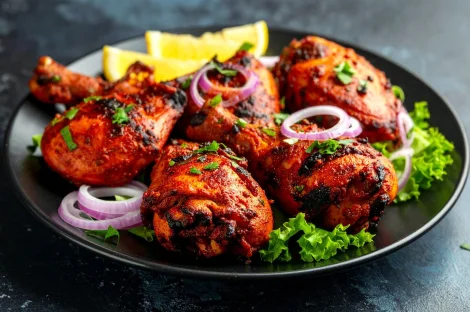
- In grilling marinades: tandoori, tikka, kebabs; freshly ground powder penetrates the meat better and develops a sharper aroma than an older one
Used whole or cracked, with no grinding at all
- In Indian pickles (achar): whole or coarsely crushed in a mortar; never powdered, which would cloud the brine and shorten the jar's shelf life
- In vegetable pickles and gherkins: dropped whole into hot vinegar, they infuse their fragrance without leaving a cloudy residue
- In tempering (tadka): a few whole seeds sizzled for seconds in hot oil or ghee before the other ingredients are added
- In some South Indian rice dishes: toasted whole seeds added as is, for a crunchy texture and a distinct burst of flavour in every bite
- In charcuterie: traditional French dry sausage uses whole or cracked seeds, never powder, for a flavour that unfolds gradually as you eat
- In witbier: brewers use only lightly cracked seeds, never ground, to avoid clouding the beer
Use shop-bought powder when you're short on time. But whenever you can spare it (even three minutes is enough), reach for whole seeds, toasted and freshly ground: the aromatic difference is noticeable from the very first bite, especially in dals, curries and masalas where coriander plays a leading role.
In Ayurveda, whole coriander (not powder) is traditionally used to prepare dhania jal (coriander water), a decoction made by steeping whole seeds in hot water and then straining the liquid. It is precisely because whole seeds release their compounds gradually into the water, unlike powder which would disperse instantly, that the whole form is preferred for this traditional preparation.
What tradition reports
- Digestive comfort: in Ayurveda, a decoction of whole coriander seeds (dhania jal) is traditionally drunk to support digestion after a heavy meal
- Freshness: toasted whole seeds, chewed after a meal, are used in some parts of India as a natural breath freshener
- Fibre content: the fibrous husk of the whole seed, unlike fine powder, provides a small amount of extra dietary fibre
Usage note
These uses belong to culinary and Ayurvedic tradition, not to medicinal use. Coriander seeds do not replace any treatment or medical advice. Consumed in ordinary culinary quantities, they are considered safe for most people.
How to recognise good whole coriander seeds
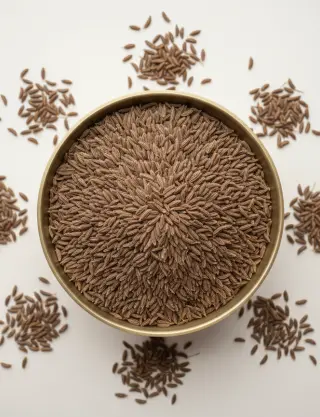
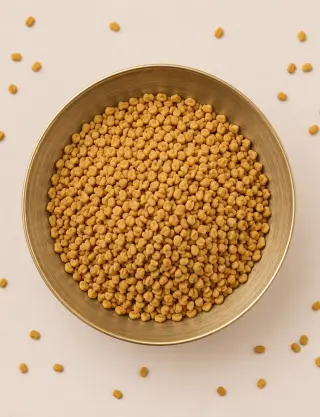
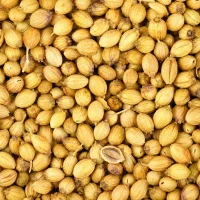
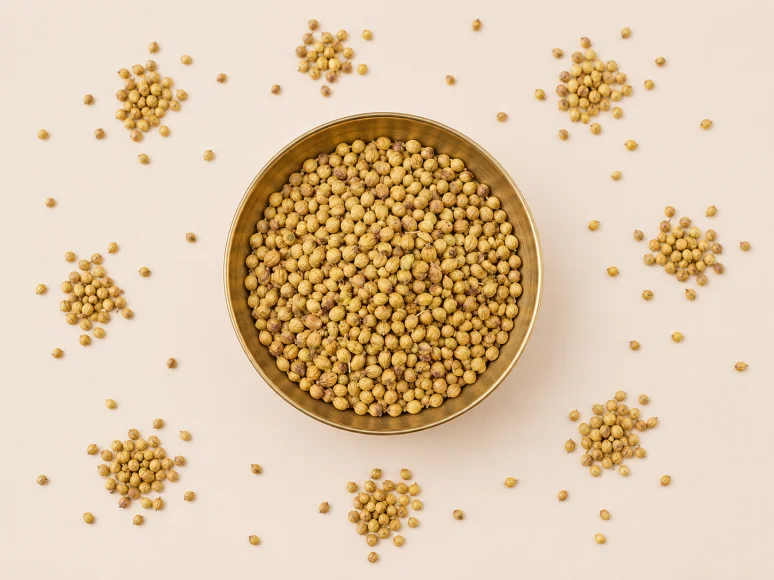
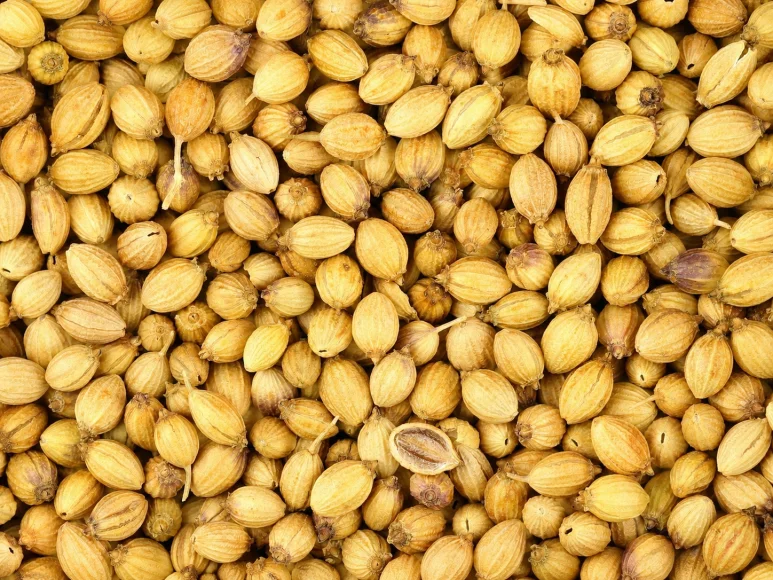
- Colour: uniform light beige to greenish-brown; grey or mottled seeds signal excessive storage time or exposure to moisture
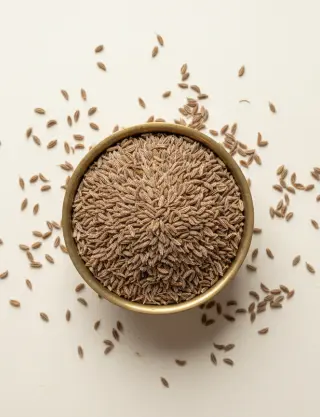
- Shape: regular 3 to 5 mm spheres, with fine, visible longitudinal ridges, not crushed
- Aroma when rubbed: rub a few seeds between your fingers; a lemony, slightly floral scent should appear immediately; a faint or absent smell points to old seeds
- Freshness test: a truly fresh seed still feels dense and full; if it sounds hollow or crumbles too easily under light pressure, its essential oil has already partly evaporated
- Cleanliness: no dust, stems or broken seeds; a sign of careful hand-sorting
Storage tips
- Always store the seeds whole, in an airtight glass jar, away from light and heat
- Toast and grind only what today's or this week's dish needs: never ahead of time
- Shelf life: 2 to 3 years for well-stored whole seeds, against just 3 to 6 months once ground
- Avoid storing above the stove: heat and steam speed up essential-oil loss through the husk
Zero-waste tip
If you already have coriander powder that's been open for months, don't throw it out: save it for long-simmered dishes (dals, sauces), where extended cooking partly makes up for lost aroma. For uses where freshness is felt instantly (tadka, quick marinades, finishing touches), rely only on freshly ground whole seeds.
What's the difference between whole coriander seeds and ground coriander?
The difference is mainly one of aromatic freshness. A whole seed keeps its essential oil protected by its husk for 2 to 3 years, whereas powder loses its most volatile compounds within weeks of milling, due to its hugely increased surface contact with air. Whole seeds also enable specific uses (tempering, pickles, charcuterie) where powder simply doesn't work.
Do I really need to toast coriander seeds before grinding them?
It isn't essential, but it's strongly recommended. Dry-toasting for 1 to 2 minutes over medium heat in a pan with no fat develops warm, roasted-nutty notes that raw seeds lack. Let them cool briefly before grinding, so steam doesn't clump the powder.
How long do whole coriander seeds keep?
Stored well in an airtight jar, away from light and heat, whole coriander seeds keep their full aromatic potential for 2 to 3 years. Once toasted and ground, however, they stay fresh for only 3 to 6 months, which is why it pays to grind only at the last moment.
Can whole coriander seeds be used without grinding them?
Yes, and for some uses it's essential: tempering (tadka), Indian pickles, vegetable marinades, charcuterie, or Belgian witbier. In these preparations, the whole or lightly cracked seed infuses its fragrance without clouding the liquid or leaving sediment, unlike powder.
How can I tell if my coriander seeds are still fresh?
Rub a few seeds between your fingers: a lemony, slightly floral scent should appear immediately. If the smell is faint or absent, or if the seeds crumble unusually easily and sound hollow, their essential oil has largely evaporated and it's time to replace them.








 Appetizers