Turmeric is one of humanity's oldest spices. The earliest Vedic texts, composed in Sanskrit more than 4,000 years ago, already mention turmeric under the name haridra: "the one that gives the golden colour". In the Atharva Veda, one of the four foundational texts of Hinduism, turmeric is prescribed as a remedy for jaundice, skin conditions and snakebites.
Long before it was a culinary spice, turmeric was a dye, a medicine and a sacred symbol. Hindu priests used it to dye their saffron-coloured robes, a tradition that continues today. In Kerala wedding ceremonies, the haldi ceremony (the application of turmeric paste to the face and body of the bride and groom) is an essential ritual, a symbol of purification and auspiciousness.
The yellow gold of the spice route
Arab merchants, who dominated the spice trade long before the Europeans, nicknamed turmeric kurkum: the direct origin of the French word "curcuma". They were exporting golden powder from Kerala to Persia, Egypt and Rome as early as the first century CE. Marco Polo, encountering turmeric in China in the 13th century, described it as "a vegetable which has all the properties of saffron, the smell as well as the colour, and yet it is not saffron".
In Ayurveda, turmeric has held a central place for millennia. The Charaka Samhita, one of the oldest medical treatises in the world (around 300 BCE), recommends it for more than 50 different conditions. It is considered a tridoshic plant, beneficial to all three constitutions (Vata, Pitta, Kapha), which is exceptionally rare in the Ayurvedic pharmacopoeia.
In Kerala, turmeric is inseparable from Siddha medicine and the local Ayurvedic tradition. The state is home to some of the oldest Ayurvedic centres in the world, where turmeric is part of hundreds of medicinal formulations. Freshly ground turmeric powder is mixed into hot milk every evening, a domestic use that has crossed the centuries and that the West has rediscovered under the name "golden milk".
The modern history of turmeric reached a turning point in 1949, when Dr Yellapragada Subbarow isolated curcumin in the laboratory and identified its anti-inflammatory properties. Since then, more than 12,000 scientific studies have been published on curcumin, making turmeric one of the most-studied medicinal plants in the history of medicine.
Did you know?
- India produces roughly 78% of the world's turmeric and consumes around 80% of it itself: turmeric is so fundamental there that it is regarded as a staple food, not a spice
- The English word "turmeric" is said to come from Old French terre mérite ("meritorious earth"), while "curcuma" comes from the Arabic kurkum and the Sanskrit kunkuma
- In 1995, the US Patent Office granted a patent on the use of turmeric for wound healing; it was overturned in 1997 after India proved that this use had been documented for millennia
- Turmeric is the ingredient that gives curry its characteristic yellow colour, without it, a curry would not be a curry
- The saffron-coloured robes of Buddhist monks were traditionally dyed with turmeric, not saffron, which is far less expensive
- In Réunion and the French Caribbean, turmeric is called safran péyi ("local saffron") and is a pillar of Creole cooking
- In 2020, research on turmeric and curcumin exploded during the Covid-19 pandemic, making turmeric the most searched medicinal plant on Google
Turmeric across languages
| Language | Name |
|---|
| French | Curcuma |
| Malayalam (Kerala) | Manjal (മഞ്ഞൾ) |
| Hindi | Haldi (हल्दी) |
| Sanskrit | Haridra (हरिद्रा) |
| Tamil | Manjal (மஞ்சள்) |
| Bengali | Halud (হলুদ) |
| English | Turmeric |
| Arabic | Kurkum (كركم) |
| Portuguese | Açafrão-da-terra |
| German | Kurkuma / Gelbwurz |
| Botanical Latin | Curcuma longa L. |
The Malayalam name manjal literally means "yellow": turmeric is so omnipresent in Kerala that the colour itself bears the spice's name. In Hindi, haldi derives from the Sanskrit haridra, evoking a golden glow. The Portuguese açafrão-da-terra ("saffron of the earth") recalls that the Portuguese navigators who arrived in Kerala in the 15th century saw turmeric as an economical substitute for the precious saffron.
| Characteristic | Detail |
|---|
| Latin name | Curcuma longa L. |
| Botanical family | Zingiberaceae, the same family as ginger and cardamom |
| Local names | Manjal (Malayalam) / Haldi (Hindi) |
| Part used | Dried, ground underground rhizome |
| Kerala varieties | Alleppey Finger, Ernakulam, Prathibha, Suguna, Sudarsana |
| Curcumin content | 3 to 5% (standard Kerala varieties) |
| Harvest | January to March, 8 to 9 months after planting |
| Drying | Boiling then sun-drying (7 to 10 days) |
Kerala is the historic cradle of the Indian spice trade, and turmeric has been grown there for millennia in the same districts as black pepper, cardamom and ginger. This narrow state, wedged between the Western Ghats and the Arabian Sea, enjoys a humid tropical climate ideal for the cultivation of Zingiberaceae.
The main turmeric-producing districts in Kerala are Wayanad, Ernakulam, Kasaragod and Kozhikode. Turmeric there often grows in association with other crops (pepper, coconut, areca) in a traditional agroforestry system that maximises biodiversity and soil fertility.
The terroir that makes the difference
- Red lateritic soil, rich in iron and organic matter, with excellent natural drainage
- Rainfall of 2,500 to 5,000 mm per year, two monsoons (south-west from June to September, north-east from October to December)
- Steady temperature between 22°C and 34°C, with high atmospheric humidity
- Variable altitude: coastal plains, mid-elevation hills and the foothills of the Western Ghats up to 1,500 m
- Traditional agroforestry: turmeric grows under the partial shade of coconut palms and spice trees, protected from direct sunlight
Kerala vs. other origins: understanding the differences
Kerala turmeric stands apart from other major origins by its balanced aromatic profile and respectable curcumin content. It does not claim to rival premium varieties such as Meghalaya's Lakadong (7–12% curcumin), but it offers remarkable value for money and superior culinary versatility.
| Origin | Curcumin content | Characteristics |
|---|
| Kerala (Alleppey) | 3–5% | Aromatic, earthy, intense colour. Versatile. |
| Tamil Nadu (Erode) | 3–4% | Drier, slightly bitter. Main Indian producer. |
| Andhra Pradesh | 2–3% | High volume, more neutral profile. |
| Meghalaya (Lakadong) | 7–12% | Rare premium. Therapeutic above all. |
| Vietnam | 5–5.5% | Good curcumin, less aromatically complex. |
| Standard commercial turmeric | 1.5–2.5% | Industrial, often blended, weak aroma. |
Botany
Turmeric (Curcuma longa) is a perennial herbaceous plant of the Zingiberaceae family, the same family as ginger (Zingiber officinale), cardamom (Elettaria cardamomum) and galangal. It is the rhizome, a horizontal underground stem, that is harvested, cooked, dried and then ground into a fine golden powder.
- Height: the plant reaches 60 to 100 cm with large, oblong, dark green leaves
- Flowers: a spike of pale-green bracts with small yellow flowers, appearing in July-August
- Rhizome: characteristic digitate shape: a central rhizome (the "mother") with lateral branches (the "fingers")
- Inner flesh: bright orange to deep orange, more intense in Kerala varieties than in commercial turmerics
- Cultivation cycle: 8 to 9 months, from planting (April-May) to harvest (January-March)
After harvest, the rhizomes undergo a multi-step transformation: they are first washed, then boiled for 45 to 60 minutes (which gelatinises the starch and fixes the colour), then sun-dried on drying floors for 7 to 10 days, and finally polished mechanically to achieve a smooth, glossy surface before being ground into powder.
The Alleppey grade: a global benchmark
"Alleppey Finger" turmeric (named after the historic port of Alleppey, now Alappuzha, in Kerala) is an internationally recognised quality grade. It stands out for its high curcumin content (4–5%) and its deep orange colour. It is the benchmark used by the American and European food industries for premium formulations.
Kerala turmeric develops a warm, earthy, delicately spiced aromatic profile that sets it clearly apart from the bland, dusty industrial turmerics. Its aromatic richness comes from its high essential-oil content (3 to 5%), notably turmerone, ar-turmerone and curlone.
Tasting notes
- Aroma: warm and earthy, with notes of fresh ginger, dry wood and a subtle musk-and-pepper undertone
- Taste: slightly bitter and peppery on the palate, with a gentle warmth that lingers in the finish, never aggressive, always enveloping
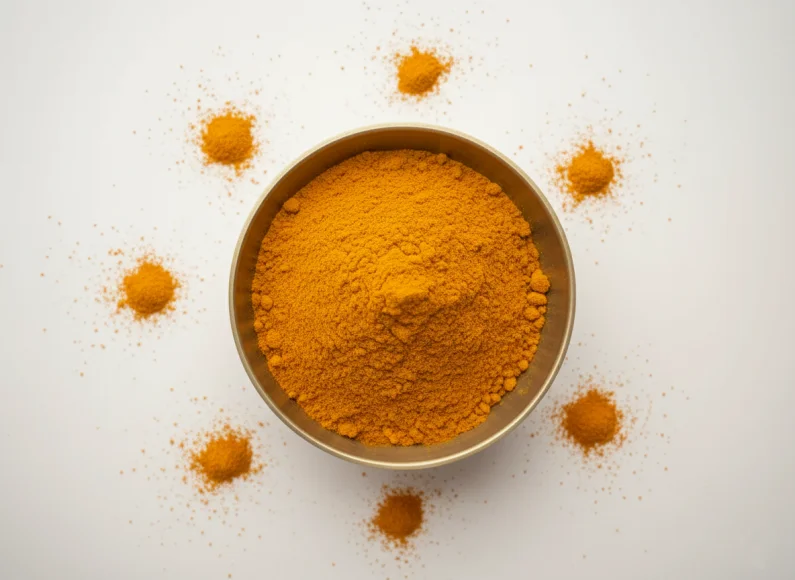
- Colour: golden yellow to intense orange: Kerala turmeric colours dishes powerfully, far more so than ordinary commercial turmeric
- Texture: fine, silky powder, slightly oily to the touch (a sign of a good essential-oil content)
Unlike Lakadong turmeric, which is above all a therapeutic product with a high curcumin concentration (7–12%), Kerala turmeric is a versatile culinary spice. Its measured bitterness and gentle warmth blend harmoniously into any preparation without dominating the other flavours.
Chef's tip
To unlock turmeric's full aromatic potential, always "bloom" it: add the powder to a hot fat (ghee, coconut oil, olive oil) for 30 seconds to 1 minute before adding the other ingredients. This step activates the fat-soluble compounds and releases the essential oils: the difference in flavour is striking.
Turmeric is the most consumed spice in India: present in virtually every cooked dish, from breakfast to dinner. In Kerala, no curry, no sambar, no rice preparation is conceivable without turmeric. It is the foundational ingredient, the one without which Indian cuisine simply would not exist.
In Indian cuisine
- Dal (lentil soup): a pinch of turmeric is added at the start of cooking for both colour and digestive benefits
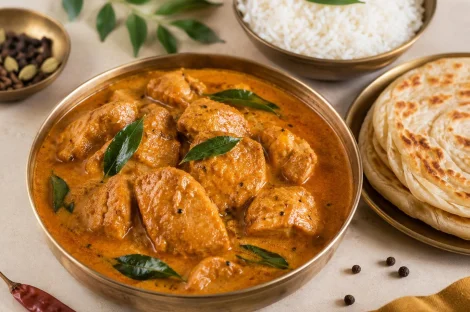
- Kerala fish curry: turmeric is bloomed in coconut oil with mustard seeds and curry leaves
- Sambar: the spiced lentil broth of South India, where turmeric is indispensable
- Rasam: the peppery, tangy broth of Tamil Nadu and Kerala
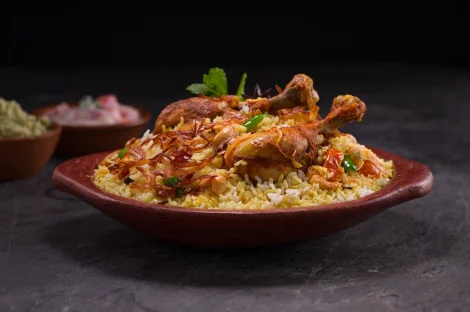
- Biryani: turmeric colours the rice and perfumes every grain
- Marinades: turmeric + ginger + garlic paste for fish, chicken, paneer
- Aviyal: the emblematic Kerala dish, a mix of vegetables in yoghurt and turmeric
- Haldi doodh (golden milk): the Ayurvedic evening remedy, rediscovered by the West
In French and European cuisine
- Golden milk: turmeric + hot milk + black pepper + cinnamon + honey: the wellness drink that has become essential
- Golden vinaigrettes: a pinch in an olive-oil dressing brightens the colour and brings a subtle warmth
- Velvety soups: carrot, butternut, red-lentil soup: turmeric adds depth and colour
- Aromatic rice: half a teaspoon in the cooking water of basmati rice for a fragrant, golden rice
- Fish and seafood: as a crust or in a marinade, turmeric pairs beautifully with cod, prawns and salmon
- Golden scrambled eggs: a pinch in eggs for a sunny colour and a subtle flavour
- Pastry: in cakes, energy balls or shortbread: turmeric brings colour and originality
- Wellness smoothies: with ginger, lemon and black pepper for a morning anti-inflammatory shot
Pairings that work
| Pairing | Why it works |
|---|
| Turmeric + black pepper | Piperine increases curcumin absorption by 2,000%. An ancestral pairing now validated by science. |
| Turmeric + ginger | Same botanical family. They reinforce each other in warmth and digestive benefits. |
| Turmeric + cinnamon | The classic golden-milk pairing. The sweetness of cinnamon balances the bitterness of turmeric. |
| Turmeric + coconut oil | The fat optimises absorption of the fat-soluble curcuminoids. |
| Turmeric + cumin | The foundation of any curry: the earthy notes of cumin amplify those of turmeric. |
| Turmeric + lemon | Lemon acidity intensifies turmeric's colour and bioavailability. |
Kerala turmeric vs. Lakadong: which to choose?
Kerala turmeric is your everyday ally: versatile, affordable, perfect for daily cooking. Lakadong (7–12% curcumin) is a premium therapeutic turmeric, ideal for concentrated golden milk or targeted health use. The two are complementary: Kerala for cooking, Lakadong for healing.
Turmeric is one of the most-studied medicinal plants in the world, with more than 12,000 scientific publications devoted to its main active compound, curcumin. In Ayurveda, it has been used for more than 4,000 years as an anti-inflammatory, digestive aid, blood purifier and healing agent.
Kerala turmeric, with its curcumin content of 3 to 5%, provides a significant daily intake of bioactive compounds when integrated regularly into the diet, exactly what Indians have naturally been doing for millennia.
Main documented benefits
- Powerful anti-inflammatory: curcumin inhibits NF-κB, one of the main mediators of chronic inflammation, relevant for arthritis, joint pain and chronic inflammatory diseases
- Antioxidant: neutralises free radicals and stimulates the body's own antioxidant enzymes (superoxide dismutase, catalase)
- Digestive support: stimulates bile production by the gallbladder, supports a healthy gut flora, reduces bloating and gas
- Liver protection: supports liver detoxification and reduces hepatic inflammation
- Immune support: documented antibacterial, antiviral and antifungal properties
- Brain health: curcumin crosses the blood-brain barrier and shows potential in research on memory, depression and neuroprotection
- Skin health: used internally and externally, antimicrobial and anti-inflammatory properties support a clear complexion and wound healing
- Cardiovascular health: may contribute to healthy cholesterol metabolism and support endothelial function
Bioavailability: the golden rule
Curcumin is fat-soluble and is naturally poorly absorbed by the body. Two simple gestures maximise its absorption: (1) always consume turmeric with a fat (ghee, coconut oil, olive oil, whole milk), and (2) add black pepper: piperine increases curcumin's bioavailability by up to 2,000%. Traditional Indian cooking has been doing both of these things naturally for millennia.
Kerala turmeric vs. Lakadong: the complementary approach
Kerala turmeric (3–5% curcumin) is ideal for daily dietary intake: every curry, every dal, every golden milk delivers its dose of curcumin. Lakadong (7–12%) is a therapeutic concentrate for targeted courses. The two approaches complement each other: the regularity of Kerala in daily cooking, the potency of Lakadong as a wellness course.
Nutritional values (per 1 tablespoon / ~9 g)
| Component | Content |
|---|
| Curcumin | 3 to 5% of total weight |
| Essential oils | 3 to 5% (turmerone, ar-turmerone, curlone) |
| Calories | ~29 kcal |
| Dietary fibre | ~0.7 g |
| Iron | ~1.7 mg (9% of RDI) |
| Manganese | ~0.5 mg (22% of RDI) |
| Potassium | ~62 mg |
| Vitamin B6 | ~0.1 mg |
How to recognise good Kerala turmeric
- Colour: golden yellow to deep orange: a dull or pale yellow turmeric is probably stale or of mediocre quality
- Aroma: warm, earthy, with a pronounced ginger note: if the smell is weak or dusty, the turmeric has lost its essential oils
- Texture: fine powder, slightly oily to the touch (a sign of a good essential-oil and curcumin content)
- Colouring power: a pinch in water should immediately release an intense golden yellow
- Stated origin: a serious supplier always indicates the state of origin (Kerala) and ideally the variety (Alleppey Finger)
- Adulteration test: dissolve a pinch in a glass of water: pure turmeric settles cleanly, while turmeric adulterated with metanil yellow (a banned dye) leaves traces of colour in the water
Beware of stains!
Turmeric is a powerful dye: it permanently stains clothes, wooden countertops, cutting boards and plastic. Use stainless-steel utensils, protect your surfaces and clean spills immediately. A little white vinegar or baking soda helps to fade stains on surfaces.
Storage tips
- Store in an airtight glass jar, in a cool, dark cupboard, never above the stove
- Avoid direct exposure to sunlight, which degrades curcumin and the essential oils
- Optimal shelf life: 2 to 3 years as a powder under good conditions; flavour is at its peak in the first year
- Whole dried turmeric fingers keep longer than the powder
- Signs of degradation: weakened aroma, faded colour, dull taste with no warmth, replace as needed
What is the difference between Kerala turmeric and Lakadong turmeric?
They are two varieties of the same species (Curcuma longa), but grown in different regions. Kerala turmeric contains 3 to 5% curcumin and is an excellent versatile culinary turmeric, ideal for everyday use. Meghalaya's Lakadong contains 7 to 12% curcumin: it is a premium therapeutic turmeric, rarer and more expensive. The two are complementary: Kerala for daily cooking, Lakadong for targeted wellness courses.
Why should you always pair turmeric with black pepper?
Curcumin, the main active compound in turmeric, is naturally poorly absorbed by the body. The piperine in black pepper increases its bioavailability by up to 2,000% by inhibiting the enzymes that metabolise it too quickly. This is a pairing practised in India for millennia, validated by modern scientific research. Also add a fat (oil, ghee) to optimise absorption.
Can turmeric replace saffron?
No, they are very different spices on the palate. Turmeric provides a similar yellow-orange colour, but its earthy, peppery taste has nothing to do with the floral and honeyed notes of saffron. On the other hand, turmeric is an excellent natural food colourant, which is why it is sometimes nicknamed the “poor man's saffron” or “Indian saffron”.
How much turmeric should you consume per day?
In everyday culinary use, 1 to 2 teaspoons of turmeric powder (around 3 to 6 g) is a common and safe quantity. This is what Indians naturally consume every day through their meals. For therapeutic use at higher doses, consult a healthcare professional.
Does turmeric really stain as much as people say?
Yes, turmeric is an extremely powerful dye, indeed one of its oldest historical uses. It permanently stains fabrics, wood, plastic and porous surfaces. Use stainless-steel utensils, protect your clothes and clean spills immediately. White vinegar and baking soda help to fade the stains.








 Gravy Dishes