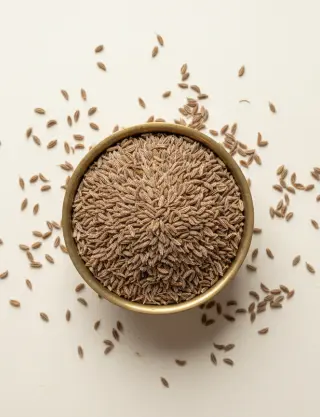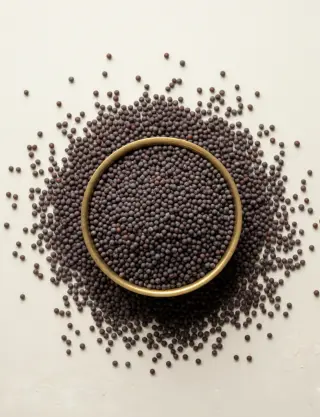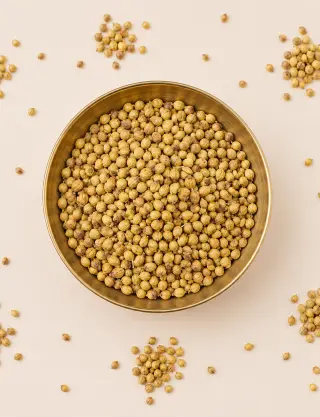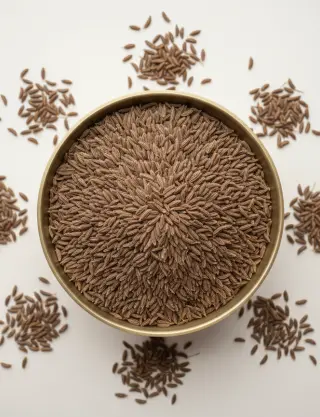




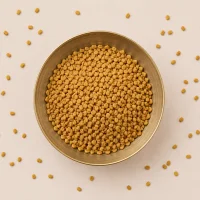
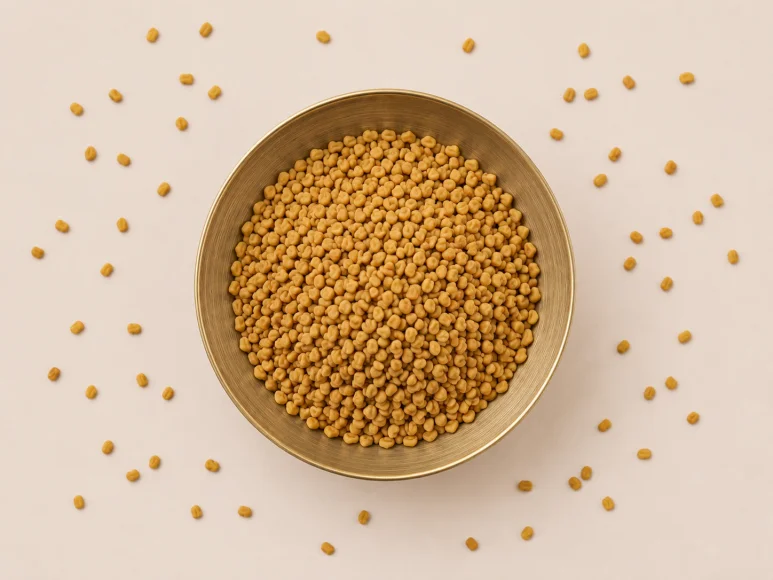
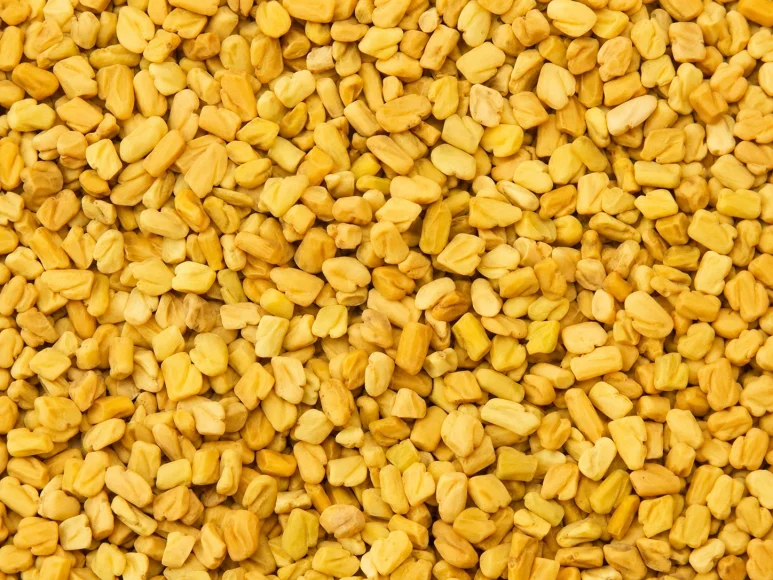
Discover our whole fenugreek seeds, grown in the Rajasthan region of India. Caramel aroma with warm hazelnut notes essential for tempering and pickles in Indian cuisine.
Ready for shipping, delivery time 2-5 business days
Delivery from €4.80 at Mondial Relay pickup points. Free shipping from €50.
Free spice samples with every order.



-
Fenugreek Seeds (Methi): the ancient spice-legume
Our fenugreek seeds come from Rajasthan, the region that alone produces the vast majority of India's fenugreek. Known as methi in Hindi, these small golden seeds with a caramel-like aroma reminiscent of maple syrup are a quiet but essential pillar of Indian cooking, from South Indian tempering to Northern pickles.
Why choose whole seeds?
Whole fenugreek seeds keep their characteristic bitterness and their mucilage content intact, both valued for tempering (tadka) and pickle marinades. Lightly dry-toasted for a few seconds, they develop warm notes of hazelnut and caramel that naturally soften their bitterness — a simple step that changes everything.
Culinary uses:
- South Indian tempering (tadka) for dals, sambars and vegetables
- Indian pickles (achaar), especially mango pickle
- Added to dosa and idli batter to help fermentation
- Bengali panch phoron (five-spice) blend
- Sprouting for salads and digestive add-ins
- Infusion as a digestive tea or breastfeeding-support drink
Origin and quality:
We select our spices exclusively from smallholder farms in India that grow without pesticides, to guarantee you a natural product of premium quality.
Storage:
To preserve all its aromas, store your fenugreek seeds in a dry place, away from light and humidity, in its airtight packaging.
-
Aids digestion and reduces bloating
Helps regulate blood sugar levels
Traditionally supports breast milk production
Rich in fiber, promotes satiety
Helps reduce cholesterol
Recognized anti-inflammatory properties
Traditionally strengthens hair and scalp
Natural source of iron and plant protein
-
Nutritional declaration per 100g
Nutritional component Per 100g Energy 1 351 kJ / 323 kcal Fat ~ 6,4 g of which saturated fat ~ 1,5 g Carbohydrates ~ 58,4 g Dietary fiber ~ 24,6 g Proteins ~ 23 g Salt ~ 170 mg Sodium ~ 70 mg -
Origin Rajasthan, India Quality Premium Type Whole seeds Taste profile Pronounced bitterness when raw, which turns into warm hazelnut and lightly minty caramel notes once the seeds are dry-roasted. Possible traces of allergens May contain traces of mustard and celery (packaged in a facility handling these allergens). -
These seeds germinate well and are delicious!!
Translated from French
Florence TurmericThis customer is a Turmeric member of our loyalty programVerified purchaseThis customer purchased this product before leaving their reviewPublished on Aug 7, 2026 · Purchased on Jul 20, 2026Add your reviewView more
Learn more
Fenugreek is one of the oldest cultivated plants known to humanity. Charred seeds have been found at the Tell Halal site in Iraq, dated to around 4000 BCE, and near-intact seeds were discovered in the tomb of Tutankhamun (14th century BCE), alongside other ritual plants.
Fenugreek in ancient Egypt
In ancient Egypt, fenugreek (hilbeh in Egyptian Arabic) served as food, medicine and embalming ingredient. Its seeds were part of kyphi, a ritual incense burned in temples. Egypt still grows and exports fenugreek today, and stuffed pigeon with fenugreek remains a classic Egyptian dish.
The Latin name itself tells an agricultural story: foenum graecum literally means "Greek hay". The Greeks and Romans grew fenugreek chiefly as protein-rich cattle fodder, a use that long preceded its recognition as a culinary spice in Europe. The Greek physician Dioscorides (1st century CE) nonetheless already described its medicinal properties in his De Materia Medica.
In India, fenugreek (methi in Hindi) holds an ancient and central place in Ayurvedic medicine. Classical texts class it among plants that are both food and medicine (ahara and aushadhi), used to balance the Vata and Kapha doshas, stimulate digestion (agni) and support lactation in new mothers.
Nagauri Methi: a protected Geographical Indication
The Nagaur region of Rajasthan produces fenugreek so renowned for the quality and uniformity of its seeds that it has held an official Geographical Indication (GI) since 2015: Nagauri Methi. Rajasthan alone accounts for nearly 80% of India's fenugreek production, making India the world's leading producer and exporter by a wide margin.
Fenugreek has also travelled far beyond the Indian subcontinent. In Yemen, soaked and whipped seeds become hilbeh, a spiced foam served alongside bread. In Ethiopia, under the name abesh, it is a component of berbere, the iconic spice blend behind Ethiopian wat stews. These independently developed uses show the singular place this small bitter seed occupies across cuisines that never had direct contact with one another.
Did you know?
- India alone supplies about 80 to 90% of world fenugreek production, most of it from Rajasthan
- Fenugreek belongs to the legume family (Fabaceae), a botanical cousin of chickpeas and lentils, not a grain
- The molecule behind its maple-syrup aroma, sotolone, is also used by the food industry as an artificial caramel and maple flavouring
- Eating fenugreek (as seeds or supplements) can give sweat and urine a maple-syrup smell, a harmless, well-documented effect that surprises those who don't know about it
- The Latin name Trigonella refers to the triangular shape of the plant's small flowers
- In France, fenugreek (also called "sénégrain" or "trigonelle") was long grown as cattle fodder before becoming a culinary curiosity again
Fenugreek across languages
| Language | Name |
|---|---|
| English | Fenugreek |
| Hindi | Methi (मेथी) |
| Sanskrit | Methika · Bahupatri |
| Tamil | Vendhayam (வெந்தயம்) |
| Arabic | Hulba · Hilbeh |
| French | Fenugrec |
| German | Bockshornklee |
| Amharic (Ethiopia) | Abesh |
| Botanical Latin | Trigonella foenum-graecum L. |
| Characteristic | Detail |
|---|---|
| Latin name | Trigonella foenum-graecum L. |
| Botanical family | Fabaceae; the legume family, like chickpeas and lentils |
| Local names | Methi (Hindi) · Vendhayam (Tamil) · Hulba (Arabic) |
| Part used | Hard seeds extracted from dried pods |
| World's leading producer | India, around 80 to 90% of world production |
| Flagship region | Rajasthan (Nagaur, Jhalawar, Sikar), ~80% of India's output |
| Geographical Indication | Nagauri Methi (Nagaur, Rajasthan), recognised since 2015 |
| Harvest | Pods cut and sun-dried, then threshed to release the seeds |
Rajasthan, a semi-arid region with a pronounced continental climate, is the cradle of Indian fenugreek. Its well-drained sandy-loam soils and cool, dry winters (the crop is typically sown after the monsoon, between October and November, for a February–March harvest) provide ideal conditions for seeds rich in mucilage and bitter compounds.
The terroir that makes the difference
- Climate: sown in the cool, dry (rabi) season; fenugreek dislikes excess humidity late in the cycle, which favours fungal disease
- Soil: sandy loam, well-drained, slightly alkaline to neutral pH
- Rotation: often grown alongside or in rotation with cumin, another flagship crop of Rajasthan and neighbouring Gujarat
- Drying: pods are left to dry in the field before threshing, concentrating the aroma and hardening the seeds
| Producing region | Share and characteristics |
|---|---|
| India, Rajasthan | ~80% of India's output · Nagauri Methi GI-tagged seeds · World quality benchmark |
| India, Gujarat, Madhya Pradesh, Uttar Pradesh | Secondary Indian production · Often rotated with cumin and coriander |
| Morocco, Egypt, Turkey | Historic Mediterranean production · Local and regional export markets |
| Ethiopia | Local production mainly for the domestic market (berbere, abesh) |
| Argentina, Canada | More recent production, geared toward the supplement industry |
Botany
Fenugreek is an annual herbaceous legume, 30 to 60 cm tall, with trifoliate leaves, which is why its dried leaves (kasuri methi) are sold as a separate culinary herb, distinct from the seed featured here.
- Stem: upright, branching, green, 30 to 60 cm tall
- Leaves: trifoliate, clover-shaped, light green, harvested fresh or dried as an herb (a separate product from the seeds)
- Flowers: small, yellowish-white with a purplish base, pea-flower shaped, typical of legumes
- Pods: long and slender, 6 to 10 cm, slightly curved, each containing 10 to 20 seeds
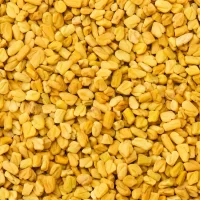
- Seeds: small (3-4 mm), hard, irregularly rhomboid, yellow-brown, marked with a characteristic deep groove
- Cycle: short-cycle annual, 3 to 4 months from sowing to mature seed harvest
One plant, two very different products
Fenugreek yields two very different culinary ingredients: the seed, hard and bitter, used whole or ground for tempering, pickles or as a background spice; and the dried leaf (kasuri methi), a mild bittersweet herb added at the end of cooking to curries and North Indian dishes like methi thepla. This guide covers the seed; for the dried leaf, see our dedicated kasuri methi page.
The fenugreek seed has one of the most contrasting flavour profiles in the spice world: intensely bitter and slightly harsh when raw, it transforms on cooking into a warm, sweet, caramelised flavour strikingly reminiscent of maple syrup.
This contrast comes from sotolone, an extremely powerful aromatic compound (detectable at minute concentrations) responsible for the signature caramel-maple note. Raw, the seeds are dominated by bitter alkaloids (including trigonelline) and by a mucilage rich in soluble fibre that slightly thickens liquid preparations. Dry-roasting reduces some of this bitterness while developing toasted, nutty notes.
Tasting notes
| Stage | Perceived notes |
|---|---|
| Raw seed, chewed | Sharp, immediate bitterness, mucilaginous texture, lingering aftertaste |
| Lightly dry-roasted seed | Toasted hazelnut, gentle caramel, softened bitterness |
| Over-roasted / burnt seed | Sharp, acrid bitterness, to be avoided entirely; a few seconds too long is enough |
| In tempering (tadka), hot oil | Nutty aroma that perfumes the oil and spreads through the whole dish |
| In pickles, after maceration | Bitterness rounds out over time, adding structure and complexity to the condiment |
Chef's tip
Always fry fenugreek seeds over medium heat for no more than 20 to 30 seconds in hot oil or ghee, until they turn slightly darker and release their nutty aroma. Any longer and they burn and turn acrid, the most common mistake with this spice. If in doubt, take the pan off the heat at the very first sizzle.
Fenugreek seeds are a background spice (discreet but indispensable) appearing in a surprising number of dishes across India and beyond, always in small amounts given how powerful their bitterness is.
In South Indian cooking
- Tempering (tadka): a few whole seeds fried in hot oil with mustard seeds and curry leaves, to flavour dals and vegetables
- Sambar and rasam: a pinch of ground seeds in the spice mix adds depth and a balancing touch of bitterness
- Dosa and idli batter: a few soaked seeds added with the rice and urad dal aid natural fermentation and round out the flavour
- Vathal and tempering powders: a classic ingredient in homemade powders used to season rice and vegetables
Pickles and preserves
- Mango pickle (aam ka achaar): whole fenugreek seeds are one of the signature ingredients of this iconic North Indian condiment
- Other achaars: lemon, chilli, mixed vegetables; fenugreek gives structure to the oil-and-spice marinade
Elsewhere in the world
- Panch phoron (Bengal): an equal-parts blend of five seeds, fenugreek, nigella, cumin, fennel and mustard or radhuni seeds, used in tempering for Bengali vegetable curries
- Hilbeh (Yemen): soaked seeds whipped into a spiced foam with garlic and chilli, served alongside bread
- Berbere and abesh (Ethiopia): ground fenugreek is part of the famous Ethiopian spice blend that flavours wat stews
As an infusion
- Digestive tea: a teaspoon of seeds steeped for 10 minutes in hot water, traditionally drunk after meals
- Breastfeeding support: an infusion traditionally consumed by new mothers in Ayurveda; see the health benefits section below for the scientific context
Seeds and leaves: don't mix them up
Recipes calling for dried fenugreek leaves (such as methi thepla or methi paratha) need kasuri methi, an herb with a far milder aroma than the seed. Substituting one for the other changes the result completely: the seed doesn't dissolve and its bitterness is much stronger.
In Ayurvedic tradition, methi is considered both a food and a medicinal plant, valued for stimulating agni (digestive fire) and supporting women during breastfeeding. Modern scientific research has explored several of these traditional uses with encouraging results, though none of it replaces medical advice.
Research directions
- Blood sugar and insulin sensitivity: several clinical trials on whole or powdered seeds in type 2 diabetic patients have shown improved postprandial glucose levels, attributed in part to galactomannan, a soluble fibre that slows carbohydrate absorption (reviews published in the Journal of Diabetes and Metabolic Disorders)
- Breastfeeding (galactagogue effect): several studies, including some published in the Journal of Alternative and Complementary Medicine, report increased breast milk volume in mothers consuming fenugreek, a very old practice in India and the Middle East
- Lipid profile: some studies, notably in Phytotherapy Research, associate regular fenugreek intake with a modest reduction in total and LDL cholesterol
- Digestive and carminative properties: traditional use confirmed by ethnopharmacological work catalogued in the Journal of Ethnopharmacology, particularly for mild digestive discomfort
- Male hormonal research: a few preliminary trials published in Phytotherapy Research suggest a positive effect on libido and testosterone levels, results still considered preliminary by the scientific community
Indicative nutritional composition (per 100 g of seeds)
| Component | Content / Role |
|---|---|
| Energy | ~323 kcal |
| Protein | ~23 g, high for a spice seed |
| Carbohydrates | ~58 g, a significant share of which is soluble fibre (galactomannan) |
| Dietary fibre | ~25 g, among the highest of any common spice |
| Iron | ~34 mg, one of the highest levels found in any plant food |
| Magnesium | ~191 mg |
Precautions
At typical culinary doses, fenugreek is generally well tolerated. However, concentrated fenugreek supplements are not recommended during pregnancy without medical advice, as the plant is traditionally associated with a stimulant effect on the uterus. Fenugreek may also enhance the effect of blood-thinning medication (such as warfarin) and diabetes treatments, worth flagging to a healthcare professional if you are on such treatment. Finally, it is common (and harmless) for sweat and urine to temporarily take on a maple-syrup smell after significant fenugreek intake, due to sotolone.
Quality criteria
- Colour: uniform yellow-brown seeds; greyish or spotted seeds indicate storage that was too long or too humid
- Hardness: good-quality seeds are very hard and brittle to bite; a soft texture indicates moisture uptake
- Aroma: lightly crushed, fresh seeds release a clean, slightly grassy and bitter scent, with no musty note
- No dust or debris: a quality batch contains no pod fragments or impurities
- Rajasthan (Nagaur) origin: a mark of the best consistency in size and aroma
Storage tips
- Keep whole seeds in an airtight glass jar, away from light and humidity
- Shelf life: 2 to 3 years as whole seeds thanks to their very hard shell, much longer than most spices
- For the best flavour, dry-roast for a few seconds right before use rather than grinding in advance
- To temper bitterness before a pickle or infusion, soaking for a few hours in water is traditionally recommended
What's the difference between fenugreek seeds and kasuri methi?
They're two different parts of the same plant. The seed, covered in this guide, is hard, bitter, and used in tempering, pickles, or ground in small amounts in spice blends. Kasuri methi is the dried leaf, with a much milder bittersweet aroma, used at the end of cooking in North Indian curries. They are not interchangeable.
Why are my fenugreek seeds so bitter?
That's completely normal: pronounced bitterness is the natural trait of the raw seed, due to alkaloids such as trigonelline. A brief dry-roast (20-30 seconds) in a pan or hot oil considerably softens this bitterness while developing nutty, caramel notes.
How do I stop fenugreek from turning acrid when cooking?
The key rule is never to let it burn: a few seconds too long in hot oil is enough to turn its pleasant bitterness into a harsh, unpleasant one. Always fry the seeds over medium heat and take the pan off the heat at the very first sizzle.
Is fenugreek safe during pregnancy?
At normal culinary amounts, fenugreek is generally not a concern, but concentrated supplements are not recommended without medical advice, as the plant is traditionally associated with a stimulant effect on the uterus. If in doubt, ask your doctor or midwife.
Why does fenugreek give off a maple syrup smell?
Fenugreek's distinctive aroma comes from sotolone, a highly potent aromatic compound also used as an artificial caramel and maple flavouring in the food industry. After eating a significant amount of fenugreek, it's not unusual for sweat and urine to briefly take on the same smell, a harmless, well-documented effect.
What is Nagauri Methi?
It's the name for fenugreek grown in the Nagaur district of Rajasthan, recognised by an official Geographical Indication since 2015 for the quality and consistency of its seeds. Rajasthan alone accounts for around 80% of India's fenugreek production.
How do you use fenugreek seeds for breastfeeding?
Ayurvedic tradition recommends an infusion of one teaspoon of seeds in hot water, drunk by new mothers. Several preliminary studies suggest a positive effect on breast milk volume, but it's advisable to discuss this with a healthcare professional before regular use, particularly given possible interactions with certain medications.
-
Fenugreek is one of the oldest cultivated plants known to humanity. Charred seeds have been found at the Tell Halal site in Iraq, dated to around 4000 BCE, and near-intact seeds were discovered in the tomb of Tutankhamun (14th century BCE), alongside other ritual plants.
Fenugreek in ancient Egypt
In ancient Egypt, fenugreek (hilbeh in Egyptian Arabic) served as food, medicine and embalming ingredient. Its seeds were part of kyphi, a ritual incense burned in temples. Egypt still grows and exports fenugreek today, and stuffed pigeon with fenugreek remains a classic Egyptian dish.
The Latin name itself tells an agricultural story: foenum graecum literally means "Greek hay". The Greeks and Romans grew fenugreek chiefly as protein-rich cattle fodder, a use that long preceded its recognition as a culinary spice in Europe. The Greek physician Dioscorides (1st century CE) nonetheless already described its medicinal properties in his De Materia Medica.
In India, fenugreek (methi in Hindi) holds an ancient and central place in Ayurvedic medicine. Classical texts class it among plants that are both food and medicine (ahara and aushadhi), used to balance the Vata and Kapha doshas, stimulate digestion (agni) and support lactation in new mothers.
Nagauri Methi: a protected Geographical Indication
The Nagaur region of Rajasthan produces fenugreek so renowned for the quality and uniformity of its seeds that it has held an official Geographical Indication (GI) since 2015: Nagauri Methi. Rajasthan alone accounts for nearly 80% of India's fenugreek production, making India the world's leading producer and exporter by a wide margin.
Fenugreek has also travelled far beyond the Indian subcontinent. In Yemen, soaked and whipped seeds become hilbeh, a spiced foam served alongside bread. In Ethiopia, under the name abesh, it is a component of berbere, the iconic spice blend behind Ethiopian wat stews. These independently developed uses show the singular place this small bitter seed occupies across cuisines that never had direct contact with one another.
Did you know?
- India alone supplies about 80 to 90% of world fenugreek production, most of it from Rajasthan
- Fenugreek belongs to the legume family (Fabaceae), a botanical cousin of chickpeas and lentils, not a grain
- The molecule behind its maple-syrup aroma, sotolone, is also used by the food industry as an artificial caramel and maple flavouring
- Eating fenugreek (as seeds or supplements) can give sweat and urine a maple-syrup smell, a harmless, well-documented effect that surprises those who don't know about it
- The Latin name Trigonella refers to the triangular shape of the plant's small flowers
- In France, fenugreek (also called "sénégrain" or "trigonelle") was long grown as cattle fodder before becoming a culinary curiosity again
Fenugreek across languages
Language Name English Fenugreek Hindi Methi (मेथी) Sanskrit Methika · Bahupatri Tamil Vendhayam (வெந்தயம்) Arabic Hulba · Hilbeh French Fenugrec German Bockshornklee Amharic (Ethiopia) Abesh Botanical Latin Trigonella foenum-graecum L. -
Characteristic Detail Latin name Trigonella foenum-graecum L. Botanical family Fabaceae; the legume family, like chickpeas and lentils Local names Methi (Hindi) · Vendhayam (Tamil) · Hulba (Arabic) Part used Hard seeds extracted from dried pods World's leading producer India, around 80 to 90% of world production Flagship region Rajasthan (Nagaur, Jhalawar, Sikar), ~80% of India's output Geographical Indication Nagauri Methi (Nagaur, Rajasthan), recognised since 2015 Harvest Pods cut and sun-dried, then threshed to release the seeds Rajasthan, a semi-arid region with a pronounced continental climate, is the cradle of Indian fenugreek. Its well-drained sandy-loam soils and cool, dry winters (the crop is typically sown after the monsoon, between October and November, for a February–March harvest) provide ideal conditions for seeds rich in mucilage and bitter compounds.
The terroir that makes the difference
- Climate: sown in the cool, dry (rabi) season; fenugreek dislikes excess humidity late in the cycle, which favours fungal disease
- Soil: sandy loam, well-drained, slightly alkaline to neutral pH
- Rotation: often grown alongside or in rotation with cumin, another flagship crop of Rajasthan and neighbouring Gujarat
- Drying: pods are left to dry in the field before threshing, concentrating the aroma and hardening the seeds
Producing region Share and characteristics India, Rajasthan ~80% of India's output · Nagauri Methi GI-tagged seeds · World quality benchmark India, Gujarat, Madhya Pradesh, Uttar Pradesh Secondary Indian production · Often rotated with cumin and coriander Morocco, Egypt, Turkey Historic Mediterranean production · Local and regional export markets Ethiopia Local production mainly for the domestic market (berbere, abesh) Argentina, Canada More recent production, geared toward the supplement industry Botany
Fenugreek is an annual herbaceous legume, 30 to 60 cm tall, with trifoliate leaves, which is why its dried leaves (kasuri methi) are sold as a separate culinary herb, distinct from the seed featured here.
- Stem: upright, branching, green, 30 to 60 cm tall
- Leaves: trifoliate, clover-shaped, light green, harvested fresh or dried as an herb (a separate product from the seeds)
- Flowers: small, yellowish-white with a purplish base, pea-flower shaped, typical of legumes
- Pods: long and slender, 6 to 10 cm, slightly curved, each containing 10 to 20 seeds
- Seeds: small (3-4 mm), hard, irregularly rhomboid, yellow-brown, marked with a characteristic deep groove
- Cycle: short-cycle annual, 3 to 4 months from sowing to mature seed harvest
One plant, two very different products
Fenugreek yields two very different culinary ingredients: the seed, hard and bitter, used whole or ground for tempering, pickles or as a background spice; and the dried leaf (kasuri methi), a mild bittersweet herb added at the end of cooking to curries and North Indian dishes like methi thepla. This guide covers the seed; for the dried leaf, see our dedicated kasuri methi page.
-
The fenugreek seed has one of the most contrasting flavour profiles in the spice world: intensely bitter and slightly harsh when raw, it transforms on cooking into a warm, sweet, caramelised flavour strikingly reminiscent of maple syrup.
This contrast comes from sotolone, an extremely powerful aromatic compound (detectable at minute concentrations) responsible for the signature caramel-maple note. Raw, the seeds are dominated by bitter alkaloids (including trigonelline) and by a mucilage rich in soluble fibre that slightly thickens liquid preparations. Dry-roasting reduces some of this bitterness while developing toasted, nutty notes.
Tasting notes
Stage Perceived notes Raw seed, chewed Sharp, immediate bitterness, mucilaginous texture, lingering aftertaste Lightly dry-roasted seed Toasted hazelnut, gentle caramel, softened bitterness Over-roasted / burnt seed Sharp, acrid bitterness, to be avoided entirely; a few seconds too long is enough In tempering (tadka), hot oil Nutty aroma that perfumes the oil and spreads through the whole dish In pickles, after maceration Bitterness rounds out over time, adding structure and complexity to the condiment Chef's tip
Always fry fenugreek seeds over medium heat for no more than 20 to 30 seconds in hot oil or ghee, until they turn slightly darker and release their nutty aroma. Any longer and they burn and turn acrid, the most common mistake with this spice. If in doubt, take the pan off the heat at the very first sizzle.
-
Fenugreek seeds are a background spice (discreet but indispensable) appearing in a surprising number of dishes across India and beyond, always in small amounts given how powerful their bitterness is.
In South Indian cooking
- Tempering (tadka): a few whole seeds fried in hot oil with mustard seeds and curry leaves, to flavour dals and vegetables
- Sambar and rasam: a pinch of ground seeds in the spice mix adds depth and a balancing touch of bitterness
- Dosa and idli batter: a few soaked seeds added with the rice and urad dal aid natural fermentation and round out the flavour
- Vathal and tempering powders: a classic ingredient in homemade powders used to season rice and vegetables
Pickles and preserves
- Mango pickle (aam ka achaar): whole fenugreek seeds are one of the signature ingredients of this iconic North Indian condiment
- Other achaars: lemon, chilli, mixed vegetables; fenugreek gives structure to the oil-and-spice marinade
Elsewhere in the world
- Panch phoron (Bengal): an equal-parts blend of five seeds, fenugreek, nigella, cumin, fennel and mustard or radhuni seeds, used in tempering for Bengali vegetable curries
- Hilbeh (Yemen): soaked seeds whipped into a spiced foam with garlic and chilli, served alongside bread
- Berbere and abesh (Ethiopia): ground fenugreek is part of the famous Ethiopian spice blend that flavours wat stews
As an infusion
- Digestive tea: a teaspoon of seeds steeped for 10 minutes in hot water, traditionally drunk after meals
- Breastfeeding support: an infusion traditionally consumed by new mothers in Ayurveda; see the health benefits section below for the scientific context
Seeds and leaves: don't mix them up
Recipes calling for dried fenugreek leaves (such as methi thepla or methi paratha) need kasuri methi, an herb with a far milder aroma than the seed. Substituting one for the other changes the result completely: the seed doesn't dissolve and its bitterness is much stronger.
-
In Ayurvedic tradition, methi is considered both a food and a medicinal plant, valued for stimulating agni (digestive fire) and supporting women during breastfeeding. Modern scientific research has explored several of these traditional uses with encouraging results, though none of it replaces medical advice.
Research directions
- Blood sugar and insulin sensitivity: several clinical trials on whole or powdered seeds in type 2 diabetic patients have shown improved postprandial glucose levels, attributed in part to galactomannan, a soluble fibre that slows carbohydrate absorption (reviews published in the Journal of Diabetes and Metabolic Disorders)
- Breastfeeding (galactagogue effect): several studies, including some published in the Journal of Alternative and Complementary Medicine, report increased breast milk volume in mothers consuming fenugreek, a very old practice in India and the Middle East
- Lipid profile: some studies, notably in Phytotherapy Research, associate regular fenugreek intake with a modest reduction in total and LDL cholesterol
- Digestive and carminative properties: traditional use confirmed by ethnopharmacological work catalogued in the Journal of Ethnopharmacology, particularly for mild digestive discomfort
- Male hormonal research: a few preliminary trials published in Phytotherapy Research suggest a positive effect on libido and testosterone levels, results still considered preliminary by the scientific community
Indicative nutritional composition (per 100 g of seeds)
Component Content / Role Energy ~323 kcal Protein ~23 g, high for a spice seed Carbohydrates ~58 g, a significant share of which is soluble fibre (galactomannan) Dietary fibre ~25 g, among the highest of any common spice Iron ~34 mg, one of the highest levels found in any plant food Magnesium ~191 mg Precautions
At typical culinary doses, fenugreek is generally well tolerated. However, concentrated fenugreek supplements are not recommended during pregnancy without medical advice, as the plant is traditionally associated with a stimulant effect on the uterus. Fenugreek may also enhance the effect of blood-thinning medication (such as warfarin) and diabetes treatments, worth flagging to a healthcare professional if you are on such treatment. Finally, it is common (and harmless) for sweat and urine to temporarily take on a maple-syrup smell after significant fenugreek intake, due to sotolone.
-
Quality criteria
- Colour: uniform yellow-brown seeds; greyish or spotted seeds indicate storage that was too long or too humid
- Hardness: good-quality seeds are very hard and brittle to bite; a soft texture indicates moisture uptake
- Aroma: lightly crushed, fresh seeds release a clean, slightly grassy and bitter scent, with no musty note
- No dust or debris: a quality batch contains no pod fragments or impurities
- Rajasthan (Nagaur) origin: a mark of the best consistency in size and aroma
Storage tips
- Keep whole seeds in an airtight glass jar, away from light and humidity
- Shelf life: 2 to 3 years as whole seeds thanks to their very hard shell, much longer than most spices
- For the best flavour, dry-roast for a few seconds right before use rather than grinding in advance
- To temper bitterness before a pickle or infusion, soaking for a few hours in water is traditionally recommended
-
What's the difference between fenugreek seeds and kasuri methi?
They're two different parts of the same plant. The seed, covered in this guide, is hard, bitter, and used in tempering, pickles, or ground in small amounts in spice blends. Kasuri methi is the dried leaf, with a much milder bittersweet aroma, used at the end of cooking in North Indian curries. They are not interchangeable.
Why are my fenugreek seeds so bitter?
That's completely normal: pronounced bitterness is the natural trait of the raw seed, due to alkaloids such as trigonelline. A brief dry-roast (20-30 seconds) in a pan or hot oil considerably softens this bitterness while developing nutty, caramel notes.
How do I stop fenugreek from turning acrid when cooking?
The key rule is never to let it burn: a few seconds too long in hot oil is enough to turn its pleasant bitterness into a harsh, unpleasant one. Always fry the seeds over medium heat and take the pan off the heat at the very first sizzle.
Is fenugreek safe during pregnancy?
At normal culinary amounts, fenugreek is generally not a concern, but concentrated supplements are not recommended without medical advice, as the plant is traditionally associated with a stimulant effect on the uterus. If in doubt, ask your doctor or midwife.
Why does fenugreek give off a maple syrup smell?
Fenugreek's distinctive aroma comes from sotolone, a highly potent aromatic compound also used as an artificial caramel and maple flavouring in the food industry. After eating a significant amount of fenugreek, it's not unusual for sweat and urine to briefly take on the same smell, a harmless, well-documented effect.
What is Nagauri Methi?
It's the name for fenugreek grown in the Nagaur district of Rajasthan, recognised by an official Geographical Indication since 2015 for the quality and consistency of its seeds. Rajasthan alone accounts for around 80% of India's fenugreek production.
How do you use fenugreek seeds for breastfeeding?
Ayurvedic tradition recommends an infusion of one teaspoon of seeds in hot water, drunk by new mothers. Several preliminary studies suggest a positive effect on breast milk volume, but it's advisable to discuss this with a healthcare professional before regular use, particularly given possible interactions with certain medications.
Pourquoi choisir Fenugreek Seeds (Methi) de La Table Indienne ?

Fraîcheur et qualité exceptionnelles
Nos épices sont importées directement d'Inde et conditionnées à la demande pour garantir une fraîcheur optimale. Contrairement aux épices vendues en grande surface qui peuvent rester des mois sur les étagères, nous veillons à ce que chaque épice conserve toute sa saveur et son arôme.
Authenticité et traçabilité
Chaque épice provient de régions spécifiques en Inde réputées pour leur savoir-faire. Nous travaillons directement avec des producteurs locaux qui cultivent leurs épices de manière traditionnelle, sans pesticides ni produits chimiques.
Comment bien utiliser cette épice ?
Pour révéler tous les arômes, nous recommandons de faire légèrement griller les épices entières à sec dans une poêle avant de les moudre. Conservez-les dans un endroit sec et à l'abri de la lumière pour préserver leur fraîcheur le plus longtemps possible.

Le saviez-vous ?
Les épices entières sont bien meilleures que les épices moulues
Consultez notre article de blog pour découvrir pourquoi les épices entières conservent mieux leurs arômes.
Questions & Answers
Thank you! Your question has been sent. Mihika will answer soon and you will receive an email.

Fenugreek Seeds (Methi)
Discover also
Other products you might like