Green Mango Powder (Amchur)
Discover our green mango powder (amchur), made from unripe mangoes dried in the sun. Fruity acidity without a drop of liquid for your chutneys, chaats and marinades.
Ready for shipping, delivery time 3-21 business days
Delivery from €4.80 at Mondial Relay pickup points.
Free spice samples with every order.
-
Amchur: India's acidity, in powder form
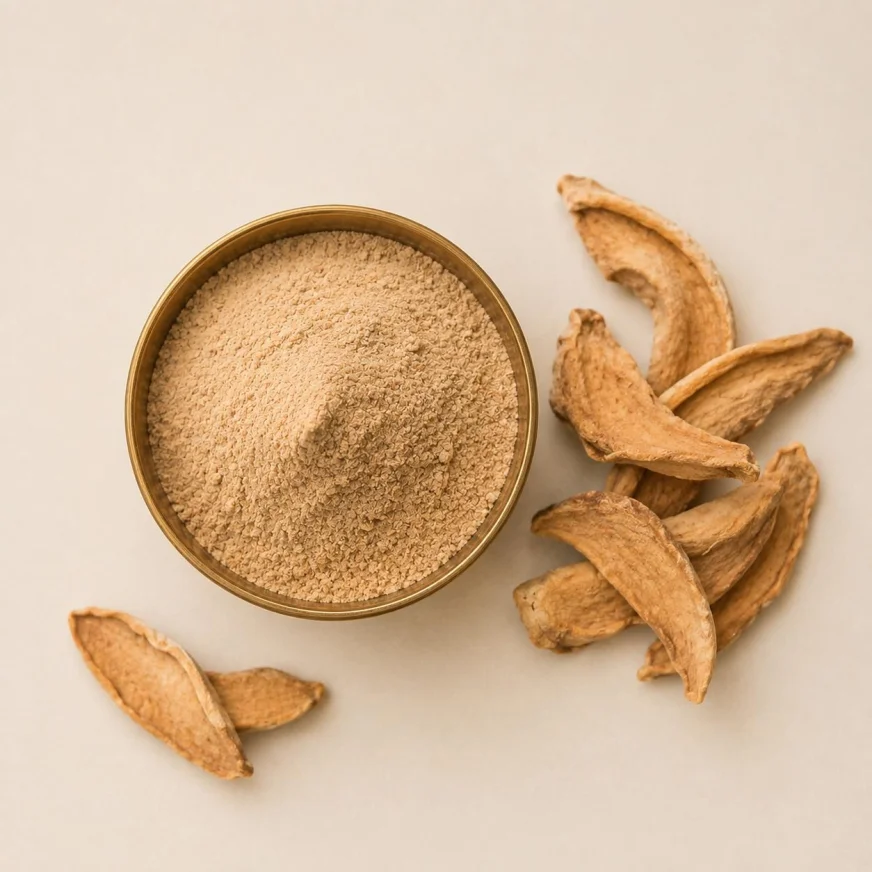
Amchur is made from mangoes picked while still green, before ripening. The fruit is peeled, sliced, sun-dried and ground into a pale beige powder with a distinctive fruity aroma. It is one of the oldest souring agents in Indian cooking, used long before lemons became common in northern kitchens.
Why use amchur instead of lemon?
Because it brings acidity without bringing water. That is its whole purpose: in a dry blend such as chaat masala, in a samosa filling, in a pakora coating or on a dry rub, a few pinches of amchur deliver the bright lift of lemon without making the preparation soggy. It also has a mild tenderising effect on meat, which makes it a natural fit for marinades. Roughly one teaspoon of amchur replaces the juice of half a lemon.
Culinary uses:
- Chaat masala and dry blends, where it is the signature sour note
- Samosa and pakora fillings, which must stay dry
- Meat and fish marinades, for its tenderising effect
- Dals and vegetable curries, stirred in at the end to lift the dish
- Chutneys and pickles, alongside or instead of tamarind
Origin and quality:
We select our spices from small Indian producers, importing directly with no middlemen, to guarantee a natural, premium-quality product.
Storage:
Amchur is hygroscopic: it draws moisture from the air and clumps. Keep it somewhere dry, away from light, in its resealable airtight pouch. If lumps form, simply crush them — the powder is still perfectly good.
-
Origin India Quality Premium Type Powder Taste profile Bright fruity acidity with a resinous green-mango edge
Kits using this spice
Discover our kits with recipes to learn how to use this spice
Learn more
Mango (Mangifera indica) has been cultivated in India for more than four thousand years, and amchur was born out of a practical need: how to keep the acidity and flavour of the green fruit available out of season, in a country where refrigeration is a fairly recent invention. Drying thin slices of green mango in the sun was a simple and effective solution, practised for centuries in the mango growing regions of northern India.
The name itself tells the story: amchur comes from the Hindi contraction of am, mango, and choor, powder or grated. In many parts of northern India, particularly before lemon became a common and easily transportable ingredient, amchur was the go to souring agent, especially in Uttar Pradesh and Punjab.
Malihabad, the land of the royal mango
Uttar Pradesh, India's leading amchur producing region, is home to one of the country's most prestigious mango growing areas: Malihabad, a short distance from Lucknow. The Dussehri mango of Malihabad has held an official Geographical Indication tag since 2009, a recognition that protects its origin and reputation. This mango growing tradition traces back to the royal gardens planted by the Nawabs of Lucknow in the eighteenth century. The original mother tree, estimated to be around 200 years old, is said to still bear fruit today in the nearby village of Dashaari. The amchur we offer does not come from this specific variety, reserved for fresh eating, but it reflects the depth of northern India's mango growing tradition, the historic terroir of this dry souring agent.
Did you know?
In Malihabad, a tree planted roughly two centuries ago in the gardens of the Nawabs of Lucknow is said to still bear fruit every year. A striking example of the mango tree's longevity, capable of spanning two hundred years of Indian history, from the Nawabs to a modern Geographical Indication, without ever ceasing to produce.
An ingredient born of food resilience
Long before modern preservation techniques, drying green fruit allowed Indian households to have a natural souring agent available all year round, without depending on lemon harvests or imports. This logic of preservation through drying shows up in many spices from the subcontinent, from kokum to tamarind.
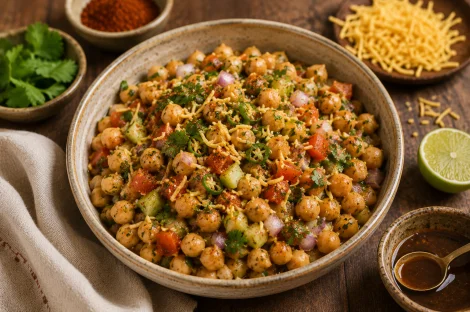
Today, amchur remains inseparable from chaat, the popular street snacks found throughout northern India where the balance between sourness, spice and crunch is essential. It is also a quiet backbone of many spice blends, where its ability to add acidity without moisture makes it hard to replace.
| Characteristic | Detail |
|---|---|
| Latin name | Mangifera indica L. |
| Botanical family | Anacardiaceae, the same family as cashew and pistachio |
| Local name | Amchur or Amchoor (Hindi), literally mango powder |
| Part used | Flesh of the still unripe, green mango |
| Main producing regions | Uttar Pradesh, Punjab, Gujarat, in northern and western India |
The mango tree is an imposing evergreen, capable of living for several centuries and bearing fruit for decades. For amchur, it is not the ripe, sweet fruit that gets harvested but mangoes that are still green, firm and sour, often coming from natural orchard thinning or from varieties less suited to fresh eating.
From green mango to powder
- Green mangoes are picked before ripening, when their acidity is at its peak
- They are peeled and thinly sliced to speed up drying
- Drying is traditionally done in the sun, over several days, until the slices become dry and brittle
- The dried slices are then ground into a fine, light beige to light brown powder
Amchur has a bright, fruity acidity carried by a blend of natural fruit acids, mainly citric and malic acid, inherited from the green mango. It is no coincidence that the fruit is so sour before ripening: during ripening, enzymes gradually convert the fruit's starch into sugars, while organic acid levels drop sharply. Harvesting the fruit before that conversion happens captures its acidity at its peak, exactly what amchur is after.
Unlike lemon juice, this acidity is concentrated and dry: it adds no moisture at all to a dish, which makes it a prime ingredient for dry spice blends.
Tasting notes
| Phase | Notes perceived |
|---|---|
| First impression | Sharp, immediate acidity |
| Heart | Green fruitiness, slightly astringent |
| Base | A soft fruity note in the background, without noticeable sweetness |
| In cooking | An acidity that lifts a dish at the end of cooking, without ever weighing it down |
Chef's tip
Use about one teaspoon of amchur to replace the juice of half a lemon. Add it towards the end of cooking to preserve its full brightness, since prolonged heat softens its acidity.
Amchur is one of the rare ingredients able to bring sharp acidity without adding any water, a real advantage anywhere moisture is unwelcome.
In Indian cooking
- The signature ingredient of chaat masala, the tangy spice blend used on street snacks
- Used in samosa fillings and pakora coatings, which need to stay dry
- Added at the end of cooking to dals and vegetable curries to brighten the dish
- Used in meat and fish marinades for its mild tenderising effect
- Found in many chutneys and pickles, on its own or alongside tamarind
Other uses
- Sprinkled over fresh fruit or a salad for a tangy touch
- Used in some vegetable based marinades and cold sauces
Did you know?
Chaat, those tangy and crunchy street snacks, is today one of the most popular culinary experiences in the big cities of northern India. Amchur plays a central role in it: it is often amchur, more than lemon or tamarind, that gives chaat its instantly recognisable tangy signature, without ever making the dish soggy.
Green mango, the raw material behind amchur, is traditionally recognised for its high vitamin C content, part of which survives the drying process.
What we know about its composition
- Fruit acids: citric and malic acid, responsible for the characteristic sourness
- Vitamin C: raw green mango contains around 36 mg per 100 g, part of which is preserved through drying
- Fibre: the powder retains part of the fruit's fibre
- Pectin: a compound naturally present in mango, sometimes mentioned for its traditional digestive role
Did you know?
Mango belongs to the Anacardiaceae family, the same as cashew, pistachio and, more surprisingly, North American poison ivy. These plants share compounds closely related to urushiol, the substance responsible for poison ivy's skin irritation. In mango, this compound is concentrated almost entirely in the skin and sap of the fresh fruit, not in the dried, peeled pulp used for amchur, but it explains why some people allergic to cashew or pistachio also react, rarely, to mango skin.
Indicative nutritional values (per 100 g of powder)
| Component | Approximate content |
|---|---|
| Energy | around 300 kcal |
| Carbohydrates | around 70 g |
| Fibre | around 6 g |
| Vitamin C | reduced by drying compared to the fresh fruit, generally moderate |
Precautions
Eaten in normal culinary amounts, amchur is well tolerated. As explained above, the mango allergen is concentrated in the skin of the fresh fruit rather than the dried pulp used here, but people with a known allergy to cashew or pistachio may, in rare cases, also react to it. When in doubt, ask a healthcare professional.
Quality criteria
- Colour: light beige to light brown, a colour that is too dark or greyish points to an old or poorly dried powder
- Smell: a clear, fruity and tangy aroma when opened
- Texture: fine powder, without hard lumps, though light clumping from ambient humidity is normal
Storage tips
- In an airtight container, away from light and moisture, since amchur is hygroscopic and readily absorbs water from the air
- Shelf life: around 12 to 18 months when stored well
- If it clumps, simply break it up with a fork or a mortar, the product remains perfectly usable
How do I replace lemon with amchur in a recipe?
Use about one teaspoon of amchur for the juice of half a lemon. Add it towards the end of cooking, since prolonged heat softens its acidity. It is an excellent choice for dry preparations where lemon juice would add unwanted moisture.
Why does amchur clump inside its pack?
Amchur is a hygroscopic powder, meaning it readily absorbs moisture from the surrounding air and forms small clumps. This is not a sign of spoilage, simply break the clumps with a fork or a mortar and the product remains perfectly good.
Is amchur a risk for people allergic to cashew nuts?
Mango belongs to the same botanical family as cashew and pistachio, the Anacardiaceae. The main allergen, however, is concentrated in the skin of the fresh fruit, not in the dried, peeled pulp used for amchur. Cross sensitivity remains possible but rare: if you have a known allergy to these nuts, ask a healthcare professional before consuming it.
What is the difference between amchur and tamarind?
Both are traditional souring agents in Indian cooking, but amchur is dry and adds acidity without moisture, ideal for spice blends and fillings. Tamarind, on the other hand, dissolves in water and suits simmered dishes, curries and soups where a tangy liquid is needed.
What is chaat masala and what role does amchur play in it?
Chaat masala is an iconic spice blend used on the street snacks of northern India, known for balancing sourness, spice and a light note of black salt, kala namak. Amchur is the signature souring ingredient in the mix, the one that gives chaat masala its instantly recognisable character.

-
Mango (Mangifera indica) has been cultivated in India for more than four thousand years, and amchur was born out of a practical need: how to keep the acidity and flavour of the green fruit available out of season, in a country where refrigeration is a fairly recent invention. Drying thin slices of green mango in the sun was a simple and effective solution, practised for centuries in the mango growing regions of northern India.
The name itself tells the story: amchur comes from the Hindi contraction of am, mango, and choor, powder or grated. In many parts of northern India, particularly before lemon became a common and easily transportable ingredient, amchur was the go to souring agent, especially in Uttar Pradesh and Punjab.
Malihabad, the land of the royal mango
Uttar Pradesh, India's leading amchur producing region, is home to one of the country's most prestigious mango growing areas: Malihabad, a short distance from Lucknow. The Dussehri mango of Malihabad has held an official Geographical Indication tag since 2009, a recognition that protects its origin and reputation. This mango growing tradition traces back to the royal gardens planted by the Nawabs of Lucknow in the eighteenth century. The original mother tree, estimated to be around 200 years old, is said to still bear fruit today in the nearby village of Dashaari. The amchur we offer does not come from this specific variety, reserved for fresh eating, but it reflects the depth of northern India's mango growing tradition, the historic terroir of this dry souring agent.
Did you know?
In Malihabad, a tree planted roughly two centuries ago in the gardens of the Nawabs of Lucknow is said to still bear fruit every year. A striking example of the mango tree's longevity, capable of spanning two hundred years of Indian history, from the Nawabs to a modern Geographical Indication, without ever ceasing to produce.
An ingredient born of food resilience
Long before modern preservation techniques, drying green fruit allowed Indian households to have a natural souring agent available all year round, without depending on lemon harvests or imports. This logic of preservation through drying shows up in many spices from the subcontinent, from kokum to tamarind.
Today, amchur remains inseparable from chaat, the popular street snacks found throughout northern India where the balance between sourness, spice and crunch is essential. It is also a quiet backbone of many spice blends, where its ability to add acidity without moisture makes it hard to replace.
-
Characteristic Detail Latin name Mangifera indica L. Botanical family Anacardiaceae, the same family as cashew and pistachio Local name Amchur or Amchoor (Hindi), literally mango powder Part used Flesh of the still unripe, green mango Main producing regions Uttar Pradesh, Punjab, Gujarat, in northern and western India The mango tree is an imposing evergreen, capable of living for several centuries and bearing fruit for decades. For amchur, it is not the ripe, sweet fruit that gets harvested but mangoes that are still green, firm and sour, often coming from natural orchard thinning or from varieties less suited to fresh eating.
From green mango to powder
- Green mangoes are picked before ripening, when their acidity is at its peak
- They are peeled and thinly sliced to speed up drying
- Drying is traditionally done in the sun, over several days, until the slices become dry and brittle
- The dried slices are then ground into a fine, light beige to light brown powder
-
Amchur has a bright, fruity acidity carried by a blend of natural fruit acids, mainly citric and malic acid, inherited from the green mango. It is no coincidence that the fruit is so sour before ripening: during ripening, enzymes gradually convert the fruit's starch into sugars, while organic acid levels drop sharply. Harvesting the fruit before that conversion happens captures its acidity at its peak, exactly what amchur is after.
Unlike lemon juice, this acidity is concentrated and dry: it adds no moisture at all to a dish, which makes it a prime ingredient for dry spice blends.
Tasting notes
Phase Notes perceived First impression Sharp, immediate acidity Heart Green fruitiness, slightly astringent Base A soft fruity note in the background, without noticeable sweetness In cooking An acidity that lifts a dish at the end of cooking, without ever weighing it down Chef's tip
Use about one teaspoon of amchur to replace the juice of half a lemon. Add it towards the end of cooking to preserve its full brightness, since prolonged heat softens its acidity.
-
Amchur is one of the rare ingredients able to bring sharp acidity without adding any water, a real advantage anywhere moisture is unwelcome.
In Indian cooking
- The signature ingredient of chaat masala, the tangy spice blend used on street snacks
- Used in samosa fillings and pakora coatings, which need to stay dry
- Added at the end of cooking to dals and vegetable curries to brighten the dish
- Used in meat and fish marinades for its mild tenderising effect
- Found in many chutneys and pickles, on its own or alongside tamarind
Other uses
- Sprinkled over fresh fruit or a salad for a tangy touch
- Used in some vegetable based marinades and cold sauces
Did you know?
Chaat, those tangy and crunchy street snacks, is today one of the most popular culinary experiences in the big cities of northern India. Amchur plays a central role in it: it is often amchur, more than lemon or tamarind, that gives chaat its instantly recognisable tangy signature, without ever making the dish soggy.
-
Green mango, the raw material behind amchur, is traditionally recognised for its high vitamin C content, part of which survives the drying process.
What we know about its composition
- Fruit acids: citric and malic acid, responsible for the characteristic sourness
- Vitamin C: raw green mango contains around 36 mg per 100 g, part of which is preserved through drying
- Fibre: the powder retains part of the fruit's fibre
- Pectin: a compound naturally present in mango, sometimes mentioned for its traditional digestive role
Did you know?
Mango belongs to the Anacardiaceae family, the same as cashew, pistachio and, more surprisingly, North American poison ivy. These plants share compounds closely related to urushiol, the substance responsible for poison ivy's skin irritation. In mango, this compound is concentrated almost entirely in the skin and sap of the fresh fruit, not in the dried, peeled pulp used for amchur, but it explains why some people allergic to cashew or pistachio also react, rarely, to mango skin.
Indicative nutritional values (per 100 g of powder)
Component Approximate content Energy around 300 kcal Carbohydrates around 70 g Fibre around 6 g Vitamin C reduced by drying compared to the fresh fruit, generally moderate Precautions
Eaten in normal culinary amounts, amchur is well tolerated. As explained above, the mango allergen is concentrated in the skin of the fresh fruit rather than the dried pulp used here, but people with a known allergy to cashew or pistachio may, in rare cases, also react to it. When in doubt, ask a healthcare professional.
-
Quality criteria
- Colour: light beige to light brown, a colour that is too dark or greyish points to an old or poorly dried powder
- Smell: a clear, fruity and tangy aroma when opened
- Texture: fine powder, without hard lumps, though light clumping from ambient humidity is normal
Storage tips
- In an airtight container, away from light and moisture, since amchur is hygroscopic and readily absorbs water from the air
- Shelf life: around 12 to 18 months when stored well
- If it clumps, simply break it up with a fork or a mortar, the product remains perfectly usable
-
How do I replace lemon with amchur in a recipe?
Use about one teaspoon of amchur for the juice of half a lemon. Add it towards the end of cooking, since prolonged heat softens its acidity. It is an excellent choice for dry preparations where lemon juice would add unwanted moisture.
Why does amchur clump inside its pack?
Amchur is a hygroscopic powder, meaning it readily absorbs moisture from the surrounding air and forms small clumps. This is not a sign of spoilage, simply break the clumps with a fork or a mortar and the product remains perfectly good.
Is amchur a risk for people allergic to cashew nuts?
Mango belongs to the same botanical family as cashew and pistachio, the Anacardiaceae. The main allergen, however, is concentrated in the skin of the fresh fruit, not in the dried, peeled pulp used for amchur. Cross sensitivity remains possible but rare: if you have a known allergy to these nuts, ask a healthcare professional before consuming it.
What is the difference between amchur and tamarind?
Both are traditional souring agents in Indian cooking, but amchur is dry and adds acidity without moisture, ideal for spice blends and fillings. Tamarind, on the other hand, dissolves in water and suits simmered dishes, curries and soups where a tangy liquid is needed.
What is chaat masala and what role does amchur play in it?
Chaat masala is an iconic spice blend used on the street snacks of northern India, known for balancing sourness, spice and a light note of black salt, kala namak. Amchur is the signature souring ingredient in the mix, the one that gives chaat masala its instantly recognisable character.

Recipes with Green Mango Powder (Amchur)
Why choose Green Mango Powder (Amchur) from La Table Indienne?
Exceptional freshness and quality
Our spices are imported directly from India and packaged on demand to guarantee optimal freshness. Unlike spices sold in supermarkets that can sit on shelves for months, we ensure each spice retains its full flavor and aroma.
Authenticity and traceability
Each spice comes from specific regions in India renowned for their expertise. We work directly with local producers who grow their spices traditionally, without pesticides or chemicals.
How to best use this spice?
To reveal all the aromas, we recommend lightly toasting whole spices in a dry pan before grinding them. Store them in a dry place away from light to preserve their freshness as long as possible.
Did you know?
Whole spices are much better than ground spices
Check out our blog article to discover why whole spices retain their aromas better.
Questions & Answers
Thank you! Your question has been sent. Mihika will answer soon and you will receive an email.