Mango Lassi
 Made in Alsace
Discover our Mango Lassi kit, elevated by cardamom and saffron. Much more than a drink: a refined taste experience, the ideal companion to your Indian dishes.
Ready for shipping, delivery time 3-10 business days
Delivery from €4.80 at Mondial Relay pickup points.


Accompaniments
This dish will combine well with the following products.
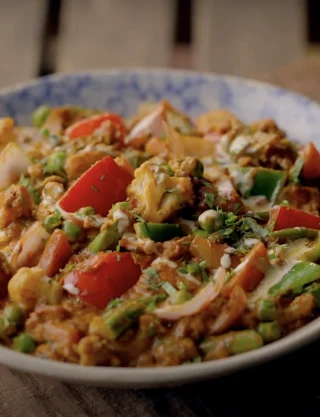
Vegetable kadhai
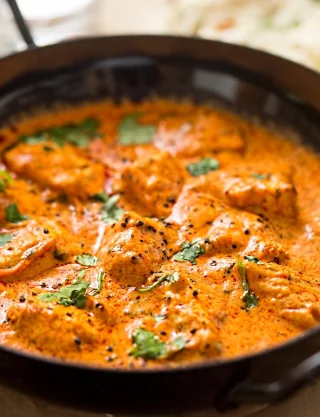
Butter chicken


Mango lassi
Did you know that lassi has an incredibly long history, dating back to 1000 BC or even earlier?
The first smoothie: Lassi originated in the Punjab region of the Indian subcontinent (northern India). The Punjabi word lassī simply refers to a yoghurt-based drink.
According to Ayurveda, accompanying your meal with lassi aids digestion, helps neutralise acidity and thus helps you balance your dosha.
Today, lassi is deeply rooted in Indian culture and is often a symbol of hospitality, a staple at celebrations and a global star!
Our lassi kit makes it easy for you to learn how to prepare this much-loved drink.
Our mango lassi kit
We provide all the spices and dry ingredients needed to prepare this drink in this kit, which is freshly hand-prepared to order.
You will need to source the necessary fresh ingredients from your local grocery store. We believe deeply in the importance of healthy, local food and therefore recommend that you buy these fresh products from a short-circuit store near you.
As some of these spices are not grown here in France, we import them directly from India via our carefully selected partners in respect of fair trade.
To learn more about where our spices come from, please feel free to send us an email. We will be happy to answer all your questions!
Your ready-to-cook kit contains the ingredients listed below as well as a simple and practical recipe sheet, so that this dish is the best you have ever tasted.
-
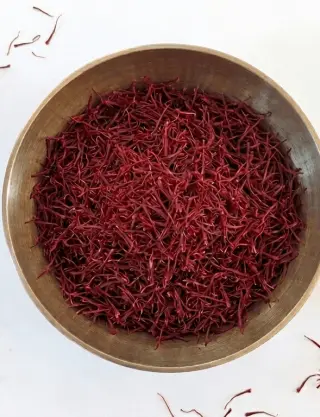
 Saffron, the most expensive spice in the world, has been cultivated in the Kashmir region of India for centuries. Its red-orange threads impart a golden color, floral aroma, and subtle taste to dishes. Saffron is used in royal biryanis, rice pulao, desserts like kheer and kulfi, and the famous Kashmiri kahwa (saffron tea).
Saffron
-
 Dried mango, or amchur in Hindi, is a powder made from dried and ground unripe green mangoes. This tangy spice is typical of North Indian cuisine. It adds fruity acidity to curries, chutneys, and chaats without adding moisture. Amchur is an essential ingredient in chaat masala and many meat marinades.
Dehydrated mango
-
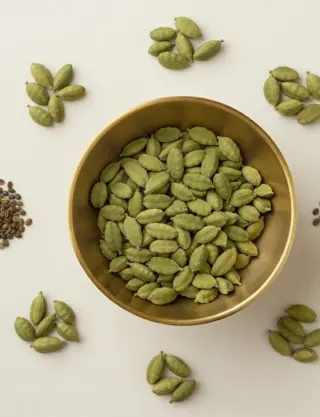
 Cardamom powder is made by grinding green cardamom seeds. More convenient than whole pods, it instantly releases its floral, sweet aroma. It is mainly used in Indian desserts like kheer, gulab jamun, and ladoos, as well as to flavor chai and Indian coffee.
Cardamom powder
-
 Almonds hold a special place in Indian cuisine, particularly in Mughlai dishes and desserts. They are used whole, slivered, or ground to enrich kormas, biryanis, and halwas. Badam milk (almond milk) is a traditional comforting drink. Almonds are also consumed soaked in the morning for their benefits according to Ayurveda.
Almond
The recipe requires the following ingredients that are not included in your kit, we recommend buying these ingredients locally.
-
 Water is an essential element in preparing Indian dishes. It is used to cook rice, prepare dals, thin sauces, and adjust the consistency of curries. The quality and quantity of water added directly influences the final texture of the dish.
Water
-
 Sugar plays an important role in Indian cuisine, not just in desserts. It is added to some curries to balance the acidity of tomatoes and the heat of spices. Jaggery (gur), an unrefined sugar made from sugarcane or palm, is traditionally preferred for its complex flavors and benefits according to Ayurveda.
sugar
-
 Yogurt (dahi) is a fundamental ingredient in Indian cuisine. It is used in marinades to tenderize meat, as a base for raita (cooling condiment), and to prepare lassi and chaas. Yogurt adds acidity and creaminess to curries and helps temper spices. Making homemade yogurt is a daily tradition in many Indian households.
Yogurt
-
 Milk is a sacred and ubiquitous ingredient in Indian cuisine. It is the base of paneer, khoya (reduced milk), ghee, and many desserts like kheer, rasmalai, and gulab jamun. Indian chai is traditionally made by boiling tea in milk. In Hindu culture, milk is associated with purity and is offered during religious rituals.
Milk
-

Ice cubes
-

Mixer
Table Indienne est une jeune entreprise à votre écoute, contactez nous si vous pensez que nous devrions inclure ces ingrédients dans nos kits ou bien vous les proposer en option.
| Directly selected smallholder producers | Yes |
| Cooking time | 10 minutes |
| Level of difficulty | Beginner |
| Spice level | Low |
| Number of servings | 2 |
| Vegetarian | Yes |
| Made in Alsace | Yes |

Mihika's note
My mother is originally from Ratnagiri (the region par excellence for the famous Alphonso mangoes) so it is no surprise that in my family we ate mangoes for breakfast, lunch and dinner as soon as the season arrived! With this Mango Lassi, I wanted to recreate and share with you exactly that same pure joy of savouring mango. A sip of summer and happiness! 🥭🥛✨
Mihika Mahakal
Founder, Table Indienne
Spices from this kit available on our website
These spices used in this kit are available individually on our website
Learn more
Lassi is a yogurt-based drink with the consistency of a smoothie, served chilled, traditionally in a small clay cup, the kulhar. It comes from Punjab, where yogurt is traditionally made from water buffalo milk. The word, borrowed from Hindi, is first attested in English only in 1882, and its ultimate origin remains uncertain: it has been linked to the Sanskrit lasya (“stickiness”) or rasah (“juice”).
One often reads that lassi goes back to 1000 BC, or even earlier. No solid source allows the drink to be dated so precisely: it is better to remember that it is an ancient Punjabi drink whose written history is poorly documented.
Salty, spiced or sweet
Basic lassi is made by blending yogurt, water and spices. Common variations add salt, cumin or cardamom. Namkeen lassi is salty, with salt, black pepper and cumin. Masalewal lassi is spiced, with almonds, ginger, green chillies and pistachios. Meethi lassi is sweet, flavoured with cardamom, rosewater and saffron. And fruit is added, mango or strawberry.
The mango, fruit of India
The mango originates in the north-east of South Asia, in present-day Bangladesh, north-eastern India and Myanmar; a 2019 study suggests it may have been domesticated first in South-East Asia, without ruling out other explanations. Its name has travelled too: the English mango, which entered in the sixteenth century, comes from the Portuguese manga, from the Malayalam manga, and ultimately from the Tamil māṉ (“mango tree”) and kāy (“unripe fruit”).
In Indian culture it has a place apart. Emperor Ashoka mentions the planting of mango groves along roads in his fifth major edict. The poet Amir Khusrau called it “the fairest fruit of Hindustan”. Akbar is said to have planted an orchard of 100,000 trees near Darbhanga, in Bihar. Mango flowers and leaves are used in the worship of Saraswati, at Vasant Panchami, and decorate Ganesh Chaturthi celebrations. The mango is India’s national fruit, and India alone accounts for about 43% of the world’s production of mangoes, mangosteens and guavas; the Alphonso is considered “the king of mangoes”.
Did you know?
In India, mangoes are harvested and sold from March to May, and it takes four to five months from flowering to ripe fruit. Our kit contains dried mango: all you need to make a mango lassi in any season.
| Characteristic | Detail |
|---|---|
| Drink | Mango lassi, a cool yogurt drink |
| Origin | Punjab, in northern India |
| Preparation | About 10 minutes, for 2 people |
| Diet | Vegetarian |
Our kit is prepared by hand, to order, to guarantee its freshness. It provides the dry ingredients, and you bring the yogurt and a few everyday items. Some of the spices, which do not grow in France, are imported directly from India through our partners.
What your kit contains
| In the kit | Role in the drink |
|---|---|
| Dried mango | The fruit, which gives the lassi its flavour and colour |
| Saffron | The fragrance and the golden hue |
| Cardamom powder | The fresh, floral note, signature of sweet lassis |
| Almond | Crunch and roundness |
To provide yourself
- Plain yogurt, preferably from a local shop
- A little milk and water, sugar and ice
- A blender
Mango lassi is creamy, fresh and fruity, with the gentle acidity of yogurt balancing the sweetness of the mango. Saffron gives it a floral fragrance and a golden hue, cardamom a fresh, floral note, almond a discreet roundness.
It is a drink that is both indulgent and thirst-quenching, served well chilled.
Preparing the kit
- Allow about 10 minutes, for 2 people
- For the quantities and the precise method, follow the instructions in the kit
- Serve at once, well chilled, in a glass or, to play the part, in a clay cup
Taking it further
- Steep the saffron for a few minutes in a little hot milk before blending, to release its fragrance and colour
- Salted version (namkeen): replace the sugar with salt, black pepper and a little toasted cumin
- For a thicker lassi, use less water; for a lighter one, add ice
What to serve it with
Lassi cools spicy dishes. It is happily drunk with an Indian meal, for example our chicken biryani or the vegetable pulao.
Storage advice
- Keep the pouch closed, somewhere dry, away from heat, light and humidity
- The kit is prepared to order: use it without leaving it too long, following the instructions on the pouch
- Lassi is best enjoyed fresh, just after preparation
Allergens
The kit contains almonds (tree nuts), and you will add yogurt and milk. If you have any allergies, check the label on the pouch and let us know your allergens when you place your order.
What is a lassi?
It is a drink made of yogurt blended with water and spices or fruit, with the consistency of a smoothie. It comes from Punjab and is served chilled, traditionally in a clay cup called a kulhar.
Is lassi always sweet?
No. There are salty lassis (with salt, black pepper and cumin), spiced ones (with almonds, ginger, green chillies and pistachios) and sweet ones (with cardamom, rosewater, saffron or fruit).
Why dried mango?
Because it keeps and lets you make a mango lassi all year round, even outside the fresh mango season, which runs from March to May in India.
Does lassi really date back to 1000 BC?
It is often read, but no solid source dates the drink so precisely. The word lassi is attested in English only in 1882. All we know is that it comes from Punjab.
Does this kit contain allergens?
It contains almonds. You will add yogurt and milk. Check the label on the pouch and tell us your allergens when you place your order.
Can it be made in advance?
Lassi is best enjoyed fresh, just after preparation. You can, however, prepare the ingredients in advance and blend at the last moment.
-
Lassi is a yogurt-based drink with the consistency of a smoothie, served chilled, traditionally in a small clay cup, the kulhar. It comes from Punjab, where yogurt is traditionally made from water buffalo milk. The word, borrowed from Hindi, is first attested in English only in 1882, and its ultimate origin remains uncertain: it has been linked to the Sanskrit lasya (“stickiness”) or rasah (“juice”).
One often reads that lassi goes back to 1000 BC, or even earlier. No solid source allows the drink to be dated so precisely: it is better to remember that it is an ancient Punjabi drink whose written history is poorly documented.
Salty, spiced or sweet
Basic lassi is made by blending yogurt, water and spices. Common variations add salt, cumin or cardamom. Namkeen lassi is salty, with salt, black pepper and cumin. Masalewal lassi is spiced, with almonds, ginger, green chillies and pistachios. Meethi lassi is sweet, flavoured with cardamom, rosewater and saffron. And fruit is added, mango or strawberry.
The mango, fruit of India
The mango originates in the north-east of South Asia, in present-day Bangladesh, north-eastern India and Myanmar; a 2019 study suggests it may have been domesticated first in South-East Asia, without ruling out other explanations. Its name has travelled too: the English mango, which entered in the sixteenth century, comes from the Portuguese manga, from the Malayalam manga, and ultimately from the Tamil māṉ (“mango tree”) and kāy (“unripe fruit”).
In Indian culture it has a place apart. Emperor Ashoka mentions the planting of mango groves along roads in his fifth major edict. The poet Amir Khusrau called it “the fairest fruit of Hindustan”. Akbar is said to have planted an orchard of 100,000 trees near Darbhanga, in Bihar. Mango flowers and leaves are used in the worship of Saraswati, at Vasant Panchami, and decorate Ganesh Chaturthi celebrations. The mango is India’s national fruit, and India alone accounts for about 43% of the world’s production of mangoes, mangosteens and guavas; the Alphonso is considered “the king of mangoes”.
Did you know?
In India, mangoes are harvested and sold from March to May, and it takes four to five months from flowering to ripe fruit. Our kit contains dried mango: all you need to make a mango lassi in any season.
-
Characteristic Detail Drink Mango lassi, a cool yogurt drink Origin Punjab, in northern India Preparation About 10 minutes, for 2 people Diet Vegetarian Our kit is prepared by hand, to order, to guarantee its freshness. It provides the dry ingredients, and you bring the yogurt and a few everyday items. Some of the spices, which do not grow in France, are imported directly from India through our partners.
What your kit contains
In the kit Role in the drink Dried mango The fruit, which gives the lassi its flavour and colour Saffron The fragrance and the golden hue Cardamom powder The fresh, floral note, signature of sweet lassis Almond Crunch and roundness To provide yourself
- Plain yogurt, preferably from a local shop
- A little milk and water, sugar and ice
- A blender
-
Mango lassi is creamy, fresh and fruity, with the gentle acidity of yogurt balancing the sweetness of the mango. Saffron gives it a floral fragrance and a golden hue, cardamom a fresh, floral note, almond a discreet roundness.
It is a drink that is both indulgent and thirst-quenching, served well chilled.
-
Preparing the kit
- Allow about 10 minutes, for 2 people
- For the quantities and the precise method, follow the instructions in the kit
- Serve at once, well chilled, in a glass or, to play the part, in a clay cup
Taking it further
- Steep the saffron for a few minutes in a little hot milk before blending, to release its fragrance and colour
- Salted version (namkeen): replace the sugar with salt, black pepper and a little toasted cumin
- For a thicker lassi, use less water; for a lighter one, add ice
What to serve it with
Lassi cools spicy dishes. It is happily drunk with an Indian meal, for example our chicken biryani or the vegetable pulao.
-
Storage advice
- Keep the pouch closed, somewhere dry, away from heat, light and humidity
- The kit is prepared to order: use it without leaving it too long, following the instructions on the pouch
- Lassi is best enjoyed fresh, just after preparation
Allergens
The kit contains almonds (tree nuts), and you will add yogurt and milk. If you have any allergies, check the label on the pouch and let us know your allergens when you place your order.
-
What is a lassi?
It is a drink made of yogurt blended with water and spices or fruit, with the consistency of a smoothie. It comes from Punjab and is served chilled, traditionally in a clay cup called a kulhar.
Is lassi always sweet?
No. There are salty lassis (with salt, black pepper and cumin), spiced ones (with almonds, ginger, green chillies and pistachios) and sweet ones (with cardamom, rosewater, saffron or fruit).
Why dried mango?
Because it keeps and lets you make a mango lassi all year round, even outside the fresh mango season, which runs from March to May in India.
Does lassi really date back to 1000 BC?
It is often read, but no solid source dates the drink so precisely. The word lassi is attested in English only in 1882. All we know is that it comes from Punjab.
Does this kit contain allergens?
It contains almonds. You will add yogurt and milk. Check the label on the pouch and tell us your allergens when you place your order.
Can it be made in advance?
Lassi is best enjoyed fresh, just after preparation. You can, however, prepare the ingredients in advance and blend at the last moment.
Why we created a Mango Lassi kit?

Anti-waste
Have you always wanted to cook Indian dishes, but never knew where to buy all the spices, or what to do if the result is not good? We are here to answer this problem with our kit! No need to buy spices that you will never use again, we only put the necessary amount of spices in your kit.
Authentic flavors
Our spices come directly from India. They are carefully selected to give you an authentic flavor.
Step-by-step recipe and instructions
We know well that Indian recipes can be difficult to understand. We provide you with step-by-step instructions and recipes to ensure you prepare the best possible version of the dish every time!

Demystifying the facts
Do Indians use the famous "curry"?
Check out our blog article to discover why curry doesn't really exist in India.
Why buy all these spices when I can just use curry?
Check out our blog article to discover the wide variety of spices used in India.
Questions & Answers
Thank you! Your question has been sent. Mihika will answer soon and you will receive an email.

Mango Lassi
You might also like
Dal Tadka
Chicken Korma