Kashmiri red chili is intimately tied to the culinary identity of the Kashmir Valley. Although chilies arrived in India via Portuguese traders in the 16th century (from the Americas), it was in Kashmir that a unique variety developed over centuries of selection by local farmers, prioritising colour and mildness over the intensity of heat.
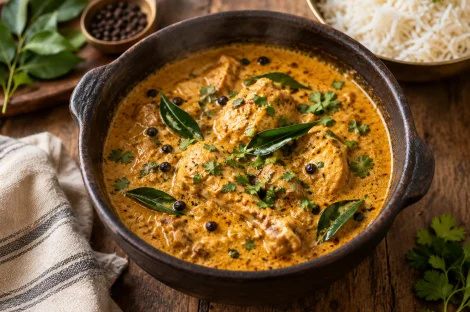
In Kashmiri cuisine (one of the most refined on the subcontinent), chili is not a vehicle for raw heat but a natural pigment and flavour enhancer. Rogan josh, the iconic dish of Kashmir, owes its deep red robe almost exclusively to the Kashmiri chili. The word rogan means "oil" or "red" in Persian, and josh means "heat" or "passion", a perfect description of what the Kashmiri chili brings to the table.
The Kashmiri culinary tradition of Wazwan (a ritual feast of 36 courses served at weddings and celebrations) uses Kashmiri chili as a central ingredient in the majority of its dishes. The vasta waza (master chef) considers the quality of the chili to be one of the most decisive factors in the success of the feast.
Over time, the Kashmiri chili has become a benchmark across all of India for colour. The expression "Kashmiri red" is synonymous with the most desirable deep red hue in Indian cooking, and numerous dishes throughout the country seek to reproduce this characteristic colour.
Did you know?
- The Kashmiri chili has been cultivated in Kashmir for approximately 400 years; it has been selectively bred over generations for its colour rather than its heat
- The Wazwan (the 36-course Kashmiri wedding feast) uses Kashmiri chili in the majority of its preparations
- Rogan josh takes its name from the Persian rogan (oil/red) and josh (heat/passion); it is the colour, not the burn, that is celebrated
- Kashmiri chili is often soaked in hot water then ground into a paste to create a colour concentrate used as a base in many dishes
- The intense red colour comes from a high concentration of carotenoids (capsanthin and capsorubin), the same pigments found in paprika
| Characteristic | Detail |
|---|
| Latin name | Capsicum annuum |
| Botanical family | Solanaceae (nightshade family) |
| Local names | Kashmiri Mirch (Hindi/Urdu), Degi Mirch, Kashmiri Lal Mirch |
| Origin | Kashmir Valley, India (~1,600 m altitude) |
| Scoville rating | 1,000 – 2,000 SHU (mild to moderate) |
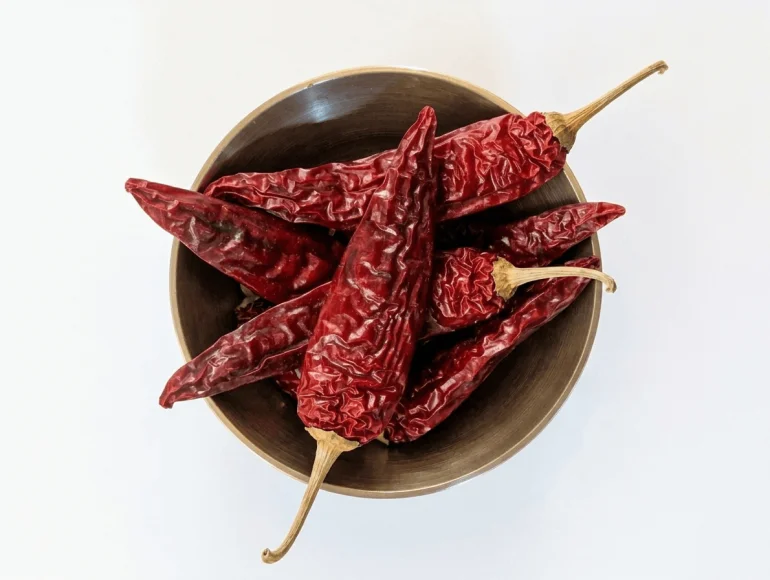
| Product form | Whole dried chilies |
| Harvest | September to November |
The Kashmir Valley, at approximately 1,600 metres altitude, enjoys a temperate climate unique in India: mild summers (25-30°C), cold winters and generous sunshine during the growing season. These conditions are fundamentally different from the hot plains where most Indian chilies grow, and they are at the heart of the Kashmiri chili's distinctive character.
The terroir that makes the difference
- Temperate altitude climate: moderate temperatures and the day-night thermal range favour slow fruit ripening, concentrating carotenoids (red pigments) rather than capsaicin (heat)
- Generous sunshine: long, sunny summer days stimulate carotenoid production, hence the exceptionally intense red colour
- Alluvial soils: the rich soils of the Kashmir Valley, nourished by Himalayan rivers, provide the nutrients needed for fruit quality
- Slow ripening: the shorter growing season and moderate temperatures slow maturation, allowing maximum pigment accumulation
It is this unique terroir that explains why attempts to grow "Kashmiri-style" chilies in other regions of India rarely achieve the same colour intensity. Varieties sold as "Kashmiri chili" on the commercial market often come from other regions and do not reach the same chromatic richness.
Kashmiri red chili is a chili apart: it is judged not on the scale of heat but on that of colour, flavour and elegance. Its flavour profile is mild, rich and deep, making it one of the most versatile chilies in the kitchen.
Tasting notes
- Heat: mild to moderate (1,000 – 2,000 SHU), a warmth that comforts without burning, accessible to all palates. Approximately 5 to 10 times less hot than a jalapeño
- Colour: this is the defining characteristic, a deep crimson red that intensely colours dishes. A few chilies are enough to visually transform an entire curry
- Taste: sweet and earthy, with a subtle sweetness and an elegant bitterness, very different from the aggressive heat of hot chilies
- Aroma: warm and fruity, with notes of roasted bell pepper and a subtle smoky touch
- Our whole dried chilies: the whole chilies preserve colour and aroma optimally. The thin, smooth skin allows for rapid infusion and easy grinding
The Kashmiri chili is often compared to Hungarian paprika: both are chilies of the same species (Capsicum annuum) selected for colour rather than heat. Yet the Kashmiri chili possesses an aromatic complexity and depth of colour all its own.
Kashmiri red chili is one of the most widely used chilies in Indian cooking: not for its heat but for its ability to give dishes a deep red colour and a rich, mild flavour. It is the ingredient that makes the difference between a "brown" curry and a "brilliantly red" one.
Signature dishes
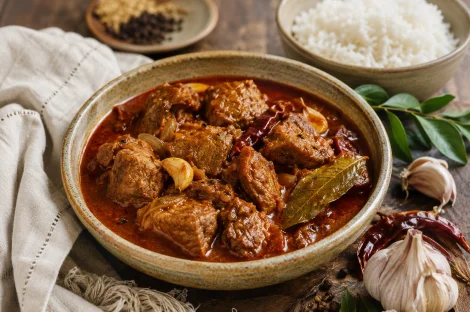
- Rogan Josh: the iconic lamb curry of Kashmir; the deep red colour comes entirely from Kashmiri chili
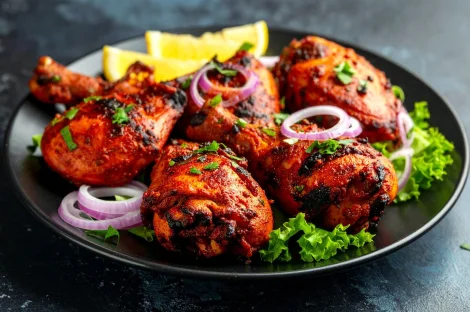
- Tandoori: traditional tandoori marinades use Kashmiri chili for their characteristic red colour (no artificial colouring in the authentic version)
- Butter Chicken / Murgh Makhani: the creamy orange-red sauce owes its hue to Kashmiri chili
- Dum Aloo: Kashmiri potatoes in sauce, coated in the local chili's red colour
- Yakhni: Kashmiri yoghurt curries, delicately coloured with Kashmiri chili
- Pickles and achars: Kashmiri chili gives preserves their appetising red colour
How to use our whole dried chilies
- Chili paste: soak 4-5 whole chilies in hot water for 20-30 minutes, then blend to a smooth paste; this is the traditional Kashmiri method for creating a concentrate of colour and flavour
- Frying at the start of cooking: break the chilies into pieces and fry them in hot oil with onions; they release their red colour into the fat
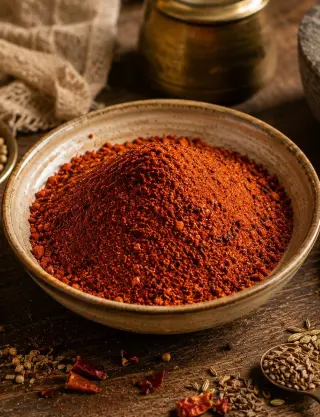
- Home-made powder: grind the dried chilies in a spice mill to produce a vivid red powder; far superior to shop-bought powders that are often diluted
- Marinades: use the Kashmiri chili paste as a marinade base for tandoori meats; yoghurt + Kashmiri chili paste + ginger-garlic
- Dosage: be generous; the heat is mild, and it is the colour you are seeking. 4-6 chilies for a curry serving 4 is a good starting point
Tip: for maximum colour, remove the seeds from the dried chilies before soaking or grinding. The seeds contain more heat but less pigment; removing them yields a more colourful and milder paste.
Kashmiri red chili shares many of the beneficial properties of other chilies, but its moderate capsaicin concentration and high carotenoid content give it a distinctive health profile: the benefits of the pigments without the aggression of extreme heat.
Key documented benefits
- Rich in vitamin A: the high concentration of carotenoids (capsanthin, capsorubin, beta-carotene) makes Kashmiri chili an exceptional source of provitamin A: essential for vision, skin and the immune system
- Powerful antioxidant: carotenoids are among the most effective antioxidants in the plant kingdom. Capsanthin (the dominant red pigment) has antioxidant activity greater than that of beta-carotene
- Digestive health: capsaicin in moderate quantities stimulates the secretion of gastric juices and improves digestion without irritating the stomach, an ideal balance
- Anti-inflammatory: carotenoids and capsaicin at low doses possess complementary anti-inflammatory properties
- Cardiovascular health: carotenoids are associated with a lower risk of cardiovascular disease, and capsaicin promotes blood circulation
- Metabolism: even at low doses, capsaicin mildly stimulates metabolism and thermogenesis
Key compounds
| Compound | Property |
|---|
| Capsanthin | Red carotenoid, powerful antioxidant, specific to red chilies |
| Capsorubin | Carotenoid, contributes to the red colour, antioxidant |
| Beta-Carotene | Provitamin A, vision, immunity, skin |
| Capsaicin | Alkaloid (low dose), digestive, anti-inflammatory, thermogenic |
How to recognise an authentic Kashmiri chili
- Colour: a deep, uniform crimson red; authentic Kashmiri chilies have a noticeably more intense and richer colour than ordinary red chilies
- Shape: medium-elongated (8-12 cm), wrinkled, with thin, smooth skin; smaller and thinner than cayenne peppers
- Aroma: warm and fruity with notes of roasted bell pepper; a distinctive aroma that sets it apart from hot chilies
- Heat: mild and warming; if a chili sold as "Kashmiri" is very spicy, it likely comes from another variety or a blend
- Colour test: soak a chili in hot water; it should release an intense red colour quickly
Storage tips
- Store in an opaque, airtight container: light degrades carotenoids (red pigments) and causes the colour to fade
- Keep in a dry, cool, dark place: moisture is the enemy of dried chilies
- Shelf life: 1 to 2 years for whole chilies under optimal conditions: the colour remains intense during the first year
- Whole chilies keep far better than powder: grind as needed for maximum colour and aroma
- Signs of degradation: loss of vivid red colour (turning brown), weakened aroma, soft texture or presence of mould
Is Kashmiri chili really mild?
Yes, at only 1,000 to 2,000 SHU, Kashmiri chili is one of the mildest chilies in existence. It is approximately 5 to 10 times less hot than a jalapeño. Its purpose is not to burn but to colour and flavour. This is what makes it so versatile, even those sensitive to heat can use it generously.
Is Kashmiri chili the same as paprika?
They are both chilies of the same species (Capsicum annuum) selected for colour, but they are different varieties with distinct profiles. Kashmiri chili has a deeper colour and a more complex aroma than most paprikas. It can replace paprika in recipes, but the reverse is not always true; standard paprika lacks the depth of colour of the Kashmiri chili.
Why use whole chilies rather than powder?
Whole dried chilies preserve their colour and aromas far better than powder. Shop-bought Kashmiri chili powder is often diluted or blended with other less colourful varieties. With whole chilies, you control the quality and can prepare your own chili paste (the traditional method) or your own freshly ground powder.
How do you achieve the red colour of authentic rogan josh?
The traditional Kashmiri method: soak 6-8 whole Kashmiri chilies (deseeded) in hot water for 30 minutes, then blend to a smooth paste. Add this paste to your curry as you fry the onions and spices. The fat from the oil or ghee dissolves the carotenoid pigments and tints the entire dish a deep, uniform red.
Does Kashmiri chili contain artificial colouring?
Absolutely not. The intense red colour of Kashmiri chili is 100% natural, it comes from the carotenoids (capsanthin and capsorubin) naturally present in the fruit. That is in fact the primary appeal of this chili: achieving a brilliant red colour in dishes without any artificial colouring. Be wary, however, of cheap powders sold as Kashmiri that may contain added dyes.





 Gravy Dishes