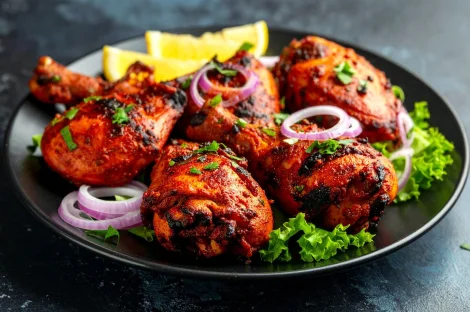
Tandoori Chicken Spice Rub
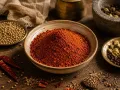
Discover our Tandoori Chicken Spice Rub, a blend of Indian spices sourced from small producers for an authentic tandoori marinade. Spicy, colorful and warming to enhance chicken, vegetables and skewers in the oven or tandoor.
Ready for shipping, delivery time 2-5 business days
Delivery from €4.80 at Mondial Relay pickup points. Free shipping from €50.
Free spice samples with every order.
-
Tandoori Chicken Spice Rub: the authentic tandoori marinade blend
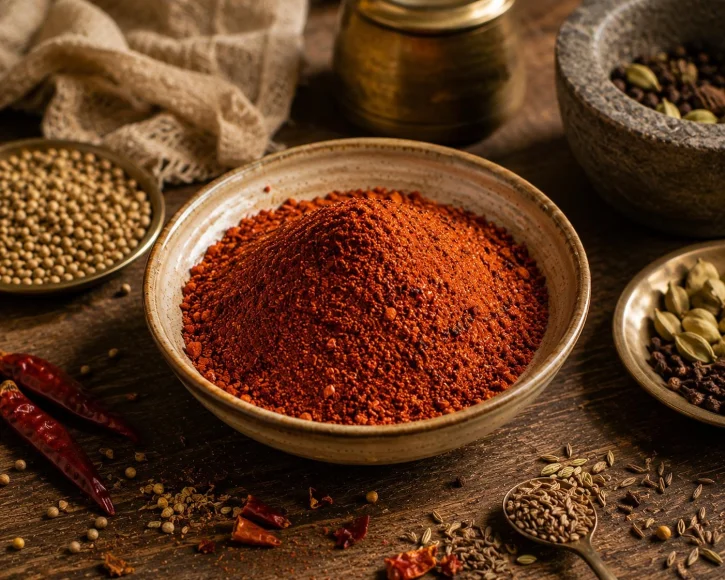
Our Tandoori Chicken Spice Rub is made from Kashmiri chili powder, turmeric, garlic, ginger, coriander and cumin seeds, cloves, star anise, cinnamon, black cardamom seeds, amchur and mace. Inspired by the yoghurt-based marinades cooked in tandoor ovens in northern India, this recipe is made with spices sourced from small Indian producers, imported directly. Simply mix it with yoghurt and lemon juice for a ready-to-use tandoori marinade.
Why choose this ready-made blend?
Gathering and measuring out a dozen different spices for a balanced tandoori marinade takes time and plenty of trial and error. Our blend gives you an already-mastered dosage, ready to use, so every dish has the same balance between the color and mild heat of Kashmiri chili, the tang of amchur, and the warmth of clove, cinnamon and star anise.
Culinary uses:
- Marinade for tandoori chicken, with yoghurt and lemon
- Tandoori vegetables: cauliflower, paneer, potatoes
- Skewers and kebabs grilled in the oven or on the barbecue
- Tandoori-style fish or prawns
- Spiced base for a homemade tikka masala sauce
- Pilaf rice or sautéed vegetables seasoned with a pinch of the blend
Origin and quality:
We source the spices in this blend from small Indian producers, through direct import and short supply chains, to guarantee an authentic, premium-quality product. This blend isn't imported ready-made or mass-produced: Mihika hand-mixes it herself, in our Alsace workshop, in small batches made to order, for maximum freshness with every order.
To see all these proportions applied step by step, check our authentic tandoori chicken recipe.
Storage:
To preserve all its aromas, store your Tandoori Chicken Spice Rub in a dry place, away from light and humidity, in its airtight packaging.
-
This ready-to-use spice blend contains the following ingredients, in the proportions listed.
-
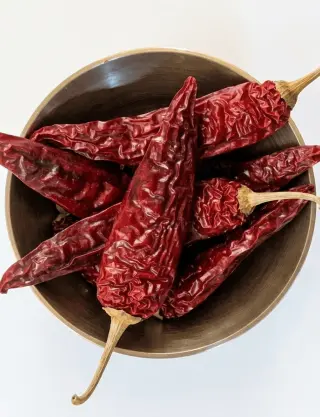
Kashmiri red chilli
-
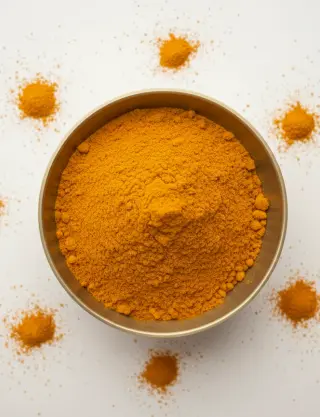
Turmeric powder
-
Garlic powder
-
Ginger is native to the rainforests of Maritime Southeast Asia and is one of the first spices to have been exported from Asia. It was introduced to India very early in its history and has been cultivated there for thousands of years, becoming an integral part of both its cuisine and traditional medicine, Ayurveda. Ginger is a foundational ingredient in Indian cooking. It is a key component of the aromatic paste known as ginger-garlic paste, which forms the flavor base for countless curries, dals, and marinades. It provides a pungent, spicy, and warm flavor. Fresh ginger is also grated or julienned and added to stir-fries, and is famously used to make a soothing and spicy chai (tea).Ginger
-
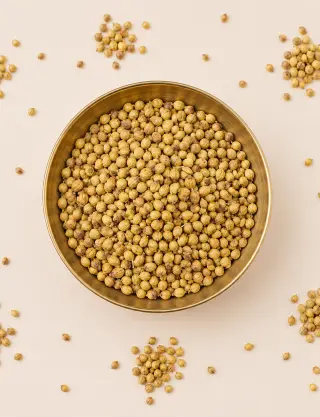
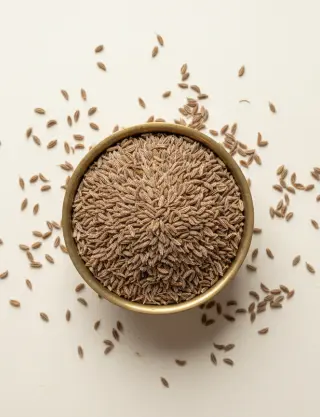
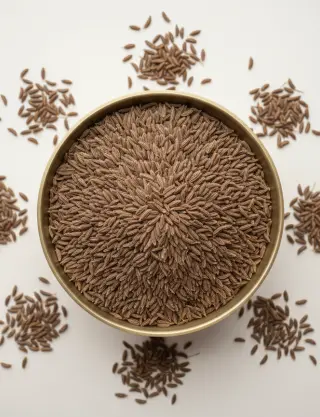
The dried seeds have a warm, citrusy, and nutty flavor that intensifies when toasted. They are a fundamental ingredient in many Indian spice blends, such as garam masala and curry powder. Whole seeds are often used in tempering (tadka), where they are fried in hot oil or ghee to release their aroma before other ingredients are added.In addition to their culinary uses, coriander has a long history in Ayurvedic medicine where it is valued for its digestive and cooling properties.Coriander seeds
-
While thought to have originated in the Middle East, cumin has been cultivated in India for millennia and is a cornerstone of Indian cooking. Cumin is used both whole and ground. The whole seeds are often fried in hot oil at the beginning of a dish (Tadka) to impart a warm, earthy aroma. Ground cumin is a key ingredient in almost all curry powders and spice blends like garam masala.Cumin
-
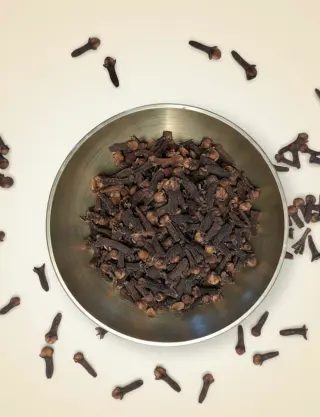
Cloves are native to the Maluku Islands of Indonesia but have been a highly prized spice in India for centuries. Cloves have a strong, pungent, and sweet aroma. They are used whole in rice dishes and curries, and are also a key ingredient in many spice blends, including garam masala.Cloves
-
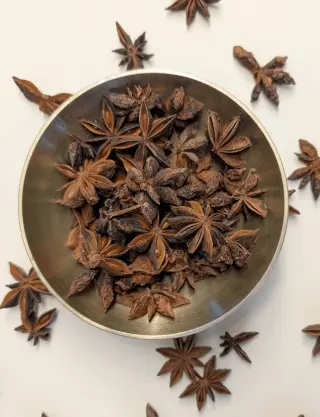
Native to Vietnam and Southern China, star anise has been used in Indian cooking for many years, likely arriving via trade routes. Star anise has a strong licorice flavor and is a key component of garam masala and other spice blends. It is often used whole to flavor biryani and other rich, meaty dishes.Star anise
-
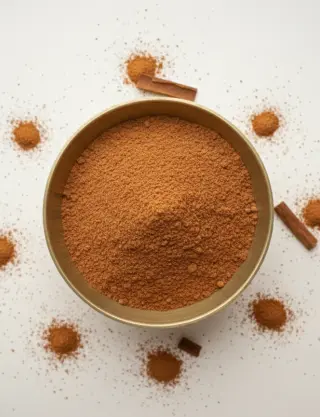
Cinnamon is a spice obtained from the inner bark of several tree species from the genus Cinnamomum. Cinnamon is used mainly as an aromatic condiment and flavouring additive in a wide variety of cuisines, sweet and savoury dishes, biscuits, breakfast cereals, snack foods, bagels, teas, hot chocolate and traditional foods. The aroma and flavour of cinnamon derive from its essential oil and principal component, cinnamaldehyde, as well as numerous other constituents, including eugenol.Cinnamon
-
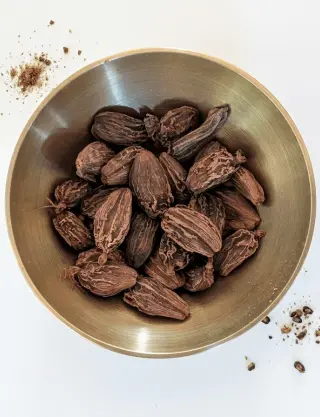
Black cardamom
-
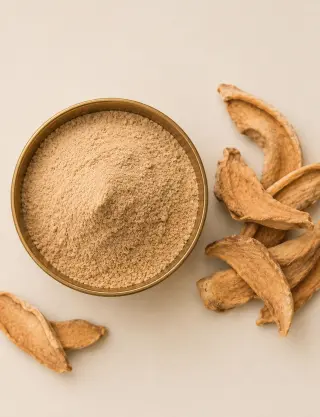
Amchur (dried mango powder)
-
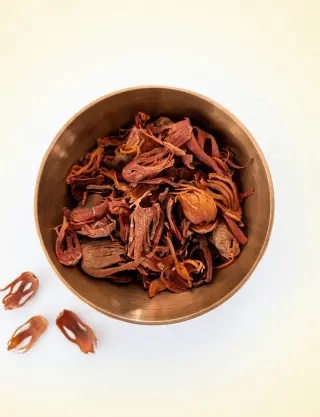
Mace is the red covering that surrounds the nutmeg seed. This precious spice, native to the Banda Islands in Indonesia, is used in Mughlai and Kashmiri cuisines for its warm, slightly sweet notes. Mace is an ingredient in garam masala and flavors royal biryanis, kormas, and refined desserts.Mace
-
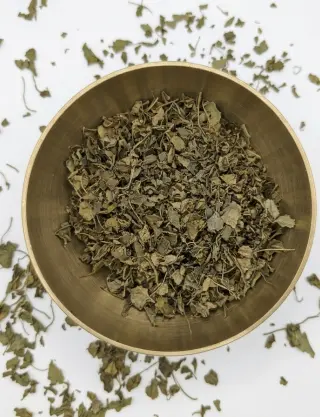
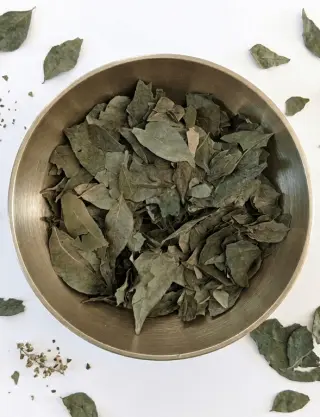
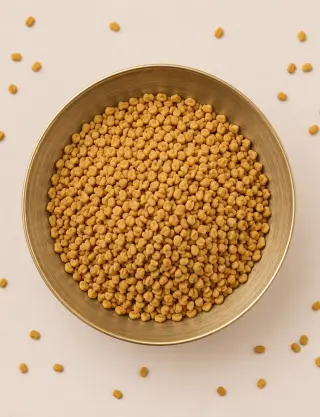
Fenugreek is a plant cultivated throughout India, and the leaves are dried to create this aromatic spice. These dried leaves have a slightly bitter and savory flavor. They are typically crushed between the palms and sprinkled into a dish toward the end of cooking to add a distinctive nutty, savory aroma, especially in curries and lentil dishes.Dried fenugreek leaves
-
Ginger powder
-
-
Turmeric is traditionally used for its anti-inflammatory properties
Garlic traditionally supports healthy immune function
Ginger is traditionally used to support digestion
Cumin seeds traditionally aid digestion
Coriander seeds are traditionally associated with healthy digestion
Cloves are rich in natural antioxidants
Cinnamon traditionally helps support balanced blood sugar
Star anise is traditionally used for its digestive benefits
-
Origin India Quality Premium Type Spice blend for tandoori marinade Taste profile Spicy and vividly colored by Kashmiri chili, mildly hot, with the tang of amchur and the warmth of clove, cinnamon and star anise. Composition Kashmiri chili powder, turmeric, garlic, ginger, coriander seeds, cumin seeds, cloves, star anise, cinnamon, black cardamom seeds, amchur (dried green mango powder), mace. The 25 g size also includes a touch of dried fenugreek leaves (kasuri methi). Made in Alsace Yes
app.ui.spices_in_this_blend
app.ui.spices_from_blend_available_separately
Learn more
The tandoor, a cylindrical clay oven fired with charcoal, is one of the oldest known cooking implements on the Indian subcontinent. Similar ovens have been unearthed at several Indus Valley civilisation sites, notably at Kalibangan in Rajasthan, where archaeologists identified rows of clay ovens dated to around 2600 BC. Poultry bones showing char marks were even found there, evidence that cooking over intense fire in this type of oven has been practised in the region for more than four thousand years.
The tandoor as we know it today, associated with Punjabi and Mughal cuisine, was refined over the centuries, notably under Persian and Central Asian influence brought by successive invasions of north-west India. But the spiced marinade and tandoori chicken served around the world today are a much more recent invention, and far better documented than these ancient origins.
Kundan Lal Gujral, from Peshawar to Delhi
The story has a name: Kundan Lal Gujral. In the 1920s, this young cook worked at a small eatery called Moti Mahal, run by Mokha Singh Lamba in Peshawar, then in the North-West of British India (now in Pakistan). There he perfected tandoor cooking and developed a yoghurt-and-spice marinade meant to tenderise meat while deeply flavouring it.
The 1947 Partition changed everything. Forced to flee the newly formed Pakistan, Kundan Lal Gujral reached Delhi and reopened his Moti Mahal restaurant there with two partners, Kundan Lal Jaggi and Thakur Dass, recreating his recipe from Peshawar. Success was immediate and reached far beyond the circle of Punjabi refugees: foreign diplomats, visiting heads of state and travellers passing through Delhi discovered tandoori chicken, which within a few decades became one of the most copied and exported Indian dishes in the world. Kundan Lal Gujral, later dubbed 'the inventor of tandoori', is also credited with inventing butter chicken and dal makhani in the same kitchen, born from leftover marinade and sauce.
Did you know?
The deep red colour of tandoori chicken owes nothing to artificial dye in the traditional recipe: it comes from Kashmiri chilli, a mild but deeply coloured variety chosen precisely to give this striking hue without making the dish too hot.
A second story, in Glasgow
Tandoori's global success spawned a direct descendant whose origin is still debated: chicken tikka masala. A widely told, well-documented version of its story places its invention in the 1970s in Glasgow, Scotland, at the Shish Mahal restaurant run by Ali Ahmed Aslam, who was originally from the Lahore region of Punjab. A customer is said to have complained his chicken tikka was too dry; Aslam reportedly improvised a sauce from tinned tomato soup, cream and spices to go with it. The dish is now so popular in the UK that it's sometimes called the country's 'national dish', though several British restaurants also claim to have invented it.
Garam masala: a principle, not a fixed recipe
Several spices in this blend (cloves, star anise, cinnamon, mace, black cardamom) belong to the wider garam masala family, literally 'warm mixture' in Hindi and Urdu. Contrary to a common Western assumption, garam masala is not one single, fixed recipe: every region, every Indian household has its own version, with different proportions and sometimes different spices, passed down orally from generation to generation. The term names an entire category of 'warming' spice blends in the Ayurvedic sense, rather than a standardised formula like the ones found on Western supermarket shelves today, which were themselves often standardised during the British colonial era to make export easier.
Rather than a single spice grown in one specific region, this blend brings together eleven ingredients chosen to recreate the traditional tandoori marinade from northern India, home of the tandoor oven and the Punjabi cuisine that made it famous worldwide.
| Spice | Role in the blend |
|---|---|
| Kashmiri chilli | Deep red colour, mild heat |
| Turmeric | Golden colour, earthy note |
| Garlic and ginger | The aromatic base of any Indian marinade |
| Coriander and cumin seeds | A warm, slightly citrusy spiced backbone |
| Cloves, star anise, cinnamon, mace | Warm, sweet notes, in the garam masala register |
| Black cardamom | Characteristic smoky note |
| Amchur (dried green mango powder) | Tang that balances the whole blend |
A Punjabi tradition gone global
Tandoor cooking is historically associated with Punjab, a region straddling present-day India and Pakistan, and the Peshawar area, where local clay was well suited to building these cylindrical ovens. Today the recipe travels far beyond: the dry spice mix lets you recreate that aromatic signature without owning a tandoor, simply by marinating meat or vegetables in yoghurt before cooking in the oven or on the grill, which fairly closely reproduces the intense dry heat of the traditional oven.
Real Kashmiri chilli
Genuine Kashmiri chilli grows at altitude in Jammu and Kashmir and Himachal Pradesh, where the cool climate gives it a thin skin and a deeply prized red colour. Its high demand has, however, given rise to a common commercial practice: many 'Kashmiri chillies' sold in shops are actually Byadgi chillies, grown in Karnataka, chosen for their very similar colouring qualities. Both varieties share the same mild, deeply coloured profile that made tandoori chicken famous.
Mace and nutmeg, one and the same seed
The mace that flavours this blend is not a standalone spice: it's the aril, the thin orange-red membrane wrapped around the nutmeg shell before being separated, flattened and dried. A single harvest therefore yields two distinct spices, close in aroma but very different in strength, mace being noticeably more concentrated.
Two trade routes in a single blend
This blend actually brings together two different trading histories. Garlic, ginger, turmeric, coriander and cumin have been grown locally in India since antiquity. Cloves, star anise and nutmeg (and therefore its mace), on the other hand, historically came from the spice islands of South-East Asia - the Moluccas for cloves and nutmeg, China for star anise - and only became a lasting part of Indian cooking after centuries of maritime trade. Tandoori masala is thus, without anyone really thinking about it, an edible record of the silk and spice routes that shaped Indian cuisine long before European colonisation.
This blend is warm and fragrant rather than truly hot: the Kashmiri chilli that gives it its colour is one of India's mildest varieties, with a Scoville rating well below that of the fresh green chillies used in other Indian dishes. You'll notice the round warmth of cumin and coriander, the earthy, slightly bitter note of turmeric, then a sharp hit of tang from the amchur that lifts the whole mix and balances the richness of the marinade's yoghurt.
In the background, the garam masala spices (cloves, star anise, cinnamon, mace, black cardamom) bring a sweet, slightly resinous warmth that develops mostly during cooking, as the marinade chars and caramelises at the edges of meat or vegetables exposed to high heat. Black cardamom, smokier and stronger than its green cousin, adds a depth that clearly sets this blend apart from an ordinary curry powder.
Garlic and ginger, almost always used together in Indian cooking as a fresh paste, form the aromatic base here that supports the other spices without ever overpowering them: their job is to flavour the meat or vegetables deeply during marinating, far more than to add heat on the palate.
The classic tandoori chicken marinade
- Mix the sachet's contents with thick plain yoghurt (Greek yoghurt or skyr work well), a squeeze of lemon juice and a little neutral oil
- Score the chicken pieces lightly so the marinade penetrates better, then coat them fully
- Marinate for at least 2 hours in the fridge, ideally overnight for a more tender, more flavourful result
- Cook in a hot oven (220-240°C), under the grill or on the barbecue, brushing with a little melted butter or ghee towards the end for shine and flavour
Why marinate in yoghurt?
Yoghurt is more than just a carrier for the spices: its mild acidity (lactic acid) and enzymes gradually tenderise the meat's fibres without breaking them down harshly the way a stronger acid would (vinegar, pure lemon juice). This slow action allows for long marinating times, up to a full night, without the surface of the meat turning mushy - a common pitfall with citrus-only marinades.
Vegetarian version
- Cubed paneer, marinated then skewered and grilled with peppers and onions for a classic paneer tikka
- Whole or large-floret cauliflower, marinated then roasted in the oven: a popular plant-based alternative in contemporary Indian restaurants
- Firm tofu, new potatoes or button mushrooms all work well with this marinade
Other uses
- Sprinkled directly onto vegetable skewers before roasting, no marinade needed, for a quick version
- Stirred into olive oil to flavour hummus, a chickpea purée or a yoghurt dip
- A pinch in naan or flatbread dough for a spiced version
- As a dry crust on a firm white fish before pan-frying or oven-baking
Traditional accompaniments
- Mint and fresh coriander chutney, whose freshness contrasts with the charred spice notes
- Thinly sliced red onion salad with lemon, almost always served alongside tandoori chicken in Indian restaurants
- Lime wedges to squeeze over just before eating
- Naan or paratha on the side, or basmati rice for a fuller meal
Did you know?
Tandoori masala is not the same as tikka masala: the former is the dry mix used for the yoghurt marinade before tandoor cooking, while the latter is the tomato-and-cream sauce the already-grilled pieces are simmered in afterwards. In a classic Indian restaurant, the two almost always appear together on the same plate: chicken tikka grilled in the tandoor, then coated in masala sauce.
This blend brings together several spices traditionally used in Indian home cooking for their digestive properties, though no health claim can be made for the blend itself: the available scientific studies look at isolated compounds from each spice, not the combination as eaten at the table.
What the component spices are traditionally used for
- Ginger and cumin seeds : long valued in home Ayurvedic medicine for settling digestion after a rich, protein-heavy meal
- Turmeric : contains curcumin, a compound studied in the lab for its antioxidant properties; its absorption by the body is notably helped by pepper or chilli in the same recipe
- Coriander seeds : traditionally infused for their soothing effect on the digestive system
- Cloves : contain eugenol, a compound with well-documented antiseptic properties, historically used in dentistry before modern anaesthetics existed
- Amchur : a source of vitamin C from dried green mango, long used in home Ayurvedic medicine for its digestive properties and natural tang that stimulates appetite
- Black cardamom : traditionally used in Ayurvedic medicine for its warming properties, especially in cold weather
- Garlic : contains allicin, a sulphur compound studied for its antimicrobial properties, released mainly when garlic is crushed or chopped rather than left whole
Marinating rather than frying
Nutritionally, tandoor or oven cooking has an advantage often highlighted compared with fried Indian dishes or ones served in a rich sauce: marinated meat grills without any significant added fat, most of the fat coming from the marinade's yoghurt itself rather than frying oil.
Precautions
Eaten in normal culinary amounts, this blend is well tolerated by most people. Studies on the active compounds of its spices (curcumin, eugenol in particular) generally look at concentrated extracts at therapeutic doses, far removed from the amounts in a marinade. People on blood-thinning medication or with acid reflux should ask a healthcare professional before regular, heavy consumption.
Quality markers
- Colour : bright, even orange-red; a dull or brownish tone signals an old blend, or one stored in light
- Smell : a clear warm, spiced aroma as soon as you open the pack, with a noticeable tangy note from the amchur
- Texture : fine, even powder, with no lumps or signs of moisture
Storage tips
- Keep in an airtight container, away from direct light and moisture, ideally in a cupboard rather than near the stove
- Shelf life: about 12 to 18 months under good conditions; beyond that, the blend mostly loses aromatic intensity rather than becoming unfit to eat
- Once mixed into a yoghurt marinade, use within 24 to 48 hours and keep refrigerated, never at room temperature because of the dairy
- Avoid dipping a wet spoon into the container, which encourages mould growth
What is the difference between tandoori masala and tikka masala?
Tandoori masala is the dry blend used to make the yoghurt marinade before oven or tandoor cooking. Tikka masala is a tomato-and-cream sauce, served once the meat is already grilled. The two are often used one after the other in the same recipe: meat marinated in tandoori masala and grilled, then coated in tikka masala sauce.
Is this blend very spicy?
No, it is mildly warming. The Kashmiri chilli that gives it its red colour is one of India's mildest varieties, chosen for its colour rather than its heat. Most of what you feel comes from the whole spice blend, not a strong burn like a hot fresh chilli.
How do I make a homemade tandoori marinade?
Mix the sachet's contents with thick plain yoghurt, a squeeze of lemon juice and a little oil. Coat the meat, paneer or vegetables and let rest for at least 2 hours in the fridge, ideally overnight, before cooking in a hot oven, under the grill or on the barbecue.
Can I use this blend for a vegetarian dish?
Yes, it works very well with paneer, cauliflower, new potatoes or firm tofu. The yoghurt-and-spice marinade works the same way, usually with a shorter cooking time than for meat.
How long does this spice blend keep?
About 12 to 18 months in an airtight container, away from light and moisture. Once mixed into a yoghurt marinade, though, it only keeps for 24 to 48 hours in the fridge because of the dairy.
Can I cook this tandoori chicken without an oven or barbecue?
Yes, a hot cast-iron griddle pan gives a close result, though the intense dry heat of a real tandoor (often above 400°C) remains hard to fully replicate at home. Finishing under the oven grill for a few minutes helps recreate the lightly charred edges typical of the dish.
What is the mace in this blend?
Mace is the aril, the thin orange-red membrane that wraps around the nutmeg shell before being separated and dried. It is therefore a different spice from nutmeg, though it comes from the same fruit, with a similar but more delicate aroma.
Is there a vegan alternative to yoghurt for the marinade?
Yes, a thick, plain soy or coconut yoghurt works well, as long as it isn't sweetened. The tenderising effect is slightly less pronounced than with dairy yoghurt's lactic acid, but the result is still very satisfying, especially on firm tofu or vegetables.
Why does black cardamom smell smoky?
Unlike green cardamom, black cardamom pods are traditionally dried over a wood fire before sale, which gives them this characteristic smoky note, quite different from the fresh, floral scent of green cardamom used in other preparations such as chai.

-
The tandoor, a cylindrical clay oven fired with charcoal, is one of the oldest known cooking implements on the Indian subcontinent. Similar ovens have been unearthed at several Indus Valley civilisation sites, notably at Kalibangan in Rajasthan, where archaeologists identified rows of clay ovens dated to around 2600 BC. Poultry bones showing char marks were even found there, evidence that cooking over intense fire in this type of oven has been practised in the region for more than four thousand years.
The tandoor as we know it today, associated with Punjabi and Mughal cuisine, was refined over the centuries, notably under Persian and Central Asian influence brought by successive invasions of north-west India. But the spiced marinade and tandoori chicken served around the world today are a much more recent invention, and far better documented than these ancient origins.
Kundan Lal Gujral, from Peshawar to Delhi
The story has a name: Kundan Lal Gujral. In the 1920s, this young cook worked at a small eatery called Moti Mahal, run by Mokha Singh Lamba in Peshawar, then in the North-West of British India (now in Pakistan). There he perfected tandoor cooking and developed a yoghurt-and-spice marinade meant to tenderise meat while deeply flavouring it.
The 1947 Partition changed everything. Forced to flee the newly formed Pakistan, Kundan Lal Gujral reached Delhi and reopened his Moti Mahal restaurant there with two partners, Kundan Lal Jaggi and Thakur Dass, recreating his recipe from Peshawar. Success was immediate and reached far beyond the circle of Punjabi refugees: foreign diplomats, visiting heads of state and travellers passing through Delhi discovered tandoori chicken, which within a few decades became one of the most copied and exported Indian dishes in the world. Kundan Lal Gujral, later dubbed 'the inventor of tandoori', is also credited with inventing butter chicken and dal makhani in the same kitchen, born from leftover marinade and sauce.
Did you know?
The deep red colour of tandoori chicken owes nothing to artificial dye in the traditional recipe: it comes from Kashmiri chilli, a mild but deeply coloured variety chosen precisely to give this striking hue without making the dish too hot.
A second story, in Glasgow
Tandoori's global success spawned a direct descendant whose origin is still debated: chicken tikka masala. A widely told, well-documented version of its story places its invention in the 1970s in Glasgow, Scotland, at the Shish Mahal restaurant run by Ali Ahmed Aslam, who was originally from the Lahore region of Punjab. A customer is said to have complained his chicken tikka was too dry; Aslam reportedly improvised a sauce from tinned tomato soup, cream and spices to go with it. The dish is now so popular in the UK that it's sometimes called the country's 'national dish', though several British restaurants also claim to have invented it.
Garam masala: a principle, not a fixed recipe
Several spices in this blend (cloves, star anise, cinnamon, mace, black cardamom) belong to the wider garam masala family, literally 'warm mixture' in Hindi and Urdu. Contrary to a common Western assumption, garam masala is not one single, fixed recipe: every region, every Indian household has its own version, with different proportions and sometimes different spices, passed down orally from generation to generation. The term names an entire category of 'warming' spice blends in the Ayurvedic sense, rather than a standardised formula like the ones found on Western supermarket shelves today, which were themselves often standardised during the British colonial era to make export easier.
-
Rather than a single spice grown in one specific region, this blend brings together eleven ingredients chosen to recreate the traditional tandoori marinade from northern India, home of the tandoor oven and the Punjabi cuisine that made it famous worldwide.
Spice Role in the blend Kashmiri chilli Deep red colour, mild heat Turmeric Golden colour, earthy note Garlic and ginger The aromatic base of any Indian marinade Coriander and cumin seeds A warm, slightly citrusy spiced backbone Cloves, star anise, cinnamon, mace Warm, sweet notes, in the garam masala register Black cardamom Characteristic smoky note Amchur (dried green mango powder) Tang that balances the whole blend A Punjabi tradition gone global
Tandoor cooking is historically associated with Punjab, a region straddling present-day India and Pakistan, and the Peshawar area, where local clay was well suited to building these cylindrical ovens. Today the recipe travels far beyond: the dry spice mix lets you recreate that aromatic signature without owning a tandoor, simply by marinating meat or vegetables in yoghurt before cooking in the oven or on the grill, which fairly closely reproduces the intense dry heat of the traditional oven.
Real Kashmiri chilli
Genuine Kashmiri chilli grows at altitude in Jammu and Kashmir and Himachal Pradesh, where the cool climate gives it a thin skin and a deeply prized red colour. Its high demand has, however, given rise to a common commercial practice: many 'Kashmiri chillies' sold in shops are actually Byadgi chillies, grown in Karnataka, chosen for their very similar colouring qualities. Both varieties share the same mild, deeply coloured profile that made tandoori chicken famous.
Mace and nutmeg, one and the same seed
The mace that flavours this blend is not a standalone spice: it's the aril, the thin orange-red membrane wrapped around the nutmeg shell before being separated, flattened and dried. A single harvest therefore yields two distinct spices, close in aroma but very different in strength, mace being noticeably more concentrated.
Two trade routes in a single blend
This blend actually brings together two different trading histories. Garlic, ginger, turmeric, coriander and cumin have been grown locally in India since antiquity. Cloves, star anise and nutmeg (and therefore its mace), on the other hand, historically came from the spice islands of South-East Asia - the Moluccas for cloves and nutmeg, China for star anise - and only became a lasting part of Indian cooking after centuries of maritime trade. Tandoori masala is thus, without anyone really thinking about it, an edible record of the silk and spice routes that shaped Indian cuisine long before European colonisation.
-
This blend is warm and fragrant rather than truly hot: the Kashmiri chilli that gives it its colour is one of India's mildest varieties, with a Scoville rating well below that of the fresh green chillies used in other Indian dishes. You'll notice the round warmth of cumin and coriander, the earthy, slightly bitter note of turmeric, then a sharp hit of tang from the amchur that lifts the whole mix and balances the richness of the marinade's yoghurt.
In the background, the garam masala spices (cloves, star anise, cinnamon, mace, black cardamom) bring a sweet, slightly resinous warmth that develops mostly during cooking, as the marinade chars and caramelises at the edges of meat or vegetables exposed to high heat. Black cardamom, smokier and stronger than its green cousin, adds a depth that clearly sets this blend apart from an ordinary curry powder.
Garlic and ginger, almost always used together in Indian cooking as a fresh paste, form the aromatic base here that supports the other spices without ever overpowering them: their job is to flavour the meat or vegetables deeply during marinating, far more than to add heat on the palate.
-
The classic tandoori chicken marinade
- Mix the sachet's contents with thick plain yoghurt (Greek yoghurt or skyr work well), a squeeze of lemon juice and a little neutral oil
- Score the chicken pieces lightly so the marinade penetrates better, then coat them fully
- Marinate for at least 2 hours in the fridge, ideally overnight for a more tender, more flavourful result
- Cook in a hot oven (220-240°C), under the grill or on the barbecue, brushing with a little melted butter or ghee towards the end for shine and flavour
Why marinate in yoghurt?
Yoghurt is more than just a carrier for the spices: its mild acidity (lactic acid) and enzymes gradually tenderise the meat's fibres without breaking them down harshly the way a stronger acid would (vinegar, pure lemon juice). This slow action allows for long marinating times, up to a full night, without the surface of the meat turning mushy - a common pitfall with citrus-only marinades.
Vegetarian version
- Cubed paneer, marinated then skewered and grilled with peppers and onions for a classic paneer tikka
- Whole or large-floret cauliflower, marinated then roasted in the oven: a popular plant-based alternative in contemporary Indian restaurants
- Firm tofu, new potatoes or button mushrooms all work well with this marinade
Other uses
- Sprinkled directly onto vegetable skewers before roasting, no marinade needed, for a quick version
- Stirred into olive oil to flavour hummus, a chickpea purée or a yoghurt dip
- A pinch in naan or flatbread dough for a spiced version
- As a dry crust on a firm white fish before pan-frying or oven-baking
Traditional accompaniments
- Mint and fresh coriander chutney, whose freshness contrasts with the charred spice notes
- Thinly sliced red onion salad with lemon, almost always served alongside tandoori chicken in Indian restaurants
- Lime wedges to squeeze over just before eating
- Naan or paratha on the side, or basmati rice for a fuller meal
Did you know?
Tandoori masala is not the same as tikka masala: the former is the dry mix used for the yoghurt marinade before tandoor cooking, while the latter is the tomato-and-cream sauce the already-grilled pieces are simmered in afterwards. In a classic Indian restaurant, the two almost always appear together on the same plate: chicken tikka grilled in the tandoor, then coated in masala sauce.
-
This blend brings together several spices traditionally used in Indian home cooking for their digestive properties, though no health claim can be made for the blend itself: the available scientific studies look at isolated compounds from each spice, not the combination as eaten at the table.
What the component spices are traditionally used for
- Ginger and cumin seeds : long valued in home Ayurvedic medicine for settling digestion after a rich, protein-heavy meal
- Turmeric : contains curcumin, a compound studied in the lab for its antioxidant properties; its absorption by the body is notably helped by pepper or chilli in the same recipe
- Coriander seeds : traditionally infused for their soothing effect on the digestive system
- Cloves : contain eugenol, a compound with well-documented antiseptic properties, historically used in dentistry before modern anaesthetics existed
- Amchur : a source of vitamin C from dried green mango, long used in home Ayurvedic medicine for its digestive properties and natural tang that stimulates appetite
- Black cardamom : traditionally used in Ayurvedic medicine for its warming properties, especially in cold weather
- Garlic : contains allicin, a sulphur compound studied for its antimicrobial properties, released mainly when garlic is crushed or chopped rather than left whole
Marinating rather than frying
Nutritionally, tandoor or oven cooking has an advantage often highlighted compared with fried Indian dishes or ones served in a rich sauce: marinated meat grills without any significant added fat, most of the fat coming from the marinade's yoghurt itself rather than frying oil.
Precautions
Eaten in normal culinary amounts, this blend is well tolerated by most people. Studies on the active compounds of its spices (curcumin, eugenol in particular) generally look at concentrated extracts at therapeutic doses, far removed from the amounts in a marinade. People on blood-thinning medication or with acid reflux should ask a healthcare professional before regular, heavy consumption.
-
Quality markers
- Colour : bright, even orange-red; a dull or brownish tone signals an old blend, or one stored in light
- Smell : a clear warm, spiced aroma as soon as you open the pack, with a noticeable tangy note from the amchur
- Texture : fine, even powder, with no lumps or signs of moisture
Storage tips
- Keep in an airtight container, away from direct light and moisture, ideally in a cupboard rather than near the stove
- Shelf life: about 12 to 18 months under good conditions; beyond that, the blend mostly loses aromatic intensity rather than becoming unfit to eat
- Once mixed into a yoghurt marinade, use within 24 to 48 hours and keep refrigerated, never at room temperature because of the dairy
- Avoid dipping a wet spoon into the container, which encourages mould growth
-
What is the difference between tandoori masala and tikka masala?
Tandoori masala is the dry blend used to make the yoghurt marinade before oven or tandoor cooking. Tikka masala is a tomato-and-cream sauce, served once the meat is already grilled. The two are often used one after the other in the same recipe: meat marinated in tandoori masala and grilled, then coated in tikka masala sauce.
Is this blend very spicy?
No, it is mildly warming. The Kashmiri chilli that gives it its red colour is one of India's mildest varieties, chosen for its colour rather than its heat. Most of what you feel comes from the whole spice blend, not a strong burn like a hot fresh chilli.
How do I make a homemade tandoori marinade?
Mix the sachet's contents with thick plain yoghurt, a squeeze of lemon juice and a little oil. Coat the meat, paneer or vegetables and let rest for at least 2 hours in the fridge, ideally overnight, before cooking in a hot oven, under the grill or on the barbecue.
Can I use this blend for a vegetarian dish?
Yes, it works very well with paneer, cauliflower, new potatoes or firm tofu. The yoghurt-and-spice marinade works the same way, usually with a shorter cooking time than for meat.
How long does this spice blend keep?
About 12 to 18 months in an airtight container, away from light and moisture. Once mixed into a yoghurt marinade, though, it only keeps for 24 to 48 hours in the fridge because of the dairy.
Can I cook this tandoori chicken without an oven or barbecue?
Yes, a hot cast-iron griddle pan gives a close result, though the intense dry heat of a real tandoor (often above 400°C) remains hard to fully replicate at home. Finishing under the oven grill for a few minutes helps recreate the lightly charred edges typical of the dish.
What is the mace in this blend?
Mace is the aril, the thin orange-red membrane that wraps around the nutmeg shell before being separated and dried. It is therefore a different spice from nutmeg, though it comes from the same fruit, with a similar but more delicate aroma.
Is there a vegan alternative to yoghurt for the marinade?
Yes, a thick, plain soy or coconut yoghurt works well, as long as it isn't sweetened. The tenderising effect is slightly less pronounced than with dairy yoghurt's lactic acid, but the result is still very satisfying, especially on firm tofu or vegetables.
Why does black cardamom smell smoky?
Unlike green cardamom, black cardamom pods are traditionally dried over a wood fire before sale, which gives them this characteristic smoky note, quite different from the fresh, floral scent of green cardamom used in other preparations such as chai.

Recipes with Tandoori Chicken Spice Rub
Pourquoi choisir Tandoori Chicken Spice Rub de La Table Indienne ?
Fraîcheur et qualité exceptionnelles
Nos épices sont importées directement d'Inde et conditionnées à la demande pour garantir une fraîcheur optimale. Contrairement aux épices vendues en grande surface qui peuvent rester des mois sur les étagères, nous veillons à ce que chaque épice conserve toute sa saveur et son arôme.
Authenticité et traçabilité
Chaque épice provient de régions spécifiques en Inde réputées pour leur savoir-faire. Nous travaillons directement avec des producteurs locaux qui cultivent leurs épices de manière traditionnelle, sans pesticides ni produits chimiques.
Comment bien utiliser cette épice ?
Pour révéler tous les arômes, nous recommandons de faire légèrement griller les épices entières à sec dans une poêle avant de les moudre. Conservez-les dans un endroit sec et à l'abri de la lumière pour préserver leur fraîcheur le plus longtemps possible.
Le saviez-vous ?
Les épices entières sont bien meilleures que les épices moulues
Consultez notre article de blog pour découvrir pourquoi les épices entières conservent mieux leurs arômes.
Questions & Answers
Thank you! Your question has been sent. Mihika will answer soon and you will receive an email.