



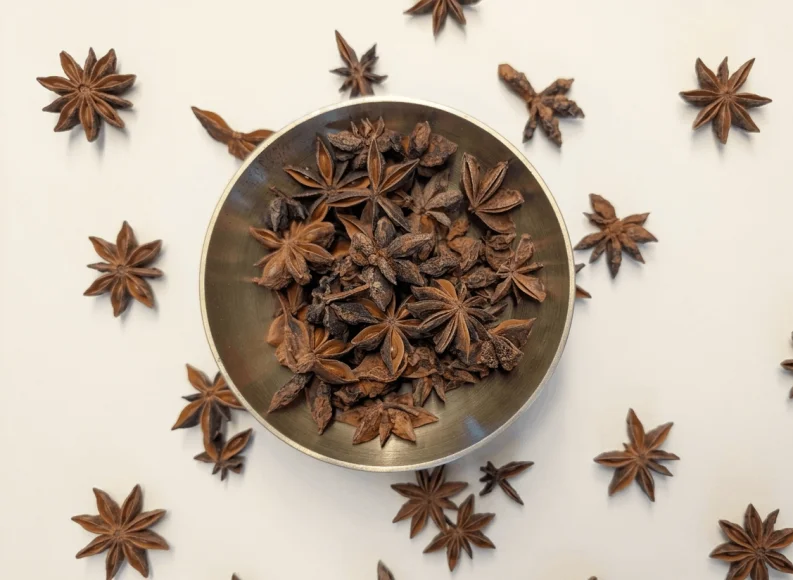
Discover our star anise (badian) whole stars, imported from India. Sweet anise and liquorice flavour to enhance your biryanis, chai masala and desserts.
Ready for shipping, delivery time 3-21 business days
Delivery from €4.80 at Mondial Relay pickup points.
Free spice samples with every order.



-
Star Anise: the star-shaped spice with captivating aromas
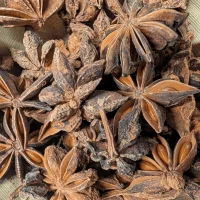
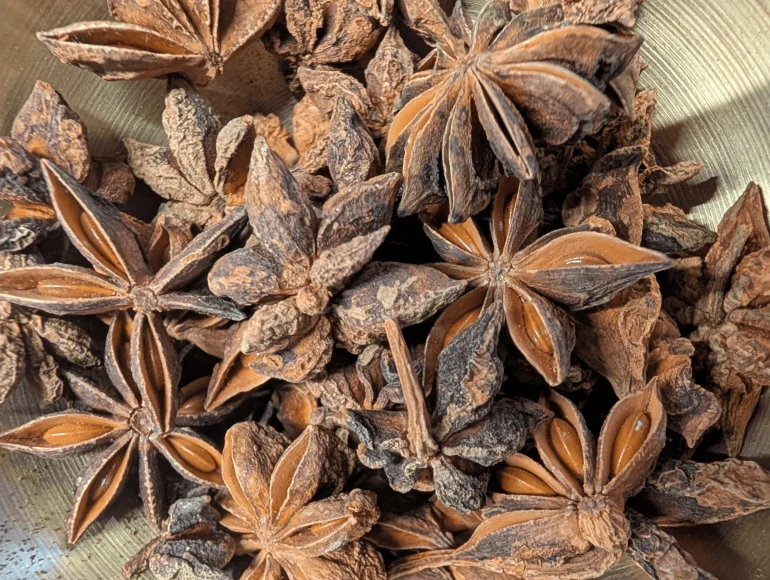
Star anise, also known as badian, is the fruit of the star anise tree (Illicium verum), native to southern China and widely cultivated in India. Recognisable by its eight-pointed star shape, this spice offers a powerful anise and liquorice aroma with subtly woody and sweet notes. Each branch contains a shiny seed that concentrates the essential oils. We select premium whole stars to guarantee intact flavour and fragrance.
Why choose whole star anise?
Whole star anise retains the full richness of its essential oils and releases its aromas gradually during cooking. Used whole in slow-cooked dishes, broths and infusions, it allows perfect control of aromatic intensity. Simply remove before serving. Star anise is a fundamental ingredient in garam masala and Chinese five-spice blend.
Culinary uses:
- Chai masala and infusions for a warm anise note
- Biryanis and pulaos for a soft, enveloping aroma
- Homemade garam masala and traditional spice blends
- Curries and slow-cooked dishes for aromatic depth
- Compotes, gingerbread and desserts for a fragrant touch
Origin and quality:
We select our spices exclusively from smallholder farms in India that grow without pesticides, guaranteeing a natural product of premium quality.
Storage:
To preserve all its aromas, store your star anise in a dry place, away from light and humidity, in its airtight packaging.
-
Aids digestion and reduces bloating
Rich in antioxidants (shikimic acid)
Relieves cough and respiratory problems
Natural anti-inflammatory properties
Antibacterial and antifungal properties
Boosts the immune system
Promotes relaxation and improves sleep
Naturally freshens breath
-
Nutritional declaration per 100g
Nutritional component Per 100g Energy 1 418 kJ / 337 kcal Fat ~ 15,9 g of which saturated fat ~ 590 mg Carbohydrates ~ 50 g of which sugars ~ 0 mg Dietary fiber ~ 14,6 g Proteins ~ 17,6 g Salt ~ 50 mg Sodium ~ 20 mg -
Directly selected smallholder producers Yes Pesticides free Yes Vegetarian Yes Origin India Quality Premium Type Whole stars Taste profile Anise and liquorice flavour with sweet and mellow notes, similar to green anise but more complex and aromatic. -
Sylvain Verified purchaseThis customer purchased this product before leaving their reviewPublished on Aug 16, 2026 · Purchased on Apr 20, 2026Add your reviewView more
Kits using this spice
Discover our kits with recipes to learn how to use this spice
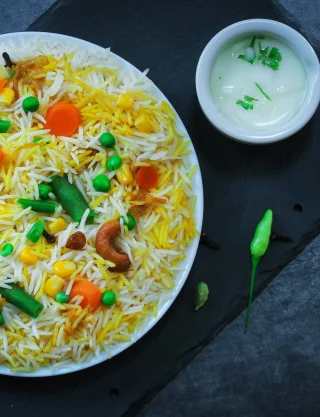
Vegtable pulao
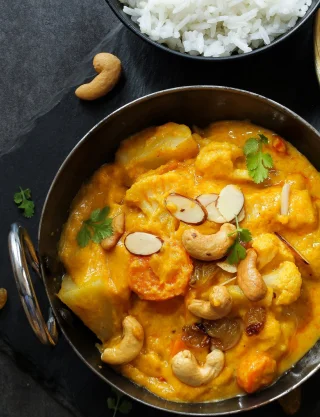
Vegetable korma
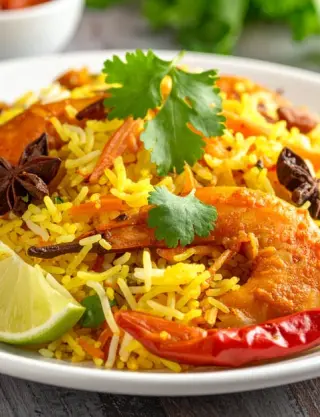
Shrimp Biryani
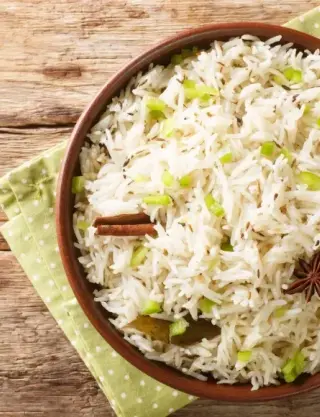
Spiced rice
Learn more
Star anise has been used in China for at least 3,000 years, all at once a culinary spice, a medicinal remedy and a ritual incense. The earliest texts of traditional Chinese pharmacopoeia mention it under the name ba jiao (八角, "eight horns"), in reference to the characteristic shape of its eight-pointed star-like fruits.
Long confined to South-East Asia, star anise only reached Europe in the 16th century, brought back by English navigators trading with the Philippines and southern China. The English botanist John Ray described it for the first time in 1693 in his Historia Plantarum. Its anise-like fragrance quickly earned it the nickname "Chinese anise" or "star anise".
The star that saved millions of lives
In 2005, during the H5N1 avian flu pandemic, global demand for star anise soared: shikimic acid, extracted from its fruits, is the chemical precursor of oseltamivir, the active ingredient in Tamiflu. China, which produces more than 80% of the world's star anise, saw its stocks depleted within months. Roche's laboratories had to develop alternative synthesis routes to meet demand.
In France, star anise plays an unexpected historical role: it is the fundamental ingredient of pastis and anisette. When absinthe was banned in 1915, Marseille distillers turned to star anise to create new anise-flavoured drinks. Paul Ricard launched his pastis in 1932, and star anise became inseparable from Provençal cultural identity.
In the 18th century, the East India Company added star anise to its cargoes alongside pepper, cinnamon and cloves. It became a prized ingredient among European pastry chefs and confectioners, used in gingerbreads, Christmas biscuits and digestive liqueurs.
Did you know?
- The name "badiane" comes from the Persian badian, meaning "anise"
- In China, star anise is placed in cupboards to repel insects: its anethole is a powerful natural deterrent
- Star anise is one of the five spices in Chinese five-spice powder (五香粉), the foundational blend of Cantonese cuisine
- Each star of anise contains exactly 8 carpels (points), each holding a single brown, glossy seed
- Japan has a related species, Illicium anisatum, which is toxic and must never be confused with true star anise
- 90% of the world's star anise comes from the Chinese province of Guangxi
- Extracting shikimic acid requires roughly 30 grams of star anise to produce a single Tamiflu capsule
Star anise across languages
| Language | Name |
|---|---|
| French | Badiane, Anis étoilé |
| Chinese (Mandarin) | Bā jiǎo (八角): "eight horns" |
| Chinese (Cantonese) | Baat gok (八角) |
| Vietnamese | Hồi, Đại hồi |
| Hindi | Chakra phool (चक्र फूल): "wheel-shaped flower" |
| English | Star Anise |
| Japanese | Sutā anisu (スターアニス) / Hakkaku (八角) |
| Malay / Indonesian | Bunga lawang |
| German | Sternanis |
| Spanish | Anís estrellado |
| Botanical Latin | Illicium verum Hook.f. |
The botanical name Illicium derives from the Latin illicere, "to entice" or "to attract", in reference to the plant's captivating fragrance. The term verum means "true", to distinguish it from the toxic Japanese species Illicium anisatum. The French name "badiane" comes from the Persian badian, itself borrowed from Chinese.
| Characteristic | Detail |
|---|---|
| Latin name | Illicium verum Hook.f. |
| Botanical family | Schisandraceae |
| Common names | Star anise, Chinese anise, badiane |
| Part used | Dried fruit (star-shaped pericarp with 8 carpels) |
| Main aromatic compound | Anethole (85 to 90% of the essential oil) |
| Other notable compound | Shikimic acid (precursor to Tamiflu) |
| Harvest | 2 to 3 harvests per year, main harvest from October to March |
| Drying | Sun-drying for 3 to 5 days until browned |
Star anise is native to the mountainous regions of southern China, mainly the province of Guangxi and northern Vietnam. These subtropical regions offer the ideal conditions for this tree, which requires a warm, humid climate, with temperatures between 15°C and 25°C and abundant rainfall.
Guangxi, with its karst limestone hills and subtropical forests, alone accounts for more than 80% of world production. The trees grow mainly between 200 and 1,600 metres of altitude, in acidic, well-drained soils rich in organic matter.
The terroir that makes the difference
- Altitude: between 200 and 1,600 metres in the mountains of Guangxi and northern Vietnam
- Subtropical climate: temperatures of 15 to 25°C, with high humidity all year round
- Acidic soil (pH 5.5 to 6.5), rich in forest humus and well drained
- Karst landscape: the limestone hills of Guangxi create a unique microclimate with frequent mists
- Mixed forests: star anise grows in partial shade beneath taller trees, in a traditional agroforestry system
In Vietnam, the province of Lạng Sơn, bordering Guangxi, is the main production area. Vietnamese star anise, slightly smaller and darker than its Chinese counterpart, is prized for its more intense aromatic concentration.
| Producing country | Production / Characteristic |
|---|---|
| China (Guangxi, Yunnan, Guizhou) | ~80% of world production, the qualitative benchmark |
| Vietnam (Lạng Sơn, Cao Bằng) | ~15%, smaller fruits, concentrated aroma |
| India (Arunachal Pradesh) | Marginal, developing production |
| Laos, Cambodia | Small local productions |
Botany
Illicium verum is an evergreen tree of the Schisandraceae family, capable of reaching 8 to 15 metres in height. Its trunk is upright, with grey-brown bark. The leaves are leathery, dark green, alternate and lance-shaped, releasing an aniseed fragrance when crushed.
The flowers, solitary and pale pink to red, appear in the axils of the leaves. After pollination, they develop into a fruit made up of 8 woody carpels arranged in a star around a central axis. Each carpel contains a single smooth, glossy seed, reddish-brown in colour.
The tree begins to bear fruit at around 6 to 7 years of age and reaches full productivity at about 15 years. An adult tree can produce for more than 100 years. The exceptional longevity of Illicium verum makes it a multi-generational investment for producer families.
Beware of toxic Japanese star anise
Illicium anisatum (Japanese star anise or shikimi) visually resembles the true star anise but contains anisatins, dangerous neurotoxins. Never gather star anise in the wild without formal identification. Illicium anisatum can be distinguished by its smaller, more irregular fruits, and its less clearly anise-like smell, with notes of resin and turpentine.
Star anise offers an aromatic profile dominated by anethole, the same compound found in green anise and fennel, but in a far higher concentration. Its fragrance is warm, sweet, intensely anise-like, with nuances of liquorice and fennel and a subtle woody edge brought by the woody pericarp of the star.
| Aromatic note | Description |
|---|---|
| Top note | Anise, fresh, lightly camphoraceous |
| Heart note | Sweet liquorice, fennel, mellow warmth |
| Base note | Woody, spicy, slightly bitter (pericarp) |
| On the palate | Sweet-anise, enveloping, with a long aromatic persistence |
Compared with green anise (Pimpinella anisum), star anise is markedly more powerful and warmer. A single star perfumes an entire dish. The aroma of the seed differs from that of the pericarp: the seed is sweeter and oilier, while the pericarp brings the characteristic woody, lightly bitter notes.
Chef's tip
To bring out star anise's full aroma, briefly toast it dry in a hot pan before adding it to your preparation, or steep it in a warm liquid (broth, sauce, syrup) for at least 20 minutes. A single star is enough for a dish serving 4. Dose it sparingly because the anethole can quickly become overpowering.
Star anise is a foundational spice of Chinese and Vietnamese cuisines, and finds remarkable applications in French and Indian cooking and in the world of pastries and drinks. Its powerful anise fragrance makes it a spice of character that elevates savoury and sweet dishes alike.
In Chinese cuisine
- Chinese five-spice powder (五香粉): star anise is the dominant spice in this iconic blend, alongside Sichuan pepper, Chinese cinnamon, cloves and fennel seeds
- Red-braised pork in soy sauce (红烧肉): iconic dish in which the star of anise perfumes the meat for hours
- Beijing roast duck: star anise is part of the traditional marinade
- Master stocks (卤水): aromatic broths reused to braise meats and eggs
- Tea eggs (茶叶蛋): eggs marinated in a broth of tea, soy and star anise
In Vietnamese cuisine
- Phở: the phở broth would not be the same without star anise: it is one of the essential spices, toasted dry with cinnamon, cloves and cardamom before being added to the bone broth
- Bún bò Huế: the spicy Huế soup integrates star anise into its complex broth
- Bò kho: Vietnamese beef stew flavoured with star anise and lemongrass
In Indian cuisine
- Biryani: whole star anise is added to the rice with cardamom, cinnamon and bay leaf
- Kashmiri Garam Masala: some regional versions include star anise
- Chai masala: star anise brings a distinctive anise note to certain spiced tea blends
In French and European cuisine
- Fish court-bouillon: one star of anise transforms the classic court-bouillon
- Compote and poached fruits: pears, apples and peaches poached in a star anise syrup
- Gingerbreads and bredele: Alsatian Christmas pastries flavoured with star anise
- Fig jam: star anise elevates autumn fruit preserves
- Mulled wine: the star of anise has become essential to the mulled wine of Christmas markets
- Pastis and anisette: star anise is the fundamental ingredient of Provençal anise drinks
Sweet pairings
- Star anise crème brûlée: infuse a star in the hot cream before baking
- Chocolate: star anise pairs remarkably well with dark chocolate
- Ice creams and sorbets: pear-star-anise sorbet, vanilla-star-anise ice cream
- Syrups and cocktails: star anise syrup for cocktails and artisanal lemonades
Star anise has been used for millennia in traditional Chinese medicine (TCM) for its digestive, antiviral and anti-inflammatory properties. Modern science has confirmed many of these traditional uses and has uncovered new ones, making star anise one of the most-studied spices in pharmacology.
The main aromatic compound is anethole (85 to 90% of the essential oil), responsible for the anise fragrance and for several therapeutic properties. But it is shikimic acid that propelled star anise onto the global pharmaceutical stage.
Documented properties
- Antiviral: the shikimic acid contained in star anise is the precursor of oseltamivir (Tamiflu), the reference antiviral against type A and B influenza viruses. This discovery turned star anise into a global strategic resource.
- Digestive: anethole stimulates the secretion of digestive juices, reduces bloating, gas and intestinal spasms. Star anise tea is a traditional remedy for infant colic in many Asian cultures.
- Antifungal: demonstrated effectiveness against Candida albicans and several dermatophytes: star anise essential oil is used in antifungal aromatherapy
- Antibacterial: active against many bacterial strains, including Escherichia coli, Staphylococcus aureus and Helicobacter pylori
- Anti-inflammatory: anethole inhibits the production of TNF-α and other inflammatory mediators
- Expectorant: eases expectoration and soothes cough: a traditional remedy for upper respiratory tract conditions
- Galactagogue: in traditional medicine, star anise tea is recommended to stimulate lactation
- Antioxidant: the phenolic compounds in star anise neutralise free radicals
Precautions
Never confuse Chinese star anise (Illicium verum) with Japanese star anise (Illicium anisatum), which is toxic. Star anise essential oil is not recommended for pregnant women, children under 3 or people with epilepsy because of its high anethole content. At high doses, anethole can cause nausea and neurotoxic effects.
Nutritional values (per 1 tablespoon / 6 g of star anise)
| Component | Content |
|---|---|
| Anethole | 85 to 90% of the essential oil |
| Shikimic acid | 3 to 7% of dry weight |
| Total essential oil | 5 to 8% |
| Vitamins | A, C, B1, B2 |
| Minerals | Calcium, iron, phosphorus, magnesium, potassium |
| Fibre | ~1 g |
| Calories | ~22 kcal |
How to recognise good star anise
- Shape: whole, well-formed stars with 8 points; avoid broken or incomplete stars, a sign of rough handling or lower quality
- Colour: uniform reddish-brown, without black spots or mould; a very dark colour may indicate over-drying
- Aroma: powerful, sweet anise fragrance to the nose; if the smell is weak or rancid, the star anise is too old
- Seeds: each carpel should contain a glossy, smooth seed; dull or powdery seeds indicate poor storage
- Size: 2.5 to 4 cm in diameter for the finest grades; stars that are too small often come from early harvests
- Stated origin: a serious supplier always indicates the origin (China or Vietnam) to rule out any confusion with toxic Japanese star anise
Storage tips
- Store whole stars in an airtight glass jar, away from direct light and moisture
- Never grind star anise in advance: the volatile aromatic compounds evaporate quickly once milled
- Optimal shelf life: 2 to 3 years for whole stars; 6 months at most once ground
- Keep at room temperature (18 to 25°C); do not refrigerate, as the moisture inside the fridge degrades the essential oils
- Signs of degradation: weakened aroma, dull colour, crumbly texture, no scent when crushed
What is the difference between star anise and green anise?
Star anise (Illicium verum) and green anise (Pimpinella anisum) are two botanically very different plants that share a single aromatic compound: anethole. Star anise is a subtropical Asian tree whose star-shaped fruit is used, while green anise is a Mediterranean herbaceous plant whose seeds are used. Star anise is markedly more powerful and warmer. In cooking, the two are not interchangeable.
Can you reuse a star of anise?
Yes, if it has simply steeped in a liquid (broth, tea), a star of anise can be reused a second time. It will have lost about half its aromatic intensity. For a long-braised dish, a single use is enough because the anethole will have been entirely extracted.
How do you use star anise in Vietnamese phở?
Dry-toast 2 to 3 stars of anise in a hot pan with cinnamon, cloves and cardamom for 1 to 2 minutes, until the spices release their fragrance. Then add them to the beef bone broth and let it simmer for at least 4 hours. Remove the spices before serving.
Is star anise dangerous?
True star anise (Illicium verum) is perfectly safe in normal culinary use. The danger comes from confusion with Japanese star anise (Illicium anisatum), a toxic species that resembles it visually. Always buy your star anise from reliable suppliers who guarantee the species Illicium verum. Star anise essential oil, very concentrated in anethole, is not recommended for pregnant women or young children.
Why is star anise linked to Tamiflu?
Star anise contains shikimic acid (3 to 7% of dry weight), a chemical compound used as the raw material to synthesise oseltamivir, the active ingredient in Tamiflu. This antiviral medication is used against influenza viruses. The discovery of this link in 1996 considerably increased the strategic value of star anise on the global market.
How much star anise should I use in a dish?
A single star of anise is generally enough to flavour a dish for 4. Its anise aroma is very powerful: it is better to start small and adjust afterwards. For a broth or braising liquid, count 1 to 2 stars per litre. In pastry, half a star infused in 250 ml of cream or milk gives a subtle, elegant fragrance.
-
Star anise has been used in China for at least 3,000 years, all at once a culinary spice, a medicinal remedy and a ritual incense. The earliest texts of traditional Chinese pharmacopoeia mention it under the name ba jiao (八角, "eight horns"), in reference to the characteristic shape of its eight-pointed star-like fruits.
Long confined to South-East Asia, star anise only reached Europe in the 16th century, brought back by English navigators trading with the Philippines and southern China. The English botanist John Ray described it for the first time in 1693 in his Historia Plantarum. Its anise-like fragrance quickly earned it the nickname "Chinese anise" or "star anise".
The star that saved millions of lives
In 2005, during the H5N1 avian flu pandemic, global demand for star anise soared: shikimic acid, extracted from its fruits, is the chemical precursor of oseltamivir, the active ingredient in Tamiflu. China, which produces more than 80% of the world's star anise, saw its stocks depleted within months. Roche's laboratories had to develop alternative synthesis routes to meet demand.
In France, star anise plays an unexpected historical role: it is the fundamental ingredient of pastis and anisette. When absinthe was banned in 1915, Marseille distillers turned to star anise to create new anise-flavoured drinks. Paul Ricard launched his pastis in 1932, and star anise became inseparable from Provençal cultural identity.
In the 18th century, the East India Company added star anise to its cargoes alongside pepper, cinnamon and cloves. It became a prized ingredient among European pastry chefs and confectioners, used in gingerbreads, Christmas biscuits and digestive liqueurs.
Did you know?
- The name "badiane" comes from the Persian badian, meaning "anise"
- In China, star anise is placed in cupboards to repel insects: its anethole is a powerful natural deterrent
- Star anise is one of the five spices in Chinese five-spice powder (五香粉), the foundational blend of Cantonese cuisine
- Each star of anise contains exactly 8 carpels (points), each holding a single brown, glossy seed
- Japan has a related species, Illicium anisatum, which is toxic and must never be confused with true star anise
- 90% of the world's star anise comes from the Chinese province of Guangxi
- Extracting shikimic acid requires roughly 30 grams of star anise to produce a single Tamiflu capsule
Star anise across languages
Language Name French Badiane, Anis étoilé Chinese (Mandarin) Bā jiǎo (八角): "eight horns" Chinese (Cantonese) Baat gok (八角) Vietnamese Hồi, Đại hồi Hindi Chakra phool (चक्र फूल): "wheel-shaped flower" English Star Anise Japanese Sutā anisu (スターアニス) / Hakkaku (八角) Malay / Indonesian Bunga lawang German Sternanis Spanish Anís estrellado Botanical Latin Illicium verum Hook.f. The botanical name Illicium derives from the Latin illicere, "to entice" or "to attract", in reference to the plant's captivating fragrance. The term verum means "true", to distinguish it from the toxic Japanese species Illicium anisatum. The French name "badiane" comes from the Persian badian, itself borrowed from Chinese.
-
Characteristic Detail Latin name Illicium verum Hook.f. Botanical family Schisandraceae Common names Star anise, Chinese anise, badiane Part used Dried fruit (star-shaped pericarp with 8 carpels) Main aromatic compound Anethole (85 to 90% of the essential oil) Other notable compound Shikimic acid (precursor to Tamiflu) Harvest 2 to 3 harvests per year, main harvest from October to March Drying Sun-drying for 3 to 5 days until browned Star anise is native to the mountainous regions of southern China, mainly the province of Guangxi and northern Vietnam. These subtropical regions offer the ideal conditions for this tree, which requires a warm, humid climate, with temperatures between 15°C and 25°C and abundant rainfall.
Guangxi, with its karst limestone hills and subtropical forests, alone accounts for more than 80% of world production. The trees grow mainly between 200 and 1,600 metres of altitude, in acidic, well-drained soils rich in organic matter.
The terroir that makes the difference
- Altitude: between 200 and 1,600 metres in the mountains of Guangxi and northern Vietnam
- Subtropical climate: temperatures of 15 to 25°C, with high humidity all year round
- Acidic soil (pH 5.5 to 6.5), rich in forest humus and well drained
- Karst landscape: the limestone hills of Guangxi create a unique microclimate with frequent mists
- Mixed forests: star anise grows in partial shade beneath taller trees, in a traditional agroforestry system
In Vietnam, the province of Lạng Sơn, bordering Guangxi, is the main production area. Vietnamese star anise, slightly smaller and darker than its Chinese counterpart, is prized for its more intense aromatic concentration.
Producing country Production / Characteristic China (Guangxi, Yunnan, Guizhou) ~80% of world production, the qualitative benchmark Vietnam (Lạng Sơn, Cao Bằng) ~15%, smaller fruits, concentrated aroma India (Arunachal Pradesh) Marginal, developing production Laos, Cambodia Small local productions Botany
Illicium verum is an evergreen tree of the Schisandraceae family, capable of reaching 8 to 15 metres in height. Its trunk is upright, with grey-brown bark. The leaves are leathery, dark green, alternate and lance-shaped, releasing an aniseed fragrance when crushed.
The flowers, solitary and pale pink to red, appear in the axils of the leaves. After pollination, they develop into a fruit made up of 8 woody carpels arranged in a star around a central axis. Each carpel contains a single smooth, glossy seed, reddish-brown in colour.
The tree begins to bear fruit at around 6 to 7 years of age and reaches full productivity at about 15 years. An adult tree can produce for more than 100 years. The exceptional longevity of Illicium verum makes it a multi-generational investment for producer families.
Beware of toxic Japanese star anise
Illicium anisatum (Japanese star anise or shikimi) visually resembles the true star anise but contains anisatins, dangerous neurotoxins. Never gather star anise in the wild without formal identification. Illicium anisatum can be distinguished by its smaller, more irregular fruits, and its less clearly anise-like smell, with notes of resin and turpentine.
-
Star anise offers an aromatic profile dominated by anethole, the same compound found in green anise and fennel, but in a far higher concentration. Its fragrance is warm, sweet, intensely anise-like, with nuances of liquorice and fennel and a subtle woody edge brought by the woody pericarp of the star.
Aromatic note Description Top note Anise, fresh, lightly camphoraceous Heart note Sweet liquorice, fennel, mellow warmth Base note Woody, spicy, slightly bitter (pericarp) On the palate Sweet-anise, enveloping, with a long aromatic persistence Compared with green anise (Pimpinella anisum), star anise is markedly more powerful and warmer. A single star perfumes an entire dish. The aroma of the seed differs from that of the pericarp: the seed is sweeter and oilier, while the pericarp brings the characteristic woody, lightly bitter notes.
Chef's tip
To bring out star anise's full aroma, briefly toast it dry in a hot pan before adding it to your preparation, or steep it in a warm liquid (broth, sauce, syrup) for at least 20 minutes. A single star is enough for a dish serving 4. Dose it sparingly because the anethole can quickly become overpowering.
-
Star anise is a foundational spice of Chinese and Vietnamese cuisines, and finds remarkable applications in French and Indian cooking and in the world of pastries and drinks. Its powerful anise fragrance makes it a spice of character that elevates savoury and sweet dishes alike.
In Chinese cuisine
- Chinese five-spice powder (五香粉): star anise is the dominant spice in this iconic blend, alongside Sichuan pepper, Chinese cinnamon, cloves and fennel seeds
- Red-braised pork in soy sauce (红烧肉): iconic dish in which the star of anise perfumes the meat for hours
- Beijing roast duck: star anise is part of the traditional marinade
- Master stocks (卤水): aromatic broths reused to braise meats and eggs
- Tea eggs (茶叶蛋): eggs marinated in a broth of tea, soy and star anise
In Vietnamese cuisine
- Phở: the phở broth would not be the same without star anise: it is one of the essential spices, toasted dry with cinnamon, cloves and cardamom before being added to the bone broth
- Bún bò Huế: the spicy Huế soup integrates star anise into its complex broth
- Bò kho: Vietnamese beef stew flavoured with star anise and lemongrass
In Indian cuisine
- Biryani: whole star anise is added to the rice with cardamom, cinnamon and bay leaf
- Kashmiri Garam Masala: some regional versions include star anise
- Chai masala: star anise brings a distinctive anise note to certain spiced tea blends
In French and European cuisine
- Fish court-bouillon: one star of anise transforms the classic court-bouillon
- Compote and poached fruits: pears, apples and peaches poached in a star anise syrup
- Gingerbreads and bredele: Alsatian Christmas pastries flavoured with star anise
- Fig jam: star anise elevates autumn fruit preserves
- Mulled wine: the star of anise has become essential to the mulled wine of Christmas markets
- Pastis and anisette: star anise is the fundamental ingredient of Provençal anise drinks
Sweet pairings
- Star anise crème brûlée: infuse a star in the hot cream before baking
- Chocolate: star anise pairs remarkably well with dark chocolate
- Ice creams and sorbets: pear-star-anise sorbet, vanilla-star-anise ice cream
- Syrups and cocktails: star anise syrup for cocktails and artisanal lemonades
-
Star anise has been used for millennia in traditional Chinese medicine (TCM) for its digestive, antiviral and anti-inflammatory properties. Modern science has confirmed many of these traditional uses and has uncovered new ones, making star anise one of the most-studied spices in pharmacology.
The main aromatic compound is anethole (85 to 90% of the essential oil), responsible for the anise fragrance and for several therapeutic properties. But it is shikimic acid that propelled star anise onto the global pharmaceutical stage.
Documented properties
- Antiviral: the shikimic acid contained in star anise is the precursor of oseltamivir (Tamiflu), the reference antiviral against type A and B influenza viruses. This discovery turned star anise into a global strategic resource.
- Digestive: anethole stimulates the secretion of digestive juices, reduces bloating, gas and intestinal spasms. Star anise tea is a traditional remedy for infant colic in many Asian cultures.
- Antifungal: demonstrated effectiveness against Candida albicans and several dermatophytes: star anise essential oil is used in antifungal aromatherapy
- Antibacterial: active against many bacterial strains, including Escherichia coli, Staphylococcus aureus and Helicobacter pylori
- Anti-inflammatory: anethole inhibits the production of TNF-α and other inflammatory mediators
- Expectorant: eases expectoration and soothes cough: a traditional remedy for upper respiratory tract conditions
- Galactagogue: in traditional medicine, star anise tea is recommended to stimulate lactation
- Antioxidant: the phenolic compounds in star anise neutralise free radicals
Precautions
Never confuse Chinese star anise (Illicium verum) with Japanese star anise (Illicium anisatum), which is toxic. Star anise essential oil is not recommended for pregnant women, children under 3 or people with epilepsy because of its high anethole content. At high doses, anethole can cause nausea and neurotoxic effects.
Nutritional values (per 1 tablespoon / 6 g of star anise)
Component Content Anethole 85 to 90% of the essential oil Shikimic acid 3 to 7% of dry weight Total essential oil 5 to 8% Vitamins A, C, B1, B2 Minerals Calcium, iron, phosphorus, magnesium, potassium Fibre ~1 g Calories ~22 kcal -
How to recognise good star anise
- Shape: whole, well-formed stars with 8 points; avoid broken or incomplete stars, a sign of rough handling or lower quality
- Colour: uniform reddish-brown, without black spots or mould; a very dark colour may indicate over-drying
- Aroma: powerful, sweet anise fragrance to the nose; if the smell is weak or rancid, the star anise is too old
- Seeds: each carpel should contain a glossy, smooth seed; dull or powdery seeds indicate poor storage
- Size: 2.5 to 4 cm in diameter for the finest grades; stars that are too small often come from early harvests
- Stated origin: a serious supplier always indicates the origin (China or Vietnam) to rule out any confusion with toxic Japanese star anise
Storage tips
- Store whole stars in an airtight glass jar, away from direct light and moisture
- Never grind star anise in advance: the volatile aromatic compounds evaporate quickly once milled
- Optimal shelf life: 2 to 3 years for whole stars; 6 months at most once ground
- Keep at room temperature (18 to 25°C); do not refrigerate, as the moisture inside the fridge degrades the essential oils
- Signs of degradation: weakened aroma, dull colour, crumbly texture, no scent when crushed
-
What is the difference between star anise and green anise?
Star anise (Illicium verum) and green anise (Pimpinella anisum) are two botanically very different plants that share a single aromatic compound: anethole. Star anise is a subtropical Asian tree whose star-shaped fruit is used, while green anise is a Mediterranean herbaceous plant whose seeds are used. Star anise is markedly more powerful and warmer. In cooking, the two are not interchangeable.
Can you reuse a star of anise?
Yes, if it has simply steeped in a liquid (broth, tea), a star of anise can be reused a second time. It will have lost about half its aromatic intensity. For a long-braised dish, a single use is enough because the anethole will have been entirely extracted.
How do you use star anise in Vietnamese phở?
Dry-toast 2 to 3 stars of anise in a hot pan with cinnamon, cloves and cardamom for 1 to 2 minutes, until the spices release their fragrance. Then add them to the beef bone broth and let it simmer for at least 4 hours. Remove the spices before serving.
Is star anise dangerous?
True star anise (Illicium verum) is perfectly safe in normal culinary use. The danger comes from confusion with Japanese star anise (Illicium anisatum), a toxic species that resembles it visually. Always buy your star anise from reliable suppliers who guarantee the species Illicium verum. Star anise essential oil, very concentrated in anethole, is not recommended for pregnant women or young children.
Why is star anise linked to Tamiflu?
Star anise contains shikimic acid (3 to 7% of dry weight), a chemical compound used as the raw material to synthesise oseltamivir, the active ingredient in Tamiflu. This antiviral medication is used against influenza viruses. The discovery of this link in 1996 considerably increased the strategic value of star anise on the global market.
How much star anise should I use in a dish?
A single star of anise is generally enough to flavour a dish for 4. Its anise aroma is very powerful: it is better to start small and adjust afterwards. For a broth or braising liquid, count 1 to 2 stars per litre. In pastry, half a star infused in 250 ml of cream or milk gives a subtle, elegant fragrance.
Why choose Star Anise from La Table Indienne?

Exceptional freshness and quality
Our spices are imported directly from India and packaged on demand to guarantee optimal freshness. Unlike spices sold in supermarkets that can sit on shelves for months, we ensure each spice retains its full flavor and aroma.
Authenticity and traceability
Each spice comes from specific regions in India renowned for their expertise. We work directly with local producers who grow their spices traditionally, without pesticides or chemicals.
How to best use this spice?
To reveal all the aromas, we recommend lightly toasting whole spices in a dry pan before grinding them. Store them in a dry place away from light to preserve their freshness as long as possible.

Did you know?
Whole spices are much better than ground spices
Check out our blog article to discover why whole spices retain their aromas better.
Questions & Answers
Thank you! Your question has been sent. Mihika will answer soon and you will receive an email.
Star Anise
Discover also
Other products you might like