


 Made in Alsace
Discover our Vegetable Pulao kit: fluffy basmati rice, colourful vegetables and authentic Indian spices. A fragrant, complete dish, all in one pot, in just minutes.
Ready for shipping, delivery time 3-10 business days
Delivery from €4.80 at Mondial Relay pickup points.



Accompaniments
This dish will combine well with the following products.
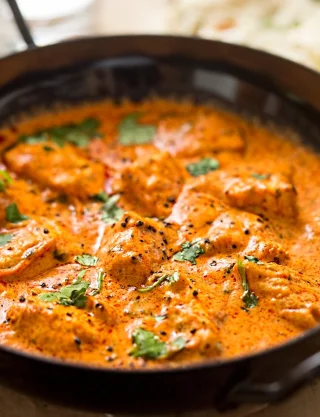
Butter chicken
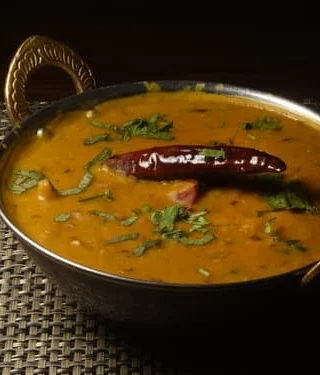
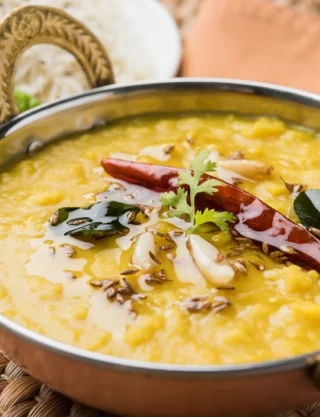
Dal Tadka
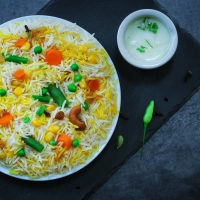
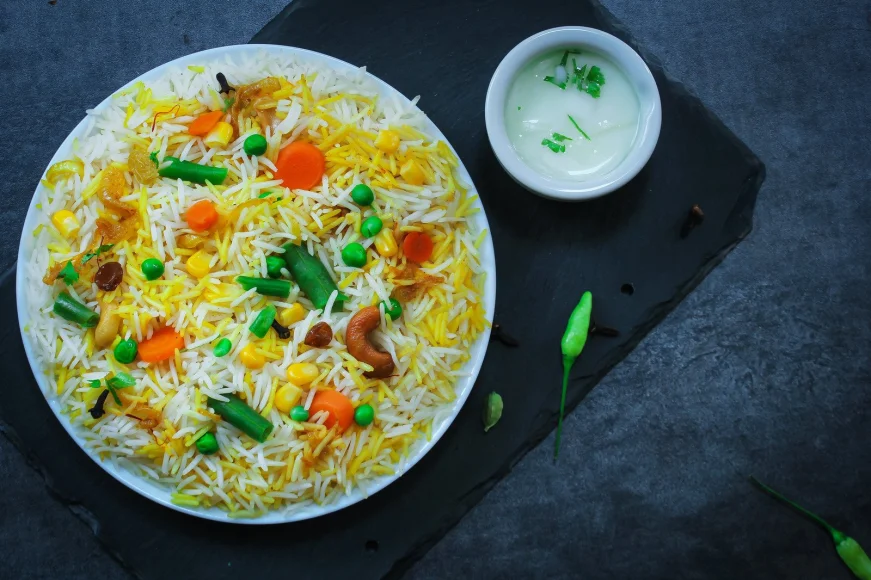
Veg pulao
Vegetable Pulao is a beloved one-pot rice dish in India, celebrated for its fragrant aroma and subtle, layered flavors. It is a simpler, everyday alternative to the more elaborate Biryani.
The cooking of Vegetable Pulao is focused on ensuring each grain of rice remains separate and fluffy, while being infused with the flavor of spices and vegetables. Basmati Rice is a Must - The quality and aroma of Basmati rice are central to the dish. The fragrance and fluffy texture of the long grains are what give pulao its signature feel.
The dish, in its various forms (known as pilaf or pilav), was brought to India by the Mughal emperors and travelers, and it quickly became a part of the subcontinent's rich culinary tradition.
Over centuries, it was adapted and evolved in different regions of India, leading to many local variations, including the vegetarian version that we now call Vegetable Pulao. It is most strongly associated with the Mughlai and North Indian cuisines.
The vegetable pulao can be eaten by itself as a one pot rice dish or served with dal or any curry of your choice !
Our Vegetable pulao kit
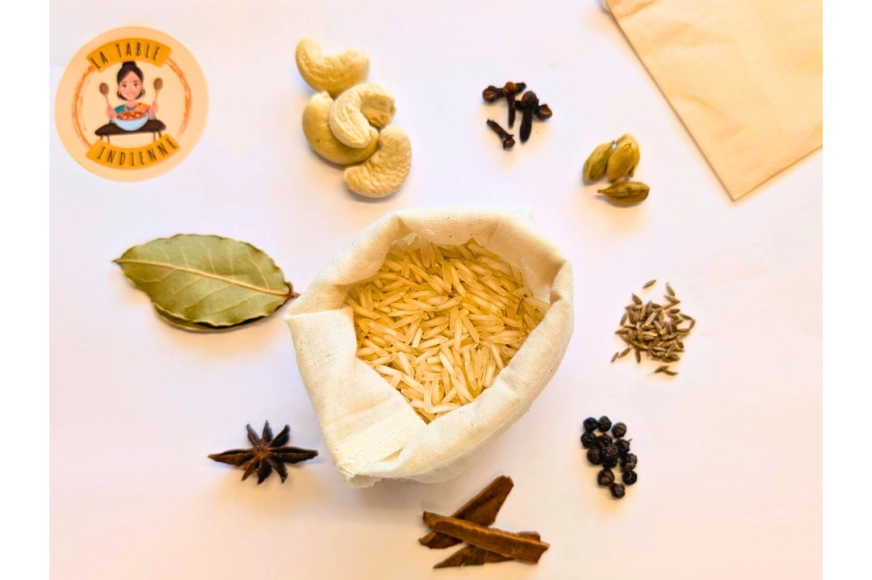
We provide all the spices and dry ingredients needed to prepare this dish in this kit, which is freshly hand-prepared to order.
You will need to source the necessary fresh ingredients from your local grocery store. We believe deeply in the importance of healthy, local food and therefore recommend that you buy these fresh products from a short-circuit store near you.
As some of these spices are not grown here in France, we import them directly from India via our carefully selected partners in respect of fair trade.
To learn more about where our spices come from, please feel free to send us an email. We will be happy to answer all your questions!
Your ready-to-cook kit contains the ingredients listed below as well as a simple and practical recipe sheet, so that this dish is the best you have ever tasted.
-
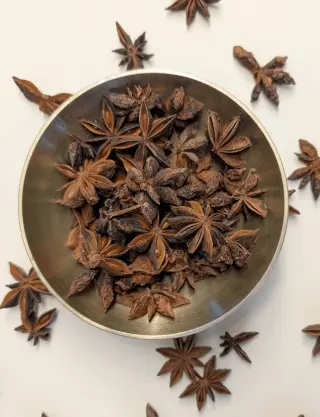
 Native to Vietnam and Southern China, star anise has been used in Indian cooking for many years, likely arriving via trade routes. Star anise has a strong licorice flavor and is a key component of garam masala and other spice blends. It is often used whole to flavor biryani and other rich, meaty dishes.
Star anise
-
 Cashew nuts were not originally native to India but were introduced by the Portuguese in the 16th century. They brought the cashew tree from its native region in Eastern Brazil to Goa, India, where it was initially used for afforestation and soil binding to prevent erosion. The tree thrived in India's coastal climate and soil, and its commercial importance was recognized later, leading to its widespread cultivation. India is now one of the world's largest producers, processors, and exporters of cashews. Cashews, known as "kaju," are a versatile and integral ingredient in Indian cuisine, valued for their creamy texture and rich flavor. They are used in both sweet and savory dishes, often to add richness, body, and a nutty taste.
Cashew nuts
-
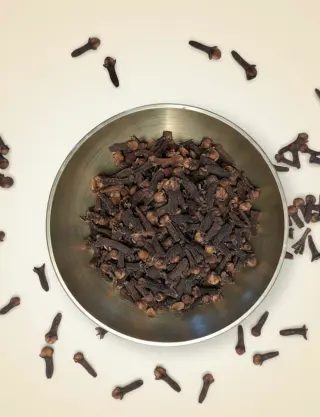
 Cloves are native to the Maluku Islands of Indonesia but have been a highly prized spice in India for centuries. Cloves have a strong, pungent, and sweet aroma. They are used whole in rice dishes and curries, and are also a key ingredient in many spice blends, including garam masala.
Cloves
-
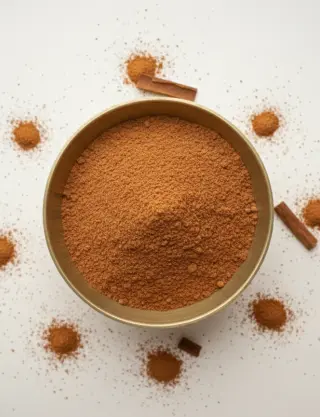
 Cinnamon is a spice obtained from the inner bark of several tree species from the genus Cinnamomum. Cinnamon is used mainly as an aromatic condiment and flavouring additive in a wide variety of cuisines, sweet and savoury dishes, biscuits, breakfast cereals, snack foods, bagels, teas, hot chocolate and traditional foods. The aroma and flavour of cinnamon derive from its essential oil and principal component, cinnamaldehyde, as well as numerous other constituents, including eugenol.
Cinnamon
-
 Basmati rice is an aromatic long-grain rice variety that originated in the foothills of the Himalayas in India and Pakistan. Known for its nutty aroma and long, slender grains, it is the preferred rice for many Indian dishes, including biryani, pulao, and as an accompaniment to curries.
Basmati rice
-
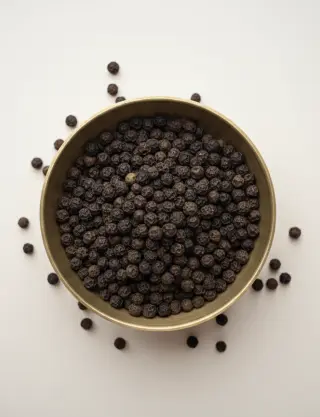
 Black pepper is native to the Malabar Coast of Southern India and was a major driver of ancient global trade. Known as the "King of Spices," black pepper adds a sharp, pungent heat to food. It is used both whole and ground in a vast range of Indian dishes, from simple curries to complex marinades.
Black pepper
-
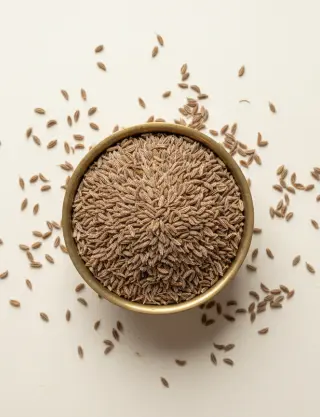
 While thought to have originated in the Middle East, cumin has been cultivated in India for millennia and is a cornerstone of Indian cooking. Cumin is used both whole and ground. The whole seeds are often fried in hot oil at the beginning of a dish (Tadka) to impart a warm, earthy aroma. Ground cumin is a key ingredient in almost all curry powders and spice blends like garam masala.
Cumin
-
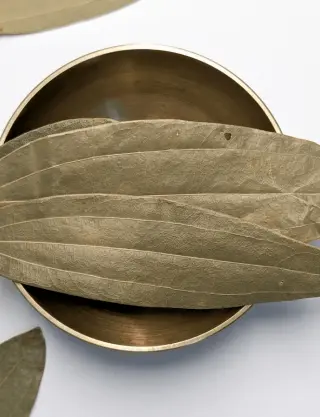
 The Indian bay leaf comes from a different tree than the European variety. It is native to the Himalayan region and has been a part of Indian cooking for a very long time. It imparts a mild, cinnamon-like aroma to dishes. It is most commonly used whole and added to the oil at the start of cooking to flavor rice, stews, and a variety of curries.
Bay leaf
-
 The lush, green mountains of Southern India are the native home of green cardamom. It is known as the "Queen of Spices." Cardamom has a sweet, floral, and highly aromatic flavor. Green pods are used whole in savory rice dishes like biryani and curries. The seeds are ground and used in desserts like kheer, and to flavor chai tea.
Cardamom
The recipe requires the following ingredients that are not included in your kit, we recommend buying these ingredients locally.
-
 Green beans are a commonly used vegetable in Indian cuisine, particularly in South Indian vegetable curries. Beans poriyal (beans sautéed with coconut) is a classic side dish from Tamil Nadu. Beans are also used in sambars and Kerala's aviyal.
French beans
-
 Carrots are used in many Indian dishes, both sweet and savory. They are included in mixed vegetable curries and pickles. Gajar ka halwa, a traditional dessert made from grated carrots cooked in milk and ghee with nuts and cardamom, is particularly popular during winter festivals.
Carrots
-

Pot
-
 Onion is the aromatic base of most Indian curries. Finely sliced and slowly browned, it forms the characteristic sauce base of Indian dishes. In Indian cooking, onions are often caramelized until golden brown (birista), a technique that develops deep, sweet flavors essential to biryanis and kormas.
Onion
-
 Peas are a highly valued vegetable in Indian cuisine, particularly in vegetarian dishes from North India. They are the main ingredient in matar paneer (peas with fresh cheese) and aloo matar (potatoes with peas). Their natural sweetness perfectly balances the spices in curries.
Green peas
-
 Oil is an essential base ingredient in Indian cooking. Different oils are used depending on the region: mustard oil in the north and east, coconut oil in the south, and peanut oil in the west. Oil serves as the base for tadka (tempering), a technique where spices are fried in hot oil to release their aromas before being added to dishes.
Oil
-
 Ginger is native to the rainforests of Maritime Southeast Asia and is one of the first spices to have been exported from Asia. It was introduced to India very early in its history and has been cultivated there for thousands of years, becoming an integral part of both its cuisine and traditional medicine, Ayurveda. Ginger is a foundational ingredient in Indian cooking. It is a key component of the aromatic paste known as ginger-garlic paste, which forms the flavor base for countless curries, dals, and marinades. It provides a pungent, spicy, and warm flavor. Fresh ginger is also grated or julienned and added to stir-fries, and is famously used to make a soothing and spicy chai (tea).
Ginger
-
 Garlic's origins are traced back to Central Asia, where it was first cultivated. It spread from there to the Middle East and then to South Asia, becoming a staple in Indian diets since ancient times. Garlic is another essential aromatic in Indian cooking. It is most often used alongside ginger and onion to create the rich, sautéed base (bhuna) for a wide array of dishes. It provides a savory, sharp, and slightly spicy flavor that is a must-have for meat dishes, vegetable curries, and dals. It is also a key ingredient in many Indian pickles and chutneys.
Garlic
Table Indienne est une jeune entreprise à votre écoute, contactez nous si vous pensez que nous devrions inclure ces ingrédients dans nos kits ou bien vous les proposer en option.
| Directly selected smallholder producers | Yes |
| Cooking time | 40 minutes |
| Level of difficulty | Beginner |
| Spice level | Low |
| Number of servings | 2 |
| Vegetarian | Yes |
| Made in Alsace | Yes |
Translated from French

Mihika's note
I love vegetable pulao because it is such an easy mix of mild spices, rice and plenty of good vegetables, cooked with just a drizzle of oil. In India, we eat it almost every week alongside a good dal. It is healthy, it is comforting... in short, it is just the best! 🥕🌾
Mihika Mahakal
Founder, Table Indienne
Spices from this kit available on our website
These spices used in this kit are available individually on our website

Learn more
The word “pulao” is a traveller. The English pilau, recorded as early as 1609, comes from the Persian pulaw, itself from the Hindi pulāv, from the Sanskrit pulāka, “ball of rice”. That Sanskrit term is itself thought to be of Dravidian origin. The dish is found under dozens of names: pilav in Turkish, palaw in Afghanistan, plov in Central Asia, pelau in the Caribbean.
For the recipe itself, historians go back to the Arab East and then Persia. According to the food historian Charles Perry, pilaf is an eastern Arab innovation from after the tenth century: Ibn al-Adim’s Kitab al-Wusla, in the early thirteenth century, gives the first recipe close to modern pilaf, with rice, meat, chickpeas and garlic. The earliest mention is a fourteenth-century Persian satirical poem, and the earliest recipe explicitly named pilaf is in the 1521 Kārnāma by the cook Muhammad-'Alī Bāvarchī, linked to the court of Ismail I. As for the legend that Alexander the Great’s army brought the recipe back from Bactria, the historian John Boardman judges it apocryphal.
And in India?
The question divides specialists. K. T. Achaya saw rice-and-meat dishes in the Mahabharata and other Sanskrit texts, but Charles Perry, Colleen Taylor Sen and Ashis Nandy dispute that reading: the Sanskrit term would first have meant a “shrivelled” grain. For Colleen Taylor Sen, the technique of frying rice in ghee and then cooking it gently so the grains stay separate probably arrived later, with the Mughals. According to Ashis Nandy, pulao, like biryani, mainly bears the stamp of the Mughal era and its Persianised high culture. Pilau does appear in the Ain-i-Akbari (1589 to 1596), and in 1641 the Portuguese priest Sebastião Manrique described “Persian” pilaos sold during Shah Jahan’s journey to Lahore.
Pulao or biryani?
The two dishes belong to the same family, but are not interchangeable. For Sohail Hashmi, pilau is simpler, while biryani has more sauce, often cooks for longer and leaves a layer of scorched rice at the bottom. According to Colleen Taylor Sen, pilau is generally a side dish cooked in one pot, whereas biryani is a festive centrepiece whose rice and meat are often cooked apart. Pulao is therefore the everyday dish, biryani the one for great occasions.
A rice that has travelled the world
In Uzbekistan and Tajikistan, plov is the national dish, inscribed on UNESCO’s Intangible Cultural Heritage list in 2016. In Karnataka, palav and its variant rice bath are eaten for breakfast, with spiced yogurt or raita. In Trinidad and Tobago and the eastern Caribbean, pelau is made with meat and pigeon peas. In India, pulao is most often a rice with vegetables, with peas, potatoes, green beans or carrots.
Did you know?
The pilaf technique comes down to a few gestures: rinse the rice to remove surface starch, fry it briefly in hot fat, then add the liquid. A long-grain rice such as basmati helps keep the grains separate. That is what a thirteenth-century text was already asking for, calling for grains that are “plump, firm and separate”.
| Characteristic | Detail |
|---|---|
| Dish | Vegetable pulao, vegetarian version |
| Rice | Basmati, essential for long, fragrant grains |
| Family | Simple, everyday cousin of biryani, rather Mughal and North Indian |
| Cooking | About 40 minutes, for 2 people |
| Ingredients to add | The fresh vegetables, to buy near you |
Our kit is prepared by hand, to order, to guarantee its freshness. It contains the basmati rice, whole spices (cinnamon, cardamom, clove, star anise, cumin, black pepper and bay leaf) and a few cashew nuts; you bring the onion, garlic, ginger, oil and fresh vegetables (peas, carrots, green beans), preferably from a local shop. Some of the spices, which do not grow in France, are imported directly from India through our partners.
Basmati, essential
The quality and fragrance of basmati rice are essential to this dish, and the kit includes it: its long grains stay separate and soft, and take on the spices and vegetables. That is what gives pulao its character.
In a classic pulao
The Indian way is to first fry whole spices in ghee or oil (for example cinnamon, cardamom, clove, cumin or Indian bay leaf), then the vegetables, before adding the rinsed rice and the water. Proportions and spices change from one household to the next.
Pulao is a dish of subtleties: a soft, fragrant rice with delicate and complex flavours, more discreet than biryani. The whole spices give a warm, slightly sweet fragrance, the vegetables a fresh and tender note.
Each grain stays separate and full of fragrance. It is a rice you can eat on its own, or accompany with a dal or a curry.
Preparing the kit
- Allow about 40 minutes, for 2 people
- For the fresh vegetables to buy, the quantities and the precise method, follow the instructions in the kit
- Serve piping hot, after a few minutes’ rest
Keeping the grains separate
- Rinse the rice until the water runs clear, to remove surface starch
- Fry it briefly in the hot fat before adding the liquid
- Do not stir during cooking: fluff with a fork at the end
What to serve it with
Pulao is eaten on its own or with a dal or a curry. Try it with our dal premix or a dal tadka, with a raita or a spiced yogurt. For a festive meal, also try our chicken biryani or our shrimp biryani.
Storage advice
- Keep the pouch closed, somewhere dry, away from heat, light and humidity
- The kit is prepared to order: use it without leaving it too long, following the instructions on the pouch
- Once the pouch is open, reseal it well to preserve the fragrance of the spices and the freshness of the rice
Allergens
This kit contains cashew nuts (tree nuts). If you have any allergies, check the label on the pouch and let us know your allergens when you place your order.
What is the difference between pulao and biryani?
Both are from the same family. Pulao is simpler, often a side dish cooked in one pot; biryani is a festive dish, with more sauce, often cooked for longer, and the rice and meat are often cooked apart.
Does it absolutely have to be basmati rice?
Basmati rice is included in the kit, and it is what gives pulao its character: its long, fragrant grains stay separate and soft.
Why rinse the rice?
Rinsing removes surface starch and helps the grains stay separate after cooking.
Is this pulao vegetarian?
Yes, it is the vegetable version. It is happily served with a dal or a vegetable curry.
What does pulao mean?
The word comes from the Sanskrit pulāka, “ball of rice”, via Persian. It is also called pilaf, pilau or pilav depending on the language.
Does this kit contain allergens?
Yes: the kit contains cashew nuts. Check the label on the pouch and tell us your allergens when you place your order.
-
The word “pulao” is a traveller. The English pilau, recorded as early as 1609, comes from the Persian pulaw, itself from the Hindi pulāv, from the Sanskrit pulāka, “ball of rice”. That Sanskrit term is itself thought to be of Dravidian origin. The dish is found under dozens of names: pilav in Turkish, palaw in Afghanistan, plov in Central Asia, pelau in the Caribbean.
For the recipe itself, historians go back to the Arab East and then Persia. According to the food historian Charles Perry, pilaf is an eastern Arab innovation from after the tenth century: Ibn al-Adim’s Kitab al-Wusla, in the early thirteenth century, gives the first recipe close to modern pilaf, with rice, meat, chickpeas and garlic. The earliest mention is a fourteenth-century Persian satirical poem, and the earliest recipe explicitly named pilaf is in the 1521 Kārnāma by the cook Muhammad-'Alī Bāvarchī, linked to the court of Ismail I. As for the legend that Alexander the Great’s army brought the recipe back from Bactria, the historian John Boardman judges it apocryphal.
And in India?
The question divides specialists. K. T. Achaya saw rice-and-meat dishes in the Mahabharata and other Sanskrit texts, but Charles Perry, Colleen Taylor Sen and Ashis Nandy dispute that reading: the Sanskrit term would first have meant a “shrivelled” grain. For Colleen Taylor Sen, the technique of frying rice in ghee and then cooking it gently so the grains stay separate probably arrived later, with the Mughals. According to Ashis Nandy, pulao, like biryani, mainly bears the stamp of the Mughal era and its Persianised high culture. Pilau does appear in the Ain-i-Akbari (1589 to 1596), and in 1641 the Portuguese priest Sebastião Manrique described “Persian” pilaos sold during Shah Jahan’s journey to Lahore.
Pulao or biryani?
The two dishes belong to the same family, but are not interchangeable. For Sohail Hashmi, pilau is simpler, while biryani has more sauce, often cooks for longer and leaves a layer of scorched rice at the bottom. According to Colleen Taylor Sen, pilau is generally a side dish cooked in one pot, whereas biryani is a festive centrepiece whose rice and meat are often cooked apart. Pulao is therefore the everyday dish, biryani the one for great occasions.
A rice that has travelled the world
In Uzbekistan and Tajikistan, plov is the national dish, inscribed on UNESCO’s Intangible Cultural Heritage list in 2016. In Karnataka, palav and its variant rice bath are eaten for breakfast, with spiced yogurt or raita. In Trinidad and Tobago and the eastern Caribbean, pelau is made with meat and pigeon peas. In India, pulao is most often a rice with vegetables, with peas, potatoes, green beans or carrots.
Did you know?
The pilaf technique comes down to a few gestures: rinse the rice to remove surface starch, fry it briefly in hot fat, then add the liquid. A long-grain rice such as basmati helps keep the grains separate. That is what a thirteenth-century text was already asking for, calling for grains that are “plump, firm and separate”.
-
Characteristic Detail Dish Vegetable pulao, vegetarian version Rice Basmati, essential for long, fragrant grains Family Simple, everyday cousin of biryani, rather Mughal and North Indian Cooking About 40 minutes, for 2 people Ingredients to add The fresh vegetables, to buy near you Our kit is prepared by hand, to order, to guarantee its freshness. It contains the basmati rice, whole spices (cinnamon, cardamom, clove, star anise, cumin, black pepper and bay leaf) and a few cashew nuts; you bring the onion, garlic, ginger, oil and fresh vegetables (peas, carrots, green beans), preferably from a local shop. Some of the spices, which do not grow in France, are imported directly from India through our partners.
Basmati, essential
The quality and fragrance of basmati rice are essential to this dish, and the kit includes it: its long grains stay separate and soft, and take on the spices and vegetables. That is what gives pulao its character.
In a classic pulao
The Indian way is to first fry whole spices in ghee or oil (for example cinnamon, cardamom, clove, cumin or Indian bay leaf), then the vegetables, before adding the rinsed rice and the water. Proportions and spices change from one household to the next.
-
Pulao is a dish of subtleties: a soft, fragrant rice with delicate and complex flavours, more discreet than biryani. The whole spices give a warm, slightly sweet fragrance, the vegetables a fresh and tender note.
Each grain stays separate and full of fragrance. It is a rice you can eat on its own, or accompany with a dal or a curry.
-
Preparing the kit
- Allow about 40 minutes, for 2 people
- For the fresh vegetables to buy, the quantities and the precise method, follow the instructions in the kit
- Serve piping hot, after a few minutes’ rest
Keeping the grains separate
- Rinse the rice until the water runs clear, to remove surface starch
- Fry it briefly in the hot fat before adding the liquid
- Do not stir during cooking: fluff with a fork at the end
What to serve it with
Pulao is eaten on its own or with a dal or a curry. Try it with our dal premix or a dal tadka, with a raita or a spiced yogurt. For a festive meal, also try our chicken biryani or our shrimp biryani.
-
Storage advice
- Keep the pouch closed, somewhere dry, away from heat, light and humidity
- The kit is prepared to order: use it without leaving it too long, following the instructions on the pouch
- Once the pouch is open, reseal it well to preserve the fragrance of the spices and the freshness of the rice
Allergens
This kit contains cashew nuts (tree nuts). If you have any allergies, check the label on the pouch and let us know your allergens when you place your order.
-
What is the difference between pulao and biryani?
Both are from the same family. Pulao is simpler, often a side dish cooked in one pot; biryani is a festive dish, with more sauce, often cooked for longer, and the rice and meat are often cooked apart.
Does it absolutely have to be basmati rice?
Basmati rice is included in the kit, and it is what gives pulao its character: its long, fragrant grains stay separate and soft.
Why rinse the rice?
Rinsing removes surface starch and helps the grains stay separate after cooking.
Is this pulao vegetarian?
Yes, it is the vegetable version. It is happily served with a dal or a vegetable curry.
What does pulao mean?
The word comes from the Sanskrit pulāka, “ball of rice”, via Persian. It is also called pilaf, pilau or pilav depending on the language.
Does this kit contain allergens?
Yes: the kit contains cashew nuts. Check the label on the pouch and tell us your allergens when you place your order.
Why we created a Vegtable pulao kit?

Anti-waste
Have you always wanted to cook Indian dishes, but never knew where to buy all the spices, or what to do if the result is not good? We are here to answer this problem with our kit! No need to buy spices that you will never use again, we only put the necessary amount of spices in your kit.
Authentic flavors
Our spices come directly from India. They are carefully selected to give you an authentic flavor.
Step-by-step recipe and instructions
We know well that Indian recipes can be difficult to understand. We provide you with step-by-step instructions and recipes to ensure you prepare the best possible version of the dish every time!

Demystifying the facts
Do Indians use the famous "curry"?
Check out our blog article to discover why curry doesn't really exist in India.
Why buy all these spices when I can just use curry?
Check out our blog article to discover the wide variety of spices used in India.
Questions & Answers
Thank you! Your question has been sent. Mihika will answer soon and you will receive an email.
Vegtable pulao
You might also like
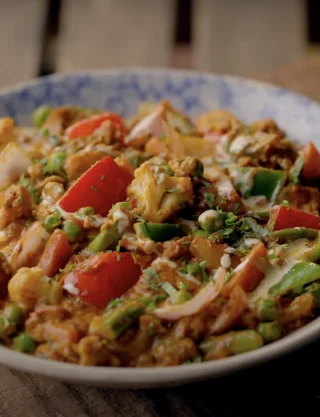
Vegetable kadhai
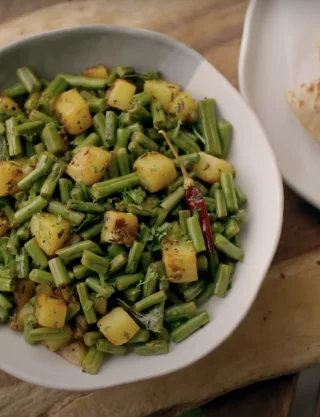
French beans and potatoes