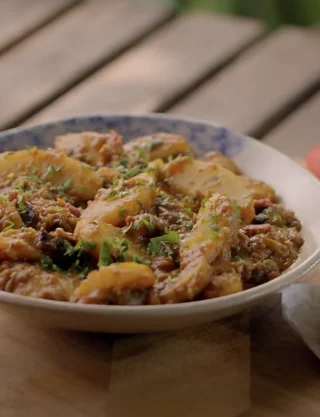
Instant dal premix
 Made in Alsace
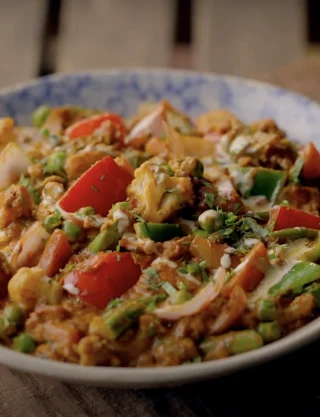
Discover our Dal Premix, a ready-to-cook protein-rich blend: just add hot water. Authentic Indian dal flavours in no time. Made to order, best consumed within two months.
Ready for shipping, delivery time 3-10 business days
Delivery from €4.80 at Mondial Relay pickup points.


In this dal instant premix, we provide you with all the spices and dry ingredients needed to prepare this dish.
However, you may need to purchase the fresh ingredients from your local grocery store to if you choose to add vegetables to this premix. We strongly believe in the importance of healthy eating and supporting local businesses, and we highly recommend that you purchase your fresh produce from a local store.
Since spices do not grow here in France, we import them from India through fair trade.
To learn more about where our spices come from, please feel free to send us an email. We will be happy to answer all your questions!
Craving another comforting homemade dal? Try our moong dal khichdi recipe.
| Directly selected smallholder producers | Yes |
| Cooking time | 15 minutes |
| Level of difficulty | Beginner |
| Spice level | Low |
| Number of servings | 4 |
| Vegetarian | Yes |
| Possible traces of allergens | Preparation contains : wheat, milk, sesame |
| Made in Alsace | Yes |

Mihika's note
We have all heard of dal, but cooking the authentic version at home often takes time. With this premix, I make your life easier! Just add a few fresh tomatoes, some spinach, or whatever you fancy, and your dal is ready to be enjoyed. All the comfort of a homemade dish, without the effort, in 10 minutes! 🍛🌿
Mihika Mahakal
Founder, Table Indienne
Learn more
The word “dal” (also spelt daal, dhal or dahl) comes from Sanskrit, from the verbal root dal-, meaning “to split”. That root itself goes back to an Indo-European root meaning “to split, to divide”. Dal is, first of all, a grain split in two. In India the word names both the dried pulse and the dish made from it: you “eat dal” the way we might say “eat lentils”.
The lentil is one of the oldest cultivated plants in the world: it was domesticated some 12,000 years ago in the Fertile Crescent, a region that today covers Iraq, Syria, Lebanon and south-eastern Turkey, alongside the ancestors of wheat and barley. It then travelled east. Depending on the source, it reached India and Pakistan around 2000 BC, while some authors already speak of lentil dishes in the Harappan period, around 2800 BC: the dates differ, and it is better to say so than to choose.
The written traces are firmer. Researchers place the preparation of split dal between 800 and 300 BC, and dal is mentioned in the Yajurveda, one of the Vedic texts, as well as in the Laṅkāvatāra Sūtra, a Mahayana Buddhist text. This is a dish whose lineage is counted in millennia.
One bean, three names
Why split the grain? Dehusking is said to improve the digestibility and flavour of pulses. Depending on whether they are left whole, split with their skin or split and dehusked, the same bean changes name: sabut for the whole grain (sabut urad), chilka for the grain split with its skin (mung dal chilka), dhuli for the split, dehusked grain (urad dhuli). On a market stall, the same seed can therefore go by three names.
One dish, a thousand dals
Dal changes face from one region to the next. In the South, where it is called paruppu, the pigeon pea (toor dal) is the base of sambar. In Punjab, dal makhani combines whole urad with red kidney beans (rajma), simmered with butter (makhan) and cream (malai). In West Bengal and Bangladesh, mung tends to dominate. In Nepal, the meal par excellence is called dal bhat: dal and rice. There is even a dal of the “five jewels”, panchratna dal, which mixes several pulses. And in the Indian communities of Guyana, Trinidad and Tobago, Fiji or Mauritius, yellow split-pea dal has followed families far beyond the subcontinent.
The tadka, the final spark
A dal simply boiled with turmeric and salt would remain rather discreet. It is the tadka that gives it character: whole spices (cumin, mustard seeds) thrown into very hot ghee or oil until they crackle, then garlic, ginger, onion, and last of all the ground spices, which burn quickly. The whole thing, still sizzling, is poured over the cooked dal. Depending on the region, the gesture is called tadka, tarka, chaunk, bagar, fodni or phoran. Nobody has dated its invention, and the legend that has Bhima, one of the Pandava brothers who became cook to King Virata during their exile, making a five-lentil dal remains a legend: no historical source confirms it.
Did you know?
India is at once the world’s largest producer of pulses, by far the largest consumer of lentils and also the largest importer: it eats more lentils than it grows. Sown in winter (a rabi crop), the lentil is the second most important winter pulse there after chickpea, and it is most often grown without irrigation, on rainfall alone.
Dal is not a plant, it is a family of seeds: lentils, split peas, mung or urad beans, chickpeas, pigeon peas or kidney beans, dozens of varieties across the subcontinent. Each has its own texture, cooking time and colour. Dal is everywhere, and yet it has no single terroir: it has as many terroirs as there are growing regions.
What is in your premix
Our premix is prepared by hand, to order, to guarantee its freshness. It brings together in a single pouch the lentils and the spice blend: all the dry ingredients you need for a rich, creamy and flavourful dal. Some of the spices, which do not grow in France, are imported directly from India through our partners.
| Element | Role in the dish |
|---|---|
| Lentils | The base: they simmer down and give the dal its creamy side |
| Spice blend | The fragrance, colour and warmth of the dish |
In a classic dal
The Indian way is to cook the lentils first with turmeric and salt, then prepare a tadka with cumin, mustard, sometimes asafoetida, garlic, ginger, onions and tomatoes, finishing with fresh coriander and a squeeze of lemon. Proportions and spices change from one household to the next. Feel free to enrich your premix with whatever you like: vegetables, fresh coriander, lemon.
A good dal is creamy, neither a clear soup nor a compact purée. The lentils give it a soft, slightly earthy roundness, the spices a warmth that builds in the mouth without attacking, and a touch of acidity (tomato, lemon) wakes it up. It is a comforting dish by nature, eaten warm or hot.
It suits every mood: thicker, it goes with rice and bread; thinner, it is eaten with a spoon like a soup.
Preparing the premix
- Simply add hot water and let it simmer: allow about 15 minutes for 4 people
- For exact quantities and the precise method, follow the instructions on the pouch
- Serve piping hot
Taking it further
- A home-made tadka: heat some ghee or oil, throw in cumin seeds until they crackle, add a sliced garlic clove, then pour it over your dal just before serving
- With vegetables: spinach, tomatoes, carrots, added during cooking
- With lemon and coriander: a squeeze of juice and a few fresh leaves at the last moment
- A smoked dal (dhungar): for the curious, a glowing coal placed in a small bowl in the middle of the pan, drizzled with ghee, lid closed, gives a smoky flavour close to that of the tandoor
If you add vegetables, choose fresh, seasonal ones bought close to home: the pouch brings all the dry ingredients, and your local shop takes care of the rest.
If you cook dal from scratch
- Sort the grains and rinse them: split lentils generally need no soaking, whole beans are soaked overnight
- Cooking time depends on the variety and age of the grains: an old dal can take twice as long, and very hard water lengthens it further
- A pressure cooker brings cooking down to about a fifth of the usual time
What to serve it with
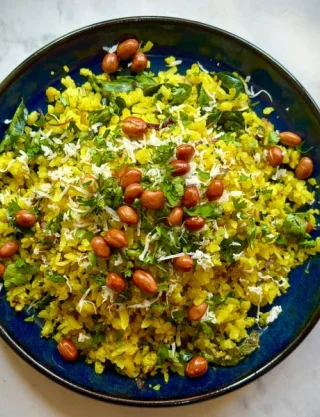
Serve your dal with basmati rice or a crisp naan. For an Indian breakfast, our poha premix is just as quick to make.
Quality criteria
- Appearance: dry, even grains of uniform colour, without holes or debris
- Smell: clean and mild for the lentils, fragrant for the spices, with no musty or stale odour
Storage advice
- Keep the pouch closed, somewhere dry, away from heat, light and humidity
- Our premix is prepared to order: it should be eaten within two months
- Once opened, reseal the pouch tightly, or transfer it to an airtight container
Allergens
This preparation contains wheat, milk and sesame. If you have any allergies, check the label on the pouch and let us know your allergens when you place your order.
What is the difference between dal and lentils?
In India, “dal” means both dried split pulses (lentils, split peas, mung or urad beans, chickpeas and so on) and the simmered dish made from them. The lentil is therefore only one of the many pulses that can make a dal.
What is a tadka?
It is the final seasoning of a dal: whole spices (cumin, mustard) are thrown into very hot ghee or oil until they crackle, then poured over the cooked dal. It is also called tarka, chaunk, bagar or phoran depending on the region.
Does this premix contain allergens?
Yes: the preparation contains wheat, milk and sesame. If you have any allergies, check the label on the pouch and tell us your allergens when you place your order.
How long does it keep?
The premix is prepared to order and should be eaten within two months. Keep it dry, in its pouch, well sealed.
Can I add vegetables?
Yes, it is common in India: spinach, tomatoes, carrots, depending on the season. Add them fresh, bought close to home, during cooking.
What do you eat dal with?
Most often with rice (the famous dal bhat) or with bread: roti, chapati or naan. It can also be eaten on its own, thinner, like a soup.
-
The word “dal” (also spelt daal, dhal or dahl) comes from Sanskrit, from the verbal root dal-, meaning “to split”. That root itself goes back to an Indo-European root meaning “to split, to divide”. Dal is, first of all, a grain split in two. In India the word names both the dried pulse and the dish made from it: you “eat dal” the way we might say “eat lentils”.
The lentil is one of the oldest cultivated plants in the world: it was domesticated some 12,000 years ago in the Fertile Crescent, a region that today covers Iraq, Syria, Lebanon and south-eastern Turkey, alongside the ancestors of wheat and barley. It then travelled east. Depending on the source, it reached India and Pakistan around 2000 BC, while some authors already speak of lentil dishes in the Harappan period, around 2800 BC: the dates differ, and it is better to say so than to choose.
The written traces are firmer. Researchers place the preparation of split dal between 800 and 300 BC, and dal is mentioned in the Yajurveda, one of the Vedic texts, as well as in the Laṅkāvatāra Sūtra, a Mahayana Buddhist text. This is a dish whose lineage is counted in millennia.
One bean, three names
Why split the grain? Dehusking is said to improve the digestibility and flavour of pulses. Depending on whether they are left whole, split with their skin or split and dehusked, the same bean changes name: sabut for the whole grain (sabut urad), chilka for the grain split with its skin (mung dal chilka), dhuli for the split, dehusked grain (urad dhuli). On a market stall, the same seed can therefore go by three names.
One dish, a thousand dals
Dal changes face from one region to the next. In the South, where it is called paruppu, the pigeon pea (toor dal) is the base of sambar. In Punjab, dal makhani combines whole urad with red kidney beans (rajma), simmered with butter (makhan) and cream (malai). In West Bengal and Bangladesh, mung tends to dominate. In Nepal, the meal par excellence is called dal bhat: dal and rice. There is even a dal of the “five jewels”, panchratna dal, which mixes several pulses. And in the Indian communities of Guyana, Trinidad and Tobago, Fiji or Mauritius, yellow split-pea dal has followed families far beyond the subcontinent.
The tadka, the final spark
A dal simply boiled with turmeric and salt would remain rather discreet. It is the tadka that gives it character: whole spices (cumin, mustard seeds) thrown into very hot ghee or oil until they crackle, then garlic, ginger, onion, and last of all the ground spices, which burn quickly. The whole thing, still sizzling, is poured over the cooked dal. Depending on the region, the gesture is called tadka, tarka, chaunk, bagar, fodni or phoran. Nobody has dated its invention, and the legend that has Bhima, one of the Pandava brothers who became cook to King Virata during their exile, making a five-lentil dal remains a legend: no historical source confirms it.
Did you know?
India is at once the world’s largest producer of pulses, by far the largest consumer of lentils and also the largest importer: it eats more lentils than it grows. Sown in winter (a rabi crop), the lentil is the second most important winter pulse there after chickpea, and it is most often grown without irrigation, on rainfall alone.
-
Dal is not a plant, it is a family of seeds: lentils, split peas, mung or urad beans, chickpeas, pigeon peas or kidney beans, dozens of varieties across the subcontinent. Each has its own texture, cooking time and colour. Dal is everywhere, and yet it has no single terroir: it has as many terroirs as there are growing regions.
What is in your premix
Our premix is prepared by hand, to order, to guarantee its freshness. It brings together in a single pouch the lentils and the spice blend: all the dry ingredients you need for a rich, creamy and flavourful dal. Some of the spices, which do not grow in France, are imported directly from India through our partners.
Element Role in the dish Lentils The base: they simmer down and give the dal its creamy side Spice blend The fragrance, colour and warmth of the dish In a classic dal
The Indian way is to cook the lentils first with turmeric and salt, then prepare a tadka with cumin, mustard, sometimes asafoetida, garlic, ginger, onions and tomatoes, finishing with fresh coriander and a squeeze of lemon. Proportions and spices change from one household to the next. Feel free to enrich your premix with whatever you like: vegetables, fresh coriander, lemon.
-
A good dal is creamy, neither a clear soup nor a compact purée. The lentils give it a soft, slightly earthy roundness, the spices a warmth that builds in the mouth without attacking, and a touch of acidity (tomato, lemon) wakes it up. It is a comforting dish by nature, eaten warm or hot.
It suits every mood: thicker, it goes with rice and bread; thinner, it is eaten with a spoon like a soup.
-
Preparing the premix
- Simply add hot water and let it simmer: allow about 15 minutes for 4 people
- For exact quantities and the precise method, follow the instructions on the pouch
- Serve piping hot
Taking it further
- A home-made tadka: heat some ghee or oil, throw in cumin seeds until they crackle, add a sliced garlic clove, then pour it over your dal just before serving
- With vegetables: spinach, tomatoes, carrots, added during cooking
- With lemon and coriander: a squeeze of juice and a few fresh leaves at the last moment
- A smoked dal (dhungar): for the curious, a glowing coal placed in a small bowl in the middle of the pan, drizzled with ghee, lid closed, gives a smoky flavour close to that of the tandoor
If you add vegetables, choose fresh, seasonal ones bought close to home: the pouch brings all the dry ingredients, and your local shop takes care of the rest.
If you cook dal from scratch
- Sort the grains and rinse them: split lentils generally need no soaking, whole beans are soaked overnight
- Cooking time depends on the variety and age of the grains: an old dal can take twice as long, and very hard water lengthens it further
- A pressure cooker brings cooking down to about a fifth of the usual time
What to serve it with
Serve your dal with basmati rice or a crisp naan. For an Indian breakfast, our poha premix is just as quick to make.
-
Quality criteria
- Appearance: dry, even grains of uniform colour, without holes or debris
- Smell: clean and mild for the lentils, fragrant for the spices, with no musty or stale odour
Storage advice
- Keep the pouch closed, somewhere dry, away from heat, light and humidity
- Our premix is prepared to order: it should be eaten within two months
- Once opened, reseal the pouch tightly, or transfer it to an airtight container
Allergens
This preparation contains wheat, milk and sesame. If you have any allergies, check the label on the pouch and let us know your allergens when you place your order.
-
What is the difference between dal and lentils?
In India, “dal” means both dried split pulses (lentils, split peas, mung or urad beans, chickpeas and so on) and the simmered dish made from them. The lentil is therefore only one of the many pulses that can make a dal.
What is a tadka?
It is the final seasoning of a dal: whole spices (cumin, mustard) are thrown into very hot ghee or oil until they crackle, then poured over the cooked dal. It is also called tarka, chaunk, bagar or phoran depending on the region.
Does this premix contain allergens?
Yes: the preparation contains wheat, milk and sesame. If you have any allergies, check the label on the pouch and tell us your allergens when you place your order.
How long does it keep?
The premix is prepared to order and should be eaten within two months. Keep it dry, in its pouch, well sealed.
Can I add vegetables?
Yes, it is common in India: spinach, tomatoes, carrots, depending on the season. Add them fresh, bought close to home, during cooking.
What do you eat dal with?
Most often with rice (the famous dal bhat) or with bread: roti, chapati or naan. It can also be eaten on its own, thinner, like a soup.
Why we created a Instant dal premix kit?

Anti-waste
Have you always wanted to cook Indian dishes, but never knew where to buy all the spices, or what to do if the result is not good? We are here to answer this problem with our kit! No need to buy spices that you will never use again, we only put the necessary amount of spices in your kit.
Authentic flavors
Our spices come directly from India. They are carefully selected to give you an authentic flavor.
Step-by-step recipe and instructions
We know well that Indian recipes can be difficult to understand. We provide you with step-by-step instructions and recipes to ensure you prepare the best possible version of the dish every time!

Demystifying the facts
Do Indians use the famous "curry"?
Check out our blog article to discover why curry doesn't really exist in India.
Why buy all these spices when I can just use curry?
Check out our blog article to discover the wide variety of spices used in India.
Questions & Answers
Thank you! Your question has been sent. Mihika will answer soon and you will receive an email.

Instant dal premix
Products related to this article
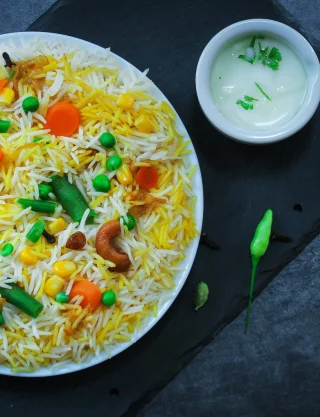
Vegtable pulao
Vegetable kadhai
You might also like