Instant poha premix
 Made in Alsace
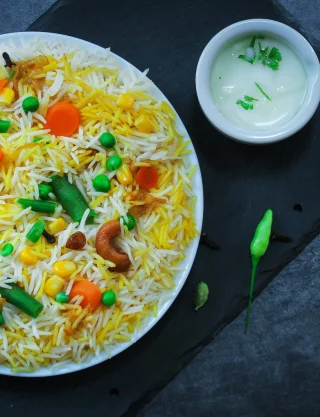
Discover our Poha Premix, India's iconic breakfast made from flattened rice. Light, flavourful and ready in minutes. Made to order, best consumed within two months.
Ready for shipping, delivery time 3-10 business days
Delivery from €4.80 at Mondial Relay pickup points.


Instant Poha Mix
Escape from routine with our instant premix for Poha, a vegetarian dish adored in India for its light, savory taste.
Made with flattened rice and a perfectly balanced blend of spices, our Poha is a complete dish, ready in minutes. Perfect for a quick breakfast, colorful brunch or healthy snack. Just add water, wait for 5 minutes and let the magic happen and enjoy the poha on your plate.
Poha is a dish originating from the state of Maharashtra in India. It is made from flattened rice. Although originally from Maharashtra, variations of poha are found all across the country. It is one of the most beloved breakfast dishes.
Our instant poha premix kit
This kit is freshly prepared by hand upon order and contains peanuts. kindly let us know when placing the ordering about any allergies that you might have.
In this Poha instant premix, we provide you with all the spices and dry ingredients needed to prepare this dish.
However, you may need to purchase the fresh ingredients from your local grocery store if you choose to add vegetables to this premix.
We strongly believe in the importance of healthy eating and supporting local businesses, and we highly recommend that you purchase your fresh produce from a local store.
Since spices do not grow here in France, we import them from India through fair trade.
To learn more about where our spices come from, please feel free to send us an email. We will be happy to answer all your questions!
| Directly selected smallholder producers | Yes |
| Cooking time | 5 minutes |
| Level of difficulty | Beginner |
| Spice level | Low |
| Number of servings | 1 |
| Vegetarian | Yes |
| Made in Alsace | Yes |

Mihika's note
In India, poha has always been the must-have Sunday breakfast ritual, and for very good reason! It is a whole country's favourite breakfast, the one that instantly brings back my fondest childhood memories. To put it simply: poha is the true Indian equivalent of the croissant! With this premix, invite a proper Indian Sunday morning straight onto your plate. 🌾🍋
Mihika Mahakal
Founder, Table Indienne
Learn more
Poha is one of the few Indian breakfast dishes whose ancestor can be named in a sacred text. In the Bhagavata Purana, chapter 10.81, a poor brahmin, whom tradition calls Sudama, visits his childhood friend Krishna, now king of Dvaraka. His only gift is flattened rice tied up in a piece of cloth. The text calls it pṛthuka, a Sanskrit word that literally means “flattened” rice (from pṛthu, “broad, spread out”).
The scene has remained famous. Krishna notices the bundle, takes it himself from the brahmin’s garment, asking “what is this?” (verse 10.81.8), then declares that these grains of flattened rice delight him and, with him, the whole universe (10.81.9). He eats one handful and is reaching for a second when his wife Rukmini takes hold of his hand (10.81.10). In the tradition, the episode has become a symbol of the sincere offering: what counts is not the wealth of the gift, but the intention of the giver.
One detail of the story is far from trivial: flattened rice travels well. Pre-cooked before it is flattened, dry and light, it slips easily into a bundle and needs no long cooking, which probably explains its place in travellers’ provisions long before it became a breakfast dish.
One rice, a thousand names
Flattened rice is so widespread in India that almost every language has its own word for it. It is poha (or pohe in Marathi) in Maharashtra and central India, aval in Tamil and Malayalam, avalakki in Kannada, atukulu in Telugu, chira in Bengali, sira in Assamese, chuda in Odia, phov in Konkani, and chiura or chura from Bihar all the way to Nepal. Depending on the region, it is made into savoury, sweet or spicy dishes, and it is also toasted or fried as a snack.
Kande pohe: the dish of first meetings
In Maharashtra, onion poha (kande pohe) has given its name to a social institution. In the tradition of Marathi arranged marriages, the expression describes the first visit of the prospective groom’s family to the home of the young woman: everyone sits in the living room, makes conversation, and a plate of onion poha is served to the guests. If the two young people take to each other over the plate, the match is off to a good start. The dish is so closely tied to the scene that “having a kande pohe” has become a familiar way of talking about these meetings.
Indore, the capital of poha
Poha is often associated with Maharashtra, but it is in Indore, in Madhya Pradesh, that it has become an emblem. There it is served early in the morning at street stalls, often with a jalebi (a fried, syrupy spiral fritter), crunchy sev (fine chickpea-flour vermicelli, often from Ratlam), raw onion, fennel seeds and a pinch of jeeravan masala. This sweet, salty and spicy pairing is one of the most recognisable breakfasts in the country. Accounts of its origin differ: the popular version has it that the Holkar and Scindia dynasties, who came from Maharashtra, brought poha with them; others date it, in its current form, to after independence in 1947. Without a solid source, it is best to keep both in mind without choosing. Enthusiasts have their own celebration too: 7 June is marked as International Poha Day.
Did you know?
India has no monopoly on flattened rice. In Cambodia, ambok (freshly harvested rice toasted in a wok, then pounded in a wooden mortar) is at the heart of the Bon Om Touk water festival and is eaten with bananas, palm sugar and coconut water. In Vietnam, cốm, made from still-green rice, marks the arrival of autumn. In the Philippines, pinipig crunches on top of desserts. And among the Newars of Nepal, chiura is part of the wedding ritual.
Poha is not a separate grain; it is a way of preparing rice. The grain is dehusked, parboiled or soaked in hot water (for about 45 minutes), dried, sometimes roasted, then flattened between rollers. This pre-cooking is why the recipe is so quick: all that remains is to soften and season it.
Thin, medium or thick
The flakes are sold in three thicknesses. Thin and medium flakes are used for everyday cooking and for desserts; thick flakes, which are sturdier, are mostly meant for deep-frying (the famous chivda, a crunchy mix for snacking).
What is in your premix
Our premix is prepared by hand, to order, to guarantee its freshness. It brings together in a single pouch the flattened rice, a spice blend and peanuts: all the dry ingredients you need to make a poha. Some of the spices, which do not grow in France, are imported directly from India through our partners.
| Element | Role in the dish |
|---|---|
| Flattened rice | The base: pre-cooked flakes that soften in a few minutes |
| Spice blend | The fragrance and colour of the dish, the “Indian breakfast” character |
| Peanuts | The crunch, which contrasts with the softness of the rice |
In a classic poha
The Indian way is to start by frying mustard seeds and curry leaves, then turmeric, green chilli, onions and often potatoes, before finishing with a squeeze of lime and fresh coriander. Proportions and ingredients change from one household to the next. Feel free to add whatever you like to your premix: vegetables, lime, coriander.
Poha is a gentle base: flattened rice has a discreet, slightly sweet flavour and a soft texture, tender without being mushy. The spices give it its personality, and the crunch of the peanuts makes every mouthful a pleasure.
Indian cooking likes to balance salty, sour and a hint of heat: a well-made poha is tender, fragrant, a little spicy and freshened by a squeeze of lime. It is a light dish, best eaten warm or hot, and it can be lifted to your own taste.
Preparing the premix
- Simply add water, wait five minutes and let the flakes soften
- For exact quantities and the precise method, follow the instructions on the pouch
- Serve straight away, warm or hot
Taking it further
- Kanda poha: the most classic version, with fried onions
- Batata poha: with diced potatoes, more filling
- Poha with peas or carrots: for a colourful brunch
- Indore style: with crunchy sev, raw onion, a squeeze of lime and, for the curious, a jalebi on the side
If you add vegetables, choose fresh, seasonal ones bought close to home: the pouch brings all the dry ingredients, and your local shop takes care of the rest.
What to serve it with
At an Indian breakfast, poha is happily served with a cup of chai: try it with a home-made chai, prepared with our Chai Masala blend. And for a complete Indian meal, our dal premix is just as quick to make.
Poha for brunch or a snack
Poha is not only for mornings. Light and quick, it makes a good brunch, a lunch on the go or a late-afternoon snack.
Quality criteria
- Appearance: dry, even flakes of creamy white, without excessive crumbs or mould
- Smell: neutral and clean for the rice, fragrant for the spices, with no rancid or damp note
Storage advice
- Keep the pouch closed, somewhere dry, away from heat, light and humidity
- Our premix is prepared to order: it should be eaten within two months
- Once opened, reseal the pouch tightly, or transfer it to an airtight container
Allergens
This premix contains peanuts. If you have any allergies, please let us know when you place your order.
What is the difference between poha and puffed rice?
Poha is flattened rice: the pre-cooked grain is pressed between rollers into a flake. Puffed rice (murmura in India) is the opposite, swollen and airy, like rice popcorn. Both are eaten, but they are not prepared in the same way.
Does it really need cooking?
Hardly at all. The rice in poha is already pre-cooked (parboiled or soaked in hot water) before being flattened, which is why this dish is ready in minutes. It is mostly a matter of softening and seasoning it.
Does this premix contain peanuts?
Yes. If you have any allergies, please tell us when you place your order.
How long does it keep?
The premix is prepared to order and should be eaten within two months. Keep it dry, in its pouch, well sealed.
Can I add vegetables?
Yes, and it is quite common in India: onions, potatoes, peas, carrots, depending on the season. Add them fresh, bought close to home.
What does kande pohe mean?
It is onion poha (kanda in Marathi). In Maharashtra the expression also describes the first meeting arranged between two families with a view to marriage, during which this dish is traditionally served.
-
Poha is one of the few Indian breakfast dishes whose ancestor can be named in a sacred text. In the Bhagavata Purana, chapter 10.81, a poor brahmin, whom tradition calls Sudama, visits his childhood friend Krishna, now king of Dvaraka. His only gift is flattened rice tied up in a piece of cloth. The text calls it pṛthuka, a Sanskrit word that literally means “flattened” rice (from pṛthu, “broad, spread out”).
The scene has remained famous. Krishna notices the bundle, takes it himself from the brahmin’s garment, asking “what is this?” (verse 10.81.8), then declares that these grains of flattened rice delight him and, with him, the whole universe (10.81.9). He eats one handful and is reaching for a second when his wife Rukmini takes hold of his hand (10.81.10). In the tradition, the episode has become a symbol of the sincere offering: what counts is not the wealth of the gift, but the intention of the giver.
One detail of the story is far from trivial: flattened rice travels well. Pre-cooked before it is flattened, dry and light, it slips easily into a bundle and needs no long cooking, which probably explains its place in travellers’ provisions long before it became a breakfast dish.
One rice, a thousand names
Flattened rice is so widespread in India that almost every language has its own word for it. It is poha (or pohe in Marathi) in Maharashtra and central India, aval in Tamil and Malayalam, avalakki in Kannada, atukulu in Telugu, chira in Bengali, sira in Assamese, chuda in Odia, phov in Konkani, and chiura or chura from Bihar all the way to Nepal. Depending on the region, it is made into savoury, sweet or spicy dishes, and it is also toasted or fried as a snack.
Kande pohe: the dish of first meetings
In Maharashtra, onion poha (kande pohe) has given its name to a social institution. In the tradition of Marathi arranged marriages, the expression describes the first visit of the prospective groom’s family to the home of the young woman: everyone sits in the living room, makes conversation, and a plate of onion poha is served to the guests. If the two young people take to each other over the plate, the match is off to a good start. The dish is so closely tied to the scene that “having a kande pohe” has become a familiar way of talking about these meetings.
Indore, the capital of poha
Poha is often associated with Maharashtra, but it is in Indore, in Madhya Pradesh, that it has become an emblem. There it is served early in the morning at street stalls, often with a jalebi (a fried, syrupy spiral fritter), crunchy sev (fine chickpea-flour vermicelli, often from Ratlam), raw onion, fennel seeds and a pinch of jeeravan masala. This sweet, salty and spicy pairing is one of the most recognisable breakfasts in the country. Accounts of its origin differ: the popular version has it that the Holkar and Scindia dynasties, who came from Maharashtra, brought poha with them; others date it, in its current form, to after independence in 1947. Without a solid source, it is best to keep both in mind without choosing. Enthusiasts have their own celebration too: 7 June is marked as International Poha Day.
Did you know?
India has no monopoly on flattened rice. In Cambodia, ambok (freshly harvested rice toasted in a wok, then pounded in a wooden mortar) is at the heart of the Bon Om Touk water festival and is eaten with bananas, palm sugar and coconut water. In Vietnam, cốm, made from still-green rice, marks the arrival of autumn. In the Philippines, pinipig crunches on top of desserts. And among the Newars of Nepal, chiura is part of the wedding ritual.
-
Poha is not a separate grain; it is a way of preparing rice. The grain is dehusked, parboiled or soaked in hot water (for about 45 minutes), dried, sometimes roasted, then flattened between rollers. This pre-cooking is why the recipe is so quick: all that remains is to soften and season it.
Thin, medium or thick
The flakes are sold in three thicknesses. Thin and medium flakes are used for everyday cooking and for desserts; thick flakes, which are sturdier, are mostly meant for deep-frying (the famous chivda, a crunchy mix for snacking).
What is in your premix
Our premix is prepared by hand, to order, to guarantee its freshness. It brings together in a single pouch the flattened rice, a spice blend and peanuts: all the dry ingredients you need to make a poha. Some of the spices, which do not grow in France, are imported directly from India through our partners.
Element Role in the dish Flattened rice The base: pre-cooked flakes that soften in a few minutes Spice blend The fragrance and colour of the dish, the “Indian breakfast” character Peanuts The crunch, which contrasts with the softness of the rice In a classic poha
The Indian way is to start by frying mustard seeds and curry leaves, then turmeric, green chilli, onions and often potatoes, before finishing with a squeeze of lime and fresh coriander. Proportions and ingredients change from one household to the next. Feel free to add whatever you like to your premix: vegetables, lime, coriander.
-
Poha is a gentle base: flattened rice has a discreet, slightly sweet flavour and a soft texture, tender without being mushy. The spices give it its personality, and the crunch of the peanuts makes every mouthful a pleasure.
Indian cooking likes to balance salty, sour and a hint of heat: a well-made poha is tender, fragrant, a little spicy and freshened by a squeeze of lime. It is a light dish, best eaten warm or hot, and it can be lifted to your own taste.
-
Preparing the premix
- Simply add water, wait five minutes and let the flakes soften
- For exact quantities and the precise method, follow the instructions on the pouch
- Serve straight away, warm or hot
Taking it further
- Kanda poha: the most classic version, with fried onions
- Batata poha: with diced potatoes, more filling
- Poha with peas or carrots: for a colourful brunch
- Indore style: with crunchy sev, raw onion, a squeeze of lime and, for the curious, a jalebi on the side
If you add vegetables, choose fresh, seasonal ones bought close to home: the pouch brings all the dry ingredients, and your local shop takes care of the rest.
What to serve it with
At an Indian breakfast, poha is happily served with a cup of chai: try it with a home-made chai, prepared with our Chai Masala blend. And for a complete Indian meal, our dal premix is just as quick to make.
Poha for brunch or a snack
Poha is not only for mornings. Light and quick, it makes a good brunch, a lunch on the go or a late-afternoon snack.
-
Quality criteria
- Appearance: dry, even flakes of creamy white, without excessive crumbs or mould
- Smell: neutral and clean for the rice, fragrant for the spices, with no rancid or damp note
Storage advice
- Keep the pouch closed, somewhere dry, away from heat, light and humidity
- Our premix is prepared to order: it should be eaten within two months
- Once opened, reseal the pouch tightly, or transfer it to an airtight container
Allergens
This premix contains peanuts. If you have any allergies, please let us know when you place your order.
-
What is the difference between poha and puffed rice?
Poha is flattened rice: the pre-cooked grain is pressed between rollers into a flake. Puffed rice (murmura in India) is the opposite, swollen and airy, like rice popcorn. Both are eaten, but they are not prepared in the same way.
Does it really need cooking?
Hardly at all. The rice in poha is already pre-cooked (parboiled or soaked in hot water) before being flattened, which is why this dish is ready in minutes. It is mostly a matter of softening and seasoning it.
Does this premix contain peanuts?
Yes. If you have any allergies, please tell us when you place your order.
How long does it keep?
The premix is prepared to order and should be eaten within two months. Keep it dry, in its pouch, well sealed.
Can I add vegetables?
Yes, and it is quite common in India: onions, potatoes, peas, carrots, depending on the season. Add them fresh, bought close to home.
What does kande pohe mean?
It is onion poha (kanda in Marathi). In Maharashtra the expression also describes the first meeting arranged between two families with a view to marriage, during which this dish is traditionally served.
Why we created a Instant poha premix kit?

Anti-waste
Have you always wanted to cook Indian dishes, but never knew where to buy all the spices, or what to do if the result is not good? We are here to answer this problem with our kit! No need to buy spices that you will never use again, we only put the necessary amount of spices in your kit.
Authentic flavors
Our spices come directly from India. They are carefully selected to give you an authentic flavor.
Step-by-step recipe and instructions
We know well that Indian recipes can be difficult to understand. We provide you with step-by-step instructions and recipes to ensure you prepare the best possible version of the dish every time!

Demystifying the facts
Do Indians use the famous "curry"?
Check out our blog article to discover why curry doesn't really exist in India.
Why buy all these spices when I can just use curry?
Check out our blog article to discover the wide variety of spices used in India.
Questions & Answers
Thank you! Your question has been sent. Mihika will answer soon and you will receive an email.

Instant poha premix
Products related to this article
You might also like