Black pepper is the oldest documented spice in the world. The first written references go back to Sanskrit books dated more than 3,000 years BCE. Cultivated and consumed in India since deepest Antiquity, it went on to conquer the entire world, sometimes literally by force of arms.
From Antiquity, the Egyptians used it in their embalming practices: peppercorns were found in the nostrils of the mummy of Ramses II, who died in 1213 BCE. The Greeks and Romans turned it into a luxury reserved for the wealthiest. In 20 CE, Apicius, the emblematic figure of Roman haute gastronomy, included pepper in his book De re coquinaria and awarded it the title of 'King of spices'.
Fortune was weighed in pepper
In the Middle Ages, the wealth of a noble family was measured by its stock of spices. A kilogram of pepper represented a fortune: the wealthiest merchants were nicknamed 'pepper sacks'. The French expression 'payer en espèces' (to pay in cash) is even said to come from a time when payment was made literally in spices ('espices').
It was the fall of Constantinople in 1453 that triggered the decisive turning point: the overland spice route was cut, and the price of pepper doubled in Europe within twenty years. This surge launched the race for maritime routes. Christopher Columbus set out in search of a route to the Indies and discovered America. Vasco da Gama sailed around Africa and landed in 1498 at Calicut, on the Malabar Coast: he opened the 'spice route' which would remain the most strategic maritime corridor for centuries to come.
The Portuguese, then the Dutch and the English, would bitterly contest this trade. In 1708, the English built a fort at Tellicherry to control the region's spice supply. It was around this trade that the British colonial Empire in India progressively took shape.
Today, black pepper represents around 20% of the global spice trade. And despite competition from Vietnam (the leading producer by volume), it is still from Kerala and the Malabar Coast that the peppers most sought after by great chefs come.
Did you know?
- Pepper is the 3rd most consumed food in the world, after salt and sugar
- Vasco da Gama, on landing at Calicut in 1498, is said to have declared: 'I come in search of Christians and pepper'
- The French expression 'payer en espèces' is said to be a distortion of 'payer en épices', pepper served as currency in the Middle Ages
- Peppercorns were found in the nostrils of the mummy of Ramses II (1213 BCE)
- The crusaders who captured Caesarea were each rewarded with a kilogram of pepper
- Piperine was only chemically isolated in 1819 by the Danish scientist Hans Christian Ørsted
- There are more than 70 varieties of Piper nigrum grown in India, including 16 developed at Panniyur (Kerala)
- Grey pepper is not a variety: it is simply ground black pepper
Black pepper across languages
| Language | Name |
|---|
| French | Poivre noir |
| Hindi | Kali Mirch (काली मिर्च) |
| Malayalam (Kerala) | Kurumulaku (കുരുമുളക്) |
| Sanskrit | Maricha / Pippali (मरिच) |
| Tamil | Milagu (மிளகு) |
| English | Black Pepper |
| Portuguese | Pimenta preta |
| Arabic | Fulful aswad (فلفل أسود) |
| German | Schwarzer Pfeffer |
| Botanical Latin | Piper nigrum L. |
The English word 'pepper' comes from the Latin piper, borrowed from the Greek peperi, which derives from the Sanskrit pippali. The same English term was, by mistake, also given to the chillies of the New World discovered by Christopher Columbus, who was specifically searching for Indian pepper. This linguistic confusion, born in 1492, has never been corrected.
| Characteristic | Detail |
|---|
| Latin name | Piper nigrum L. |
| Botanical family | Piperaceae |
| Local names | Kurumulaku (Malayalam) / Kali Mirch (Hindi) |
| Part used | Dried berry (drupes) |
| Emblematic varieties | Karimunda, Panniyur-1, Tellicherry, Malabar |
| Piperine content | 5 to 9% depending on variety and terroir |
| Harvest | October to January, berries picked before full maturity |
| Drying | Naturally in the sun (3 to 5 days) |
Kerala is a narrow but extraordinarily rich state, squeezed between the Western Ghats range and the Arabian Sea. This tropical corridor, bathed by two monsoons a year, offers ideal conditions for growing pepper: constant warmth, abundant humidity, volcanic soil rich in organic matter.
This coast has been known as the 'spice coast' (or Malabar Coast) since Antiquity. It produces nearly 70% of India's spice output. Pepper vines grow semi-wild in the mountain forests, winding around tree trunks that naturally serve as their supports.
The terroir that makes the difference
- Altitude between 500 and 1,500 metres in the districts of Wayanad, Idukki and Pathanamthitta
- Rainfall of 2,500 to 5,000 mm/year: two monsoons guarantee constant humidity
- Red lateritic soil, rich in minerals, with good natural drainage
- Natural shade from large forest trees, which protects the vines from direct sunlight
- Exceptional biodiversity: on the same plot, pepper coexists with cardamom, turmeric, vanilla and clove trees
The main varieties grown in Kerala are Karimunda (best traditional cultivar), Panniyur-1 (high yield), Tevan, Neelamundi and Jeerakarimundi. The famous Tellicherry pepper is a selection grade: it designates the largest berries harvested at full maturity in the Thalassery region, known for their aromatic complexity.
| Producing country | Production / Quality ranking |
|---|
| Vietnam | ~800,000 t/year (global volume #1) |
| Brazil | ~100,000 t/year |
| Indonesia | ~80,000 t/year |
| India (Kerala + Karnataka) | ~65,000 t/year (premium quality) |
| Sri Lanka | ~30,000 t/year |
Botany
The pepper plant (Piper nigrum) is a tropical evergreen vine of the Piperaceae family. Its woody stems can reach 5 to 10 metres. The plant begins to produce after 3 to 4 years, and only becomes profitable from the 7th year.
The same plant produces green, black, red and white pepper depending on the stage of harvest:
- Green pepper: berries picked while immature, dried or brined
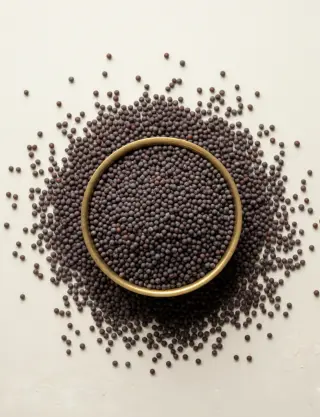
- Black pepper: berries picked almost ripe, sun-dried
- Red pepper: berries at full maturity: rare, with intense fruity aroma
- White pepper: ripe red berries with their pericarp removed
Beware of false peppers
Sichuan pepper (Zanthoxylum), pink peppercorns (Schinus), allspice (Pimenta dioica) and grains of Selim (Xylopia) are not true peppers. They do not contain piperine.
Kerala black pepper has an aromatic richness you will not find in industrial peppers. Freshly ground, it unfolds a complex palette ranging from woody, resinous notes to fruity and slightly floral accents, with a clean heat that builds gradually on the palate.
| Variety | Aromatic profile |
|---|
| Karimunda | Woody, resinous, notes of roasted coffee, intense heat. The most aromatic. |
| Malabar | Fruity, slightly floral, vegetable broth, balanced piquancy. The most versatile. |
| Tellicherry | Complex, fruity-lemony, notes of citrus zest, elegant piquancy. The most refined. |
| White pepper | Soft, less piquant, mushroom and yeast notes. Ideal for white sauces. |
| Green pepper | Fresh, herbal, slightly tangy. Ideal brined or freeze-dried. |
Chef's tip
Always grind your pepper at the last moment, just before serving. Volatile aromatic compounds evaporate quickly after grinding. Pre-ground pepper will have lost up to 70% of its aroma. Buy whole peppercorns and invest in a good mill with a ceramic mechanism.
Black pepper is the most universally used spice in cooking. In Indian cuisine, its uses are many and nuanced: it is used not only as a finishing touch but at different stages of cooking.
In Indian cuisine
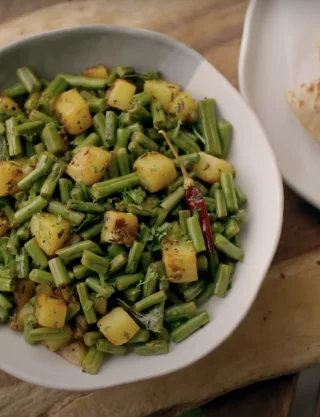
- In tadka (tempering): whole peppercorns dropped into hot oil or ghee to release the fat-soluble aromas
- In garam masala: a central component of this North Indian spice blend
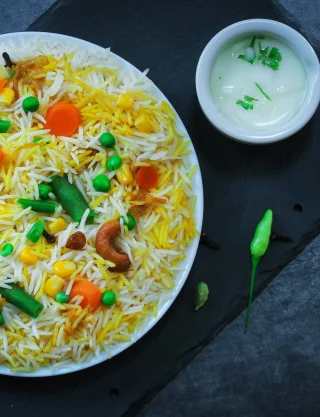
- In biryanis: tucked between layers of rice to perfume them delicately
- In rasam: black pepper is the main spice of this restorative Tamil Nadu broth
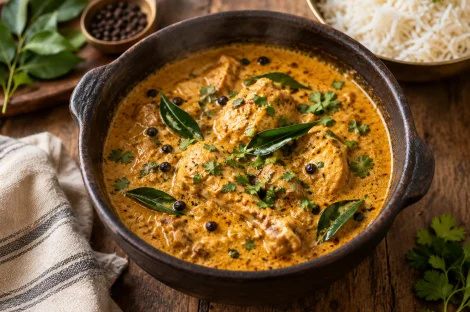
- In Chettinad masala: in large quantities, it is the signature spice of Chettinad cuisine
- In chai: a few crushed peppercorns in heated milk
In French cuisine: the perfect pairings
- Steak au poivre: prefer a coarsely crushed Malabar or Tellicherry
- Green peppercorn sauce: cream, cognac and brined green peppercorns
- Roast red meats: rib steak, prime rib of beef, duck breast
- Grilled fish: salmon, cod, sea bass: Malabar with its fruity note is ideal
- Root vegetables: roasted carrots, parsnip purée, beetroot: pepper reveals their sweetness
- Cheeses: lifts hard cheeses (comté, parmesan) and blue cheeses
- Strawberries with pepper: a French classic, a remarkable combination
- Dark chocolate: in ganache or sprinkled, pepper pairs remarkably well with cocoa
Black pepper is much more than a simple condiment: it has been a central medicinal plant in Ayurvedic medicine for over 3,000 years. Ayurveda uses it to stimulate agni (the digestive fire) and to treat a wide range of everyday ailments.
The key active compound is piperine, an alkaloid discovered in 1819 by the Danish chemist Hans Christian Ørsted. It is piperine that gives pepper its piquancy and most of its therapeutic properties.
Documented properties of piperine
- Digestive: stimulates the secretion of gastric acid, pancreatic and biliary juices, recommended for bloating and flatulence
- Antioxidant: neutralizes free radicals and protects cells from oxidative stress
- Anti-inflammatory: inhibits the NF-κB pathway and the production of pro-inflammatory cytokines
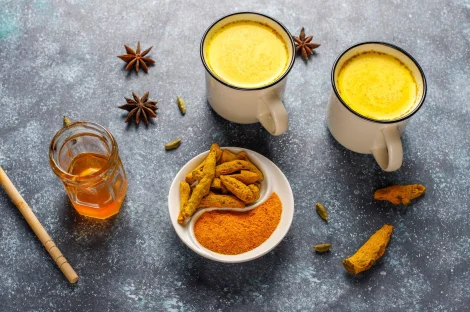
- Bioavailability enhancer: increases the absorption of curcumin from turmeric by 2,000% (1998 study), which is why the two spices are traditionally paired in India
- Neuroprotective: stimulates the production of serotonin and endorphins
- Antibacterial: efficacy demonstrated against Staphylococcus aureus and Pseudomonas aeruginosa
- Decongestant: a traditional Ayurvedic remedy against coughs and colds
- Cardiovascular: may help reduce LDL cholesterol and increase HDL
Precautions of use
At high doses, piperine can have pro-inflammatory effects. Not recommended in cases of gastric ulcer, gastritis, oesophagitis or haemorrhoids. Do not heat pepper to very high temperatures (deep-frying), as its active compounds degrade.
Nutritional values (per 1 tablespoon / 6 g)
| Component | Content |
|---|
| Piperine | 5 to 9% of total weight |
| Essential oils | 1 to 2.5% (myrcene, limonene, caryophyllene) |
| Oleoresin | 6 to 10% |
| Vitamins | B1, B2, B6, C, K |
| Minerals | Manganese, iron, copper, calcium, magnesium |
| Fibre | ~1.5 g |
| Calories | ~16 kcal |
How to recognize a good pepper
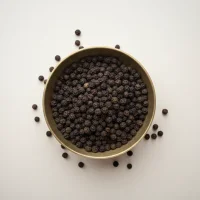
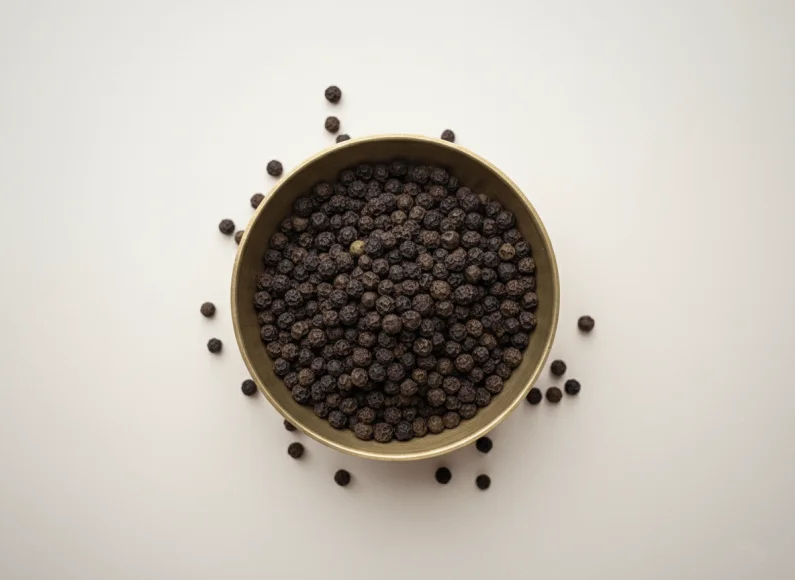
- Colour: uniformly black, glossy berries; a dull or greyish colour indicates faulty drying
- Size: round and well-formed berries, with no shrivelled, broken or discoloured grains
- Aroma: powerful, woody and slightly fruity smell; if the aroma is weak, the pepper is old
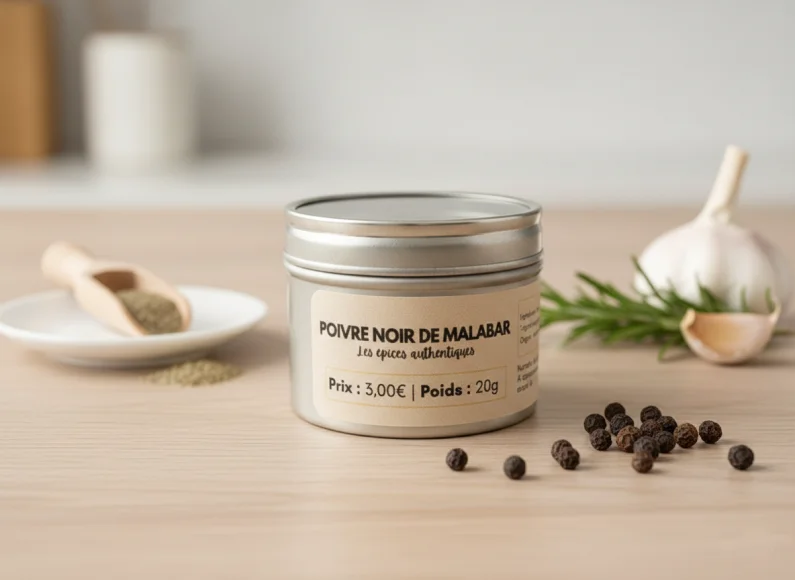
- Origin mentioned: a serious producer always indicates the country, state and ideally the variety
- Whole peppercorns: never pre-ground, to preserve the aromas
Storage tips
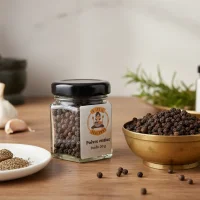
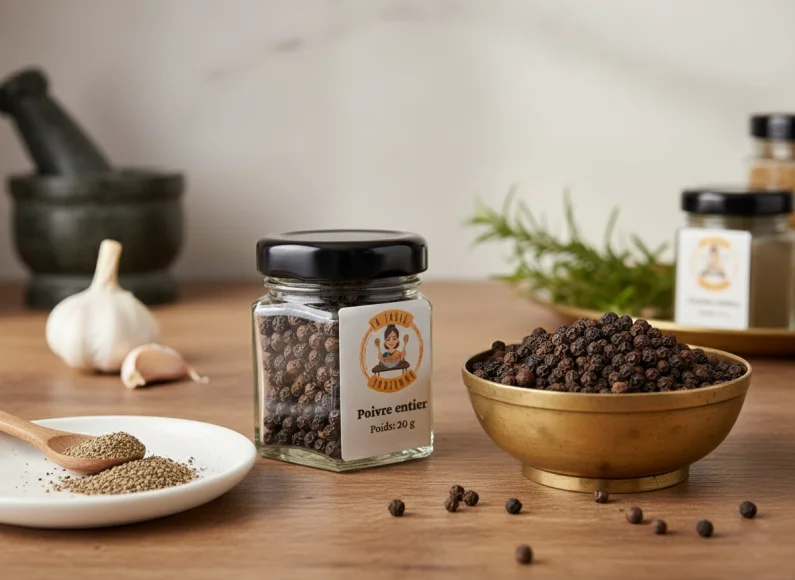
- Store as whole peppercorns in an airtight glass jar, away from light and moisture
- Never store above the stove: heat and steam degrade the essential oils
- Optimal shelf life: 2 to 3 years for whole peppercorns; 6 months maximum once ground
- Sign of degradation: weakened aroma, faded colour, only piquant taste with no complexity
What is the difference between black, white, green and red pepper?
They are the same berries from the same plant (Piper nigrum), harvested at different stages of maturity. Green is picked immature. Black is picked almost ripe and then sun-dried. Red is fully ripe: rare and highly aromatic. White is a ripe red berry from which the pericarp has been removed.
Can I use Kerala pepper like any other pepper?
Yes, but as its concentration of aromas is higher than industrial pepper, you can often use less of it. Its aromatic complexity reveals itself particularly well as a finishing touch, ground directly onto the dish at the moment of serving.
Why pair black pepper with turmeric?
The piperine in black pepper increases the body's absorption of curcumin from turmeric by 2,000%. This is a pairing practised for millennia in India, validated by modern science. In Ayurvedic preparations, the two spices are almost always used together.
How do you recognize authentic Kerala pepper?
Look for uniformly black and glossy peppercorns, a powerful and complex aroma when the bag is opened, an explicit mention of the origin (Kerala, Malabar, Karimunda or Tellicherry), and a sale as whole peppercorns rather than pre-ground.
Why is Vietnamese pepper cheaper than Kerala pepper?
Vietnamese production is industrialized and geared towards maximum yield. Kerala produces traditional varieties on diversified plots, harvested by hand, with natural cycles respected. The price difference reflects a difference in agricultural philosophy, with a very clear difference in taste.








 Gravy Dishes