



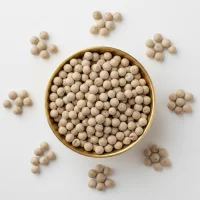
Whole White Peppercorns
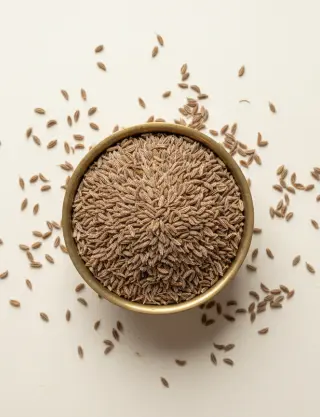
Discover our whole white peppercorns, grown in the plantations of Kerala, India. Delicate, mildly pungent and subtly musky for freshly ground pepper with every use.
Ready for shipping, delivery time 3-21 business days
Delivery from €4.80 at Mondial Relay pickup points.
Free spice samples with every order.



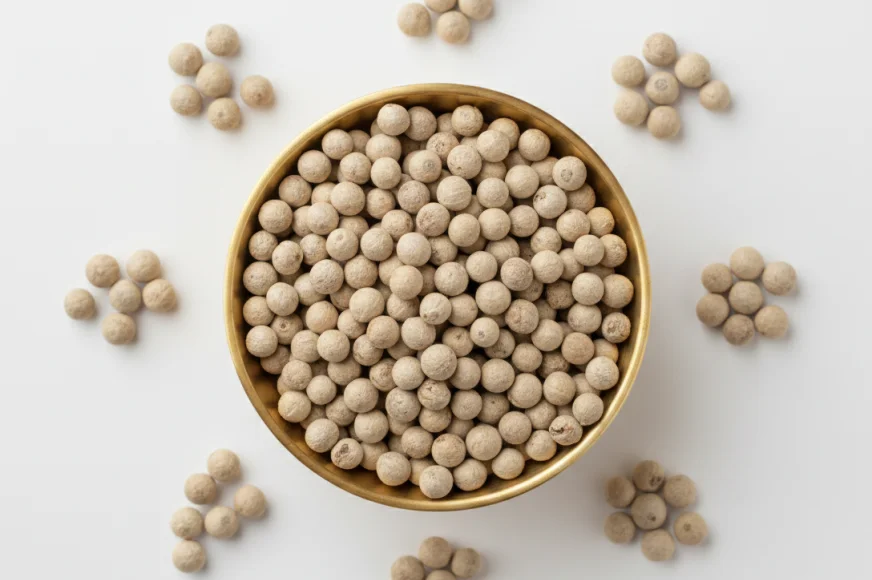
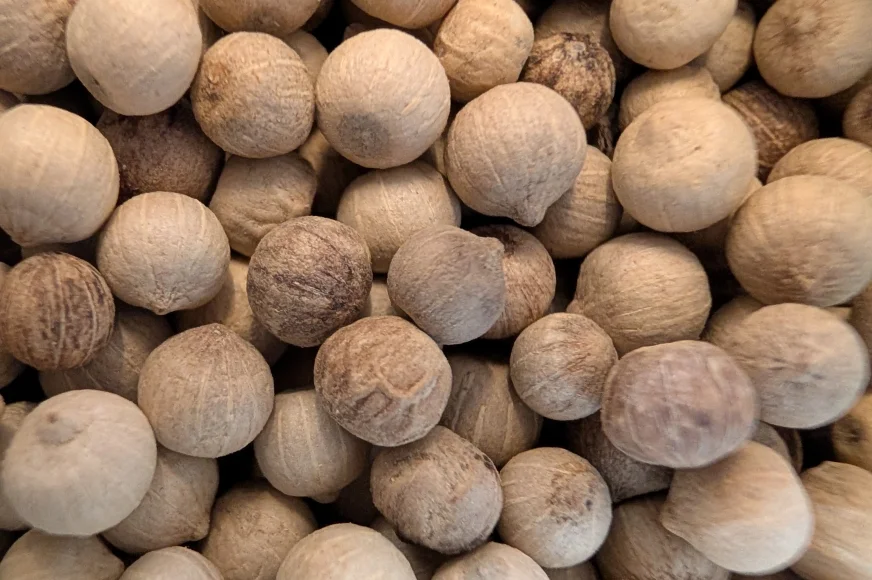
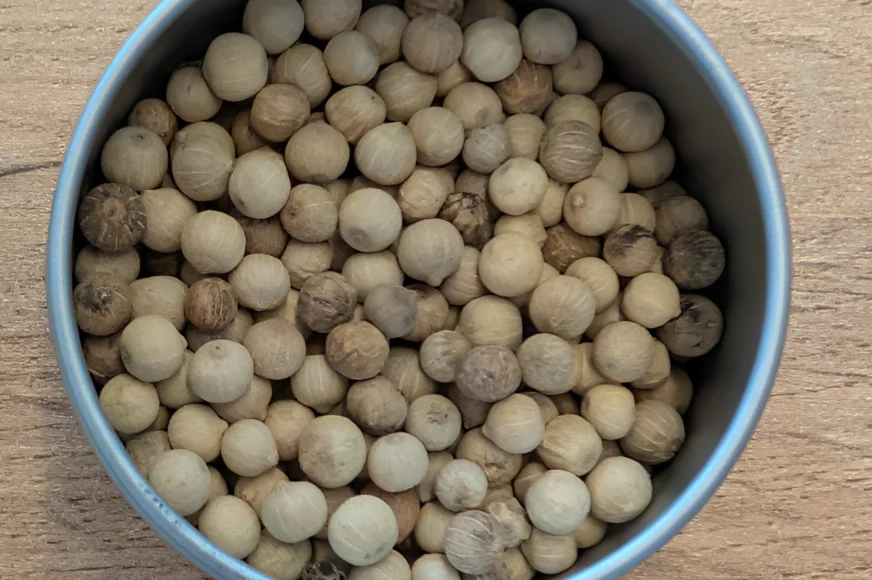
Whole White Peppercorns: the finesse of Kerala
Our whole white peppercorns come from the finest plantations of Kerala, the historical home of pepper in India. White pepper is obtained from ripe berries whose outer skin has been removed, revealing a softer and more refined grain than black pepper. As whole peppercorns, they retain all the richness of their aromas and allow you to grind them at the last moment for an incomparable fragrance.
Why choose whole white peppercorns?
Whole white peppercorns preserve their essential oils and aromas far longer than the ground version. Freshly ground, they release elegant warmth and a subtly musky flavour. They are the ideal spice for recipes where visual discretion matters as much as flavour: white sauces, fish, mashed potatoes and velouté soups.
Culinary uses:
- Pepper mill for fresh everyday seasoning
- White sauces (béchamel, velouté, butter sauce)
- Fish and seafood (cod, salmon, prawns)
- Mashed potatoes and creamy vegetables
- Mild Indian curries and delicate dishes
- Marinades for white meat and poultry
Origin and quality:
We source our spices in India from producers who grow without pesticides, guaranteeing a natural premium quality product, free from additives and preservatives.
Storage:
To preserve all its aromas, store your whole white peppercorns in a dry place, away from light and humidity, in their airtight packaging. Whole peppercorns keep their freshness far longer than ground pepper.
Stimulates digestion and reduces bloating
Natural antibacterial properties
Rich in protective antioxidants
Promotes nutrient absorption
Recognised anti-inflammatory effects
Supports respiratory health
Helps regulate blood sugar levels
Strengthens the immune system
Nutritional declaration per 100g
| Nutritional component | Per 100g |
|---|---|
| Energy | 1 491 kJ / 357 kcal |
| Fat | ~ 3,3 g |
| of which saturated fat | ~ 1,1 g |
| Carbohydrates | ~ 68,6 g |
| of which sugars | ~ 640 mg |
| Dietary fiber | ~ 26,3 g |
| Proteins | ~ 10,4 g |
| Salt | ~ 40 mg |
| Directly selected smallholder producers | Yes |
| Pesticides free | Yes |
| Spice level | Medium |
| Origin | Kerala, India |
| Quality | Premium |
| Type | Whole |
| Taste profile | Soft and mildly pungent flavour with musky and earthy notes. Less intense than black pepper, with an elegant warmth on the palate. |
Learn more
White pepper shares the thousand-year-old origins of black pepper: the plant is the same, Piper nigrum, cultivated on the Malabar coast for more than 3,000 years. But its specific method of preparation (retting) makes it a distinct product, with its own commercial and culinary history.
The earliest traces of white-pepper processing reach back to ancient India, where ripe berries were soaked in the rivers of Kerala to loosen their skins. This retting technique, close to the one used for flax or hemp, made it possible to obtain a milder, less pungent grain, better suited to delicate preparations.
It was in South-East Asia that white pepper truly forged its own identity. From the 17th century onwards, the island of Bangka in Indonesia (whose capital is Muntok) developed white-pepper production on a large scale. Muntok pepper quickly became the global benchmark, sought after by European cooks for its immaculate whiteness and controlled pungency.
White pepper and French cuisine
It was in the 18th century that white pepper made its definitive entry into French haute cuisine. The leading chefs of the era were looking for a spice that would season without leaving visible black specks in white sauces: béchamel, velouté, sauce suprême. This aesthetic requirement, as much as the gustatory one, made white pepper an essential ingredient of classic French cooking, where it remains so today.
In the 19th century, Malaysia (and in particular the state of Sarawak, on the island of Borneo) became another major centre of production. Sarawak white pepper stands out for its floral notes and refinement, while Muntok remains prized for its power and consistency.
Today, white pepper accounts for roughly 10 to 15% of global pepper production. It remains a pillar of French cuisine, of Chinese cuisine (where it is ubiquitous in soups) and of Scandinavian cooking.
Did you know?
- White pepper and black pepper come from exactly the same plant: only the stage of harvest and the processing differ
- The term "white pepper" is sometimes misused for low-quality ground peppers, blended with flour or starches
- In China, white pepper is used far more than black pepper: it is found in virtually every traditional soup
- White pepper retting lasts between 7 and 10 days: too short, the pericarp does not detach; too long, the grain ferments excessively
- The famous Muntok pepper takes its name from the port town of Muntok on the island of Bangka in Indonesia
- Auguste Escoffier, the father of modern cuisine, used white pepper almost exclusively in his classic sauces
White pepper across languages
| Language | Name |
|---|---|
| French | Poivre blanc |
| Hindi | Safed Mirch (सफ़ेद मिर्च) |
| Malayalam (Kerala) | Vellai Kurumulaku (വെളുത്ത കുരുമുളക്) |
| Sanskrit | Shveta Maricha (श्वेत मरिच) |
| Tamil | Vellai Milagu (வெள்ளை மிளகு) |
| English | White Pepper |
| Malay / Indonesian | Lada putih |
| Chinese (Mandarin) | Bái Hújiāo (白胡椒) |
| German | Weißer Pfeffer |
| Botanical Latin | Piper nigrum L. (decorticated) |
The word "white" refers to the colour of the grain once stripped of its dark pericarp. The grain is not actually pure white but rather cream to pale beige. The Malay term lada putih (white pepper) is the origin of many commercial names across South-East Asia.
| Characteristic | Detail |
|---|---|
| Latin name | Piper nigrum L. (decorticated) |
| Botanical family | Piperaceae |
| Local names | Safed Mirch (Hindi) / Lada putih (Malay) |
| Part used | Seed (ripe decorticated drupes) |
| Famous grades | Muntok (Indonesia), Sarawak (Malaysia), Malabar (India) |
| Piperine content | 3 to 5% (lower than black pepper) |
| Harvest | Berries at full maturity (bright red) |
| Processing | Retting 7-10 days, decortication, sun-drying |
White pepper is produced from the same Piper nigrum plants as black pepper, but the harvest and processing are radically different. Whereas black pepper is picked before full maturity and dried directly, white pepper requires perfectly ripe berries (bright red on the cluster) and then a long retting process.
Retting: the crucial step
Retting (or soaking) is the ancestral technique that gives white pepper its character. The ripe berries are immersed in running water (traditionally in jute sacks plunged into rivers or tanks) for 7 to 10 days. The combined action of water and micro-organisms breaks down the pericarp (the outer skin), which is then rubbed off by hand or mechanically. The grains are then sun-dried for 2 to 3 days.
It is this fermentation process that gives white pepper its characteristic earthy, slightly musky, fermented notes: absent from black pepper.
The great origins of white pepper
| Origin | Characteristics |
|---|---|
| Muntok (Indonesia) | The global benchmark. Regular white grains, frank pungency, pronounced earthy notes. Bangka island, South Sumatra province. |
| Sarawak (Malaysia) | Finer and more floral than Muntok. Lightly woody and musky notes. Island of Borneo. |
| Kerala / Malabar (India) | Warm and lightly fruity notes, smaller grain. Limited production, the majority of Indian pepper is processed as black. |
| Vietnam | Growing industrial production. Clean pungency but less complex. |
Botany: one plant, four peppers
The pepper plant (Piper nigrum) is a perennial tropical vine that can reach 5 to 10 metres. The berries grow in clusters (spikes) of 50 to 150 fruits. It is the stage of harvest and the mode of processing that determine the type of pepper obtained:
- Green pepper: berries picked immature, dried or brined: freshness and vivacity
- Black pepper: berries picked nearly ripe, sun-dried: the most aromatic and pungent
- Red pepper: berries at full maturity, dried or brined: rare, intensely fruity
- White pepper: berries at full maturity, retted then decorticated: the mildest, with earthy notes
How to recognise true white pepper
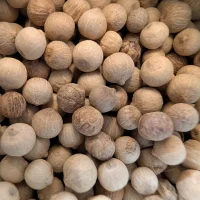
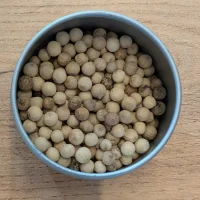
Quality white pepper has cream to pale beige grains, of regular size, with a clear, earthy aroma when the bag is opened. Be wary of pre-ground white peppers: they are often of mediocre quality, sometimes cut with flour or starches to bulk up the volume. Always buy as whole peppercorns.
White pepper offers an aromatic profile fundamentally different from that of black pepper. Where black pepper deploys a complex palette of woody, resinous and fruity notes, white pepper is defined by an earthy mellowness, fermentation notes and a more restrained but persistent pungency.
| Dimension | White pepper | Black pepper |
|---|---|---|
| Pungency | Moderate, progressive, lingering on the palate | Frank, immediate, more intense |
| Dominant notes | Earthy, musky, fermented, slightly animal | Woody, resinous, fruity, floral |
| Complexity | Fewer aromatic layers, more linear profile | Very complex, multiple layers |
| Bitterness | Almost absent | Present (comes from the pericarp) |
| Piperine | 3 to 5% | 5 to 9% |
The earthy and lightly musky notes of white pepper come directly from the retting process. This gentle fermentation creates aromatic compounds absent from black pepper, close to those found in certain aged cheeses or in white truffles.
Nuances by origin
- Muntok: the most pungent of white peppers, with frank earthy notes and a slight camphor edge
- Sarawak: more delicate, with floral and woody notes and restrained pungency: the most elegant
- Malabar: gentle warmth, notes of toasted hazelnut, slightly fruity
Chef's tip
White pepper reveals all its subtlety when ground at the last moment. As with black pepper, the aromatic compounds evaporate quickly after milling. A dedicated white-pepper mill is recommended to avoid mixing flavours with black pepper.
White pepper is the seasoning of choice wherever pungency is wanted without visible black specks. It is the invisible spice (discreet but indispensable) of white sauces, purées, veloutés and preparations based on fish or poultry.
In French cuisine: the pepper of white sauces
White pepper is deeply rooted in the French culinary tradition. The mother sauces of classic cuisine that are light in colour (béchamel, velouté and their derivatives) use it almost exclusively.
- Béchamel: white pepper is an essential component of this mother sauce
- Poultry or fish velouté: a classic seasoning that does not alter the colour
- Sauce suprême: cream, poultry stock and white pepper
- Mashed potatoes: indispensable for an elegant, smooth purée
- Blanquette de veau: white pepper preserves the whiteness of the dish
- Pike quenelles: traditional seasoning of Lyonnais preparations
- Fish in sauce: sole meunière, sea bass with beurre blanc, poached cod
- Scrambled eggs, omelettes: for a delicate, invisible seasoning
In Chinese cuisine: the soup spice
White pepper plays a central role in Chinese cuisine, far more so than black pepper. It is virtually omnipresent in broths and soups.
- Hot-and-sour soup (酸辣汤): white pepper provides the characteristic spicy heat
- Wonton soup: a pinch of white pepper in the broth is essential
- Cantonese fried rice: a basic seasoning alongside salt and soy sauce
- Chinese dumplings (jiaozi): in the pork filling for a discreet warmth
- Hotpot: in the clear broth (as opposed to the red chilli broth)
In Scandinavian and Northern European cuisine
- Cream sauces: a classic accompaniment to salmon, herring and cod
- Charcuterie: in white sausages, boudins blancs and refined terrines
- Pastry: in some Scandinavian biscuits and gingerbreads
When to choose white pepper over black?
Use white pepper in pale preparations (white sauces, purées, clear soups, fish). Use black pepper for more robust dishes (red meats, grilling, marinades). The choice is as much aesthetic as gustatory: white pepper brings a gentler, earthier pungency, without the woody and fruity notes of the black.
White pepper contains the same active compounds as black pepper, since it comes from the same plant. The main difference lies in the concentrations: removing the pericarp reduces the piperine and essential-oil content while preserving the fundamental properties.
Piperine remains the main active compound of white pepper, although in a lower concentration (3 to 5% versus 5 to 9% for black pepper). It nevertheless retains its main therapeutic properties.
Documented properties
- Digestive: stimulates the secretion of gastric and biliary juices, helps relieve bloating: white pepper is traditionally considered gentler on the stomach than black pepper
- Bioavailability enhancer: the piperine in white pepper also increases the absorption of curcumin from turmeric, though to a slightly lesser extent than black pepper
- Anti-inflammatory: inhibits inflammatory pathways, with a gentler effect well suited to sensitive individuals
- Antioxidant: neutralises free radicals, although the polyphenols of the pericarp (absent in white pepper) contribute more to this activity in black pepper
- Carminative: relieves gas and intestinal discomfort: a widespread traditional use in Chinese medicine
- Antibacterial: antimicrobial properties preserved thanks to piperine
In traditional medicine
In traditional Chinese medicine, white pepper is regarded as a "warming" food that warms the stomach and dispels internal cold. It is frequently recommended for abdominal pain linked to cold, nausea and diarrhoea. In Ayurveda, white pepper is also used, although black pepper (more concentrated in piperine) is generally preferred.
Precautions
Although gentler than black pepper, white pepper may still irritate the stomach in cases of gastritis or ulcer. Not advised in large quantities during pregnancy. Do not heat to very high temperatures: piperine degrades above 200°C.
Nutritional values (per 1 tablespoon / 6 g)
| Component | Content |
|---|---|
| Piperine | 3 to 5% of total weight |
| Essential oils | 0.5 to 1.5% (caryophyllene, limonene, linalool) |
| Oleoresin | 4 to 6% |
| Vitamins | B1, B2, B6, C |
| Minerals | Manganese, iron, calcium, potassium |
| Fibre | ~1.6 g |
| Calories | ~18 kcal |
How to recognise good white pepper
- Colour: uniformly cream to pale beige grains: overly white grains may indicate chemical bleaching; greyish grains signal ageing
- Size: round, regular, uniformly sized grains: avoid lots with many broken grains or pericarp debris
- Aroma: a clean, earthy, slightly musky smell when the bag is opened: if the smell is weak or unpleasant, the retting was poorly conducted
- Stated origin: a serious producer indicates the origin (Muntok, Sarawak, Malabar) and the grade
- Whole peppercorns: never pre-ground: ground white pepper loses its aromas even more quickly than ground black pepper and is more often adulterated
Storage tips
- Store as whole peppercorns in an airtight glass jar, away from light and moisture
- White pepper is more sensitive to moisture than black pepper because of the missing protective pericarp: absolutely avoid storage near the sink or stove
- Optimal shelf life: 2 to 3 years as whole peppercorns; 3 to 4 months maximum once ground (shorter than black pepper)
- Signs of degradation: weakened aroma, rancid or musty smell, colour turning dark grey
- Use a dedicated mill to avoid mixing flavours with other types of pepper
What is the difference between white pepper and black pepper?
They come from exactly the same plant (Piper nigrum). Black pepper is picked before full maturity and dried with its pericarp. White pepper is picked at full maturity, soaked in water for 7 to 10 days (retting) to remove the pericarp, then dried. The result: the white is less pungent, earthier and without the woody notes of the black.
Why use white pepper rather than black?
White pepper is indispensable in pale preparations (béchamel, velouté, mashed potatoes, fish in sauce) where black pepper specks would be unsightly. Beyond the aesthetics, its softer, earthier aromatic profile harmonises better with delicate flavours.
What is Muntok pepper?
Muntok pepper is a white pepper produced on the island of Bangka in Indonesia. It is the global benchmark for white pepper, recognised for its regular grains, frank pungency and pronounced earthy notes. The name comes from the port town of Muntok.
Is white pepper less healthful than black?
White pepper contains the same active compounds (notably piperine) but in a slightly lower concentration, since the pericarp has been removed. It nevertheless retains its digestive and anti-inflammatory properties and its ability to enhance the absorption of turmeric.
Why does white pepper sometimes smell unpleasant?
A strong or unpleasant smell generally comes from poorly controlled retting: too long or in stagnant water. A quality white pepper has a clean, earthy and subtly musky smell, with no notes of mould or rot. Always buy from trustworthy suppliers.
-
White pepper shares the thousand-year-old origins of black pepper: the plant is the same, Piper nigrum, cultivated on the Malabar coast for more than 3,000 years. But its specific method of preparation (retting) makes it a distinct product, with its own commercial and culinary history.
The earliest traces of white-pepper processing reach back to ancient India, where ripe berries were soaked in the rivers of Kerala to loosen their skins. This retting technique, close to the one used for flax or hemp, made it possible to obtain a milder, less pungent grain, better suited to delicate preparations.
It was in South-East Asia that white pepper truly forged its own identity. From the 17th century onwards, the island of Bangka in Indonesia (whose capital is Muntok) developed white-pepper production on a large scale. Muntok pepper quickly became the global benchmark, sought after by European cooks for its immaculate whiteness and controlled pungency.
White pepper and French cuisine
It was in the 18th century that white pepper made its definitive entry into French haute cuisine. The leading chefs of the era were looking for a spice that would season without leaving visible black specks in white sauces: béchamel, velouté, sauce suprême. This aesthetic requirement, as much as the gustatory one, made white pepper an essential ingredient of classic French cooking, where it remains so today.
In the 19th century, Malaysia (and in particular the state of Sarawak, on the island of Borneo) became another major centre of production. Sarawak white pepper stands out for its floral notes and refinement, while Muntok remains prized for its power and consistency.
Today, white pepper accounts for roughly 10 to 15% of global pepper production. It remains a pillar of French cuisine, of Chinese cuisine (where it is ubiquitous in soups) and of Scandinavian cooking.
Did you know?
- White pepper and black pepper come from exactly the same plant: only the stage of harvest and the processing differ
- The term "white pepper" is sometimes misused for low-quality ground peppers, blended with flour or starches
- In China, white pepper is used far more than black pepper: it is found in virtually every traditional soup
- White pepper retting lasts between 7 and 10 days: too short, the pericarp does not detach; too long, the grain ferments excessively
- The famous Muntok pepper takes its name from the port town of Muntok on the island of Bangka in Indonesia
- Auguste Escoffier, the father of modern cuisine, used white pepper almost exclusively in his classic sauces
White pepper across languages
Language Name French Poivre blanc Hindi Safed Mirch (सफ़ेद मिर्च) Malayalam (Kerala) Vellai Kurumulaku (വെളുത്ത കുരുമുളക്) Sanskrit Shveta Maricha (श्वेत मरिच) Tamil Vellai Milagu (வெள்ளை மிளகு) English White Pepper Malay / Indonesian Lada putih Chinese (Mandarin) Bái Hújiāo (白胡椒) German Weißer Pfeffer Botanical Latin Piper nigrum L. (decorticated) The word "white" refers to the colour of the grain once stripped of its dark pericarp. The grain is not actually pure white but rather cream to pale beige. The Malay term lada putih (white pepper) is the origin of many commercial names across South-East Asia.
-
Characteristic Detail Latin name Piper nigrum L. (decorticated) Botanical family Piperaceae Local names Safed Mirch (Hindi) / Lada putih (Malay) Part used Seed (ripe decorticated drupes) Famous grades Muntok (Indonesia), Sarawak (Malaysia), Malabar (India) Piperine content 3 to 5% (lower than black pepper) Harvest Berries at full maturity (bright red) Processing Retting 7-10 days, decortication, sun-drying White pepper is produced from the same Piper nigrum plants as black pepper, but the harvest and processing are radically different. Whereas black pepper is picked before full maturity and dried directly, white pepper requires perfectly ripe berries (bright red on the cluster) and then a long retting process.
Retting: the crucial step
Retting (or soaking) is the ancestral technique that gives white pepper its character. The ripe berries are immersed in running water (traditionally in jute sacks plunged into rivers or tanks) for 7 to 10 days. The combined action of water and micro-organisms breaks down the pericarp (the outer skin), which is then rubbed off by hand or mechanically. The grains are then sun-dried for 2 to 3 days.
It is this fermentation process that gives white pepper its characteristic earthy, slightly musky, fermented notes: absent from black pepper.
The great origins of white pepper
Origin Characteristics Muntok (Indonesia) The global benchmark. Regular white grains, frank pungency, pronounced earthy notes. Bangka island, South Sumatra province. Sarawak (Malaysia) Finer and more floral than Muntok. Lightly woody and musky notes. Island of Borneo. Kerala / Malabar (India) Warm and lightly fruity notes, smaller grain. Limited production, the majority of Indian pepper is processed as black. Vietnam Growing industrial production. Clean pungency but less complex. Botany: one plant, four peppers
The pepper plant (Piper nigrum) is a perennial tropical vine that can reach 5 to 10 metres. The berries grow in clusters (spikes) of 50 to 150 fruits. It is the stage of harvest and the mode of processing that determine the type of pepper obtained:
- Green pepper: berries picked immature, dried or brined: freshness and vivacity
- Black pepper: berries picked nearly ripe, sun-dried: the most aromatic and pungent
- Red pepper: berries at full maturity, dried or brined: rare, intensely fruity
- White pepper: berries at full maturity, retted then decorticated: the mildest, with earthy notes
How to recognise true white pepper
Quality white pepper has cream to pale beige grains, of regular size, with a clear, earthy aroma when the bag is opened. Be wary of pre-ground white peppers: they are often of mediocre quality, sometimes cut with flour or starches to bulk up the volume. Always buy as whole peppercorns.
-
White pepper offers an aromatic profile fundamentally different from that of black pepper. Where black pepper deploys a complex palette of woody, resinous and fruity notes, white pepper is defined by an earthy mellowness, fermentation notes and a more restrained but persistent pungency.
Dimension White pepper Black pepper Pungency Moderate, progressive, lingering on the palate Frank, immediate, more intense Dominant notes Earthy, musky, fermented, slightly animal Woody, resinous, fruity, floral Complexity Fewer aromatic layers, more linear profile Very complex, multiple layers Bitterness Almost absent Present (comes from the pericarp) Piperine 3 to 5% 5 to 9% The earthy and lightly musky notes of white pepper come directly from the retting process. This gentle fermentation creates aromatic compounds absent from black pepper, close to those found in certain aged cheeses or in white truffles.
Nuances by origin
- Muntok: the most pungent of white peppers, with frank earthy notes and a slight camphor edge
- Sarawak: more delicate, with floral and woody notes and restrained pungency: the most elegant
- Malabar: gentle warmth, notes of toasted hazelnut, slightly fruity
Chef's tip
White pepper reveals all its subtlety when ground at the last moment. As with black pepper, the aromatic compounds evaporate quickly after milling. A dedicated white-pepper mill is recommended to avoid mixing flavours with black pepper.
-
White pepper is the seasoning of choice wherever pungency is wanted without visible black specks. It is the invisible spice (discreet but indispensable) of white sauces, purées, veloutés and preparations based on fish or poultry.
In French cuisine: the pepper of white sauces
White pepper is deeply rooted in the French culinary tradition. The mother sauces of classic cuisine that are light in colour (béchamel, velouté and their derivatives) use it almost exclusively.
- Béchamel: white pepper is an essential component of this mother sauce
- Poultry or fish velouté: a classic seasoning that does not alter the colour
- Sauce suprême: cream, poultry stock and white pepper
- Mashed potatoes: indispensable for an elegant, smooth purée
- Blanquette de veau: white pepper preserves the whiteness of the dish
- Pike quenelles: traditional seasoning of Lyonnais preparations
- Fish in sauce: sole meunière, sea bass with beurre blanc, poached cod
- Scrambled eggs, omelettes: for a delicate, invisible seasoning
In Chinese cuisine: the soup spice
White pepper plays a central role in Chinese cuisine, far more so than black pepper. It is virtually omnipresent in broths and soups.
- Hot-and-sour soup (酸辣汤): white pepper provides the characteristic spicy heat
- Wonton soup: a pinch of white pepper in the broth is essential
- Cantonese fried rice: a basic seasoning alongside salt and soy sauce
- Chinese dumplings (jiaozi): in the pork filling for a discreet warmth
- Hotpot: in the clear broth (as opposed to the red chilli broth)
In Scandinavian and Northern European cuisine
- Cream sauces: a classic accompaniment to salmon, herring and cod
- Charcuterie: in white sausages, boudins blancs and refined terrines
- Pastry: in some Scandinavian biscuits and gingerbreads
When to choose white pepper over black?
Use white pepper in pale preparations (white sauces, purées, clear soups, fish). Use black pepper for more robust dishes (red meats, grilling, marinades). The choice is as much aesthetic as gustatory: white pepper brings a gentler, earthier pungency, without the woody and fruity notes of the black.
-
White pepper contains the same active compounds as black pepper, since it comes from the same plant. The main difference lies in the concentrations: removing the pericarp reduces the piperine and essential-oil content while preserving the fundamental properties.
Piperine remains the main active compound of white pepper, although in a lower concentration (3 to 5% versus 5 to 9% for black pepper). It nevertheless retains its main therapeutic properties.
Documented properties
- Digestive: stimulates the secretion of gastric and biliary juices, helps relieve bloating: white pepper is traditionally considered gentler on the stomach than black pepper
- Bioavailability enhancer: the piperine in white pepper also increases the absorption of curcumin from turmeric, though to a slightly lesser extent than black pepper
- Anti-inflammatory: inhibits inflammatory pathways, with a gentler effect well suited to sensitive individuals
- Antioxidant: neutralises free radicals, although the polyphenols of the pericarp (absent in white pepper) contribute more to this activity in black pepper
- Carminative: relieves gas and intestinal discomfort: a widespread traditional use in Chinese medicine
- Antibacterial: antimicrobial properties preserved thanks to piperine
In traditional medicine
In traditional Chinese medicine, white pepper is regarded as a "warming" food that warms the stomach and dispels internal cold. It is frequently recommended for abdominal pain linked to cold, nausea and diarrhoea. In Ayurveda, white pepper is also used, although black pepper (more concentrated in piperine) is generally preferred.
Precautions
Although gentler than black pepper, white pepper may still irritate the stomach in cases of gastritis or ulcer. Not advised in large quantities during pregnancy. Do not heat to very high temperatures: piperine degrades above 200°C.
Nutritional values (per 1 tablespoon / 6 g)
Component Content Piperine 3 to 5% of total weight Essential oils 0.5 to 1.5% (caryophyllene, limonene, linalool) Oleoresin 4 to 6% Vitamins B1, B2, B6, C Minerals Manganese, iron, calcium, potassium Fibre ~1.6 g Calories ~18 kcal -
How to recognise good white pepper
- Colour: uniformly cream to pale beige grains: overly white grains may indicate chemical bleaching; greyish grains signal ageing
- Size: round, regular, uniformly sized grains: avoid lots with many broken grains or pericarp debris
- Aroma: a clean, earthy, slightly musky smell when the bag is opened: if the smell is weak or unpleasant, the retting was poorly conducted
- Stated origin: a serious producer indicates the origin (Muntok, Sarawak, Malabar) and the grade
- Whole peppercorns: never pre-ground: ground white pepper loses its aromas even more quickly than ground black pepper and is more often adulterated
Storage tips
- Store as whole peppercorns in an airtight glass jar, away from light and moisture
- White pepper is more sensitive to moisture than black pepper because of the missing protective pericarp: absolutely avoid storage near the sink or stove
- Optimal shelf life: 2 to 3 years as whole peppercorns; 3 to 4 months maximum once ground (shorter than black pepper)
- Signs of degradation: weakened aroma, rancid or musty smell, colour turning dark grey
- Use a dedicated mill to avoid mixing flavours with other types of pepper
-
What is the difference between white pepper and black pepper?
They come from exactly the same plant (Piper nigrum). Black pepper is picked before full maturity and dried with its pericarp. White pepper is picked at full maturity, soaked in water for 7 to 10 days (retting) to remove the pericarp, then dried. The result: the white is less pungent, earthier and without the woody notes of the black.
Why use white pepper rather than black?
White pepper is indispensable in pale preparations (béchamel, velouté, mashed potatoes, fish in sauce) where black pepper specks would be unsightly. Beyond the aesthetics, its softer, earthier aromatic profile harmonises better with delicate flavours.
What is Muntok pepper?
Muntok pepper is a white pepper produced on the island of Bangka in Indonesia. It is the global benchmark for white pepper, recognised for its regular grains, frank pungency and pronounced earthy notes. The name comes from the port town of Muntok.
Is white pepper less healthful than black?
White pepper contains the same active compounds (notably piperine) but in a slightly lower concentration, since the pericarp has been removed. It nevertheless retains its digestive and anti-inflammatory properties and its ability to enhance the absorption of turmeric.
Why does white pepper sometimes smell unpleasant?
A strong or unpleasant smell generally comes from poorly controlled retting: too long or in stagnant water. A quality white pepper has a clean, earthy and subtly musky smell, with no notes of mould or rot. Always buy from trustworthy suppliers.
Why choose Whole White Peppercorns from La Table Indienne?

Exceptional freshness and quality
Our spices are imported directly from India and packaged on demand to guarantee optimal freshness. Unlike spices sold in supermarkets that can sit on shelves for months, we ensure each spice retains its full flavor and aroma.
Authenticity and traceability
Each spice comes from specific regions in India renowned for their expertise. We work directly with local producers who grow their spices traditionally, without pesticides or chemicals.
How to best use this spice?
To reveal all the aromas, we recommend lightly toasting whole spices in a dry pan before grinding them. Store them in a dry place away from light to preserve their freshness as long as possible.

Did you know?
Whole spices are much better than ground spices
Check out our blog article to discover why whole spices retain their aromas better.
Questions & Answers
Thank you! Your question has been sent. Mihika will answer soon and you will receive an email.
Whole White Peppercorns
Discover also
Other products you might like