Nigella Seeds (Kalonji)
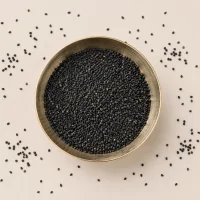
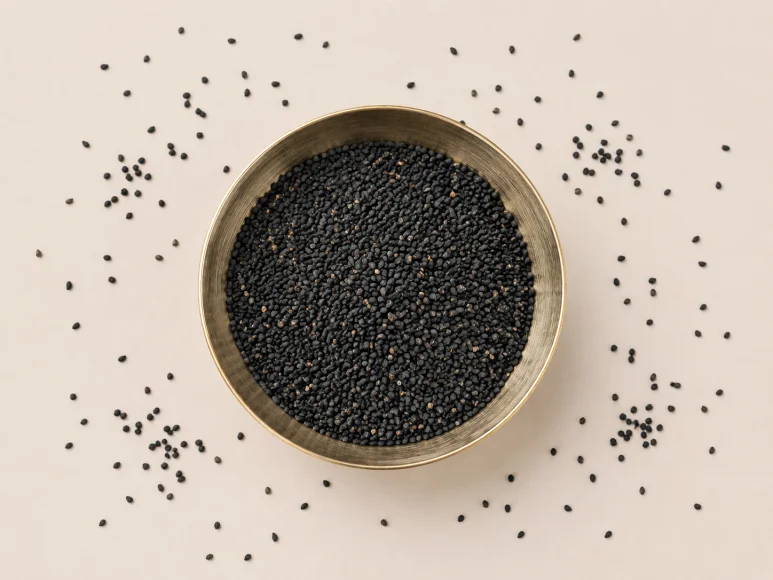
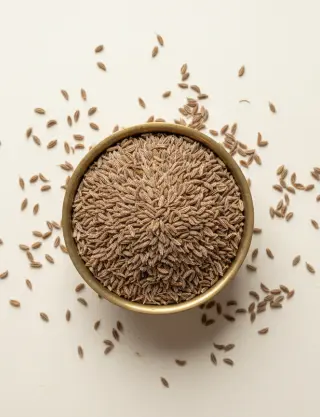
Discover our nigella seeds (kalonji), grown in India. Slightly bitter, earthy and peppery, with a herbaceous touch to enhance your breads, pickles and Indian dishes.
Ready for shipping, delivery time 2-5 business days
Delivery from €4.80 at Mondial Relay pickup points. Free shipping from €50.
Free spice samples with every order.
-
Nigella Seeds (Kalonji): the forgotten treasure of Indian spices
Nigella seeds, known as kalonji in Hindi, come from the Nigella sativa plant cultivated in India for millennia. Also known as "black cumin seeds" or "black onion seeds", they hold a central place in Indian cuisine and Ayurvedic medicine.
Why choose whole seeds?
Whole kalonji seeds retain their essential oils far longer than ground powder. They release their aromas — slightly bitter, earthy and peppery with a distinctive herbaceous note — at the moment of cooking, on contact with heat or fat. You thus control the intensity of flavour depending on your chosen toasting method.
Culinary uses:
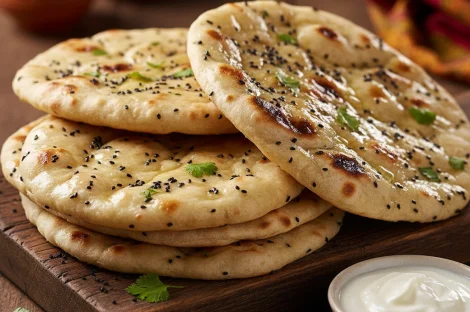
- Sprinkled on naans and flatbreads before baking for an authentic flavour
- Essential in Indian pickles and chutneys (achar)
- Perfect for tadka (tempering) in dals and vegetable curries
- Key component of Panch Phoron (Bengali five-spice blend)
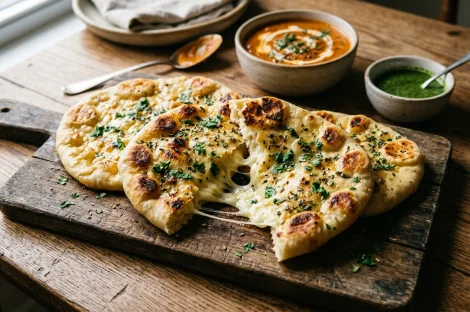
- Added to fresh cheeses, yoghurts and dips for an original spiced note
- Incorporated into meat and fish marinades for a complex flavour
Origin and quality:
Our nigella seeds come from India, where Nigella sativa has been cultivated for millennia.
You'll find them sprinkled over the dough in our homemade naan recipe.
Storage:
To preserve all its aromas, store your nigella seeds in a dry place, away from light and moisture, in their airtight packaging.
-
Supports digestion and reduces bloating
Boosts immunity thanks to thymoquinone
Recognised anti-inflammatory properties
Rich in antioxidants that protect cells
Helps regulate blood sugar levels
Relieves respiratory symptoms (asthma, allergies)
Source of iron, calcium and essential fatty acids
Used in Ayurvedic medicine to balance the doshas
-
Nutritional declaration per 100g
Nutritional component Per 100g Energy 2 070 kJ / 495 kcal Fat ~ 40,4 g of which saturated fat ~ 3,3 g Carbohydrates ~ 38,2 g of which sugars ~ 2,4 g Dietary fiber ~ 10,5 g Proteins ~ 17,8 g Salt ~ 110 mg Sodium ~ 40 mg -
Directly selected smallholder producers Yes Vegetarian Yes Origin India Quality Premium Type Whole seeds Taste profile Slightly bitter and earthy, with peppery notes and a distinctive herbaceous touch. A unique aromatic profile reminiscent of oregano, marjoram and black pepper.
Learn more
Nigella (Nigella sativa) is among the oldest seeds in human history: some were found in the tomb of Tutankhamun, opened by archaeologist Howard Carter in 1922. Their presence among the objects meant to accompany the young pharaoh into the afterlife suggests they were prized both as a seasoning and as a remedy, a dual role that runs through the entire history of this seed.
Native to the Mediterranean basin and western Asia, the plant was already known to the Greeks and Romans, who used it in cooking and in pharmacopoeia. In Islamic tradition, a hadith attributed to the Prophet Muhammad states that "the black seed cures every illness except death", a phrase that fuelled its reputation as a universal remedy across much of the Muslim world, long before modern science took an interest in its composition.
A lasting place in India and Bengal
Nigella reached the Indian subcontinent along ancient trade routes and found a lasting place there, both in cooking and in Ayurvedic medicine. Today it is inseparable from panch phoron, the blend of five whole seeds tempered in hot oil that structures much of Bengali cuisine: cumin, mustard, fenugreek, fennel and nigella each play a distinct role, with nigella contributing its slightly onion like, peppery note to the whole.
Did you know?
Despite its nickname "black cumin", nigella has no botanical link to true cumin whatsoever. It belongs to the Ranunculaceae family, the same as buttercups and anemones, while cumin (Cuminum cyminum) belongs to the Apiaceae, the family of parsley and carrot. Two dark seeds, two entirely separate culinary histories, no botanical kinship at all.
A Western rediscovery
In Europe, nigella has long been called "Roman coriander" or "black caraway", traditionally sprinkled on Ashkenazi Jewish rye bread and on certain Central European pastries. This use persisted for centuries before partly fading from memory in the eighteenth century, when the plant became better known as a garden ornamental than as a spice. It has enjoyed renewed interest in recent decades, driven both by Indian cuisine and by scientific research into its active compounds.
| Characteristic | Detail |
|---|---|
| Latin name | Nigella sativa L. |
| Botanical family | Ranunculaceae, the same family as buttercups and anemones |
| Local name | Kalonji (Hindi and Urdu), Habat ul Sauda (Arabic) |
| Part used | Seed, harvested from the flower's seed capsule |
| Main growing regions | Rajasthan, Uttar Pradesh, Madhya Pradesh and Gujarat, as well as West Bengal |
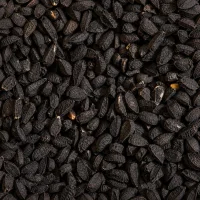
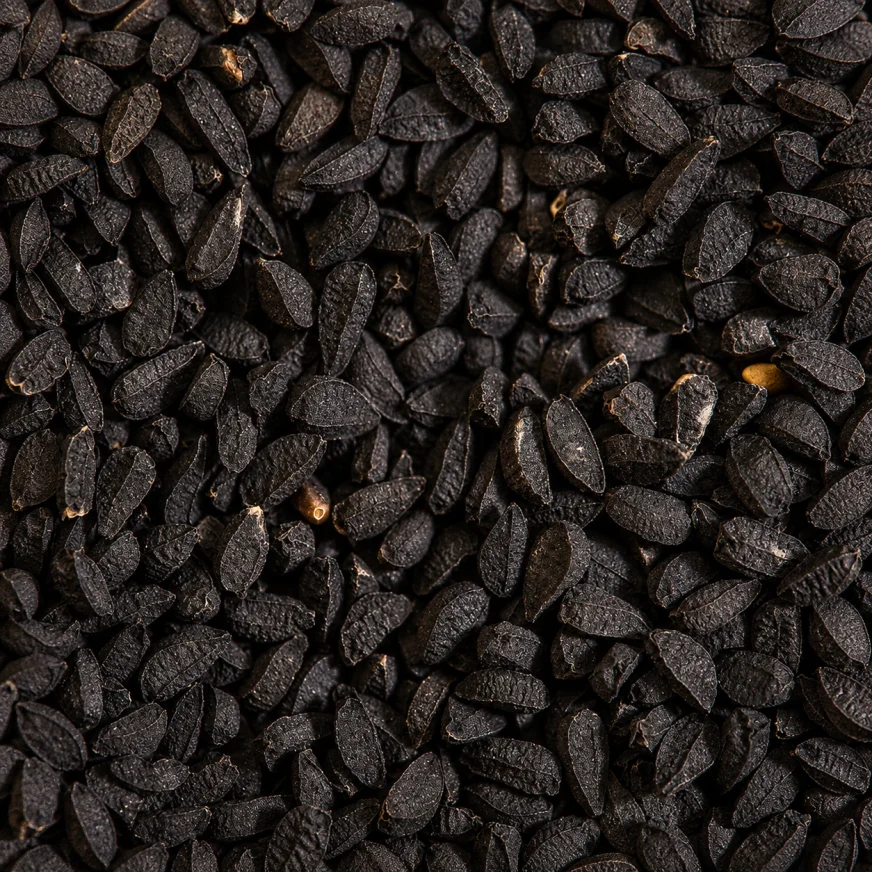
Nigella is an annual herbaceous plant with a thin, branching stem that produces delicate pale blue or white flowers with petals as fine as paper. Once flowering ends, the flower gives way to a swollen capsule, the follicle, which holds numerous small black, wrinkled, teardrop shaped seeds.
From seed to plate
- Sown in October after the monsoon, the plant is harvested between March and April, once the capsules dry out and turn brown
- The stems are cut and left to dry in the sun for a few more days
- The capsules are threshed to release the black seeds, which are then sieved and cleaned
- No further processing is needed: the whole seed is ready to be cooked with as it is
Did you know?
In the Table Indienne range, nigella has a namesake but not a flavour twin: Himalayan black cumin, or kala jeera, botanically Bunium persicum. This is a true Apiaceae, close to ordinary cumin, with a mild, smoky aroma, whereas nigella stays more bitter, more peppery and considerably more affordable.
Raw nigella seed surprises with its mild bitterness and earthy note, quite far removed from round, sweet spices. Its aromatic profile recalls oregano, marjoram and black pepper all at once, with a hint that some palates also compare to nutmeg.
Raw or toasted: two different faces
Raw, the seed releases little aroma: its essential oils stay locked inside the hard, black shell. It is on contact with heat, in hot oil or ghee (the tadka technique), or during baking, that it fully develops its peppery, faintly onion like notes. A brief dry roast of a few moments in a hot, ungreased pan sharpens this character further and brings out a subtle smoky note.
The nickname "black cumin" fuels a frequent mix up with true cumin, cumin seeds (Cuminum cyminum), which belongs to an entirely different botanical family. The two seeds share a dark colour and a use in hot oil tempering, but their flavours have nothing in common: cumin is warm, earthy and faintly anise like, while nigella stays more bitter and peppery, without any of cumin's warm notes.
Sold as whole seeds, nigella keeps its essential oils far longer than a ground powder would, an advantage Indian cuisine has always relied on.
In Indian cooking
- Sprinkled on naans and flatbreads before baking, for an authentic flavour and a recognisable look
- An essential component of panch phoron, the five spice blend of Bengali cuisine
- Used in tadka (tempering in hot oil or ghee) for dals and vegetable curries
- Essential in many Indian pickles and chutneys, where it adds crunch and bitterness
- Added to meat and fish marinades for a more complex flavour
Beyond India
- Traditionally sprinkled on Ashkenazi Jewish rye bread, under the name "Roman coriander"
- Used as a topping on certain Turkish and Central Asian flatbreads before baking
- Stirred into fresh cheeses, yoghurts and dips for an original spiced note
Did you know?
In panch phoron, each of the five seeds plays a precise role: cumin brings earthy depth, mustard adds sharpness, fenugreek a bittersweet edge, fennel an anise like sweetness, and nigella its onion like, peppery note that rounds off the blend. None of the five is ground: it is a mix of whole seeds, tempered together in hot oil or ghee until they "pop".
Much of nigella's scientific interest centres on thymoquinone, its main active compound, isolated from the seed's essential oil and studied for several decades for its antioxidant properties.
What research is exploring
- Thymoquinone: the seed's most studied compound, with antioxidant and anti inflammatory properties documented in laboratory settings
- Essential fatty acids: the seed contains an oil rich in linoleic acid, an unsaturated fatty acid
- Traditional use: long recognised in Ayurvedic and Unani medicine to support digestion and mild respiratory complaints
- Clinical research: around ten published clinical trials explore its potential in type 2 diabetes or inflammation, but human evidence remains preliminary and does not concern the seed as consumed in normal cooking amounts
Precautions
Consumed in normal culinary amounts, nigella is well tolerated by most people. The studies mentioned above mostly concern concentrated extracts or nigella oil at therapeutic doses, not the whole seed used in cooking. Pregnant or breastfeeding people, as well as those on anticoagulant or antidiabetic treatment, are advised to seek medical advice before regular or large consumption, as certain interactions with these treatments have been studied.
Indicative nutritional values (per 100 g of seeds)
| Component | Approximate content |
|---|---|
| Energy | about 400 kcal |
| Fat | about 28 g, mostly unsaturated fatty acids |
| Protein | about 21 g |
| Fibre | about 6 g |
Quality criteria
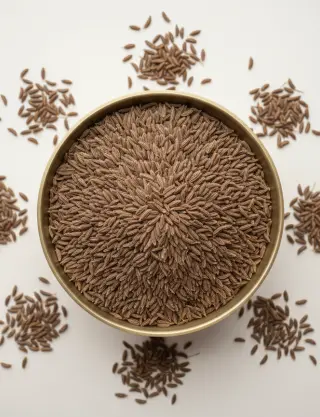
- Colour: deep black with a slight sheen; a dull or greyish colour signals old seeds
- Smell: a clear earthy, peppery aroma as soon as the pack is opened
- Texture: dry seeds that do not stick together and flow freely
Storage tips
- In an airtight container, away from light and moisture
- Shelf life: about 2 to 3 years under good storage conditions, whole seeds keeping far longer than a ground powder
- To wake up the aroma before use, dry roast the seeds briefly in a hot pan
What is the difference between nigella (kalonji) and true cumin?
Despite their shared dark colour and the nickname "black cumin" sometimes given to nigella, the two seeds have no botanical link. True cumin (Cuminum cyminum) belongs to the Apiaceae family and tastes warm, earthy and faintly anise like, while nigella belongs to the Ranunculaceae and stays more bitter and peppery, without any of cumin's warm notes.
Are nigella and Himalayan black cumin (kala jeera) the same thing?
No. Kala jeera, botanically Bunium persicum, is a true Apiaceae close to ordinary cumin, with a mild, smoky aroma. Nigella (Nigella sativa) belongs to a different botanical family, the Ranunculaceae, and has a more bitter, peppery taste. The two dark seeds are often confused because of their name, not their botany.
Should nigella seeds be toasted before use?
It is not required, but it is recommended to bring out their aroma fully. A few moments in a hot, dry pan, or a pass through hot oil in a tadka, is enough to release their essential oils and peppery note. Used raw, the seeds stay more subtle on the palate.
What is panch phoron and what role does nigella play in it?
Panch phoron is a blend of five whole seeds emblematic of Bengali cuisine: cumin, mustard, fenugreek, fennel and nigella. Tempered in hot oil or ghee at the start of cooking, it flavours dals, vegetables and fish. Nigella contributes its onion like, slightly bitter note, balancing the anise like sweetness of fennel and the bittersweet edge of fenugreek.
Can nigella be eaten during pregnancy or while on medication?
In normal culinary amounts, nigella is well tolerated by most people. As a precaution, pregnant or breastfeeding people, as well as those on anticoagulant or antidiabetic treatment, are advised to seek medical advice before regular or large consumption, since some studies have looked at interactions with these treatments at concentrated doses, different from culinary amounts.

-
Nigella (Nigella sativa) is among the oldest seeds in human history: some were found in the tomb of Tutankhamun, opened by archaeologist Howard Carter in 1922. Their presence among the objects meant to accompany the young pharaoh into the afterlife suggests they were prized both as a seasoning and as a remedy, a dual role that runs through the entire history of this seed.
Native to the Mediterranean basin and western Asia, the plant was already known to the Greeks and Romans, who used it in cooking and in pharmacopoeia. In Islamic tradition, a hadith attributed to the Prophet Muhammad states that "the black seed cures every illness except death", a phrase that fuelled its reputation as a universal remedy across much of the Muslim world, long before modern science took an interest in its composition.
A lasting place in India and Bengal
Nigella reached the Indian subcontinent along ancient trade routes and found a lasting place there, both in cooking and in Ayurvedic medicine. Today it is inseparable from panch phoron, the blend of five whole seeds tempered in hot oil that structures much of Bengali cuisine: cumin, mustard, fenugreek, fennel and nigella each play a distinct role, with nigella contributing its slightly onion like, peppery note to the whole.
Did you know?
Despite its nickname "black cumin", nigella has no botanical link to true cumin whatsoever. It belongs to the Ranunculaceae family, the same as buttercups and anemones, while cumin (Cuminum cyminum) belongs to the Apiaceae, the family of parsley and carrot. Two dark seeds, two entirely separate culinary histories, no botanical kinship at all.
A Western rediscovery
In Europe, nigella has long been called "Roman coriander" or "black caraway", traditionally sprinkled on Ashkenazi Jewish rye bread and on certain Central European pastries. This use persisted for centuries before partly fading from memory in the eighteenth century, when the plant became better known as a garden ornamental than as a spice. It has enjoyed renewed interest in recent decades, driven both by Indian cuisine and by scientific research into its active compounds.
-
Characteristic Detail Latin name Nigella sativa L. Botanical family Ranunculaceae, the same family as buttercups and anemones Local name Kalonji (Hindi and Urdu), Habat ul Sauda (Arabic) Part used Seed, harvested from the flower's seed capsule Main growing regions Rajasthan, Uttar Pradesh, Madhya Pradesh and Gujarat, as well as West Bengal Nigella is an annual herbaceous plant with a thin, branching stem that produces delicate pale blue or white flowers with petals as fine as paper. Once flowering ends, the flower gives way to a swollen capsule, the follicle, which holds numerous small black, wrinkled, teardrop shaped seeds.
From seed to plate
- Sown in October after the monsoon, the plant is harvested between March and April, once the capsules dry out and turn brown
- The stems are cut and left to dry in the sun for a few more days
- The capsules are threshed to release the black seeds, which are then sieved and cleaned
- No further processing is needed: the whole seed is ready to be cooked with as it is
Did you know?
In the Table Indienne range, nigella has a namesake but not a flavour twin: Himalayan black cumin, or kala jeera, botanically Bunium persicum. This is a true Apiaceae, close to ordinary cumin, with a mild, smoky aroma, whereas nigella stays more bitter, more peppery and considerably more affordable.
-
Raw nigella seed surprises with its mild bitterness and earthy note, quite far removed from round, sweet spices. Its aromatic profile recalls oregano, marjoram and black pepper all at once, with a hint that some palates also compare to nutmeg.
Raw or toasted: two different faces
Raw, the seed releases little aroma: its essential oils stay locked inside the hard, black shell. It is on contact with heat, in hot oil or ghee (the tadka technique), or during baking, that it fully develops its peppery, faintly onion like notes. A brief dry roast of a few moments in a hot, ungreased pan sharpens this character further and brings out a subtle smoky note.
The nickname "black cumin" fuels a frequent mix up with true cumin, cumin seeds (Cuminum cyminum), which belongs to an entirely different botanical family. The two seeds share a dark colour and a use in hot oil tempering, but their flavours have nothing in common: cumin is warm, earthy and faintly anise like, while nigella stays more bitter and peppery, without any of cumin's warm notes.
-
Sold as whole seeds, nigella keeps its essential oils far longer than a ground powder would, an advantage Indian cuisine has always relied on.
In Indian cooking
- Sprinkled on naans and flatbreads before baking, for an authentic flavour and a recognisable look
- An essential component of panch phoron, the five spice blend of Bengali cuisine
- Used in tadka (tempering in hot oil or ghee) for dals and vegetable curries
- Essential in many Indian pickles and chutneys, where it adds crunch and bitterness
- Added to meat and fish marinades for a more complex flavour
Beyond India
- Traditionally sprinkled on Ashkenazi Jewish rye bread, under the name "Roman coriander"
- Used as a topping on certain Turkish and Central Asian flatbreads before baking
- Stirred into fresh cheeses, yoghurts and dips for an original spiced note
Did you know?
In panch phoron, each of the five seeds plays a precise role: cumin brings earthy depth, mustard adds sharpness, fenugreek a bittersweet edge, fennel an anise like sweetness, and nigella its onion like, peppery note that rounds off the blend. None of the five is ground: it is a mix of whole seeds, tempered together in hot oil or ghee until they "pop".
-
Much of nigella's scientific interest centres on thymoquinone, its main active compound, isolated from the seed's essential oil and studied for several decades for its antioxidant properties.
What research is exploring
- Thymoquinone: the seed's most studied compound, with antioxidant and anti inflammatory properties documented in laboratory settings
- Essential fatty acids: the seed contains an oil rich in linoleic acid, an unsaturated fatty acid
- Traditional use: long recognised in Ayurvedic and Unani medicine to support digestion and mild respiratory complaints
- Clinical research: around ten published clinical trials explore its potential in type 2 diabetes or inflammation, but human evidence remains preliminary and does not concern the seed as consumed in normal cooking amounts
Precautions
Consumed in normal culinary amounts, nigella is well tolerated by most people. The studies mentioned above mostly concern concentrated extracts or nigella oil at therapeutic doses, not the whole seed used in cooking. Pregnant or breastfeeding people, as well as those on anticoagulant or antidiabetic treatment, are advised to seek medical advice before regular or large consumption, as certain interactions with these treatments have been studied.
Indicative nutritional values (per 100 g of seeds)
Component Approximate content Energy about 400 kcal Fat about 28 g, mostly unsaturated fatty acids Protein about 21 g Fibre about 6 g -
Quality criteria
- Colour: deep black with a slight sheen; a dull or greyish colour signals old seeds
- Smell: a clear earthy, peppery aroma as soon as the pack is opened
- Texture: dry seeds that do not stick together and flow freely
Storage tips
- In an airtight container, away from light and moisture
- Shelf life: about 2 to 3 years under good storage conditions, whole seeds keeping far longer than a ground powder
- To wake up the aroma before use, dry roast the seeds briefly in a hot pan
-
What is the difference between nigella (kalonji) and true cumin?
Despite their shared dark colour and the nickname "black cumin" sometimes given to nigella, the two seeds have no botanical link. True cumin (Cuminum cyminum) belongs to the Apiaceae family and tastes warm, earthy and faintly anise like, while nigella belongs to the Ranunculaceae and stays more bitter and peppery, without any of cumin's warm notes.
Are nigella and Himalayan black cumin (kala jeera) the same thing?
No. Kala jeera, botanically Bunium persicum, is a true Apiaceae close to ordinary cumin, with a mild, smoky aroma. Nigella (Nigella sativa) belongs to a different botanical family, the Ranunculaceae, and has a more bitter, peppery taste. The two dark seeds are often confused because of their name, not their botany.
Should nigella seeds be toasted before use?
It is not required, but it is recommended to bring out their aroma fully. A few moments in a hot, dry pan, or a pass through hot oil in a tadka, is enough to release their essential oils and peppery note. Used raw, the seeds stay more subtle on the palate.
What is panch phoron and what role does nigella play in it?
Panch phoron is a blend of five whole seeds emblematic of Bengali cuisine: cumin, mustard, fenugreek, fennel and nigella. Tempered in hot oil or ghee at the start of cooking, it flavours dals, vegetables and fish. Nigella contributes its onion like, slightly bitter note, balancing the anise like sweetness of fennel and the bittersweet edge of fenugreek.
Can nigella be eaten during pregnancy or while on medication?
In normal culinary amounts, nigella is well tolerated by most people. As a precaution, pregnant or breastfeeding people, as well as those on anticoagulant or antidiabetic treatment, are advised to seek medical advice before regular or large consumption, since some studies have looked at interactions with these treatments at concentrated doses, different from culinary amounts.

Recipes with Nigella Seeds (Kalonji)
Pourquoi choisir Nigella Seeds (Kalonji) de La Table Indienne ?
Fraîcheur et qualité exceptionnelles
Nos épices sont importées directement d'Inde et conditionnées à la demande pour garantir une fraîcheur optimale. Contrairement aux épices vendues en grande surface qui peuvent rester des mois sur les étagères, nous veillons à ce que chaque épice conserve toute sa saveur et son arôme.
Authenticité et traçabilité
Chaque épice provient de régions spécifiques en Inde réputées pour leur savoir-faire. Nous travaillons directement avec des producteurs locaux qui cultivent leurs épices de manière traditionnelle, sans pesticides ni produits chimiques.
Comment bien utiliser cette épice ?
Pour révéler tous les arômes, nous recommandons de faire légèrement griller les épices entières à sec dans une poêle avant de les moudre. Conservez-les dans un endroit sec et à l'abri de la lumière pour préserver leur fraîcheur le plus longtemps possible.
Le saviez-vous ?
Les épices entières sont bien meilleures que les épices moulues
Consultez notre article de blog pour découvrir pourquoi les épices entières conservent mieux leurs arômes.
Questions & Answers
Thank you! Your question has been sent. Mihika will answer soon and you will receive an email.