Delivery starting at €3.99 to a pickup point in France • Free delivery on orders of €45 or more!
Loading...

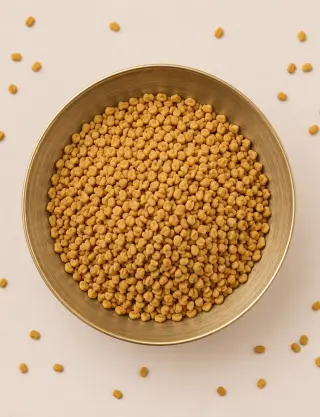
Asafoetida (Hing)

Origin :
Rajasthan, India
Quality :
Premium
Type :
Ground resin
Certified organic supplier Pesticide-free

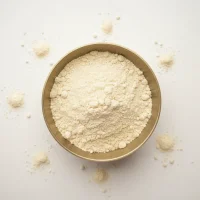
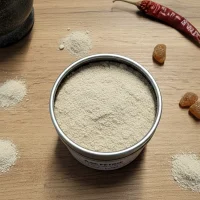
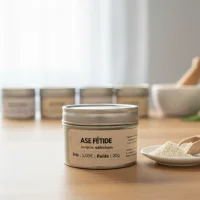
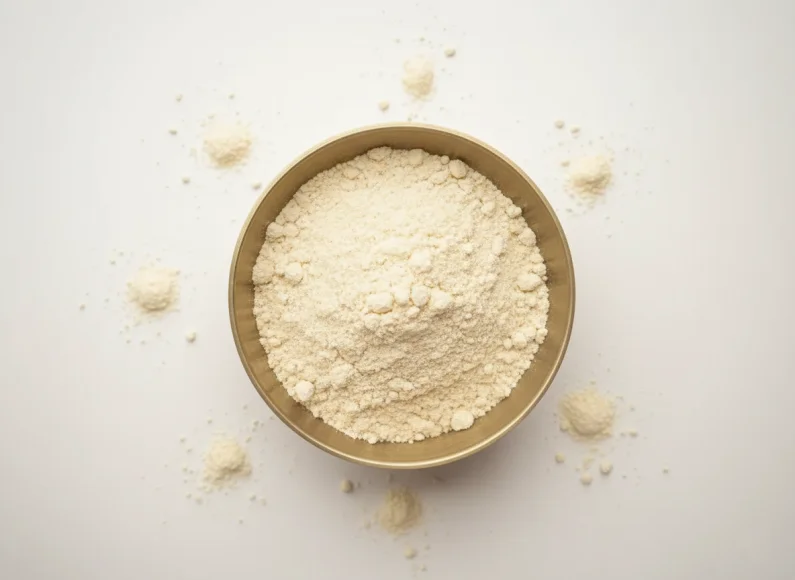
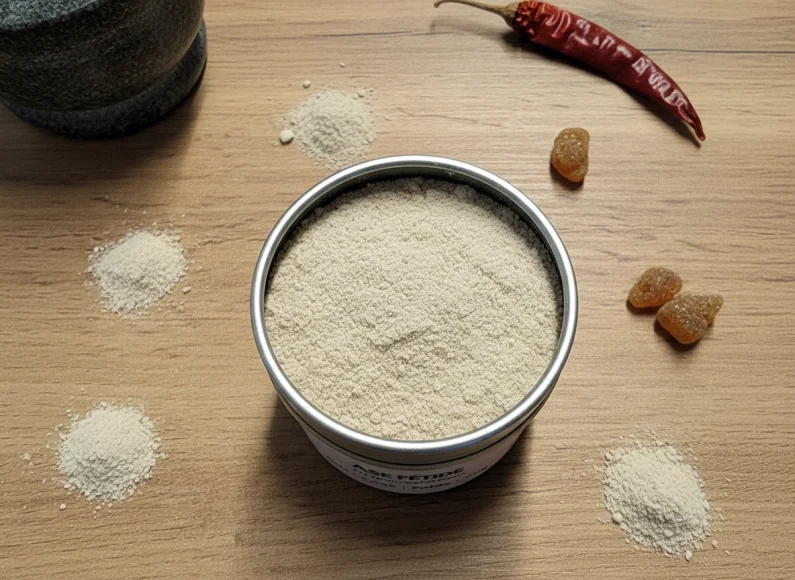
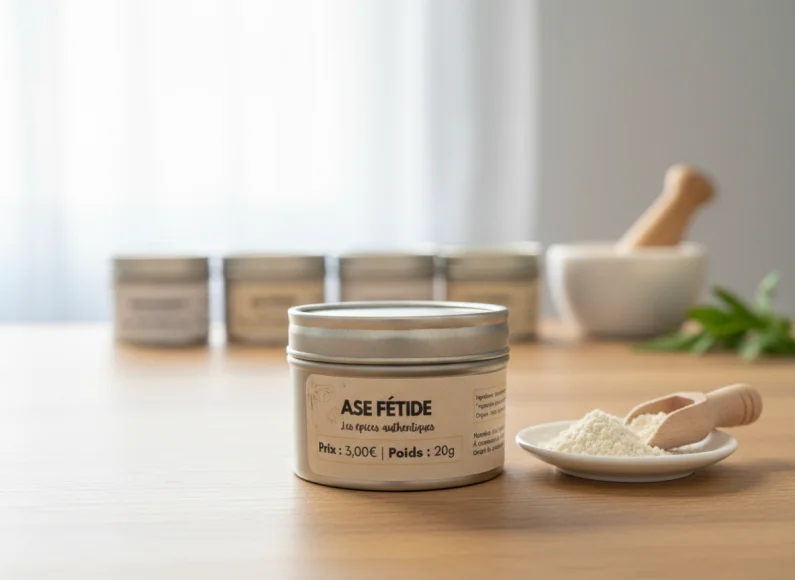
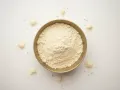
Discover our asafoetida (Hing) powder, extracted from the plantations of Rajasthan, India. Pungent, sulphurous aroma reminiscent of garlic and onion to elevate your Indian vegetarian dishes.

€3.00
€150.00/kg
By purchasing this product, you add €0.12 to your loyalty account, redeemable as a discount on your next order!
Loading...

Ready for shipping, delivery time 2-5 business days

Delivery from €3.99 at Mondial Relay pickup points. Free shipping from €45.

Free spice samples with every order.

Mondial Relay
Colissimo
Chronopost
  • Asafoetida (Hing): the secret spice of Indian cuisine

    Asafoetida, known as Hing in India, is a ground resin derived from the Ferula asafoetida plant, cultivated in the arid lands of Rajasthan. Used for millennia in Ayurvedic cooking, it brings a unique aromatic depth reminiscent of garlic and onion once heated. We select premium quality powder, pure and additive-free, to offer you the full power of this ancestral spice.

    Why choose Hing powder?

    Asafoetida powder is the most convenient form for cooking: it dissolves instantly in hot oil during tempering, releasing its sulphurous aromas that transform into a mild, umami flavour. It advantageously replaces garlic and onion for those following a Jain or Ayurvedic diet, and only a tiny pinch is needed to flavour an entire dish.

    Culinary uses:

    • Dals and lentil dishes for aromatic depth
    • Indian vegetarian and vegan cooking as a garlic and onion substitute
    • Tempering (tadka) in hot oil at the start of cooking
    • Pickles and preserves for a pungent, characteristic aroma
    • Stews and slow-cooked dishes to enhance flavours

    Origin and quality:

    We source our spices exclusively from certified organic producers in India, to guarantee you a natural product of premium quality.

    Storage:

    To preserve all its aromas, store your asafoetida in a dry place, away from light and humidity, in its airtight packaging. A single pinch is enough to flavour an entire dish.

  • Promotes digestion and relieves bloating

    Reduces flatulence and abdominal cramps

    Recognized anti-inflammatory properties

    Natural antimicrobial activity

    Helps lower blood pressure

    Relieves menstrual pain

    Rich in protective antioxidants

    Relieves respiratory disorders

  • Nutritional declaration per 100g

    Nutritional component Per 100g
    Energy 1 461 kJ / 349 kcal
    Fat ~ 1,1 g
    of which saturated fat ~ 300 mg
    Carbohydrates ~ 67,8 g
    of which sugars ~ 2 g
    Dietary fiber ~ 4,1 g
    Proteins ~ 4 g
    Salt ~ 10 mg
  • Supplier certified organic Yes
    Pesticides free Yes
    Origin Rajasthan, India
    Quality Premium
    Type Ground resin
    Taste profile Pungent, sulfurous flavor reminiscent of garlic and onion, with an intensity that mellows during cooking.

Kits using this spice

Discover our kits with recipes to learn how to use this spice

Learn more

  • Hing is one of the most mysterious and misunderstood spices in the Western world. In India, it is a daily-use ingredient as ordinary as salt — present in almost every kitchen in the country. In Europe, it long carried one of the least appetising names imaginable: ‘‘devil's dung'' in English (and ‘‘merde du diable'' in French), terms that betray the Europeans' disgust at its raw odour.

    Yet that very same ingredient was, two thousand years ago, one of the most prized spices of the Roman Empire. The Greeks called it ‘‘Median silphium'' — after the mythical plant of Cyrene (Libya) of which hing was perceived to be the Eastern cousin. Apicius, the great Roman gastronome of the 1st century CE, included it in many recipes of his celebrated treatise De re coquinaria under the name laser. The plant is mentioned in Akkadian texts under the name nukhurtu, and its culinary use in ancient Iran has been attested for more than 2,500 years.

    The plant that changed the history of the world

    The story of hing is intimately linked to the disappearance of silphium — a plant endemic to Cyrene (ancient Libya) considered one of antiquity's most precious. Used as a contraceptive, a culinary flavouring and a medicine, it was harvested so heavily that it vanished forever in the 1st century CE. Pliny the Elder notes that a single specimen was delivered to Emperor Nero, and after that, nothing more. It was hing — brought back from Iran and Afghanistan through the conquests of Alexander the Great — that served as a substitute for this ‘‘lost silphium''. Some historians even believe the two plants were related.

    It was during Alexander the Great's campaigns in Asia, from 334 BCE, that Macedonian soldiers discovered a plant nearly identical to silphium in the north-eastern provinces of the Persian Empire. It was brought back to Europe as a culinary and medicinal substitute. The Romans took to it immediately: Pliny the Elder mentions it abundantly in his Natural History, and it appears in the spice shops of Pompeii, as attested by archaeological excavations.

    After the fall of the Roman Empire, asafoetida gradually disappeared from European cuisine. Judged ‘‘too powerful'' and associated with Eastern medicine rather than with gastronomy, it survived in Europe only in a few pharmaceutical preparations. In India, by contrast, it was precisely the Mughal Empire (16th–17th centuries) that popularised its large-scale use, introducing it into the cuisines of the Deccan and Gujarat via the Perso-Afghan trade routes.

    Today, India alone consumes about 40% of the world's hing production. It is a paradoxical reality: the plant barely grows in India (only a few experimental hectares in Kashmir and Himachal Pradesh since 2020), yet it has become inseparable from Indian cooking. Nearly all the hing consumed in India is imported from Afghanistan as raw resin, then processed and packaged by Indian companies before being redistributed worldwide.

    India's strategic dependence on Afghanistan

    In 2017, more than 92% of India's hing imports came from Afghanistan. When the Taliban regained power in Kabul in 2021, the price of hing in India jumped by nearly 35% in a single week — revealing just how tied this everyday spice is to the geopolitics of Central Asia. The Indian government has since funded experimental cultivation programmes in the Lahaul Valley (Himachal Pradesh), with encouraging early results, but domestic production remains negligible.

    Did you know?

    • The word ‘‘asafoetida'' is a linguistic blend of the Persian aza (mastic, resin) and the Latin foetida (stinking) — literally ‘‘stinking resin''
    • In colloquial French, hing is called ‘‘merde du diable'' — a direct translation of the German Teufelsdreck and the English ‘‘devil's dung''
    • The soldiers of Alexander the Great, crossing the Persian provinces in 334 BCE, were the first Europeans to taste hing — which they used as a substitute for their beloved silphium of Cyrene
    • Hing appears in Worcestershire sauce — one of the rare European industrial preparations that contain it
    • India consumes 40% of the world's hing production while producing almost none on its own soil — a unique economic anomaly in the spice world
    • A Sanskrit text from the 2nd century BCE, the Kashyapa Samhita, already mentions the import of hing from Afghanistan to India — proof of a continuous trade route over 2,200 years old
    • Fresh hing resin is so sticky and so powerful that Afghan harvesters wear masks and thick gloves to work with it
    • Hing is one of the only spices whose aromatic value increases on cooking — its sulphur compounds transform positively in the heat
    • In 2019, India imported more than 100 million dollars worth of hing per year

    Hing across languages

    LanguageName
    FrenchAse fétide / Asafoetida / Férule asafœtide
    Hindi / UrduHing (हींग)
    SanskritHingu (हिङ्गु)
    TamilPerungayam (பெருங்காயம்)
    KannadaIngu (ಇಂಗು)
    TeluguInguva (ఇంగువ)
    MalayalamKayam (കായം)
    GujaratiHing (હींગ)
    Persian / DariAnghuda (انگوزه) / Anguzeh
    EnglishAsafoetida / Devil's dung
    GermanTeufelsdreck (devil's dung)
    Botanical LatinFerula assa-foetida L.

    The etymology of the word reveals the full geographical and cultural trajectory of this resin: the first term (aza) is Persian — the spice comes from Iran. The second (foetida) is Latin — it was named by the Romans who adopted it via Alexander's conquests. The Hindi name ‘‘hing'' derives from the Sanskrit hingu, itself possibly of Iranian origin — underlining that even in India, the etymology points westward.

  • CharacteristicDetail
    Botanical nameFerula assa-foetida L.
    FamilyApiaceae — the carrot and fennel family
    Common namesHing (Hindi) / Ase fétide (French) / Asafoetida (English)
    Part usedOleo-gum-resin extracted from the roots and stem
    Country of originIran and Afghanistan (wild plant), Central Asia
    Main producersAfghanistan (~80–90% of global exports to India), Iran
    Commercial formsPure resin in tears / lumps; compounded hing powder (25–40% resin)
    HarvestMarch to June — incisions on the roots of plants at least 4 years old
    Composition40–64% resin, ~25% polysaccharide gum, 10–17% essential oil

    Unlike the vast majority of spices, hing is not the product of intensive agriculture — it is a wild plant gathered under difficult and often remote conditions. Ferula assa-foetida grows naturally in arid and semi-arid highlands, between 1,000 and 3,000 metres, in a geographic arc stretching from eastern Iran to Afghanistan, Tajikistan, Uzbekistan and Pakistan.

    Why Afghanistan produces the reference-grade hing

    • The province of Kandahar and the region of Mazar-e-Sharif produce the most sought-after Afghan varieties, known as Pathani Hing or Kandaharee Hing
    • The calcareous desert soil, the cold winters and the dry summers create the exact conditions Ferula needs to concentrate its active sulphur compounds
    • Afghan resin (white hing) is water-soluble, more fragrant and more aromatic than the Iranian resin (red hing, oil-soluble)
    • The Hadda variety, produced in the Afghan province of the same name, is reputed to be the most fragrant and most expensive on the market
    • Harvesters have practised for generations the technique of progressive root incisions — a skill that cannot be mechanised and is transmitted orally

    The harvest is an artisanal process that stretches over several months. Each plant must be at least 4 to 5 years old before its first tapping. In March–April, just before flowering, the harvesters make a horizontal incision in the upper part of the root or the lower part of the stem. A milky sap seeps out — the fresh resin, whitish and almost liquid. Exposed to the air, it gradually sets to form tears or masses of yellowish resin, which take on an amber tint as they dry. Several successive incisions can be made on the same plant over two to three months, until it is exhausted. A single plant can produce up to 1 kg of resin per season.

    Producing regionCharacteristics
    Afghanistan~80–90% of exports to India; white resin (Kabuli Sufaid); global qualitative reference
    Iran~10–15%; red resin (Hing Lal); oil-soluble; sharper
    Tajikistan / UzbekistanGrowing share; variable quality; emerging alternatives
    India (Kashmir, HP)Experimental since 2020; negligible output; aim: reduce Afghan dependence
    China (Xinjiang)Local production; rarely exported

    Botany

    Ferula assa-foetida is a perennial herbaceous plant of the Apiaceae family — the same family as carrot, fennel, celery, cumin, coriander and parsley. This botanical kinship is no accident: like its cousins, Ferula develops aromatic sulphur compounds and essential oils in its tissues, but at an incomparable concentration and intensity.

    • Mature size: 1 to 2 metres tall, with a robust, fleshy stem and finely cut leaves reminiscent of fennel
    • The plant is monocarpic — it flowers only once in its life, then dies after fruiting
    • To delay flowering and maximise resin production, harvesters cut off the flower buds each season
    • The resin is produced in specialised secretory canals concentrated in the roots and the base of the stem
    • The organosulphur compounds (disulphide sulphides, terpenes) are responsible for the characteristic odour
    • Fresh resin is whitish to milky — it browns and acquires its amber colour as it dries and oxidises

    Compounded hing vs. pure resin

    The hing sold as powder in shops is almost never pure resin. The raw resin is so potent that a minute amount is enough, and it is extremely difficult to handle (sticky, rock-hard, with an overwhelming odour). Compounded hing, or ‘‘Bandhani Hing'', the most widespread commercial form, is a blend generally containing 25 to 40% pure resin diluted with rice or wheat flour, gum arabic and turmeric for colour.

  • Hing is the spice of transformation. Raw or unheated, its odour is violent and sulphurous, reminiscent of fermented garlic and onion — aptly described by the popular term ‘‘devil's dung''. It is this aspect that has put off Europeans for centuries and continues to disconcert the uninitiated.

    But heated in oil or ghee for two or three seconds, something remarkable happens: the volatile sulphur compounds responsible for the raw odour transform and almost entirely fade away. What remains on the palate is a sweet, deep and complex flavour — a note of caramelised garlic and onion, with a slight resinous bitterness and an earthy umami base that enriches the whole dish without ever announcing itself.

    The ‘‘invisible enhancer'' effect

    Hing is often compared to MSG in its culinary effect: it does not ‘‘taste'' of itself, but it amplifies and rounds out all the other aromas of a dish. A dal without hing and a dal with hing seem to have the same taste — yet the first feels flat in comparison. It is this umami amplification effect that makes hing so difficult to replace in Indian vegetarian recipes.

    Form / useAromatic result
    Raw pure resinIntense sulphurous odour, almost unbearable for the uninitiated. Never use directly.
    Compounded hing powder (raw)Strong but more manageable odour. Alliaceous notes, sulphur softened by the flours.
    Hing heated 2–3 sec in hot oilComplete aromatic transformation. Sweet garlic-onion notes. Rich and appetising fragrance.
    Hing added at the end of cookingRaw, untransformed aroma, unbalanced. Always heat first in the fat.
    Hing in a recipe without fatLess effective — fat is essential to transform the sulphur compounds.
  • Hing is at the heart of two great Indian culinary traditions: Brahmin cuisine (which proscribes garlic and onion for religious and philosophical reasons) and Jain cuisine (which excludes all root vegetables, including onions and garlic, so as not to kill the whole plant). For these two communities, representing hundreds of millions of people in India, hing is not just another flavouring — it is the only possible substitute for the alliaceous depth so fundamental to cooking.

    Classic uses in Indian cuisine

    • In the tadka (tempering): a pinch of hing powder is dropped into oil or ghee heated over high heat for 2–3 seconds, just before the other spices are added — this is the founding step of most dals and pulses
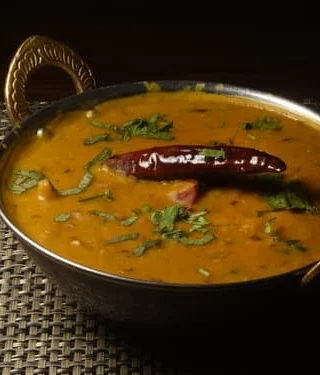
    • In dal: hing is the signature spice of dal tadka, dal makhani and the southern sambhar — it brings the depth that the absence of onion would otherwise leave
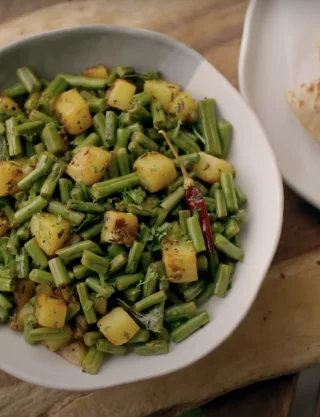
    • In roasted vegetables and sabzis: a small pinch at the end of tempering for potatoes, cauliflowers and leafy greens
    • In pickles (achaar): used as a natural preservative and flavouring in mango, lemon and vegetable pickles
    • In farsan (Gujarati snacks): kachori, mathri, papad — hing perfumes the dough or the frying oil
    • In chutneys and raitas: a touch of hing in a tamarind chutney or a cucumber raita completely changes the complexity of the dish
    • In rice dishes: vegetarian biryani, khichdi, pongal — a pinch in the tempering ghee

    How to use hing for the first time

    • Start with a minute pinch — literally the size of a grain of rice for 4 people
    • Always heat in hot oil, ghee or butter before adding the other ingredients
    • Never add directly to a cold or hot dish without going through a hot fat first
    • Increase the dose very gradually across several uses — the palate needs to adjust
    • For vegan cooking: a perfect replacement for garlic and onion in any recipe

    Hing in French cuisine — an unexplored territory

    In France, hing is almost unknown to the general public. Yet its applications in French cooking are fascinating: a pinch in an onion soup to amplify its foundation, in a beurre blanc for depth, in a vinaigrette or a sauce vierge. Hing can transform an ordinary French dish into something mysteriously deeper, without anyone being able to name what has changed.

  • In Ayurvedic medicine, hing is considered one of the most important medicinal plants — a status it shares with turmeric, ginger and black pepper. Its Ayurvedic name, hingu, is associated with balancing the Vata dosha (which governs digestive functions and the nervous system). It is the carminative par excellence of traditional Indian medicine.

    Modern science has since validated many of hing's traditional properties, identifying its key active compounds: coumarins (ferulic acid, umbelliprenin, farnesiferol), organosulphur compounds (alkyl polysulphides) and sesquiterpenes.

    Documented properties and traditional uses

    • Digestive and carminative: this is the most anciently documented and the most scientifically validated property. Hing stimulates the production of digestive enzymes, reduces intestinal spasms and prevents bloating and flatulence — which explains its systematic use in pulse-based dishes in India
    • Anti-inflammatory: the coumarins and polysulphides in hing inhibit the COX-2 (cyclooxygenase-2) pathway, thereby reducing systemic inflammation — a mechanism similar to ibuprofen
    • Antihypertensive: several clinical studies have shown that hing's coumarins (notably umbelliprenin) have a vasodilatory and blood-pressure-lowering effect
    • Natural anticoagulant: the coumarins can thin the blood by reducing platelet aggregation — to be taken into account in case of anticoagulant therapy
    • Bronchial antispasmodic: used in Ayurvedic medicine against asthma, bronchitis and cough — the organosulphur compounds have a relaxing effect on bronchial muscles
    • Antibacterial and antifungal: efficacy demonstrated against several bacterial and fungal strains, notably Candida albicans
    • Neuroprotective: preliminary studies suggest that hing's sesquiterpenes could have a protective effect against certain neurodegenerative diseases
    • Blood-sugar regulation: animal studies have shown hypoglycaemic potential — clinical research in humans is ongoing

    Important precautions

    Hing is not recommended for pregnant women (it can stimulate uterine contractions). It is also contraindicated in case of anticoagulant therapy (warfarin, heparin) because of its blood-thinning effect. People with coeliac disease should check that the compounded hing they use does not contain wheat flour — choose a certified gluten-free compounded hing or pure resin. In sensitive individuals, high doses can cause headaches or a slight, temporary rise in blood pressure.

  • The two commercial forms to know

    • Pure resin in tears or lumps: the purest, most powerful and most difficult form to dose. Reserved for experienced cooks and medicinal uses. A quality resin is amber, slightly translucent, hard but not brittle. Favour Afghan varieties such as Kabuli Sufaid.
    • Compounded hing powder: the most practical form for everyday cooking. Contains 25 to 40% pure resin mixed with rice or wheat flour and gum arabic. Prefer a powder of ivory-cream colour (too yellow = excess added turmeric), with a strong but not rancid odour.

    Quality criteria

    • Stated resin content: serious producers mention the percentage of pure resin (look for a minimum of 30%)
    • Origin of the resin: prefer hings based on Afghan resin (Kabuli) for a superior aroma
    • Gluten-free: check whether the powder uses rice flour (gluten-free) or wheat flour depending on your sensitivity
    • Recent manufacturing date: hing loses its potency over time — favour fast-turnover stock

    Storage tips

    • Hing is the spice that demands the most care in storage — its odour is so powerful it can contaminate every other food in a cupboard
    • Always store in a double-sealed airtight glass jar, or in a metal tin with a gasket
    • Never store with other spices, nor near butter, eggs or neutral-flavoured foods
    • Away from light and moisture — room temperature is fine
    • Shelf life: pure resin up to 3–5 years if well stored; compounded powder 12 to 18 months
    • Tip: place the jar inside an airtight ziplock bag in addition to the jar itself
  • Does hing smell as strong in cooked dishes?

    No — and this is hing's most astonishing transformation. Raw or unheated, its odour is extremely intense and sulphurous. But the moment it is heated for 2 to 3 seconds in hot oil or ghee, its volatile compounds undergo a chemical transformation. What remains is a sweet, deep, umami flavour reminiscent of caramelised garlic and onion.

    How do you dose hing correctly?

    To start, use a tiny amount — for 4 people, a pinch the size of a grain of rice is more than enough (about 1/8 teaspoon of compounded powder). Hing is highly concentrated and its effect is cumulative: too much yields a bitter, unbalanced dish.

    Can hing replace garlic and onion in all recipes?

    Not identically, but as a flavour enhancer and functional substitute, yes. It reproduces the aromatic depth and umami effect of garlic and onion. This is particularly useful for people on a low-FODMAP diet, those with IBS, Jains, Brahmins, and anyone avoiding alliums.

    Which hing should I buy to get started?

    For a first try, go for a good-quality compounded hing powder — it is less intimidating than pure resin and easier to dose. Look for a powder based on Afghan (Kabuli) resin, with a stated resin percentage (minimum 25–30%), and ideally certified gluten-free if you have a sensitivity.

    Is hing suitable for vegetarian and vegan diets?

    Yes, pure resin hing is 100% plant-based. Compounded hing powder may contain wheat or rice flour — check the label for gluten-free compatibility. It is the ingredient of choice for Brahmin and Jain cuisines, which have been strictly vegetarian for millennia.

Recipes with Asafoetida (Hing)

Pourquoi choisir Asafoetida (Hing) de La Table Indienne ?

Icône de cible

Fraîcheur et qualité exceptionnelles

Nos épices sont importées directement d'Inde et conditionnées à la demande pour garantir une fraîcheur optimale. Contrairement aux épices vendues en grande surface qui peuvent rester des mois sur les étagères, nous veillons à ce que chaque épice conserve toute sa saveur et son arôme.

Icône de cible

Authenticité et traçabilité

Chaque épice provient de régions spécifiques en Inde réputées pour leur savoir-faire. Nous travaillons directement avec des producteurs locaux qui cultivent leurs épices de manière traditionnelle et biologique, sans pesticides ni produits chimiques.

Icône de cible

Comment bien utiliser cette épice ?

Pour révéler tous les arômes, nous recommandons de faire légèrement griller les épices entières à sec dans une poêle avant de les moudre. Conservez-les dans un endroit sec et à l'abri de la lumière pour préserver leur fraîcheur le plus longtemps possible.

Icône d'étoile

Le saviez-vous ?

Les épices entières sont bien meilleures que les épices moulues
Consultez notre article de blog pour découvrir pourquoi les épices entières conservent mieux leurs arômes.

Questions & Answers

Thank you! Your question has been sent. Mihika will answer soon and you will receive an email.

Ask Mihika your question

Your email will not be published. It is only used to notify you of the answer.

Asafoetida (Hing)

€3.00