Saffron has been cultivated for over 3,000 years and its history is inseparable from the great civilisations. The earliest traces date back to Minoan Crete, where frescoes in the Palace of Knossos (c. 1600 BCE) depict the harvesting of crocus flowers. The Persians used it as a royal commodity (for dyeing textiles, as perfume, in ritual offerings and as medicine), and they are credited with introducing saffron cultivation to Kashmir.
According to Kashmiri tradition, saffron was brought to the valley by two travelling Sufis, Khwaja Masood Wali and Sheikh Sharif-ud-din Wali, around the 12th century. They are said to have offered crocus bulbs to a local healer in gratitude for treatment received. Since then, saffron farming has been deeply rooted in the life of Pampore and its surrounding villages, passed down from generation to generation.
The Mughals elevated Kashmiri saffron to the status of an imperial product. Emperor Akbar demanded that the royal gardens of Srinagar be lined with crocus. Kashmiri saffron was presented to foreign dignitaries and used in celebratory dishes: the imperial biryani was unthinkable without it.
Today, Kashmiri saffron holds a Geographical Indication (GI) tag granted by the Indian government, protecting its origin and quality. The certified growing area covers approximately 3,715 hectares in the districts of Pulwama, Budgam and Kishtwar.
Did you know?
- It takes approximately 150,000 flowers to produce a single kilogram of dried saffron: each flower yields only three stigmas, each picked by hand one at a time
- The harvest takes place over just two to three weeks in October-November, and the flowers must be picked at dawn before they fully open
- Saffron is mentioned in the Song of Solomon in the Bible, in ancient Ayurvedic texts and in the writings of Hippocrates
- The word "saffron" comes from the Arabic za'faran, itself derived from the Persian zar-paran meaning "golden feathers"
- Cleopatra is said to have used saffron in her baths for its cosmetic properties and captivating fragrance
| Characteristic | Detail |
|---|
| Latin name | Crocus sativus L. |
| Botanical family | Iridaceae |
| Grade | Mongra (stigma tips only, no yellow style), the highest grade |
| Origin | Pampore, Kashmir Valley, India (~1,600 m altitude) |
| Part used | Dried stigmas of the crocus flower |
| Harvest | October to November (2-3 weeks) |
| GI tag | Kashmir Saffron, granted in 2020 |
| Cultivated area | ~3,715 hectares (Pulwama, Budgam, Kishtwar) |
The Kashmir Valley offers the crocus an exceptional terroir. Situated at approximately 1,600 metres altitude, the Pampore region (nicknamed "Saffron Town") enjoys a unique microclimate: mild summers, dry and sunny autumns during the crucial flowering period, and karewa soils: ancient lacustrine deposits rich in minerals and naturally well-drained.
The terroir that makes the difference
- Karewa soils: these alluvial plateaus composed of Pleistocene lacustrine deposits provide exceptional drainage and ideal mineral richness for the crocus
- Altitude: ~1,600 m, creating a day-night temperature variation that concentrates aromatic compounds in the stigmas
- Rainfall: moderate precipitation with a dry autumn: essential as the bulbs are very sensitive to excess moisture
- Sunshine: bright October days are crucial for flowering and stigma quality
Kashmiri saffron grades are distinguished by the part of the stigma included:
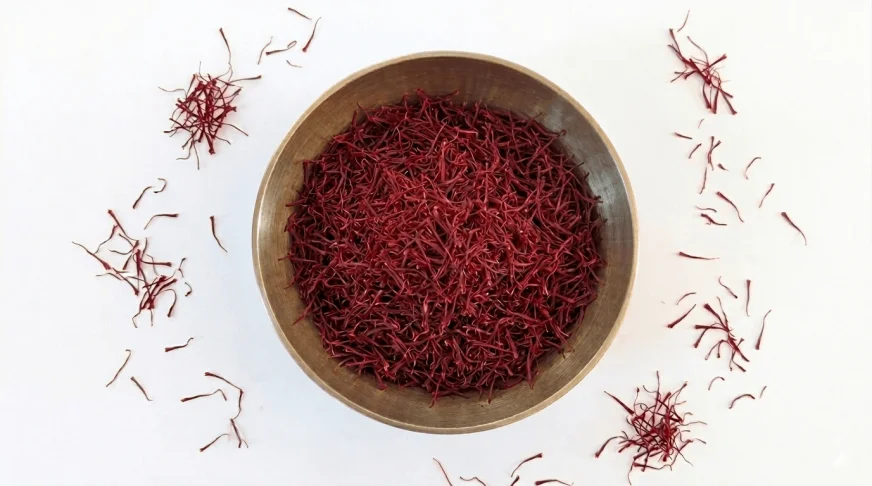
- Mongra (ours): only the dark red tips of the stigmas: maximum concentration of crocin and safranal
- Lachha: whole stigmas with a small portion of yellow style
- Guchhi: stigmas bundled together in small tufts
Kashmiri saffron stands apart from other origins (Iran, Spain, Greece) with its deeper aroma, more intense colour and higher crocin content. The Mongra grade, retaining only the most concentrated part of the stigma, represents the absolute pinnacle of quality.
Kashmiri Mongra saffron delivers an aromatic profile of rare complexity: no other spice in the world possesses such sensory depth, which justifies its status as the most precious spice on Earth.
Tasting notes
- Aroma: honeyed, floral, with notes of dried hay and a characteristic metallic hint: the aroma is immediate and enveloping as soon as the container is opened
- Taste: both sweet and slightly bitter, with a noble bitterness comparable to chestnut honey: the taste lingers long on the palate
- Colour: a few threads are enough to tint an entire dish from golden yellow to deep orange: this is crocin, the most powerful carotenoid pigment in the plant kingdom
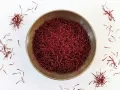
- Texture: Mongra threads are firm, deep crimson red, and release their colour gradually in warm liquid
Saffron quality is measured by three compounds: crocin (colour), picrocrocin (taste) and safranal (aroma). The Mongra grade, retaining only the stigma tips, concentrates all three compounds at their maximum.
To unlock saffron's full potential, steep it in a warm liquid (water, milk, broth) for at least 20 minutes before adding it to your dish. Never fry saffron directly in oil: excessive heat destroys safranal.
Saffron is the spice of festivity and celebration in virtually every culture that uses it. A few threads are enough to transform a dish: in colour, aroma and prestige.
Signature dishes
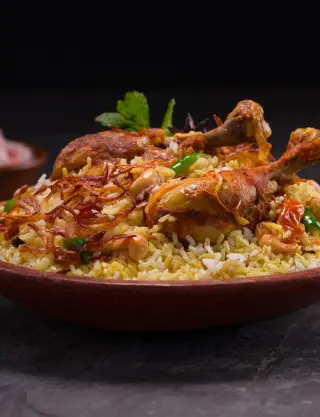
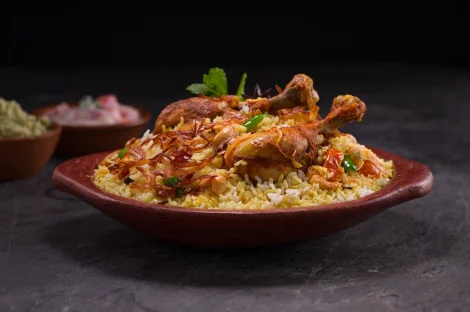
- Biryani: the quintessential Mughal rice dish: saffron infused in warm milk is drizzled over the rice to create the characteristic golden streaks
- Kahwa: Kashmiri green tea with saffron, served with almonds and cardamom, a traditional welcome drink
- Rogan Josh: Kashmiri lamb curry, where saffron imparts colour and aromatic depth
- Risotto alla milanese: the classic Italian saffron risotto, proof of this spice's universality
- Paella: the iconic Spanish dish, where saffron is the defining ingredient
- Bouillabaisse: the Provencal fish stew owes part of its character to saffron
- Saffron phirni: a creamy Indian dessert made from ground rice and milk
How to use
- Pre-infusion: soak 4-5 threads in 2 tablespoons of warm liquid (water, milk, broth) for 20 to 30 minutes: this is the essential method
- Dosage: a pinch (8-12 threads) is sufficient for a dish serving 4: Mongra saffron is highly concentrated
- Baking: add saffron infusion to brioche dough, pastry creams, ice creams and biscuits
- Drinks: a few threads in warm milk, tea or even a cocktail add colour and sophistication
- Late addition: to preserve the aroma, add the saffron infusion in the final minutes of cooking
Saffron has been used in traditional medicine since antiquity: in Ayurveda, in Persian medicine (Unani) and in European herbal medicine. Modern research has identified its active compounds and validated several of its traditional uses.
Key documented benefits
- Antidepressant effect: several clinical studies have shown that saffron (30 mg/day of crocin) can be as effective as certain conventional antidepressants for mild to moderate depression: this is one of the best-documented benefits
- Eye health: crocin and crocetin protect retinal cells. Studies suggest a beneficial effect on age-related macular degeneration (AMD)
- Anti-inflammatory: crocin and safranal have documented anti-inflammatory properties, useful for joint pain and chronic inflammation
- Powerful antioxidant: crocin is one of the most potent carotenoids identified: it neutralises free radicals and protects cells from oxidative stress
- Cognitive health: preliminary research shows potential in supporting memory and preventing age-related cognitive decline
- Digestive aid: traditionally used to stimulate appetite and relieve digestive complaints
Key active compounds
| Compound | Property |
|---|
| Crocin | Carotenoid pigment, antioxidant, neuroprotective, antidepressant |
| Picrocrocin | Responsible for taste, precursor to safranal |
| Safranal | Volatile compound, anxiolytic, mild sedative, antioxidant |
| Kaempferol | Flavonoid, anti-inflammatory, potential anticancer properties |
Note: saffron is a food and should be consumed in normal culinary amounts (a few threads per dish). At very high doses (>5 g), it can be toxic. Pregnant women should limit their intake to standard culinary quantities.
How to recognise authentic saffron
- Appearance: authentic Mongra threads are deep crimson red, uniform, with slightly trumpet-shaped tips: never yellow or orange (a sign of style inclusion or inferior quality)
- Aroma: intense, honeyed and floral with a hay note: never bland or chemical
- Water test: drop a few threads into lukewarm water. Genuine saffron releases its colour slowly (10-15 minutes) and the threads remain red. Adulterated saffron colours instantly and the threads lose all colour
- Press test: rub a thread between your fingers: it should leave a yellow-orange stain and not disintegrate
- Provenance: a reputable seller states the exact origin and grade, and provides a certificate of analysis
Storage tips
- Store in an airtight, opaque container (tinted glass, metal tin or aluminium packaging): light degrades crocin and safranal
- Keep in a cool, dry place, ideally between 15 and 20°C: do not refrigerate as fridge humidity is harmful
- Shelf life: 2 to 3 years under optimal conditions, though aromas peak in the first year
- Never expose to direct heat, sunlight or moisture
- Handle with dry utensils: moisture accelerates degradation
Why is saffron so expensive?
Saffron is the only spice that requires entirely manual harvesting, flower by flower. Each crocus flower produces just three stigmas, and it takes approximately 150,000 flowers to obtain one kilogram of dried saffron. Harvesting is done at dawn during a window of only 2-3 weeks per year. Mongra grade is even more exclusive because only the red tips of the stigmas are kept.
What is the difference between Mongra saffron and other grades?
Mongra (also called Lacha cut tip) contains only the dark red tips of the stigmas, the part most concentrated in crocin, picrocrocin and safranal. Lachha grade includes the entire stigma with part of the yellow style. Guchhi presents stigmas in tufts. Mongra therefore delivers the maximum concentration of aromatic and colouring compounds.
How do you tell real saffron from fake?
The water test is the most reliable: drop a few threads into lukewarm water. Real saffron releases its colour slowly (10-15 min) and the threads stay red and intact. Fake saffron (often safflower or dyed turmeric) colours the water instantly and the threads lose all colour. By touch, real saffron leaves a yellow-orange trace when rubbed between your fingers.
How much saffron should I use per dish?
Mongra saffron is highly concentrated: a pinch of 8-12 threads is enough for a dish serving 4. Always steep them first in 2 tablespoons of warm liquid for 20-30 minutes to release the full colour and aroma. Never add saffron directly to hot oil: excessive heat destroys safranal.
Is Kashmiri saffron better than Iranian saffron?
Iran produces around 90% of the world's saffron, but Kashmir is renowned for a higher concentration of aromatic compounds, thanks to its altitude (~1,600 m) and unique karewa soils. Kashmiri Mongra grade is considered by many experts to be the global quality benchmark. The very limited production (a few tonnes per year versus hundreds of tonnes from Iran) also contributes to its exclusivity.








 Rice
Rice