Turmeric has been woven into Indian civilisation for more than 4,000 years: present in the ancient Vedic texts, in Ayurvedic treatises and in wedding rituals. Its Sanskrit name, haridra, and its deep cultural role as purifier, healer and symbol of good auspice make it one of the most history-laden spices in the world.
But within the vast world of turmeric, one variety stands apart from all the others. In the dense, mist-shrouded forests of the Jaintia Hills in northeastern India, the indigenous Jaintia (Pnar) and Khasi tribes began cultivating a variety of wild turmeric they found growing naturally in the forest undergrowth. Over generations, they selected the finest rhizomes, refined their growing methods and developed what would become the most curcumin-rich turmeric in the world, named after its village of origin, Lakadong.
For most of its history, Lakadong turmeric remained a local treasure, consumed fresh and as powder in tribal kitchens, used in traditional medicine and passed down within families. Only at the beginning of the 21st century did its exceptional quality begin to attract wider attention, first from Indian nutraceutical companies, then from health-conscious consumers around the world.
A Padma Shri for turmeric
Trinity Saioo, a schoolteacher from the village of Mulieh in the West Jaintia Hills, became the human face of the Lakadong revolution. Recognising the extraordinary potential of this spice while her community struggled economically, she organised local farmers (particularly women) into self-help groups. She mobilised up to 800 farmers, contributed to the launch of the government's Mission Lakadong programme, and was awarded the prestigious Padma Shri in 2021 for her contribution to agriculture and community development. She is now affectionately known as "Turmeric Trinity".
The official journey toward protecting this heritage began in 2019, when the Lakadong Turmeric Cooperative Union Limited, backed by the Meghalaya government's Directorate of Horticulture, launched the process of obtaining a Geographical Indication (GI) tag. After years of documentation, hearings and scientific validation, the GI tag (registration no. 741) was officially granted by the Geographical Indications Registry in Chennai, making Lakadong the first turmeric variety from Meghalaya to receive this protection, placing it in the same exclusive category as Darjeeling tea or Champagne wine.
Did you know?
- Lakadong turmeric holds the highest curcumin content ever recorded for any turmeric variety in the world, confirmed by the Indian Council of Agricultural Research (ICAR)
- Despite numerous attempts to transplant it to other parts of India and abroad, no one has succeeded in reproducing Lakadong's high curcumin levels outside the Jaintia Hills
- The Laskein block in the West Jaintia Hills accounts for roughly 87% of all Lakadong cultivation area: a truly limited-quantity product
- India produces around 78% of the world's turmeric, and Lakadong represents the absolute peak of that production in terms of quality
- Before the GI tag was granted, counterfeiting was so widespread that genuine Lakadong farmers were being undercut by imitations trading on their spice's reputation
- The English word "turmeric" is said to come from the Old French terre mérite ("meritorious earth") a fitting description for a spice so deeply rooted in its native soil
- The French word "curcuma" comes directly from the Arabic kurkum and the Sanskrit kunkuma
Turmeric across languages
| Language | Name |
|---|
| French | Curcuma / Curcuma Lakadong |
| Hindi | Haldi (हल्दी) |
| Sanskrit | Haridra (हरिद्रा) |
| Khasi (local) | Shynrai Lakadong |
| Pnar (local) | Chyrmit Lakadong |
| Tamil | Manjal (மஞ்சள்) |
| Bengali | Halud (হলুদ) |
| English | Turmeric / Lakadong Turmeric |
| Portuguese | Açafrão-da-terra |
| Botanical Latin | Curcuma longa var. Lakadong |
In the Khasi language, the prefix Shyn- denotes a plant of particular significance, while Lakadong simply refers to the village of origin. In Pnar, Chyrmit is the word for turmeric, and Lakadong is once again the village name, a reminder that this spice's identity is inseparable from its birthplace.
| Characteristic | Detail |
|---|
| Latin name | Curcuma longa var. Lakadong |
| Botanical family | Zingiberaceae (the same family as ginger and cardamom) |
| Local names | Shynrai Lakadong (Khasi) / Chyrmit Lakadong (Pnar) |
| Part used | Underground rhizome (often called the "root") |
| Curcumin content | 7 to 12% (vs. 2–3% for ordinary turmeric) |
| GI tag | Granted 2023–2024 (no. 741, Chennai) |
| Harvest | December to January |
| Drying | Sun-drying on raised beds |
| Farming communities | ~14,000 farmers in 43 villages |
| Cultivated area | ~1,753 to 2,130 hectares |
Meghalaya (whose name means "abode of the clouds" in Sanskrit) lies in the northeastern corner of India, bordering Bangladesh to the south. It is one of the wettest places on Earth, receiving an annual average rainfall that can reach 10,000 mm in some districts. This extraordinary abundance of rain, combined with the altitude, soil composition and temperature variation of the Jaintia Hills, creates a growing environment that cannot be replicated anywhere else in the world.
The terroir that makes the difference
- Deep, loamy soils, rich in organic matter, with naturally low chemical input
- Rainfall of 4,000 to 10,000 mm per year, providing constant moisture to the rhizomes
- Altitude variation creating cool nights and warm days: ideal conditions for curcumin synthesis
- Meghalaya uses only 17 to 20 kg of agrochemicals per hectare: the lowest rate of any state in India
- The state withdrew chemical-fertiliser subsidies in 2015
Farmers have repeatedly attempted to transplant Lakadong rhizomes to other regions, and the results are consistent and revealing: curcumin content drops dramatically. The unique combination of soil minerals, rainfall and microclimate of the Jaintia Hills appears inseparable from the spice's potency. This terroir effect is now legally recognised and protected by the GI tag.
The main growing area is concentrated in the Laskein block of the West Jaintia Hills, which alone accounts for around 87% of all Lakadong cultivation. The main farming villages include Lakadong, Mulieh, Shangpung, Raliang, Sahsniang and dozens of others across the districts of East and West Jaintia Hills.
| Turmeric origin | Average curcumin content |
|---|
| Vietnam | ~5.0–5.5% |
| Indonesia | ~4.0–5.0% |
| Tamil Nadu, India (Erode) | ~3.0–4.0% |
| Standard commercial turmeric | ~2.0–3.0% |
| Lakadong, Meghalaya | 7.0–12.0% |
Botany
Lakadong turmeric belongs to the species Curcuma longa, of the Zingiberaceae family (the same family as ginger, cardamom and galangal). As with all turmerics, the part used is the rhizome: an underground stem that stores nutrients and produces the characteristic orange flesh.
- Height: the plant reaches 60 to 120 cm, with large lance-shaped leaves
- Flowers: pale yellow-green, cone-shaped, appearing in summer
- Rhizome interior: deep orange, noticeably more vivid than standard varieties
- Local varieties: three varieties grow in the Jaintia Hills (Lakadong, Laskein and Ladaw), each with distinct properties
The land is prepared with the arrival of the first monsoon rains, generally in March-April. Rhizomes are planted in terraced hillside plots, a traditional farming technique that conserves water and protects the fertile topsoil from erosion. By December and January, the rhizomes have matured and are harvested by hand, then sun-dried on raised beds before being ground into powder.
A matrilineal heritage
The Khasi and Jaintia peoples of Meghalaya are among the few remaining matrilineal societies in the world: lineage, property and land all pass through the mother. This cultural framework has made women the natural guardians of turmeric cultivation, and their role in preserving Lakadong's quality is inseparable from the excellence of this spice.
Lakadong turmeric is not only more potent in health-supporting compounds, it is a superior culinary ingredient in every respect. Its aromatic profile is richer, earthier and more complex than that of standard commercial turmeric.
Tasting notes
- Aroma: warm, earthy, with a ginger note and a subtle floral and citrus undertone
- Taste: powerful and peppery on the palate, with a slight bitterness and a long, warming finish
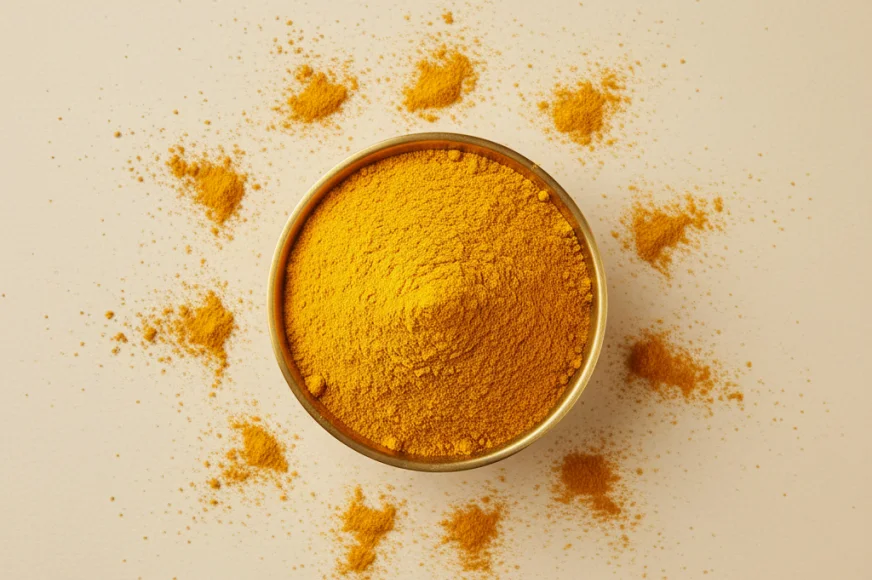
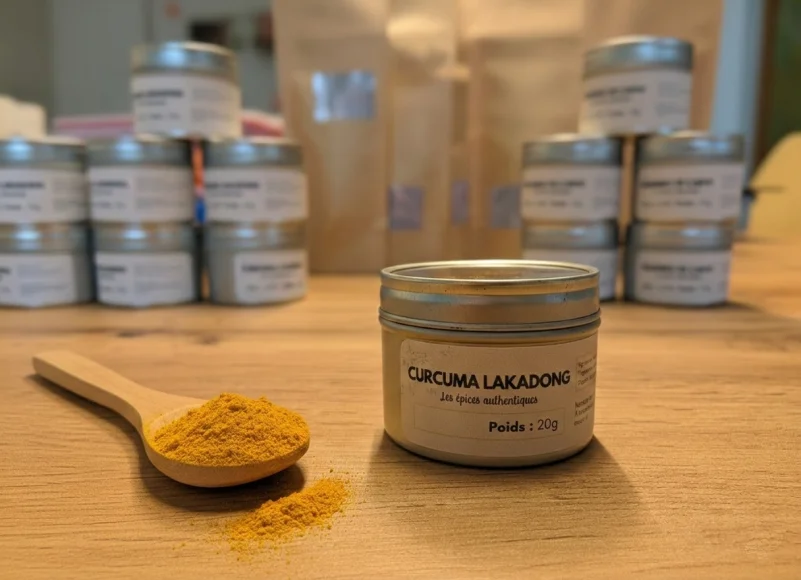
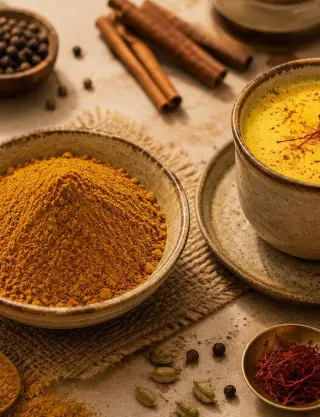
- Colour: deep golden-orange powder, noticeably brighter and more saturated than ordinary turmeric
- Potency: thanks to its high curcumin concentration, roughly half a teaspoon of Lakadong can do the job of two teaspoons of standard turmeric
Chef's tip
Because Lakadong is considerably more potent, adjust the quantity when substituting it in your recipes: start with half the usual amount and adjust from there. Its vibrant colour will also give your dishes a more appetising, photogenic look.
Briefly toasting dried whole Lakadong turmeric in a dry pan before grinding releases its volatile oils and deepens the flavour considerably. In the Jaintia Hills, turmeric is often used fresh: the raw rhizome thinly sliced or grated into dishes for maximum aroma, a technique well worth trying if you can find fresh roots.
In the Jaintia Hills, Lakadong turmeric is an everyday food: added to rice dishes, meat preparations, fermented foods and herbal tonics. Indian cuisine more broadly uses turmeric as one of its most essential ingredients, and Lakadong excels in every application.
Classic Indian dishes
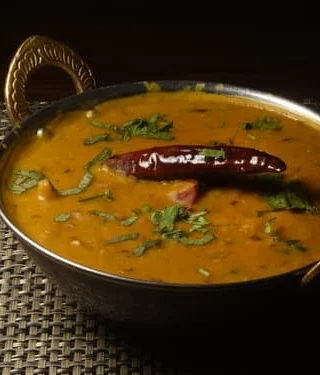
- Dal (lentil soup): turmeric is essential for both colour and anti-inflammatory benefits
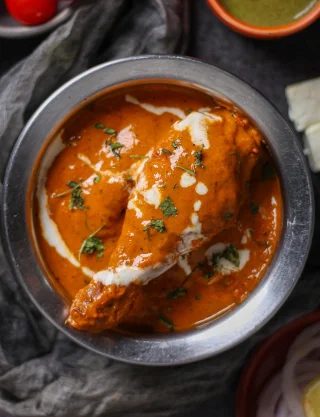
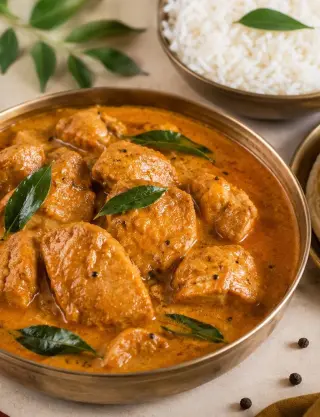
- Chicken or mutton curry: bloomed in hot ghee at the start of cooking
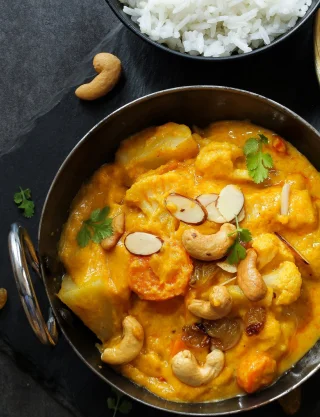
- Saag (spinach preparations) and vegetable sabzis
- Haldi doodh (golden milk): a traditional Ayurvedic evening drink
- Marinades for paneer, fish and chicken (turmeric + ginger + garlic paste)
- Khichdi: the comforting porridge of rice and lentils
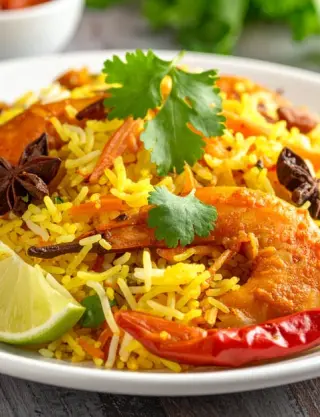
- Biryani: added to the rice cooking water for colour and aroma
How to use it in your kitchen
- Bloom it: always add turmeric to a hot fat (ghee, oil or butter) at the start of cooking to activate its fat-soluble compounds and release the full flavour
- Pair it with black pepper: the piperine in black pepper increases curcumin absorption by up to 2,000%, ancestral wisdom now confirmed by modern science
- Add it to hot milk: golden milk with a pinch of Lakadong, black pepper, cinnamon and honey is one of the most effective and delicious wellness drinks
- Use it in dressings: a pinch in a mustard vinaigrette adds colour and a subtle warmth
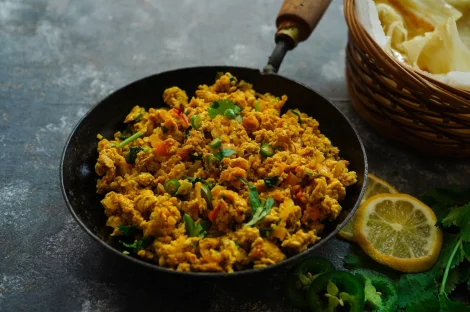
- Add it to eggs: a small amount in scrambled eggs or a frittata is surprisingly delicious
- Smoothies and lattes: works beautifully in ginger-turmeric shots or spiced lattes
Lakadong turmeric and French cuisine
- Réunion and the French Caribbean: turmeric (called saffron péyi in Réunion) is a pillar of Creole cooking, used in carries and rougails
- Mustard with turmeric: French yellow mustard owes part of its signature colour to turmeric, every French kitchen already uses it without knowing
- Golden milk: the lait doré trend has taken over health and café culture in France: an ideal vehicle for Lakadong
- Herbal teas and wellness shots: French pharmacies and organic shops increasingly stock turmeric supplements and infusions
- Starred kitchens: a growing number of French chefs are integrating high-quality Indian spices into their contemporary cuisine, drawn by terroir stories similar to those of wine and cheese
A French note on terroir
France understands terroir better than almost any other culture: the idea that the quality of a product is inseparable from the precise place it comes from. Lakadong turmeric is India's answer to Champagne or Comté: a product so uniquely tied to its geography that it cannot be reproduced elsewhere, now officially protected by a GI tag. It is a story that resonates deeply with French values of quality, origin and authenticity.
Turmeric has held a central place in Ayurvedic medicine for more than 4,000 years. In Ayurveda, it is classified as a tridoshic herb, considered beneficial for all three constitutional types (doshas: Vata, Pitta and Kapha). It is used to warm the body, support digestion, purify the blood and promote clear skin.
Modern science has validated many of these traditional claims. The key compound responsible is curcumin, a polyphenol that is one of the most studied natural anti-inflammatory agents in the world. And because Lakadong turmeric contains up to four times more curcumin than standard varieties, its health benefits are proportionally amplified.
Main health benefits
- Anti-inflammatory: curcumin inhibits NF-kB, one of the main molecular switches behind chronic inflammation, relevant for arthritis, joint pain and inflammatory conditions
- Antioxidant: curcumin directly neutralises free radicals and also stimulates the body's own antioxidant defences
- Digestive support: stimulates bile production, supports a healthy gut flora, reduces bloating and intestinal inflammation
- Immune support: contains lipopolysaccharide enzymes that activate the immune system's defences against viral and bacterial infections
- Liver protection: supports hepatic detoxification and reduces liver inflammation
- Brain health: curcumin can cross the blood-brain barrier and has shown potential in research related to depression, cognitive function and the reduction of Alzheimer's disease risk markers
- Skin health: applied topically, its antimicrobial and anti-inflammatory properties help with acne, complexion radiance and wound healing
- Cardiovascular health: may support healthy cholesterol metabolism and circulation
A note on absorption
Curcumin is poorly absorbed by the body on its own, as it is fat-soluble and rapidly metabolised. To maximise the benefits: (1) always consume it with a healthy fat such as ghee, coconut oil or olive oil, and (2) combine it with black pepper, piperine increases curcumin's bioavailability by up to 2,000% according to studies.
Nutritional values (per 1 tablespoon / ~9 g)
| Component | Content |
|---|
| Curcumin (Lakadong) | 7 to 12% of total weight |
| Curcumin (ordinary turmeric) | 2 to 3% of total weight |
| Dietary fibre | ~0.7 g |
| Iron | ~1.7 mg |
| Potassium | ~62 mg |
| Fats | ~0.1 g |
| Proteins | ~0.3 g |
How to recognise authentic Lakadong turmeric
- GI certification: look for the GI tag (no. 741): this is your primary guarantee of authenticity
- Colour: genuine Lakadong powder is a deep, vivid golden-orange, noticeably richer than the pale yellow of commercial turmeric
- Aroma: powerful, warm, earthy and with a ginger note: if the smell is weak or dusty, it may be adulterated or stale
- Lab reports: reputable sellers will provide third-party test results confirming a curcumin content above 7%
- Provenance: check that the seller sources directly from farmers in the Jaintia Hills: ideally with farm-to-table traceability
- The water test: stir a pinch into water: authentic turmeric settles cleanly with an even colour, while adulterated turmeric may leave streaks of artificial dye
Storage tips
- Store in an airtight glass jar, away from direct sunlight and heat
- Ideal storage: a cool, dark cupboard, never above the stove or near windows
- Shelf life: 2 to 3 years for dried powder; flavour is at its peak in the first year
- Whole dried turmeric fingers keep even longer than the powder
- Signs of degradation: faded colour, weakened aroma or a musty smell, when in doubt, replace it
Is Lakadong turmeric the same as ordinary turmeric?
No. Although both are Curcuma longa, Lakadong is a specific variety grown exclusively in the Jaintia Hills of Meghalaya. Its curcumin content (the bioactive compound responsible for most of the health benefits and the vibrant colour) is typically 3 to 4 times higher than that of commercial turmeric. The flavour is also significantly richer and more complex.
Can I use Lakadong turmeric in the same quantities as ordinary turmeric?
Because it is significantly more potent, you should start with about half the quantity you would normally use and adjust to taste. Half a teaspoon of Lakadong can do the job of a full teaspoon of standard turmeric in most recipes.
Why is authentic Lakadong turmeric difficult to grow outside Meghalaya?
Despite repeated attempts, transplanting Lakadong rhizomes to other regions consistently results in a dramatic drop in curcumin levels. The specific combination of rainfall, altitude, soil mineral composition and temperature variation in the Jaintia Hills appears to be irreplaceable, a terroir effect now recognised and protected by law.
What does the GI tag mean for consumers?
The Geographical Indication tag (similar to the protection granted to Champagne or Darjeeling tea) means that only turmeric grown in the designated districts of East and West Jaintia Hills, using traditional cultivation methods, can legally be labelled and sold as Lakadong Turmeric. It is your guarantee of authenticity, quality and ethical sourcing.
What is the best way to absorb the curcumin in Lakadong turmeric?
Curcumin is fat-soluble and poorly absorbed on its own. Always consume it with: (1) a healthy fat such as ghee, coconut oil, olive oil or whole milk, and (2) black pepper, piperine increases curcumin's bioavailability by up to 2,000% according to research. This is why traditional Indian cooking almost always naturally combines these ingredients.









 Dry Dishes