













-15 %
€2.55
€3.00
€51.00/kg
 Table Indienne
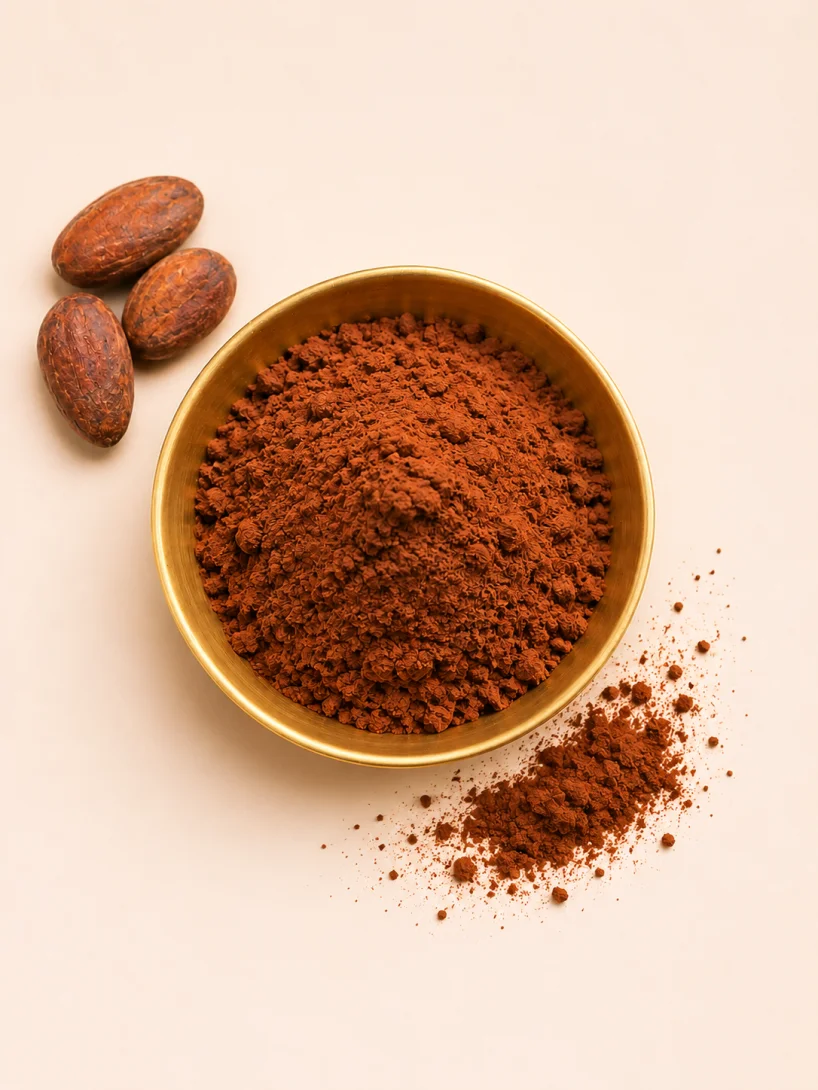
Few people know that India grows cocoa, yet since the 1960s, the states of Kerala, Tamil Nadu and Andhra Pradesh have been producing quality cocoa beans, often intercropped under coconut palms and rubber trees. Our pure cocoa powder is obtained by pressing and grinding these Indian beans, with no added sugar or additives. A prime ingredient to rediscover the true taste of cocoa, far from sweetened commercial chocolate powders.
Unlike a classic drinking chocolate powder, which already contains sugar, milk powder and flavourings, our pure cocoa powder is 100% cocoa: you stay in full control of the sugar and other ingredients in your recipes. Its high cocoa content gives it a more intense taste and a richer natural antioxidant profile, while fitting just as well into Western desserts as into modern Indian cooking, where cocoa is only just starting to find its place alongside traditional spices.
Our powder dissolves into a drink or a bake. For crunch, try our cacao nibs. For shelling at home, see our roasted cocoa beans, which come in their shell.
Our cocoa comes from small farms in Kerala, Tamil Nadu and Andhra Pradesh, where it is grown intercropped in the shade of coconut palms.
To preserve all its aroma, store your cocoa powder in a dry place, away from light and moisture, in its airtight packaging.
Rich in antioxidants (flavonoids)
Natural source of magnesium
Supports cardiovascular health
Boosts mood thanks to theobromine
Supports focus and alertness
Contributes to skin health
Provides iron, helpful against fatigue
Helps regulate blood pressure
Nutritional declaration per 100g
| Nutritional component | Per 100g |
|---|---|
| Energy | 954 kJ / 228 kcal |
| Fat | ~ 13,7 g |
| of which saturated fat | ~ 8,1 g |
| Carbohydrates | ~ 57,9 g |
| of which sugars | ~ 1,8 g |
| Dietary fiber | ~ 33 g |
| Proteins | ~ 19,6 g |
| Salt | ~ 50 mg |
| Directly selected smallholder producers | No |
| Vegetarian | Yes |
| Origin | Kerala, Tamil Nadu and Andhra Pradesh, India |
| Quality | Premium |
| Type | Powder |
| Taste profile | Intense pure cocoa aroma, slightly bitter and roasted notes, with no added sugar. |
| Possible traces of allergens | May contain traces of tree nuts and milk (packaged in a facility handling these allergens). |
| Composition | 100% pure cocoa powder, unsweetened, no additives. |
Discover our pure cocoa powder, grown in South India, between Kerala, Tamil Nadu and Andhra Pradesh. Intense, slightly bitter and with no added sugar for your baking, hot drinks and modern Indian recipes.
By purchasing this product, you add €0.08 to your loyalty account, redeemable as a discount on your next order!
From €40.00 in your basket: a free spice gift of your choice, 3 to pick from.
Ready for shipping, delivery time 3-7 business days
Delivery from €4.80 at Mondial Relay pickup points. Free pickup-point delivery from €65.00 (up to 1 kg). *



The cacao tree carries a royal name: Theobroma cacao, which Linnaeus built from Greek to mean “food of the gods”. It is native to the Amazon basin, and the earliest traces of its domestication go back at least 5,300 years, at the Santa Ana-La Florida site in south-eastern Ecuador, among the Mayo-Chinchipe culture. In Central America, domestication followed about 1,500 years later, and chemical residue analysis of pottery from Puerto Escondido in Honduras shows cocoa was consumed there between 1500 and 1400 BC.
The Maya and the Olmecs used it in their ceremonies. Before the Spanish conquest, the beans even served as currency across Mesoamerica. A Spanish soldier recounts that the Aztec emperor Moctezuma II drank his chocolate from a golden goblet, up to sixty portions a day. The origin of the word itself, kakaw, is still debated: scholars hesitate between Nahuatl and a Mixe-Zoquean language.
It was the Europeans who then spread the cacao tree to the West Indies, the Philippines, Asia and West Africa. India has known it since 1798, when the British East India Company introduced it at Courtallam, in today’s Tamil Nadu. Today the map of cocoa has been turned upside down: in 2022, Ivory Coast alone produced about 2.2 million tonnes, ahead of Ghana and Indonesia.
In 1828, the Dutchman Coenraad van Houten devised in Amsterdam a hydraulic press that separates cocoa butter from the paste. What remains, a defatted press “cake”, is ground into a fine powder that dissolves well: this was the birth of modern cocoa powder, a key step in the history of chocolate.
Did you know?
A pod weighs on average 400 g and holds 30 to 50 seeds embedded in a sweet pulp, yet it yields only 35 to 40 g of dried beans, barely 9 to 10% of its weight. It takes about 400 dried beans to make 450 g of chocolate. The cacao tree takes five years to produce its first pods, which grow directly on the trunk and large branches, and can live for about a hundred years.
| Characteristic | Detail |
|---|---|
| Latin name | Theobroma cacao L. |
| Botanical family | Malvaceae |
| Part used | The bean, the seed inside the pod |
| Origin of our cocoa | Kerala, Tamil Nadu and Andhra Pradesh, in southern India |
| Ingredient | 100% pure cocoa powder, unsweetened, with no additives |
The cacao tree grows in the hot, humid belt close to the equator, within 20° of latitude. In southern India it is most often grown as an intercrop, in the shade of coconut palms, by small producers: the palms give it the partial shade it needs. Our cocoa comes from small farms in Kerala, Tamil Nadu and Andhra Pradesh.
The fat content of a powder depends on the pressure and duration of pressing. An ordinary powder generally contains 20 to 22% cocoa butter, a so-called low-fat powder 10 to 12%, and the lighter-coloured powders are often the most defatted.
Did you know?
Until recently, India imported about 70% of the cocoa it needed. Its southern plantations, long modest, are now growing in importance: in 2020-2021, Andhra Pradesh and Kerala were the country’s two leading producing states.
With no added sugar, a pure cocoa does not resemble what is drunk at breakfast: the aroma is intense, the taste slightly bitter and roasted. This is the real taste of cocoa, far from the chocolate powders of the supermarket, which already contain sugar, milk powder and flavourings.
The bitterness comes from the cocoa itself, which is softened only by what you add to it. The level of roasting also plays a part: a light roast gives a more acidic and aromatic flavour, a darker roast a more intense and bitter one. Cocoa also loves spices: cinnamon, cardamom, vanilla, ginger and even a hint of chilli suit it wonderfully, as in the Mexican tradition of mole.
For crunch, try our roasted cacao nibs, which are the raw bean crushed: they go very well with the powder.
Cocoa is one of the most studied plant raw materials. No health claim can, however, be made for the powder used in cooking.
| Component | Approximate content |
|---|---|
| Energy | about 228 kcal |
| Fat | about 14 g |
| Carbohydrates | about 58 g, including about 33 g of fibre |
| Protein | about 20 g |
| Theobromine | about 2 g |
| Caffeine | about 230 mg |
These values are given as a guide for an unsweetened cocoa powder (USDA database). The label on your pouch prevails.
Precautions
Cocoa is a mild stimulant: people sensitive to caffeine, children and people who sleep badly are advised to moderate their consumption, especially in the evening. Pregnant women can ask a healthcare professional for advice. Cocoa and chocolate are toxic to dogs and cats, because of the theobromine: keep the pouch out of their reach.
Allergens
This product may contain traces of tree nuts and milk: it is packed in a workshop that handles these allergens. If you have any allergies, please mention them when you place your order.
A supermarket drinking chocolate already contains sugar, often milk powder and flavourings. Our pure cocoa is 100% cocoa, with no sugar or additives: you control entirely what you add to your preparations.
Because it contains no sugar. Bitterness is the natural taste of cocoa, which is balanced with sugar, honey or milk depending on the recipe.
Yes. The cacao tree arrived in India in 1798 and is grown today mainly in the south, in Kerala, Tamil Nadu, Andhra Pradesh and Karnataka, often in the shade of coconut palms.
Yes, in small amounts, along with theobromine, a close relative. The effect is gentler than that of coffee, but sensitive people may wish to moderate their consumption, especially in the evening.
It may contain traces of tree nuts and milk, as it is packed in a workshop that handles these allergens. Please mention any allergies when you place your order.
Yes. A spoonful of cocoa rounds off the bitterness of chillies in a mole-style sauce and flavours marinades for grilled meats, with spices.
Thank you! Your question has been sent. Mihika will answer soon and you will receive an email.
Pure Cocoa Powder from South India
Other products you might like
€2.55
€3.00
€51.00/kg
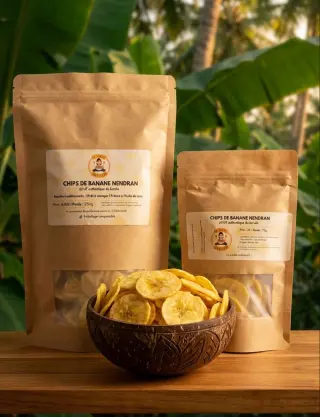
€3.00 €40.00/kg
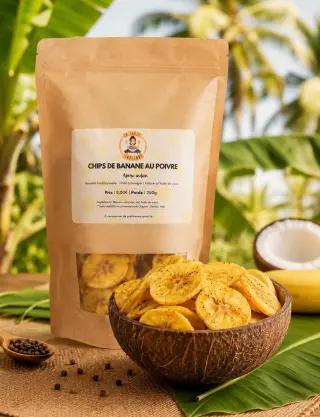
€3.50 €46.67/kg
€5.50 €5.50/kg