












€5.00 €250.00/kg
 Table Indienne
Discover our ground ginger, grown in the highlands of Sikkim, India. Warm, pungent and slightly citrusy to enliven curries, chai and baked goods.
By purchasing this product, you add €0.08 to your loyalty account, redeemable as a discount on your next order!
From €40.00 in your basket: a free spice gift of your choice, 3 to pick from.
Ready for shipping, delivery time 3-7 business days
Delivery from €4.80 at Mondial Relay pickup points. Free pickup-point delivery from €65.00 (up to 1 kg). *


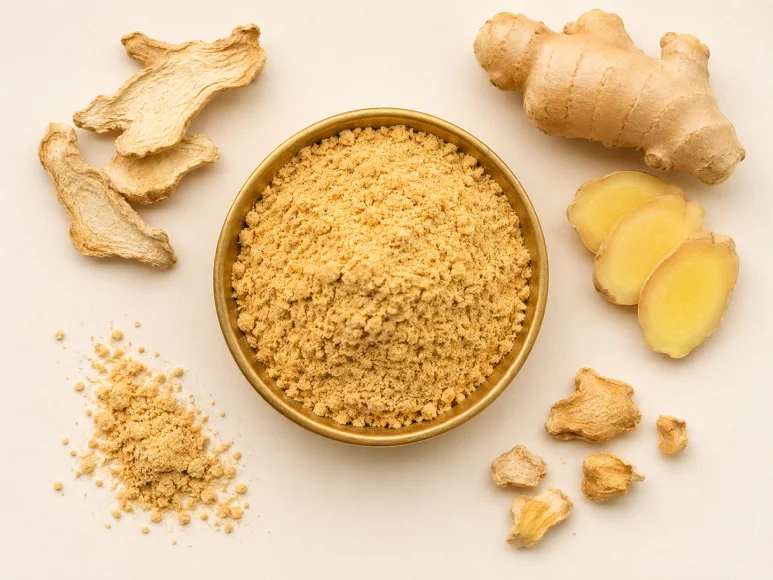
Our ginger powder is made from freshly harvested rhizomes, dried and ground using traditional methods. Grown in the highlands of Sikkim, a north-eastern Indian region renowned for the quality of its ginger, it develops a warm, pungent aroma with a slightly citrusy edge. An essential spice in Indian cooking, equally at home in savoury dishes and baking.
Unlike fresh ginger, the powder keeps for a long time without losing its essential aromas and blends instantly into your preparations, with no peeling or grating required. It releases a more concentrated, even flavour, ideal for marinades, baking and spice blends like chai masala.
We select our ginger from smallholder farms, to guarantee you a natural, premium-quality product.
To preserve all its aromas, store your ginger powder in a dry place, away from light and humidity, in its airtight packaging.
Aids digestion
Soothes nausea
Natural anti-inflammatory properties
Boosts the immune system
Eases muscle tension
Supports blood circulation
Rich in antioxidants
Warms the body in winter
Nutritional declaration per 100g
| Nutritional component | Per 100g |
|---|---|
| Energy | 1 402 kJ / 335 kcal |
| Fat | ~ 4,2 g |
| Carbohydrates | ~ 71,6 g |
| of which sugars | ~ 3,4 g |
| Dietary fiber | ~ 14,1 g |
| Proteins | ~ 9 g |
| Salt | ~ 70 mg |
| Directly selected smallholder producers | Yes |
| Origin | Sikkim, India |
| Quality | Premium |
| Type | Powder |
| Taste profile | Warm, pungent flavour with slightly citrusy notes and a touch of woody sweetness. |
This spice is one of the ingredients of these ready-made blends
€5.00 €250.00/kg
€5.50 €220.88/kg
Ginger (Zingiber officinale) is what botanists call a cultigen: it does not exist in the wild. It comes from maritime South-East Asia and was most likely domesticated by the Austronesian peoples, who carried it with turmeric aboard their canoes. That is how it crossed the Pacific as far as Hawaii. It reached India about 3,500 years ago, through contact with the Dravidian-speaking peoples of Sri Lanka and South India.
Its name has travelled almost as far as the plant. The Sanskrit word śṛṅgavera is often broken down by tradition into “horn” and “body”, because the shape of the root recalls a stag’s antlers, but this popular etymology is considered doubtful: the word more likely comes from a Dravidian term, related to the Tamil and Malayalam words for ginger. Greek made it ziggíberis, then Latin zingiber, and from there our “ginger”.
The earliest written mention is Chinese: it appears in the Analects of Confucius, composed in the Warring States period (475 to 221 BC), which report that the master ate it at every meal. In 406, the Chinese monk Faxian described ships carrying ginger to prevent scurvy, long before anyone understood what vitamin C was. In the Mediterranean it was the Arabs who introduced it, and both Dioscorides and Pliny the Elder described it. Around 150, Ptolemy noted that it was produced in Ceylon.
In the Middle Ages, ginger was a luxury spice. In fourteenth-century England, a pound of ginger cost as much as a sheep. In 1495, when the Gribshunden, a ship of King John of Denmark, sank off Sweden, its wreck yielded ginger among a luxury cargo. In the Middle Ages, the pharmacopoeias of several countries described it.
In the sixteenth century, Spain introduced ginger to the Caribbean, where it became the leading export of Hispaniola and Puerto Rico. It held that rank until the seventeenth century, when sugar, produced by enslaved labour, overtook it. A spice had thus travelled the world long before modern globalisation.
In Hindi, fresh ginger is adrak and dried ginger is sonth (or saunth). The distinction matters: sonth is traditionally prepared from fully mature rhizomes, soaked, peeled by hand and then dried in the sun. In Ayurveda, dried ginger (shunthi) is part of the trikatu, “the three pungents”, with black pepper and long pepper.
Did you know?
India alone produces about 45% of the world’s ginger (nearly 4.9 million tonnes in total in 2023), far ahead of Nigeria and China. Yet it accounts for only about 1% of world exports and ranks seventh among exporters: most of its harvest is eaten at home, in chai, curries and the garlic and ginger pastes of its kitchens.
| Characteristic | Detail |
|---|---|
| Latin name | Zingiber officinale Roscoe |
| Botanical family | Zingiberaceae, the same family as turmeric, cardamom and galangal |
| Local names | Adrak (fresh) and sonth or saunth (dried) in Hindi |
| Part used | The rhizome, the swollen underground stem |
| Main growing regions | South-western India (notably Kerala for dried ginger) and the north-east (including Sikkim) |
Ginger is a perennial whose pseudostem, formed by the leaf sheaths, reaches about a metre in height. Its flowers are pale yellow edged with purple. Everything happens underground: it is the rhizome, thickening over the months, that is harvested.
Our ginger is grown in the heights of Sikkim, a small Himalayan state in north-eastern India, one of the recognised ginger-growing regions of the country. The plant grows there between about 300 and 1,500 metres above sea level, in partial shade, in a warm and humid climate, with a dry spell before planting and well-spread rain during growth. Local cultivars carry names such as Bhaise, Gorubathane, Majhaule, Tange, Patle or Jorethang. As almost everywhere in India, ginger there is most often grown on small family farms.
Did you know?
Ginger is a cousin of several spices on our shelves. Turmeric belongs to the same botanical family, as does green cardamom. It is no accident that they are found together in chai or golden milk.
Ginger powder is warm, pungent and slightly citrusy, with a hint of woody sweetness on the finish. Its fragrance is less sharp and less juicy than that of the fresh rhizome, but deeper and rounder.
The heat of ginger comes from molecules called gingerols, of which [6]-gingerol is the main one. During drying, or with cooking, prolonged storage or an acidic medium, some of the gingerols turn into shogaols, which are much more pungent, and into zingerone, with a spicy and slightly sweet aroma. That is why dried ginger is hotter, weight for weight, than fresh, and warmer in the mouth than citrusy.
Fresh brings juice, freshness and a citrus liveliness; the powder brings warmth and depth. They are therefore not swapped weight for weight. As a guide, allow about 1/4 to 1/2 teaspoon of powder for 1 tablespoon of freshly grated ginger, and adjust to taste.
Allow about 1/2 to 1 teaspoon of powder to flavour a dish for 4 people. Taste, then increase gradually: its heat builds with cooking time.
Ginger has been used in the traditional medicines of India, China and Japan for centuries, and it has a place in Ayurveda, where dried ginger (shunthi) has been used for a very long time. No health claim can, however, be made for the spice used in cooking.
Precautions
At culinary doses, ginger is well tolerated by most adults. In large amounts it can cause digestive discomfort and heartburn, especially in powder form. It can interact with anticoagulants (warfarin, aspirin) and certain medicines, and it may be a concern for people with gallstones. Pregnant women and people on treatment are advised to seek a healthcare professional’s opinion before regular or large consumption.
Fresh is juicy, lively and citrusy, the powder warmer, deeper and hotter, because drying turns some of the gingerols into shogaols. Allow about 1/4 to 1/2 teaspoon of powder to replace 1 tablespoon of freshly grated ginger.
Yes, weight for weight. Drying concentrates the heat and turns gingerols into the more pungent shogaols. Add it gradually, to taste.
Yes, it is one of the traditional ingredients of chai masala, alongside cardamom, cinnamon, clove and black pepper.
Sonth (or saunth) is the Hindi name for dried ginger, traditionally prepared from mature rhizomes that are peeled and dried. Once ground, it gives ginger powder.
Ginger likes warmth, humidity, partial shade and deep, well-drained soils, between about 300 and 1,500 metres above sea level. The heights of Sikkim bring these conditions together, and cultivation there is most often done on family farms.
Yes. Ginger, turmeric, cardamom and galangal all belong to the Zingiberaceae family, which explains their kinship of warm, aromatic flavours.
About 12 to 18 months in an airtight container, away from light, heat and humidity. Its aroma fades gradually over time.

Wherever possible we buy our spices whole, in small batches of a few kilos. We pack them to order in our workshop in Alsace, and grind them ourselves when you choose them ground. They do not spend months on a shelf: they keep their flavour and aroma all the way to your kitchen.
Each spice comes from a farm or a small Indian trader we chose after testing their samples in our kitchen. We do not buy from wholesalers: we know where what we sell comes from.
To reveal all the aromas, we recommend lightly toasting whole spices in a dry pan before grinding them. Store them in a dry place away from light to preserve their freshness as long as possible.

Whole spices are much better than ground spices
Check out our blog article to discover why whole spices retain their aromas better.
Thank you! Your question has been sent. Mihika will answer soon and you will receive an email.
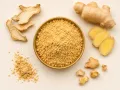
Ginger Powder
Other products you might like
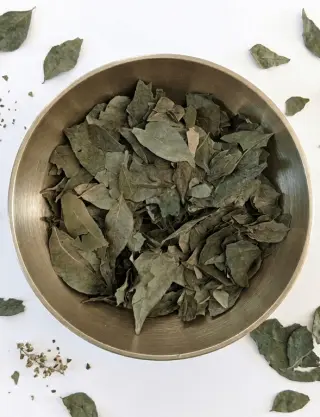
€1.28
€1.50
€256.00/kg
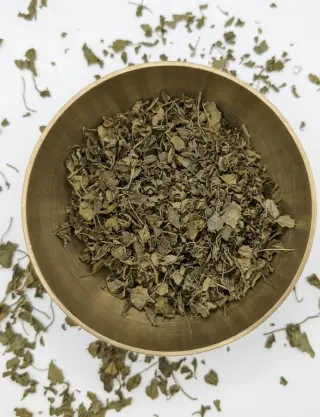
€1.50 €300.00/kg
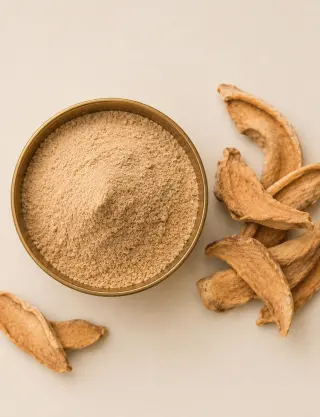
€1.80 €180.00/kg
€2.00 €100.00/kg
€2.00 €100.00/kg
€2.00 €100.00/kg
€2.00 €100.00/kg
€2.00 €100.00/kg
€2.00 €400.00/kg