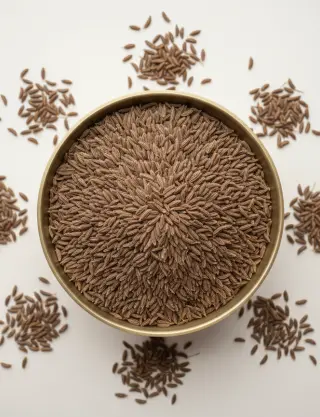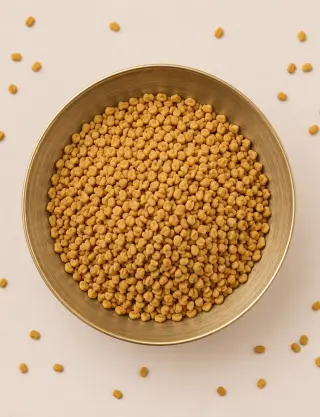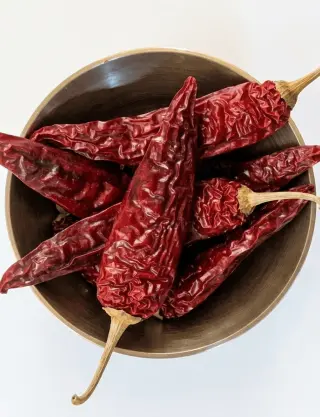




Dried Kanthari Chili
Discover our dried Kanthari chili, a tiny bird's eye chili harvested in the border villages of Kerala and Karnataka, on the outskirts of the Nagarhole reserve. Very hot, with a fruity edge to spice up curries, achars and chutneys, sparingly.
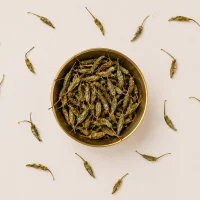
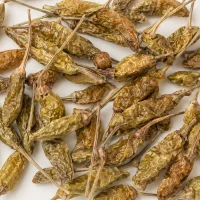
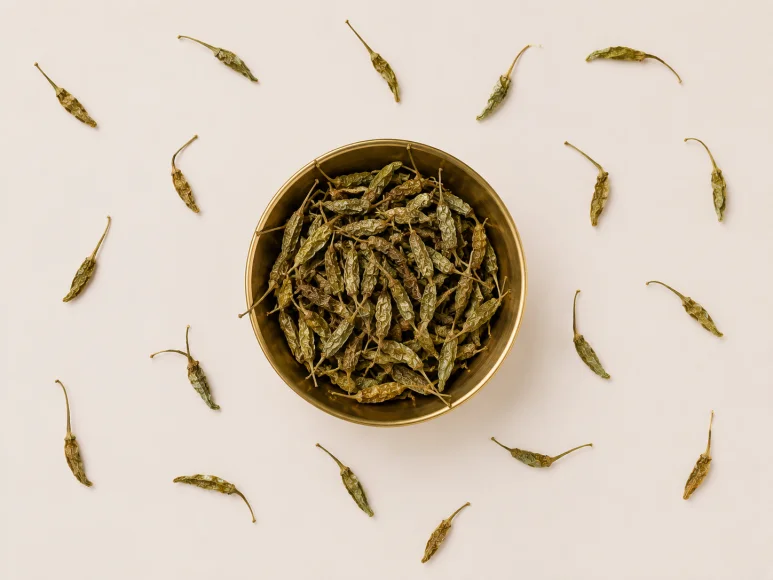
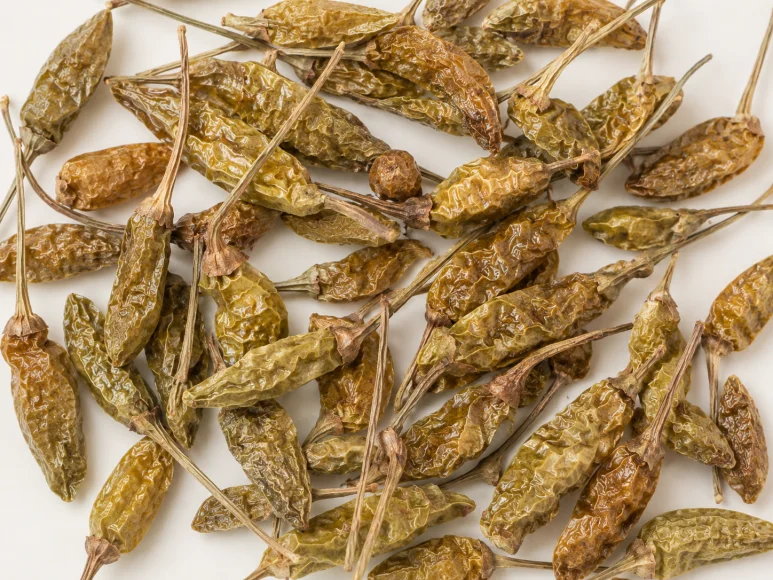
Kanthari Chili: the tiny fireball from the edge of Nagarhole
Kanthari chili (also called kanthari mulaku or bird's eye chili) is a tiny whole dried green chili harvested in the border villages between Kerala and Karnataka, on the outskirts of the Nagarhole Tiger Reserve. Its rule is as simple as it is fierce: the smaller the chili, the hotter it gets. With an intensity of 50,000 to 100,000 Scoville units, it ranks among the hottest chilies in South Indian cooking, while keeping a distinctive fruity edge. We source it directly from smallholder growers in the region so you can discover a chili still largely unknown outside India.
Why choose whole dried chili?
Dried whole rather than crushed, Kanthari chili keeps its essential oils and aromatic intensity far longer than a powder. You can use it as is, crush it at the last moment, or grind it yourself to control exactly how much heat you want: a precision simply not available from a pre-ground chili powder.
Culinary uses:
- Crumbled into a curry or sambar for an immediate, sharp heat
- Essential in Kerala-style achars (pickles) and fiery chutneys
- Infused in hot oil or ghee to flavour sauces and tempering
- Coarsely ground to spice up marinades and fish curries
- Added whole to stir-fried vegetables for a gradual heat
- Use sparingly: a single chili is often enough to spice up an entire dish
Origin and quality:
Our Kanthari chili comes from the border villages of Kerala and Karnataka, on the outskirts of the Nagarhole reserve, where it grows on small family farms. We select it with care, so we can guarantee you a natural, authentic product.
To learn all about this tiny Kerala chili, read our guide to Kanthari chili.
Storage:
To preserve all its heat and aroma, store your Kanthari chili in a dry place, away from light and humidity, in its airtight packaging.
Boosts metabolism
Rich in vitamin C
Antioxidant properties
May relieve pain locally (capsaicin's analgesic effect)
Supports blood circulation
Stimulates the palate and appetite
Supports thermogenesis (natural appetite-suppressing effect)
Supports natural defenses
| Directly selected smallholder producers | No |
| Spice level | Very strong |
| Vegetarian | Yes |
| Origin | Kerala-Karnataka, India |
| Quality | Premium |
| Type | Whole dried chili peppers (green) |
| Taste profile | Very hot chili with a fruity edge, high Scoville intensity (50,000-100,000 SHU). |
| Possible traces of allergens | No major allergens identified. |
Learn more
In Kerala, kanthari mulaku used to grow spontaneously in almost every backyard garden, spread without human intervention: birds swallow the ripe red fruits and scatter the seeds in their droppings, a propagation method that gives this chilli family its English name, "bird's eye chilli".
Used for generations as both a condiment and a folk remedy across South India, kanthari holds a quiet but constant place in Kerala's kitchens, far from the great spice trade routes of black pepper or cardamom, yet just as embedded in everyday home cooking.
A backyard chilli rather than a plantation crop
Unlike chillies grown on large plots for export, kanthari remains above all a household crop: a few plants near the house are enough to supply a family year-round, with the dried surplus keeping through the off-season.
Did you know?
Kanthari belongs to the species Capsicum frutescens, the same as Louisiana's tabasco pepper, rather than Capsicum annuum like most North Indian dried chillies. This botanical detail partly explains its distinctive flavour, more peppery and slightly bitter than fruity.
Like most Indian chillies, kanthari's origin traces back to Mexico: Portuguese explorers introduced it to the Malabar coast in the 16th century, along the same trade route that spread chilli to Africa and Thailand. Kanthari in fact shares its botanical species, Capsicum frutescens, with African piri piri, later popularised by Portuguese cuisine itself.
A rarer white variant
A less common kanthari variant ripens to an ivory white colour rather than red, sometimes sold as "kanthari maluka" by specialist chilli growers. Its flavour stays close to the classic kanthari, but its rarity makes it a curiosity sought by chilli enthusiasts rather than a widely cultivated variety.
The dish that best embodies kanthari in Kerala cuisine remains "kanthari mulaku chammanthi", a mortar-pounded chutney with shallot, garlic and fresh coconut, traditionally served with mashed tapioca, a pairing so deeply rooted in Kerala households that it is often cited as the ultimate comfort dish of the region.
| Characteristic | Detail |
|---|---|
| Latin name | Capsicum frutescens |
| Botanical family | Solanaceae |
| Local name | Kanthari mulaku (Malayalam), bird's eye chilli |
| Part used | Whole dried fruit |
| Main growing region | Kerala, Malabar coast, South India |
Kanthari grows on a small perennial shrub, well suited to Kerala's humid tropical climate. The tiny, pointed fruits turn from green to bright red as they ripen and are picked as they mature, often straight from the hedges bordering gardens.
A plant that seeds itself
- Spreads naturally thanks to birds, which swallow ripe fruits and scatter the seeds
- Needs little care once established, tolerant of the coastal climate's heat and humidity
- Hand-picked fruit by fruit as it ripens
- Sun-dried for long storage outside the harvest season
Did you know?
In the Table Indienne catalogue, kanthari has two far hotter cousins: the dalle khursani from the Himalayas, in the 100,000-350,000 Scoville range, and the Sirarakhong chilli from Manipur, protected by a Geographical Indication and notably milder.
The kanthari plant readily grows semi wild, at forest edges or in clearings, where seeds scattered by birds germinate without human intervention. Once established, a perennial plant can bear fruit for several consecutive years, which explains its quiet but lasting presence in Kerala gardens.
Kanthari sits between 50,000 and 100,000 Scoville Heat Units, a moderate-to-high level of heat, though far from the most extreme chillies. Its small size hides a distinctive flavour, peppery with a slightly bitter finish, quite different from the fruity roundness of other Indian chillies.
A sharp heat that doesn't linger
Unlike chillies whose heat settles in for the long haul, kanthari hits fairly quickly then fades, making it an easy ingredient to dose in a dish or as a table condiment. Dried, it concentrates its characteristic bitterness and gains in intensity.
Some analyses also distinguish between kanthari varieties: the rarer white fruits reportedly show among the highest capsaicin levels in the family, while the more common green and red kanthari sit a notch below, while still remaining far hotter than typical North Indian chillies.
For comparison, Louisiana tabasco pepper (the same botanical species) tops out around 30,000 to 50,000 Scoville units, while kanthari typically climbs between 50,000 and 100,000: notably stronger heat despite the two peppers being direct botanical relatives.
In Kerala, kanthari turns up crumbled into a curry just as often as steeped in a fiery pickle, where its small size allows precise control over the heat.
In Kerala cooking
- Marinated into the traditional pickle, "kanthari uppilittathu", with salt, oil and sometimes lime
- Added whole or crushed to Kerala's coconut milk chicken curry
- Used in thoran, a stir-fry of vegetables or fish with grated coconut
- Taken in small amounts as a table condiment to lift a meal
How to use it at home
- Crumbled sparingly into a sauce or curry near the end of cooking
- Infused into hot oil to make a homemade chilli oil
- Rehydrated for a few minutes before blending into a spice paste
Did you know?
Thoran is one of Kerala's most everyday dishes: finely chopped vegetables or fish, stir-fried with grated coconut, mustard seeds and a few crumbled kanthari. It is often the dish that introduces Kerala children to chilli, in carefully measured amounts.
A home remedy as much as a condiment
In Kerala, kanthari also goes into morum vellam, a traditional drink of fermented buttermilk, ginger, curry leaves and crushed kanthari, prized as refreshing and digestive, served chilled at the end of a meal. Another common preparation is chammanthi: fresh kanthari crushed with shallot, salt and sometimes tamarind, softened with a drizzle of coconut oil, a punchy condiment that accompanies everyday rice.
Like most hot chillies, kanthari owes most of its nutritional interest to its vitamin C content and to capsaicin, the active compound responsible for its heat.
What we know about its composition
- Vitamin C: present in notable amounts in the fresh fruit, as in most chillies
- Capsaicin: the compound responsible for its heat, studied for its thermogenic effect and antioxidant properties
- Traditional use: long used in Kerala folk medicine to stimulate appetite and digestion
- Research: several preliminary studies explore a link between hot chilli consumption and cardiovascular health, but the evidence remains limited and does not concern kanthari specifically
Usage precautions
Despite its small size, kanthari is a genuinely hot chilli (50,000 to 100,000 Scoville Heat Units). Handle it with care, wash your hands thoroughly after cutting it, and avoid any contact with your eyes. Consumed in excess, it may irritate sensitive digestive mucosa.
Beyond the kitchen, oleoresin capsicum extracted from chillies like kanthari is used in warming balms and external preparations traditionally applied for joint and muscle pain (lumbago, rheumatism), diluted for topical use and never as a concentrated internal remedy.
The capsaicin in hot peppers like kanthari is also studied for its possible thermogenic effect, meaning a slight, temporary rise in energy expenditure after consumption. Studies documenting this effect mostly use concentrated extracts at controlled doses, not the amount found in a homemade chammanthi, so it is best read as a scientific curiosity rather than a weight-loss claim.
Quality criteria
- Colour: bright, even red for dried fruits
- Texture: wrinkled but pliable skin, free of mould or white bloom
- Smell: sharp, slightly peppery scent as soon as opened
Storage tips
- In an airtight container, away from light and moisture
- Shelf life: about 1 year when stored well
- Always handle with care, gloves recommended
Fresh kanthari keeps only a few days refrigerated; full drying is what makes year round enjoyment possible, the form Table Indienne offers.
Is kanthari chilli very hot?
It sits between 50,000 and 100,000 Scoville Heat Units, a moderate-to-high level, though far from extreme chillies like the Himalayan dalle khursani. Its peppery, slightly bitter flavour stands out as much as its heat.
How is kanthari pickle made?
Kanthari uppilittathu is a traditional Kerala pickle made by marinating whole chillies in salt, oil and sometimes lime. It accompanies rice and curries in small amounts.
What is thoran?
Thoran is a stir-fry of finely chopped vegetables or fish with grated coconut, typical of Kerala, often seasoned with a few crumbled kanthari and mustard seeds.
What is the difference between kanthari and other Indian chillies?
Kanthari belongs to the species Capsicum frutescens, like tabasco, while most North Indian dried chillies are Capsicum annuum. Its very small size and its self-propagation by birds in Kerala gardens also make it a household crop rather than a plantation one.
How do I use dried kanthari in cooking?
Crumble it sparingly into a curry or sauce near the end of cooking, infuse it into hot oil for a homemade chilli oil, or rehydrate it for a few minutes before blending into a spice paste.
Is kanthari the same family as African piri piri?
Yes, both belong to the same botanical species, Capsicum frutescens, introduced to Africa and India by Portuguese explorers from Mexico in the 16th century. Their kinship explains a fairly similar heat and aroma profile, even though culinary uses later evolved separately.
What is morum vellam?
A traditional Kerala drink made from fermented buttermilk, ginger, curry leaves and crushed kanthari, served chilled at the end of a meal for its reputed digestive benefits. It is one of the oldest uses of kanthari outside of everyday savoury cooking.
-
In Kerala, kanthari mulaku used to grow spontaneously in almost every backyard garden, spread without human intervention: birds swallow the ripe red fruits and scatter the seeds in their droppings, a propagation method that gives this chilli family its English name, "bird's eye chilli".
Used for generations as both a condiment and a folk remedy across South India, kanthari holds a quiet but constant place in Kerala's kitchens, far from the great spice trade routes of black pepper or cardamom, yet just as embedded in everyday home cooking.
A backyard chilli rather than a plantation crop
Unlike chillies grown on large plots for export, kanthari remains above all a household crop: a few plants near the house are enough to supply a family year-round, with the dried surplus keeping through the off-season.
Did you know?
Kanthari belongs to the species Capsicum frutescens, the same as Louisiana's tabasco pepper, rather than Capsicum annuum like most North Indian dried chillies. This botanical detail partly explains its distinctive flavour, more peppery and slightly bitter than fruity.
Like most Indian chillies, kanthari's origin traces back to Mexico: Portuguese explorers introduced it to the Malabar coast in the 16th century, along the same trade route that spread chilli to Africa and Thailand. Kanthari in fact shares its botanical species, Capsicum frutescens, with African piri piri, later popularised by Portuguese cuisine itself.
A rarer white variant
A less common kanthari variant ripens to an ivory white colour rather than red, sometimes sold as "kanthari maluka" by specialist chilli growers. Its flavour stays close to the classic kanthari, but its rarity makes it a curiosity sought by chilli enthusiasts rather than a widely cultivated variety.
The dish that best embodies kanthari in Kerala cuisine remains "kanthari mulaku chammanthi", a mortar-pounded chutney with shallot, garlic and fresh coconut, traditionally served with mashed tapioca, a pairing so deeply rooted in Kerala households that it is often cited as the ultimate comfort dish of the region.
-
Characteristic Detail Latin name Capsicum frutescens Botanical family Solanaceae Local name Kanthari mulaku (Malayalam), bird's eye chilli Part used Whole dried fruit Main growing region Kerala, Malabar coast, South India Kanthari grows on a small perennial shrub, well suited to Kerala's humid tropical climate. The tiny, pointed fruits turn from green to bright red as they ripen and are picked as they mature, often straight from the hedges bordering gardens.
A plant that seeds itself
- Spreads naturally thanks to birds, which swallow ripe fruits and scatter the seeds
- Needs little care once established, tolerant of the coastal climate's heat and humidity
- Hand-picked fruit by fruit as it ripens
- Sun-dried for long storage outside the harvest season
Did you know?
In the Table Indienne catalogue, kanthari has two far hotter cousins: the dalle khursani from the Himalayas, in the 100,000-350,000 Scoville range, and the Sirarakhong chilli from Manipur, protected by a Geographical Indication and notably milder.
The kanthari plant readily grows semi wild, at forest edges or in clearings, where seeds scattered by birds germinate without human intervention. Once established, a perennial plant can bear fruit for several consecutive years, which explains its quiet but lasting presence in Kerala gardens.
-
Kanthari sits between 50,000 and 100,000 Scoville Heat Units, a moderate-to-high level of heat, though far from the most extreme chillies. Its small size hides a distinctive flavour, peppery with a slightly bitter finish, quite different from the fruity roundness of other Indian chillies.
A sharp heat that doesn't linger
Unlike chillies whose heat settles in for the long haul, kanthari hits fairly quickly then fades, making it an easy ingredient to dose in a dish or as a table condiment. Dried, it concentrates its characteristic bitterness and gains in intensity.
Some analyses also distinguish between kanthari varieties: the rarer white fruits reportedly show among the highest capsaicin levels in the family, while the more common green and red kanthari sit a notch below, while still remaining far hotter than typical North Indian chillies.
For comparison, Louisiana tabasco pepper (the same botanical species) tops out around 30,000 to 50,000 Scoville units, while kanthari typically climbs between 50,000 and 100,000: notably stronger heat despite the two peppers being direct botanical relatives.
-
In Kerala, kanthari turns up crumbled into a curry just as often as steeped in a fiery pickle, where its small size allows precise control over the heat.
In Kerala cooking
- Marinated into the traditional pickle, "kanthari uppilittathu", with salt, oil and sometimes lime
- Added whole or crushed to Kerala's coconut milk chicken curry
- Used in thoran, a stir-fry of vegetables or fish with grated coconut
- Taken in small amounts as a table condiment to lift a meal
How to use it at home
- Crumbled sparingly into a sauce or curry near the end of cooking
- Infused into hot oil to make a homemade chilli oil
- Rehydrated for a few minutes before blending into a spice paste
Did you know?
Thoran is one of Kerala's most everyday dishes: finely chopped vegetables or fish, stir-fried with grated coconut, mustard seeds and a few crumbled kanthari. It is often the dish that introduces Kerala children to chilli, in carefully measured amounts.
A home remedy as much as a condiment
In Kerala, kanthari also goes into morum vellam, a traditional drink of fermented buttermilk, ginger, curry leaves and crushed kanthari, prized as refreshing and digestive, served chilled at the end of a meal. Another common preparation is chammanthi: fresh kanthari crushed with shallot, salt and sometimes tamarind, softened with a drizzle of coconut oil, a punchy condiment that accompanies everyday rice.
-
Like most hot chillies, kanthari owes most of its nutritional interest to its vitamin C content and to capsaicin, the active compound responsible for its heat.
What we know about its composition
- Vitamin C: present in notable amounts in the fresh fruit, as in most chillies
- Capsaicin: the compound responsible for its heat, studied for its thermogenic effect and antioxidant properties
- Traditional use: long used in Kerala folk medicine to stimulate appetite and digestion
- Research: several preliminary studies explore a link between hot chilli consumption and cardiovascular health, but the evidence remains limited and does not concern kanthari specifically
Usage precautions
Despite its small size, kanthari is a genuinely hot chilli (50,000 to 100,000 Scoville Heat Units). Handle it with care, wash your hands thoroughly after cutting it, and avoid any contact with your eyes. Consumed in excess, it may irritate sensitive digestive mucosa.
Beyond the kitchen, oleoresin capsicum extracted from chillies like kanthari is used in warming balms and external preparations traditionally applied for joint and muscle pain (lumbago, rheumatism), diluted for topical use and never as a concentrated internal remedy.
The capsaicin in hot peppers like kanthari is also studied for its possible thermogenic effect, meaning a slight, temporary rise in energy expenditure after consumption. Studies documenting this effect mostly use concentrated extracts at controlled doses, not the amount found in a homemade chammanthi, so it is best read as a scientific curiosity rather than a weight-loss claim.
-
Quality criteria
- Colour: bright, even red for dried fruits
- Texture: wrinkled but pliable skin, free of mould or white bloom
- Smell: sharp, slightly peppery scent as soon as opened
Storage tips
- In an airtight container, away from light and moisture
- Shelf life: about 1 year when stored well
- Always handle with care, gloves recommended
Fresh kanthari keeps only a few days refrigerated; full drying is what makes year round enjoyment possible, the form Table Indienne offers.
-
Is kanthari chilli very hot?
It sits between 50,000 and 100,000 Scoville Heat Units, a moderate-to-high level, though far from extreme chillies like the Himalayan dalle khursani. Its peppery, slightly bitter flavour stands out as much as its heat.
How is kanthari pickle made?
Kanthari uppilittathu is a traditional Kerala pickle made by marinating whole chillies in salt, oil and sometimes lime. It accompanies rice and curries in small amounts.
What is thoran?
Thoran is a stir-fry of finely chopped vegetables or fish with grated coconut, typical of Kerala, often seasoned with a few crumbled kanthari and mustard seeds.
What is the difference between kanthari and other Indian chillies?
Kanthari belongs to the species Capsicum frutescens, like tabasco, while most North Indian dried chillies are Capsicum annuum. Its very small size and its self-propagation by birds in Kerala gardens also make it a household crop rather than a plantation one.
How do I use dried kanthari in cooking?
Crumble it sparingly into a curry or sauce near the end of cooking, infuse it into hot oil for a homemade chilli oil, or rehydrate it for a few minutes before blending into a spice paste.
Is kanthari the same family as African piri piri?
Yes, both belong to the same botanical species, Capsicum frutescens, introduced to Africa and India by Portuguese explorers from Mexico in the 16th century. Their kinship explains a fairly similar heat and aroma profile, even though culinary uses later evolved separately.
What is morum vellam?
A traditional Kerala drink made from fermented buttermilk, ginger, curry leaves and crushed kanthari, served chilled at the end of a meal for its reputed digestive benefits. It is one of the oldest uses of kanthari outside of everyday savoury cooking.
Why choose Dried Kanthari Chili from La Table Indienne?

Exceptional freshness and quality
Our spices are imported directly from India and packaged on demand to guarantee optimal freshness. Unlike spices sold in supermarkets that can sit on shelves for months, we ensure each spice retains its full flavor and aroma.
Authenticity and traceability
Each spice comes from specific regions in India renowned for their expertise. We work directly with local producers who grow their spices traditionally.
How to best use this spice?
To reveal all the aromas, we recommend lightly toasting whole spices in a dry pan before grinding them. Store them in a dry place away from light to preserve their freshness as long as possible.

Did you know?
Whole spices are much better than ground spices
Check out our blog article to discover why whole spices retain their aromas better.
Questions & Answers
Thank you! Your question has been sent. Mihika will answer soon and you will receive an email.
Discover also
Other products you might like