



In a previous article, we explained why "curry powder" does not really exist in India. That does not mean the blend is useless: it is a practical, versatile tool, as long as you know what it actually contains and make it yourself rather than buying a standardized industrial version. Here is our homemade recipe, and what you should understand before making it.
A British invention, not an Indian spice
The term "curry powder" was coined in the 18th century by British colonists, who wanted to export and reproduce back home the taste of the Indian dishes they were discovering. Unable to bring back the dozens of regional and family blends that actually existed, they standardized a single powder meant to represent "the" taste of India. This product never existed as such in Indian households: it is an export invention, designed for the British market and later the global one.
In India, nobody ever talks about "curry powder": every dish, every region, every family has its own balance of spices, prepared according to the recipe and the moment.
Curry powder or garam masala: what is the difference?
The two are often confused, even though they have neither the same origin nor the same composition. We cover this distinction in detail in our article on curry powder versus garam masala. In short: curry powder always contains a large amount of turmeric, which gives it its characteristic yellow colour, and sometimes chilli and chickpea flour to thicken sauces. Garam masala, on the other hand, never contains turmeric and varies enormously from one household to another: we show you how to make it in our homemade garam masala recipe.
Why make your own curry powder
Supermarket curry powders are often made from spices that were ground long ago, sometimes with added anti-caking agents or flavour enhancers. Making it yourself from whole, freshly roasted spices gives a far more aromatic blend, free of additives, that you can adjust to your own taste: milder or spicier, as you prefer.
Our whole spices come from smallholder farmers in India, and are chosen for freshness rather than price.
The spices in this recipe
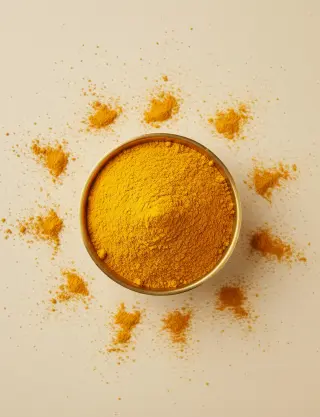
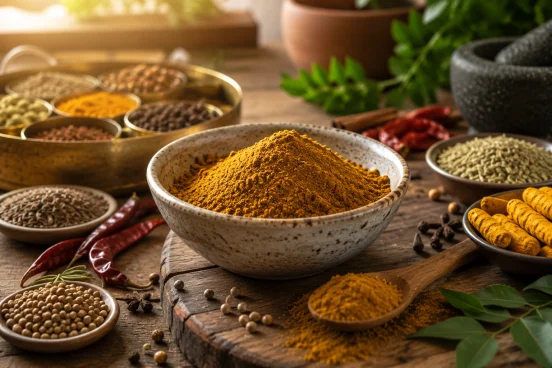
- Turmeric: the base of any curry powder, giving it both its colour and much of its identity. We recommend our Lakadong turmeric, known for its high curcumin content.
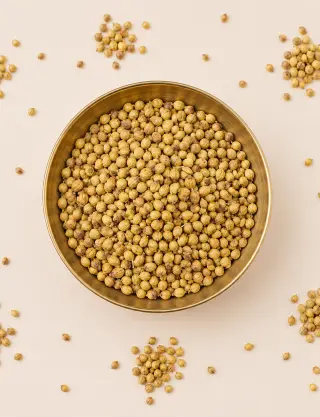
- Coriander seeds: add body and a subtle citrus note that softens the blend. See our coriander seeds.
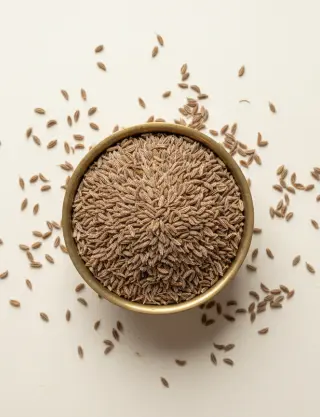
- Cumin seeds: warm and earthy, they add depth. Our whole cumin seeds roast particularly well.
- Fenugreek: in small amounts, its slightly bitter, slightly sweet seeds bring the familiar "curry" taste many people recognise in the West. It is often the missing ingredient in homemade blends. See our fenugreek seeds.
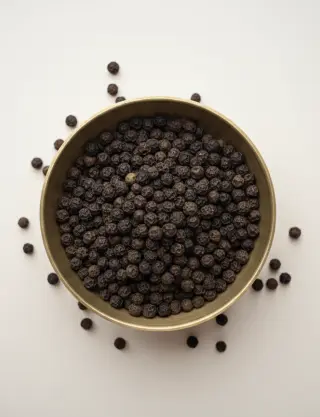
- Black pepper: lifts the whole blend and even helps the body absorb turmeric's curcumin better. Discover our black pepper.
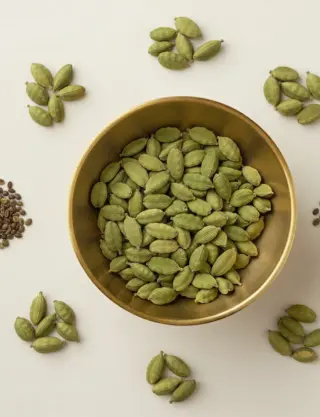
- Green cardamom: optional, but it adds a floral note that softens the blend. Find our green cardamom pods.
- Dried chilli (optional): add according to how much heat you want. Many curry powders sold in Europe include it to compensate for a lack of aroma. We recommend our Kashmiri red chili, valued for its colour and mild heat.
The method: dry roasting then grinding
As with garam masala, the golden rule is to start from whole spices and dry-roast them in a pan with no oil, over medium heat, for 2 to 4 minutes while stirring constantly. This step releases the essential oils and gives a far more fragrant result than a blend made from spices that were already ground. We cover the full technique in our guide on how to roast spices. Turmeric itself is roasted very briefly on its own, over low heat, since it burns quickly.
Once the spices have cooled, grind them together in a dedicated coffee grinder or a mortar for smaller amounts, then stir in the ground turmeric at the end.
Indicative proportions for a homemade blend
Here is a starting base for about 4 tablespoons of homemade curry powder: 3 tablespoons of ground turmeric, 2 tablespoons of coriander seeds, 1 tablespoon of cumin seeds, 1 teaspoon of fenugreek seeds, 1 teaspoon of black peppercorns, and 4 to 5 green cardamom pods. Add dried chilli to taste. Roast each whole spice separately, let them cool, grind them together, then stir in the turmeric.
How to use homemade curry powder
This blend is not the one used in traditional Indian dishes, but it is an excellent shortcut for quick preparations: sautéed vegetables, lentils, marinades, or Indian-inspired Western dishes. Unlike garam masala, which is usually added at the end of cooking, homemade curry powder behaves like a base spice mix and can be used from the very start, bloomed in hot oil as a tadka, or stirred directly into a sauce.
Storage
Store your homemade curry powder in an airtight jar, away from light and moisture, ideally in a masala dabba. Used within two to three months, it keeps its full fragrance; beyond that, it gradually loses intensity without becoming unsafe to eat.
Table Indienne: whole spices for a homemade curry powder
We offer all the whole spices needed to prepare a quality homemade curry powder, chosen for freshness rather than price. And if you want to discover the blend actually used in traditional Indian cooking, our article on homemade garam masala is the best next step.