



Curry powder or garam masala? This is one of the questions that comes up most often when people start exploring Indian cooking. Both names conjure up spices, India, warm flavours, and yet they refer to very different things. One is a British colonial invention; the other is a culinary tradition centuries old. One goes in at the start of cooking; the other is sprinkled on at the end. Understanding the difference is a decisive step towards more authentic Indian cuisine.
Curry powder: a British invention
Despite what its name might suggest, "curry powder": the yellow spice blend found in every Western supermarket: is not a traditional Indian preparation. It is a British invention, born in the eighteenth century during the colonial period in India.
British colonists returning home wanted to recreate the spiced flavours of the Indian dishes they had discovered abroad. But Indian cooking is a cuisine of homemade blends, family secrets, and spices roasted and ground fresh for each dish: impossible to standardise in a tin. British spice merchants therefore created a single, all-purpose blend intended to evoke "the taste of India". That blend became curry powder.
Its composition varies between brands, but typically includes:
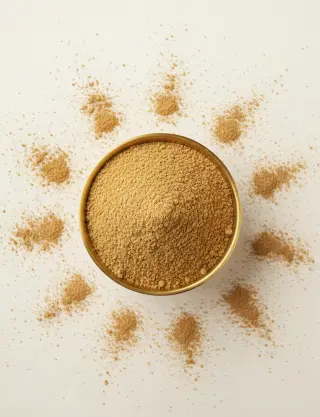
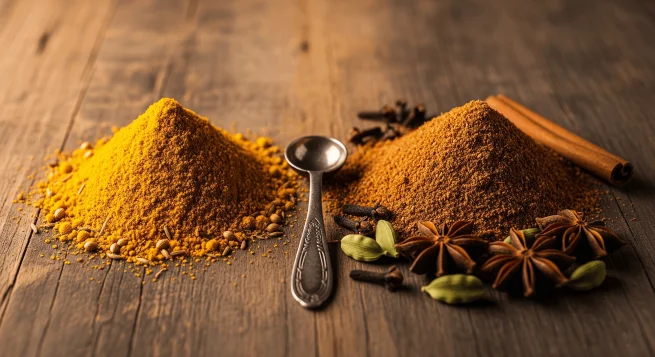
- Turmeric: used in large quantities; it is what gives curry powder its characteristic yellow colour.
- Coriander: brings a mild, slightly citrusy note.
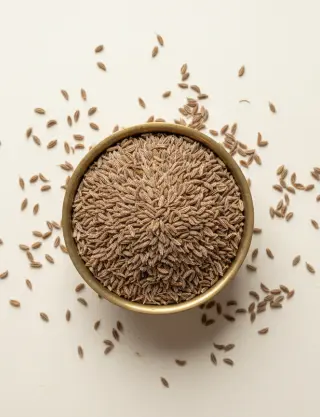
- Cumin: earthy and warm, it forms the aromatic backbone of the blend.
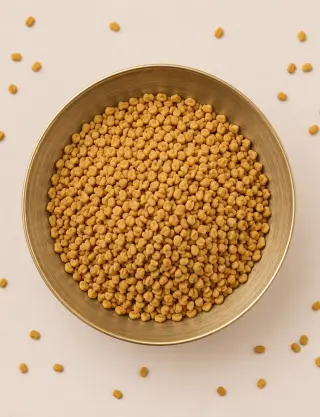
- Fenugreek: slightly bitter, it gives curry powder its characteristic edge.
- Chilli: for heat, in varying amounts depending on the blend.
In India, the word "curry" refers to a sauced dish: not a spice. Indian cooks do not use "curry powder": they compose their own blends, different for each dish, each region, each family.
There is one essential point to remember: curry powder is not an Indian product. It is a Western simplification: useful as a starting point, but one that does not reflect the true richness of the cuisine of the subcontinent.
Garam masala: an authentically Indian blend
Garam masala, by contrast, is a preparation deeply rooted in the culinary tradition of northern India. Its name comes from Hindi: garam means "warm" and masala means "spice blend". This is not a fiery heat but an aromatic warmth in the Ayurvedic sense: spices that "warm" the body from within.
Unlike curry powder, garam masala has no fixed composition. Each region of northern India, each family, each cook has their own recipe, passed down from generation to generation. It is precisely this variety that makes it so rich. That said, certain ingredients appear consistently:
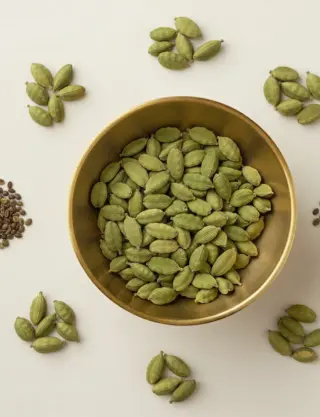
- Green cardamom: floral and fresh, it lends an almost sweet quality.
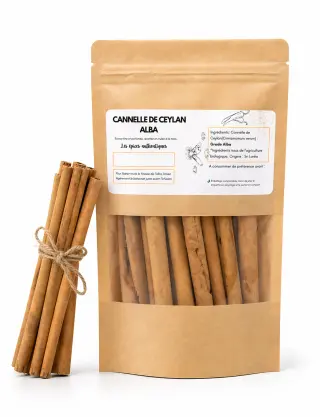
- Ceylon cinnamon: gentle and delicate, very different from the sharper cassia cinnamon.
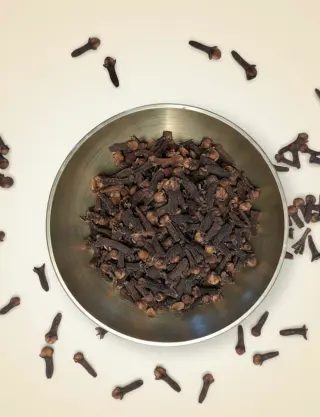
- Cloves: intense and slightly numbing, they form the structural core of the blend.
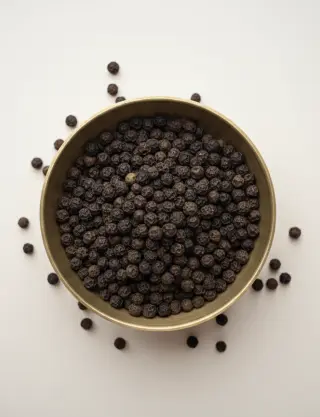
- Black pepper: provides a direct, frank heat.
- Cumin: earthy and deep, it forms the base of the blend.
- Nutmeg: warm and slightly sweet, it rounds out the ensemble.
- Bay leaves: subtle but essential for aromatic depth.
Garam masala contains no turmeric. This is one of the most reliable ways to tell the two blends apart: if your preparation is bright yellow, it is curry powder, not garam masala.
The key differences between curry powder and garam masala
Here are the essential distinctions to keep in mind so you never confuse the two again:
- Origin: curry powder is an eighteenth-century British invention; garam masala is a traditional North Indian blend.
- Colour: curry powder is bright yellow thanks to turmeric; garam masala is dark brown and contains no turmeric.
- When to add it: curry powder goes in at the start of cooking to infuse the dish; garam masala is sprinkled in at the end of cooking to preserve its delicate aromas.
- Flavour profile: curry powder is earthy, yellow, relatively mild and uniform; garam masala is warm, aromatic, complex, with woody and floral notes.
- Quantity: curry powder can be used quite generously; garam masala is used in small amounts: a single pinch often suffices to transform a dish.
A useful analogy: if curry powder is the broad brush that colours and builds the flavours of a dish, garam masala is the fine stroke that signs it just before serving.
Indian cuisine is far more than these two blends
One of the most widespread misconceptions in the West is the idea that "Indian spices" means curry. In reality, Indian cuisine is a world of extraordinarily varied blends, specific to each region, season, and dish. Garam masala is just one example among dozens.
- Tandoori masala: a vivid, colourful blend (owing to Kashmiri chilli) used for tandoor marinades.
- Chaat masala: sharp and tangy (thanks to dried mango and amchur powder), used to season street snacks, salads, and fruit juices.
- Panch phoron: the "Bengali five-spice", made from whole seeds (nigella, fenugreek, fennel, black cumin, black mustard), used whole in hot oil.
- Sambar powder: a spiced South Indian blend, the essential base of sambar, a lentil and vegetable soup.
These blends have nothing in common with one another. They reflect a spice culture of extraordinary richness and precision that the simple word "curry" cannot begin to capture.
How to use each one in your cooking
If you want to cook Indian food in a more authentic way, here are some practical tips.
For curry powder: if a Western recipe calls for curry powder, you can easily replace it or build on it by adding turmeric, ground cumin, and ground coriander separately. The result will be far more nuanced and less "one-dimensional".
For garam masala: sprinkle it in right at the end of cooking, or even after turning off the heat. Half a teaspoon is enough to perfume a dish for four people. Too much garam masala cooked for too long can make a dish bitter: it is a spice to use with a light touch, more like a finishing perfume than a sauce base.
The two blends can also complement each other in the same recipe: curry powder (or individual spices) builds the underlying flavours at the start of cooking; garam masala, added at the end, provides the depth and aromatic signature of the finished dish.
The golden rule of garam masala: less is more. A small pinch added off the heat turns an ordinary dish into something memorable.
Table Indienne's garam masala
At Table Indienne, we offer a garam masala crafted following a traditional North Indian recipe, using carefully selected whole spices. Each ingredient (green cardamom, Ceylon cinnamon, cloves, black pepper, cumin, nutmeg) is chosen for its quality and aromatic intensity before being assembled and ground.
The advantage of starting with high-quality whole spices is a freshness and complexity that industrial blends simply cannot replicate. Whole spices retain their essential oils far longer than pre-ground powders, and it is in those oils that all the aromatic power resides.
If you would like to go further and compose your own garam masala at home, all of the whole spices that make it up are also available individually in our shop: green cardamom, Ceylon cinnamon, cloves, cumin seeds, and black pepper. A wonderful way to discover each spice on its own terms before blending them to your taste.