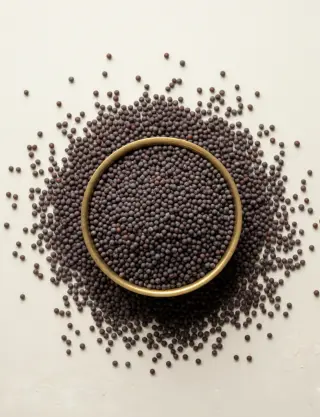




Kapok Buds
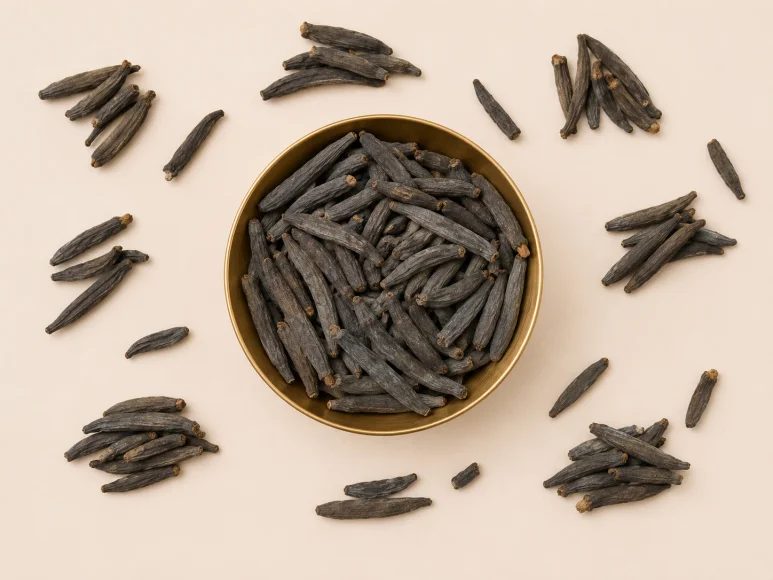
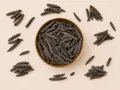
Discover our kapok buds, dried flower buds of the kapok tree, harvested in Karnataka and Andhra Pradesh. Woody, slightly bitter and earthy, with notes of mustard and black pepper to flavour your sambar and rasam powders and Karnataka's slow-cooked dishes.
-
Kapok Buds (Marathi Moggu): the secret spice of Karnataka cuisine
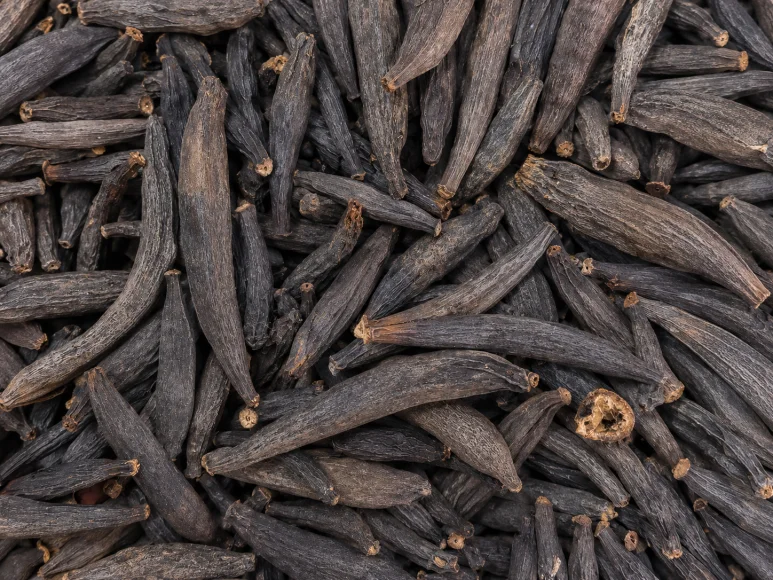
Marathi moggu, or kapok bud, is the dried flower bud of the kapok tree (Bombax ceiba), the silk-cotton tree native to South India. Harvested before blooming in the Karnataka and Andhra Pradesh regions, it is sun-dried and then used as a spice in its own right — a rare and little-known use outside India. We source it directly from growers in the region so you can discover this little-known spice.
Why is marathi moggu always roasted before use?
Unlike most spices, kapok buds are never used raw: they are always dry-roasted and then ground with other spices before being added to dishes. This roasting step develops its powerful woody aroma and softens its natural bitterness, revealing notes somewhere between mustard and black pepper.
Culinary uses:
- A signature ingredient in bisibelebath, Karnataka's spiced lentil rice
- Used in saagu, a coconut-based mixed vegetable stew
- Essential to vangi bath, Karnataka's fragrant aubergine rice
- Goes into homemade sambar powder blends
- Flavours rasam powders with a distinctive woody note
- Always dry-roasted before being ground with the rest of the spice blend
Origin and quality:
Our kapok buds come from the Karnataka and Andhra Pradesh regions, hand-harvested on small farms. Our growers grow without pesticides, so we can guarantee you a natural, authentic spice.
To understand why this spice is always roasted before use, read our guide to marathi moggu.
Storage:
To preserve all its aromas, store your kapok buds in a dry place, away from light and humidity, in their airtight packaging.
-
Directly selected smallholder producers No Pesticides free Yes Vegetarian Yes Origin Karnataka and Andhra Pradesh, India Quality Premium Type Whole dried buds Taste profile A cross between mustard and black pepper, with a powerful woody aroma, slightly bitter and earthy. Always roasted before use. Possible traces of allergens No inherent allergens; may contain traces of mustard and celery (packaged in a facility shared with other spices).
Learn more
Unlike spices such as cardamom or pepper, marathi moggu has no documented ancient written history: no Sanskrit text, no trade chronicle appears to mention it under this name before modern times. Its story is above all an oral, domestic one, rooted in the kitchens of Karnataka and Andhra Pradesh, where picking these buds remains a family skill passed down through generations rather than a structured commercial supply chain.
A name that puzzles Indians too
The name marathi moggu surprises Indians themselves: why would a spice from Karnataka and Andhra Pradesh carry the name of Marathi, a language spoken hundreds of kilometers away in Maharashtra? The question comes up regularly on Indian food forums and blogs, without a definitive answer. The most commonly cited explanation is purely linguistic: in Kannada, the language of Karnataka, moggu simply means "bud", so the word likely has nothing to do with the Marathi people, despite the striking resemblance.
This etymological haze is nothing unusual in the world of regional Indian spices, where the same product can carry very different names from one state to another, sometimes inherited from old trade routes, sometimes from simple coincidence. What is certain, however, is the geographic anchor of its culinary use: it is in the kitchens of Karnataka, and to a lesser extent Andhra Pradesh and Tamil Nadu (through Chettinad blends), that marathi moggu has its true living history.
Did you know?
- "Moggu" simply means "bud" in Kannada: the spice's name is literally "Marathi bud," with no proven link to Maharashtra
- Marathi moggu is sometimes mistaken for a caper by its shape and preparation, though it is actually a tree flower bud, not a caper-bush button
- It is one of the least-known secrets of Andhra Kodi Pulao, a regional variant of chicken biryani
- The kapok tree (Bombax ceiba) that produces it is also called the "red silk cotton tree," after its vivid red flowers and the silky fiber of its seeds, a fiber with no culinary use, however
- It should not be confused with textile kapok (pillow-stuffing fiber), which most often comes from a different tree, Ceiba pentandra; in Indian cooking, only the dried flower bud of Bombax ceiba is used as a spice
Marathi moggu across languages
| Language | Name |
|---|---|
| English | Kapok buds · Marathi moggu |
| Kannada | Marathi moggu (ಮರಾಠಿ ಮೊಗ್ಗು): "moggu" = bud |
| Telugu | Marathi mogga |
| Hindi | Shalmali · Semul ki kali |
| French | Marathi moggu · Bourgeon de kapok |
| Botanical Latin | Bombax ceiba L. |
| Characteristic | Detail |
|---|---|
| Latin name | Bombax ceiba L. (syn. Bombax malabaricum) |
| Botanical family | Malvaceae, subfamily Bombacoideae |
| Common tree names | Red silk cotton tree · Semal (Hindi) |
| Part used | Dried flower bud, picked before it opens |
| Producing regions | Karnataka (majority), Andhra Pradesh, to a lesser extent Tamil Nadu and Kerala |
| Production method | Family harvesting, often from isolated trees at field or village edges rather than dedicated plantations |
| Preparation before sale | Sun-dried until a hard, dark brown-black bud is obtained |
The red silk cotton tree is a tall deciduous tree, sometimes over 20 meters high, recognizable in late winter by its fleshy, vivid red flowers that appear before the leaves. It grows wild across much of India, often standing alone (at the edge of fields, roads or villages) rather than in an organized orchard. This scattered growth partly explains why marathi moggu remains a local, family-gathered spice, never having become a large-scale plantation crop like cardamom or pepper.
A tree with many uses, a spice with a narrow market
- Flowers: used fresh as a vegetable in some parts of India, and in traditional medicine (Ayurveda, Siddha, Unani)
- Buds: dried, this is the part used as a spice, marathi moggu itself
- Seed fiber: textile kapok, used for stuffing, most often comes from a different tree (Ceiba pentandra); Bombax ceiba's fiber exists but is little exploited commercially
- Bark and gum: used in traditional medicine for their astringent properties
A niche spice, not a mass-market product
Unlike cardamom, cumin or turmeric, marathi moggu has never had a structured export trade or international recognition. Available volumes remain modest, harvesting depends on scattered trees rather than intensive cultivation, and demand stays concentrated among the South Indian diaspora and lovers of authentic regional cooking. This very rarity is what gives it character, but also means it should not be expected to be easy to find outside South India.
Marathi moggu perfectly illustrates the idea that a spice should never be judged raw. Unroasted, the dried bud is earthy, harsh and slightly bitter, an unappealing profile that explains why it is never used as is. It is dry-roasting, or a quick pass in hot oil or ghee, that reveals its true character: a powerful woody aroma, often described as a cross between mustard and black pepper, with a faint smoky note and a bitterness that softens without fully disappearing.
Tasting notes
| Stage | Perceived notes |
|---|---|
| Raw bud | Earthy, harsh, unpleasant bitterness; never consumed at this stage |
| Dry-roasted bud | Woody, mustard-black pepper cross, faint smoky note |
| Fried in oil or ghee | Rounder aroma, diffused through the fat; the traditional tempering method |
| Ground with other spices | Blends in discreetly, adds depth without dominating the mix |
Chef's tip
Always dry-roast marathi moggu, or fry it briefly in a little ghee, over medium heat until it releases its woody aroma, about thirty seconds is usually enough. Never let it burn: as with many roasted spices, the bitterness turns acrid past that point. It is almost always used alongside other spices (cinnamon, cardamom, cloves) rather than alone, which further softens its profile.
Marathi moggu is a background spice, never the star of a dish, but often the ingredient that sets an authentic Karnataka or Andhra Pradesh recipe apart from a standardized version.
Karnataka cuisine
- Bisibelebath: Karnataka's iconic spiced lentil rice, where roasted marathi moggu goes into the homemade spice paste
- Vangi bath: fragrant eggplant rice, prepared for festive meals
- Saagu: coconut-simmered vegetable stew, often served with dosa or rice
- Homemade sambar and rasam powders: a few roasted buds ground with coriander, dried chili and other spices
Andhra Pradesh and Tamil Nadu cuisine
- Andhra Kodi Pulao: one of the lesser-known secrets of this regional chicken biryani variant
- Chettinad spice blends: alongside black stone flower (kalpasi), to season biryanis and simmered curries
How to use it
- Always roast or fry before use; never used raw
- Dry-roast in a hot pan, or fry in oil/ghee at the start of tempering
- Grind with other roasted spices (cinnamon, cloves, cardamom) rather than alone
- Use sparingly: its woody bitterness is powerful even in small amounts
A distant cousin of clove and pepper, with no botanical link
By its dark, gnarled shape, marathi moggu is often visually mistaken for a clove or a misshapen black peppercorn. Yet it shares no botanical kinship with either: cloves are the flower bud of the clove tree (Syzygium aromaticum), pepper the fruit of a vine (Piper nigrum), while marathi moggu comes from a tall tree of the Malvaceae family.
Marathi moggu has not been the subject of dedicated scientific studies as a culinary spice; unlike cumin, fenugreek or cardamom, its consumption remains too niche and localized to have attracted clinical research. Caution is therefore warranted with any health claim about it.
The tree that produces it, Bombax ceiba, is however well documented in traditional Indian medicine (Ayurveda, Siddha, Unani), where its flowers, bark and gum (not specifically the dried buds used in cooking) have long been used for their traditionally described astringent, cooling and diuretic properties.
What the research does (and does not) say
A few recent laboratory studies have looked at concentrated Bombax ceiba flower extracts (not the dried bud as used in cooking), suggesting promising but preliminary anti-inflammatory and antidiabetic leads. These findings concern laboratory extracts at concentrated doses, unrelated to the tiny amounts of roasted marathi moggu used in a dish. We therefore make no health claims about this spice: to date, no reliable data allows attributing a specific benefit to its culinary consumption.
We believe this honesty is more useful than a list of benefits with no solid grounding: marathi moggu deserves to be chosen for its distinctive taste and cultural role, not for unproven virtues.
Quality criteria
- Color: uniform dark brown to black buds; grayish tones or a powdery texture indicate storage that was too long or too humid
- Hardness: quality buds are hard and dry to the touch, never soft or spongy
- Size: evenly sized buds, without too many stems or debris
- Aroma: while dry, the smell stays discreet; it is roasting that should reveal the woody aroma, not the bag itself
Storage tips
- Keep whole buds in an airtight jar, away from light and moisture
- Thanks to their hard shell, they keep for several years without losing their aromatic qualities, unlike a pre-ground powder, which is far more fragile
- Only roast and grind just before use, to preserve the intensity of the woody aroma
- Avoid any contact with moisture, which softens the bud and encourages mold growth
Why is a Karnataka spice called marathi moggu?
The link to Maharashtra remains uncertain. The most common explanation is linguistic: in Kannada, moggu simply means bud. The name is confusing, but the spice genuinely comes from Karnataka and Andhra Pradesh, not Maharashtra.
Can marathi moggu be used raw?
No, never. Raw, it is earthy and bitter, with no culinary appeal. It must always be dry-roasted or fried in oil or ghee before being ground or added to a dish.
Is marathi moggu related to the kapok used for pillow stuffing?
Not directly. Textile kapok most often comes from a different tree, Ceiba pentandra. The marathi moggu used in cooking is the dried flower bud of Bombax ceiba, a distinct species in the same broad botanical family. In Indian cooking, only the dried bud is used; never the fiber.
What can I substitute for marathi moggu if I cannot find it?
There is no exact substitute, since its woody, half-mustard half-pepper profile is unique. As a distant approximation, some cooks use a roasted mix of black mustard seeds and black pepper, though the result will still differ.
Is marathi moggu a common spice in India?
No, it is a niche spice even in India. It remains concentrated in the kitchens of Karnataka and, to a lesser extent, Andhra Pradesh and Tamil Nadu, and many Indian cooks from other regions have never heard of it.
How do you recognize good-quality marathi moggu?
A good bud is hard, dry, and a uniform dark brown to black, with no trace of mold or soft texture. Its size should be even, and its aroma, discreet when raw, should fully emerge on roasting.
Does marathi moggu have health benefits?
No dedicated scientific study exists on the dried bud as consumed in cooking. The tree (Bombax ceiba) is used in traditional Indian medicine for its flowers, bark and gum, but we prefer to stay honest: to date, no reliable data allows attributing a specific benefit to marathi moggu's culinary consumption.
-
Unlike spices such as cardamom or pepper, marathi moggu has no documented ancient written history: no Sanskrit text, no trade chronicle appears to mention it under this name before modern times. Its story is above all an oral, domestic one, rooted in the kitchens of Karnataka and Andhra Pradesh, where picking these buds remains a family skill passed down through generations rather than a structured commercial supply chain.
A name that puzzles Indians too
The name marathi moggu surprises Indians themselves: why would a spice from Karnataka and Andhra Pradesh carry the name of Marathi, a language spoken hundreds of kilometers away in Maharashtra? The question comes up regularly on Indian food forums and blogs, without a definitive answer. The most commonly cited explanation is purely linguistic: in Kannada, the language of Karnataka, moggu simply means "bud", so the word likely has nothing to do with the Marathi people, despite the striking resemblance.
This etymological haze is nothing unusual in the world of regional Indian spices, where the same product can carry very different names from one state to another, sometimes inherited from old trade routes, sometimes from simple coincidence. What is certain, however, is the geographic anchor of its culinary use: it is in the kitchens of Karnataka, and to a lesser extent Andhra Pradesh and Tamil Nadu (through Chettinad blends), that marathi moggu has its true living history.
Did you know?
- "Moggu" simply means "bud" in Kannada: the spice's name is literally "Marathi bud," with no proven link to Maharashtra
- Marathi moggu is sometimes mistaken for a caper by its shape and preparation, though it is actually a tree flower bud, not a caper-bush button
- It is one of the least-known secrets of Andhra Kodi Pulao, a regional variant of chicken biryani
- The kapok tree (Bombax ceiba) that produces it is also called the "red silk cotton tree," after its vivid red flowers and the silky fiber of its seeds, a fiber with no culinary use, however
- It should not be confused with textile kapok (pillow-stuffing fiber), which most often comes from a different tree, Ceiba pentandra; in Indian cooking, only the dried flower bud of Bombax ceiba is used as a spice
Marathi moggu across languages
Language Name English Kapok buds · Marathi moggu Kannada Marathi moggu (ಮರಾಠಿ ಮೊಗ್ಗು): "moggu" = bud Telugu Marathi mogga Hindi Shalmali · Semul ki kali French Marathi moggu · Bourgeon de kapok Botanical Latin Bombax ceiba L. -
Characteristic Detail Latin name Bombax ceiba L. (syn. Bombax malabaricum) Botanical family Malvaceae, subfamily Bombacoideae Common tree names Red silk cotton tree · Semal (Hindi) Part used Dried flower bud, picked before it opens Producing regions Karnataka (majority), Andhra Pradesh, to a lesser extent Tamil Nadu and Kerala Production method Family harvesting, often from isolated trees at field or village edges rather than dedicated plantations Preparation before sale Sun-dried until a hard, dark brown-black bud is obtained The red silk cotton tree is a tall deciduous tree, sometimes over 20 meters high, recognizable in late winter by its fleshy, vivid red flowers that appear before the leaves. It grows wild across much of India, often standing alone (at the edge of fields, roads or villages) rather than in an organized orchard. This scattered growth partly explains why marathi moggu remains a local, family-gathered spice, never having become a large-scale plantation crop like cardamom or pepper.
A tree with many uses, a spice with a narrow market
- Flowers: used fresh as a vegetable in some parts of India, and in traditional medicine (Ayurveda, Siddha, Unani)
- Buds: dried, this is the part used as a spice, marathi moggu itself
- Seed fiber: textile kapok, used for stuffing, most often comes from a different tree (Ceiba pentandra); Bombax ceiba's fiber exists but is little exploited commercially
- Bark and gum: used in traditional medicine for their astringent properties
A niche spice, not a mass-market product
Unlike cardamom, cumin or turmeric, marathi moggu has never had a structured export trade or international recognition. Available volumes remain modest, harvesting depends on scattered trees rather than intensive cultivation, and demand stays concentrated among the South Indian diaspora and lovers of authentic regional cooking. This very rarity is what gives it character, but also means it should not be expected to be easy to find outside South India.
-
Marathi moggu perfectly illustrates the idea that a spice should never be judged raw. Unroasted, the dried bud is earthy, harsh and slightly bitter, an unappealing profile that explains why it is never used as is. It is dry-roasting, or a quick pass in hot oil or ghee, that reveals its true character: a powerful woody aroma, often described as a cross between mustard and black pepper, with a faint smoky note and a bitterness that softens without fully disappearing.
Tasting notes
Stage Perceived notes Raw bud Earthy, harsh, unpleasant bitterness; never consumed at this stage Dry-roasted bud Woody, mustard-black pepper cross, faint smoky note Fried in oil or ghee Rounder aroma, diffused through the fat; the traditional tempering method Ground with other spices Blends in discreetly, adds depth without dominating the mix Chef's tip
Always dry-roast marathi moggu, or fry it briefly in a little ghee, over medium heat until it releases its woody aroma, about thirty seconds is usually enough. Never let it burn: as with many roasted spices, the bitterness turns acrid past that point. It is almost always used alongside other spices (cinnamon, cardamom, cloves) rather than alone, which further softens its profile.
-
Marathi moggu is a background spice, never the star of a dish, but often the ingredient that sets an authentic Karnataka or Andhra Pradesh recipe apart from a standardized version.
Karnataka cuisine
- Bisibelebath: Karnataka's iconic spiced lentil rice, where roasted marathi moggu goes into the homemade spice paste
- Vangi bath: fragrant eggplant rice, prepared for festive meals
- Saagu: coconut-simmered vegetable stew, often served with dosa or rice
- Homemade sambar and rasam powders: a few roasted buds ground with coriander, dried chili and other spices
Andhra Pradesh and Tamil Nadu cuisine
- Andhra Kodi Pulao: one of the lesser-known secrets of this regional chicken biryani variant
- Chettinad spice blends: alongside black stone flower (kalpasi), to season biryanis and simmered curries
How to use it
- Always roast or fry before use; never used raw
- Dry-roast in a hot pan, or fry in oil/ghee at the start of tempering
- Grind with other roasted spices (cinnamon, cloves, cardamom) rather than alone
- Use sparingly: its woody bitterness is powerful even in small amounts
A distant cousin of clove and pepper, with no botanical link
By its dark, gnarled shape, marathi moggu is often visually mistaken for a clove or a misshapen black peppercorn. Yet it shares no botanical kinship with either: cloves are the flower bud of the clove tree (Syzygium aromaticum), pepper the fruit of a vine (Piper nigrum), while marathi moggu comes from a tall tree of the Malvaceae family.
-
Marathi moggu has not been the subject of dedicated scientific studies as a culinary spice; unlike cumin, fenugreek or cardamom, its consumption remains too niche and localized to have attracted clinical research. Caution is therefore warranted with any health claim about it.
The tree that produces it, Bombax ceiba, is however well documented in traditional Indian medicine (Ayurveda, Siddha, Unani), where its flowers, bark and gum (not specifically the dried buds used in cooking) have long been used for their traditionally described astringent, cooling and diuretic properties.
What the research does (and does not) say
A few recent laboratory studies have looked at concentrated Bombax ceiba flower extracts (not the dried bud as used in cooking), suggesting promising but preliminary anti-inflammatory and antidiabetic leads. These findings concern laboratory extracts at concentrated doses, unrelated to the tiny amounts of roasted marathi moggu used in a dish. We therefore make no health claims about this spice: to date, no reliable data allows attributing a specific benefit to its culinary consumption.
We believe this honesty is more useful than a list of benefits with no solid grounding: marathi moggu deserves to be chosen for its distinctive taste and cultural role, not for unproven virtues.
-
Quality criteria
- Color: uniform dark brown to black buds; grayish tones or a powdery texture indicate storage that was too long or too humid
- Hardness: quality buds are hard and dry to the touch, never soft or spongy
- Size: evenly sized buds, without too many stems or debris
- Aroma: while dry, the smell stays discreet; it is roasting that should reveal the woody aroma, not the bag itself
Storage tips
- Keep whole buds in an airtight jar, away from light and moisture
- Thanks to their hard shell, they keep for several years without losing their aromatic qualities, unlike a pre-ground powder, which is far more fragile
- Only roast and grind just before use, to preserve the intensity of the woody aroma
- Avoid any contact with moisture, which softens the bud and encourages mold growth
-
Why is a Karnataka spice called marathi moggu?
The link to Maharashtra remains uncertain. The most common explanation is linguistic: in Kannada, moggu simply means bud. The name is confusing, but the spice genuinely comes from Karnataka and Andhra Pradesh, not Maharashtra.
Can marathi moggu be used raw?
No, never. Raw, it is earthy and bitter, with no culinary appeal. It must always be dry-roasted or fried in oil or ghee before being ground or added to a dish.
Is marathi moggu related to the kapok used for pillow stuffing?
Not directly. Textile kapok most often comes from a different tree, Ceiba pentandra. The marathi moggu used in cooking is the dried flower bud of Bombax ceiba, a distinct species in the same broad botanical family. In Indian cooking, only the dried bud is used; never the fiber.
What can I substitute for marathi moggu if I cannot find it?
There is no exact substitute, since its woody, half-mustard half-pepper profile is unique. As a distant approximation, some cooks use a roasted mix of black mustard seeds and black pepper, though the result will still differ.
Is marathi moggu a common spice in India?
No, it is a niche spice even in India. It remains concentrated in the kitchens of Karnataka and, to a lesser extent, Andhra Pradesh and Tamil Nadu, and many Indian cooks from other regions have never heard of it.
How do you recognize good-quality marathi moggu?
A good bud is hard, dry, and a uniform dark brown to black, with no trace of mold or soft texture. Its size should be even, and its aroma, discreet when raw, should fully emerge on roasting.
Does marathi moggu have health benefits?
No dedicated scientific study exists on the dried bud as consumed in cooking. The tree (Bombax ceiba) is used in traditional Indian medicine for its flowers, bark and gum, but we prefer to stay honest: to date, no reliable data allows attributing a specific benefit to marathi moggu's culinary consumption.
Pourquoi choisir Kapok Buds de La Table Indienne ?

Fraîcheur et qualité exceptionnelles
Nos épices sont importées directement d'Inde et conditionnées à la demande pour garantir une fraîcheur optimale. Contrairement aux épices vendues en grande surface qui peuvent rester des mois sur les étagères, nous veillons à ce que chaque épice conserve toute sa saveur et son arôme.
Authenticité et traçabilité
Chaque épice provient de régions spécifiques en Inde réputées pour leur savoir-faire. Nous travaillons directement avec des producteurs locaux qui cultivent leurs épices de manière traditionnelle, sans pesticides ni produits chimiques.
Comment bien utiliser cette épice ?
Pour révéler tous les arômes, nous recommandons de faire légèrement griller les épices entières à sec dans une poêle avant de les moudre. Conservez-les dans un endroit sec et à l'abri de la lumière pour préserver leur fraîcheur le plus longtemps possible.

Le saviez-vous ?
Les épices entières sont bien meilleures que les épices moulues
Consultez notre article de blog pour découvrir pourquoi les épices entières conservent mieux leurs arômes.
Questions & Answers
Thank you! Your question has been sent. Mihika will answer soon and you will receive an email.
Kapok Buds
Discover also
Other products you might like