Direct selection of smallholder producers
Pesticide-free
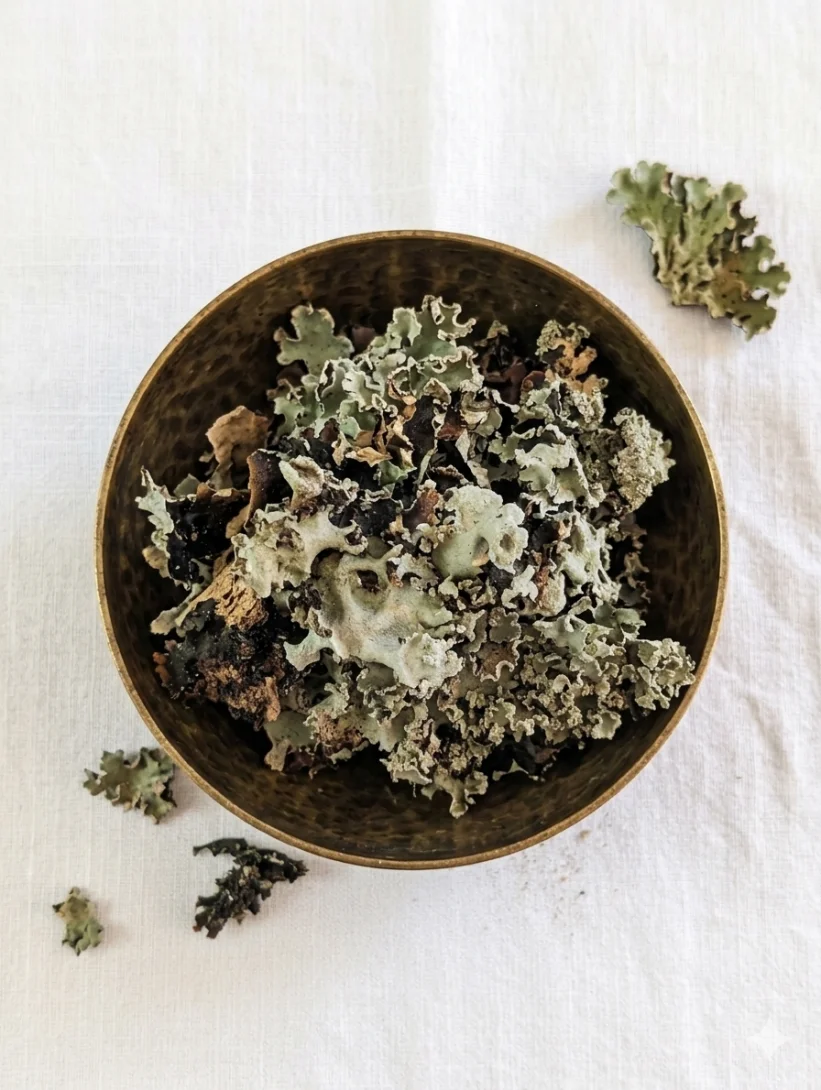
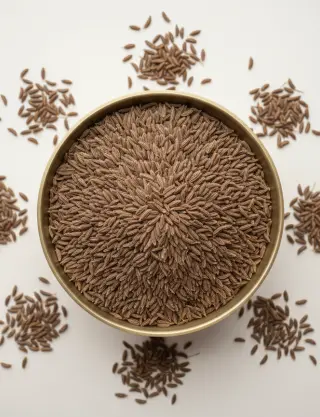
Discover our stone flower (dagad phool) whole flakes, imported from India. Earthy, smoky and woody aromas to enhance your goda masala, chettinad curries and Maharashtrian slow-cooked dishes.
€4.50
€225.00/kg
By purchasing this product, you add €0.16 to your loyalty account, redeemable as a discount on your next order!
Loading...
Ready for shipping, delivery time 3-21 business days
Delivery from €4.80 at Mondial Relay pickup points.
Stone flower (dagad phool): the aromatic lichen from Maharashtra
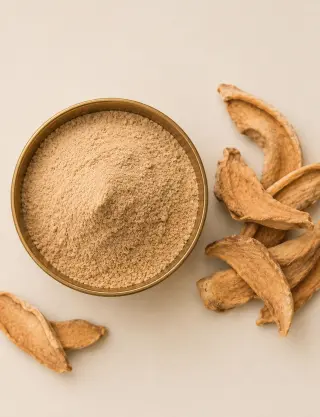
Stone flower, known in India as dagad phool or kalpasi, is not a flower but a wild lichen (Parmotrema perlatum) harvested from the rocks and trees of the Western Ghats. This rare, well-kept-secret spice offers a deeply earthy and woody fragrance, with smoky, mineral notes that recall the forest floor after rain. Dried and broken into greyish-brown flakes, its leaves release their aromas only when heated: a matter of seconds in hot oil.
Why cook with stone flower?
Dagad phool is the signature ingredient of Goda Masala, the iconic spice blend of Maharashtrian cuisine, but it is also found in Tamil Nadu's chettinad curries and certain Mughlai preparations. Pre-fried for a few seconds in hot oil or ghee before the other spices, stone flower develops an incomparable umami and smoky depth that turns an everyday curry into a feast. A pinch is enough to perfume a whole pot.
Culinary uses:
Homemade goda masala, the signature blend of Maharashtra
Chettinad curries and South Indian dishes
Bhuna gosht, mutton curry and slow-cooked Mughlai dishes
Meat biryanis for a smoky, woody backbone
Tadka and tempering: fry in hot oil along with mustard seeds
How to use:
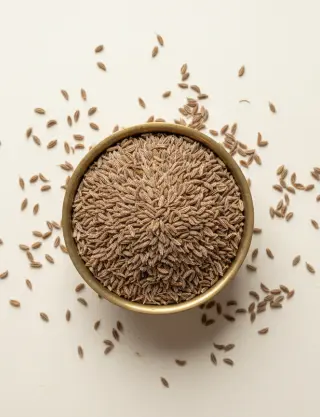
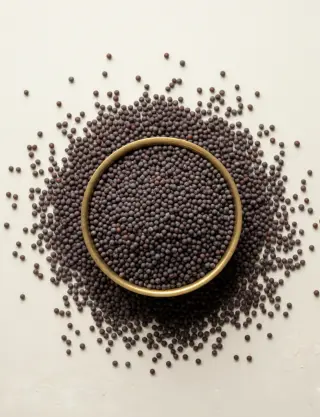
Stone flower is used at the very start of cooking, dropped into hot oil or ghee together with the other whole spices (mustard seeds, cumin, cardamom). It puffs up slightly and perfumes the kitchen within seconds: that's the cue to add onions. A generous pinch (2 to 4 flakes) for 4 servings is plenty: the aroma is potent, better to start gently.
Origin & quality:
We source our stone flower in India, in the Maharashtra and Karnataka regions where this lichen is hand-harvested from the trees and rocks of the Western Ghats. The premium grade guarantees whole, clean flakes with intact fragrance.
Storage:
Keep your stone flower flakes in a dry place, away from light and moisture, in their airtight pouch. Stored this way, they keep their aromas for several years.
Directly selected smallholder producers
Yes
Pesticides free
Yes
Vegetarian
Yes
Origin
India
Quality
Premium
Type
Whole flakes
Taste profile
Earthy, smoky and woody aromas with subtle mineral notes. Pre-fried in hot oil, it develops a unique umami depth: the signature of Maharashtrian cuisine.
Perfect—no complaints at all. I've already used it, and it really adds a nice aroma to dishes. The package tracking was excellent, too.
Translated from French
Valentin
Turmeric
This customer is a Turmeric member of our loyalty program
Verified purchase
This customer purchased this product before leaving their review
Published on Sep 1, 2026
· Purchased on Aug 22, 2026
Guest
Verified purchase
This customer purchased this product before leaving their review
Published on Aug 17, 2026
· Purchased on Jun 29, 2026
Stone flower has the rare distinction of being an Indian spice that never travelled the Great Spice Route. Unlike pepper, cardamom and cloves, which built empires and rerouted oceans, dagad phool stayed close to home, harvested by indigenous communities of the Western Ghats and traded on the regional markets of Maharashtra, Karnataka and Tamil Nadu. No fleet ever sailed for stone flower; no war was fought over it. And yet it appears in Ayurvedic texts more than two thousand years old.
In the Charaka Samhita, the great Ayurvedic treatise compiled between the 2nd century BCE and the 2nd century CE, we find references to Shaileyam (शैलेय), literally « that which grows on stone », an ingredient used in several digestive and anti-inflammatory preparations. The word derives from the Sanskrit shaila (mountain, rock) and unambiguously names what we call stone flower today. Sushruta, another major figure of Ayurveda, classes it among the tikta-kashaya (bitter-astringent) ingredients recommended to balance the kapha dosha.
Did you know?
The name dagad phool combines two Marathi words: dagad means « stone » and phool means « flower ». The same product is called kalpasi in Tamil, patthar phool in Hindi, charila or shaileyam in medicinal Hindi and Sanskrit. This proliferation of regional names is itself a sign: it speaks of a deep, oral, never-standardised culinary tradition.
Maharashtrian adoption: the birth of Goda Masala
Stone flower truly came into its own in Maharashtra. From the 17th century onwards, under the Maratha empire of Shivaji and his Peshwa successors, the cuisines of Pune and Kolhapur developed a distinctive style anchored in dry-roasted spice blends. One blend became iconic: the Goda Masala, literally « sweet masala », combining coriander, cumin, cinnamon, cloves, dried coconut, sesame, and always, as a signature note, a few flakes of stone flower. Without it, the blend loses the smoky, earthy depth that immediately distinguishes a Maharashtrian curry from a Punjabi or Bengali one.
18th-century Peshwa-era culinary manuscripts, preserved in Pune's Bharat Itihas Samshodhak Mandal, explicitly cite dagad phool in court recipes. Kothimbir vadi, bharli vangi (stuffed aubergines), mutton kolhapuri, all rely on a Goda Masala pre-fried in ghee, with stone flower playing the role of aromatic pivot.
Chettinad: the southern temple of stone flower
1 500 kilometres south of Maharashtra, in the arid Chettinad region of Tamil Nadu, another culinary culture made stone flower, which they call kalpasi, one of its signatures. The Nattukottai Chettiars, a community of Tamil bankers and merchants, traveled across South-East Asia for centuries (Burma, Malaysia, Sri Lanka, Indonesia) and brought back sophisticated cooking techniques and an intensive use of spices. Their kalpasi appears in their most iconic dishes: chettinad chicken, nattu kozhi varuval, uppukari.
The historical irony is that stone flower has never been cultivated, it has always been a wild harvest, gathered by tribal communities (Katkari, Warli, Mahadeo Koli in Maharashtra; Irular and Malayali in the Nilgiris) who climb rocks and tree trunks during the dry season. This wild-harvest model explains why production stays limited, irregular, and increasingly threatened by deforestation.
A scientific detour: from curry to litmus paper
In the 19th century, as the European industrial revolution was scouring the world for exploitable raw materials, French and British chemists turned their attention to lichens. They discovered that certain species (Roccella tinctoria in particular, but also Parmotrema) contain orcinic acid and other pH-sensitive compounds, the origin of the famous litmus paper used in every chemistry lab. For a few decades, Indian lichens (including stone flower) were exported to Europe to make colour indicators and textile dyes, before synthetic dyes rendered the practice obsolete around 1900.
Contemporary revival
Through most of the 20th century, stone flower remained a niche spice, ignored outside India and barely known even in the North. Since the 2000s, things have changed: the Indian diaspora has popularised regional cuisines (Maharashtra and Chettinad above all), chefs like Gaggan Anand (Bangkok) and Manish Mehrotra (Indian Accent, Delhi) have put dagad phool back on the modern Indian gastronomic map, and the slow food movement has given new value to wild, artisanal, hard-to-source ingredients.
The threat now is no longer oblivion but over-harvesting: as demand grows, certain Ghats forests are being scraped too aggressively, leaving no time for the lichens (which grow 1 to 5 mm per year) to regenerate. Choosing suppliers who practise rotational harvesting and protect host trees has become an ecological as well as a gustatory issue.
The Western Ghats: a unique biological enclave
Stone flower grows almost exclusively in the Western Ghats, the long mountain range that runs 1 600 km along India's western coast, from Gujarat to Kerala. UNESCO-listed since 2012, the Ghats are one of the world's eight biodiversity hotspots, home to over 7 400 flowering plant species, 1 800 endemic plants, and several hundred lichen species. Their dense, humid, fog-bathed forests give the lichen Parmotrema perlatum the conditions it needs to thrive.
Feature
Detail
Latin name
Parmotrema perlatum (Hudson) M. Choisy
Family
Parmeliaceae (foliose lichens)
Nature
Symbiosis of fungus (ascomycete) + green alga (Trebouxia)
Main regions
Maharashtra, Karnataka, Tamil Nadu, Kerala
Harvest altitude
500 to 2 000 m in the Ghats
Substrate
Tree bark (mango, jackfruit, banyan) and rock
Growth rate
1 to 5 mm per year
Harvest season
October to April (post-monsoon, dry conditions)
A symbiosis apart: neither plant nor fungus
Stone flower is not a plant. It is not even a single organism. Each « flake » you hold between your fingers is a symbiosis between two completely different beings: a fungus (which provides structure, water and mineral salts) and a microscopic green alga (which photosynthesises and provides sugars). This symbiosis, first described in the 19th century by Swiss botanist Simon Schwendener, was long disputed, it seemed too improbable that one organism could in fact be two.
This dual nature explains the extreme slowness of lichen growth (a few millimetres a year at best), their extraordinary resilience, they survive at -50 °C and at +60 °C, they have travelled into space and come back alive, but also their extreme sensitivity to pollution. Lichens are bio-indicators: where stone flower grows, the air is still clean. Where it disappears, something is going wrong.
The Ghats microclimate: why here and nowhere else
The Western Ghats intercept the south-west monsoon winds that rise from the Indian Ocean. When the humid air hits the mountains, it cools and dumps torrential rain on the western flank, up to 8 000 mm a year in some stations. This humidity, combined with moderate temperatures (15-25 °C on average) and ancient, undisturbed forests, creates an environment where lichens flourish in both abundance and diversity.
At the end of the monsoon (October), the forests gradually dry out. The lichens, having accumulated water and nutrients during the rains, enter their metabolically active phase. This is when tribal communities climb into the canopy, often using ropes, to detach lichens with small curved knives. Harvesting is done by hand, lichen by lichen, taking care to leave the foot attached to the substrate so that regrowth remains possible.
Karnataka, Maharashtra, Tamil Nadu: three terroirs, three flavours
Not all dagad phool tastes alike. Depending on the harvest region, the host tree and the local microclimate, the aromatic profile varies notably. Stone flowers from Maharashtra (Sahyadri, Bhimashankar, Mahabaleshwar) tend to be smokier and woodier, ideal for Goda Masala. Those from Karnataka (Coorg, Sirsi, Agumbe) often appear lighter and more mineral. Those from Tamil Nadu and Kerala (Nilgiris, Kodaikanal Ghats), harvested further south at higher altitudes, can show almost menthol-like notes, prized by Chettinad cooks.
A culinary aroma unlike any other
Stone flower is one of those spices that defies description, because its perfume resembles nothing else. Raw, when you open the pouch for the first time, the flakes give off a discreet, almost imperceptible scent: a hint of dried moss, a hint of damp wood, perhaps a touch of cold ash. Nothing that prepares you for what heat will reveal.
But the moment you drop a few flakes into hot oil or ghee, everything changes within seconds. The lichen puffs up slightly, darkens, and releases a bouquet of volatile compounds that transforms the kitchen. The earthy and smoky notes dominate, like a forest floor after rain, like a fire that has just gone out, like moss crushed between your fingers. In the background appear woody notes, almost cedar or sandalwood, and a trace of mineral character that recalls wet stone.
The chemical signature
Chemically, stone flower's aroma comes mainly from three families of compounds. First the depsides and depsidones (atranorin, salazinic acid, consalazinic acid), secondary metabolites the lichen produces to defend itself against UV and herbivores, giving the bitter, earthy and woody notes. Then usnic acid, which contributes a slightly astringent and mineral edge. Finally, a volatile fraction rich in sesquiterpenes and phenolic aldehydes, released only on heating, which creates the characteristic smoky and umami notes.
This last fraction is critical: it explains why stone flower must be pre-fried to reveal its perfume. Cold, it smells of almost nothing. Lukewarm, the aroma barely begins to appear. Only above 120-140 °C, in a fat, do the aroma molecules truly volatilise and redeposit on the other ingredients of the dish, a technique known as tempering or tadka.
Flavour or perfume?
A subtle question: stone flower doesn't really have « flavour » in the strict sense. If you chew a raw flake, you'll find barely a hint of bitterness. It is above all an aromatic spice, it perfumes the air, the oil, the rest of the dish. It is also an umami spice: it doesn't taste like much by itself, but it gives depth, body and character to whatever it accompanies. Without it, a Maharashtrian curry seems flat. With it, that same curry acquires another dimension, as if it had simmered for hours.
How to cook with stone flower
The golden rule, true for nearly every recipe: stone flower goes in at the very start of cooking, dropped into hot fat along with the other whole spices (mustard seeds, cumin, fennel, cardamom, cloves, curry leaves). This technique, known as tadka or chaunk in Hindi, tempering in English and phodni in Marathi, releases the spices' aromas in 20 to 40 seconds, exactly what stone flower needs to bloom.
The amount is small: 2 to 4 flakes (about 0.5 to 1 gram) is enough to flavour a dish for 4 people. This is a powerful spice, to be used like vanilla or saffron: a little is already a lot. Too much, and the dish becomes bitter and medicinal.
Signature recipes where it makes all the difference
Homemade Goda Masala: 4-6 flakes in the dry-roast, the irreplaceable signature
Mutton Kolhapuri: fiery Maharashtrian lamb curry where stone flower meets red chillies
Bhuna Gosht: slow-cooked Mughlai mutton, deep and smoky
Chettinad Chicken: spiced Tamil chicken, where it adds its mineral note
Hyderabadi Biryani: 3-4 flakes in finishing ghee, to perfume the rice
Misal Pav: Pune street food, where dagad phool is the soul of the masala
Beyond India: contemporary uses
Western chefs who discover stone flower use it in more inventive ways: cold-infused in neutral oil (to flavour a vinaigrette or mayonnaise), tempered in clarified butter for grilled fish, a single flake added to a dashi broth to « double » it with a smoky vegetable note. A few New York bartenders even infuse it in mezcal to build cocktails with an unexpected umami signature.
Ayurveda and traditional pharmacopeia
Stone flower, under its Sanskrit name Shaileyam, has been used in Ayurveda for over two thousand years. The Charaka Samhita and Sushruta Samhita, two of the founding texts of traditional Indian medicine, class it among the tikta-kashaya (bitter-astringent) ingredients and attribute to it digestive, anti-inflammatory, antimicrobial and kapha-balancing properties.
In classical Ayurvedic practice, Shaileyam features in many churnas (medicinal powders), particularly those used for digestive disorders, chronic inflammation, certain respiratory complaints and skin infections. It is rarely used alone: it is combined with other ingredients (ginger, long pepper, honey, ghee) to potentiate its effects and mitigate its bitterness.
What does modern science say?
Modern studies on Parmotrema perlatum and related lichens are still few, but those that exist confirm several traditional intuitions. Several of the lichen's secondary metabolites, notably usnic acid, atranorin and salazinic acid, show in vitro antibacterial activity against Staphylococcus aureus and Escherichia coli, as well as measurable antioxidant effects on free radicals.
Important notice
Stone flower is sold by Table Indienne as a culinary spice, not as a therapeutic product. References to Ayurveda or pharmacological research are provided for informational and cultural purposes. At the doses used in cooking (a few flakes per curry for 4 people), no significant medicinal effect is expected, it is above all a flavour ingredient. For any therapeutic use, consult a healthcare professional.
Nutritional profile
At culinary doses (0.5 to 1 g per recipe for 4 people), stone flower does not contribute meaningfully to a meal's nutritional intake. It contains no notable calories, no proteins, no carbohydrates, no fats, it is mostly dried fungal and algal matrix, rich in plant fibres and secondary metabolites. The point is aromatic and cultural, not nutritional.
Precautions and contraindications
At normal culinary doses, stone flower is considered safe for the vast majority of adult consumers. A few caveats are worth noting:
High-dose usnic acid: some studies show hepatotoxic effects with concentrated usnic acid supplements (several grams per day). At culinary doses, this risk is non-existent.
Lichen allergies: rare but possible, particularly in people sensitive to moulds or pollens. When in doubt, test with a very small quantity first.
Pregnancy and breastfeeding: no specific data. As a precaution, keep consumption to moderate culinary use.
Storing your stone flower flakes
Good news: stone flower is one of the most robust spices in any pantry. Because it's dry, barely volatile when cold, and naturally resilient (recall that lichens live in extreme conditions), it keeps for several years without losing the bulk of its aroma, provided you follow three simple rules.
Away from moisture: Stone flower's worst enemy is water. If it absorbs ambient humidity, it can mould (the ultimate irony for a lichen). Keep it in its original airtight pouch, or transfer it to a glass jar with a silicone seal.
Away from light: UV rays slowly degrade the secondary metabolites (usnic acid, depsides) that carry the aroma. An opaque tin or a closed cupboard is enough.
Away from heat: Don't store it above the oven or near the stove. A stable room temperature (15-25 °C) is ideal.
Respect these three rules and your stone flower will keep its intact aroma for 2 to 3 years, sometimes more. You'll know it's time to replace it when, pre-fried in hot oil, it no longer releases the signature smoky-woody note that gives it its value.
What to avoid
Never pre-grind stone flower. Once powdered, it loses its aroma within weeks (volatile compounds evaporate as the exposed surface increases). If a recipe calls for ground stone flower, which is rare, grind it just before use, in a mortar or a clean spice mill.
Avoid the fridge too: condensation when opening and closing can introduce moisture and trigger moulds. The freezer is acceptable if you've bought a large quantity, provided the container is perfectly airtight and you let it return to room temperature before opening, to avoid condensation.
Is stone flower really a lichen?
Yes, and that's its most fascinating trait. Stone flower (Parmotrema perlatum) is neither a plant nor a classic fungus: it's a stable symbiosis between a fungus (providing the structure) and a microscopic green alga (doing photosynthesis). The two organisms live fused together and function as a single being. So it's not a « flower » in the botanical sense, the name is purely metaphorical, based on its shape and rocky habitat.
How many flakes per recipe?
For a recipe serving 4 people, count on 2 to 4 flakes, about 0.5 to 1 gram. It's a powerful spice: too much, and the dish turns bitter and medicinal; too little, and the aroma disappears. If you're new to it, start with 2 flakes and adjust next time. In a homemade Goda Masala batch, you can use up to 6 flakes, but the blend is then diluted across many dishes.
How do I actually use it?
Always at the start of cooking, dropped into hot oil or ghee with the other whole spices (mustard seeds, cumin, cardamom). In 20-40 seconds, it puffs slightly and releases its aroma. That's your cue to add the onions. Don't eat it raw, don't pre-grind it, and don't add it at the end of cooking, its perfume develops only with heat, in a fat.
Is there a substitute?
Honestly, no real equivalent exists. Stone flower's profile (earthy, smoky, woody, mineral) is mimicked by no other spice. The closest approximation would be a mix of black cardamom (for the smoky note) and a hint of smoked tea (lapsang souchong), but it will always be a compromise. For authentic Goda Masala or Chettinad kalpasi, there is no substitute.
What's the difference between dagad phool, kalpasi, patthar phool and charila?
No botanical difference: they're all regional names for the same lichen (Parmotrema perlatum). Dagad phool is Marathi (Maharashtra), kalpasi is Tamil (Tamil Nadu, Chettinad), patthar phool is the Hindi market name, and charila or shaileyam are the Sanskrit Ayurvedic names. Quality can vary by region, but the species is the same.
Is your stone flower treated with pesticides?
Because stone flower is a wild harvest (never cultivated), it is by nature free of pesticides, fertilisers and human intervention on its growth.
Why is it so rare and so expensive?
Three reasons. First, it's a wild harvest, no farm produces dagad phool; people climb into the Ghats forests to pick it by hand. Second, lichen growth is extremely slow (1 to 5 mm per year): it takes years for a lichen to reach harvest size. Third, demand now far exceeds supply, thanks to the Indian diaspora, openness to regional cuisines, and deforestation reducing the harvest zones. The price reflects all of that.
Can I eat it raw?
Technically yes, it's not toxic, but there's no culinary point. Raw, it doesn't release its aroma (which needs the heat of oil at 120-140 °C) and its taste is slightly bitter and papery. Cooking in fat is essential to reveal what makes this spice valuable.
A spice born in the wet forests of ancient India
Stone flower has the rare distinction of being an Indian spice that never travelled the Great Spice Route. Unlike pepper, cardamom and cloves, which built empires and rerouted oceans, dagad phool stayed close to home, harvested by indigenous communities of the Western Ghats and traded on the regional markets of Maharashtra, Karnataka and Tamil Nadu. No fleet ever sailed for stone flower; no war was fought over it. And yet it appears in Ayurvedic texts more than two thousand years old.
In the Charaka Samhita, the great Ayurvedic treatise compiled between the 2nd century BCE and the 2nd century CE, we find references to Shaileyam (शैलेय), literally « that which grows on stone », an ingredient used in several digestive and anti-inflammatory preparations. The word derives from the Sanskrit shaila (mountain, rock) and unambiguously names what we call stone flower today. Sushruta, another major figure of Ayurveda, classes it among the tikta-kashaya (bitter-astringent) ingredients recommended to balance the kapha dosha.
Did you know?
The name dagad phool combines two Marathi words: dagad means « stone » and phool means « flower ». The same product is called kalpasi in Tamil, patthar phool in Hindi, charila or shaileyam in medicinal Hindi and Sanskrit. This proliferation of regional names is itself a sign: it speaks of a deep, oral, never-standardised culinary tradition.
Maharashtrian adoption: the birth of Goda Masala
Stone flower truly came into its own in Maharashtra. From the 17th century onwards, under the Maratha empire of Shivaji and his Peshwa successors, the cuisines of Pune and Kolhapur developed a distinctive style anchored in dry-roasted spice blends. One blend became iconic: the Goda Masala, literally « sweet masala », combining coriander, cumin, cinnamon, cloves, dried coconut, sesame, and always, as a signature note, a few flakes of stone flower. Without it, the blend loses the smoky, earthy depth that immediately distinguishes a Maharashtrian curry from a Punjabi or Bengali one.
18th-century Peshwa-era culinary manuscripts, preserved in Pune's Bharat Itihas Samshodhak Mandal, explicitly cite dagad phool in court recipes. Kothimbir vadi, bharli vangi (stuffed aubergines), mutton kolhapuri, all rely on a Goda Masala pre-fried in ghee, with stone flower playing the role of aromatic pivot.
Chettinad: the southern temple of stone flower
1 500 kilometres south of Maharashtra, in the arid Chettinad region of Tamil Nadu, another culinary culture made stone flower, which they call kalpasi, one of its signatures. The Nattukottai Chettiars, a community of Tamil bankers and merchants, traveled across South-East Asia for centuries (Burma, Malaysia, Sri Lanka, Indonesia) and brought back sophisticated cooking techniques and an intensive use of spices. Their kalpasi appears in their most iconic dishes: chettinad chicken, nattu kozhi varuval, uppukari.
The historical irony is that stone flower has never been cultivated, it has always been a wild harvest, gathered by tribal communities (Katkari, Warli, Mahadeo Koli in Maharashtra; Irular and Malayali in the Nilgiris) who climb rocks and tree trunks during the dry season. This wild-harvest model explains why production stays limited, irregular, and increasingly threatened by deforestation.
A scientific detour: from curry to litmus paper
In the 19th century, as the European industrial revolution was scouring the world for exploitable raw materials, French and British chemists turned their attention to lichens. They discovered that certain species (Roccella tinctoria in particular, but also Parmotrema) contain orcinic acid and other pH-sensitive compounds, the origin of the famous litmus paper used in every chemistry lab. For a few decades, Indian lichens (including stone flower) were exported to Europe to make colour indicators and textile dyes, before synthetic dyes rendered the practice obsolete around 1900.
Contemporary revival
Through most of the 20th century, stone flower remained a niche spice, ignored outside India and barely known even in the North. Since the 2000s, things have changed: the Indian diaspora has popularised regional cuisines (Maharashtra and Chettinad above all), chefs like Gaggan Anand (Bangkok) and Manish Mehrotra (Indian Accent, Delhi) have put dagad phool back on the modern Indian gastronomic map, and the slow food movement has given new value to wild, artisanal, hard-to-source ingredients.
The threat now is no longer oblivion but over-harvesting: as demand grows, certain Ghats forests are being scraped too aggressively, leaving no time for the lichens (which grow 1 to 5 mm per year) to regenerate. Choosing suppliers who practise rotational harvesting and protect host trees has become an ecological as well as a gustatory issue.
The Western Ghats: a unique biological enclave
Stone flower grows almost exclusively in the Western Ghats, the long mountain range that runs 1 600 km along India's western coast, from Gujarat to Kerala. UNESCO-listed since 2012, the Ghats are one of the world's eight biodiversity hotspots, home to over 7 400 flowering plant species, 1 800 endemic plants, and several hundred lichen species. Their dense, humid, fog-bathed forests give the lichen Parmotrema perlatum the conditions it needs to thrive.
Feature
Detail
Latin name
Parmotrema perlatum (Hudson) M. Choisy
Family
Parmeliaceae (foliose lichens)
Nature
Symbiosis of fungus (ascomycete) + green alga (Trebouxia)
Main regions
Maharashtra, Karnataka, Tamil Nadu, Kerala
Harvest altitude
500 to 2 000 m in the Ghats
Substrate
Tree bark (mango, jackfruit, banyan) and rock
Growth rate
1 to 5 mm per year
Harvest season
October to April (post-monsoon, dry conditions)
A symbiosis apart: neither plant nor fungus
Stone flower is not a plant. It is not even a single organism. Each « flake » you hold between your fingers is a symbiosis between two completely different beings: a fungus (which provides structure, water and mineral salts) and a microscopic green alga (which photosynthesises and provides sugars). This symbiosis, first described in the 19th century by Swiss botanist Simon Schwendener, was long disputed, it seemed too improbable that one organism could in fact be two.
This dual nature explains the extreme slowness of lichen growth (a few millimetres a year at best), their extraordinary resilience, they survive at -50 °C and at +60 °C, they have travelled into space and come back alive, but also their extreme sensitivity to pollution. Lichens are bio-indicators: where stone flower grows, the air is still clean. Where it disappears, something is going wrong.
The Ghats microclimate: why here and nowhere else
The Western Ghats intercept the south-west monsoon winds that rise from the Indian Ocean. When the humid air hits the mountains, it cools and dumps torrential rain on the western flank, up to 8 000 mm a year in some stations. This humidity, combined with moderate temperatures (15-25 °C on average) and ancient, undisturbed forests, creates an environment where lichens flourish in both abundance and diversity.
At the end of the monsoon (October), the forests gradually dry out. The lichens, having accumulated water and nutrients during the rains, enter their metabolically active phase. This is when tribal communities climb into the canopy, often using ropes, to detach lichens with small curved knives. Harvesting is done by hand, lichen by lichen, taking care to leave the foot attached to the substrate so that regrowth remains possible.
Karnataka, Maharashtra, Tamil Nadu: three terroirs, three flavours
Not all dagad phool tastes alike. Depending on the harvest region, the host tree and the local microclimate, the aromatic profile varies notably. Stone flowers from Maharashtra (Sahyadri, Bhimashankar, Mahabaleshwar) tend to be smokier and woodier, ideal for Goda Masala. Those from Karnataka (Coorg, Sirsi, Agumbe) often appear lighter and more mineral. Those from Tamil Nadu and Kerala (Nilgiris, Kodaikanal Ghats), harvested further south at higher altitudes, can show almost menthol-like notes, prized by Chettinad cooks.
A culinary aroma unlike any other
Stone flower is one of those spices that defies description, because its perfume resembles nothing else. Raw, when you open the pouch for the first time, the flakes give off a discreet, almost imperceptible scent: a hint of dried moss, a hint of damp wood, perhaps a touch of cold ash. Nothing that prepares you for what heat will reveal.
But the moment you drop a few flakes into hot oil or ghee, everything changes within seconds. The lichen puffs up slightly, darkens, and releases a bouquet of volatile compounds that transforms the kitchen. The earthy and smoky notes dominate, like a forest floor after rain, like a fire that has just gone out, like moss crushed between your fingers. In the background appear woody notes, almost cedar or sandalwood, and a trace of mineral character that recalls wet stone.
The chemical signature
Chemically, stone flower's aroma comes mainly from three families of compounds. First the depsides and depsidones (atranorin, salazinic acid, consalazinic acid), secondary metabolites the lichen produces to defend itself against UV and herbivores, giving the bitter, earthy and woody notes. Then usnic acid, which contributes a slightly astringent and mineral edge. Finally, a volatile fraction rich in sesquiterpenes and phenolic aldehydes, released only on heating, which creates the characteristic smoky and umami notes.
This last fraction is critical: it explains why stone flower must be pre-fried to reveal its perfume. Cold, it smells of almost nothing. Lukewarm, the aroma barely begins to appear. Only above 120-140 °C, in a fat, do the aroma molecules truly volatilise and redeposit on the other ingredients of the dish, a technique known as tempering or tadka.
Flavour or perfume?
A subtle question: stone flower doesn't really have « flavour » in the strict sense. If you chew a raw flake, you'll find barely a hint of bitterness. It is above all an aromatic spice, it perfumes the air, the oil, the rest of the dish. It is also an umami spice: it doesn't taste like much by itself, but it gives depth, body and character to whatever it accompanies. Without it, a Maharashtrian curry seems flat. With it, that same curry acquires another dimension, as if it had simmered for hours.
How to cook with stone flower
The golden rule, true for nearly every recipe: stone flower goes in at the very start of cooking, dropped into hot fat along with the other whole spices (mustard seeds, cumin, fennel, cardamom, cloves, curry leaves). This technique, known as tadka or chaunk in Hindi, tempering in English and phodni in Marathi, releases the spices' aromas in 20 to 40 seconds, exactly what stone flower needs to bloom.
The amount is small: 2 to 4 flakes (about 0.5 to 1 gram) is enough to flavour a dish for 4 people. This is a powerful spice, to be used like vanilla or saffron: a little is already a lot. Too much, and the dish becomes bitter and medicinal.
Signature recipes where it makes all the difference
Homemade Goda Masala: 4-6 flakes in the dry-roast, the irreplaceable signature
Mutton Kolhapuri: fiery Maharashtrian lamb curry where stone flower meets red chillies
Bhuna Gosht: slow-cooked Mughlai mutton, deep and smoky
Chettinad Chicken: spiced Tamil chicken, where it adds its mineral note
Hyderabadi Biryani: 3-4 flakes in finishing ghee, to perfume the rice
Misal Pav: Pune street food, where dagad phool is the soul of the masala
Beyond India: contemporary uses
Western chefs who discover stone flower use it in more inventive ways: cold-infused in neutral oil (to flavour a vinaigrette or mayonnaise), tempered in clarified butter for grilled fish, a single flake added to a dashi broth to « double » it with a smoky vegetable note. A few New York bartenders even infuse it in mezcal to build cocktails with an unexpected umami signature.
Ayurveda and traditional pharmacopeia
Stone flower, under its Sanskrit name Shaileyam, has been used in Ayurveda for over two thousand years. The Charaka Samhita and Sushruta Samhita, two of the founding texts of traditional Indian medicine, class it among the tikta-kashaya (bitter-astringent) ingredients and attribute to it digestive, anti-inflammatory, antimicrobial and kapha-balancing properties.
In classical Ayurvedic practice, Shaileyam features in many churnas (medicinal powders), particularly those used for digestive disorders, chronic inflammation, certain respiratory complaints and skin infections. It is rarely used alone: it is combined with other ingredients (ginger, long pepper, honey, ghee) to potentiate its effects and mitigate its bitterness.
What does modern science say?
Modern studies on Parmotrema perlatum and related lichens are still few, but those that exist confirm several traditional intuitions. Several of the lichen's secondary metabolites, notably usnic acid, atranorin and salazinic acid, show in vitro antibacterial activity against Staphylococcus aureus and Escherichia coli, as well as measurable antioxidant effects on free radicals.
Important notice
Stone flower is sold by Table Indienne as a culinary spice, not as a therapeutic product. References to Ayurveda or pharmacological research are provided for informational and cultural purposes. At the doses used in cooking (a few flakes per curry for 4 people), no significant medicinal effect is expected, it is above all a flavour ingredient. For any therapeutic use, consult a healthcare professional.
Nutritional profile
At culinary doses (0.5 to 1 g per recipe for 4 people), stone flower does not contribute meaningfully to a meal's nutritional intake. It contains no notable calories, no proteins, no carbohydrates, no fats, it is mostly dried fungal and algal matrix, rich in plant fibres and secondary metabolites. The point is aromatic and cultural, not nutritional.
Precautions and contraindications
At normal culinary doses, stone flower is considered safe for the vast majority of adult consumers. A few caveats are worth noting:
High-dose usnic acid: some studies show hepatotoxic effects with concentrated usnic acid supplements (several grams per day). At culinary doses, this risk is non-existent.
Lichen allergies: rare but possible, particularly in people sensitive to moulds or pollens. When in doubt, test with a very small quantity first.
Pregnancy and breastfeeding: no specific data. As a precaution, keep consumption to moderate culinary use.
Storing your stone flower flakes
Good news: stone flower is one of the most robust spices in any pantry. Because it's dry, barely volatile when cold, and naturally resilient (recall that lichens live in extreme conditions), it keeps for several years without losing the bulk of its aroma, provided you follow three simple rules.
Away from moisture: Stone flower's worst enemy is water. If it absorbs ambient humidity, it can mould (the ultimate irony for a lichen). Keep it in its original airtight pouch, or transfer it to a glass jar with a silicone seal.
Away from light: UV rays slowly degrade the secondary metabolites (usnic acid, depsides) that carry the aroma. An opaque tin or a closed cupboard is enough.
Away from heat: Don't store it above the oven or near the stove. A stable room temperature (15-25 °C) is ideal.
Respect these three rules and your stone flower will keep its intact aroma for 2 to 3 years, sometimes more. You'll know it's time to replace it when, pre-fried in hot oil, it no longer releases the signature smoky-woody note that gives it its value.
What to avoid
Never pre-grind stone flower. Once powdered, it loses its aroma within weeks (volatile compounds evaporate as the exposed surface increases). If a recipe calls for ground stone flower, which is rare, grind it just before use, in a mortar or a clean spice mill.
Avoid the fridge too: condensation when opening and closing can introduce moisture and trigger moulds. The freezer is acceptable if you've bought a large quantity, provided the container is perfectly airtight and you let it return to room temperature before opening, to avoid condensation.
Is stone flower really a lichen?
Yes, and that's its most fascinating trait. Stone flower (Parmotrema perlatum) is neither a plant nor a classic fungus: it's a stable symbiosis between a fungus (providing the structure) and a microscopic green alga (doing photosynthesis). The two organisms live fused together and function as a single being. So it's not a « flower » in the botanical sense, the name is purely metaphorical, based on its shape and rocky habitat.
How many flakes per recipe?
For a recipe serving 4 people, count on 2 to 4 flakes, about 0.5 to 1 gram. It's a powerful spice: too much, and the dish turns bitter and medicinal; too little, and the aroma disappears. If you're new to it, start with 2 flakes and adjust next time. In a homemade Goda Masala batch, you can use up to 6 flakes, but the blend is then diluted across many dishes.
How do I actually use it?
Always at the start of cooking, dropped into hot oil or ghee with the other whole spices (mustard seeds, cumin, cardamom). In 20-40 seconds, it puffs slightly and releases its aroma. That's your cue to add the onions. Don't eat it raw, don't pre-grind it, and don't add it at the end of cooking, its perfume develops only with heat, in a fat.
Is there a substitute?
Honestly, no real equivalent exists. Stone flower's profile (earthy, smoky, woody, mineral) is mimicked by no other spice. The closest approximation would be a mix of black cardamom (for the smoky note) and a hint of smoked tea (lapsang souchong), but it will always be a compromise. For authentic Goda Masala or Chettinad kalpasi, there is no substitute.
What's the difference between dagad phool, kalpasi, patthar phool and charila?
No botanical difference: they're all regional names for the same lichen (Parmotrema perlatum). Dagad phool is Marathi (Maharashtra), kalpasi is Tamil (Tamil Nadu, Chettinad), patthar phool is the Hindi market name, and charila or shaileyam are the Sanskrit Ayurvedic names. Quality can vary by region, but the species is the same.
Is your stone flower treated with pesticides?
Because stone flower is a wild harvest (never cultivated), it is by nature free of pesticides, fertilisers and human intervention on its growth.
Why is it so rare and so expensive?
Three reasons. First, it's a wild harvest, no farm produces dagad phool; people climb into the Ghats forests to pick it by hand. Second, lichen growth is extremely slow (1 to 5 mm per year): it takes years for a lichen to reach harvest size. Third, demand now far exceeds supply, thanks to the Indian diaspora, openness to regional cuisines, and deforestation reducing the harvest zones. The price reflects all of that.
Can I eat it raw?
Technically yes, it's not toxic, but there's no culinary point. Raw, it doesn't release its aroma (which needs the heat of oil at 120-140 °C) and its taste is slightly bitter and papery. Cooking in fat is essential to reveal what makes this spice valuable.
Why choose Stone Flower (Dagad Phool) from La Table Indienne?
Exceptional freshness and quality
Our spices are imported directly from India and packaged on demand to guarantee optimal freshness. Unlike spices sold in supermarkets that can sit on shelves for months, we ensure each spice retains its full flavor and aroma.
Authenticity and traceability
Each spice comes from specific regions in India renowned for their expertise. We work directly with local producers who grow their spices traditionally, without pesticides or chemicals.
How to best use this spice?
To reveal all the aromas, we recommend lightly toasting whole spices in a dry pan before grinding them. Store them in a dry place away from light to preserve their freshness as long as possible.
Did you know?
Whole spices are much better than ground spices
Check out our blog article to discover why whole spices retain their aromas better.
Questions & Answers
Thank you! Your question has been sent. Mihika will answer soon and you will receive an email.
The deposit is an amount included in the product price that will be converted to loyalty points when you return the empty packaging to us. It's an ecological and economical system that allows containers to be reused.
How does it work?
1
You pay the deposit in addition to the product price at checkout.
2
You consume the product and keep the clean empty packaging.
3
You bring back the packaging to us and we credit you loyalty points (20 points per euro of deposit).
Online orders
For purchases on our online store, we provide you with a free return label from 5 packages onwards. You then receive loyalty points based on the returned deposit amount (20 points per euro), which you can exchange for rewards.
A gesture for the planet
By participating in the deposit system, you reduce packaging waste and contribute to a more sustainable circular economy.