



You want to start cooking Indian food, but standing in front of the spice aisle, you feel a little lost. Cumin, cardamom, garam masala, turmeric, mustard seeds, fenugreek, coriander powder… The list seems endless, and online recipes don't always make things easier. This guide is here to help. We are going to build your first Indian spice collection together, step by step, explaining what each spice does, how to use it, and how to store it.
Good news: you don't need to buy everything at once. With seven well-chosen spices, you can cook dozens of authentic Indian dishes. That is exactly what goes into the masala dabba — the round stainless steel spice box found in every Indian kitchen for generations.
Indian cooking is not complicated — it is precise. Master seven spices and you hold the keys to an entire cuisine.
The 7 essential spices: your starter masala dabba
These seven spices form the backbone of everyday Indian cooking. They appear in kitchens from north to south, in vegetarian and meat dishes alike. Once you master them, you can improvise freely.
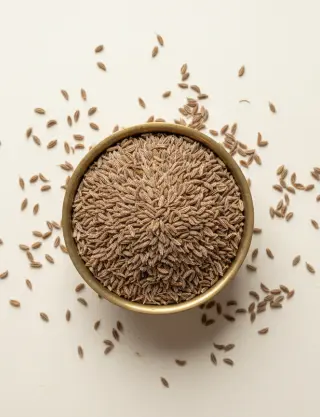
- Cumin seeds (jeera): the foundation. Nearly every Indian dish begins with cumin seeds dropped into hot oil — they splutter within seconds and release a warm, nutty, earthy aroma. Irreplaceable in dals, curries, rice dishes, and sautéed vegetables.
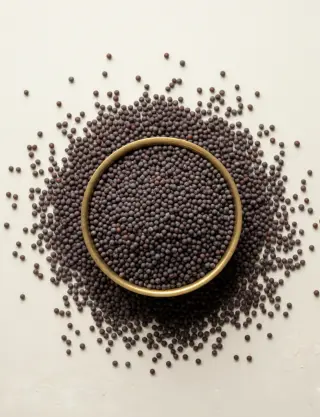
- Black mustard seeds (rai): the signature of South Indian cooking. They need very hot oil and pop spectacularly with a sharp crack. Their flavour is nutty and mildly pungent. Essential for sambar, sautéed vegetables, and dishes from Kerala and Tamil Nadu.
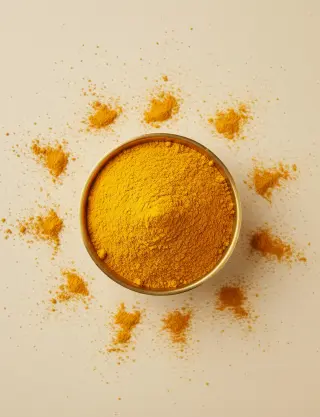
- Turmeric (haldi): the golden spice. It gives Indian cooking its characteristic yellow colour and brings well-documented anti-inflammatory properties. Use it sparingly — half a teaspoon is enough for a dish serving four. Too much turmeric makes a dish bitter.
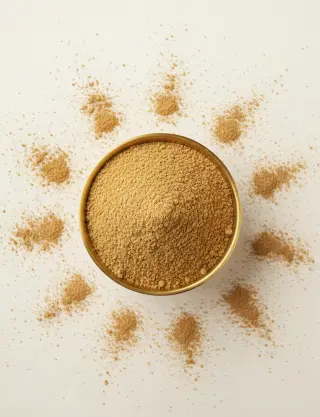
- Coriander powder (dhania): the gentle background note. Slightly citrusy and earthy, it adds body to curries without bringing heat. Used in almost every Indian curry, often in generous quantities. It is the invisible spice that makes sauces rich and complex.
- Garam masala: the finishing blend. Contrary to what many recipes suggest, garam masala does not go in at the start of cooking — it is added at the very end, off the heat or in the final minutes. Its warm, aromatic profile (cinnamon, cardamom, cloves) evaporates under prolonged heat.
- Red chilli powder: the heat source. For beginners, start with Kashmiri chilli (mild, beautiful deep red colour) before moving to hotter varieties. Adjust to your own tolerance — you can always add more, but you can never take it away.
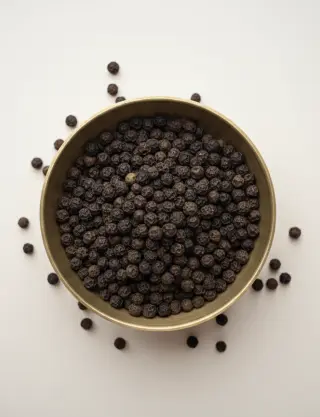
- Black pepper (kali mirch): the universal enhancer. Freshly ground, it amplifies the aroma of every other spice on the list. In India, it stars solo in certain South Indian meat dishes — Kerala peppercorns are among the finest in the world. Buy it whole and grind it to order.
The next 5 spices: intermediate level
Once your basic masala dabba is assembled, these five spices open a wider world of recipes — biryanis, desserts, chai, and more elaborate meat dishes.
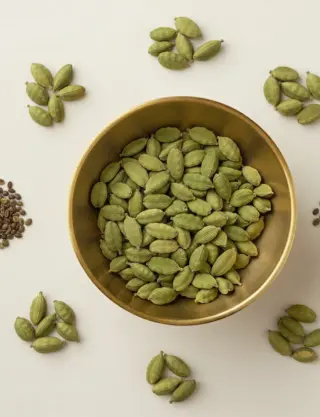
- Green cardamom (elaichi): floral, fresh, slightly camphor-like. Essential in rice pudding (kheer), chai, ladoos, and biryani. Use whole pods in sauced dishes and remove before serving, or grind the seeds alone for desserts.
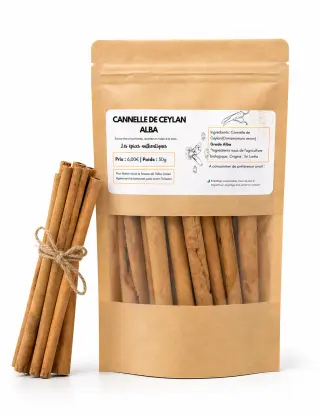
- Ceylon cinnamon (dalchini): delicate and sweet, very different from the cassia cinnamon sold in most supermarkets. Indispensable in biryani, chai, and many North Indian meat curries. Use one small stick whole and remove before serving.
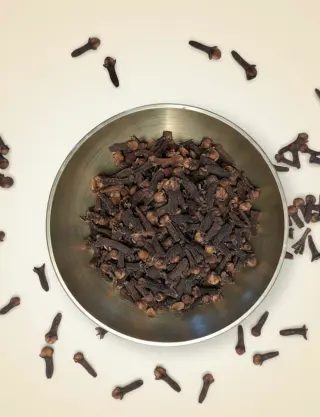
- Cloves (laung): powerful and almost medicinal when raw, but remarkably elegant in slow-cooked dishes. Use very few — two or three whole cloves are enough to perfume an entire biryani. Remove before serving as they are unpleasant to bite into.
- Whole coriander seeds (sabut dhania): to make your own fresh coriander powder. A light dry roast followed by a quick grind gives a powder incomparably more aromatic than anything pre-ground. Whole seeds keep two to three times longer than the powder.
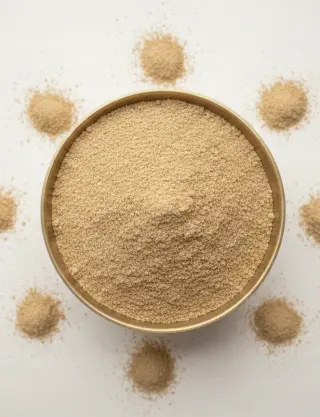
- Ground ginger (sonth): different from fresh ginger — softer on the palate, warmer, with a gentle lingering heat. Ideal for winter chai, slow-cooked dals, and Ayurvedic recipes. It keeps far better than fresh ginger and requires no preparation.
How to store your spices: the masala dabba philosophy
The masala dabba is not simply a storage container — it is a philosophy of culinary organisation. The idea is simple: the seven spices you use every day must be instantly accessible, without opening a cupboard or searching for a jar. The box lives beside the stove, always within reach.
For your spice stock, a few essential rules: store them in airtight containers, away from direct light and heat. Spices are the enemies of the shelf above the hob. Heat and light degrade essential oils and dull colours — well-stored turmeric stays vibrant and deep orange; poorly stored turmeric turns a flat pale yellow.
Whole spices keep for 2–3 years. Ground spices, 6–12 months. The golden rule: if you open the jar and smell nothing, it is time to restock.
Whole spices keep two to three times longer than their ground equivalents, and their aroma is consistently superior once freshly ground. This is why Indian cooks prefer to buy cumin seeds, coriander seeds, and peppercorns whole, and grind them as needed. A small coffee grinder reserved for spices is all you need.
The essential technique: the tadka
Before you learn any recipe, master the tadka. It is the founding technique of Indian cooking: heat a fat (oil or ghee) to high temperature, then drop in whole spices to "temper" them — releasing their essential oils in a matter of seconds.
Sequencing is crucial. Always start with the spices that need the most time: mustard seeds first (they take longer to pop), then cumin (5 to 10 seconds), then more delicate spices like curry leaves or asafoetida. Each spice has its own cooking window — just a few seconds — beyond which it goes from fragrant to burnt.
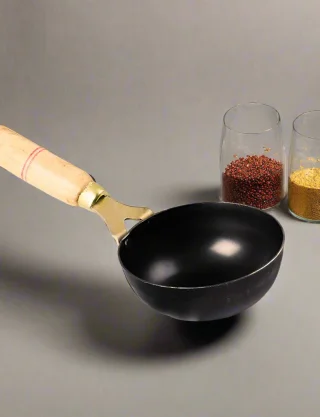
The tadka can be used in two ways: at the start of cooking (onions, tomatoes, and meat are fried directly in the infused oil) or as a finishing touch (the dish is prepared, then a blazing hot tadka is poured over it at the moment of serving). This second use — a creamy dal crowned with a drizzle of ghee with sizzling cumin seeds — is one of the most immediately sensory pleasures of Indian cooking. A tadka pan (a small stainless steel or copper vessel with a long handle) makes the job much easier.
Your first 3 Indian dishes
Rather than tackling a complex recipe, here are three beginner dishes that draw on exactly the spices in your starter masala dabba. Each one teaches a different technique.
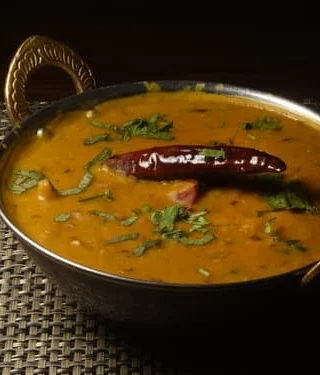
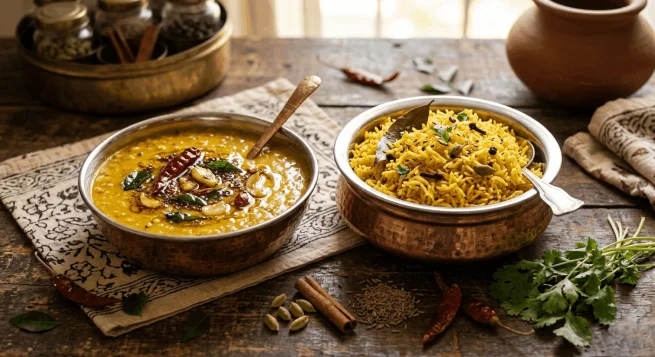
- Dal (lentil soup): the everyday dish of all India. Lentils cooked in water, a cumin tadka, turmeric, coriander powder, and garam masala added at the end. Simple, nourishing, infinitely adaptable. It is the perfect first Indian dish for learning to dose spices, since a mistake can always be corrected.
- Aloo gobi (potato and cauliflower): a vegetarian classic from North India. Cumin in the tadka, turmeric, coriander powder, chilli, and garam masala as a finish. Dry-fried in a little oil — the vegetables colour lightly and the spices cling to their surface. Excellent for understanding how spices interact with vegetables.
- Jeera rice (cumin rice): the simplest recipe in this guide — one rice, one spice. Cumin seeds in hot ghee, then basmati rice cooked in the same pan. The result is an incredibly fragrant rice that accompanies any Indian dish. It is the best way to understand, alone and without distraction, what cumin truly brings to a dish.
Where to find quality Indian spices in Alsace
The quality of spices makes a real difference. Cumin seeds bought from a supermarket two years ago have little aromatic value left. At Table Indienne, all spices are selected directly from our certified organic suppliers in India — from Lakadong turmeric grown in Meghalaya to cumin seeds from Gujarat — and packaged in small quantities to guarantee freshness.
To get started on the right foot, our masala dabba is available empty or pre-filled with the seven essential spices. It is the ideal gift for a beginner — or for yourself, if you want to build a solid foundation in a single purchase. We also offer Indian cooking workshops in Wittisheim, Alsace, to learn the techniques hands-on.
If you want to go deeper into the world of Indian spices and their properties, our article on Lakadong turmeric from Meghalaya gives a good sense of the depth hidden within a single spice.