

Spice box
Traditional spice box in sheesham wood, 9 compartments. Simplify your everyday Indian cooking.
In the same style
This product goes well with the following products.
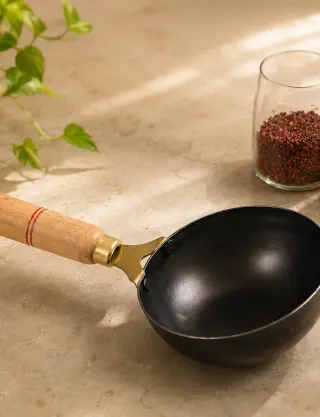
Tadka Pan

Sabai grass bread box

Spice Box
The spice box, known in India as a "masala dabba", is an essential and iconic item in every Indian kitchen, and its importance goes far beyond simple storage.
Made from Sheesham wood. Handcrafted beautifully in a unique square shape with 9 compartments.
A Symbol of Heritage : The masala dabba is not just a tool; it's a symbol of Indian culinary culture. It represents the rich tapestry of flavors and the art of balancing spices that define Indian cuisine. In many Indian families, the spice box is a cherished heirloom, passed down from grandmothers and mothers to their children. It carries with it not only the spices but also the family's recipes and a legacy of home-cooked meals.
Instant Access : A masala dabba holds the most frequently used spices for daily cooking in one place. This saves a tremendous amount of time and effort that would otherwise be spent rummaging through a cupboard full of individual jars.
Streamlined Cooking : Indian cooking often involves adding several spices in a particular sequence. Having them all in a single, open container allows for quick and instinctive seasoning, keeping the cooking process flowing smoothly.
Care : Don’t wash; use dry cotton cloth to remove dirt
Wondering which spices to put in it and how to organise them? Check out our complete masala dabba guide.
| Dimensions | 21 cm |
| Weight | 750 g |
| Origin | India |
| Composition | Sheesham wood |
Learn more
In India, the masala dabba (मसाला डब्बा, literally "spice box") is far more than storage: it is the nerve centre of the kitchen. Every Indian household has its own, usually handed down or given as a wedding present. It sits beside the stove, always within reach, and its contents reflect the family's culinary traditions.
The design is ingenious in its simplicity: a large cylindrical stainless steel container holds 7 small removable cups, each filled with a different spice. An airtight lid protects everything from moisture and light. The number 7 is no accident: it matches the fundamental spices used every day in most regional Indian kitchens.
Why 7 compartments?
Seven is the number of spices an Indian cook reaches for in the majority of everyday dishes. It is not an absolute rule (some masala dabba hold 9 or 12), but the 7-cup format became the standard because it strikes the best balance between accessibility and variety. With these 7 spices, you can prepare 90% of everyday Indian dishes.
The cook's gesture at the masala dabba is instinctive: open the lid, take a pinch of cumin, half a spoonful of turmeric, a touch of chilli, close it again, all in a few seconds and without a second thought. It is this fluidity that makes everyday Indian cooking so quick and efficient.
The contents of the masala dabba vary from region to region and family to family, but two great traditions dominate: North and South India.
| Compartment | North India | South India |
|---|---|---|
| 1 | Turmeric (haldi) | Turmeric (manjal) |
| 2 | Cumin seeds (jeera) | Mustard seeds (kadugu) |
| 3 | Coriander seeds (dhania) | Urad dal (ulundu) |
| 4 | Red chilli powder (lal mirch) | Red chilli powder (milagai) |
| 5 | Garam masala | Fenugreek seeds (vendhayam) |
| 6 | Asafoetida (hing) | Asafoetida (perungayam) |
| 7 | Mustard seeds (rai) | Cumin seeds (jeerakam) |
Our suggestion for getting started
If you are new to Indian cooking, here is a versatile selection that covers the most recipes: turmeric, cumin seeds, coriander seeds, red chilli powder, garam masala, mustard seeds and asafoetida. With these 7 spices, you can make dals, curries, biryanis and raitas with ease.
Organisation tips
- Put the most-used spices in the centre: turmeric and cumin, used in almost every dish, deserve the most accessible positions
- Group by use: tadka spices (cumin, mustard, asafoetida) on one side, ground spices (turmeric, chilli, garam masala) on the other
- Keep a small spoon inside: most masala dabba come with one, and it stops one spice being contaminated by the residue of another
- Label the compartments if you are just starting out: some ground spices look alike (turmeric/garam masala)
Filling and rotation
- Fill the cups no more than two thirds full: this leaves room to scoop easily
- Top up as soon as a compartment is half empty: do not let the spices run out completely
- Replace ground spices every 2-3 months, whole seeds every 6 months
- Keep your reserves in airtight jars in the cupboard: the masala dabba holds only the quantity you use day to day
What NOT to put in the masala dabba
- Damp ingredients: fresh ginger, garlic-ginger paste, fresh curry leaves, they bring in moisture and make the other spices go mouldy
- Highly volatile ground spices: ground cardamom and nutmeg lose their aroma too quickly at room temperature, so grind them to order
- Oily mixtures: curry pastes or oiled panch phoron can seep and contaminate the neighbouring cups
The masala dabba is such an effective system of organisation that it lends itself to many other culinary uses.
Baking station
Fill your masala dabba with: ground cinnamon, vanilla powder, nutmeg, ground ginger, ground cardamom, ground cloves and allspice. You will have everything you need for your cakes, tarts and winter biscuits close at hand.
Barbecue station
Smoked paprika, ground cumin, garlic powder, onion powder, black pepper, chipotle chilli and ground coriander. A complete kit for your marinades and rubs for grilled meat.
Tea and chai station
Green cardamom, cinnamon sticks (broken), cloves, dried ginger, black pepper, star anise and fennel. Everything you need to make a masala chai or fragrant infusions at any time.
A perfect gift
A masala dabba filled with spices makes an original and useful gift for any keen cook. Give it with the 7 essential spices and a dal tadka recipe card: it is an ideal way into Indian cooking.
Which spices should I put in the masala dabba when I am starting out?
To start with, we recommend: turmeric, cumin seeds, coriander seeds, red chilli powder, garam masala, mustard seeds and asafoetida (hing). These 7 spices cover the great majority of everyday Indian recipes: dals, curries, biryanis and tadkas.
How often should the compartments be refilled?
Top up as soon as a compartment is half empty. Ground spices (turmeric, chilli, garam masala) should be replaced every 2 to 3 months to keep their aromatic strength. Whole seeds (cumin, mustard, coriander) keep for 6 months. The masala dabba holds only the quantity you use day to day: keep your reserves in airtight jars in the cupboard.
Why choose stainless steel?
Stainless steel is the ideal material for a spice box: it does not absorb odours, does not rust, does not react with acidic or pigmented spices, is easy to clean and lasts a lifetime. Plastic absorbs odours and stains with turmeric. Wood absorbs moisture. Stainless steel is the only material that stays perfectly neutral in prolonged contact with spices.
Can I put pre-ground spices in the masala dabba?
Yes, and for some spices it is the usual practice: turmeric powder, chilli powder and garam masala are almost always stored ground. Cumin, mustard and coriander, on the other hand, keep far better as whole seeds: grind them in a mortar or mill just before use for the fullest aroma.
-
In India, the masala dabba (मसाला डब्बा, literally "spice box") is far more than storage: it is the nerve centre of the kitchen. Every Indian household has its own, usually handed down or given as a wedding present. It sits beside the stove, always within reach, and its contents reflect the family's culinary traditions.
The design is ingenious in its simplicity: a large cylindrical stainless steel container holds 7 small removable cups, each filled with a different spice. An airtight lid protects everything from moisture and light. The number 7 is no accident: it matches the fundamental spices used every day in most regional Indian kitchens.
Why 7 compartments?
Seven is the number of spices an Indian cook reaches for in the majority of everyday dishes. It is not an absolute rule (some masala dabba hold 9 or 12), but the 7-cup format became the standard because it strikes the best balance between accessibility and variety. With these 7 spices, you can prepare 90% of everyday Indian dishes.
The cook's gesture at the masala dabba is instinctive: open the lid, take a pinch of cumin, half a spoonful of turmeric, a touch of chilli, close it again, all in a few seconds and without a second thought. It is this fluidity that makes everyday Indian cooking so quick and efficient.
-
The contents of the masala dabba vary from region to region and family to family, but two great traditions dominate: North and South India.
Compartment North India South India 1 Turmeric (haldi) Turmeric (manjal) 2 Cumin seeds (jeera) Mustard seeds (kadugu) 3 Coriander seeds (dhania) Urad dal (ulundu) 4 Red chilli powder (lal mirch) Red chilli powder (milagai) 5 Garam masala Fenugreek seeds (vendhayam) 6 Asafoetida (hing) Asafoetida (perungayam) 7 Mustard seeds (rai) Cumin seeds (jeerakam) Our suggestion for getting started
If you are new to Indian cooking, here is a versatile selection that covers the most recipes: turmeric, cumin seeds, coriander seeds, red chilli powder, garam masala, mustard seeds and asafoetida. With these 7 spices, you can make dals, curries, biryanis and raitas with ease.
-
Organisation tips
- Put the most-used spices in the centre: turmeric and cumin, used in almost every dish, deserve the most accessible positions
- Group by use: tadka spices (cumin, mustard, asafoetida) on one side, ground spices (turmeric, chilli, garam masala) on the other
- Keep a small spoon inside: most masala dabba come with one, and it stops one spice being contaminated by the residue of another
- Label the compartments if you are just starting out: some ground spices look alike (turmeric/garam masala)
Filling and rotation
- Fill the cups no more than two thirds full: this leaves room to scoop easily
- Top up as soon as a compartment is half empty: do not let the spices run out completely
- Replace ground spices every 2-3 months, whole seeds every 6 months
- Keep your reserves in airtight jars in the cupboard: the masala dabba holds only the quantity you use day to day
What NOT to put in the masala dabba
- Damp ingredients: fresh ginger, garlic-ginger paste, fresh curry leaves, they bring in moisture and make the other spices go mouldy
- Highly volatile ground spices: ground cardamom and nutmeg lose their aroma too quickly at room temperature, so grind them to order
- Oily mixtures: curry pastes or oiled panch phoron can seep and contaminate the neighbouring cups
-
The masala dabba is such an effective system of organisation that it lends itself to many other culinary uses.
Baking station
Fill your masala dabba with: ground cinnamon, vanilla powder, nutmeg, ground ginger, ground cardamom, ground cloves and allspice. You will have everything you need for your cakes, tarts and winter biscuits close at hand.
Barbecue station
Smoked paprika, ground cumin, garlic powder, onion powder, black pepper, chipotle chilli and ground coriander. A complete kit for your marinades and rubs for grilled meat.
Tea and chai station
Green cardamom, cinnamon sticks (broken), cloves, dried ginger, black pepper, star anise and fennel. Everything you need to make a masala chai or fragrant infusions at any time.
A perfect gift
A masala dabba filled with spices makes an original and useful gift for any keen cook. Give it with the 7 essential spices and a dal tadka recipe card: it is an ideal way into Indian cooking.
-
Which spices should I put in the masala dabba when I am starting out?
To start with, we recommend: turmeric, cumin seeds, coriander seeds, red chilli powder, garam masala, mustard seeds and asafoetida (hing). These 7 spices cover the great majority of everyday Indian recipes: dals, curries, biryanis and tadkas.
How often should the compartments be refilled?
Top up as soon as a compartment is half empty. Ground spices (turmeric, chilli, garam masala) should be replaced every 2 to 3 months to keep their aromatic strength. Whole seeds (cumin, mustard, coriander) keep for 6 months. The masala dabba holds only the quantity you use day to day: keep your reserves in airtight jars in the cupboard.
Why choose stainless steel?
Stainless steel is the ideal material for a spice box: it does not absorb odours, does not rust, does not react with acidic or pigmented spices, is easy to clean and lasts a lifetime. Plastic absorbs odours and stains with turmeric. Wood absorbs moisture. Stainless steel is the only material that stays perfectly neutral in prolonged contact with spices.
Can I put pre-ground spices in the masala dabba?
Yes, and for some spices it is the usual practice: turmeric powder, chilli powder and garam masala are almost always stored ground. Cumin, mustard and coriander, on the other hand, keep far better as whole seeds: grind them in a mortar or mill just before use for the fullest aroma.
Questions & Answers
Thank you! Your question has been sent. Mihika will answer soon and you will receive an email.
You might also like
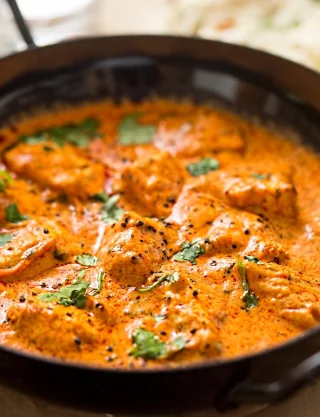
Butter chicken
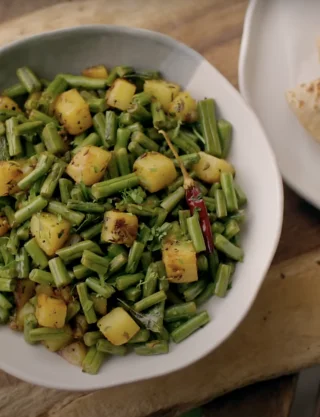
French beans and potatoes