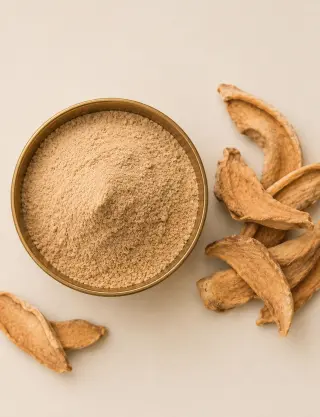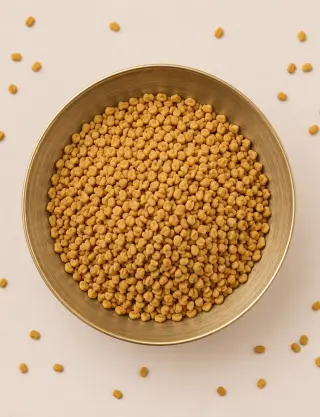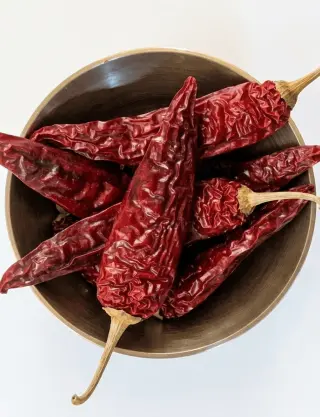




Discover our kokum (amsul), dried fruit rind of Garcinia indica, harvested in the Konkan region, between Goa and Maharashtra. Tangy, fruity, with a characteristic purple hue to flavour your sol kadhi, fish curries and dals.
Ready for shipping, delivery time 3-21 business days
Delivery from €4.80 at Mondial Relay pickup points.
Free spice samples with every order.



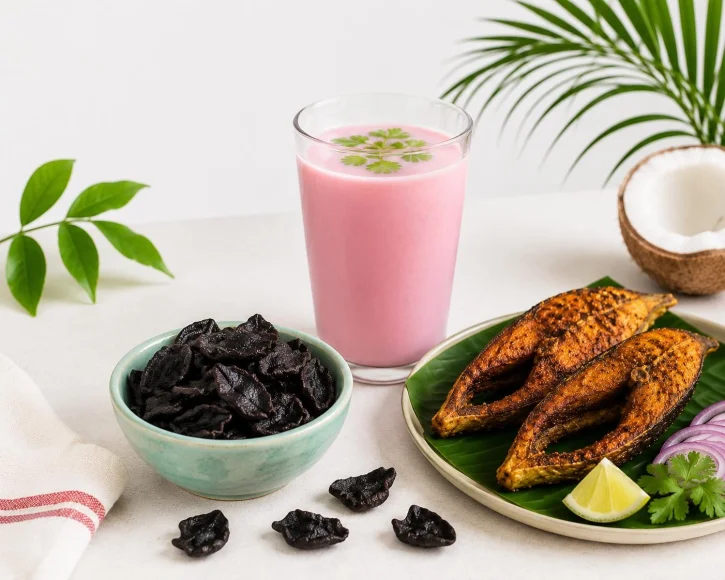
Kokum (Amsul): the fruity souring agent of the Konkan coast
Kokum, or amsul, is the dried rind of the Garcinia indica fruit, a tree native to the coastal Konkan region, between Goa and Maharashtra. Sun-dried until it takes on a characteristic deep purple hue, this rind has been used for centuries as a natural souring agent in coastal Indian cuisine. An alternative to tamarind, it brings a fruitier, less sweet acidity.
Why choose whole dried rind?
Whole, unprocessed kokum rind keeps all its aromatic complexity and its natural purple hue, which delicately colours dishes. Simply soak it in warm water for a few minutes to extract the tangy juice, or add it directly to slow-cooked preparations so it infuses during cooking.
Culinary uses:
- An essential ingredient in sol kadhi, the Konkan yoghurt and coconut drink
- Sours fish curries in the Goan and Maharashtrian style
- Flavours dals with a fruity acidity
- A natural alternative to tamarind in vegetable curries
- Used in kokum sherbet, a traditional refreshing drink
- Soaked in warm water to extract its tangy juice
Origin and quality:
Our kokum comes from the Konkan region, between Goa and Maharashtra, where it is harvested and dried using traditional methods. Our growers grow without pesticides, so we can guarantee you a natural, authentic product.
To discover all the uses of this fruity souring agent, read our complete guide to kokum.
Storage:
To preserve all its aromas, store your kokum in a dry place, away from light and humidity, in its airtight packaging.
Rich in antioxidants (garcinol)
Supports digestion
Anti-inflammatory properties
Traditionally used to cool the body
Supports gut health
Traditionally supports weight management
Source of vitamin C
Traditionally soothing for the skin
| Directly selected smallholder producers | No |
| Pesticides free | Yes |
| Vegetarian | Yes |
| Origin | Konkan (Goa / Maharashtra), India |
| Quality | Premium |
| Type | Dried rind |
| Taste profile | Tangy, fruity, with a characteristic purple hue. An alternative to tamarind, fruitier and less sweet. |
Translated from French
Learn more
In Sanskrit, kokum is called vrikshamla (वृक्षाम्ल), literally "the tree's sour," from vriksha (tree) and amla (sour, acid). The name points to its long standing in Ayurvedic medicine, where the fruit is traditionally used to balance the pitta dosha, aid digestion and cool the body during the monsoon heat.
A name owed to a French-Swiss botanist
The genus Garcinia was named by Linnaeus in honour of Laurent Garcin (1683-1752), a French-Swiss naturalist and surgeon for the Dutch East India Company, and a Fellow of the Royal Society, who studied Indian flora in the 18th century. Kokum's signature antioxidant compound, garcinol, in turn takes its name from this botanical genus.
On the Konkan coast and in Goa, the fruit goes by dozens of local names: amsul or amsool in Bombay and Goa, bhirand in Konkani, ratamba or kokambi in Marathi. This variety is a sign of an old rural and tribal use, long predating any commercial trade. Konkan communities have harvested, dried and traded kokum for generations, first and foremost as a souring agent and a natural preservative for fish preparations, in a region where humid heat makes food preservation a real challenge.
This deep rural heritage was officially recognised in 2016, when kokum from the Sindhudurg and Ratnagiri districts (Maharashtra) received protected Geographical Indication (GI) status as the "Sindhudurg & Ratnagiri Kokum," enshrining the local drying and salting know-how that sets this terroir apart.
Did you know?
- Kokum belongs to the Clusiaceae family, the same family as the mangosteen (Garcinia mangostana), a much better-known tropical cousin in South-East Asia
- Dried kokum rind is one of the most concentrated plant sources of hydroxycitric acid (HCA), a compound studied for its potential role in appetite regulation
- Cold-pressed from the fruit's seeds, "kokum butter" is a fat used in cosmetics for its emollient properties; long before Western cosmetics discovered it, it was already used on the Konkan coast to soothe sun-irritated skin
- In the Sindhudurg and Ratnagiri region, kokum provides much of the seasonal income for many rural families, with several thousand tonnes of fruit processed each year into dried rind, syrup and butter
- Kokum gives sol kadhi, the Goan and Konkan coconut-milk drink, its characteristic purple hue, with no added colouring whatsoever
Kokum across languages
| Language | Name |
|---|---|
| English | Kokum / Kokum rind |
| Hindi | Kokum (कोकम) |
| Sanskrit | Vrikshamla (वृक्षाम्ल) |
| Marathi | Kokum / Ratamba / Kokambi (कोकम / रातंबा) |
| Konkani | Bhirand (भिरींड) |
| Malayalam | Kokkam (കൊക്കം) |
| Kannada | Punarpuli / Murgina (ಪುನರ್ಪುಳಿ) |
| French | Kokum |
| Botanical Latin | Garcinia indica (Thouars) Choisy |
The name amsul (or amsool), very common in Bombay and Goa, is really a trade and culinary name rather than a strict regional vernacular term; it is usually the one found on labels in Indian markets.
| Characteristic | Detail |
|---|---|
| Latin name | Garcinia indica (Thouars) Choisy |
| Botanical family | Clusiaceae (the mangosteen family) |
| Local names | Amsul / Amsool (Bombay, Goa) / Vrikshamla (Sanskrit) / Bhirand (Konkani) |
| Part used | Dried pericarp (rind) of the fruit |
| Plant type | Dioecious evergreen tree, up to 15-18 m tall, pyramidal habit at maturity |
| Fresh fruit | Orange-sized spherical berry with purplish-red flesh, 5 to 8 seeds |
| Harvest | April to May (dry season, before the monsoon); ripe fruit picked by hand |
| Drying | Rind hand-separated, steeped in its own juice (sometimes salted), then sun-dried for 3 to 7 days until deep purple-black |
Garcinia indica grows wild or semi-cultivated in the humid tropical forests of the Konkan coast and the Western Ghats, from sea level up to roughly 800 metres. The tree favours well-drained soil and abundant monsoon rainfall followed by a marked dry season, which favours fruiting.
Growing regions
- Sindhudurg and Ratnagiri (Maharashtra): the historic heartland of production, recognised by a protected Geographical Indication since 2016 ("Sindhudurg & Ratnagiri Kokum"). Roughly 70% of the regional harvest comes from Sindhudurg, 30% from Ratnagiri
- Goa: significant production, closely tied to Goan cuisine (sol kadhi, fish curries); the tree often grows at the edge of family gardens
- Coastal Karnataka and Kerala: more limited presence, mostly for local consumption, where kokum competes with tamarind as a souring agent
A protected designation of origin
Since 2016, the name "Sindhudurg & Ratnagiri Kokum" has been protected by a Geographical Indication issued by India's GI registry, reserving the name for kokum grown and processed in these two Konkan districts using traditional drying methods.
Kokum and tamarind: two souring agents, two terroirs
| Criterion | Kokum (G. indica) | Tamarind (Tamarindus indica) |
|---|---|---|
| Part used | Dried fruit rind | Pod pulp |
| Home region | Konkan coast, Goa (humid coastal climate) | Across India, especially the South |
| Taste | Fruity, mildly sour, not sweet | Sweet-and-sour, more pronounced |
| Best with | Coconut-based and fish dishes | Sambars, chutneys, slow-cooked dishes |
See also our tamarind guide to compare the two most iconic souring agents of Indian cuisine.
Kokum brings a fruity, gently sour flavour, noticeably milder than tamarind and without its sticky-sweet edge. Sun-drying gives it a light astringency reminiscent of tart red fruit rather than citrus.
| Aromatic note | Description |
|---|---|
| Top note | Immediate fruity sourness, almost salty if the rind was steeped in salt |
| Heart note | Tart red fruit, lightly astringent |
| Base note | Woody, tannic edge |
| On the palate | "Clean" sourness, refreshing, without tamarind's stickiness |
Unlike tamarind, whose sourness comes with a marked sweet undertone, kokum stays dry and crisp on the palate. This trait explains its natural pairing with coconut milk: its light astringency balances coconut's richness and sweetness without ever overpowering it.
Soaked or simmered: two different results
Soaked for 15 to 20 minutes in hot water, kokum releases a gentle sourness and a deep purple juice, ideal for drinks and clear curries. Added directly, in pieces, to a simmering dish, it infuses more gradually and leaves a subtler, background sourness.
On the Konkan coast and in Goa, kokum appears in any dish that calls for fresh sourness rather than heat. It is used in two ways: soaked to extract its juice, or added in pieces straight into the cooking pot.
Konkan and Goan classics
- Sol kadhi: the signature drink of Goa and the Konkan, made from kokum juice and coconut milk, often spiked with ginger, garlic and green chilli. Served chilled, it accompanies rice or is drunk on its own as a digestif after a rich meal
- Coastal fish curries: kokum is a natural substitute for tamarind in coconut-based fish and prawn curries, alongside black pepper and curry leaves; its light astringency holds up well to cooking without masking the fish
- Kokum rasam: a variant of the traditional rasam in which kokum stands in for tamarind, for a lighter sourness
- Kokum kadhi: a sour version of kadhi made with buttermilk or coconut milk, served with rice
- Dals and vegetables: a few pieces of kokum added during cooking lend dals and vegetable curries a subtle sour note
- Kokum sherbet (sharbat): concentrated kokum syrup diluted in ice water, a hugely popular cooling drink during the Indian summer heat
How to use it
- Soaking: soak 3 to 4 pieces of dried rind in a little hot water for 15 to 20 minutes; use both the softened flesh and the resulting juice
- Direct cooking: add whole pieces at the start of cooking for a simmered dish, much as you would tamarind or preserved lemon
- Salted vs unsalted kokum: the salted version (often steeped in its own juice with added salt) keeps better and adds a salty-sour note from the start; adjust the dish's seasoning accordingly
- Reuse: soaked rind pieces can be reused a second time for a lighter sourness
A natural stand-in for tamarind
In any recipe calling for tamarind, kokum can often replace it in roughly equal amounts when a lighter, less sweet sourness is preferred. This swap is particularly recommended in coconut-based dishes, where kokum has historically been the preferred choice.
Beyond the kitchen
Cold-pressed from the fruit's seeds, kokum butter is a fat used in cosmetics for its emollient properties: a traditional skin-care use that long predates its adoption by Western cosmetics.
Kokum holds an old place in Ayurvedic medicine, where it is traditionally used to balance the pitta dosha, cool the body and aid digestion. Modern research has mainly focused on two characteristic compounds in its rind: hydroxycitric acid (HCA) and garcinol.
What we know
- Digestive: traditionally drunk (as sol kadhi or sherbet) after meals to aid digestion and soothe mild stomach discomfort
- Rich in hydroxycitric acid (HCA): dried kokum rind is among the most concentrated plant sources of HCA, a compound studied for its potential role in appetite regulation and fat metabolism. The available evidence remains largely preclinical or from small trials; kokum's culinary use is nowhere near as concentrated as the standardised extracts used in research, and should not be mistaken for a weight-loss supplement
- Antioxidant: rich in garcinol and anthocyanins (responsible for its purple colour), two compound families recognised for their antioxidant properties
- Traditional cooling agent: long used on the Konkan coast against heat exhaustion and mild dehydration during the monsoon and summer months
- Vitamin C: the fresh fruit contains a notable amount, partly retained in the dried rind
- Traditional skin use: the butter extracted from the seeds is traditionally applied to soothe dry or sun-irritated skin
Precautions
Eaten as food, in ordinary amounts, kokum carries no particular risk. Concentrated HCA supplements, however, often sold under the name Garcinia cambogia (a closely related species), have raised caution in people on existing medication, particularly for diabetes or certain liver conditions: check with your doctor before taking any kokum- or Garcinia-based supplement, as opposed to ordinary culinary use.
Recognising good-quality kokum
- Colour: deep, even purple-black rind; a dull brown or greyish tone signals poor drying or an aged product
- Flexibility: pieces should remain slightly pliable, not brittle; overly dry, crumbly kokum has lost some of its aroma
- Smell: fruity, tangy aroma, with no musty note
- Salted or unsalted: salted kokum (steeped in its own juice with added salt) is darker and slightly tacky to the touch: a traditional variant, not a flaw
Storage tips
- Store in an airtight jar or resealable bag, away from light and moisture
- Dried kokum keeps far longer than fresh fruit (up to 12 to 18 months under good storage conditions)
- The salted version keeps even longer, thanks to salt's natural preserving effect
- Avoid any contact with moisture, which encourages mould on the rind
- Signs of spoilage: whitish spots, musty smell, unusually sticky texture
What is kokum and how is it different from tamarind?
Kokum is the dried rind of the fruit of Garcinia indica, a tree from the Konkan and Goa. Like tamarind, it brings sourness to a dish, but its flavour is milder, fruitier and tangier, without tamarind's sweet edge. It is especially prized in coconut-based dishes.
How do I use dried kokum in cooking?
Two methods: soak it for 15 to 20 minutes in hot water to extract its juice (used in drinks and clear curries), or add it directly, in pieces, to a dish at the start of cooking, much like tamarind.
Can I replace tamarind with kokum in a recipe?
Yes, in most recipes that call for sourness, in roughly equal amounts. It is particularly favoured in coconut-based dishes, where kokum is historically preferred. The result will be less sweet and lighter than tamarind.
Does kokum really help with weight loss?
Kokum rind is rich in hydroxycitric acid (HCA), a compound studied for a potential effect on appetite and fat metabolism, but the scientific evidence remains limited and comes mostly from preclinical studies or concentrated supplements, unrelated to the amounts used in cooking. It is not a miracle weight-loss product.
What is the difference between salted and unsalted kokum?
Salted kokum has been steeped in its own juice with added salt before drying, so it is darker, slightly tacky, and keeps longer. Unsalted kokum is drier and more neutral; adjust your dish's seasoning depending on which version you use.
How should I store dried kokum?
In an airtight jar, away from light and moisture, for up to 12 to 18 months. The salted version keeps even longer thanks to salt's natural preserving effect.
-
In Sanskrit, kokum is called vrikshamla (वृक्षाम्ल), literally "the tree's sour," from vriksha (tree) and amla (sour, acid). The name points to its long standing in Ayurvedic medicine, where the fruit is traditionally used to balance the pitta dosha, aid digestion and cool the body during the monsoon heat.
A name owed to a French-Swiss botanist
The genus Garcinia was named by Linnaeus in honour of Laurent Garcin (1683-1752), a French-Swiss naturalist and surgeon for the Dutch East India Company, and a Fellow of the Royal Society, who studied Indian flora in the 18th century. Kokum's signature antioxidant compound, garcinol, in turn takes its name from this botanical genus.
On the Konkan coast and in Goa, the fruit goes by dozens of local names: amsul or amsool in Bombay and Goa, bhirand in Konkani, ratamba or kokambi in Marathi. This variety is a sign of an old rural and tribal use, long predating any commercial trade. Konkan communities have harvested, dried and traded kokum for generations, first and foremost as a souring agent and a natural preservative for fish preparations, in a region where humid heat makes food preservation a real challenge.
This deep rural heritage was officially recognised in 2016, when kokum from the Sindhudurg and Ratnagiri districts (Maharashtra) received protected Geographical Indication (GI) status as the "Sindhudurg & Ratnagiri Kokum," enshrining the local drying and salting know-how that sets this terroir apart.
Did you know?
- Kokum belongs to the Clusiaceae family, the same family as the mangosteen (Garcinia mangostana), a much better-known tropical cousin in South-East Asia
- Dried kokum rind is one of the most concentrated plant sources of hydroxycitric acid (HCA), a compound studied for its potential role in appetite regulation
- Cold-pressed from the fruit's seeds, "kokum butter" is a fat used in cosmetics for its emollient properties; long before Western cosmetics discovered it, it was already used on the Konkan coast to soothe sun-irritated skin
- In the Sindhudurg and Ratnagiri region, kokum provides much of the seasonal income for many rural families, with several thousand tonnes of fruit processed each year into dried rind, syrup and butter
- Kokum gives sol kadhi, the Goan and Konkan coconut-milk drink, its characteristic purple hue, with no added colouring whatsoever
Kokum across languages
Language Name English Kokum / Kokum rind Hindi Kokum (कोकम) Sanskrit Vrikshamla (वृक्षाम्ल) Marathi Kokum / Ratamba / Kokambi (कोकम / रातंबा) Konkani Bhirand (भिरींड) Malayalam Kokkam (കൊക്കം) Kannada Punarpuli / Murgina (ಪುನರ್ಪುಳಿ) French Kokum Botanical Latin Garcinia indica (Thouars) Choisy The name amsul (or amsool), very common in Bombay and Goa, is really a trade and culinary name rather than a strict regional vernacular term; it is usually the one found on labels in Indian markets.
-
Characteristic Detail Latin name Garcinia indica (Thouars) Choisy Botanical family Clusiaceae (the mangosteen family) Local names Amsul / Amsool (Bombay, Goa) / Vrikshamla (Sanskrit) / Bhirand (Konkani) Part used Dried pericarp (rind) of the fruit Plant type Dioecious evergreen tree, up to 15-18 m tall, pyramidal habit at maturity Fresh fruit Orange-sized spherical berry with purplish-red flesh, 5 to 8 seeds Harvest April to May (dry season, before the monsoon); ripe fruit picked by hand Drying Rind hand-separated, steeped in its own juice (sometimes salted), then sun-dried for 3 to 7 days until deep purple-black Garcinia indica grows wild or semi-cultivated in the humid tropical forests of the Konkan coast and the Western Ghats, from sea level up to roughly 800 metres. The tree favours well-drained soil and abundant monsoon rainfall followed by a marked dry season, which favours fruiting.
Growing regions
- Sindhudurg and Ratnagiri (Maharashtra): the historic heartland of production, recognised by a protected Geographical Indication since 2016 ("Sindhudurg & Ratnagiri Kokum"). Roughly 70% of the regional harvest comes from Sindhudurg, 30% from Ratnagiri
- Goa: significant production, closely tied to Goan cuisine (sol kadhi, fish curries); the tree often grows at the edge of family gardens
- Coastal Karnataka and Kerala: more limited presence, mostly for local consumption, where kokum competes with tamarind as a souring agent
A protected designation of origin
Since 2016, the name "Sindhudurg & Ratnagiri Kokum" has been protected by a Geographical Indication issued by India's GI registry, reserving the name for kokum grown and processed in these two Konkan districts using traditional drying methods.
Kokum and tamarind: two souring agents, two terroirs
Criterion Kokum (G. indica) Tamarind (Tamarindus indica) Part used Dried fruit rind Pod pulp Home region Konkan coast, Goa (humid coastal climate) Across India, especially the South Taste Fruity, mildly sour, not sweet Sweet-and-sour, more pronounced Best with Coconut-based and fish dishes Sambars, chutneys, slow-cooked dishes See also our tamarind guide to compare the two most iconic souring agents of Indian cuisine.
-
Kokum brings a fruity, gently sour flavour, noticeably milder than tamarind and without its sticky-sweet edge. Sun-drying gives it a light astringency reminiscent of tart red fruit rather than citrus.
Aromatic note Description Top note Immediate fruity sourness, almost salty if the rind was steeped in salt Heart note Tart red fruit, lightly astringent Base note Woody, tannic edge On the palate "Clean" sourness, refreshing, without tamarind's stickiness Unlike tamarind, whose sourness comes with a marked sweet undertone, kokum stays dry and crisp on the palate. This trait explains its natural pairing with coconut milk: its light astringency balances coconut's richness and sweetness without ever overpowering it.
Soaked or simmered: two different results
Soaked for 15 to 20 minutes in hot water, kokum releases a gentle sourness and a deep purple juice, ideal for drinks and clear curries. Added directly, in pieces, to a simmering dish, it infuses more gradually and leaves a subtler, background sourness.
-
On the Konkan coast and in Goa, kokum appears in any dish that calls for fresh sourness rather than heat. It is used in two ways: soaked to extract its juice, or added in pieces straight into the cooking pot.
Konkan and Goan classics
- Sol kadhi: the signature drink of Goa and the Konkan, made from kokum juice and coconut milk, often spiked with ginger, garlic and green chilli. Served chilled, it accompanies rice or is drunk on its own as a digestif after a rich meal
- Coastal fish curries: kokum is a natural substitute for tamarind in coconut-based fish and prawn curries, alongside black pepper and curry leaves; its light astringency holds up well to cooking without masking the fish
- Kokum rasam: a variant of the traditional rasam in which kokum stands in for tamarind, for a lighter sourness
- Kokum kadhi: a sour version of kadhi made with buttermilk or coconut milk, served with rice
- Dals and vegetables: a few pieces of kokum added during cooking lend dals and vegetable curries a subtle sour note
- Kokum sherbet (sharbat): concentrated kokum syrup diluted in ice water, a hugely popular cooling drink during the Indian summer heat
How to use it
- Soaking: soak 3 to 4 pieces of dried rind in a little hot water for 15 to 20 minutes; use both the softened flesh and the resulting juice
- Direct cooking: add whole pieces at the start of cooking for a simmered dish, much as you would tamarind or preserved lemon
- Salted vs unsalted kokum: the salted version (often steeped in its own juice with added salt) keeps better and adds a salty-sour note from the start; adjust the dish's seasoning accordingly
- Reuse: soaked rind pieces can be reused a second time for a lighter sourness
A natural stand-in for tamarind
In any recipe calling for tamarind, kokum can often replace it in roughly equal amounts when a lighter, less sweet sourness is preferred. This swap is particularly recommended in coconut-based dishes, where kokum has historically been the preferred choice.
Beyond the kitchen
Cold-pressed from the fruit's seeds, kokum butter is a fat used in cosmetics for its emollient properties: a traditional skin-care use that long predates its adoption by Western cosmetics.
-
Kokum holds an old place in Ayurvedic medicine, where it is traditionally used to balance the pitta dosha, cool the body and aid digestion. Modern research has mainly focused on two characteristic compounds in its rind: hydroxycitric acid (HCA) and garcinol.
What we know
- Digestive: traditionally drunk (as sol kadhi or sherbet) after meals to aid digestion and soothe mild stomach discomfort
- Rich in hydroxycitric acid (HCA): dried kokum rind is among the most concentrated plant sources of HCA, a compound studied for its potential role in appetite regulation and fat metabolism. The available evidence remains largely preclinical or from small trials; kokum's culinary use is nowhere near as concentrated as the standardised extracts used in research, and should not be mistaken for a weight-loss supplement
- Antioxidant: rich in garcinol and anthocyanins (responsible for its purple colour), two compound families recognised for their antioxidant properties
- Traditional cooling agent: long used on the Konkan coast against heat exhaustion and mild dehydration during the monsoon and summer months
- Vitamin C: the fresh fruit contains a notable amount, partly retained in the dried rind
- Traditional skin use: the butter extracted from the seeds is traditionally applied to soothe dry or sun-irritated skin
Precautions
Eaten as food, in ordinary amounts, kokum carries no particular risk. Concentrated HCA supplements, however, often sold under the name Garcinia cambogia (a closely related species), have raised caution in people on existing medication, particularly for diabetes or certain liver conditions: check with your doctor before taking any kokum- or Garcinia-based supplement, as opposed to ordinary culinary use.
-
Recognising good-quality kokum
- Colour: deep, even purple-black rind; a dull brown or greyish tone signals poor drying or an aged product
- Flexibility: pieces should remain slightly pliable, not brittle; overly dry, crumbly kokum has lost some of its aroma
- Smell: fruity, tangy aroma, with no musty note
- Salted or unsalted: salted kokum (steeped in its own juice with added salt) is darker and slightly tacky to the touch: a traditional variant, not a flaw
Storage tips
- Store in an airtight jar or resealable bag, away from light and moisture
- Dried kokum keeps far longer than fresh fruit (up to 12 to 18 months under good storage conditions)
- The salted version keeps even longer, thanks to salt's natural preserving effect
- Avoid any contact with moisture, which encourages mould on the rind
- Signs of spoilage: whitish spots, musty smell, unusually sticky texture
-
What is kokum and how is it different from tamarind?
Kokum is the dried rind of the fruit of Garcinia indica, a tree from the Konkan and Goa. Like tamarind, it brings sourness to a dish, but its flavour is milder, fruitier and tangier, without tamarind's sweet edge. It is especially prized in coconut-based dishes.
How do I use dried kokum in cooking?
Two methods: soak it for 15 to 20 minutes in hot water to extract its juice (used in drinks and clear curries), or add it directly, in pieces, to a dish at the start of cooking, much like tamarind.
Can I replace tamarind with kokum in a recipe?
Yes, in most recipes that call for sourness, in roughly equal amounts. It is particularly favoured in coconut-based dishes, where kokum is historically preferred. The result will be less sweet and lighter than tamarind.
Does kokum really help with weight loss?
Kokum rind is rich in hydroxycitric acid (HCA), a compound studied for a potential effect on appetite and fat metabolism, but the scientific evidence remains limited and comes mostly from preclinical studies or concentrated supplements, unrelated to the amounts used in cooking. It is not a miracle weight-loss product.
What is the difference between salted and unsalted kokum?
Salted kokum has been steeped in its own juice with added salt before drying, so it is darker, slightly tacky, and keeps longer. Unsalted kokum is drier and more neutral; adjust your dish's seasoning depending on which version you use.
How should I store dried kokum?
In an airtight jar, away from light and moisture, for up to 12 to 18 months. The salted version keeps even longer thanks to salt's natural preserving effect.
Why choose Kokum (Amsul) from La Table Indienne?

Exceptional freshness and quality
Our spices are imported directly from India and packaged on demand to guarantee optimal freshness. Unlike spices sold in supermarkets that can sit on shelves for months, we ensure each spice retains its full flavor and aroma.
Authenticity and traceability
Each spice comes from specific regions in India renowned for their expertise. We work directly with local producers who grow their spices traditionally, without pesticides or chemicals.
How to best use this spice?
To reveal all the aromas, we recommend lightly toasting whole spices in a dry pan before grinding them. Store them in a dry place away from light to preserve their freshness as long as possible.

Did you know?
Whole spices are much better than ground spices
Check out our blog article to discover why whole spices retain their aromas better.
Questions & Answers
Thank you! Your question has been sent. Mihika will answer soon and you will receive an email.

Kokum (Amsul)
Discover also
Other products you might like