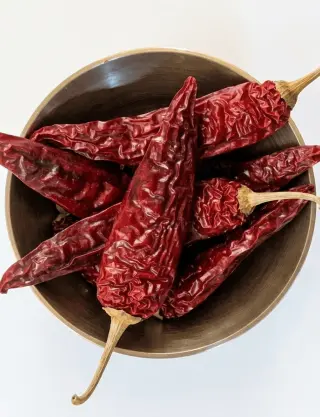




Hulled White Sesame Seeds
Discover our hulled white sesame seeds, with delicate nutty notes, perfect for baking, salads and Asian cuisine.
Ready for shipping, delivery time 3-21 business days
Delivery from €4.80 at Mondial Relay pickup points.
Free spice samples with every order.



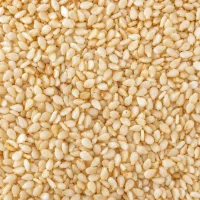
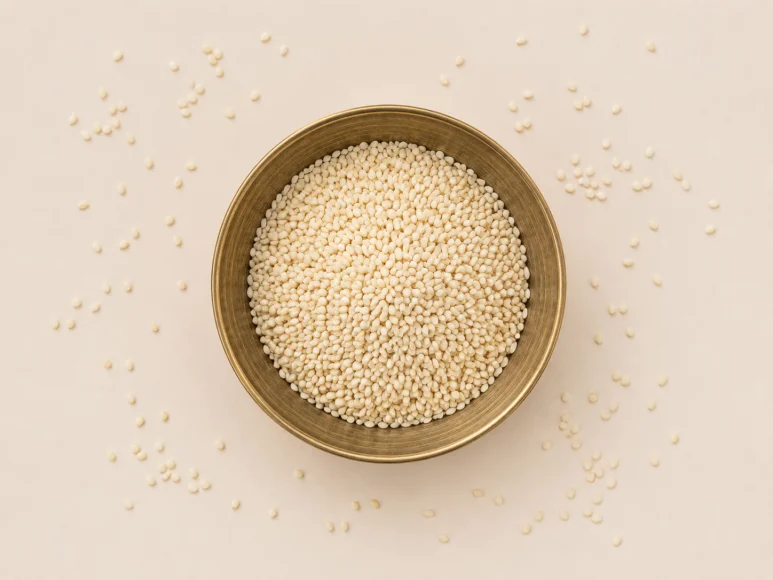
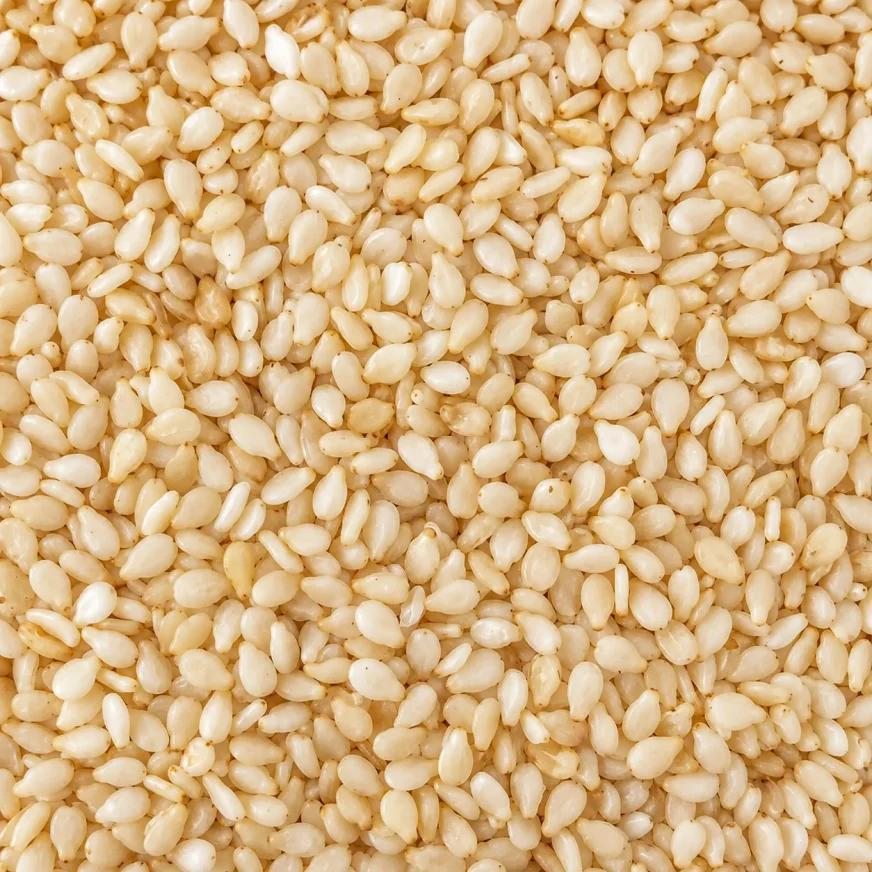
White Hulled Sesame: creamy delicacy from India
White hulled sesame (Sesamum indicum) is one of the oldest oilseed crops cultivated in the world. Used for over 5,000 years in India, the Middle East and Asia, it is prized for its sweet, delicate flavour and melt-in-the-mouth texture. We source our white sesame seeds from producers in India to guarantee a premium natural product, free from pesticides and additives.
Why choose hulled white sesame?
Hulling removes the outer shell of the seed, revealing a milder, lighter and more versatile sesame. Hulled white sesame offers a delicately sweet and nutty flavour, less bitter than whole sesame, making it ideal for baking, sauces and delicate preparations. It is the base of tahini, the essential ingredient in hummus.
Culinary uses:
- Tahini and hummus: blend into a smooth, creamy sesame paste
- Asian stir-fries and noodles: sprinkle as a finishing touch for a crunchy garnish
- Bread and pastry toppings: scatter over breads, bagels and biscuits before baking
- Indian sweets: a key ingredient in ladoo and chikki (sesame brittle)
- Salad dressings and sauces: incorporate into dressings or use as a sesame sauce base
- Coating for fish or tofu: coat before cooking for a golden, crispy crust
Origin and quality:
We source our white sesame seeds from producers in India, guaranteeing a premium natural product free from pesticides and additives.
Storage:
To preserve all its flavour and freshness, store your white sesame in a cool, dry place, away from light and moisture, in its airtight packaging. It keeps for up to 12 months.
Excellent source of calcium for bone health
Rich in beneficial unsaturated fatty acids (omega-6)
Good source of plant protein
Rich in B vitamins (thiamine, niacin) for energy metabolism
Supports bone health thanks to calcium, zinc and magnesium
Source of zinc and magnesium for the immune system
Contains lignans (sesamin, sesamolin) with antioxidant properties
Supports heart health
Nutritional declaration per 100g
| Nutritional component | Per 100g |
|---|---|
| Energy | 2 400 kJ / 573 kcal |
| Fat | ~ 50 g |
| of which saturated fat | ~ 7 g |
| Carbohydrates | ~ 23 g |
| of which sugars | ~ 300 mg |
| Dietary fiber | ~ 12 g |
| Proteins | ~ 17 g |
| Salt | ~ 40 mg |
| Directly selected smallholder producers | Yes |
| Pesticides free | Yes |
| Vegetarian | Yes |
| Origin | India |
| Quality | Premium |
| Type | Hulled seeds |
| Taste profile | Sweet, delicate and nutty flavour. Hulled sesame offers a creamy sweetness without the bitterness of the hull, with a lightly sweet note. |
| Possible traces of allergens | Contains sesame |
| Composition | 100% white hulled sesame seeds (Sesamum indicum) |
Learn more
Sesame is one of the oldest crops cultivated by humanity. Archaeological evidence dating from 3,500 to 5,000 BC confirms its cultivation in the Indus Valley, India, making it likely the world's oldest domesticated oilseed. Carbonised sesame seeds have been found at the Harappa and Mohenjo-daro sites, testifying to the importance of this plant in Indus Valley civilisations.
The sacred texts of ancient India mention sesame abundantly. The Vedas, composed between 1500 and 500 BC, describe sesame oil (tila taila) as the purest and most beneficial of all oils. In Ayurveda, sesame holds a premier position: Abhyanga, sesame oil massage, is considered one of the pillars of daily health.
From India, sesame spread to Mesopotamia and ancient Egypt via trade routes. The Babylonians used sesame oil in their cuisine and medicine from 2000 BC. The Egyptians knew it as sesemt (the word from which "sesame" derives) and included it in the Ebers Papyrus (1550 BC) among medicinal plants.
The famous phrase "Open Sesame!" from the One Thousand and One Nights (the tale of Ali Baba and the 40 Thieves) references the natural phenomenon of the sesame pod bursting open at maturity to release its seeds, a botanical mechanism called dehiscence.
Did you know?
- Sesame is likely the first oilseed domesticated by humanity, over 5,000 years ago in the Indus Valley
- The phrase "Open Sesame!" from the Arabian Nights references the sesame pod that bursts open at maturity to release its seeds
- In ancient India, sesame was considered a symbol of immortality; it is still used in Hindu funeral rituals
- Roman gladiators consumed sesame seeds for energy and strength
- The word "sesame" derives from ancient Egyptian sesemt and Babylonian shaman
| Characteristic | Detail |
|---|---|
| Latin name | Sesamum indicum L. |
| Botanical family | Pedaliaceae |
| Common names | White sesame, Hulled sesame, Gingelly (South India) |
| Part used | Hulled seed (outer shell removed) |
| Key compound | Sesamol, sesamolin |
| Growth cycle | Annual, 90 to 120 days from seed to harvest |
Sesame is a tropical and subtropical plant that thrives in hot, dry regions. India is the world's leading sesame producer. Our seeds come from suppliers cultivating without pesticides in India's traditional sesame-growing regions.
Hulled white sesame has had its outer shell removed, revealing the pearly white heart of the seed. This process softens the flavour by eliminating the slight bitterness of the hull, producing a finer, smoother texture ideal for tahini, halva and preparations where a mild, creamy character is desired.
Hulled white sesame offers one of the gentlest and most accessible flavour profiles among oilseeds. Its taste is an invitation to indulgence: smooth, nutty, subtly sweet, without the slightest harshness.
| Aromatic note | Description |
|---|---|
| Top note | Gentle, slightly buttery, milky |
| Heart note | Nutty, smooth, subtly sweet |
| Base note | Creamy, slightly cereal-like, persistent |
| On the palate | Melt-in-the-mouth texture, gentle rounded flavour, delicate crunch |
Toasted, white sesame develops brown butter and caramel notes that make it irresistible. Toast in a dry pan over medium heat for 2 to 4 minutes, stirring constantly, until uniformly golden.
White sesame is one of the most versatile seeds in cooking, found across an impressive diversity of culinary traditions from the Mediterranean to Asia.
Sesame-based preparations
- Tahini: ground white sesame paste, pillar of Levantine cuisine, essential for hummus, baba ghanoush, sauces and desserts
- Halva: confection made from tahini and sugar, found from Greece to India
- Gomashio: Japanese condiment of toasted sesame and salt, the ultimate rice companion
In Mediterranean and Middle Eastern cuisine
- Breads: sesame breads, Turkish simit, bagels, breadsticks
- Hummus: tahini is the secret ingredient giving hummus its creaminess
- Falafel: often rolled in sesame before frying
- Dukkah: Egyptian blend of sesame, hazelnuts, coriander and cumin
In Asian cuisine
- Stir-fries: toasted seeds finish nearly every Asian stir-fry
- Coating: sesame-crusted chicken, fish or tofu
- Sauces: sesame sauce for cold noodles, salads and dumplings
- Desserts: Chinese sesame balls (jian dui), sesame biscuits
In Indian cuisine
- Til ladoo: sesame and jaggery balls, a traditional Makar Sankranti sweet
- Chikki: crunchy sesame-jaggery bars from Maharashtra and Gujarat
- Tempering (tadka): sesame seeds added to hot oil to flavour dals and curries
Sesame is a food of remarkable nutritional density, concentrating an impressive array of essential nutrients and unique bioactive compounds.
Documented properties
- Excellent calcium source: one of the best plant-based calcium sources, essential for bone health
- Unique lignans: sesame contains specific lignans (sesamol and sesamin) found in no other food. These compounds have powerful antioxidant properties.
- Healthy fats: rich in unsaturated fatty acids (oleic and linoleic), supporting cardiovascular health
- B vitamins: notable source of thiamine (B1), niacin (B3) and vitamin B6
- Zinc and magnesium: important minerals for immunity, hormonal health and the nervous system
- Bone health: the combination of calcium + zinc + magnesium + phosphorus makes sesame a valuable ally for bone density
Precautions
Sesame is one of the 14 major food allergens in Europe. People with sesame allergy must avoid this product. Outside of this allergy, sesame has no known side effects at normal dietary doses.
Storage tips
- Store in an airtight jar, away from light, heat and moisture
- Hulled sesame contains oils that can go rancid; keep cool for optimal shelf life
- Optimal shelf life: 6 to 12 months in good conditions, longer if refrigerated
- Only toast just before use
- Signs of degradation: rancid smell, bitter or sour taste, yellowed colour
What is the difference between white and black sesame?
White (hulled) sesame has its outer shell removed, revealing an ivory-white heart with a gentle, nutty flavour. Black sesame retains its hull, giving it a more intense, earthy flavour with a slight bitterness. Both come from the same plant (Sesamum indicum) but offer different flavour profiles.
Is hulled sesame less nutritious than unhulled?
Hulling removes the outer shell, slightly reducing calcium, fibre and some mineral content. However, hulled white sesame remains highly nutritious with excellent levels of healthy fats, proteins, lignans, zinc and magnesium. The choice depends on your taste preferences and culinary use.
How do I make homemade tahini?
Lightly toast 200 g of white sesame in a dry pan for 3 to 4 minutes. Allow to cool, then blend in a food processor for 5 to 10 minutes, scraping the sides regularly. The seeds gradually release their oil to form a smooth, creamy paste. Add 1 tablespoon of sesame or neutral oil to thin if needed.
Is sesame an allergen?
Yes, sesame is one of the 14 major food allergens in Europe. Sesame allergy can cause reactions ranging from urticaria to anaphylaxis. If you are allergic, avoid all products containing sesame or traces of sesame.
How do I toast white sesame perfectly?
Place seeds in a dry pan over medium heat. Stir constantly for 2 to 4 minutes until uniformly golden with a nutty aroma. Remove from the pan immediately as seeds continue cooking from residual heat. The most common mistake is leaving them too long: they go from golden to burnt in seconds.
-
Sesame is one of the oldest crops cultivated by humanity. Archaeological evidence dating from 3,500 to 5,000 BC confirms its cultivation in the Indus Valley, India, making it likely the world's oldest domesticated oilseed. Carbonised sesame seeds have been found at the Harappa and Mohenjo-daro sites, testifying to the importance of this plant in Indus Valley civilisations.
The sacred texts of ancient India mention sesame abundantly. The Vedas, composed between 1500 and 500 BC, describe sesame oil (tila taila) as the purest and most beneficial of all oils. In Ayurveda, sesame holds a premier position: Abhyanga, sesame oil massage, is considered one of the pillars of daily health.
From India, sesame spread to Mesopotamia and ancient Egypt via trade routes. The Babylonians used sesame oil in their cuisine and medicine from 2000 BC. The Egyptians knew it as sesemt (the word from which "sesame" derives) and included it in the Ebers Papyrus (1550 BC) among medicinal plants.
The famous phrase "Open Sesame!" from the One Thousand and One Nights (the tale of Ali Baba and the 40 Thieves) references the natural phenomenon of the sesame pod bursting open at maturity to release its seeds, a botanical mechanism called dehiscence.
Did you know?
- Sesame is likely the first oilseed domesticated by humanity, over 5,000 years ago in the Indus Valley
- The phrase "Open Sesame!" from the Arabian Nights references the sesame pod that bursts open at maturity to release its seeds
- In ancient India, sesame was considered a symbol of immortality; it is still used in Hindu funeral rituals
- Roman gladiators consumed sesame seeds for energy and strength
- The word "sesame" derives from ancient Egyptian sesemt and Babylonian shaman
-
Characteristic Detail Latin name Sesamum indicum L. Botanical family Pedaliaceae Common names White sesame, Hulled sesame, Gingelly (South India) Part used Hulled seed (outer shell removed) Key compound Sesamol, sesamolin Growth cycle Annual, 90 to 120 days from seed to harvest Sesame is a tropical and subtropical plant that thrives in hot, dry regions. India is the world's leading sesame producer. Our seeds come from suppliers cultivating without pesticides in India's traditional sesame-growing regions.
Hulled white sesame has had its outer shell removed, revealing the pearly white heart of the seed. This process softens the flavour by eliminating the slight bitterness of the hull, producing a finer, smoother texture ideal for tahini, halva and preparations where a mild, creamy character is desired.
-
Hulled white sesame offers one of the gentlest and most accessible flavour profiles among oilseeds. Its taste is an invitation to indulgence: smooth, nutty, subtly sweet, without the slightest harshness.
Aromatic note Description Top note Gentle, slightly buttery, milky Heart note Nutty, smooth, subtly sweet Base note Creamy, slightly cereal-like, persistent On the palate Melt-in-the-mouth texture, gentle rounded flavour, delicate crunch Toasted, white sesame develops brown butter and caramel notes that make it irresistible. Toast in a dry pan over medium heat for 2 to 4 minutes, stirring constantly, until uniformly golden.
-
White sesame is one of the most versatile seeds in cooking, found across an impressive diversity of culinary traditions from the Mediterranean to Asia.
Sesame-based preparations
- Tahini: ground white sesame paste, pillar of Levantine cuisine, essential for hummus, baba ghanoush, sauces and desserts
- Halva: confection made from tahini and sugar, found from Greece to India
- Gomashio: Japanese condiment of toasted sesame and salt, the ultimate rice companion
In Mediterranean and Middle Eastern cuisine
- Breads: sesame breads, Turkish simit, bagels, breadsticks
- Hummus: tahini is the secret ingredient giving hummus its creaminess
- Falafel: often rolled in sesame before frying
- Dukkah: Egyptian blend of sesame, hazelnuts, coriander and cumin
In Asian cuisine
- Stir-fries: toasted seeds finish nearly every Asian stir-fry
- Coating: sesame-crusted chicken, fish or tofu
- Sauces: sesame sauce for cold noodles, salads and dumplings
- Desserts: Chinese sesame balls (jian dui), sesame biscuits
In Indian cuisine
- Til ladoo: sesame and jaggery balls, a traditional Makar Sankranti sweet
- Chikki: crunchy sesame-jaggery bars from Maharashtra and Gujarat
- Tempering (tadka): sesame seeds added to hot oil to flavour dals and curries
-
Sesame is a food of remarkable nutritional density, concentrating an impressive array of essential nutrients and unique bioactive compounds.
Documented properties
- Excellent calcium source: one of the best plant-based calcium sources, essential for bone health
- Unique lignans: sesame contains specific lignans (sesamol and sesamin) found in no other food. These compounds have powerful antioxidant properties.
- Healthy fats: rich in unsaturated fatty acids (oleic and linoleic), supporting cardiovascular health
- B vitamins: notable source of thiamine (B1), niacin (B3) and vitamin B6
- Zinc and magnesium: important minerals for immunity, hormonal health and the nervous system
- Bone health: the combination of calcium + zinc + magnesium + phosphorus makes sesame a valuable ally for bone density
Precautions
Sesame is one of the 14 major food allergens in Europe. People with sesame allergy must avoid this product. Outside of this allergy, sesame has no known side effects at normal dietary doses.
-
Storage tips
- Store in an airtight jar, away from light, heat and moisture
- Hulled sesame contains oils that can go rancid; keep cool for optimal shelf life
- Optimal shelf life: 6 to 12 months in good conditions, longer if refrigerated
- Only toast just before use
- Signs of degradation: rancid smell, bitter or sour taste, yellowed colour
-
What is the difference between white and black sesame?
White (hulled) sesame has its outer shell removed, revealing an ivory-white heart with a gentle, nutty flavour. Black sesame retains its hull, giving it a more intense, earthy flavour with a slight bitterness. Both come from the same plant (Sesamum indicum) but offer different flavour profiles.
Is hulled sesame less nutritious than unhulled?
Hulling removes the outer shell, slightly reducing calcium, fibre and some mineral content. However, hulled white sesame remains highly nutritious with excellent levels of healthy fats, proteins, lignans, zinc and magnesium. The choice depends on your taste preferences and culinary use.
How do I make homemade tahini?
Lightly toast 200 g of white sesame in a dry pan for 3 to 4 minutes. Allow to cool, then blend in a food processor for 5 to 10 minutes, scraping the sides regularly. The seeds gradually release their oil to form a smooth, creamy paste. Add 1 tablespoon of sesame or neutral oil to thin if needed.
Is sesame an allergen?
Yes, sesame is one of the 14 major food allergens in Europe. Sesame allergy can cause reactions ranging from urticaria to anaphylaxis. If you are allergic, avoid all products containing sesame or traces of sesame.
How do I toast white sesame perfectly?
Place seeds in a dry pan over medium heat. Stir constantly for 2 to 4 minutes until uniformly golden with a nutty aroma. Remove from the pan immediately as seeds continue cooking from residual heat. The most common mistake is leaving them too long: they go from golden to burnt in seconds.
Why choose Hulled White Sesame Seeds from La Table Indienne?

Exceptional freshness and quality
Our spices are imported directly from India and packaged on demand to guarantee optimal freshness. Unlike spices sold in supermarkets that can sit on shelves for months, we ensure each spice retains its full flavor and aroma.
Authenticity and traceability
Each spice comes from specific regions in India renowned for their expertise. We work directly with local producers who grow their spices traditionally, without pesticides or chemicals.
How to best use this spice?
To reveal all the aromas, we recommend lightly toasting whole spices in a dry pan before grinding them. Store them in a dry place away from light to preserve their freshness as long as possible.

Did you know?
Whole spices are much better than ground spices
Check out our blog article to discover why whole spices retain their aromas better.
Questions & Answers
Thank you! Your question has been sent. Mihika will answer soon and you will receive an email.
Hulled White Sesame Seeds
Discover also
Other products you might like