



Discover our Ceylon Cinnamon C-5 Special, an excellent true cinnamon (Cinnamomum verum) grown in Sri Lanka. Warm and sweet-spicy aroma, delicate quills with woody notes for all your everyday culinary uses.
Ready for shipping, delivery time 3-10 business days
Delivery from €4.80 at Mondial Relay pickup points.



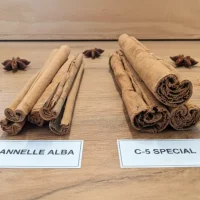
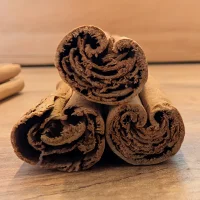
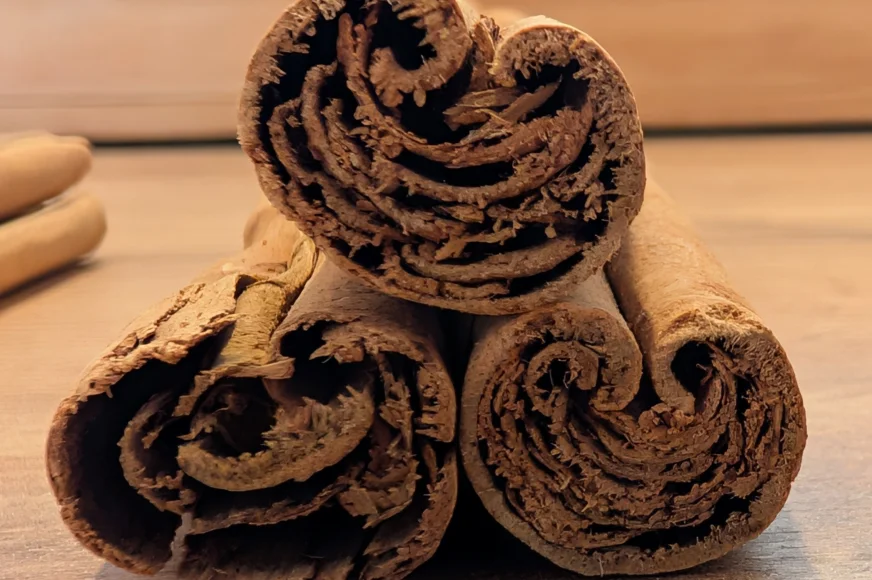
Ceylon Cinnamon C-5 Special: everyday excellence
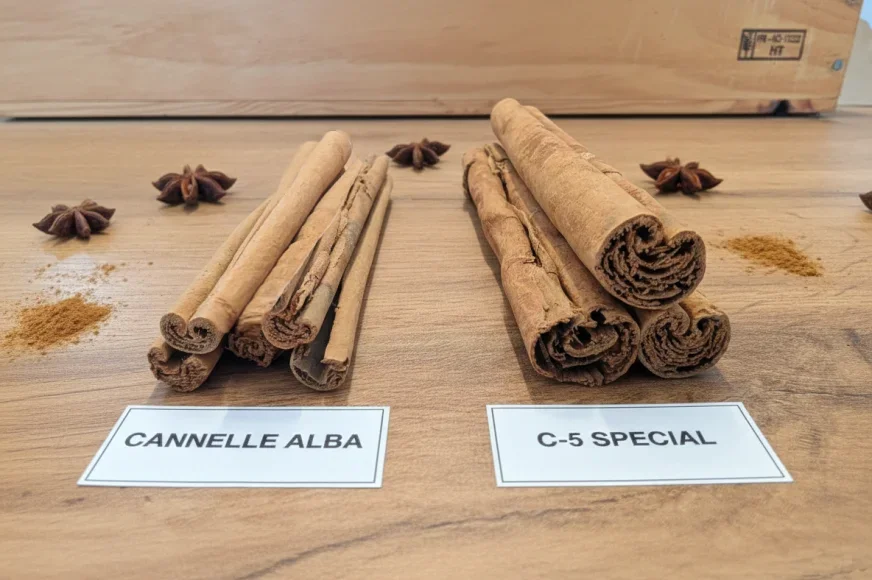
Our Ceylon Cinnamon C-5 Special comes from true cinnamon (Cinnamomum verum) grown in Sri Lanka, the only authentic cinnamon recognised by gastronomes and health professionals alike. The C-5 Special grade is characterised by slightly thicker quills than the Alba grade, while retaining all the superior qualities of Ceylon cinnamon: low coumarin content, complex aroma and delicately sweet flavour.
Why choose Ceylon cinnamon over cassia cinnamon?
The vast majority of cinnamons sold in Europe under the generic name "cinnamon" are actually cassia cinnamon (Cinnamomum cassia), originating from China or Indonesia. This variety contains high levels of coumarin, a substance whose regular consumption can be harmful to health. Ceylon Cinnamon C-5 Special contains up to 250 times less coumarin, with a far more complex aromatic profile and a much softer and more refined flavour.
Culinary uses:
- Pastries and desserts (pies, cakes, cookies)
- Infusions, chai and fragrant hot beverages
- Indian curries and slow-cooked dishes
- Compotes, poached fruits and porridge
- Mulled wine and winter beverages
- Biryanis, pilafs and aromatic rice dishes
Origin and quality:
We source our cinnamon from smallholder farms in Sri Lanka that grow it without pesticides, guaranteeing authentic true cinnamon, natural, with no additives or preservatives.
Storage:
To preserve all its aromas, store your cinnamon quills in a dry place, away from light and humidity, in their original airtight packaging.
To learn more, read our article: Ceylon cinnamon vs cassia.
Very low coumarin content, safe for daily use
Helps regulate blood sugar naturally
Anti-inflammatory and antioxidant properties
Improves digestion and reduces bloating
Promotes cardiovascular health
Antibacterial and antimicrobial properties
Maintains oral hygiene and fresh breath
Strengthens the immune system
Nutritional declaration per 100g
| Nutritional component | Per 100g |
|---|---|
| Energy | 1 035 kJ / 247 kcal |
| Fat | ~ 1,2 g |
| of which saturated fat | ~ 350 mg |
| Carbohydrates | ~ 80,6 g |
| of which sugars | ~ 2,2 g |
| Dietary fiber | ~ 53,1 g |
| Proteins | ~ 4 g |
| Salt | ~ 40 mg |
| Directly selected smallholder producers | Yes |
| Pesticides free | Yes |
| Origin | Sri Lanka |
| Quality | C-5 Special |
| Type | Whole quills |
| Taste profile | Warm and sweet-spicy aroma with woody and slightly floral notes. Softer and less acrid than cassia cinnamon, with remarkable aromatic complexity. |
Translated from French
Learn more
Ceylon cinnamon is one of the oldest traded spices in the world: it appears in Egyptian texts more than 3,500 years old, where it was used to scent embalming oils, as well as in Chinese recipes and biblical writings. For centuries, the Arab traders who carried it to the Mediterranean kept its true origin a closely guarded secret, inventing tales of giant birds nesting in cinnamon trees to discourage rivals.
The secret unravelled in 1505, when Portuguese sailors reached Ceylon (modern-day Sri Lanka) and discovered the island produced most of the world's true cinnamon. They set up a trading post and, soon after, a monopoly. In 1658 the Dutch East India Company drove out the Portuguese and imposed a far stricter control, even burning rival plantations discovered on the Indian coast to protect their exclusivity. The British took over in 1796 and kept the state monopoly until 1833, when the trade finally opened to private merchants.
One spice, two faces
What is simply labelled "cinnamon" in most shops is very often cassia (Cinnamomum cassia or aromaticum), a thicker, sharper and much cheaper bark from China or Indonesia. Ceylon cinnamon remains rare: Sri Lanka still supplies most of the world's true cinnamon, with a harvesting and hand-rolling craft that has stayed largely unchanged for generations.
Did you know?
Cassia naturally contains a much higher amount of coumarin, a compound that can strain the liver when consumed regularly in large quantities, than Ceylon cinnamon does. That's one reason European health authorities recommend favouring Ceylon cinnamon for everyday use.
The C-5 Special grade
In Sri Lanka, cinnamon quills are officially graded by the diameter of the finished stick. C-5 Special sits just below Alba, the finest and most expensive grade: its quills, roughly 7 to 9 mm in diameter, strike an excellent balance between aromatic finesse and price, making it a favourite among professional cooks and home cooks alike.
The rollers behind the trade: the Salagama community
Behind the international cinnamon trade lies a lesser-known social history. In Sri Lanka, harvesting and rolling the bark was long reserved for a specific community, the Salagama, weavers of South Indian origin who settled on the island after the 13th century. Under the Sinhalese kings, each Salagama household head owed a fixed quantity of cinnamon in exchange for the land he farmed.
The system became far harsher under colonial rule: from the age of 12, Salagama boys were bound to harvesting quotas that rose with age and physical condition, the required quantity having grown fivefold between 1590 and 1640 under the Portuguese. The Salagama were not without recourse, though: well organised, they could down tools and flee into the Kingdom of Kandy, beyond colonial reach, forcing the authorities to negotiate concessions to bring them back to peeling.
Kandy's own king, Rajasingha II, sealed the island's fate in 1658: seeking to expel the Portuguese with the help of the Dutch East India Company (VOC), he won independence from Lisbon at the cost of a full cinnamon monopoly granted to the Dutch. Isolated and cut off from the profits of his own land, the Kingdom of Kandy fell into open conflict with its new "ally" during the Dutch-Kandyan War of 1670-1675, never regaining control of the very resource that had prompted the alliance in the first place.
| Feature | Detail |
|---|---|
| Latin name | Cinnamomum verum J.Presl (syn. C. zeylanicum) |
| Botanical family | Lauraceae, the same family as the bay laurel and the avocado tree |
| Local name | Kurundu (Sinhala) |
| Part used | Inner bark of the young trunk, hand-rolled |
| Main growing region | South-western coastal belt of Sri Lanka (Galle, Matara, Colombo provinces) |
The Ceylon cinnamon tree is a tropical evergreen that can reach around ten metres in the wild, but harvesters keep it as a low coppiced shrub through regular cutting, encouraging the young, flexible shoots best suited to bark harvesting.
A craft still done by hand
- Young branches are cut and their rough outer bark is scraped off with a knife
- The thin, pliable inner bark is then peeled from the wood and hand-rolled around a thin stick while still moist
- Several thin strips are nested inside one another to form the final quill
- Drying in the shade, then in the sun, gives the stick its characteristic honey colour and brittle texture
- Grading (Alba, C-5 Special, C-5, C-4...) then follows the diameter of the finished quill
Did you know?
This hand-rolling craft, passed down through generations of Sri Lankan harvesting families, traditionally takes 5 to 7 years of apprenticeship to fully master, a training period comparable to a craft guild apprenticeship, which says a lot about the real technical skill behind a gesture that looks deceptively simple.
A grading ladder wider than it looks
C-5 Special is just one rung on a much longer official classification ladder set by the Sri Lanka Standards Institution. From finest to thickest, it runs through Alba, C-5 Special, C-5, C-4, C-3, then the M (Mexican) series and finally the H (Hamburg) series: the thickest, coarsest grades, usually destined for grinding into powder rather than sold as sticks.
| Grade | Quill diameter | Typical use |
|---|---|---|
| Alba | under 6 mm | The finest and most expensive, reserved for the most delicate uses |
| C-5 Special | 7 to 9 mm | Excellent quality-to-price ratio, this product's grade |
| C-5 | up to 12 mm | Everyday cooking |
| M / H series | 16 mm and above | Thicker, coarser bark, usually destined for powder |
Did you know?
The names "Mexican" and "Hamburg" given to the thickest grades have nothing to do with where the bark is harvested, which is always Sri Lanka: they historically refer to the export markets these coarser qualities were traditionally shipped to, Mexico and Germany having long been major importers of cheaper cinnamon for their own industrial processing.
Unlike the thicker, sharper cassia, Ceylon cinnamon develops a delicate, sweet and slightly floral aroma, with citrus and clove notes in the background. Its brittle, almost crumbly texture is a world away from cassia's woody hardness.
A gentle warmth, never sharp
On the palate, Ceylon cinnamon stays round and enveloping, without the tannic bite that cheaper cassia can carry. That gentleness is what makes it especially suited to delicate sweet preparations (pastry, custards, hot drinks) where a warm note without bitterness is what you're after.
Ground cinnamon quickly loses part of its volatile essential oils: whole quills, infused or grated at the last moment, deliver a noticeably livelier aroma than powder that has already sat on a shelf for months.
In Indian and Sri Lankan cooking
- A base ingredient in garam masala and many curry blends, lending a sweet background note
- Steeped whole in milk for chai and desserts such as kheer
- Used in Sri Lankan meat and vegetable curries, often paired with cardamom and clove
- Featured in coconut milk rice and biryanis, where the whole stick perfumes the cooking without overpowering it
Around the world
- Western baking: gingerbread, cinnamon rolls, apple pie
- Warming winter drinks: mulled wine, hot chocolate, spiced coffee
- Mexican cuisine, where it flavours traditional hot chocolate and some moles
Did you know?
Steeping a Ceylon cinnamon stick in a hot liquid only takes a few minutes: its brittle texture releases its aroma much faster than a denser, woodier cassia stick. Remove it as soon as the flavour suits you to avoid an overly strong note.
Lesser-known Sri Lankan specialities
- Traditional Sri Lankan rice and curry almost always pairs a whole cinnamon stick with the base spice blend (thuna paha), alongside cardamom and cloves
- In polos curry (green jackfruit curry) and Sri Lankan-style fish curries, it lends a sweet note that balances chilli heat and tamarind sourness
- Kottu roti, the iconic street-food dish of chopped flatbread stir-fried on a griddle, is often given a hint of cinnamon in its sauce
Ceylon cinnamon has traditionally been associated with digestive and circulatory benefits in Ayurvedic medicine, and its low coumarin level makes it a more reassuring choice than cassia for regular consumption.
What we know
- Coumarin : present only in trace amounts, unlike cassia, where it can reach concerning levels with large, prolonged daily consumption
- Aromatic compounds : cinnamaldehyde, the main compound in the essential oil, is studied for its antioxidant properties
- Traditional use : recognised in Ayurveda to support digestion and warm the body in winter
- Clinical research : several studies explore a possible effect on blood sugar, but results remain preliminary and are no substitute for medical treatment
Precautions
Consumed in normal culinary amounts, Ceylon cinnamon is well tolerated. Pregnant or breastfeeding people, and those on treatment for diabetes or blood clotting, are advised to seek medical advice before regular consumption in large amounts, especially as concentrated supplements.
Indicative nutritional values (per 100 g of bark)
| Component | Approximate content |
|---|---|
| Energy | about 250 kcal |
| Fibre | about 50 g, mostly insoluble |
| Calcium | about 1000 mg |
| Iron | about 8 mg |
A matter of dose, not just variety
The European Food Safety Authority (EFSA) has set a tolerable daily intake for coumarin at 0.1 mg per kilo of body weight. For a 70 kg adult, that is roughly 7 mg a day: a threshold that generous daily consumption of ground cassia can easily exceed around the festive season (baking, mulled drinks), while Ceylon cinnamon, almost coumarin-free, does not pose the same problem even at more generous doses.
Quality markers
- Colour : golden honey to light brown, a darker or reddish tone often signals cassia
- Texture : thin, brittle quills that snap cleanly rather than crumble into dust
- Smell : sweet, delicate aroma right from opening, with no sharp or acrid note
Storage tips
- In an airtight container, away from light and moisture
- Shelf life: about 2 to 3 years for whole sticks, ground cinnamon loses its aroma faster (6 to 12 months)
- Favour whole sticks and grate or grind just before use to preserve as much aroma as possible
What's the difference between Ceylon cinnamon and cassia?
Ceylon cinnamon (Cinnamomum verum) is the botanically "true" cinnamon tree, grown almost exclusively in Sri Lanka: its bark is thin, brittle and mild. Cassia (Cinnamomum cassia), far more common in shops under the plain label "cinnamon", comes from China or Indonesia and yields a thicker, sharper bark much richer in coumarin.
What is the C-5 Special grade?
It's an official grading of Ceylon cinnamon based on the diameter of the rolled quills. C-5 Special sits just below Alba, the finest grade, with quills around 7 to 9 mm in diameter: an excellent balance between aromatic quality and price.
Why choose Ceylon cinnamon for everyday use?
Its coumarin content, a compound that can strain the liver with regular, large consumption, is only present in trace amounts, unlike cassia where it can be much higher. This is the general recommendation from European health authorities for frequent use.
How do you recognise good-quality Ceylon cinnamon?
It comes in thin, brittle quills of honey to light brown colour that snap cleanly between the fingers. Its aroma is sweet and delicate, with no sharp note. A thick, hard, reddish bark is usually a sign of cassia sold under the generic "cinnamon" label.
Should the cinnamon stick be removed after steeping?
Yes, that's recommended. Since Ceylon cinnamon is more brittle than cassia, it releases its aroma quickly, within a few minutes in a hot liquid. Leaving it in too long can develop a bitter note, so remove the stick as soon as the flavour suits you.
Why is the cinnamon sold in most supermarkets almost always cassia?
Because cassia is far more productive and cheaper to grow than the true cinnamon tree, which grows almost exclusively in Sri Lanka and requires entirely hand-rolled processing. Since the generic name "cinnamon" is not a protected term in most countries, manufacturers use cassia, which is significantly cheaper, without having to state so on the label.
What do the "Mexican" and "Hamburg" grades of Ceylon cinnamon mean?
Despite the name, these grades only describe the quill's thickness (the coarser ones), not the country of origin: the cinnamon is still always harvested in Sri Lanka. The names historically come from the export markets these coarser qualities were traditionally shipped to.
-
Ceylon cinnamon is one of the oldest traded spices in the world: it appears in Egyptian texts more than 3,500 years old, where it was used to scent embalming oils, as well as in Chinese recipes and biblical writings. For centuries, the Arab traders who carried it to the Mediterranean kept its true origin a closely guarded secret, inventing tales of giant birds nesting in cinnamon trees to discourage rivals.
The secret unravelled in 1505, when Portuguese sailors reached Ceylon (modern-day Sri Lanka) and discovered the island produced most of the world's true cinnamon. They set up a trading post and, soon after, a monopoly. In 1658 the Dutch East India Company drove out the Portuguese and imposed a far stricter control, even burning rival plantations discovered on the Indian coast to protect their exclusivity. The British took over in 1796 and kept the state monopoly until 1833, when the trade finally opened to private merchants.
One spice, two faces
What is simply labelled "cinnamon" in most shops is very often cassia (Cinnamomum cassia or aromaticum), a thicker, sharper and much cheaper bark from China or Indonesia. Ceylon cinnamon remains rare: Sri Lanka still supplies most of the world's true cinnamon, with a harvesting and hand-rolling craft that has stayed largely unchanged for generations.
Did you know?
Cassia naturally contains a much higher amount of coumarin, a compound that can strain the liver when consumed regularly in large quantities, than Ceylon cinnamon does. That's one reason European health authorities recommend favouring Ceylon cinnamon for everyday use.
The C-5 Special grade
In Sri Lanka, cinnamon quills are officially graded by the diameter of the finished stick. C-5 Special sits just below Alba, the finest and most expensive grade: its quills, roughly 7 to 9 mm in diameter, strike an excellent balance between aromatic finesse and price, making it a favourite among professional cooks and home cooks alike.
The rollers behind the trade: the Salagama community
Behind the international cinnamon trade lies a lesser-known social history. In Sri Lanka, harvesting and rolling the bark was long reserved for a specific community, the Salagama, weavers of South Indian origin who settled on the island after the 13th century. Under the Sinhalese kings, each Salagama household head owed a fixed quantity of cinnamon in exchange for the land he farmed.
The system became far harsher under colonial rule: from the age of 12, Salagama boys were bound to harvesting quotas that rose with age and physical condition, the required quantity having grown fivefold between 1590 and 1640 under the Portuguese. The Salagama were not without recourse, though: well organised, they could down tools and flee into the Kingdom of Kandy, beyond colonial reach, forcing the authorities to negotiate concessions to bring them back to peeling.
Kandy's own king, Rajasingha II, sealed the island's fate in 1658: seeking to expel the Portuguese with the help of the Dutch East India Company (VOC), he won independence from Lisbon at the cost of a full cinnamon monopoly granted to the Dutch. Isolated and cut off from the profits of his own land, the Kingdom of Kandy fell into open conflict with its new "ally" during the Dutch-Kandyan War of 1670-1675, never regaining control of the very resource that had prompted the alliance in the first place.
-
Feature Detail Latin name Cinnamomum verum J.Presl (syn. C. zeylanicum) Botanical family Lauraceae, the same family as the bay laurel and the avocado tree Local name Kurundu (Sinhala) Part used Inner bark of the young trunk, hand-rolled Main growing region South-western coastal belt of Sri Lanka (Galle, Matara, Colombo provinces) The Ceylon cinnamon tree is a tropical evergreen that can reach around ten metres in the wild, but harvesters keep it as a low coppiced shrub through regular cutting, encouraging the young, flexible shoots best suited to bark harvesting.
A craft still done by hand
- Young branches are cut and their rough outer bark is scraped off with a knife
- The thin, pliable inner bark is then peeled from the wood and hand-rolled around a thin stick while still moist
- Several thin strips are nested inside one another to form the final quill
- Drying in the shade, then in the sun, gives the stick its characteristic honey colour and brittle texture
- Grading (Alba, C-5 Special, C-5, C-4...) then follows the diameter of the finished quill
Did you know?
This hand-rolling craft, passed down through generations of Sri Lankan harvesting families, traditionally takes 5 to 7 years of apprenticeship to fully master, a training period comparable to a craft guild apprenticeship, which says a lot about the real technical skill behind a gesture that looks deceptively simple.
A grading ladder wider than it looks
C-5 Special is just one rung on a much longer official classification ladder set by the Sri Lanka Standards Institution. From finest to thickest, it runs through Alba, C-5 Special, C-5, C-4, C-3, then the M (Mexican) series and finally the H (Hamburg) series: the thickest, coarsest grades, usually destined for grinding into powder rather than sold as sticks.
Grade Quill diameter Typical use Alba under 6 mm The finest and most expensive, reserved for the most delicate uses C-5 Special 7 to 9 mm Excellent quality-to-price ratio, this product's grade C-5 up to 12 mm Everyday cooking M / H series 16 mm and above Thicker, coarser bark, usually destined for powder Did you know?
The names "Mexican" and "Hamburg" given to the thickest grades have nothing to do with where the bark is harvested, which is always Sri Lanka: they historically refer to the export markets these coarser qualities were traditionally shipped to, Mexico and Germany having long been major importers of cheaper cinnamon for their own industrial processing.
-
Unlike the thicker, sharper cassia, Ceylon cinnamon develops a delicate, sweet and slightly floral aroma, with citrus and clove notes in the background. Its brittle, almost crumbly texture is a world away from cassia's woody hardness.
A gentle warmth, never sharp
On the palate, Ceylon cinnamon stays round and enveloping, without the tannic bite that cheaper cassia can carry. That gentleness is what makes it especially suited to delicate sweet preparations (pastry, custards, hot drinks) where a warm note without bitterness is what you're after.
Ground cinnamon quickly loses part of its volatile essential oils: whole quills, infused or grated at the last moment, deliver a noticeably livelier aroma than powder that has already sat on a shelf for months.
-
In Indian and Sri Lankan cooking
- A base ingredient in garam masala and many curry blends, lending a sweet background note
- Steeped whole in milk for chai and desserts such as kheer
- Used in Sri Lankan meat and vegetable curries, often paired with cardamom and clove
- Featured in coconut milk rice and biryanis, where the whole stick perfumes the cooking without overpowering it
Around the world
- Western baking: gingerbread, cinnamon rolls, apple pie
- Warming winter drinks: mulled wine, hot chocolate, spiced coffee
- Mexican cuisine, where it flavours traditional hot chocolate and some moles
Did you know?
Steeping a Ceylon cinnamon stick in a hot liquid only takes a few minutes: its brittle texture releases its aroma much faster than a denser, woodier cassia stick. Remove it as soon as the flavour suits you to avoid an overly strong note.
Lesser-known Sri Lankan specialities
- Traditional Sri Lankan rice and curry almost always pairs a whole cinnamon stick with the base spice blend (thuna paha), alongside cardamom and cloves
- In polos curry (green jackfruit curry) and Sri Lankan-style fish curries, it lends a sweet note that balances chilli heat and tamarind sourness
- Kottu roti, the iconic street-food dish of chopped flatbread stir-fried on a griddle, is often given a hint of cinnamon in its sauce
-
Ceylon cinnamon has traditionally been associated with digestive and circulatory benefits in Ayurvedic medicine, and its low coumarin level makes it a more reassuring choice than cassia for regular consumption.
What we know
- Coumarin : present only in trace amounts, unlike cassia, where it can reach concerning levels with large, prolonged daily consumption
- Aromatic compounds : cinnamaldehyde, the main compound in the essential oil, is studied for its antioxidant properties
- Traditional use : recognised in Ayurveda to support digestion and warm the body in winter
- Clinical research : several studies explore a possible effect on blood sugar, but results remain preliminary and are no substitute for medical treatment
Precautions
Consumed in normal culinary amounts, Ceylon cinnamon is well tolerated. Pregnant or breastfeeding people, and those on treatment for diabetes or blood clotting, are advised to seek medical advice before regular consumption in large amounts, especially as concentrated supplements.
Indicative nutritional values (per 100 g of bark)
Component Approximate content Energy about 250 kcal Fibre about 50 g, mostly insoluble Calcium about 1000 mg Iron about 8 mg A matter of dose, not just variety
The European Food Safety Authority (EFSA) has set a tolerable daily intake for coumarin at 0.1 mg per kilo of body weight. For a 70 kg adult, that is roughly 7 mg a day: a threshold that generous daily consumption of ground cassia can easily exceed around the festive season (baking, mulled drinks), while Ceylon cinnamon, almost coumarin-free, does not pose the same problem even at more generous doses.
-
Quality markers
- Colour : golden honey to light brown, a darker or reddish tone often signals cassia
- Texture : thin, brittle quills that snap cleanly rather than crumble into dust
- Smell : sweet, delicate aroma right from opening, with no sharp or acrid note
Storage tips
- In an airtight container, away from light and moisture
- Shelf life: about 2 to 3 years for whole sticks, ground cinnamon loses its aroma faster (6 to 12 months)
- Favour whole sticks and grate or grind just before use to preserve as much aroma as possible
-
What's the difference between Ceylon cinnamon and cassia?
Ceylon cinnamon (Cinnamomum verum) is the botanically "true" cinnamon tree, grown almost exclusively in Sri Lanka: its bark is thin, brittle and mild. Cassia (Cinnamomum cassia), far more common in shops under the plain label "cinnamon", comes from China or Indonesia and yields a thicker, sharper bark much richer in coumarin.
What is the C-5 Special grade?
It's an official grading of Ceylon cinnamon based on the diameter of the rolled quills. C-5 Special sits just below Alba, the finest grade, with quills around 7 to 9 mm in diameter: an excellent balance between aromatic quality and price.
Why choose Ceylon cinnamon for everyday use?
Its coumarin content, a compound that can strain the liver with regular, large consumption, is only present in trace amounts, unlike cassia where it can be much higher. This is the general recommendation from European health authorities for frequent use.
How do you recognise good-quality Ceylon cinnamon?
It comes in thin, brittle quills of honey to light brown colour that snap cleanly between the fingers. Its aroma is sweet and delicate, with no sharp note. A thick, hard, reddish bark is usually a sign of cassia sold under the generic "cinnamon" label.
Should the cinnamon stick be removed after steeping?
Yes, that's recommended. Since Ceylon cinnamon is more brittle than cassia, it releases its aroma quickly, within a few minutes in a hot liquid. Leaving it in too long can develop a bitter note, so remove the stick as soon as the flavour suits you.
Why is the cinnamon sold in most supermarkets almost always cassia?
Because cassia is far more productive and cheaper to grow than the true cinnamon tree, which grows almost exclusively in Sri Lanka and requires entirely hand-rolled processing. Since the generic name "cinnamon" is not a protected term in most countries, manufacturers use cassia, which is significantly cheaper, without having to state so on the label.
What do the "Mexican" and "Hamburg" grades of Ceylon cinnamon mean?
Despite the name, these grades only describe the quill's thickness (the coarser ones), not the country of origin: the cinnamon is still always harvested in Sri Lanka. The names historically come from the export markets these coarser qualities were traditionally shipped to.
Why choose Ceylon Cinnamon C-5 Special from La Table Indienne?

Exceptional freshness and quality
Our spices are imported directly from India and packaged on demand to guarantee optimal freshness. Unlike spices sold in supermarkets that can sit on shelves for months, we ensure each spice retains its full flavor and aroma.
Authenticity and traceability
Each spice comes from specific regions in India renowned for their expertise. We work directly with local producers who grow their spices traditionally.
How to best use this spice?
To reveal all the aromas, we recommend lightly toasting whole spices in a dry pan before grinding them. Store them in a dry place away from light to preserve their freshness as long as possible.

Did you know?
Whole spices are much better than ground spices
Check out our blog article to discover why whole spices retain their aromas better.
Questions & Answers
Thank you! Your question has been sent. Mihika will answer soon and you will receive an email.
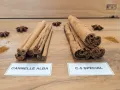
Ceylon Cinnamon C-5 Special
Discover also
Other products you might like