Ajwain Seeds from Rajasthan
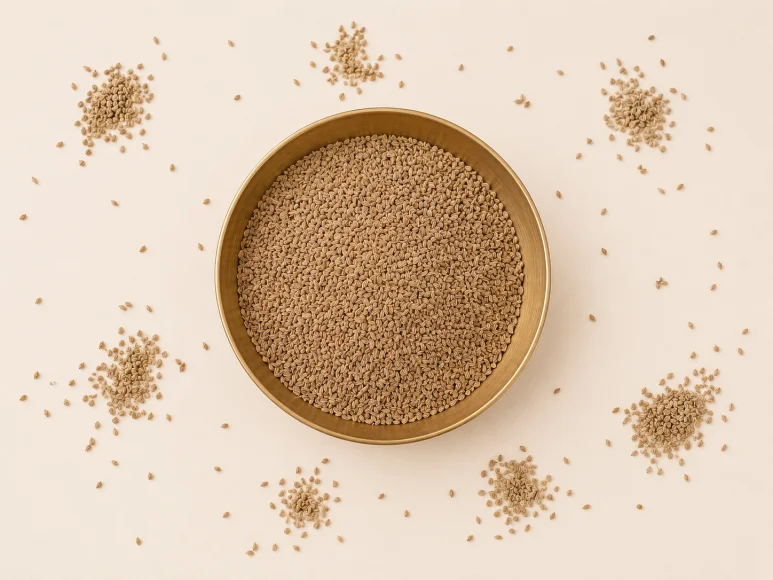
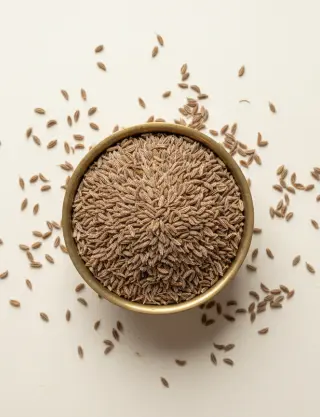
Discover our whole ajwain seeds, grown in the arid plains of Rajasthan, India. Powerful, aromatic and slightly bitter, they bring a unique warmth reminiscent of thyme and oregano to your preparations.
Ready for shipping, delivery time 2-5 business days
Delivery from €4.80 at Mondial Relay pickup points. Free shipping from €50.
Free spice samples with every order.
-
Ajwain Seeds: the spice with wild thyme aromas
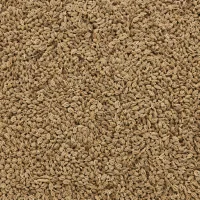
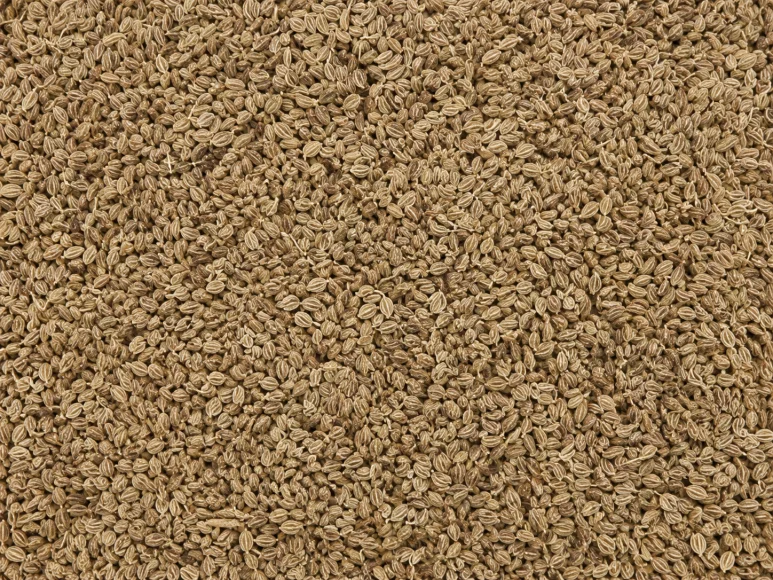
Ajwain (Trachyspermum ammi), also known as carom seeds, is an essential spice in Indian cooking. Grown in the arid plains of Rajasthan, it stands out for its exceptional thymol content — the aromatic compound characteristic of thyme — which gives it that powerful and immediately recognisable olfactory profile. We exclusively select premium whole seeds grown without pesticides.
Why choose whole seeds?
Whole ajwain seeds release their essential oils on contact with heat or light pressure, ensuring maximum aromatic freshness. Unlike powder which oxidises quickly, the seeds retain their potency for several months in an airtight container. Simply fry them for a few seconds in ghee or oil to instantly reveal their aromas.
Culinary uses:
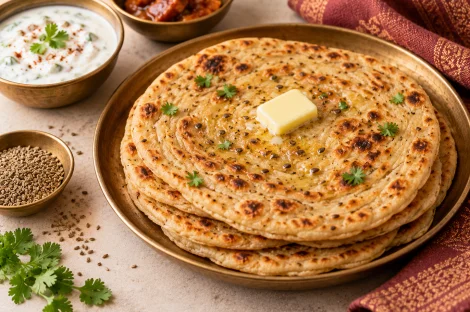
- Paratha and chapati: mixed into the dough for fragrant flatbread with wild thyme notes
- Samosa and pakora filling: essential for flavouring potato-based fillings
- Dal tadka: added to the tarka (spice tempering) to flavour lentils and legumes
- Breads and crackers: sprinkled on naans, mathri or savoury biscuits before baking
- Vegetable and fish curries: add a herbal, slightly spicy note at the start of cooking
- Herbal infusion: a few seeds steeped in hot water, for a drink with wild thyme notes
Origin and quality:
We select spices grown without pesticides, to guarantee a natural product of premium quality from India.
To discover the history of this Rajasthani spice and all its uses, read our complete guide to ajwain seeds.
Storage:
To preserve all their aromas, store your ajwain seeds in a dry place, away from light and moisture, in their airtight packaging.
-
Promotes digestion and relieves bloating
Natural antimicrobial properties thanks to thymol
Relieves respiratory issues and clears airways
Rich in fibre for regular intestinal transit
Antifungal properties recognised in Ayurvedic medicine
Helps regulate blood pressure
Source of calcium, iron and phosphorus
Anti-inflammatory effects used in traditional medicine
-
Nutritional declaration per 100g
Nutritional component Per 100g Energy 1 464 kJ / 350 kcal Fat ~ 25 g of which saturated fat ~ 3,8 g Carbohydrates ~ 43 g of which sugars ~ 900 mg Dietary fiber ~ 21,2 g Proteins ~ 16,2 g Salt ~ 70 mg -
Directly selected smallholder producers No Pesticides free Yes Origin Rajasthan, India Quality Premium Type Whole seeds Taste profile Powerful aroma reminiscent of thyme and oregano, with a slight bitterness and a lingering spicy note. Very concentrated — use sparingly.
Learn more
Ajwain (Trachyspermum ammi), sometimes called carom or "bishop's weed" in English, belongs to the Apiaceae family, the same as cumin, fennel, coriander and dill. This botanical kinship partly explains why these seeds often share similar uses in hot-oil tempering across Indian cooking.
The plant has been grown for centuries across the Indian subcontinent, with Rajasthan and Gujarat among the main producing regions. Its use spans both everyday home cooking and traditional Ayurvedic pharmacopoeia, where it holds a prized place among family digestive remedies passed down through generations.
A spice of home remedies
In many Indian households, a pinch of chewed or infused ajwain seeds remains the first instinct for digestive heaviness after a rich meal, well ahead of reaching for medication. This household use, passed down orally, long preceded the scientific studies now looking into its main active compound, thymol.
Did you know?
Thymol, the molecule behind ajwain's distinctive aroma, is the same active compound found in thyme essential oil, hence the obvious aromatic kinship between the two, even though the plants don't belong to the same botanical family.
A Mediterranean origin, an Indian adoption
Contrary to popular belief, ajwain is not native to India: the plant is thought to originate from the eastern Mediterranean basin, possibly Egypt, before spreading toward the Near East and, much later, to India, where it found such a favourable adopted home that it is now inseparable from everyday family cooking there. Its oldest trace appears in the Ebers Papyrus, around 1500 BCE, where it is already recommended for digestive troubles, the very use it is still known for today.
In ancient Greece, the physicians Galen and Dioscorides described its use in carminative preparations. The classical Ayurvedic text Charaka Samhita, written around 400 CE, already classes it among plants that pacify vata and kapha, two of the three doshas of Ayurvedic medicine, crediting it with easing hives and bloating. In medieval Persia, the seeds travelled along trade routes to season flatbreads, while Unani medicine turned it into a honey paste given to infants against colic.
Rajasthan, the heart of Indian production
While ajwain grows in several Indian states, Rajasthan alone accounts for around 90% of national production, its dry, well-drained soil and hot growing season offering ideal conditions for the plant. This geographic concentration explains why ajwain remains so deeply rooted in the home cooking of Rajasthan and neighbouring Gujarat, far more than in other Indian regions where it is mostly used in modest amounts.
In Punjab and Haryana, a different popular tradition still lives on today: chewing a few roasted ajwain seeds after a meal, a simple gesture passed down through generations to ease bloating and freshen breath, long before industrial digestive tablets ever existed.

| Feature | Detail |
|---|---|
| Latin name | Trachyspermum ammi (L.) Sprague |
| Botanical family | Apiaceae, the same family as cumin, fennel and coriander |
| Local name | Ajwain or Ajowan (Hindi) |
| Part used | Seed (dried fruit) |
| Main growing regions | Rajasthan and Gujarat |
Ajwain is an annual herbaceous plant that grows well in the hot, relatively dry climates of north-western India. Its cultivation remains largely small-scale and family-run, on often modest plots.
From seed to spice
- Harvested at the end of the dry season, once the seeds are well formed and browned
- Sun-dried to concentrate their essential oils
- No further processing needed: the whole seed is ready to use
- The essential oil, overwhelmingly thymol, gamma-terpinene and para-cymene, accounts for its powerful, recognisable aroma
Raw ajwain surprises with its bitterness and sharpness, close to concentrated thyme. Only under heat, tempered in oil or ghee, does its aroma soften and reveal more complex, slightly aniseed notes.
A single pinch is usually enough to perfume an entire dish: ajwain is a powerful spice, best used sparingly or it will overpower the other flavours.
In Indian cooking
- Tempered in hot oil (tadka) at the start of cooking dals and vegetables
- Kneaded into paratha and poori dough, for aroma and easier digestion
- Used in fried vegetable fritters (pakoras) and certain legume blends
- Featured in many regional spice blends of northern India
Did you know?
Adding a pinch of ajwain seeds to paratha or poori dough is a very common practice in northern Indian households, credited with the double benefit of flavouring the dough and easing the digestion of fried preparations.
Beyond India
- Common in Egyptian and Levantine cooking, the plant's presumed birthplace, notably in some breads and legume dishes
- Used in Afghanistan and Iran in a few traditional breads and marinades
- Present in Unani cuisine and some Middle Eastern folk remedies, as a digestive tisane
Ajwain is traditionally recognised in Ayurvedic medicine for its digestive properties, a use now documented by several scientific studies on its main active compound.
What we know
- Thymol : the dominant compound in the essential oil (up to 98% together with gamma-terpinene and para-cymene), with studied antiseptic and carminative properties
- Traditional use : long recognised to relieve bloating, flatulence and mild indigestion
- Research : several studies explore antibacterial and antifungal properties of thymol, though mostly conducted in the lab rather than on the spice as eaten
Precautions
Consumed in normal culinary amounts, ajwain is well tolerated. Pregnant or breastfeeding people are advised to seek medical advice before regular, large consumption, as traditional Indian medicine advises against high doses during pregnancy.
Quality markers
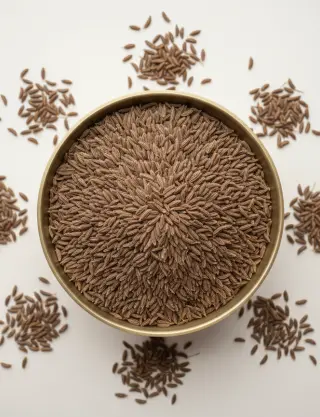
- Colour : uniform greyish-brown, with no blackened or dusty seeds
- Smell : strong, thyme-like aroma right from opening
- Texture : dry, ridged seeds that flow freely
Storage tips
- In an airtight container, away from light and moisture
- Shelf life: about 2 to 3 years as whole seed
- No need to grind ahead of time: the whole seed goes straight into hot oil for tempering
What does ajwain taste like?
Ajwain has a powerful, thyme-like taste due to its high thymol content. Raw, it's bitter and sharp; tempered in hot oil, it softens and reveals more complex, slightly aniseed notes.
Why is ajwain added to paratha dough?
It's a traditional northern Indian practice: ajwain flavours the dough and is traditionally believed to aid digestion of fried preparations like parathas and poori.
Do you need a lot of ajwain to flavour a dish?
No, a single pinch is usually enough. It's a powerful spice that can quickly overpower other flavours if used in excess.
Are ajwain and thyme related?
Not botanically: ajwain (Trachyspermum ammi) belongs to the Apiaceae family while thyme belongs to the Lamiaceae. Their aromatic kinship comes from thymol, an aromatic compound both plants produce in quantity, without any direct botanical relation.
Can ajwain be eaten during pregnancy?
In normal culinary amounts, ajwain is generally well tolerated, but traditional Indian medicine advises against high doses during pregnancy. Seek medical advice before any regular, large consumption.
Is ajwain native to India?
No, despite a common belief. The plant is thought to originate from the eastern Mediterranean basin, possibly Egypt, before spreading to the Near East and then India, where it acclimatised so well that it became a pillar of family cooking, especially in Rajasthan and Gujarat.
Is ajwain's medicinal use ancient?
Very ancient: its oldest trace appears in the Egyptian Ebers Papyrus, around 1500 BCE, for its digestive properties. The Ayurvedic text Charaka Samhita, around 400 CE, already lists it as a carminative plant, and the Greek physicians Galen and Dioscorides used it in antiquity.
-
Ajwain (Trachyspermum ammi), sometimes called carom or "bishop's weed" in English, belongs to the Apiaceae family, the same as cumin, fennel, coriander and dill. This botanical kinship partly explains why these seeds often share similar uses in hot-oil tempering across Indian cooking.
The plant has been grown for centuries across the Indian subcontinent, with Rajasthan and Gujarat among the main producing regions. Its use spans both everyday home cooking and traditional Ayurvedic pharmacopoeia, where it holds a prized place among family digestive remedies passed down through generations.
A spice of home remedies
In many Indian households, a pinch of chewed or infused ajwain seeds remains the first instinct for digestive heaviness after a rich meal, well ahead of reaching for medication. This household use, passed down orally, long preceded the scientific studies now looking into its main active compound, thymol.
Did you know?
Thymol, the molecule behind ajwain's distinctive aroma, is the same active compound found in thyme essential oil, hence the obvious aromatic kinship between the two, even though the plants don't belong to the same botanical family.
A Mediterranean origin, an Indian adoption
Contrary to popular belief, ajwain is not native to India: the plant is thought to originate from the eastern Mediterranean basin, possibly Egypt, before spreading toward the Near East and, much later, to India, where it found such a favourable adopted home that it is now inseparable from everyday family cooking there. Its oldest trace appears in the Ebers Papyrus, around 1500 BCE, where it is already recommended for digestive troubles, the very use it is still known for today.
In ancient Greece, the physicians Galen and Dioscorides described its use in carminative preparations. The classical Ayurvedic text Charaka Samhita, written around 400 CE, already classes it among plants that pacify vata and kapha, two of the three doshas of Ayurvedic medicine, crediting it with easing hives and bloating. In medieval Persia, the seeds travelled along trade routes to season flatbreads, while Unani medicine turned it into a honey paste given to infants against colic.
Rajasthan, the heart of Indian production
While ajwain grows in several Indian states, Rajasthan alone accounts for around 90% of national production, its dry, well-drained soil and hot growing season offering ideal conditions for the plant. This geographic concentration explains why ajwain remains so deeply rooted in the home cooking of Rajasthan and neighbouring Gujarat, far more than in other Indian regions where it is mostly used in modest amounts.
In Punjab and Haryana, a different popular tradition still lives on today: chewing a few roasted ajwain seeds after a meal, a simple gesture passed down through generations to ease bloating and freshen breath, long before industrial digestive tablets ever existed.

-
Feature Detail Latin name Trachyspermum ammi (L.) Sprague Botanical family Apiaceae, the same family as cumin, fennel and coriander Local name Ajwain or Ajowan (Hindi) Part used Seed (dried fruit) Main growing regions Rajasthan and Gujarat Ajwain is an annual herbaceous plant that grows well in the hot, relatively dry climates of north-western India. Its cultivation remains largely small-scale and family-run, on often modest plots.
From seed to spice
- Harvested at the end of the dry season, once the seeds are well formed and browned
- Sun-dried to concentrate their essential oils
- No further processing needed: the whole seed is ready to use
- The essential oil, overwhelmingly thymol, gamma-terpinene and para-cymene, accounts for its powerful, recognisable aroma
-
Raw ajwain surprises with its bitterness and sharpness, close to concentrated thyme. Only under heat, tempered in oil or ghee, does its aroma soften and reveal more complex, slightly aniseed notes.
A single pinch is usually enough to perfume an entire dish: ajwain is a powerful spice, best used sparingly or it will overpower the other flavours.
-
In Indian cooking
- Tempered in hot oil (tadka) at the start of cooking dals and vegetables
- Kneaded into paratha and poori dough, for aroma and easier digestion
- Used in fried vegetable fritters (pakoras) and certain legume blends
- Featured in many regional spice blends of northern India
Did you know?
Adding a pinch of ajwain seeds to paratha or poori dough is a very common practice in northern Indian households, credited with the double benefit of flavouring the dough and easing the digestion of fried preparations.
Beyond India
- Common in Egyptian and Levantine cooking, the plant's presumed birthplace, notably in some breads and legume dishes
- Used in Afghanistan and Iran in a few traditional breads and marinades
- Present in Unani cuisine and some Middle Eastern folk remedies, as a digestive tisane
-
Ajwain is traditionally recognised in Ayurvedic medicine for its digestive properties, a use now documented by several scientific studies on its main active compound.
What we know
- Thymol : the dominant compound in the essential oil (up to 98% together with gamma-terpinene and para-cymene), with studied antiseptic and carminative properties
- Traditional use : long recognised to relieve bloating, flatulence and mild indigestion
- Research : several studies explore antibacterial and antifungal properties of thymol, though mostly conducted in the lab rather than on the spice as eaten
Precautions
Consumed in normal culinary amounts, ajwain is well tolerated. Pregnant or breastfeeding people are advised to seek medical advice before regular, large consumption, as traditional Indian medicine advises against high doses during pregnancy.
-
Quality markers
- Colour : uniform greyish-brown, with no blackened or dusty seeds
- Smell : strong, thyme-like aroma right from opening
- Texture : dry, ridged seeds that flow freely
Storage tips
- In an airtight container, away from light and moisture
- Shelf life: about 2 to 3 years as whole seed
- No need to grind ahead of time: the whole seed goes straight into hot oil for tempering
-
What does ajwain taste like?
Ajwain has a powerful, thyme-like taste due to its high thymol content. Raw, it's bitter and sharp; tempered in hot oil, it softens and reveals more complex, slightly aniseed notes.
Why is ajwain added to paratha dough?
It's a traditional northern Indian practice: ajwain flavours the dough and is traditionally believed to aid digestion of fried preparations like parathas and poori.
Do you need a lot of ajwain to flavour a dish?
No, a single pinch is usually enough. It's a powerful spice that can quickly overpower other flavours if used in excess.
Are ajwain and thyme related?
Not botanically: ajwain (Trachyspermum ammi) belongs to the Apiaceae family while thyme belongs to the Lamiaceae. Their aromatic kinship comes from thymol, an aromatic compound both plants produce in quantity, without any direct botanical relation.
Can ajwain be eaten during pregnancy?
In normal culinary amounts, ajwain is generally well tolerated, but traditional Indian medicine advises against high doses during pregnancy. Seek medical advice before any regular, large consumption.
Is ajwain native to India?
No, despite a common belief. The plant is thought to originate from the eastern Mediterranean basin, possibly Egypt, before spreading to the Near East and then India, where it acclimatised so well that it became a pillar of family cooking, especially in Rajasthan and Gujarat.
Is ajwain's medicinal use ancient?
Very ancient: its oldest trace appears in the Egyptian Ebers Papyrus, around 1500 BCE, for its digestive properties. The Ayurvedic text Charaka Samhita, around 400 CE, already lists it as a carminative plant, and the Greek physicians Galen and Dioscorides used it in antiquity.
Pourquoi choisir Ajwain Seeds from Rajasthan de La Table Indienne ?
Fraîcheur et qualité exceptionnelles
Nos épices sont importées directement d'Inde et conditionnées à la demande pour garantir une fraîcheur optimale. Contrairement aux épices vendues en grande surface qui peuvent rester des mois sur les étagères, nous veillons à ce que chaque épice conserve toute sa saveur et son arôme.
Authenticité et traçabilité
Chaque épice provient de régions spécifiques en Inde réputées pour leur savoir-faire. Nous travaillons directement avec des producteurs locaux qui cultivent leurs épices de manière traditionnelle, sans pesticides ni produits chimiques.
Comment bien utiliser cette épice ?
Pour révéler tous les arômes, nous recommandons de faire légèrement griller les épices entières à sec dans une poêle avant de les moudre. Conservez-les dans un endroit sec et à l'abri de la lumière pour préserver leur fraîcheur le plus longtemps possible.
Le saviez-vous ?
Les épices entières sont bien meilleures que les épices moulues
Consultez notre article de blog pour découvrir pourquoi les épices entières conservent mieux leurs arômes.
Questions & Answers
Thank you! Your question has been sent. Mihika will answer soon and you will receive an email.