



In an Indian kitchen, it only takes a pinch of tiny striped seeds dropped into hot oil to turn an ordinary dish into something irresistible. Those seeds belong to ajwain, also known as carom seeds or ajowan: the small spice that flavors breakfast parathas and has helped digestion along for generations of Indian families.
What is ajwain?
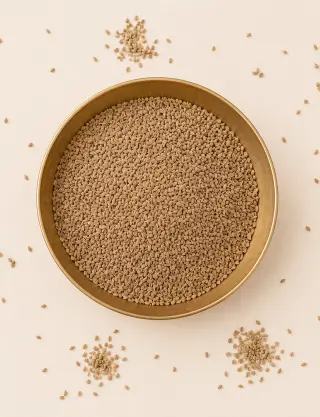
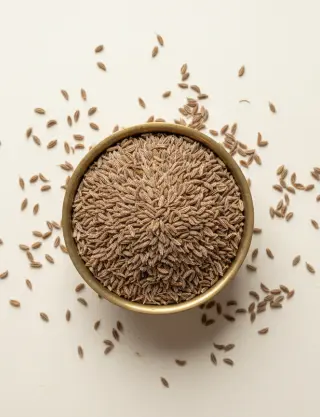
Ajwain (Trachyspermum ammi) is a small, oval, ridged seed, a botanical cousin of cumin, caraway and parsley. It's almost always sold whole rather than pre-ground, since its aroma is so volatile and potent.
Its scent is instantly recognizable: warm, almost sharp, with a strong note of thyme. That's no coincidence: ajwain owes this character to an exceptionally high thymol content, the same aromatic compound found in common thyme.
Just one seed bitten into is enough to understand why ajwain can't be mistaken for any other spice: powerful, slightly bitter and pungent, with a thyme-like note that lingers long on the palate.
The secret to fragrant parathas
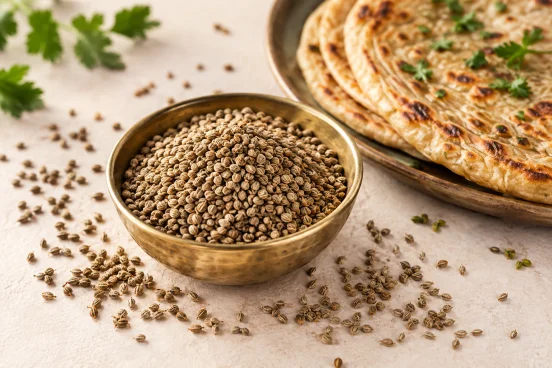
In North India, ajwain is best known as the bread spice. A pinch of carom seeds worked straight into paratha or puri dough is enough to scent an entire batch: one of the best-kept secrets of Indian home cooks for breads that smell wonderful and sit easily on the stomach.
- Breads: paratha, puri, thepla, a pinch in the dough is enough.
- Fried snacks: pakora, samosa, namkeen, ajwain cuts through the richness and aids digestion.
- Dals and lentils: a few seeds in the tadka that finishes a dal tadka add roundness and digestibility.
- Marinades and pickles: ajwain enlivens fish or vegetable marinades meant for preserving.
A pinch goes a long way: mind the dose
This is the golden rule with ajwain: a few seeds go a very long way. Too generous a hand can quickly turn a dish bitter and overpower the other flavors. As with most whole spices, a brief pass through hot oil or ghee (just a few seconds) releases the full aroma without the bitterness.
The thymol found in ajwain (up to half of its essential oil) is exactly the same compound that gives thyme its antiseptic properties: it's also found in many mouthwashes and toothpastes sold at pharmacies.
Ajwain water, a digestive ritual passed down through generations
In many Indian households, a pinch of ajwain seeds steeped in hot water (sometimes with a little ginger) is the home remedy prepared after a heavy meal. This "ajwain water" (ajwain ka pani) is one of those traditional gestures passed down from generation to generation, long before digestive tablets appeared on pharmacy shelves.
At Table Indienne
Our carom seeds come from smallholder Indian producers, grown without pesticides. The perfect way to scent your next homemade parathas, with the same small pinch used in family kitchens across India.