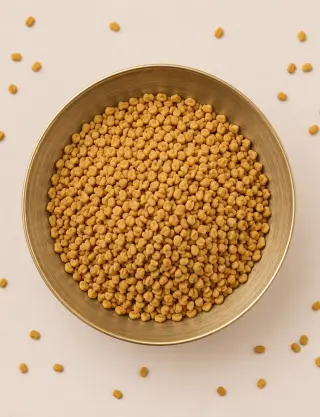
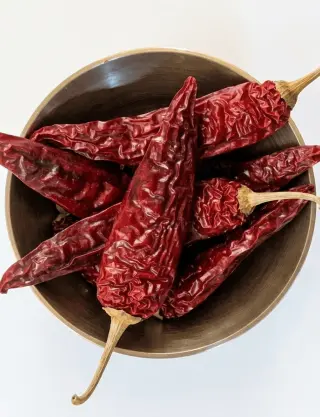
Yellow chili
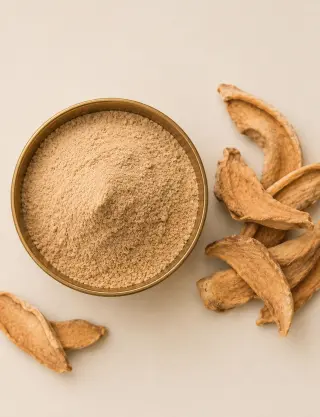
Discover our yellow chili, sun-dried, whole or powdered. Mildly spicy, sweet and fruity with a beautiful golden-yellow colour, it brings colour and subtle warmth to your dishes.
Ready for shipping, delivery time 2-5 business days
Delivery from €4.80 at Mondial Relay pickup points. Free shipping from €50.
Free spice samples with every order.
-
Yellow Chillies: fruity sweetness and golden sunshine
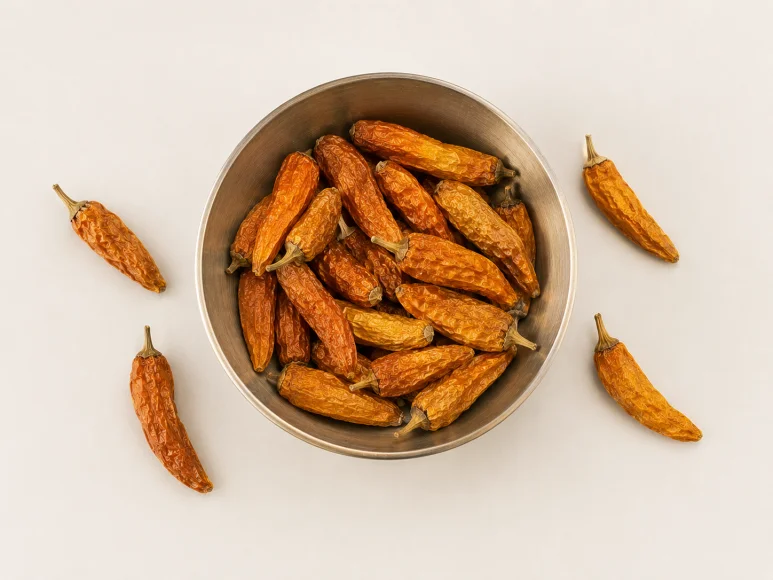
Yellow chillies are a rare and precious variety, grown in the highlands of India. Harvested at full ripeness then naturally sun-dried, they develop a magnificent golden-yellow colour and a unique aromatic profile: mildly spicy, sweet, with fruity and floral notes. We select them whole to preserve their full aromatic intensity until the moment of use.
Why choose whole chillies?
Whole chillies retain their flavour and heat far longer than powder. You control the intensity by using them whole (milder) or broken (spicier). They elegantly garnish your dishes and can be removed before serving for sensitive palates.
Culinary uses:
- Tempering in hot oil (tadka) to release their aromas
- Dals, lentils and Indian soups
- Marinades and chutney sauces with a golden-yellow colour
- Biryanis and saffron rice dishes for a gentle warmth
- Vegetarian curries and roasted vegetable dishes
- Homemade pickles for a fruity and mildly spiced flavour
Storage:
To preserve all their flavours, store your yellow chillies in a dry place, away from light and moisture, in their airtight packaging.
-
Boosts metabolism thanks to capsaicin
Rich in vitamin C to strengthen immunity
Powerful antioxidant properties
Promotes healthy blood circulation
Natural anti-inflammatory effects
Supports digestive health
Source of iron and B vitamins
Helps regulate blood sugar levels
-
Nutritional declaration per 100g
Nutritional component Per 100g Energy 1 360 kJ / 325 kcal Fat ~ 11,6 g of which saturated fat ~ 1,2 g Carbohydrates ~ 56,6 g of which sugars ~ 10,3 g Dietary fiber ~ 27,2 g Proteins ~ 12 g Salt ~ 70 mg -
Directly selected smallholder producers Yes Pesticides free Yes Spice level Strong Vegetarian Yes Origin Uttarakhand, India Quality Premium Type Whole dried chillies & powder Taste profile Mildly spicy with a characteristic fruity and floral sweetness of the yellow variety. Subtle heat that enhances without overpowering.
Learn more
The name "lakhori" comes from Lakhora, a village on the border between the Garhwal and Kumaon regions of Uttarakhand state. This is where the chili variety is believed to have first been cultivated, before spreading to the neighbouring blocks of Bhikiyasain and Salt, in Almora district.
Unlike major Indian chili varieties grown nationwide (such as Kashmiri or Guntur chili), lakhori has remained a niche regional speciality: attempts to grow it outside these Himalayan valleys haven't produced the same results, making it a true terroir product.
Two sizes, two uses
Growers traditionally distinguish two sizes: the smaller lakhori jamri, rich in seeds and mostly used for chili flakes, and the larger size, used whole or ground for everyday cooking.
Uttarakhand is a Himalayan state in northern India, where the Garhwal and Kumaon foothills offer a mid-mountain climate: mild summers, cool winters, and intense sun exposure that supports slow, natural drying after harvest.
- Harvest: mainly in November, at the end of the monsoon
- Drying: traditionally sun-dried, which gives the lakhori chili its distinctive surface wrinkles
- Growing area: Almora district, mainly the Bhikiyasain and Salt blocks
Lakhori chili sits around 50,000 to 55,000 Scoville Heat Units (SHU), a moderate to fairly hot level, well above a jalapeño but far from the most extreme chilies on the market. Its flavour is clean and mildly fruity, without the bitterness sometimes found in cheap dried chilies.
Its real distinction: colour
Lakhori never turns red as it dries: it keeps a golden-yellow to yellow-orange hue. That's what makes it prized for dishes where heat is wanted without turning red: kadhi, yoghurt- or coconut-based white curries, pale marinades, chutneys, and certain snacks (namkeen) where the finished colour matters as much as the taste.
- Kadhi and yoghurt-based curries: heat without darkening the dish's pale colour
- Tempering (tadka/chhonk): fried in hot oil with mustard seeds and curry leaves at the start of cooking
- Dals and Indian soups
- Marinades and chutneys with a golden-yellow colour
- Biryanis and fragrant rice dishes, for gentle heat without staining the rice
- Homemade pickles, used whole, for a fruity, mildly spicy flavour
- Vegetarian curries and roasted vegetables
Use it whole to control intensity (remove before serving for sensitive palates), or powdered for a more even spread of both heat and colour.
Like most chilies, lakhori owes its properties mainly to capsaicin, the compound responsible for its heat.
- Boosts metabolism through capsaicin, which supports thermogenesis
- Rich in vitamin C, supporting immune defences
- Powerful antioxidant properties
- Supports blood circulation
- Natural anti-inflammatory effects
- Supports digestive health
- Source of iron and B vitamins
- Helps regulate blood sugar
These benefits apply to normal culinary use; lakhori chili is not a dietary supplement and does not replace any medical treatment.
- Store lakhori chili (whole or powdered) in an airtight container, away from light and moisture
- Whole chilies keep their aroma longer than powder: favour them if you don't use chili often, and grind just before use
- Powder gradually loses its heat and colour on contact with air: use within 6 to 12 months for best results
- Avoid storing near a heat source (oven, stovetop)
Is lakhori yellow chili the same as Kashmiri chili?
No. This is a common mix-up, but lakhori mirch is a distinct variety, originating from Lakhora village on the Garhwal-Kumaon border in Uttarakhand state, not from Kashmir.
Why use a yellow chili instead of a red one?
Its golden-yellow colour doesn't tint pale dishes (kadhi, yoghurt curries, marinades) the way red chili does, while providing comparable, moderate-to-strong heat.
How hot is lakhori chili?
Around 50,000 to 55,000 Scoville Heat Units (SHU), moderate to fairly hot, stronger than a jalapeño but far from the hottest chilies on the market.
Should I use it whole or powdered?
Whole, it keeps longer and lets you control intensity by infusing or breaking it. Powdered, it spreads more evenly through the dish and colours it more strongly.
Where exactly does lakhori chili come from?
From the Himalayan region of Uttarakhand, in Almora district (mainly the Bhikiyasain and Salt blocks) where it has been grown and sun-dried for generations.
Can I substitute lakhori chili with regular red chili?
Yes for the flavour, but you'll lose the visual benefit: the dish will turn reddish instead of staying golden. For an identical colour result, lakhori remains the best option.

-
The name "lakhori" comes from Lakhora, a village on the border between the Garhwal and Kumaon regions of Uttarakhand state. This is where the chili variety is believed to have first been cultivated, before spreading to the neighbouring blocks of Bhikiyasain and Salt, in Almora district.
Unlike major Indian chili varieties grown nationwide (such as Kashmiri or Guntur chili), lakhori has remained a niche regional speciality: attempts to grow it outside these Himalayan valleys haven't produced the same results, making it a true terroir product.
Two sizes, two uses
Growers traditionally distinguish two sizes: the smaller lakhori jamri, rich in seeds and mostly used for chili flakes, and the larger size, used whole or ground for everyday cooking.
-
Uttarakhand is a Himalayan state in northern India, where the Garhwal and Kumaon foothills offer a mid-mountain climate: mild summers, cool winters, and intense sun exposure that supports slow, natural drying after harvest.
- Harvest: mainly in November, at the end of the monsoon
- Drying: traditionally sun-dried, which gives the lakhori chili its distinctive surface wrinkles
- Growing area: Almora district, mainly the Bhikiyasain and Salt blocks
-
Lakhori chili sits around 50,000 to 55,000 Scoville Heat Units (SHU), a moderate to fairly hot level, well above a jalapeño but far from the most extreme chilies on the market. Its flavour is clean and mildly fruity, without the bitterness sometimes found in cheap dried chilies.
Its real distinction: colour
Lakhori never turns red as it dries: it keeps a golden-yellow to yellow-orange hue. That's what makes it prized for dishes where heat is wanted without turning red: kadhi, yoghurt- or coconut-based white curries, pale marinades, chutneys, and certain snacks (namkeen) where the finished colour matters as much as the taste.
-
- Kadhi and yoghurt-based curries: heat without darkening the dish's pale colour
- Tempering (tadka/chhonk): fried in hot oil with mustard seeds and curry leaves at the start of cooking
- Dals and Indian soups
- Marinades and chutneys with a golden-yellow colour
- Biryanis and fragrant rice dishes, for gentle heat without staining the rice
- Homemade pickles, used whole, for a fruity, mildly spicy flavour
- Vegetarian curries and roasted vegetables
Use it whole to control intensity (remove before serving for sensitive palates), or powdered for a more even spread of both heat and colour.
-
Like most chilies, lakhori owes its properties mainly to capsaicin, the compound responsible for its heat.
- Boosts metabolism through capsaicin, which supports thermogenesis
- Rich in vitamin C, supporting immune defences
- Powerful antioxidant properties
- Supports blood circulation
- Natural anti-inflammatory effects
- Supports digestive health
- Source of iron and B vitamins
- Helps regulate blood sugar
These benefits apply to normal culinary use; lakhori chili is not a dietary supplement and does not replace any medical treatment.
-
- Store lakhori chili (whole or powdered) in an airtight container, away from light and moisture
- Whole chilies keep their aroma longer than powder: favour them if you don't use chili often, and grind just before use
- Powder gradually loses its heat and colour on contact with air: use within 6 to 12 months for best results
- Avoid storing near a heat source (oven, stovetop)
-
Is lakhori yellow chili the same as Kashmiri chili?
No. This is a common mix-up, but lakhori mirch is a distinct variety, originating from Lakhora village on the Garhwal-Kumaon border in Uttarakhand state, not from Kashmir.
Why use a yellow chili instead of a red one?
Its golden-yellow colour doesn't tint pale dishes (kadhi, yoghurt curries, marinades) the way red chili does, while providing comparable, moderate-to-strong heat.
How hot is lakhori chili?
Around 50,000 to 55,000 Scoville Heat Units (SHU), moderate to fairly hot, stronger than a jalapeño but far from the hottest chilies on the market.
Should I use it whole or powdered?
Whole, it keeps longer and lets you control intensity by infusing or breaking it. Powdered, it spreads more evenly through the dish and colours it more strongly.
Where exactly does lakhori chili come from?
From the Himalayan region of Uttarakhand, in Almora district (mainly the Bhikiyasain and Salt blocks) where it has been grown and sun-dried for generations.
Can I substitute lakhori chili with regular red chili?
Yes for the flavour, but you'll lose the visual benefit: the dish will turn reddish instead of staying golden. For an identical colour result, lakhori remains the best option.

Pourquoi choisir Yellow chili de La Table Indienne ?
Fraîcheur et qualité exceptionnelles
Nos épices sont importées directement d'Inde et conditionnées à la demande pour garantir une fraîcheur optimale. Contrairement aux épices vendues en grande surface qui peuvent rester des mois sur les étagères, nous veillons à ce que chaque épice conserve toute sa saveur et son arôme.
Authenticité et traçabilité
Chaque épice provient de régions spécifiques en Inde réputées pour leur savoir-faire. Nous travaillons directement avec des producteurs locaux qui cultivent leurs épices de manière traditionnelle, sans pesticides ni produits chimiques.
Comment bien utiliser cette épice ?
Pour révéler tous les arômes, nous recommandons de faire légèrement griller les épices entières à sec dans une poêle avant de les moudre. Conservez-les dans un endroit sec et à l'abri de la lumière pour préserver leur fraîcheur le plus longtemps possible.
Le saviez-vous ?
Les épices entières sont bien meilleures que les épices moulues
Consultez notre article de blog pour découvrir pourquoi les épices entières conservent mieux leurs arômes.
Questions & Answers
Thank you! Your question has been sent. Mihika will answer soon and you will receive an email.