



Khus Khus – White Poppy Seeds from India
Discover our khus khus, white poppy seeds grown in India. Mild, subtly nutty and creamy once soaked to thicken and enrich your kormas and velvety curries.
Ready for shipping, delivery time 3-10 business days
Delivery from €4.80 at Mondial Relay pickup points.



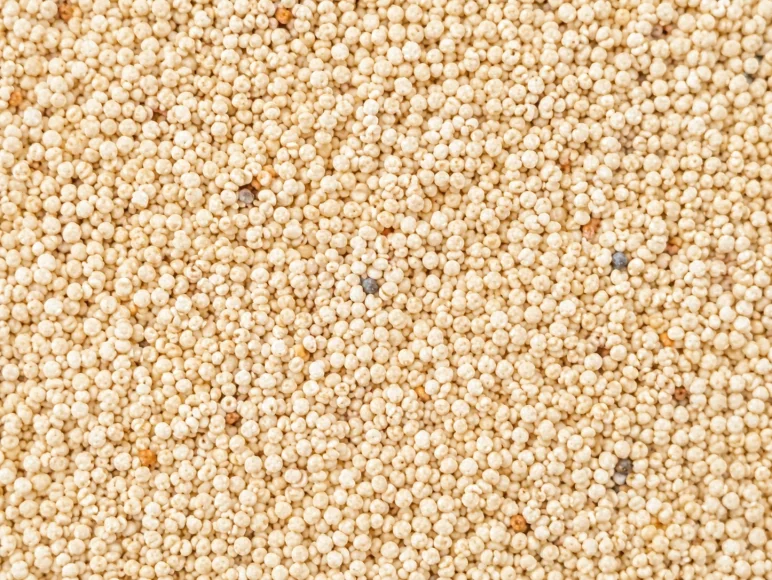
Khus Khus: the white poppy seed that makes curries silky
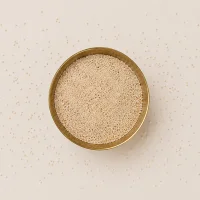
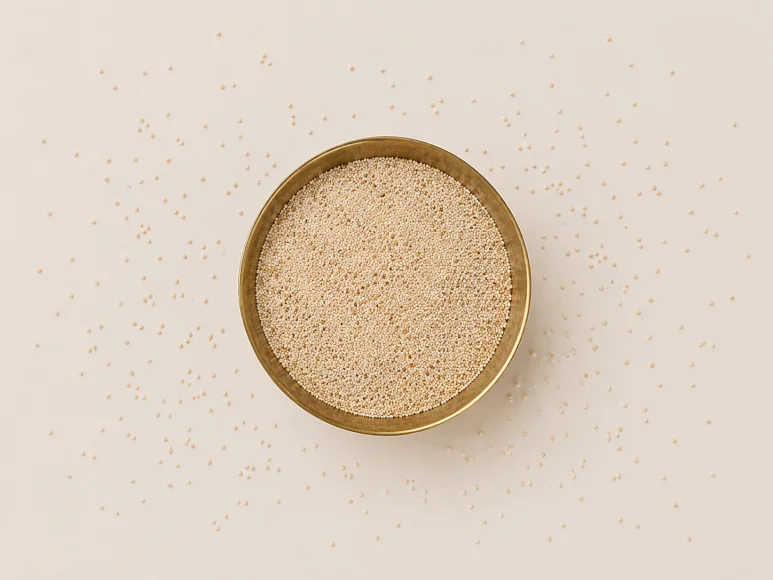
Khus khus, or white poppy seed, is a tiny cream to white seed harvested from the poppy plant (Papaver somniferum) grown in India. Known for its mild, subtly nutty flavour, it is an essential ingredient in North Indian and Mughlai cuisine, where it is mainly used to thicken and enrich sauces. We source it in bulk from our Indian partners to offer you a pure, untreated seed.
Why choose whole seeds?
Sold whole, khus khus keeps all its freshness and natural oils until you're ready to use it. Soaked for a few minutes in warm water and then blended, whole seeds release a smooth, creamy white paste that is far finer and more fragrant than a pre-ground powder, which loses its aroma quickly and can oxidise.
Culinary uses:
- Soaked and blended into a paste to thicken kormas, malai kofta and Mughlai sauces
- Added to cashew pastes for an even silkier texture
- Sprinkled over naan, kulcha and breads for a crunchy touch
- Used in biryanis to gently bind the sauce
- Stirred into desserts and Indian sweets such as kheer
- Combined with coconut in certain South Indian preparations
Origin and quality:
Our khus khus is sourced in bulk from Indian producers and grown without pesticides, guaranteeing a natural, premium-quality seed.
To explore the uses of this seed that thickens Mughlai sauces, read our guide to white poppy seeds (khus khus).
Storage:
To preserve all its aroma, store your khus khus in a dry place, away from light and humidity, in its airtight packaging.
Rich in calcium for strong bones
Good source of fiber, supports digestion
Cooling, soothing effect recognized in Ayurveda
Provides beneficial unsaturated fatty acids
Good source of magnesium
Antioxidant properties (lignans)
Supports skin health thanks to zinc and copper
Traditionally used to promote restful sleep
Nutritional declaration per 100g
| Nutritional component | Per 100g |
|---|---|
| Energy | 2 196 kJ / 525 kcal |
| Fat | ~ 41,6 g |
| of which saturated fat | ~ 4,5 g |
| Carbohydrates | ~ 28,1 g |
| of which sugars | ~ 3 g |
| Dietary fiber | ~ 19,5 g |
| Proteins | ~ 18 g |
| Salt | ~ 70 mg |
| Directly selected smallholder producers | No |
| Pesticides free | Yes |
| Vegetarian | Yes |
| Origin | India |
| Quality | Premium |
| Type | Whole seeds |
| Taste profile | Mild, subtle nutty flavour with a delicate texture that turns creamy once soaked and blended into a paste. |
Learn more
The culinary use of poppy seeds in India reportedly dates back, according to food historian Chitrita Banerjee, to the 15th and 16th centuries, a period that coincides with the rise of Mughal cuisine. The seeds, ground into a paste, were already used at the time to thicken and texture meat-based sauces, a technique that remains fundamental in Bengali cooking today.
Khus khus comes from the same plant as opium, the opium poppy (Papaver somniferum). Once the latex of the seed pods has been harvested to extract opium, the seeds that remain are devoid of any narcotic effect: it is these, and only these, that end up on the plate.
A tightly regulated legal status within India itself
In India, opium poppy cultivation remains strictly regulated under the 1985 Narcotic Drugs and Psychotropic Substances Act, and is only permitted under licence from the Central Bureau of Narcotics. West Bengal, where khus khus is an everyday ingredient, has long sought more cultivation permits to meet local demand.
Did you know?
The Bengali dish "alu posto", potatoes simmered in a poppy seed paste, is so iconic it is sometimes nicknamed West Bengal's national dish. "Posto" is the Bengali word for poppy seed.
Khus khus goes by different names across India's languages and regions, a sign of its long presence in very diverse cuisines: khuskhus in Hindi, posto in Bengali, afuguti in Assamese, kasakasa in Tamil, gasagase in Kannada. This range of regional names extends well beyond Bengal, even though that is where its culinary use is most iconic.
Among the Santal, an indigenous community of eastern India, poppy and its seeds are said to have held a far older and more everyday place than elsewhere, before an increasingly rare and costly supply gradually turned it into more of a specialty than a staple.
| Characteristic | Detail |
|---|---|
| Latin name | Papaver somniferum |
| Botanical family | Papaveraceae |
| Local name | Khus khus (Hindi), posto (Bengali) |
| Part used | Seed, once the pod's latex has been harvested |
| Main use | Bengali and Bangladeshi cooking |
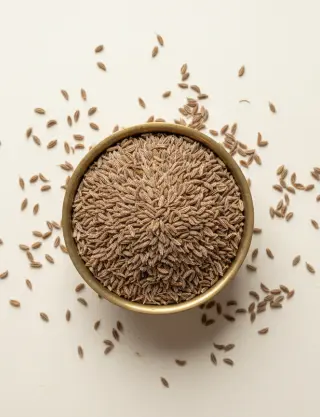
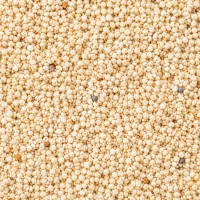
Khus khus seeds are tiny, barely a millimetre across, cream to ivory white depending on the variety. They are extracted from poppy pods once the latex has been harvested for pharmaceutical use, an entirely separate purpose from their culinary one.
An ingredient that crosses regions
- Especially prominent in Bengali cooking, where it structures many simmered dishes
- Also used in some baked goods across the subcontinent and the Middle East
- Ground into a fine paste with water to serve as a binder in sauces
- Sometimes dry-roasted to bring out a stronger aroma before grinding
Did you know?
Contrary to a common assumption, the poppy that khus khus comes from is the very same botanical species used for opium. What separates a harmless food seed from a regulated plant is purely the part used: the latex on one hand, the ripe seed on the other.
The distinction between white seeds and bluish grey seeds (sometimes called "black") mainly comes down to the Papaver somniferum variety grown and the production region: India largely favours white seeds in cooking, while Central Europe uses darker seeds more, especially in baking.
Raw, khus khus has a mild, faintly nutty taste. It is once ground into a fine paste, often with a little water or yoghurt, that it reveals its true culinary role: more than a flavour enhancer, a binder that lends body and a silky texture to sauces.
A textural role above all
The flavour of khus khus always stays in the background compared to the spices around it, garlic, ginger, chilli or turmeric. Its primary function is to bind and thicken, somewhat similarly to how ground cashews or almonds are used in other Indian culinary traditions.
Indian white versus European blue-grey
Not all poppy seeds taste the same. The ivory-white variety used in India, the one behind khus khus, is noticeably creamier and milder than the blue-grey variety commonly used in Europe to top breads and pastries: the latter, drier, gives more of a crunch and develops a more pronounced toasted-hazelnut aroma once roasted.
Raw, the white seed is almost neutral in taste; it is once soaked and ground into a paste that it fully reveals its silky texture and mild, nutty flavour, reminiscent of almond or cashew, never turning bitter unless overcooked.
In Bengal, khus khus turns up in a great many dishes, from simple vegetable side dishes to more elaborate festive fare.
In Bengali cooking
- Alu posto, potatoes simmered in a khus khus paste, an everyday classic
- Khus khus paste to thicken fish or prawn curries
- Chorchori, a sautéed vegetable mix seasoned with a touch of ground poppy seeds
- A coating for meat or fish before cooking, for a flavourful crust
How to use it at home
- Soak the seeds in warm water for 20 to 30 minutes before blending into a fine paste
- Add the paste near the end of cooking to thicken a curry without boiling it too long
- Dry-roast lightly before grinding for a stronger aroma
Did you know?
Chorchori is a typically Bengali sautéed vegetable dish, often made with the peels and offcuts usually discarded, seasoned with ground khus khus. It is a telling example of a cuisine that wastes nothing.
Beyond Bengal
While alu posto remains the most iconic preparation, khus khus also acts as a thickener in certain Mughal kormas, used to body up the sauce without cream, a technique directly inherited from 16th century court kitchens, as well as in several South Indian spice pastes where it adds body without overpowering other flavours.
Outside India, poppy seed follows a very different culinary path: blue-grey rather than white, it traditionally tops breads and pastries across Central Europe and Ashkenazi Jewish recipes, a decorative, crunchy use far removed from Bengali posto's smooth, thickening paste.
Khus khus stands out for its notable nutritional richness, particularly its calcium content, among the highest of any commonly eaten seed.
What we know about its composition
- Calcium: around 1,440 mg per 100 g, an exceptionally high level for a seed
- Fat: around 42 g per 100 g, mostly polyunsaturated fatty acids
- Protein: around 21 g per 100 g
- Traditional use: ground seeds are sometimes used in folk medicine for their soothing properties, unrelated to their narcotic content, which is nil
What to know before travelling
Although devoid of narcotic effect, poppy seeds can carry minute traces of opiates (morphine, codeine) left over from the harvesting process, enough to skew certain urine drug tests within 48 hours of eating them. Several countries apply very strict regulations to them: the United Arab Emirates, for example, classify poppy plants and their seeds as narcotics and strictly prohibit their import, even in small amounts within culinary preparations. Check the regulations of your destination country before travelling with this product.
Nutritionally, white poppy seed stands out for a calcium content unusually high for a seed, around 1,400 mg per 100 g according to available nutritional tables, a level well above most dairy products by comparable weight.
Quality criteria
- Colour: even creamy white, free of dark grains or impurities
- Texture: dry, fine seeds that flow freely
- Smell: mild, faintly nutty scent
Storage tips
- In an airtight container, away from light and heat
- Shelf life: about 1 year, their oil content makes them prone to going rancid
- In warm climates, storing them in the fridge is recommended
To prepare a traditional khus khus paste, soak the seeds in warm water for about thirty minutes before blending: this softens their shell and makes it easier to reach the smooth texture essential for alu posto and similar preparations.
Does khus khus contain narcotic substances?
No. Khus khus is the seed of the opium poppy, harvested after the latex used for opium has been extracted. The seed itself is devoid of narcotic effect, though minute traces of opiates can sometimes remain.
Can I travel with khus khus?
Generally yes, but some countries apply very strict rules, notably the United Arab Emirates, where poppy plants and their seeds are classified as narcotics and their import is strictly prohibited. Always check your destination country's regulations before travelling with this product.
How do I use khus khus in cooking?
Soak the seeds in warm water for 20 to 30 minutes, then blend into a fine paste to thicken a curry or vegetable dish, as in the classic Bengali alu posto. Lightly dry-roasting before grinding intensifies their aroma.
What is alu posto?
Alu posto is a Bengali dish of potatoes simmered in a khus khus paste, often considered one of West Bengal's most iconic dishes.
Can khus khus affect a drug test?
Yes, potentially. The seeds can carry minute traces of opiates left over from harvesting, enough to give a positive result on certain urine tests within 48 hours of eating a significant amount.
Why does khus khus have so many different names in India?
Because its culinary use is ancient and widespread across the subcontinent: khuskhus in Hindi, posto in Bengali, afuguti in Assamese, kasakasa in Tamil, gasagase in Kannada. Each region developed its own vocabulary around an ingredient present in its cuisine for centuries.
What's the difference between white and bluish grey poppy seeds?
The difference mainly comes down to the Papaver somniferum variety grown and the region: India favours white seeds in savoury cooking, while Central Europe uses bluish grey seeds, often called black, more in baking. Taste and nutritional makeup remain fairly close.
Does khus khus have a strong flavour?
No, quite the opposite: raw it is nearly neutral, barely nutty, and its main culinary role is to thicken and bind sauces rather than season them strongly, somewhat like cashews or ground almonds in other Indian traditions.
-
The culinary use of poppy seeds in India reportedly dates back, according to food historian Chitrita Banerjee, to the 15th and 16th centuries, a period that coincides with the rise of Mughal cuisine. The seeds, ground into a paste, were already used at the time to thicken and texture meat-based sauces, a technique that remains fundamental in Bengali cooking today.
Khus khus comes from the same plant as opium, the opium poppy (Papaver somniferum). Once the latex of the seed pods has been harvested to extract opium, the seeds that remain are devoid of any narcotic effect: it is these, and only these, that end up on the plate.
A tightly regulated legal status within India itself
In India, opium poppy cultivation remains strictly regulated under the 1985 Narcotic Drugs and Psychotropic Substances Act, and is only permitted under licence from the Central Bureau of Narcotics. West Bengal, where khus khus is an everyday ingredient, has long sought more cultivation permits to meet local demand.
Did you know?
The Bengali dish "alu posto", potatoes simmered in a poppy seed paste, is so iconic it is sometimes nicknamed West Bengal's national dish. "Posto" is the Bengali word for poppy seed.
Khus khus goes by different names across India's languages and regions, a sign of its long presence in very diverse cuisines: khuskhus in Hindi, posto in Bengali, afuguti in Assamese, kasakasa in Tamil, gasagase in Kannada. This range of regional names extends well beyond Bengal, even though that is where its culinary use is most iconic.
Among the Santal, an indigenous community of eastern India, poppy and its seeds are said to have held a far older and more everyday place than elsewhere, before an increasingly rare and costly supply gradually turned it into more of a specialty than a staple.
-
Characteristic Detail Latin name Papaver somniferum Botanical family Papaveraceae Local name Khus khus (Hindi), posto (Bengali) Part used Seed, once the pod's latex has been harvested Main use Bengali and Bangladeshi cooking Khus khus seeds are tiny, barely a millimetre across, cream to ivory white depending on the variety. They are extracted from poppy pods once the latex has been harvested for pharmaceutical use, an entirely separate purpose from their culinary one.
An ingredient that crosses regions
- Especially prominent in Bengali cooking, where it structures many simmered dishes
- Also used in some baked goods across the subcontinent and the Middle East
- Ground into a fine paste with water to serve as a binder in sauces
- Sometimes dry-roasted to bring out a stronger aroma before grinding
Did you know?
Contrary to a common assumption, the poppy that khus khus comes from is the very same botanical species used for opium. What separates a harmless food seed from a regulated plant is purely the part used: the latex on one hand, the ripe seed on the other.
The distinction between white seeds and bluish grey seeds (sometimes called "black") mainly comes down to the Papaver somniferum variety grown and the production region: India largely favours white seeds in cooking, while Central Europe uses darker seeds more, especially in baking.
-
Raw, khus khus has a mild, faintly nutty taste. It is once ground into a fine paste, often with a little water or yoghurt, that it reveals its true culinary role: more than a flavour enhancer, a binder that lends body and a silky texture to sauces.
A textural role above all
The flavour of khus khus always stays in the background compared to the spices around it, garlic, ginger, chilli or turmeric. Its primary function is to bind and thicken, somewhat similarly to how ground cashews or almonds are used in other Indian culinary traditions.
Indian white versus European blue-grey
Not all poppy seeds taste the same. The ivory-white variety used in India, the one behind khus khus, is noticeably creamier and milder than the blue-grey variety commonly used in Europe to top breads and pastries: the latter, drier, gives more of a crunch and develops a more pronounced toasted-hazelnut aroma once roasted.
Raw, the white seed is almost neutral in taste; it is once soaked and ground into a paste that it fully reveals its silky texture and mild, nutty flavour, reminiscent of almond or cashew, never turning bitter unless overcooked.
-
In Bengal, khus khus turns up in a great many dishes, from simple vegetable side dishes to more elaborate festive fare.
In Bengali cooking
- Alu posto, potatoes simmered in a khus khus paste, an everyday classic
- Khus khus paste to thicken fish or prawn curries
- Chorchori, a sautéed vegetable mix seasoned with a touch of ground poppy seeds
- A coating for meat or fish before cooking, for a flavourful crust
How to use it at home
- Soak the seeds in warm water for 20 to 30 minutes before blending into a fine paste
- Add the paste near the end of cooking to thicken a curry without boiling it too long
- Dry-roast lightly before grinding for a stronger aroma
Did you know?
Chorchori is a typically Bengali sautéed vegetable dish, often made with the peels and offcuts usually discarded, seasoned with ground khus khus. It is a telling example of a cuisine that wastes nothing.
Beyond Bengal
While alu posto remains the most iconic preparation, khus khus also acts as a thickener in certain Mughal kormas, used to body up the sauce without cream, a technique directly inherited from 16th century court kitchens, as well as in several South Indian spice pastes where it adds body without overpowering other flavours.
Outside India, poppy seed follows a very different culinary path: blue-grey rather than white, it traditionally tops breads and pastries across Central Europe and Ashkenazi Jewish recipes, a decorative, crunchy use far removed from Bengali posto's smooth, thickening paste.
-
Khus khus stands out for its notable nutritional richness, particularly its calcium content, among the highest of any commonly eaten seed.
What we know about its composition
- Calcium: around 1,440 mg per 100 g, an exceptionally high level for a seed
- Fat: around 42 g per 100 g, mostly polyunsaturated fatty acids
- Protein: around 21 g per 100 g
- Traditional use: ground seeds are sometimes used in folk medicine for their soothing properties, unrelated to their narcotic content, which is nil
What to know before travelling
Although devoid of narcotic effect, poppy seeds can carry minute traces of opiates (morphine, codeine) left over from the harvesting process, enough to skew certain urine drug tests within 48 hours of eating them. Several countries apply very strict regulations to them: the United Arab Emirates, for example, classify poppy plants and their seeds as narcotics and strictly prohibit their import, even in small amounts within culinary preparations. Check the regulations of your destination country before travelling with this product.
Nutritionally, white poppy seed stands out for a calcium content unusually high for a seed, around 1,400 mg per 100 g according to available nutritional tables, a level well above most dairy products by comparable weight.
-
Quality criteria
- Colour: even creamy white, free of dark grains or impurities
- Texture: dry, fine seeds that flow freely
- Smell: mild, faintly nutty scent
Storage tips
- In an airtight container, away from light and heat
- Shelf life: about 1 year, their oil content makes them prone to going rancid
- In warm climates, storing them in the fridge is recommended
To prepare a traditional khus khus paste, soak the seeds in warm water for about thirty minutes before blending: this softens their shell and makes it easier to reach the smooth texture essential for alu posto and similar preparations.
-
Does khus khus contain narcotic substances?
No. Khus khus is the seed of the opium poppy, harvested after the latex used for opium has been extracted. The seed itself is devoid of narcotic effect, though minute traces of opiates can sometimes remain.
Can I travel with khus khus?
Generally yes, but some countries apply very strict rules, notably the United Arab Emirates, where poppy plants and their seeds are classified as narcotics and their import is strictly prohibited. Always check your destination country's regulations before travelling with this product.
How do I use khus khus in cooking?
Soak the seeds in warm water for 20 to 30 minutes, then blend into a fine paste to thicken a curry or vegetable dish, as in the classic Bengali alu posto. Lightly dry-roasting before grinding intensifies their aroma.
What is alu posto?
Alu posto is a Bengali dish of potatoes simmered in a khus khus paste, often considered one of West Bengal's most iconic dishes.
Can khus khus affect a drug test?
Yes, potentially. The seeds can carry minute traces of opiates left over from harvesting, enough to give a positive result on certain urine tests within 48 hours of eating a significant amount.
Why does khus khus have so many different names in India?
Because its culinary use is ancient and widespread across the subcontinent: khuskhus in Hindi, posto in Bengali, afuguti in Assamese, kasakasa in Tamil, gasagase in Kannada. Each region developed its own vocabulary around an ingredient present in its cuisine for centuries.
What's the difference between white and bluish grey poppy seeds?
The difference mainly comes down to the Papaver somniferum variety grown and the region: India favours white seeds in savoury cooking, while Central Europe uses bluish grey seeds, often called black, more in baking. Taste and nutritional makeup remain fairly close.
Does khus khus have a strong flavour?
No, quite the opposite: raw it is nearly neutral, barely nutty, and its main culinary role is to thicken and bind sauces rather than season them strongly, somewhat like cashews or ground almonds in other Indian traditions.
Why choose Khus Khus – White Poppy Seeds from India from La Table Indienne?

Exceptional freshness and quality
Our spices are imported directly from India and packaged on demand to guarantee optimal freshness. Unlike spices sold in supermarkets that can sit on shelves for months, we ensure each spice retains its full flavor and aroma.
Authenticity and traceability
Each spice comes from specific regions in India renowned for their expertise. We work directly with local producers who grow their spices traditionally.
How to best use this spice?
To reveal all the aromas, we recommend lightly toasting whole spices in a dry pan before grinding them. Store them in a dry place away from light to preserve their freshness as long as possible.

Did you know?
Whole spices are much better than ground spices
Check out our blog article to discover why whole spices retain their aromas better.
Questions & Answers
Thank you! Your question has been sent. Mihika will answer soon and you will receive an email.

Khus Khus – White Poppy Seeds from India
Discover also
Other products you might like