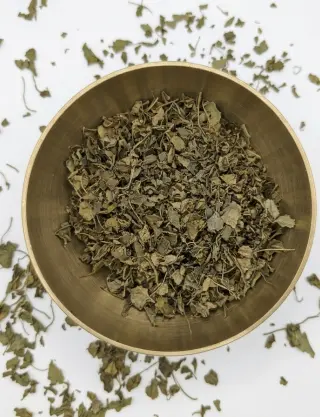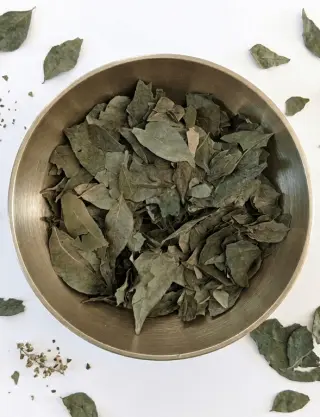




Discover our Jamboo (Jimbu), dried Himalayan herb, harvested in the high-altitude mountains of Uttarakhand, India. Powerful onion-garlic aroma, savoury and earthy, essential for tempering dals, kadhis and dishes of the Kumaoni and Garhwali cuisines.
Ready for shipping, delivery time 3-10 business days
Delivery from €4.80 at Mondial Relay pickup points.



Jamboo (Jimbu): the sacred herb of Himalayan cuisines
Jamboo, also known as Jimbu or Faran depending on the region, is a wild aromatic herb (Allium hookeri / Allium wallichii) harvested at high altitude in the forests and meadows of Uttarakhand. Used for centuries in Kumaoni and Garhwali cuisines, it forms the essential aromatic base of the local tadka (tempering). We select premium dried leaves and stalks from farms that grow without pesticides, in the Himalayan mountains.
Why choose dried leaves?
In dried form, Jamboo releases an exceptionally concentrated onion-garlic aroma when heated in oil or ghee. Unlike fresh onions and garlic, it delivers a softer, more earthy and less pungent flavour, characteristic of mountain dishes from northern India. The dried leaves keep for a long time and are ready to use directly in the tempering pan.
Culinary uses:
- Tadka (tempering) for dals, lentils and legume soups
- Kadhi (yoghurt curry) in the Kumaoni and Garhwali style
- Rajma (red kidney beans) and traditional legume dishes
- Aloo (sautéed potatoes) and roasted vegetables with mountain flavours
- Rice and khichdi flavoured in the Himalayan style
- Chutneys and marinades with soft, deep alliaceous notes
Origin and quality:
We source our spices from farms that grow without pesticides, guaranteeing a natural premium-quality product.
To learn all about this Himalayan herb also known as jimbu, read our guide to jimbu.
Storage:
To preserve all its aromas, store your Jamboo in a dry place, away from light and moisture, in its airtight packaging.
Natural antimicrobial properties
Improves digestion and reduces bloating
Supports cardiovascular health
Rich in protective antioxidants
Helps regulate blood pressure
Strengthens the immune system
Anti-inflammatory effects recognised in Ayurvedic medicine
Source of essential minerals: iron, calcium and phosphorus
| Directly selected smallholder producers | No |
| Pesticides free | Yes |
| Vegetarian | Yes |
| Origin | Uttarakhand, India |
| Quality | Premium |
| Type | Dried leaves |
| Taste profile | Powerful onion-garlic aroma that develops with heat, with savoury and earthy notes typical of wild Himalayan herbs. |
Learn more
Jamboo (or jimbu) belongs to the Allium genus, the same as onion, garlic and chives, yet it is neither: it is a wild species native to the high Himalayan valleys, growing at altitudes where few other aromatic plants survive. Two closely related species, Allium hypsistum and Allium przewalskianum, are grouped under this common vernacular name depending on the region.
This herb has long been used in the mountain kitchens of Nepal, notably in the Mustang region, and in Indian Himalayan states such as Uttarakhand, where it is locally called "faran" in some Kumaon valleys. Unlike lowland spices, jamboo grows in remote, hard-to-reach areas, which has long made it a foraged rather than cultivated spice, reserved for local populations.
Did you know?
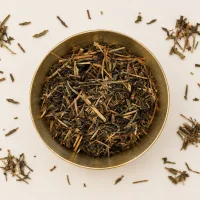
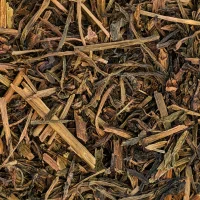
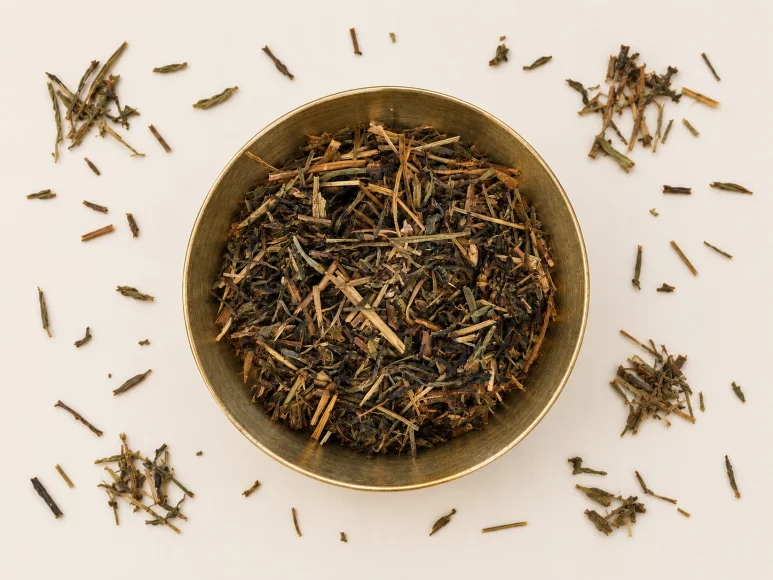
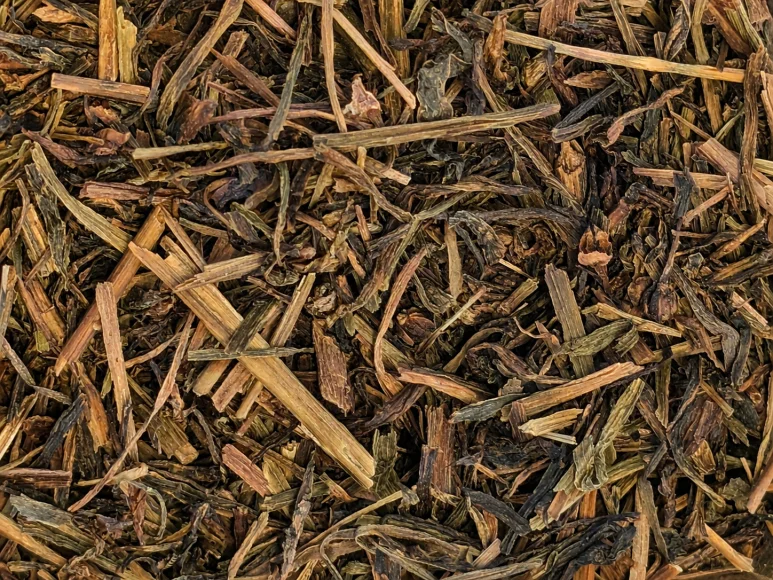
Jamboo is almost always sold and used dried, but contrary to what one might expect, drying does not concentrate its aroma: it actually weakens it considerably, leaving it almost dormant. It is the quick frying in hot oil or ghee, right before use, that reawakens and fully reveals its scent. Once dried, it looks like fine brown stringy herbs, quite different from the fresh onion or garlic it shares a botanical family with.
A remedy from Himalayan folk medicine
Beyond the kitchen, jimbu holds an old place in the traditional medicine of the high valleys of Upper Mustang and north-central Nepal, where families have used it for generations to treat colds, coughs and stomach aches. This home use, passed down orally from generation to generation, long predates any formal scientific study of the plant.
An economic weight disproportionate to its size
In Nepal's Mustang district, about 90% of households use jimbu in their curries, soups, pickles and meat dishes, a remarkable adoption rate for an herb almost unknown outside the Himalayan region. A 2004 field study in Upper Mustang estimated the annual dried jimbu harvest at around 3,288 kg for that district alone, almost entirely destined for sale rather than home consumption.
That figure, modest as it looks, illustrates jimbu's status as a "high value, low volume" crop in the Himalayan rural economy: Nepalese agricultural trade specialists classify it among those resources harvested in small quantities but sold at a price high enough to make up a meaningful share of income for many mountain households, alongside other foraged products such as certain high-altitude mushrooms or medicinal plants.
| Characteristic | Detail |
|---|---|
| Latin name | Allium hypsistum Stearn and Allium przewalskianum Regel (depending on region) |
| Botanical family | Amaryllidaceae (Allioideae subfamily), the same family as onion, garlic and chives |
| Local name | Jimbu (Nepali), Jamboo or Faran (Uttarakhand, depending on the valley) |
| Part used | Dried stem and leaf |
| Main producing regions | High Himalayan valleys of Nepal (including Mustang) and Uttarakhand (Kumaon region) |
Jamboo grows wild on alpine meadows and rocky high-altitude slopes, often above 3,000 metres, an extreme environment that severely limits any intensive cultivation. This geographic scarcity explains why the spice remains little known outside its home region.
From foraging to drying
- Hand-harvested at high altitude during the summer months, when the plant is most developed
- Stems and leaves are cut and then set to dry, traditionally in the open air or the sun
- Full drying can take several days, as the plant must lose almost all its moisture
- No further processing: the dried herb is kept as is until use
Did you know?
Botanists do not always agree on a single species for jimbu: depending on the valley and altitude of harvest, it is sometimes Allium hypsistum, sometimes Allium przewalskianum, two closely related Himalayan wild onions, sold under the same vernacular name, a botanical ambiguity fairly common for foraged plants that have never been standardised through agricultural domestication.
Dried, jamboo gives off a powerful scent, halfway between onion and chives, with a discreet hint of garlic in the background. Its aroma stays fairly neutral when cold but transforms radically on contact with heat.
Fried briefly in hot ghee or oil, it develops a richer, almost umami aroma, along with a slight bitterness reminiscent of certain grilled herbs. It is this quick frying step, right before the rest of the ingredients go in, that unlocks its full aromatic potential.
In Himalayan cooking
- Tempered in hot ghee or oil to flavour Nepali and Uttarakhandi dal (lentils)
- Used to season mountain vegetables, notably bamboo shoots and potato preparations
- Added to certain traditional achars (pickles) and marinades
- Used sparingly, a small pinch usually being enough to flavour an entire dish
Did you know?
In Nepali cooking, jamboo is one of the clearest markers separating a "mountain" dal from a lowland one: its dried allium scent, impossible to reproduce with fresh onion or garlic, is instantly recognisable to anyone familiar with Himalayan cuisine.
Dal, its favourite stage
Across the rest of Nepal, outside the regions that pair it with mountain curries and pickles, jimbu is used above all to flavour dal (lentils), much like asafoetida elsewhere in India: a few dry strands dropped into hot oil or ghee before the cooked lentils go in, for a discreet but lingering onion-and-garlic scent.
An ingredient of Nepali street food and restaurants
Beyond mountain family kitchens, jimbu has made its way into Nepali restaurants in big cities and the diaspora, where it often serves as a quiet signature for a dal-bhat meant to feel authentic: some cooks see it as a mark of quality, able to tell a traditionally prepared dish apart from a standardised, fresh-onion version that is cheaper but aromatically flatter.
Like many plants of the Allium genus, jamboo is traditionally associated in mountain kitchens with digestive and warming properties, a use rooted in experience long before any formal scientific study of this specific species.
What we know
- Sulphur compounds: like garlic and onion, the Allium genus produces aromatic sulphur compounds, the source of its characteristic scent and likely of some of its traditional properties
- Traditional use: used locally to warm the body in cold climates and support digestion of fibre-rich lentil dishes
- Home remedy: in Upper Mustang and north-central Nepal, jimbu is also used outside cooking, as a simple decoction, to relieve colds, coughs and stomach aches
- Research: scientific studies specific to Allium hypsistum and Allium przewalskianum remain scarce, this spice having received little attention compared with more common Allium species like garlic or onion
Usage precautions
Consumed in normal culinary amounts, jamboo is used without known issue by the Himalayan populations who have cooked with it for a long time. In the absence of abundant specific scientific data, it is advisable to stick to traditional culinary use, in small amounts, and not to treat its older home-remedy uses as a substitute for medical advice.
Quality criteria
- Colour: brownish-green to dark brown, with no trace of mould
- Smell: a clear allium scent, between dried onion and chives
- Texture: stringy stems and leaves, well dried and brittle
Storage tips
- In an airtight container, away from light and moisture
- Shelf life: about 1 to 2 years, the dried herb gradually losing its scent
- Lightly crumble the stems before frying them in hot ghee or oil, for optimal aroma release
- Buy in small quantities if possible: since jimbu is only harvested once a year in season, an older batch will have lost some of its aroma compared to a recent harvest
Is jamboo just dried onion?
No, even though it belongs to the same botanical genus (Allium). Jamboo (Allium hypsistum or przewalskianum depending on the region) is a wild Himalayan species in its own right, distinct from cultivated onion (Allium cepa), with a scent closer to chives and garlic.
How is jamboo used in cooking?
It is briefly fried in hot ghee or oil before the rest of the ingredients are added, an essential step to fully develop its aroma. A small pinch is usually enough to flavour an entire dish.
Why is jamboo such a rare spice?
It only grows wild, at high altitude in the Himalayan valleys of Nepal and Uttarakhand, often above 3,000 metres. This extreme geographic location strongly limits harvested volumes: a 2004 study estimated the annual harvest of Upper Mustang alone at around 3,288 kg dried.
Are jamboo (jimbu) and jakhiya the same spice?
No, these are two distinct Himalayan spices, sometimes mentioned together simply because both are regional and little known outside their home area. Jamboo is a dried herb from the onion family, while jakhiya is a tempering seed from a completely different plant, related to caper bushes.
Can jamboo be replaced with fresh onion or garlic?
The result will not be identical: drying concentrates aromatic compounds unique to jamboo, absent from fresh onion or garlic. Dried chives can work in a pinch for an approaching note, without exactly reproducing its characteristic scent.
Is jamboo a spice found across all of India?
No, its rarity is exactly what makes it a curiosity: jamboo (jimbu) only grows at high altitude in the Himalayas, mainly in Nepal (Mustang district, where 90% of households use it) and in the mountainous regions of Uttarakhand such as Kumaon. It remains virtually unknown elsewhere on the subcontinent.
Does jamboo have any use outside the kitchen?
Yes, in Upper Mustang and north-central Nepal it has long also been used as a home remedy for colds, coughs and stomach aches, outside any culinary context, a traditional use passed down orally, never validated by a specific clinical study to date.
-
Jamboo (or jimbu) belongs to the Allium genus, the same as onion, garlic and chives, yet it is neither: it is a wild species native to the high Himalayan valleys, growing at altitudes where few other aromatic plants survive. Two closely related species, Allium hypsistum and Allium przewalskianum, are grouped under this common vernacular name depending on the region.
This herb has long been used in the mountain kitchens of Nepal, notably in the Mustang region, and in Indian Himalayan states such as Uttarakhand, where it is locally called "faran" in some Kumaon valleys. Unlike lowland spices, jamboo grows in remote, hard-to-reach areas, which has long made it a foraged rather than cultivated spice, reserved for local populations.
Did you know?
Jamboo is almost always sold and used dried, but contrary to what one might expect, drying does not concentrate its aroma: it actually weakens it considerably, leaving it almost dormant. It is the quick frying in hot oil or ghee, right before use, that reawakens and fully reveals its scent. Once dried, it looks like fine brown stringy herbs, quite different from the fresh onion or garlic it shares a botanical family with.
A remedy from Himalayan folk medicine
Beyond the kitchen, jimbu holds an old place in the traditional medicine of the high valleys of Upper Mustang and north-central Nepal, where families have used it for generations to treat colds, coughs and stomach aches. This home use, passed down orally from generation to generation, long predates any formal scientific study of the plant.
An economic weight disproportionate to its size
In Nepal's Mustang district, about 90% of households use jimbu in their curries, soups, pickles and meat dishes, a remarkable adoption rate for an herb almost unknown outside the Himalayan region. A 2004 field study in Upper Mustang estimated the annual dried jimbu harvest at around 3,288 kg for that district alone, almost entirely destined for sale rather than home consumption.
That figure, modest as it looks, illustrates jimbu's status as a "high value, low volume" crop in the Himalayan rural economy: Nepalese agricultural trade specialists classify it among those resources harvested in small quantities but sold at a price high enough to make up a meaningful share of income for many mountain households, alongside other foraged products such as certain high-altitude mushrooms or medicinal plants.
-
Characteristic Detail Latin name Allium hypsistum Stearn and Allium przewalskianum Regel (depending on region) Botanical family Amaryllidaceae (Allioideae subfamily), the same family as onion, garlic and chives Local name Jimbu (Nepali), Jamboo or Faran (Uttarakhand, depending on the valley) Part used Dried stem and leaf Main producing regions High Himalayan valleys of Nepal (including Mustang) and Uttarakhand (Kumaon region) Jamboo grows wild on alpine meadows and rocky high-altitude slopes, often above 3,000 metres, an extreme environment that severely limits any intensive cultivation. This geographic scarcity explains why the spice remains little known outside its home region.
From foraging to drying
- Hand-harvested at high altitude during the summer months, when the plant is most developed
- Stems and leaves are cut and then set to dry, traditionally in the open air or the sun
- Full drying can take several days, as the plant must lose almost all its moisture
- No further processing: the dried herb is kept as is until use
Did you know?
Botanists do not always agree on a single species for jimbu: depending on the valley and altitude of harvest, it is sometimes Allium hypsistum, sometimes Allium przewalskianum, two closely related Himalayan wild onions, sold under the same vernacular name, a botanical ambiguity fairly common for foraged plants that have never been standardised through agricultural domestication.
-
Dried, jamboo gives off a powerful scent, halfway between onion and chives, with a discreet hint of garlic in the background. Its aroma stays fairly neutral when cold but transforms radically on contact with heat.
Fried briefly in hot ghee or oil, it develops a richer, almost umami aroma, along with a slight bitterness reminiscent of certain grilled herbs. It is this quick frying step, right before the rest of the ingredients go in, that unlocks its full aromatic potential.
-
In Himalayan cooking
- Tempered in hot ghee or oil to flavour Nepali and Uttarakhandi dal (lentils)
- Used to season mountain vegetables, notably bamboo shoots and potato preparations
- Added to certain traditional achars (pickles) and marinades
- Used sparingly, a small pinch usually being enough to flavour an entire dish
Did you know?
In Nepali cooking, jamboo is one of the clearest markers separating a "mountain" dal from a lowland one: its dried allium scent, impossible to reproduce with fresh onion or garlic, is instantly recognisable to anyone familiar with Himalayan cuisine.
Dal, its favourite stage
Across the rest of Nepal, outside the regions that pair it with mountain curries and pickles, jimbu is used above all to flavour dal (lentils), much like asafoetida elsewhere in India: a few dry strands dropped into hot oil or ghee before the cooked lentils go in, for a discreet but lingering onion-and-garlic scent.
An ingredient of Nepali street food and restaurants
Beyond mountain family kitchens, jimbu has made its way into Nepali restaurants in big cities and the diaspora, where it often serves as a quiet signature for a dal-bhat meant to feel authentic: some cooks see it as a mark of quality, able to tell a traditionally prepared dish apart from a standardised, fresh-onion version that is cheaper but aromatically flatter.
-
Like many plants of the Allium genus, jamboo is traditionally associated in mountain kitchens with digestive and warming properties, a use rooted in experience long before any formal scientific study of this specific species.
What we know
- Sulphur compounds: like garlic and onion, the Allium genus produces aromatic sulphur compounds, the source of its characteristic scent and likely of some of its traditional properties
- Traditional use: used locally to warm the body in cold climates and support digestion of fibre-rich lentil dishes
- Home remedy: in Upper Mustang and north-central Nepal, jimbu is also used outside cooking, as a simple decoction, to relieve colds, coughs and stomach aches
- Research: scientific studies specific to Allium hypsistum and Allium przewalskianum remain scarce, this spice having received little attention compared with more common Allium species like garlic or onion
Usage precautions
Consumed in normal culinary amounts, jamboo is used without known issue by the Himalayan populations who have cooked with it for a long time. In the absence of abundant specific scientific data, it is advisable to stick to traditional culinary use, in small amounts, and not to treat its older home-remedy uses as a substitute for medical advice.
-
Quality criteria
- Colour: brownish-green to dark brown, with no trace of mould
- Smell: a clear allium scent, between dried onion and chives
- Texture: stringy stems and leaves, well dried and brittle
Storage tips
- In an airtight container, away from light and moisture
- Shelf life: about 1 to 2 years, the dried herb gradually losing its scent
- Lightly crumble the stems before frying them in hot ghee or oil, for optimal aroma release
- Buy in small quantities if possible: since jimbu is only harvested once a year in season, an older batch will have lost some of its aroma compared to a recent harvest
-
Is jamboo just dried onion?
No, even though it belongs to the same botanical genus (Allium). Jamboo (Allium hypsistum or przewalskianum depending on the region) is a wild Himalayan species in its own right, distinct from cultivated onion (Allium cepa), with a scent closer to chives and garlic.
How is jamboo used in cooking?
It is briefly fried in hot ghee or oil before the rest of the ingredients are added, an essential step to fully develop its aroma. A small pinch is usually enough to flavour an entire dish.
Why is jamboo such a rare spice?
It only grows wild, at high altitude in the Himalayan valleys of Nepal and Uttarakhand, often above 3,000 metres. This extreme geographic location strongly limits harvested volumes: a 2004 study estimated the annual harvest of Upper Mustang alone at around 3,288 kg dried.
Are jamboo (jimbu) and jakhiya the same spice?
No, these are two distinct Himalayan spices, sometimes mentioned together simply because both are regional and little known outside their home area. Jamboo is a dried herb from the onion family, while jakhiya is a tempering seed from a completely different plant, related to caper bushes.
Can jamboo be replaced with fresh onion or garlic?
The result will not be identical: drying concentrates aromatic compounds unique to jamboo, absent from fresh onion or garlic. Dried chives can work in a pinch for an approaching note, without exactly reproducing its characteristic scent.
Is jamboo a spice found across all of India?
No, its rarity is exactly what makes it a curiosity: jamboo (jimbu) only grows at high altitude in the Himalayas, mainly in Nepal (Mustang district, where 90% of households use it) and in the mountainous regions of Uttarakhand such as Kumaon. It remains virtually unknown elsewhere on the subcontinent.
Does jamboo have any use outside the kitchen?
Yes, in Upper Mustang and north-central Nepal it has long also been used as a home remedy for colds, coughs and stomach aches, outside any culinary context, a traditional use passed down orally, never validated by a specific clinical study to date.
Why choose Jamboo (Jimbu) Himalayan Herb from La Table Indienne?

Exceptional freshness and quality
Our spices are imported directly from India and packaged on demand to guarantee optimal freshness. Unlike spices sold in supermarkets that can sit on shelves for months, we ensure each spice retains its full flavor and aroma.
Authenticity and traceability
Each spice comes from specific regions in India renowned for their expertise. We work directly with local producers who grow their spices traditionally.
How to best use this spice?
To reveal all the aromas, we recommend lightly toasting whole spices in a dry pan before grinding them. Store them in a dry place away from light to preserve their freshness as long as possible.

Did you know?
Whole spices are much better than ground spices
Check out our blog article to discover why whole spices retain their aromas better.
Questions & Answers
Thank you! Your question has been sent. Mihika will answer soon and you will receive an email.
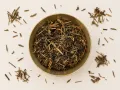
Jamboo (Jimbu) Himalayan Herb
Discover also
Other products you might like