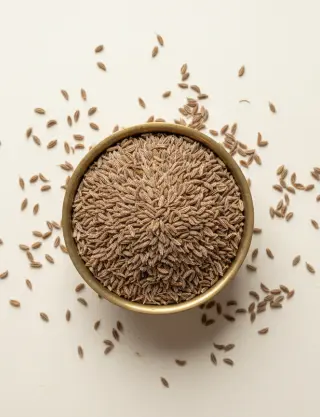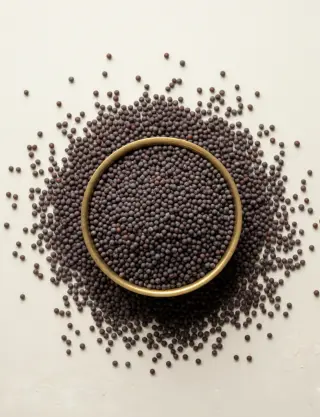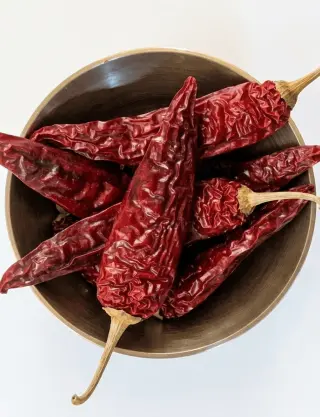




Discover our Himalayan hemp seeds, grown in the valleys of Uttarakhand, in the heart of the Indian Himalayas. Mild, subtly earthy and gently nutty to enrich your chutneys, simmered dishes and smoothies.
Ready for shipping, delivery time 3-10 business days
Delivery from €4.80 at Mondial Relay pickup points.



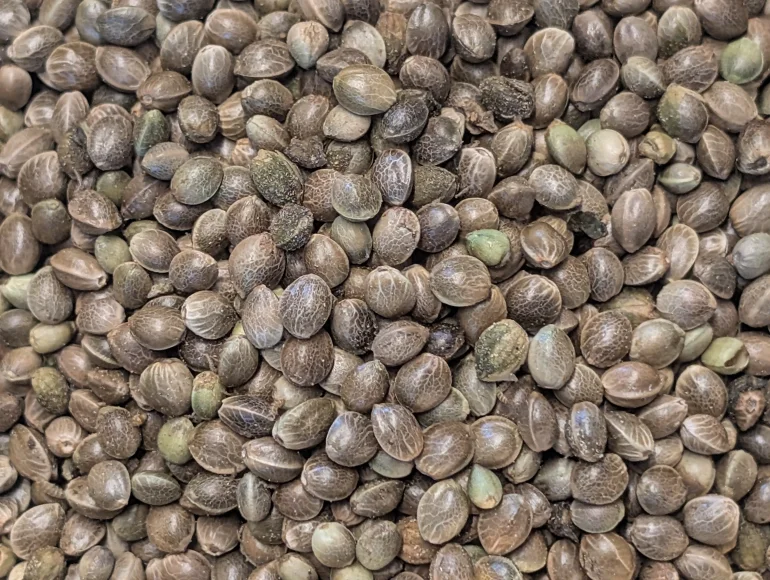
Himalayan Hemp Seeds: Uttarakhand's Bhang
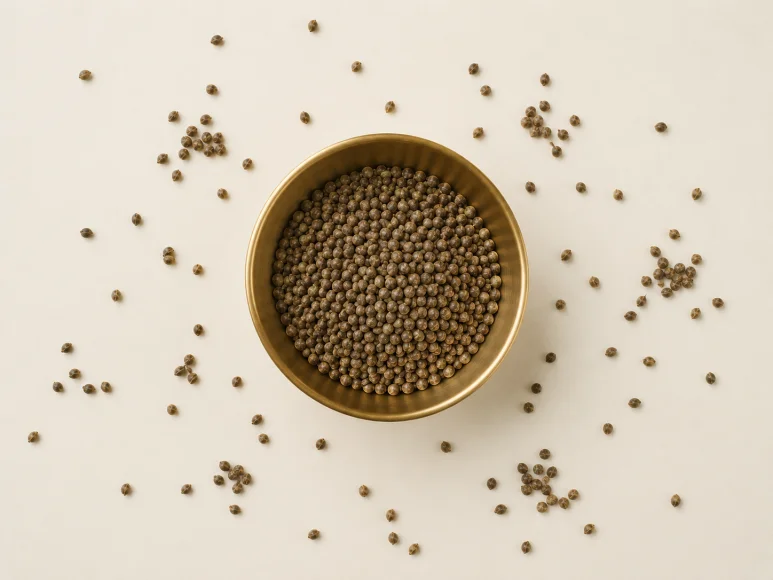
Bhang: edible hemp seeds (Cannabis sativa, THC-free), is a traditional condiment from the valleys of Uttarakhand, in the Indian Himalayas, where pahari families have grown and harvested it for generations. Blended with a little water and strained into a smooth "milk", dry-roasted, or ground into chutney, these small seeds bring a mild, nutty flavour to many mountain dishes. We source them directly from producers in the region so you can discover a seed still little known outside India.
Why choose whole seeds?
Left whole, hemp seeds keep their essential oils and nutritional qualities far longer than a pre-ground powder. They can be prepared to suit the dish: lightly dry-roasted for a crunchier texture and a more pronounced nutty aroma, or blended with water and strained into a smooth paste, the base of the traditional bhang ki chutney.
Culinary uses:
- Make the traditional bhang ki chutney: roasted seeds blended with green chilli, coriander and a splash of lemon
- As a toasted topping on sautéed vegetables (cabbage, radish, fenugreek) and salads
- Blended with water and strained into a smooth hemp "milk", to drink or cook with
- Added whole or ground into smoothies for a boost of protein and omega-3/6
- Sprinkled over dals and legumes for a crunchy, aromatic touch
- Mixed into homemade bread dough or muesli for a crunchy texture
Origin and quality:
Our hemp seeds come from smallholder farms in the valleys of Uttarakhand. We select our producers with care, so we can guarantee you a natural, premium-quality seed.
To discover the story of bhang in the valleys of Uttarakhand, read our guide to Himalayan hemp seeds.
Storage:
To preserve all its aroma, store your hemp seeds in a dry place, away from light and humidity, in their airtight packaging.
Rich in omega-3 and omega-6 fatty acids
Provides complete protein with all essential amino acids
Supports cardiovascular health
Aids digestion thanks to its fibre content
Contributes to healthy skin and hair
Helps fight inflammation
Rich in magnesium and iron
Promotes satiety and weight balance
Nutritional declaration per 100g
| Nutritional component | Per 100g |
|---|---|
| Energy | 2 313 kJ / 553 kcal |
| Fat | ~ 48,8 g |
| of which saturated fat | ~ 4,6 g |
| Carbohydrates | ~ 8,7 g |
| of which sugars | ~ 1,5 g |
| Dietary fiber | ~ 4 g |
| Proteins | ~ 31,6 g |
| Salt | ~ 20 mg |
| Directly selected smallholder producers | Yes |
| Vegetarian | Yes |
| Origin | Uttarakhand, India |
| Quality | Premium |
| Type | Whole seeds |
| Taste profile | Mild, nutty flavour with a subtly earthy note. Turns creamy and smooth once blended with water and strained, or crisp and aromatic when lightly toasted. |
| Possible traces of allergens | May contain traces of tree nuts, sesame and mustard (packaged in a facility handling these allergens). |
Translated from French
Learn more
In the hills of Uttarakhand, hemp (Cannabis sativa) has been grown for generations for its seed and fibre, long before the plant became associated in the popular imagination with an entirely different use. The seed, locally called "bhang ke beej", is among the oldest and most everyday foods of Garhwali and Kumaoni cooking.
The most iconic dish it produces, bhang ki chutney (or bhangeera in some Kumaon areas), is made by grinding roasted seeds with garlic, green chilli, lemon and salt into a coarse, nutty, slightly tangy paste. No traditional mountain meal would really be complete without it, typically served with gahat paratha (bean flatbreads) for breakfast.
One plant, two very distinct uses
It's important to clearly separate the food seed sold here from the Indian ritual preparation called "bhang", a drink or paste made from cannabis leaves and flowers, traditionally consumed during certain festivals such as Holi or Shivaratri. These are two culturally real but botanically and legally very different uses: only the seed, free of psychoactive properties, is sold here.
Did you know?
In India, the FSSAI (the food safety authority) officially approved hemp seeds as a food item on 15 November 2021, confirming their status as a fully-fledged food, separate from any cannabis regulation.
Far more than a seed: a plant for every purpose
Long before cooks took an interest, Himalayan hemp served mountain tribal communities for far more than food: its braided fibres were woven into bhangela, a traditional cloth, as well as ropes, sacks and fishing nets. This versatility explains why the plant always held a central place in the domestic economy of Himalayan villages, long before its seeds were recognised as a food in their own right.
In July 2018, Uttarakhand became the first Indian state to formally legalise hemp cultivation, under a strict framework governed by the Narcotic Drugs and Psychotropic Substances (NDPS) Act. Three years later, in November 2021, the Food Safety and Standards Authority of India (FSSAI) formally recognised hemp seeds, their oil and flour as food, opening the way to their legal sale as a food ingredient across the country.
A precise legal status, not just tolerance
The legal status of hemp seeds in India is not just administrative tolerance: India's Narcotic Drugs and Psychotropic Substances Act of 1985 (NDPS Act) explicitly excludes hemp seeds and hemp seed oil from its own legal definition of cannabis. This precise legal exclusion, unlike the ambiguity that surrounds hemp in some other countries, is why bringing them to market as food never required a special exemption, only formal recognition from the food safety authority.
The same principle applies at European level: a hemp variety is considered industrial, and therefore legal to grow and to sell seeds from, as long as its THC content does not exceed 0.3% by mass, a regulatory threshold that clearly separates food-grade hemp from varieties grown for other purposes.
| Feature | Detail |
|---|---|
| Latin name | Cannabis sativa L. (industrial variety, very low in THC) |
| Botanical family | Cannabaceae, the same family as hops |
| Local name | Bhang ke beej (Hindi, "hemp seeds") |
| Part used | Seed (achene) |
| Main growing region | The hills of Uttarakhand (Garhwal and Kumaon), at altitudes well suited to this hardy crop |
Hemp grown for its seed and fibre is an industrial variety, bred for very low THC content, the psychoactive substance in recreational cannabis. This distinction, essential both legally and botanically, is sometimes blurred by the closeness of vernacular names in India.
A hardy mountain crop
- Sown in spring on the slopes of the Himalayan hills, often as a family subsistence crop
- Harvested in late summer, once the seeds are ripe and dry on the stalk
- Threshed to separate the seeds from the stalks, then cleaned and sorted
- Eaten dry-roasted, a step that develops its nutty flavour and makes it easier to grind
A strict legal framework, built for the food-grade seed
Indian regulation sets precise permitted THC thresholds for hemp-based food products: 5 mg per kilo for solid foods, 0.2 mg per kilo for beverages. These deliberately low thresholds ensure the seed sold as food carries no psychoactive effect, unlike the leaves and flowers of the same plant traditionally used in ritual bhang.
Raw hemp seed has a mild, understated taste, close to sunflower seed. It's the dry-roasting, systematically applied before use in Himalayan cooking, that fully brings out its toasted nutty aroma and characteristic slight bitterness.
Once ground into a chutney with garlic, green chilli and lemon, it develops a complex profile, nutty, sharp and tangy all at once, quite different from the seed on its own.
In Himalayan cooking
- Ground into chutney (bhang ki chutney or bhangeera) with garlic, green chilli, lemon and salt
- Traditionally served for breakfast with gahat paratha (bean flatbreads) and cucumber raita
- Used ground in certain sauces and mountain vegetable accompaniments
- Eaten roasted on its own, as a crunchy snack
Around the world
- Sprinkled over salads, yoghurt and cereal bowls in contemporary Western cooking
- Used as hemp seed oil, rich in essential fatty acids
Did you know?
To make a simple bhang ki chutney, dry-roast the seeds for a few minutes until they start to pop slightly, then pound them in a mortar with garlic, green chilli, lemon juice and a pinch of salt into a coarse paste.
Hemp seeds are among the most nutritionally interesting seeds around: they provide a complete protein and a particularly sought-after fatty acid balance.
What we know
- Complete protein : hemp seeds contain all nine essential amino acids, a rare profile among plant seeds
- Omega-3 and omega-6 : present in roughly a 3-to-1 ratio, close to the one recommended by the World Health Organization
- Gamma-linolenic acid (GLA) : a rarer fatty acid, studied for its role in modulating inflammation
- No psychoactive property : the seed contains no significant THC, unlike the leaves and flowers used in ritual preparations
Precautions
The food-grade hemp seeds sold here are legal in the European Union and carry no psychoactive property whatsoever. As with any fat-rich seed, moderate consumption fits within a balanced diet.
Indicative nutritional values (per 100 g of seeds)
| Component | Approximate content |
|---|---|
| Energy | about 580 kcal |
| Protein | about 31 g |
| Fat | about 48 g, mostly unsaturated |
| Fibre | about 4 g |
Quality markers
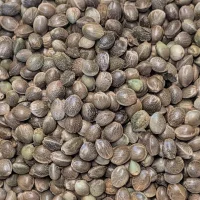
- Colour : greyish-brown to olive green, uniform
- Smell : mild, slightly nutty aroma, with no rancid note
- Texture : dry, non-sticky seeds with an intact shell
Storage tips
- In an airtight container, away from light and heat, ideally refrigerated once opened
- Shelf life: about 12 months, owing to their unsaturated fat content, which is prone to oxidation
- Dry-roast them just before use to revive their aroma
Do hemp seeds have a psychoactive effect?
No. Food-grade industrial hemp seed contains no significant THC and has no psychoactive property whatsoever. It should not be confused with bhang, an Indian ritual preparation made from cannabis leaves and flowers.
What is bhang ki chutney?
It's a traditional condiment from the hills of Uttarakhand (Garhwal and Kumaon), made by grinding roasted hemp seeds with garlic, green chilli, lemon and salt. It traditionally accompanies gahat paratha for breakfast.
Are hemp seeds legal in the EU?
Yes. Hemp seeds (which carry no psychoactive properties, unlike the flowers and leaves) are legal to sell and consume as food in the European Union.
Why should hemp seeds be roasted before use?
Dry-roasting fully brings out their toasted nutty aroma and makes them easier to grind into chutney, a step systematically applied in traditional Himalayan cooking.
Why are hemp seeds considered nutritionally interesting?
They provide all nine essential amino acids (a so-called complete protein) as well as an omega-6 to omega-3 ratio of roughly 3 to 1, close to what the World Health Organization recommends to help limit inflammation.
Do food-grade hemp seeds have any connection to traditional Indian bhang?
Botanically, they come from the same plant, but they are two very different products. Traditional bhang is a ritual preparation made from cannabis leaves and flowers, consumed notably during Holi or Shivaratri. The food-grade seeds sold here are regulated by the FSSAI, contain no significant active THC, and have no psychoactive effect: they are a nutritional ingredient, not a ritual preparation.
Since when have hemp seeds been legal to sell as food in India?
The Food Safety and Standards Authority of India (FSSAI) formally recognised them as food in November 2021, with strict residual THC thresholds (5 mg/kg solid, 0.2 mg/kg liquid). Uttarakhand had paved the way as early as July 2018 by legalising hemp cultivation on its territory, within a framework governed by the NDPS anti-narcotics law.
-
In the hills of Uttarakhand, hemp (Cannabis sativa) has been grown for generations for its seed and fibre, long before the plant became associated in the popular imagination with an entirely different use. The seed, locally called "bhang ke beej", is among the oldest and most everyday foods of Garhwali and Kumaoni cooking.
The most iconic dish it produces, bhang ki chutney (or bhangeera in some Kumaon areas), is made by grinding roasted seeds with garlic, green chilli, lemon and salt into a coarse, nutty, slightly tangy paste. No traditional mountain meal would really be complete without it, typically served with gahat paratha (bean flatbreads) for breakfast.
One plant, two very distinct uses
It's important to clearly separate the food seed sold here from the Indian ritual preparation called "bhang", a drink or paste made from cannabis leaves and flowers, traditionally consumed during certain festivals such as Holi or Shivaratri. These are two culturally real but botanically and legally very different uses: only the seed, free of psychoactive properties, is sold here.
Did you know?
In India, the FSSAI (the food safety authority) officially approved hemp seeds as a food item on 15 November 2021, confirming their status as a fully-fledged food, separate from any cannabis regulation.
Far more than a seed: a plant for every purpose
Long before cooks took an interest, Himalayan hemp served mountain tribal communities for far more than food: its braided fibres were woven into bhangela, a traditional cloth, as well as ropes, sacks and fishing nets. This versatility explains why the plant always held a central place in the domestic economy of Himalayan villages, long before its seeds were recognised as a food in their own right.
In July 2018, Uttarakhand became the first Indian state to formally legalise hemp cultivation, under a strict framework governed by the Narcotic Drugs and Psychotropic Substances (NDPS) Act. Three years later, in November 2021, the Food Safety and Standards Authority of India (FSSAI) formally recognised hemp seeds, their oil and flour as food, opening the way to their legal sale as a food ingredient across the country.
A precise legal status, not just tolerance
The legal status of hemp seeds in India is not just administrative tolerance: India's Narcotic Drugs and Psychotropic Substances Act of 1985 (NDPS Act) explicitly excludes hemp seeds and hemp seed oil from its own legal definition of cannabis. This precise legal exclusion, unlike the ambiguity that surrounds hemp in some other countries, is why bringing them to market as food never required a special exemption, only formal recognition from the food safety authority.
The same principle applies at European level: a hemp variety is considered industrial, and therefore legal to grow and to sell seeds from, as long as its THC content does not exceed 0.3% by mass, a regulatory threshold that clearly separates food-grade hemp from varieties grown for other purposes.
-
Feature Detail Latin name Cannabis sativa L. (industrial variety, very low in THC) Botanical family Cannabaceae, the same family as hops Local name Bhang ke beej (Hindi, "hemp seeds") Part used Seed (achene) Main growing region The hills of Uttarakhand (Garhwal and Kumaon), at altitudes well suited to this hardy crop Hemp grown for its seed and fibre is an industrial variety, bred for very low THC content, the psychoactive substance in recreational cannabis. This distinction, essential both legally and botanically, is sometimes blurred by the closeness of vernacular names in India.
A hardy mountain crop
- Sown in spring on the slopes of the Himalayan hills, often as a family subsistence crop
- Harvested in late summer, once the seeds are ripe and dry on the stalk
- Threshed to separate the seeds from the stalks, then cleaned and sorted
- Eaten dry-roasted, a step that develops its nutty flavour and makes it easier to grind
A strict legal framework, built for the food-grade seed
Indian regulation sets precise permitted THC thresholds for hemp-based food products: 5 mg per kilo for solid foods, 0.2 mg per kilo for beverages. These deliberately low thresholds ensure the seed sold as food carries no psychoactive effect, unlike the leaves and flowers of the same plant traditionally used in ritual bhang.
-
Raw hemp seed has a mild, understated taste, close to sunflower seed. It's the dry-roasting, systematically applied before use in Himalayan cooking, that fully brings out its toasted nutty aroma and characteristic slight bitterness.
Once ground into a chutney with garlic, green chilli and lemon, it develops a complex profile, nutty, sharp and tangy all at once, quite different from the seed on its own.
-
In Himalayan cooking
- Ground into chutney (bhang ki chutney or bhangeera) with garlic, green chilli, lemon and salt
- Traditionally served for breakfast with gahat paratha (bean flatbreads) and cucumber raita
- Used ground in certain sauces and mountain vegetable accompaniments
- Eaten roasted on its own, as a crunchy snack
Around the world
- Sprinkled over salads, yoghurt and cereal bowls in contemporary Western cooking
- Used as hemp seed oil, rich in essential fatty acids
Did you know?
To make a simple bhang ki chutney, dry-roast the seeds for a few minutes until they start to pop slightly, then pound them in a mortar with garlic, green chilli, lemon juice and a pinch of salt into a coarse paste.
-
Hemp seeds are among the most nutritionally interesting seeds around: they provide a complete protein and a particularly sought-after fatty acid balance.
What we know
- Complete protein : hemp seeds contain all nine essential amino acids, a rare profile among plant seeds
- Omega-3 and omega-6 : present in roughly a 3-to-1 ratio, close to the one recommended by the World Health Organization
- Gamma-linolenic acid (GLA) : a rarer fatty acid, studied for its role in modulating inflammation
- No psychoactive property : the seed contains no significant THC, unlike the leaves and flowers used in ritual preparations
Precautions
The food-grade hemp seeds sold here are legal in the European Union and carry no psychoactive property whatsoever. As with any fat-rich seed, moderate consumption fits within a balanced diet.
Indicative nutritional values (per 100 g of seeds)
Component Approximate content Energy about 580 kcal Protein about 31 g Fat about 48 g, mostly unsaturated Fibre about 4 g -
Quality markers
- Colour : greyish-brown to olive green, uniform
- Smell : mild, slightly nutty aroma, with no rancid note
- Texture : dry, non-sticky seeds with an intact shell
Storage tips
- In an airtight container, away from light and heat, ideally refrigerated once opened
- Shelf life: about 12 months, owing to their unsaturated fat content, which is prone to oxidation
- Dry-roast them just before use to revive their aroma
-
Do hemp seeds have a psychoactive effect?
No. Food-grade industrial hemp seed contains no significant THC and has no psychoactive property whatsoever. It should not be confused with bhang, an Indian ritual preparation made from cannabis leaves and flowers.
What is bhang ki chutney?
It's a traditional condiment from the hills of Uttarakhand (Garhwal and Kumaon), made by grinding roasted hemp seeds with garlic, green chilli, lemon and salt. It traditionally accompanies gahat paratha for breakfast.
Are hemp seeds legal in the EU?
Yes. Hemp seeds (which carry no psychoactive properties, unlike the flowers and leaves) are legal to sell and consume as food in the European Union.
Why should hemp seeds be roasted before use?
Dry-roasting fully brings out their toasted nutty aroma and makes them easier to grind into chutney, a step systematically applied in traditional Himalayan cooking.
Why are hemp seeds considered nutritionally interesting?
They provide all nine essential amino acids (a so-called complete protein) as well as an omega-6 to omega-3 ratio of roughly 3 to 1, close to what the World Health Organization recommends to help limit inflammation.
Do food-grade hemp seeds have any connection to traditional Indian bhang?
Botanically, they come from the same plant, but they are two very different products. Traditional bhang is a ritual preparation made from cannabis leaves and flowers, consumed notably during Holi or Shivaratri. The food-grade seeds sold here are regulated by the FSSAI, contain no significant active THC, and have no psychoactive effect: they are a nutritional ingredient, not a ritual preparation.
Since when have hemp seeds been legal to sell as food in India?
The Food Safety and Standards Authority of India (FSSAI) formally recognised them as food in November 2021, with strict residual THC thresholds (5 mg/kg solid, 0.2 mg/kg liquid). Uttarakhand had paved the way as early as July 2018 by legalising hemp cultivation on its territory, within a framework governed by the NDPS anti-narcotics law.
Why choose Himalayan Hemp Seeds (Bhang) from La Table Indienne?

Exceptional freshness and quality
Our spices are imported directly from India and packaged on demand to guarantee optimal freshness. Unlike spices sold in supermarkets that can sit on shelves for months, we ensure each spice retains its full flavor and aroma.
Authenticity and traceability
Each spice comes from specific regions in India renowned for their expertise. We work directly with local producers who grow their spices traditionally.
How to best use this spice?
To reveal all the aromas, we recommend lightly toasting whole spices in a dry pan before grinding them. Store them in a dry place away from light to preserve their freshness as long as possible.

Did you know?
Whole spices are much better than ground spices
Check out our blog article to discover why whole spices retain their aromas better.
Questions & Answers
Thank you! Your question has been sent. Mihika will answer soon and you will receive an email.
Himalayan Hemp Seeds (Bhang)
Discover also
Other products you might like