



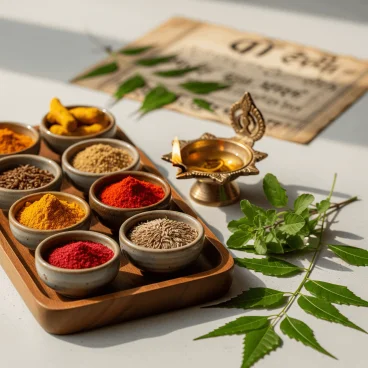
More than five thousand years ago, the sages of ancient India developed a remarkably coherent system of health. Ayurveda: from the Sanskrit ayur (life) and veda (knowledge), is literally the science of life. It is neither an exotic medicine nor a wellness trend: it is one of the oldest medical systems in the world, still alive, still practised by hundreds of millions of people.
At the heart of this tradition lies an idea as simple as it is revolutionary: food is medicine. Not in a metaphorical sense, but in a deeply practical one. Spices are not there to flavour dishes: they are there to balance the body, stimulate digestion, purify the blood and nourish the tissues. Traditional Indian cuisine is, at its foundations, a daily pharmacology.
In Ayurveda, the cook is also a healer. Every meal is a prescription, every spice a medicine. Traditional Indian cuisine is a pharmacy you eat three times a day.
What is fascinating is that most Indian households do not think of themselves as "practising Ayurveda" at all. They simply cook the way their mothers and grandmothers taught them. But by adding turmeric to every dal, by sizzling cumin seeds in ghee, by brewing ginger tea when the stomach feels heavy, they are perpetuating (without knowing it) a millennia-old medical knowledge. This guide opens the doors to that wisdom.
The foundations of Ayurveda: the three doshas
To understand how spices work according to Ayurveda, you first need to grasp the central concept of this medicine: the doshas. Ayurveda considers that every human being is made up of a unique combination of three vital energies, called doshas, which govern all physiological and psychological functions.
- Vata: the energy of movement. Associated with the elements of air and space, it governs circulation, breathing and the nervous system. An imbalanced Vata manifests as anxiety, insomnia and irregular digestion. Warming spices like ginger, cinnamon and black pepper calm and ground it.
- Pitta: the energy of transformation. Associated with fire and water, it governs metabolism, digestion and intelligence. An imbalanced Pitta manifests as inflammation, irritability and acid reflux. Cooling spices like cardamom, coriander and fennel pacify it.
- Kapha: the energy of structure. Associated with earth and water, it governs stability, joint lubrication and immunity. An imbalanced Kapha manifests as congestion, lethargy and weight gain. Pungent, warming spices like ginger, pepper and cloves stimulate it.
Each person is born with a unique constitution: a combination of doshas called prakriti. Health, according to Ayurveda, consists of maintaining this individual balance throughout life, and food is the primary tool to achieve it. You do not need to know your dominant dosha to benefit from Ayurvedic wisdom: cooking with these spices daily is already a giant step.
The 8 essential Ayurvedic spices
Here are the eight spices that form the heart of the Ayurvedic pharmacopoeia. For each, we share its traditional properties, what modern science says about it, and (most importantly) how to integrate it easily into daily life.
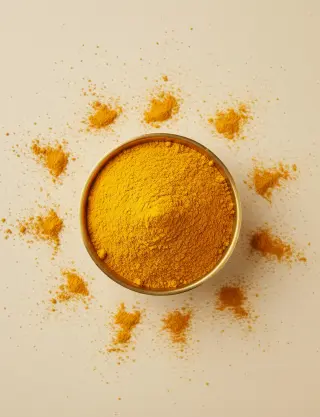
1. Turmeric (haldi): the golden goddess
If Ayurveda had just one spice, it would be turmeric. Called haldi in Hindi and revered for millennia as a universal purifier, it is present in almost every Indian dish, every skincare ritual, every grandmother's remedy. Ayurveda attributes tridoshic properties to it: it balances all three doshas simultaneously, making it a rare and precious spice.
- Ayurvedic properties: purifies the blood (rakta shodhana), warms the tissues, improves skin radiance, supports the liver. Used for 4,000 years in treatments for skin conditions, wounds and joint inflammation.
- What science says: curcumin, its active compound, is one of the most studied anti-inflammatory compounds in the world, with thousands of scientific publications. It inhibits inflammatory pathways (NF-κB) and acts as a powerful antioxidant. Our Lakadong turmeric from Meghalaya contains between 7 and 12% curcumin, compared to 2–3% for ordinary turmeric.
- Daily use: curcumin is fat-soluble and poorly absorbed on its own. Always combine turmeric with a fat (ghee, coconut oil, whole milk) and black pepper: the piperine in pepper increases its absorption by 2,000%. A pinch in scrambled eggs, sautéed vegetables or the classic evening golden milk.
2. Ginger (adrak): the universal medicine
In Sanskrit, ginger bears the name vishwabhesaj: "the universal medicine". This is not hyperbole. Ayurveda considers it the most versatile of all plant remedies: it stimulates agni (digestive fire), warms the body in depth, clears the respiratory tract and fights nausea with an effectiveness that modern medicine has confirmed in double-blind trials.
- Ayurvedic properties: ginger calms Vata and Kapha, and may slightly aggravate Pitta in excess. Fresh ginger (adrak) is considered milder and more moistening; dried ginger (sonth) is more concentrated and penetrating, recommended for deep warming.
- What science says: gingerol and shogaol, its active compounds, have clinically proven anti-nausea properties (pregnancy, chemotherapy, motion sickness), anti-inflammatory and analgesic effects. Recent studies also suggest a positive effect on blood sugar and menstrual pain.
- Daily use: the Ayurvedic morning ritual begins with a glass of warm water with a few slices of fresh ginger and a squeeze of lemon: a simple gesture that awakens agni after the night's fast. Ground ginger is used in curries, soups, marinades and chai masala.
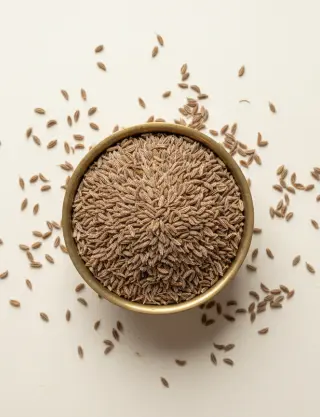
3. Cumin (jeera): the digestive without equal
Cumin is a paradoxical spice in Ayurveda: it is simultaneously warming and cooling. It stimulates agni like warming spices, yet without aggravating Pitta: which makes it rare and precious for all constitutional types. It is the most universally digestive spice in the Indian pharmacopoeia.
- Ayurvedic properties: stimulates secretion of digestive enzymes, aids nutrient absorption, reduces bloating and gas. Balances Vata, Pitta and Kapha in moderate amounts. Promotes iron assimilation.
- What science says: cuminaldehyde, its principal volatile compound, effectively stimulates the secretion of saliva and pancreatic enzymes. Studies have shown significant reduction of irritable bowel syndrome symptoms with cumin supplementation.
- Daily use: a few whole cumin seeds in the opening tadka of every dish. As an infusion after heavy meals: one teaspoon of seeds in boiling water, steep for 5 minutes. In raita, rice and dals, it is indispensable.
4. Coriander (dhania): the soother
If ginger is the yang of Indian cooking (heat, power, penetration) coriander is its yin. Ayurveda classifies it as a cooling spice (shita virya), particularly valuable for calming Pitta and its excesses: inflammation, gastric acidity, irritability, excessive body heat.
- Ayurvedic properties: digestive, carminative (against gas), gentle diuretic. Cools the blood. Seeds and fresh leaves are used differently: seeds are more drying and digestive, fresh leaves more cooling and detoxifying.
- What science says: coriander seeds contain linalool, a terpene with studied anxiolytic and anticonvulsant properties. Hypoglycaemic effects have been documented in animals. Linalool is also one of the most widely used aromatic compounds in aromatherapy for its calming effects.
- Daily use: ground coriander seeds are used in almost all Indian spice blends: garam masala, curry, sambar powder. CCF tea (cumin-coriander-fennel) is Ayurveda's gentle detox drink of choice for all doshas.
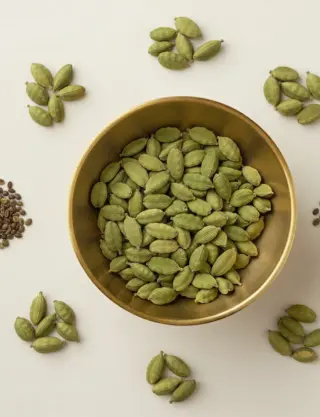
5. Cardamom (elaichi): the queen of spices
Cardamom is called the "queen of spices" in India, and Ayurveda crowns it queen of balance too. It is one of the rare tridoshic spices: it balances all three doshas, making it suitable for virtually everyone. Its floral, slightly camphorated, sweet and fresh aroma makes it unique in its category.
- Ayurvedic properties: digestive, cooling for Pitta, stimulating for Vata and Kapha. A natural breath freshener: chewing a seed after meals is a daily gesture throughout India. Reputed to lift mood and clarify the mind.
- What science says: preliminary studies suggest antihypertensive and diuretic effects. 1,8-cineole, its principal active compound, has studied bronchodilating and antibacterial properties. Its breath-freshening effect is due to antimicrobial compounds that reduce oral bacteria.
- Daily use: in chai masala and golden milk of course, but also in morning porridge, compotes, poultry marinades and even vegetable curries where it brings a deep aromatic sweetness. A pod steeped in the cooking water transforms ordinary rice into fragrant basmati. Whole pods keep better than powder: open them at the last moment.
6. Cinnamon (dalchini): the sweet warming spice
Ceylon cinnamon is Ayurveda's preference, and it should not be confused with cassia (Cinnamomum cassia), which is more common in Europe. In Sanskrit, dalchini means "sweet wood", and that is precisely what it is: a warming but gentle spice that strengthens without aggressing, stimulates without irritating.
- Ayurvedic properties: calms Vata and Kapha. Strengthens digestive fire (agni), improves blood circulation, warms the extremities. Considered a gentle cardiac tonic. Its natural sweetness helps reduce sugar cravings.
- What science says: Ceylon cinnamon is one of the best-documented spices for its effect on blood sugar: it improves insulin sensitivity and reduces fasting blood glucose in several clinical studies. The Ceylon variety is preferable for daily use as it contains very little coumarin (potentially hepatotoxic in large doses in cassia).
- Daily use: in chai masala and golden milk of course, but also in morning porridge, compotes, poultry marinades and vegetable curries where it brings deep aromatic sweetness. A stick steeped in the cooking water transforms ordinary rice.
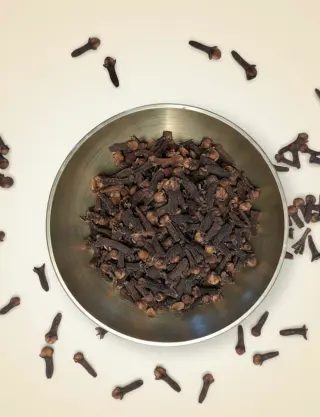
7. Cloves (laung): the powerful spice
Cloves are the most intense spice in the Ayurvedic pantheon. Ayurveda uses them sparingly and with respect: because laung is very heating, very penetrating, and can aggravate Pitta if used in excess. But in small quantities, its therapeutic power is unmatched.
- Ayurvedic properties: very warming, powerful agni stimulant, expectorant, analgesic. Used for centuries to relieve toothache (applied topically), sore throat and colds. Powerfully calms Vata and Kapha, but should be avoided with strong Pitta.
- What science says: eugenol, which represents 70–90% of clove essential oil, is one of the most powerful known natural antimicrobials. It inhibits a wide range of pathogenic bacteria and fungi. Its analgesic effect is used in modern dentistry. Cloves also have one of the highest ORAC scores (antioxidant power) of all spices.
- Daily use: one or two cloves suffice for an entire dish. Essential in chai masala, biryanis, meat curries and marinades. One clove chewed after a meal is a powerful natural breath freshener. Use sparingly: the power of cloves is a quality, not a reason to use more.
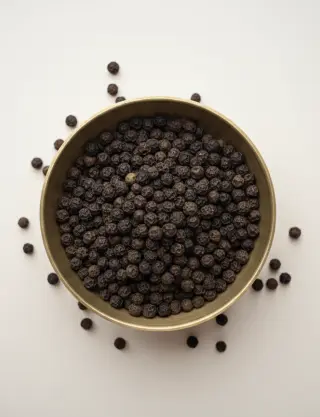
8. Black pepper (kali mirch): the king of spices
Black pepper is called kali mirch in Hindi, and Ayurveda considers it the "king of spices". Its primary virtue is not just its heat or pungency: it is its extraordinary ability to increase the bioavailability of everything it accompanies. In Ayurveda, black pepper is said to "open the channels" (srotas), allowing other remedies to penetrate deeper into the tissues.
- Ayurvedic properties: very warming, powerful agni stimulant, expectorant. A component of the famous Trikatu (with ginger and long pepper), the basic Ayurvedic formula for stimulating digestion and metabolism. Strongly calms Vata and Kapha.
- What science says: piperine inhibits intestinal enzymes that degrade foreign molecules, thereby increasing the bioavailability of many nutrients and medicines. With turmeric, it increases absorption by 2,000%. It also improves absorption of selenium, B vitamins and beta-carotene. It is the universal amplifier.
- Daily use: always with turmeric, that is the golden rule. In all cooked dishes, marinades and roasted vegetables. Freshly ground at the moment of serving for maximum aroma and active piperine. Black pepper is the one spice you should add to every single meal without exception.
Ayurvedic spice combinations that make all the difference
Ayurveda does not think of spices as isolated ingredients but as players in an orchestra. Certain combinations have been proven over millennia for their synergy: each component amplifies and complements the others. Here are the four fundamental combinations you can adopt today.
- Trikatu (the three pungents): ginger + black pepper + long pepper. Ayurveda's basic digestive formula. It stimulates agni, burns toxins (ama) and improves absorption of all substances. Taken before meals for difficult digestions.
- Golden milk: turmeric + black pepper + cinnamon + warm milk (or plant milk) + ghee or coconut oil. The anti-inflammatory drink par excellence. Fat promotes turmeric absorption, piperine multiplies it. In the evening it also promotes restorative sleep.
- Chai masala: cardamom + cinnamon + ginger + cloves + black pepper. Indian masala tea is not just a comforting drink: it is an Ayurvedic formula for warming and digestive stimulation. Each ingredient plays a precise role in the composition.
- CCF tea (cumin-coriander-fennel): equal parts cumin, coriander and fennel seeds, steeped in hot water. Ayurveda's gentle daily detox, suitable for all doshas. Drunk between meals or in the evening, it soothes digestion, reduces bloating and supports the elimination of toxins without aggression.
Daily Ayurvedic rituals with spices
Ayurveda does not work in intensive mode. It is not a three-week cure: it is a daily practice of small, consistent gestures. The power of these spices lies in their regularity, not their quantity. Here is how to weave Ayurvedic spices into the thread of your day:
- Morning: a glass of warm (not boiling) water with a few slices of fresh ginger and a squeeze of lemon. This simple gesture awakens agni after the night's fast, hydrates the tissues and prepares the digestive system to receive breakfast.
- At meals: cook with turmeric and black pepper in every cooked dish. Sizzle cumin seeds in a little ghee at the start of cooking. Add a few ground coriander seeds to your sauces. These gestures take ten seconds and transform every meal into an Ayurvedic ritual.
- After meals: chew a cardamom seed or a clove to freshen breath and support final digestion. Prepare CCF tea if you feel digestive heaviness.
- Evening: golden milk, a cup of warm milk with half a teaspoon of turmeric, a pinch of black pepper, a pinch of cinnamon and a teaspoon of ghee or coconut oil. Drink it thirty minutes before bed. It is the anti-inflammatory evening ritual par excellence.
Ayurveda in daily life: no need to change everything
One of the biggest resistances to Ayurveda in the West is the belief that you need to transform everything (your diet, lifestyle, habits) to benefit from it. This is a misconception. You do not need to know your dosha, follow a strict protocol or buy supplements to enjoy Ayurvedic wisdom.
The truth is far simpler and far more beautiful: traditional Indian cuisine is inherently Ayurvedic. Every dal cooked with turmeric and cumin, every curry seasoned with coriander and ginger, every chai prepared with cardamom and cinnamon: all of this is already applied Ayurveda. Indian families who have been cooking this way for generations do not think of it as a medical practice. They simply cook with taste and intention.
You do not need to change everything. Start by adding turmeric and black pepper to your morning eggs. That is Ayurveda. Sizzle cumin seeds in your oil before adding vegetables. That is Ayurveda. Drink a spiced warm milk in the evening. That is Ayurveda. Little by little, your kitchen becomes a benevolent pharmacy.
Table Indienne's Ayurvedic pantry
At Table Indienne, all the spices presented in this article are available, selected directly from Indian producers: sourced directly, with no middlemen. Our turmeric is the Lakadong from Meghalaya, one of the curcumin-richest varieties in the world. Our whole spices arrive fresh each season, retaining all their active compounds.
To begin your daily Ayurvedic practice, we particularly recommend the masala dabba: the Indian stainless steel spice box with its seven compartments. Fill it with the spices in this guide and place it next to your stove. When these spices are visible and accessible, you will use them. When they are buried in a cupboard, they will be forgotten. The masala dabba is the first tool of your Ayurvedic pharmacy.
Ayurveda is not a diet. It is not a cure. It is a way of cooking with awareness and intention: a way of nourishing the body as much as healing it. These eight spices are your entry point. Indian cuisine does the rest.