



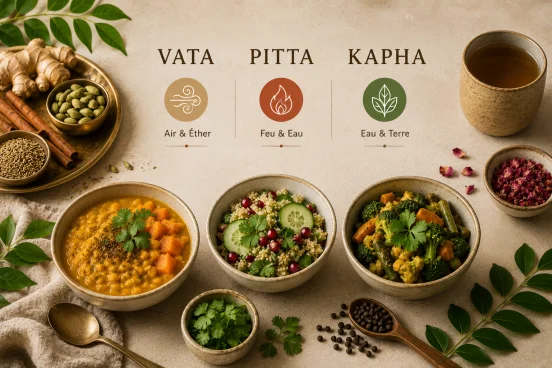
In Ayurveda, India's centuries-old system of wellbeing, every person is described as a unique blend of three fundamental energies called doshas: Vata, Pitta and Kapha. This framework, still central to everyday Ayurvedic cooking, invites you to adapt your diet to your own constitution rather than follow a one-size-fits-all regime.
An important note: Ayurveda is a centuries-old wellbeing tradition, not medicine in the Western sense. Everything in this article reflects that tradition and is not a substitute for medical advice or professional dietary guidance.
What are the Vata, Pitta and Kapha doshas?
According to Ayurveda, everything in the universe (including the human body) is made up of five elements: ether, air, fire, water and earth. These combine into three broad energies, the doshas, present in everyone in different proportions. This is not a box to be sorted into, but a vocabulary for noticing your own tendencies: digestion, sleep, energy, mood.
- Vata (air and ether): movement. Light, dry, cold, changeable. Linked to creativity and quick thinking, but also, in excess, to anxiety, poor sleep and irregular digestion.
- Pitta (fire and water): transformation. Hot, sharp, precise. Linked to drive and a strong metabolism, but also, in excess, to irritability and a sense of inner heat.
- Kapha (water and earth): structure. Heavy, stable, gentle. Linked to endurance and calm, but also, in excess, to sluggish digestion and inertia.
Most people recognise themselves in a blend of two doshas rather than a single one. The goal isn't to "become" another dosha, but to soothe whichever is currently out of balance: a cold, dry season naturally increases Vata, a hot season increases Pitta, a damp season increases Kapha.
Eating to soothe Vata
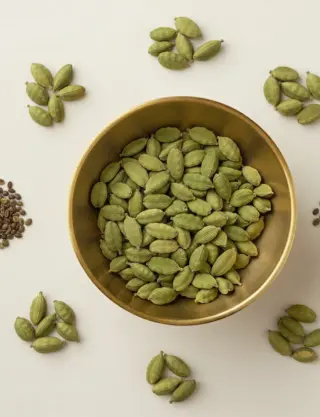
When Vata dominates or runs high, tradition recommends warm, cooked, slightly oily and regular meals: the opposite of cold, irregular snacking. Sweet, sour and salty tastes are favoured: soups, well-simmered dals, rice, ghee, cooked root vegetables. Fresh ginger and cardamom are two classic allies for warming digestion gently.
A simple ritual for winter or restless evenings: a cup of spiced warm milk before bed. Try our golden milk recipe, warm, gentle and comforting: exactly the kind of habit tradition associates with soothing Vata.
Eating to soothe Pitta
Pitta responds well to coolness and moderation. Tradition suggests limiting overly spicy, fried or sour food, and favouring sweet, bitter and astringent tastes: leafy greens, cucumber, fresh coriander, rice, cultured dairy. The idea isn't to remove spices altogether, but to choose the gentler ones and go easy on chilli.
The traditional drink associated with Pitta is masala chaas, a salted buttermilk lassi with roasted cumin, traditionally drunk after meals to cool the body and aid digestion: a staple across Indian households in hot weather.
Eating to soothe Kapha
Kapha thrives on lighter, warmer, more stimulating meals: steamed vegetables, legumes, pungent spices, and less dairy and sugar. This is the dosha for which Ayurvedic tradition leans hardest on "awakening" spices: black pepper, dry ginger, cumin.
A simple drink worth trying: nimbu paani (Indian lime water) with a pinch of ginger and black salt: light and stimulating rather than sweet and heavy.
The role of spices in balancing the doshas
Spices hold a special place in Ayurveda: chosen well, they're treated as fine tools for tuning a meal to the dosha of the moment, rather than mere flavour boosters. Turmeric is often described as tridoshic, meaning suitable for all three constitutions when used in moderation. For more on this, our article on anti-inflammatory spices in Ayurveda goes deeper into the subject.
Green cardamom is a good example of this logic: cooling for Pitta, warming and digestive for Vata and Kapha, at home in a chai as much as in a rice pudding. The main principle for beginners: taste, notice how you feel after the meal, and adjust gently: Ayurveda is practised in small steps, not sweeping change.
Tips for getting started without overthinking it
- Observe before you conclude: track your digestion, sleep and energy for a week rather than trusting a single online quiz.
- Follow the seasons: even without knowing your dominant dosha, eating warmer and more cooked in winter and lighter in summer already follows core Ayurvedic logic.
- Wake up your agni (digestive fire): dry-roasted and freshly ground cumin seeds, added at the end of cooking, are a classic way to support digestion regardless of dosha.
- Try the copper water ritual: keeping water overnight in a copper bottle before drinking it in the morning is a simple traditional practice, often recommended as a gentle way for beginners to ease into Ayurvedic habits.
Going further
This dosha-based approach is just one entry point into Ayurvedic cooking among many. Our article on golden milk and its traditional uses continues this topic, as does our range of spices selected for their quality and origin.
At Table Indienne, we don't claim to turn your diet into a treatment: we offer whole spices and accessories true to Indian tradition, so you can cook with a little more awareness: one meal at a time.