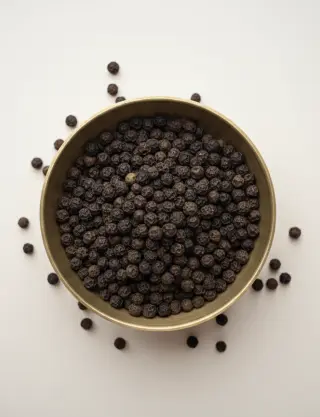




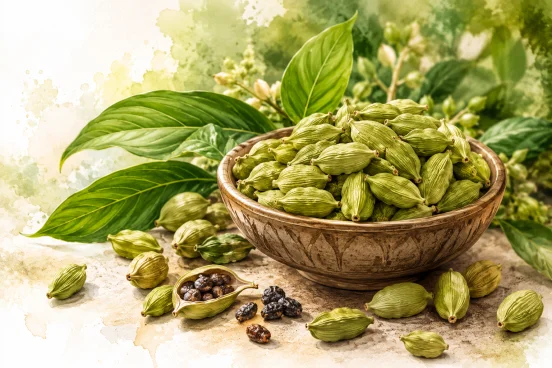
In India, every spice has its title of nobility. Pepper is the King — the Raja of spices, the one that financed trade routes and inspired the great maritime explorations. But there exists a sovereign who surpasses it in prestige, in price and in refinement: cardamom, the Rani, the Queen of spices. The third most expensive spice in the world after saffron and vanilla, it has been cultivated for millennia in the humid forests of Kerala, in South India, and remains to this day one of the most precious treasures of Indian pharmacopoeia and gastronomy.
What strikes you when you open a fresh green cardamom pod is the immediate intensity of the fragrance. Floral, slightly citrusy, warm, with a camphor and almost menthol-like note — an aroma that seems to contain in itself all the complexity of Indian cuisine. It is no accident that cardamom appears in morning chai, in Sunday biryani, in wedding sweets and in the most refined spice blends. It is the spice that connects the everyday to the ceremonial, cooking to healing.
Cardamom is to Indian cuisine what truffle is to French cuisine: a spice of character, rare, precious, capable on its own of transforming an ordinary dish into a memorable experience.
But cardamom is not just about flavour. Ayurvedic texts have mentioned it for more than 4,000 years, and modern scientific research now confirms what Indian healers have always known: this small green pod is a concentrated source of health benefits. Digestion, breath, blood pressure, inflammation, stress — its documented effects are numerous and remarkable.
Green cardamom and black cardamom: two spices, two characters
A common mistake is to think of cardamom as a single spice. In reality, there are two main species, radically different in their aromatic profile and uses:
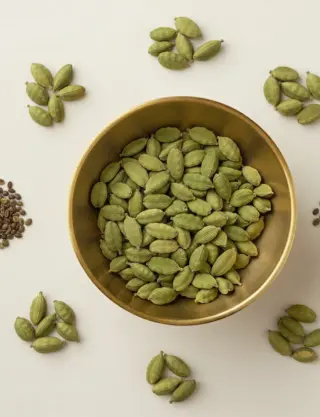
- Green cardamom (Elettaria cardamomum): small, delicately green, intensely aromatic. Its fragrance is floral, citrusy, with a slight eucalyptus note. This is the one you find in chai, desserts, biryanis and garam masala. Native to Kerala and now also grown in Guatemala, it is the cardamom the world knows.
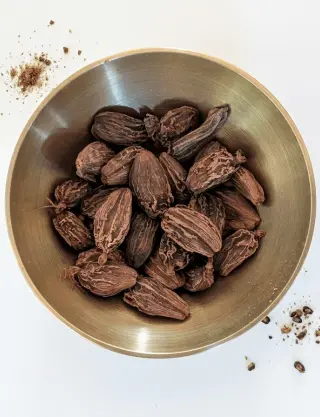
- Black cardamom (Amomum subulatum): much larger, brown, with bigger seeds. Its aroma is radically different: smoky, earthy, camphor-like, almost medicinal. It does not replace the green variety — it plays a distinct role in braised meat dishes, robust curries and broths. Used almost exclusively in savoury cooking.
Both have their place in authentic Indian cuisine. When preparing a traditional biryani or meat curry, you may use both simultaneously: the black for the depth and body of the broth, the green for the finesse and fragrance. At Table Indienne, we offer both as whole pods so you can explore each in its best register.
The health benefits of cardamom
Ayurveda classifies green cardamom as a tridoshic spice — a rare distinction meaning it balances all three doshas (Vata, Pitta, Kapha) without aggravating any. In Ayurvedic traditions, this is a mark of excellence reserved for the gentlest and most versatile spices. Here is what we know today of its documented benefits:
- Digestive aid: cardamom stimulates saliva production and bile secretion, facilitating the digestion of fats. It is the traditional remedy par excellence against bloating, gas and indigestion. In India, it is common to chew one or two whole cardamom pods after a heavy meal — a gesture as natural as dessert. Its essential oils activate digestive enzymes and soothe intestinal contractions.
- Fresh breath: before chewing gum, before mint pastilles, there was cardamom. It contains cineole, a natural antiseptic that destroys the bacteria responsible for bad breath. Chewing a cardamom pod after a meal is the oldest and most elegant way to freshen your mouth — a tradition maintained throughout India and in many Middle Eastern cultures.
- Anti-inflammatory and antioxidant: cardamom is rich in phenolic compounds and flavonoids with marked antioxidant properties. Studies published in nutrition journals suggest that regular consumption may help reduce markers of systemic inflammation. Some animal and in vitro studies also indicate a potential blood-pressure-lowering effect — a promising avenue that still requires broader clinical trials in humans.
- Blood sugar regulation: several preliminary studies suggest that the active compounds in cardamom may help stabilise blood sugar levels and improve insulin sensitivity. These results, still at an exploratory stage, are nonetheless consistent with the traditional use of cardamom in dietary regimens prescribed for metabolic disorders in Ayurveda.
- Respiratory health: the essential oils in cardamom — notably cineole and terpineol — have documented bronchodilatory properties. They help open the airways, thin mucus and relieve mild coughs. In traditional Indian medicine, a cardamom and honey decoction is still the first resort against seasonal colds.
- Mental wellbeing and stress: aromatherapy studies show that cardamom essential oil significantly reduces anxiety markers. In Ayurveda, cardamom is said to open the heart and elevate the mind — it is used in blends aimed at calming an agitated mind, fostering clarity and dispelling low mood. Being a tridoshic spice also means being able to pacify Vata — the energy of movement and anxiety.
Cardamom in the kitchen: essential uses
Cardamom is one of the most versatile spices in existence: it crosses effortlessly between sweet and savoury, between cooking and beverages. Here are the fundamental uses every lover of Indian cuisine should know.
- In chai: cardamom is the soul of Indian chai. Lightly crush 2 to 3 green pods with the flat of a knife to open them, add them to simmering milk with the tea leaves. The essential oil releases gradually in the warmth of the milk. Without cardamom, it is not chai — it is simply milky tea. Find our full recipe in the article on authentic chai masala.
- In rice and biryani: add 2 to 3 whole pods (green or black) to the cooking water for rice. They perfume the grain without overpowering it. In a biryani, both types of cardamom are often used together: the black in the slow-cooked meat layer, the green in the fragrant rice that crowns it.
- In desserts: kheer (Indian rice pudding), carrot halwa, laddoos, fragrant shortbreads — ground green cardamom is the quintessential sweet aroma of Indian confectionery. It pairs with remarkable precision with rose water, saffron and pistachios. Try simply adding a pinch of ground cardamom to your next rice pudding or plain yoghurt with honey.
- In coffee: in Arab and Ethiopian tradition, cardamom coffee is an institution. Add a few crushed seeds directly to your coffee maker or filter. The result is surprising: cardamom softens the bitterness of coffee, adds a floral note and aids digestion. An easy habit to adopt and one you will not give up.
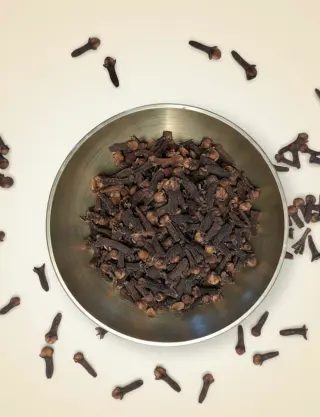
- In garam masala: garam masala is the great spice blend of North Indian cuisine, and green cardamom is one of its major components. It sits alongside Ceylon cinnamon, cloves and black pepper. Cardamom is what gives garam masala its high, floral note, its elegant finish.
How to buy, store and use cardamom
The quality of the cardamom you buy directly determines the result in your cooking. Here is what to look for and what to avoid:
- Buy whole pods: the pod is the seed's best natural protection. Essential oils evaporate the moment this shell is broken. Pre-ground cardamom sold commercially has often lost 80% of its aromatic potential before it even reaches your kitchen. The golden rule: buy whole, grind or crush at the last moment.
- Recognising good green cardamom: look for pods that are well-coloured green, firm, tightly closed and plump. A pale, dry pod or one whose seeds move freely inside is a sign of ageing. The aroma should be immediate and intense as soon as you lightly rub a pod between your fingers.
- Storage: store in an airtight jar, away from light and heat. Well stored, whole cardamom retains its aromatic power for 1 to 2 years. For cooking, two techniques: lightly crush the pods for a gentle infusion (in chai or rice), or extract the black seeds and grind them finely for an intense flavour (desserts, homemade garam masala).
To organise your spice collection and keep cardamom within reach, see our guide on the masala dabba, the traditional Indian spice box.
Cardamom at Table Indienne
At Table Indienne, we offer both green cardamom and black cardamom as whole pods, selected from suppliers certified organic by the European Union. Our green cardamoms come from the traditional growing regions of Kerala and Guatemala — the two great origins that have made this spice world-famous. They are packaged in small quantities to guarantee maximum freshness when they arrive with you.
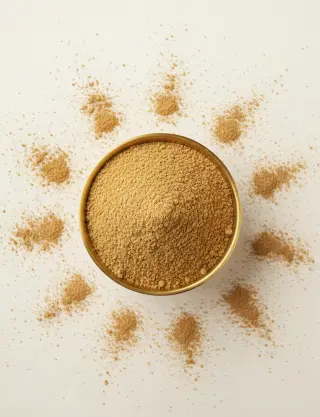
Ground cardamom is useful only when convenience takes precedence over intensity. If you choose our ground cardamom, it is milled in small batches to ensure you receive a product that is still alive — far from the flavourless powders sometimes found in supermarkets. But the ideal is always the whole pod, crushed at the last moment.
Cardamom is a spice that tolerates no compromise. Buy it whole, store it with care, use it fresh — and it will reward you with an aroma you will find nowhere else.
Whether you are a newcomer to Indian cooking or a long-standing enthusiast, cardamom deserves a permanent place in your kitchen. It is one of those rare spices that improves everything it touches — from morning chai to evening dessert, through the midday rice and the bedtime tisane. The Queen of spices has waited patiently for you to discover her. It is time.