United States: delivery from €25.10.
Loading...

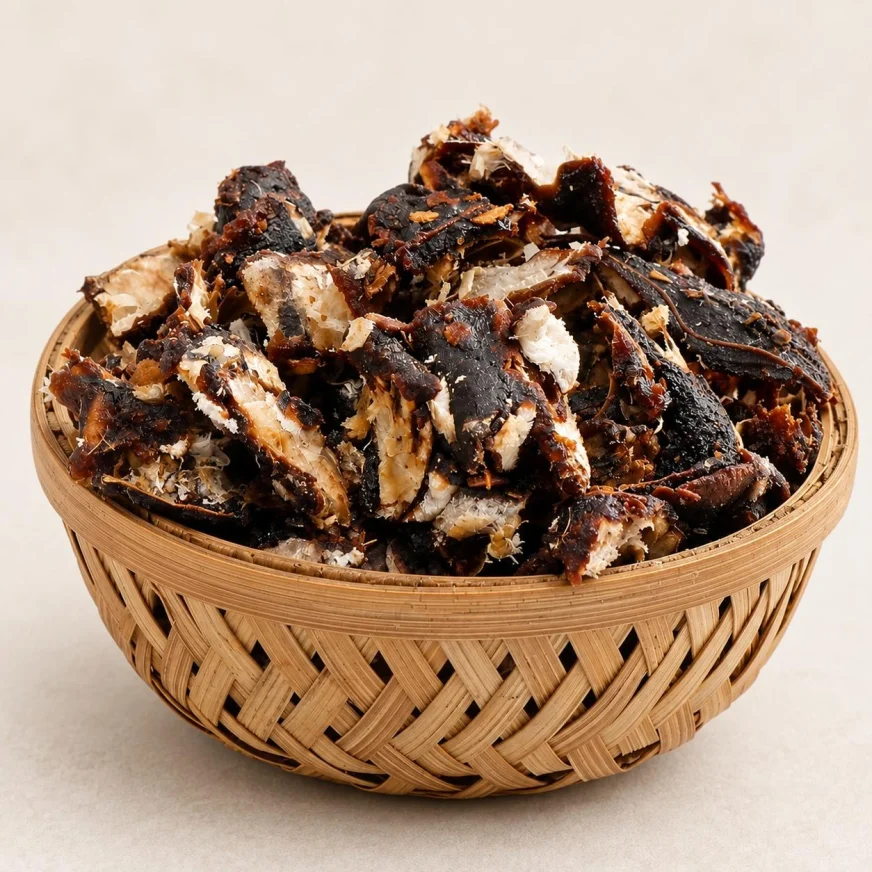
Tamarind (Imli)

Origin :
Tamil Nadu, India
Quality :
Premium
Type :
Seedless pulp
Pesticide-free

Discover our tamarind (imli), tangy pulp extracted from the pods of the tamarind tree, prepared according to traditional South Indian methods. Tangy, fruity and slightly sweet, with notes of date and plum to add a zesty kick to your sambar, rasam, chutneys and curries.

€5.00
€50.00/kg
By purchasing this product, you add €0.20 to your loyalty account, redeemable as a discount on your next order!
Loading...

Ready for shipping, delivery time 2-5 business days

Delivery from €3.99 at Mondial Relay pickup points. Free shipping from €50.

Free spice samples with every order.

Mondial Relay
Colissimo
Chronopost
  • Tamarind (Imli): the essential fruity tang of Indian cuisine

    Tamarind, or imli in Hindi, is the dark brown pulp extracted from the long pods of the tamarind tree (Tamarindus indica), a tree native to tropical Africa that has been widely cultivated in India for centuries. This tangy, fruity pulp is one of the pillars of South Indian cuisine, where it replaces lemon or vinegar to bring a complex, deep acidity. We select it for its dense texture and intense flavour, ready to be diluted in hot water to extract the juice.

    Why choose whole tamarind pulp?

    Unlike ready-made concentrates or pastes, whole tamarind pulp (seedless, free of coarse fibres, ready to dilute) keeps all the aromatic complexity of the fresh fruit. It lets you dose the acidity precisely for your recipes, and its texture makes it easy to extract the juice by soaking it in hot water for a few minutes.

    Culinary uses:

    • An essential base for sambar, South India's tangy lentil stew
    • A key ingredient in rasam, the spicy, tangy soup
    • Used in sweet-and-sour chutneys, notably tamarind-date chutney
    • Essential to pad thai and many South East Asian dishes
    • Adds acidity to vegetable and fish curries
    • Replaces lemon or vinegar for a rounder, fruitier tang

    Origin and quality:

    Our tamarind comes from South Indian growers, selected for the quality of their pulp. Our growers grow without pesticides, so we can guarantee you a natural, authentic product.

    Storage:

    To preserve all its aromas, store your tamarind in a dry place, away from light and humidity, in its airtight packaging.

  • Rich in antioxidants

    Supports digestion

    Source of dietary fiber

    Helps regulate blood sugar

    Anti-inflammatory properties

    Supports heart health

    A source of potassium and magnesium

    Traditional mild laxative

  • Nutritional declaration per 100g

    Nutritional component Per 100g
    Energy 1 000 kJ / 239 kcal
    Fat ~ 600 mg
    of which saturated fat ~ 100 mg
    Carbohydrates ~ 62,5 g
    of which sugars ~ 38,5 g
    Dietary fiber ~ 5,1 g
    Proteins ~ 2,8 g
    Salt ~ 70 mg
  • Directly selected smallholder producers No
    Pesticides free Yes
    Vegetarian Yes
    Origin Tamil Nadu, India
    Quality Premium
    Type Seedless pulp
    Taste profile Tangy, fruity and slightly sweet, with notes of date and plum. Dissolves easily in hot water.

Learn more

  • Unlike most star spices of Indian cuisine, the tamarind tree (Tamarindus indica) is not native to India. Botanical studies place its origin in the savannas of East Africa and Sudan, where the tree still grows wild today. Its introduction to India goes back several millennia, likely carried along trade routes that already linked the Horn of Africa to the subcontinent well before our era.

    The tree acclimatised so perfectly to the climate of South India that it was long, mistakenly, considered a native species. It is India, in fact, that gave tamarind its Western name: Arab traders, encountering a fruit already widely grown across the subcontinent, called it tamr hindi, literally "date of India", because of its sticky brown pulp, reminiscent of dried dates. This Arabic name passed through medieval Latin (tamarindus) to give the English "tamarind" and the French "tamarin".

    A Portuguese botanist clears up a thousand year old mix up

    For centuries, tamarind was confused, in Greek and Roman texts, with the fruit of a different tree: the mature, purple dates described by Dioscorides, the first century Greek physician, under the name "phoenicobalanus". It was the Portuguese physician and naturalist Garcia de Orta who, in his landmark work Colóquios dos simples e drogas da Índia, published in Goa in 1563, one of the very first European treatises on the medicinal plants of Asia, clearly distinguished tamarind from this ancient fruit and corrected the error. His book, written as a series of dialogues, drew on his direct observations in India rather than relying solely on the authority of ancient texts, a fairly rare approach for his time.

    Did you know?

    For centuries, European naturalists believed that tamarind and the purple dates described in antiquity by Dioscorides were one and the same fruit. It took until the sixteenth century, and direct field observation in Goa, for this confusion to be cleared up. A reminder that European botany was long built on copied texts rather than observation, until travellers like Garcia de Orta came along to correct it.

    A well travelled fruit

    From India, tamarind continued its journey to South East Asia along trade routes, becoming a pillar of Thai cuisine. Every January, Thailand's Phetchabun province celebrates its sweet tamarind harvest with a popular festival, the Sweet Tamarind Fair, proof of the country's cultural attachment to this fruit. Spanish and Portuguese colonisers then introduced it to the Caribbean and Latin America from the sixteenth century onward, Mexico turned it into a popular drink, agua de tamarindo, as well as various sweets.

    The hidden secret of Worcestershire sauce

    One of tamarind's most surprising stories plays out in England, in the 1830s. According to the tradition passed down by the house of Lea & Perrins, Lord Sandys, an English aristocrat back from serving in Bengal, brought a local sauce recipe home to Worcester and asked two local chemists, John Wheeley Lea and William Henry Perrins, to recreate it. The result, judged far too strong, was banished to the cellar. Forgotten for several years, the barrel was rediscovered by chance: ageing had transformed the mixture into a tangy, umami rich, complex sauce. Worcestershire sauce was born, in 1837, and tamarind still features among its ingredients today, alongside vinegar, molasses, anchovies, onions and garlic. A nineteenth century ingredient list, rediscovered in 2009, confirmed the presence of tamarind extract in the original recipe.

    Did you know?

    Next time you shake a few drops of Worcestershire sauce into a bloody mary or a marinade, know that you are unknowingly using a little of the same fruity acidity found in South Indian sambar or rasam. Tamarind, sitting quietly at the bottom of that bottle since 1837, is one of the most discreet and well travelled ingredients in the entire history of Western gastronomy.

    In traditional Ayurvedic medicine, tamarind has been mentioned since antiquity for its digestive and cooling properties, particularly for soothing excess heat during India's hot months. It also holds a place in traditional African pharmacopoeia, its continent of origin, where the pulp and bark have been used for generations.


  • CharacteristicDetail
    Latin nameTamarindus indica L.
    Botanical familyFabaceae (legumes), the same family as lentils and chickpeas
    Local namesImli (Hindi), Puli (Tamil, Malayalam), Chinta (Telugu)
    Part usedFibrous pulp surrounding the seeds, inside the pod
    Main producing regions in IndiaTamil Nadu, Andhra Pradesh, Karnataka, South India
    Other world producersThailand, Mexico, East Africa, its region of origin

    The tamarind tree is a majestic evergreen that can reach 20 to 25 metres in height and live for several centuries. It grows in tropical regions with dry to semi arid climates, tolerating drought very well once established, a trait that explains its presence across the arid landscapes of South India, where it also serves as a shade tree in many villages and along roadsides.

    Botany

    • Foliage: small, paired leaflets that fold up at night, a phenomenon called nyctinasty
    • Flowers: small, pale yellow with red streaks, grouped in clusters
    • Pods: brown, with a rough, brittle shell, 5 to 20 cm long, containing several seeds surrounded by fibrous pulp
    • Root system: deep and extensive, which explains the tree's exceptional drought resistance
    • Longevity: several centuries, with pod production continuing for decades once the tree matures

    From pod to pulp

    • The pods ripen on the tree and turn brown as they dry, a sign that they are ready for harvest
    • They are shelled by hand to extract the fibrous pulp clinging to the seeds
    • The coarsest fibres and some of the seeds are removed, then the pulp is pressed into dense blocks, the form in which we offer it, ready to dilute
    • Unlike industrial pastes or concentrates, this whole pulp keeps the full aromatic complexity of the fruit
  • Tamarind owes its distinctive sourness to an exceptionally high concentration of tartaric acid, one of the most powerful fruit acids in the plant kingdom, combined with natural sugars that soften the whole. According to composition analyses, tamarind pulp contains roughly 10 to 15 percent tartaric acid by weight, with total acidity reaching 12 to 24 percent depending on the variety, making it one of the most concentrated natural sources of this acid.

    Did you know?

    Tartaric acid is the very same compound that forms crystals at the bottom of wine barrels: cream of tartar, used in baking to stabilise whipped egg whites. While cream of tartar is a byproduct of winemaking, extracted from the sediment of fermented grapes, tamarind offers a direct plant based source of that same acid, with no fermentation involved. Two radically different origins for the same chemical signature, one born in a wine cellar, the other in the African savanna and then the Indian terroir.

    Tasting notes

    PhaseNotes perceived
    First impressionSharp, almost tangy acidity
    HeartDark fruitiness, somewhere between date, prune and redcurrant
    BaseSlight bitterness and caramelised notes once cooked
    Once dilutedA rounded acidity that structures a dish without ever overpowering it

    Chef's tip

    Soak a piece of pulp in hot water for 10 to 15 minutes, then press and strain it through a fine sieve to get a ready to use tamarind juice, free of fibres and seeds. This juice freezes very well in individual portions.

  • Tamarind is one of the rare spices able to stand in for lemon, vinegar and a touch of sugar all at once, a fruity acidity that structures a dish without ever dominating it.

    In South Indian cooking

    • An essential base for sambar, the South's lentil and vegetable stew
    • A key ingredient in rasam, the spiced and tangy soup served at the end of a meal
    • Used in puliyodarai, tamarind rice, and many chutneys, notably tamarind date chutney
    • Seasons vegetable and fish curries for a rounder acidity than lemon

    In South East Asia and beyond

    • An essential ingredient in pad thai and many Thai sauces
    • Used in Mexico for agua de tamarindo and various tangy sweets
    • A historical component of Worcestershire sauce, born in Worcester in 1837

    Did you know?

    Every January, Thailand's Phetchabun province holds a festival dedicated to sweet tamarind, a milder variety grown to be eaten as is, like a sweet fruit. The event draws visitors from across the country, proof that tamarind is not just a cooking ingredient but also a fruit enjoyed for its own sake.

  • In traditional Ayurvedic medicine, tamarind has been used for centuries as a light, cooling digestive, in particular to soothe excess heat during the hot season.

    What we know about its composition

    • Tartaric acid: responsible for its characteristic sourness, also recognised as a natural antioxidant
    • Dietary fibre: a notable content that supports digestive transit
    • Potassium and magnesium: minerals present in good amounts in the pulp
    • Polyphenols: antioxidant compounds studied for their potential anti inflammatory properties

    Nutritional values (per 100 g of raw pulp, USDA data)

    ComponentContent
    Energy239 kcal
    Protein2.8 g
    Carbohydrates62.5 g
    Fibre5.1 g
    Potassium628 mg
    Magnesium92 mg
    Iron2.8 mg
    Calcium74 mg
    Phosphorus113 mg
    Vitamin Caround 3.5 mg, a modest amount, further reduced by drying

    Precautions

    Eaten in normal culinary amounts, tamarind is well tolerated. Its pronounced acidity can nonetheless interact with certain medications or affect tooth enamel with very frequent consumption. When in doubt, ask a healthcare professional.

  • Quality criteria

    • Colour: dark brown to black, never greyish or dried out on the surface
    • Texture: soft, sticky pulp, without excessive sugar crystallisation
    • Purity: prefer whole pulp over an already diluted paste or concentrate, which is often mixed with salt or sugar

    Storage tips

    • In an airtight container, at room temperature or refrigerated for longer storage
    • Shelf life: several months at room temperature, more than a year refrigerated and well wrapped
    • Strained juice freezes very well in ready to use portions
  • How do I make tamarind juice from the pulp?

    Soak a piece of pulp, about 20 g per 250 ml of hot water, for 10 to 15 minutes, mash it by hand to dissolve the pulp, then strain through a fine sieve to remove fibres and seeds. The resulting juice keeps a few days in the fridge or freezes well in portions.

    Is it true that tamarind hides inside Worcestershire sauce?

    Yes, this is a documented fact. The original Worcestershire sauce recipe, created in Worcester in 1837 by chemists Lea and Perrins from a recipe brought back from Bengal, contains tamarind extract. It still appears among the ingredients today, alongside vinegar, molasses and anchovies.

    What is the difference between whole tamarind pulp and shop bought tamarind paste?

    The whole pulp we offer is the raw, dried and pressed product, with no additives, it keeps the full aromatic complexity of the fruit and lets you dose the acidity precisely. Commercial pastes or concentrates are often diluted and frequently contain salt, sugar or preservatives.

    Can tamarind replace lemon in a recipe?

    Yes, in many stews, curries and chutneys, tamarind juice brings a rounder, fruitier acidity than lemon, with a light sweet sour note that pairs especially well with spicy South Indian dishes.

    Why isn't tamarind native to India, given how closely it's associated with Indian cooking?

    The tamarind tree originates from the savannas of East Africa, but it became naturalised in India thousands of years ago to the point of becoming an essential pillar of Indian cuisine, especially in the South. Its very name, from the Arabic tamr hindi, date of India, reflects an adoption so ancient it was long mistaken for an Indian origin.

    How should I store tamarind pulp once the pack is open?

    Keep it in an airtight container, away from air. At room temperature it keeps for several months, in the fridge, count on more than a year. Juice that has already been prepared and strained also freezes very well in small portions.

Pourquoi choisir Tamarind (Imli) de La Table Indienne ?

Icône de cible

Fraîcheur et qualité exceptionnelles

Nos épices sont importées directement d'Inde et conditionnées à la demande pour garantir une fraîcheur optimale. Contrairement aux épices vendues en grande surface qui peuvent rester des mois sur les étagères, nous veillons à ce que chaque épice conserve toute sa saveur et son arôme.

Icône de cible

Authenticité et traçabilité

Chaque épice provient de régions spécifiques en Inde réputées pour leur savoir-faire. Nous travaillons directement avec des producteurs locaux qui cultivent leurs épices de manière traditionnelle, sans pesticides ni produits chimiques.

Icône de cible

Comment bien utiliser cette épice ?

Pour révéler tous les arômes, nous recommandons de faire légèrement griller les épices entières à sec dans une poêle avant de les moudre. Conservez-les dans un endroit sec et à l'abri de la lumière pour préserver leur fraîcheur le plus longtemps possible.

Icône d'étoile

Le saviez-vous ?

Les épices entières sont bien meilleures que les épices moulues
Consultez notre article de blog pour découvrir pourquoi les épices entières conservent mieux leurs arômes.

Questions & Answers

Thank you! Your question has been sent. Mihika will answer soon and you will receive an email.

Ask Mihika your question

Your email will not be published. It is only used to notify you of the answer.

Tamarind (Imli)

€5.00