



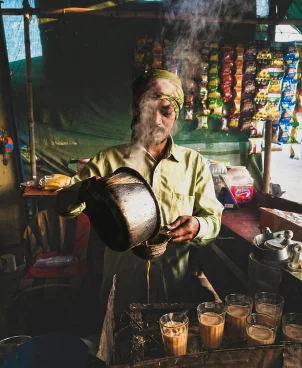
Bevor Sie beginnen, sollten Sie eines wissen: „Chai Tea", wie man es im Westen so oft hört, ist ein Pleonasmus. Chai (चाय) bedeutet auf Hindi schlicht und einfach „Tee". „Chai Tea" zu sagen ist wie „Tee Tea" zu sagen. Was Sie zubereiten möchten, ist Masala Chai — wörtlich „Gewürztee" — das Nationalgetränk Indiens, täglich milliardenfach konsumiert, von den belebten Straßenständen Mumbais bis zu Familienküchen im Punjab.
Dies ist nicht die süße, lauwarme Version, die Sie einmal in einer Kaffeekette bestellt haben. Echter Masala Chai ist ein kräftiges, tief gewürztes Getränk, das durch Aufkochen — nicht durch Aufgießen — zubereitet und kochend heiß in einem kleinen Glas oder einer Tontasse serviert wird. Es ist eine Alchemie aus starkem schwarzen Tee, Vollmilch und einem sorgfältig zusammengestellten Gewürzstrauß.
In Indien ist Masala Chai kein Trend. Er ist der rote Faden des Tages: beim Aufwachen, am Vormittag beim Chaiwalla um die Ecke, nach dem Mittagessen, wenn ein Freund vorbeischaut. Er prägt den Lebensrhythmus.
Eine Geschichte, die mit der Kolonisierung beginnt
Tee existiert in Indien seit Jahrtausenden, aber es war nicht Indien, das ihn als Massengetränk populär machte — es war die britische Kolonisierung, die alles veränderte. Im neunzehnten Jahrhundert entwickelte das britische Empire riesige Teeplantagen in Assam und Darjeeling, um das chinesische Monopol herauszufordern. Indien wurde zu einem der größten Teeproduzenten der Welt — doch die Inder selbst tranken damals noch sehr wenig davon.
Erst im frühen zwanzigsten Jahrhundert, angetrieben von Teeunternehmen, die einen Binnenmarkt aufbauen wollten, verbreitete sich der Teekonsum in ganz Indien. Doch die Inder taten etwas typisch Indisches: Sie passten das Getränk ihrer eigenen Kultur an. Sie reduzierten die Teemenge, fügten Vollmilch, reichlich Zucker und vor allem ihre eigenen Gewürze hinzu. Der Masala Chai war geboren.
Seitdem hat jede Region, jede Familie, jeder Chaiwalla (Straßen-Teeverkäufer) sein eigenes Geheimrezept entwickelt. Es gibt nicht den einen Masala Chai — es gibt Tausende von Variationen, alle legitim, alle köstlich. Was folgt, ist eine solide, authentische Grundlage, von der aus Sie Ihre eigene Version entwickeln können.
Die wichtigsten Gewürze des Masala Chai
Die Gewürzmischung ist die Seele des Masala Chai. Hier sind die unverzichtbaren Zutaten und was jede einzelne zur Tasse beiträgt:
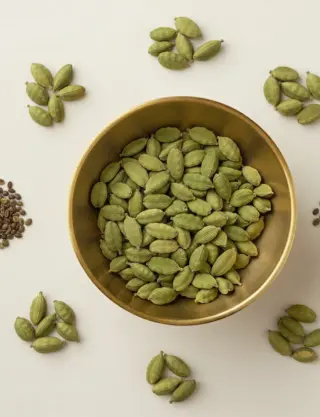
- Grüner Kardamom — die Königin des Masala Chai: blumig, leicht kampferartig, mit einer einzigartigen Frische. Unverzichtbar. Verwenden Sie immer ganze Kapseln, die kurz vor der Verwendung im Mörser zerdrückt werden — niemals Kardamompulver, das seine ätherischen Öle längst verloren hat. 3 bis 4 Kapseln für zwei Tassen.
- Ceylon-Zimt: sanft, fein, mit einem leichten Zitrushauch. Wählen Sie Ceylon-Zimt statt Cassia (dem sogenannten „chinesischen Zimt"), der deutlich schärfer und weniger komplex ist. Ein kleines Stäbchen von 3 bis 4 cm genügt.
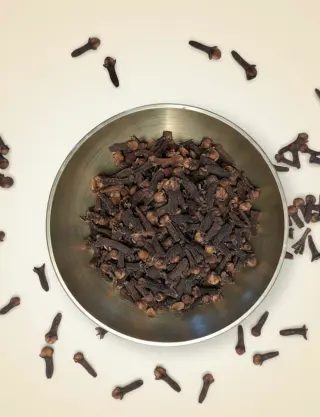
- Gewürznelken: intensiv, leicht betäubend, bringen tiefe Wärme und eine dezente Bitterkeit, die die Süße ausbalanciert. Maximal 2 bis 3 Nelken — darüber hinaus dominieren sie alles andere.
- Frischer Ingwer: er liefert das charakteristische Zing — diese lebhafte, leicht scharfe Wärme, die die Kehle hinaufsteigt. Verwenden Sie frisch geriebenen Ingwer — ein Stück von 2 bis 3 cm. Ingwerpulver kann als Ersatz dienen, ergibt aber ein weniger frisches Ergebnis.
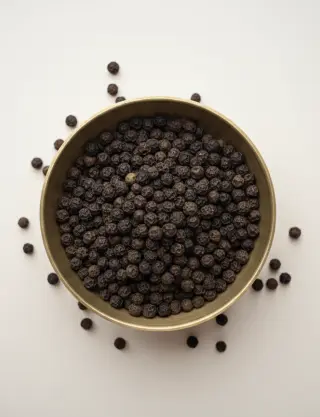
- Schwarzer Pfeffer: 2 bis 3 ganze Körner, leicht angedrückt. Seine Rolle ist subtil, aber wichtig: Er fügt eine trockene, direkte Schärfe hinzu, die die anderen Gewürze verstärkt, und hilft dem Körper, die Wirkstoffe des Ingwers besser aufzunehmen.
Optionale Gewürze nach Region und Geschmack: Sternanis, Fenchelsamen, frisch geriebene Muskatnuss. Diese Ergänzungen sind in bestimmten regionalen Traditionen verbreitet — aber meistern Sie erst die Basis, bevor Sie experimentieren.
Das authentische Rezept, Schritt für Schritt
Für zwei großzügige Tassen:
- Zutaten: 250 ml Wasser — 250 ml Vollmilch — 2 Teelöffel losen schwarzen Tee (Assam CTC ist traditionell, oder jeder kräftige schwarze Tee) — 3 bis 4 zerdrückte grüne Kardamomkapseln — 1 kleines Ceylon-Zimtstäbchen — 2 bis 3 Gewürznelken — 2 bis 3 cm frischer Ingwer, gerieben — 2 bis 3 schwarze Pfefferkörner, leicht angedrückt — Zucker nach Geschmack (die Inder mögen es süß!).
- Schritt 1 — Gewürze im kalten Wasser: gießen Sie das Wasser in einen kleinen Topf. Fügen Sie alle Gewürze hinzu (zerdrückter Kardamom, Zimt, Nelken, geriebener Ingwer, Pfeffer). Zum Kochen bringen und 3 bis 5 Minuten köcheln lassen. Dieser Schritt setzt die ätherischen Öle der Gewürze ins Wasser frei. Nicht überspringen.
- Schritt 2 — der Tee: losen Tee hinzufügen. Noch 2 Minuten kochen lassen. Der Tee soll stark sein — das ist gewollt. Er muss gegen Milch und Gewürze bestehen können.
- Schritt 3 — die Milch: Vollmilch eingießen und Zucker hinzufügen. Bei mittlerer Hitze erneut zum Kochen bringen. Den Topf nicht verlassen: Milch steigt extrem schnell auf. Sobald der Schaum zum Rand quillt, sofort vom Herd nehmen oder die Hitze reduzieren. Manche indischen Köche lassen die Milch zwei- bis dreimal aufsteigen und abfallen — das konzentriert die Aromen wunderbar.
- Schritt 4 — abseihen und servieren: durch ein feines Sieb direkt in die Tassen gießen. Sofort kochend heiß servieren. Masala Chai wartet nicht.
Das grundlegende Geheimnis: Masala Chai wird durch Aufkochen zubereitet, nicht durch Aufgießen. Die Gewürze müssen im Wasser kochen, um ihre Aromen freizusetzen. Chai, der nur in heißem Wasser „gezogen" hat, ist kein Masala Chai — er ist aromatisierter Tee.
Was echten Chai vom westlichen „Chai Latte" unterscheidet
Der westliche „Chai Latte" — jenes süße Sirup-Milch-Gemisch aus Kaffeeketten — hat sehr wenig mit authentischem Masala Chai gemein. Die Unterschiede sind grundlegend:
- Methode: indischer Chai wird aufgekocht; Chai Latte wird aufgegossen oder aus einem Konzentrat zubereitet.
- Die Gewürze: ganz und frisch zerdrückt in der indischen Version; Industriepulver oder künstlicher Sirup in der kommerziellen Version.
- Die Milch: zusammen mit Tee und Gewürzen gekocht in der indischen Version; separat hinzugefügt (oft Magermilch, oft pflanzlich) in der westlichen Version. Aufgekochte Vollmilch setzt Milchzucker frei, der sich mit den Gewürzen harmonisiert — das ist unersetzlich.
- Die Intensität: indischer Chai ist kräftig, gewürzt, wärmend, leicht süß und dezent bitter. Kaffeeketten-Chai-Latte ist mild, süß und oft überwältigend nach Kunstvanille.
Die großen regionalen Variationen
Indien ist ein Kontinent der Aromen, und Chai macht da keine Ausnahme. Hier sind einige der bekanntesten regionalen Variationen:
- Mumbais Cutting Chai: in einem halben Glas serviert (daher „cutting" — halbiert), sehr stark und süß, im Stehen in unter zwei Minuten vor dem Stand des Chaiwalla getrunken. Er ist der Treibstoff Mumbais.
- Kalkuttas Chai: manchmal mit gezuckerter Kondensmilch zubereitet für eine cremigere Textur und intensive Süße. Traditionell in kleinen Tontöpfen (Kulhad) serviert, die eine dezente mineralische Note verleihen.
- Kaschmirs Kahwa: eine grundlegend andere Variation — Grüntee, ohne Milch, mit Safran, Zimt und Mandelscheiben aufgegossen. Zu besonderen Anlässen aus einem großen Kupfer-Samowar serviert. Zart, blumig, von seltener Eleganz.
- Südindischer Gewürztee: oft milcharmer, mit einem ausgeprägten Ingweranteil und manchmal frischen Curryblättern. Die tamilische Version kann ganz ohne Milch zubereitet werden — fast ein Ingwer-Gewürztee.
Tipps aus einer indischen Küche
- Kardamom immer erst im letzten Moment zerdrücken: sobald die Kapseln geöffnet sind, verflüchtigen sich die ätherischen Öle rasch. Kaufen Sie ganze Kapseln und zerdrücken Sie sie kurz vor der Zubereitung im Mörser. Der Unterschied zum monatelang im Regal stehenden Pulver ist bemerkenswert.
- Vollmilch — keine Option: das Fett der Vollmilch extrahiert und fixiert die fettlöslichen Aromastoffe der Gewürze. Magermilch ergibt einen wässrigen Chai ohne Körper. Vollmilch ist eine Regel, keine Präferenz.
- Nicht zu lange nach der Milch kochen: sobald die Milch drin ist, heißt das Ziel: aufkochen und servieren. Langes Weiterkochen erzeugt Anbrenngeschmack, der die Gewürze überdeckt. Schnell und aufmerksam.
- Ein eigener Topf: viele indische Köche behalten einen kleinen Topf, der ausschließlich für Chai reserviert ist. Die Ablagerungen von Tanninen und Gewürzen, die sich im Laufe der Zeit ansammeln, schaffen eine „Würzung" des Topfes, die jeden neuen Aufguss bereichert. Legen Sie einen beiseite.
Masala Chai mit Table Indienne Gewürzen
Masala Chai ist eine der besten Möglichkeiten, konkret zu erleben, was Gewürzqualität in einer Tasse verändert. Mit frischen ganzen Gewürzen ist das Ergebnis unvergleichlich: Kardamom entfaltet sich am Gaumen, Ingwer wärmt von innen, Ceylon-Zimt hüllt alles in eine zarte Süße.
Bei Table Indienne finden Sie alles, was Sie für einen authentischen Masala Chai brauchen: grüner Kardamom in ganzen Kapseln, Ceylon-Zimt in Stäbchen, ganze Gewürznelken, schwarzer Pfeffer in Körnern und Ingwerpulver für den Fall, dass kein frischer Ingwer zur Hand ist.
Um alle fünf Gewürze griffbereit zu haben, sobald die Lust auf Chai aufkommt, empfiehlt sich die Masala Dabba — die traditionelle indische Gewürzbox aus Edelstahl mit ihren sieben Schälchen. Sie ist das Werkzeug, das Mihika in ihrer eigenen Küche in Wittisheim verwendet. Wir haben ihr einen vollständigen Leitfaden gewidmet.
Und wenn Sie die Welt der indischen Gewürzmischungen interessiert — Garam Masala zum Beispiel teilt mehrere Gewürze mit Masala Chai — erklärt unser Artikel über die Unterschiede zwischen Curry und Garam Masala die großen Säulen der indischen Küche.