



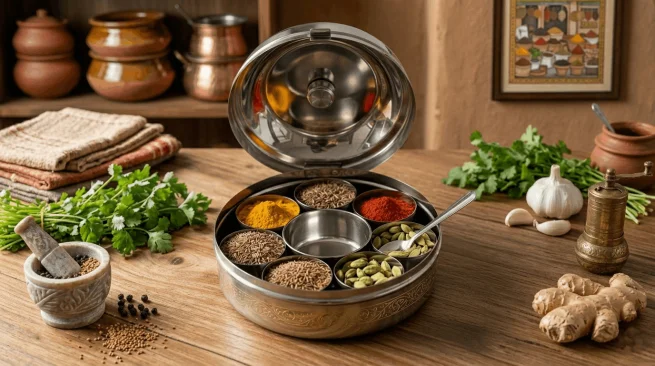
Il est un objet que l'on retrouve dans absolument chaque cuisine indienne, du petit appartement de Mumbai à la grande maison familiale du Rajasthan : la masala dabba. Cette boîte ronde en acier inoxydable, avec ses sept petites coupelles amovibles nichées à l'intérieur, est bien plus qu'un simple rangement. Elle est le coeur battant de la cuisine indienne, l'outil qui permet au cuisinier de créer de la saveur avec la rapidité et l'instinct d'un artisan.
Si vous avez déjà été impressionné par la vitesse à laquelle un cuisinier indien assaisonne un plat — une pincée de ceci, une demi-cuillère de cela, sans jamais ouvrir un seul placard — vous avez vu la masala dabba à l'oeuvre. Ce guide vous explique son histoire, ses sept épices traditionnelles, et comment l'intégrer dans votre cuisine au quotidien.
Qu'est-ce que la masala dabba ?
Le terme masala dabba (मसाला डब्बा) se traduit littéralement en hindi par « boîte à épices ». La forme est standardisée depuis des générations : un grand cylindre en inox d'environ 20 à 25 cm de diamètre, fermé par un couvercle hermétique, contient sept petites coupelles circulaires, elles aussi en inox. Chaque coupelle accueille une épice différente, soigneusement choisie parmi les indispensables de la cuisine régionale.
Le génie de la masala dabba réside dans sa logique d'usage. Les épices ne sont pas rangées dans un placard pour être consultées ponctuellement — elles sont exposées, accessibles, présentes à chaque instant de la cuisson. Le cuisinier n'a qu'à soulever le couvercle et prélever ce dont il a besoin, d'un seul geste. La petite cuillère glissée à l'intérieur complète le dispositif.
En Inde, la masala dabba ne se range pas dans un placard. Elle vit à côté de la cuisinière, toujours ouverte à la cuisine, toujours prête à assaisonner.
L'acier inoxydable n'est pas un choix anodin. Il ne rouille pas, n'absorbe pas les odeurs, ne réagit pas avec les pigments des épices comme le curcuma, et se nettoie facilement. Une masala dabba de qualité, entretenue correctement, se transmet de génération en génération.
Histoire et tradition : un cadeau de mariage millénaire
La masala dabba s'inscrit dans une tradition culinaire et familiale profondément ancrée dans la culture indienne. Dans de nombreuses régions, elle est l'un des cadeaux de mariage les plus significatifs qu'une famille puisse offrir à une jeune mariée. C'est une manière de lui transmettre les saveurs de sa future maison — les épices qui définiront la cuisine qu'elle créera pour sa propre famille.
Chaque famille remplissait sa masala dabba selon les recettes transmises de mère en fille, de grand-mère en petite-fille. Une famille du Tamil Nadu choisira des graines de moutarde et de l'urad dal pour ses tadkas du sud ; une famille du Rajasthan privilégiera le cumin et l'asafoetida. Le contenu de la boîte est un véritable marqueur d'identité régionale et familiale.
Cette transmission orale et culinaire est l'une des grandes richesses de la gastronomie indienne. Il n'existe pas de recette unique et figée — chaque masala dabba raconte l'histoire d'une lignée, d'une région, d'un terroir. C'est pourquoi deux cuisinières indiennes ne remplissent jamais leur boîte de la même façon, même si elles vivent dans la même ville.
Regarder la masala dabba d'une famille indienne, c'est lire le chapitre d'un livre de cuisine qui ne sera jamais écrit : la recette vivante d'une tradition.
Aujourd'hui, la masala dabba traverse les frontières. Elle est adoptée par des cuisiniers passionnés du monde entier qui ont découvert que cette boîte simple transforme la manière de cuisiner — pas seulement les plats indiens, mais n'importe quel plat qui mérite d'être bien assaisonné.
Les 7 épices essentielles
Le contenu de la masala dabba varie selon les familles et les régions, mais certaines épices sont presque universelles. Voici les sept épices que l'on retrouve dans la grande majorité des masala dabba d'Inde du Nord, avec des explications sur leur rôle et leur usage.
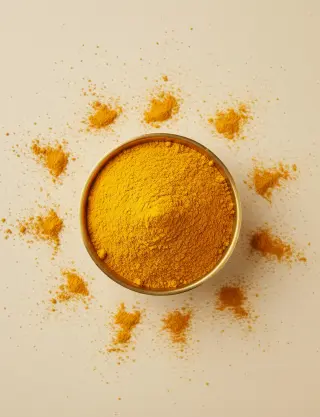
1. Le curcuma (haldi)
Le curcuma est la première épice que tout cuisinier indien saisit. Sa poudre dorée colore chaque curry, chaque dal, presque chaque plat cuit. Il ne s'utilise jamais seul — il est systématiquement associé à d'autres épices — mais son absence se remarque immédiatement. Un curry sans curcuma manque de profondeur de couleur et de cette saveur terreuse caractéristique.
- Saveur : Terreuse, légèrement amère, avec une chaleur douce et persistante.
- Bienfaits : Riche en curcumine, un puissant composé anti-inflammatoire. Le curcuma Lakadong que propose Table Indienne affiche un taux de curcumine exceptionnellement élevé, entre 7 et 12 %, contre 2 à 3 % pour un curcuma ordinaire.
- Usage : Ajoutez une demi-cuillère à café en début de cuisson, avec les oignons ou les tomates. Quelques secondes dans l'huile chaude suffisent à libérer ses arômes.
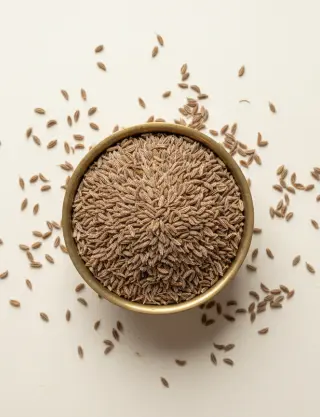
2. Les graines de cumin (jeera)
Le cumin est l'épice du tadka — cette technique fondamentale de la cuisine indienne qui consiste à faire crépiter des graines entières dans de l'huile ou du ghee très chaud pour libérer leurs arômes liposolubles. Le son des graines de cumin qui crépitent dans la poêle est l'un des sons les plus reconnaissables d'une cuisine indienne.
- Saveur : Chaud, terreux, légèrement fumé, avec une note de noisette grillée après torréfaction.
- Bienfaits : Excellente source de fer, propriétés digestives reconnues depuis des millénaires. Son nom sanscrit, jeeraka, signifie littéralement « celui qui aide à digérer ».
- Usage : Commencez chaque dal et chaque curry par un tadka : versez une cuillère à café de graines dans du ghee fumant, attendez qu'elles crépitent (10 à 15 secondes), puis ajoutez les oignons.
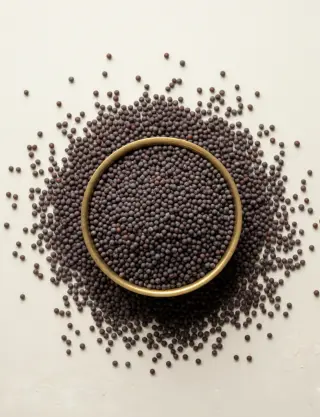
3. Les graines de moutarde (rai)
Incontournables dans la cuisine du sud de l'Inde — Tamil Nadu, Kerala, Karnataka — les graines de moutarde noire sont l'une des premières épices à entrer dans la casserole. Comme le cumin, elles s'utilisent en tadka et explosent en bouche lors de la cuisson avec un crépitement caractéristique et un arôme noisette-piquant très différent de la moutarde en poudre occidentale.
- Saveur : Légèrement piquante et noisettée crue, les graines révèlent une saveur douce-amère et complexe après avoir crépité dans l'huile chaude.
- Usage : Chauffez l'huile, ajoutez les graines de moutarde et couvrez immédiatement (elles sautent). Quand le crépitement s'arrête, ajoutez les autres ingrédients.
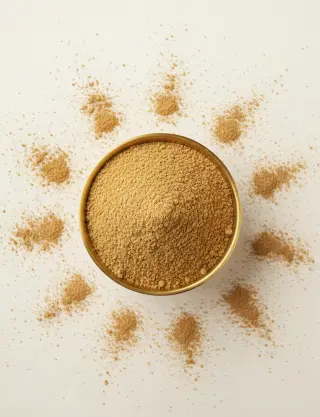
4. Le garam masala
Contrairement aux autres épices de la masala dabba, le garam masala ne se cuit pas — ou très peu. C'est une finition, une signature. On le saupoudre en toute fin de cuisson ou directement dans l'assiette, comme on mettrait du poivre fraîchement moulu. Le terme garam signifie « chaud » dans un sens ayurvédique : ces épices réchauffent le corps de l'intérieur.
- Composition : Chaque mélange est différent, mais on y retrouve généralement cardamome, cannelle, clou de girofle, poivre noir, cumin, coriandre et muscade.
- Usage : Une demi-cuillère à café en fin de cuisson, quand le feu est éteint ou très réduit, pour préserver tous les arômes volatils des épices chauffantes.
5. La poudre de piment rouge (lal mirch)
La chaleur et la couleur : voilà les deux rôles du piment rouge moulu dans la masala dabba. Il donne aux currys leur robe rouge-orangée profonde et leur feu caractéristique. La quantité varie considérablement selon les régions — une cuillère à café dans les currys du Rajasthan, une pointe dans un plat du Cachemire. En cuisine indienne, la chaleur est modulée, pas imposée.
- Conseil : Commencez par un quart de cuillère à café si vous n'êtes pas habitué à la chaleur. La capsaïcine du piment libère des endorphines — le corps s'adapte progressivement et le palais s'éduque.
- Usage : Ajoutez en même temps que le curcuma, dans l'huile chaude avec les oignons, pour développer une base de curry riche et colorée.
6. Les graines de coriandre (dhania)
Les graines de coriandre apportent une douceur agrumée, presque florale, qui équilibre la puissance du cumin et du piment. Elles constituent avec le cumin la base aromatique de la plupart des mélanges d'épices indiens. En cuisine traditionnelle, elles sont souvent torréfiées puis moulues juste avant usage — un geste simple qui transforme radicalement leur profil aromatique.
- Saveur : Légère, agrumée, presque citronnée, avec une douceur terreuse en arrière-plan. Beaucoup moins intense que le cumin.
- Usage : Torréfiez à sec 1 à 2 minutes puis broyez au mortier juste avant d'ajouter dans le curry. Ou ajoutez les graines entières dans un tadka pour une saveur plus douce.
7. L'asafoetida (hing)
L'asafoetida est l'épice la plus déroutante pour les cuisiniers non initié : son odeur crue est sulfureuse, presque repoussante. Mais quelques secondes dans l'huile chaude opèrent une métamorphose : elle développe des arômes d'oignon et d'ail caramélisés, d'une profondeur et d'une complexité remarquables. C'est pourquoi elle est l'épice de substitution par excellence dans les traditions culinaires indiennes qui excluent l'oignon et l'ail — comme dans certaines communautés jaïnes et brahmaniques.
- Quantité : Une toute petite pincée suffit — c'est l'une des épices les plus puissantes qui soit. Un gramme change entièrement un plat ; trop, et il le domine.
- Usage : Ajoutez une infime pincée dans le ghee chaud en tout début de tadka, quelques secondes avant les graines de cumin ou de moutarde. L'huile chaude transforme instantanément son arôme sulfureux en douceur umami.
Comment utiliser votre masala dabba au quotidien
L'un des grands avantages de la masala dabba est sa place fixe dans la cuisine. Elle vit à côté de la cuisinière — pas dans un placard, pas dans un tiroir. Cette présence permanente change la manière de cuisiner : au lieu de chercher des épices, vous les avez sous les yeux, ce qui vous incite à assaisonner plus instinctivement et plus généreusement.
- Fraîcheur préservée : Le couvercle hermétique protège les épices de l'humidité et de la lumière. Les petites quantités dans chaque coupelle se renouvellent fréquemment, ce qui garantit que vous cuisinez toujours avec des épices fraîches — contrairement aux grands pots qui restent ouverts des mois.
- Remplissage régulier : Rechargez chaque coupelle dès qu'elle est à moitié vide. Gardez vos réserves dans des bocaux hermétiques au placard — la masala dabba ne contient que la quantité d'usage courant, pas le stock.
- Entretien : Nettoyez les coupelles à l'eau chaude savonneuse et séchez-les parfaitement avant de remettre les épices. L'humidité résiduelle fait agglomérer les poudres et peut provoquer des moisissures sur les graines entières.
- Rotation : Renouvelez les épices moulues tous les 2 à 3 mois, les graines entières tous les 6 mois. Une épice éventée ne nuit pas, mais elle ne sert à rien non plus — son arôme est la raison de son existence.
Pourquoi chaque cuisinier passionné en a besoin
La masala dabba n'est pas réservée aux cuisiniers indiens. C'est un système d'organisation culinaire universel, d'une efficacité redoutable, qui s'adapte à n'importe quelle cuisine du monde qui mérite d'être bien assaisonnée.
La commodité avant tout. Fini de fouiller dans une armoire pleine de petits sachets à moitié vides. Vos sept épices essentielles sont là, ouvertes devant vous, en un coup d'oeil. Vous cuisinez plus vite, plus sereinement, et vous avez l'oeil sur vos stocks en permanence.
La fraîcheur par design. Les petites coupelles forcent à renouveler les épices souvent, car elles se vident rapidement. Cette rotation naturelle garantit que vous n'avez jamais d'épices de deux ans oubliées dans un placard. En cuisine indienne, la fraîcheur des épices n'est pas une option — c'est la condition sine qua non de la qualité d'un plat.
L'authenticité au quotidien. Cuisiner avec une masala dabba, c'est adopter le rythme et les gestes d'une cuisine indienne authentique. Ce n'est pas seulement fonctionnel — c'est un rappel constant que la cuisine est un art qui mérite d'être pratiqué avec les bons outils.
La masala dabba ne change pas seulement la manière de ranger les épices — elle change la manière de cuisiner. Une fois qu'on y a goûté, on ne revient jamais aux sachets dans le placard.
La masala dabba de Table Indienne
Chez Table Indienne, nous proposons une masala dabba traditionnelle en acier inoxydable, fabriquée selon les standards indiens : robuste, hermétique, avec ses sept coupelles amovibles et sa petite cuillère. C'est l'outil de cuisine que Mihika utilise dans sa propre cuisine, à Wittisheim.
Mais une masala dabba sans épices de qualité ne sert à rien. C'est pourquoi nous proposons également toutes les épices nécessaires pour la remplir, sourcées directement auprès de producteurs et fournisseurs certifiés bio en Inde. Parmi elles, notre curcuma Lakadong, une variété d'exception du Meghalaya avec un taux de curcumine de 7 à 12 % — deux à quatre fois supérieur à ce que l'on trouve en grande surface.
Nos graines de cumin, graines de moutarde et graines de coriandre sont sélectionnées pour leur fraîcheur et leur richesse aromatique. Notre garam masala est préparé selon une recette authentique, sans exhausteurs de goût ni additifs. L'objectif est simple : vous permettre de remplir votre masala dabba avec des épices qui font la différence dans l'assiette.
La masala dabba est également un cadeau parfait — pour un amateur de cuisine, pour une personne qui découvre la cuisine indienne, ou comme cadeau de pendaison de crémaillère original et durable. Offerte avec les sept épices essentielles, elle est une porte d'entrée idéale dans la richesse de la gastronomie indienne.
Vous pouvez retrouver notre masala dabba et toutes les épices pour la remplir dans la boutique en ligne de Table Indienne — expédiées depuis Wittisheim, en Alsace, directement dans votre cuisine.