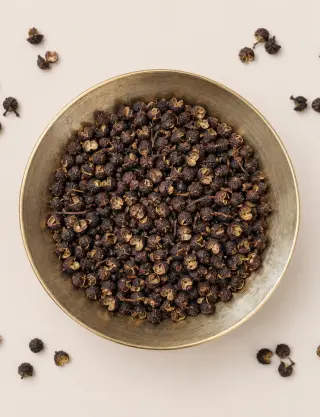
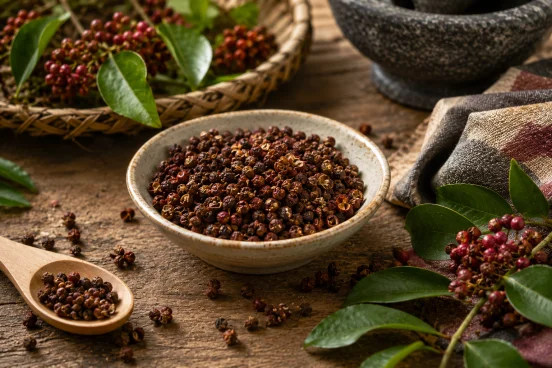
The first bite of a Timut peppercorn is startling. This is not pepper at all: it is a burst of grapefruit and citrus, followed by a light tingling, numbing sensation on the tip of the tongue that lasts a few seconds. Native to the Himalayan foothills of Nepal, Timut pepper (also spelled "Timur") is one of the most fascinating spices for anyone who enjoys venturing off the beaten culinary path.
Timut pepper does not burn like chilli and does not warm like black pepper: it fizzes, it lightly numbs, it perfumes, as if a grapefruit and a pinch of Sichuan pepper had met inside the same berry.
Where does Timut pepper come from? Origin and botany
Despite its name, Timut pepper is not a true pepper. It does not grow on a climbing vine of the Piper genus like black pepper, but on a small thorny shrub, Zanthoxylum armatum, from the Rutaceae family: the same botanical family as lemon, orange and grapefruit. This kinship explains its distinctive citrus fragrance.
The shrub grows wild on the steep slopes of southern Nepal, between 1,000 and 2,500 metres of altitude, in Himalayan valleys. The small reddish-brown berries are hand-picked by rural communities, then sun-dried. This artisanal, still largely traditional harvest partly explains the rarity and price of this spice on European markets. Timut pepper is also known as "Timur berry", after the Nepali name of the shrub, Timur.
A unique flavour profile: the citrus fruit that tingles
What sets Timut pepper apart from every other spice is the combination of two sensations that, at first glance, seem incompatible. On one hand, an intense, fresh citrus aroma: pink grapefruit, lime zest, sometimes a floral note. On the other, a light tingling, numbing sensation on the tongue and lips, similar to Sichuan pepper, its closest botanical cousin.
This dual personality comes from its composition: the berries contain essential oils rich in limonene and citronellal, responsible for the citrus burst, as well as unsaturated amides that cause this characteristic light numbing: far less intense than Sichuan pepper, but just as surprising on first taste.
In the kitchen: savoury uses
Timut pepper seems made for fish and seafood: its citrus freshness works wonders on a pan-seared salmon fillet, seared scallops, or a ceviche. But it does not stop there: it also shows its character on heartier meats and in wok-cooked dishes.
- Fish and seafood: salmon, cod, scallops, ceviche, the citrus freshness matches their delicate texture perfectly.
- Poultry and white meats: roast chicken, grilled pork, a few crushed berries added at the end of cooking are enough to transform the dish.
- Bolder meats: spiced Nagaland-style pork, lamb, a striking contrast against chilli.
- Vegetables and wok dishes: carrots, cabbage, vegetables stir-fried over high heat, a few crushed berries added right at the very end.
In the kitchen: the boldness of sweet
This is arguably where Timut pepper surprises the most: unlike classic black pepper, it pairs beautifully with sweet preparations. Its citrus note makes it a natural partner for dark chocolate, adding a fresh, faintly tingling edge that lifts the bitterness of cocoa. It also elevates red berries (strawberries, raspberries), poached pears, citrus salads, and creams or panna cotta, where a few crushed berries infused in warm cream are enough to transform a classic dessert.
How to use Timut pepper well
- Crush it at the last moment: like most spices, Timut pepper quickly loses its volatile essential oils once ground. Crush it in a mortar or grinder just before using it.
- Do not overcook it: add it right at the end of cooking, or as a garnish off the heat. Prolonged cooking destroys the compounds responsible for its citrus aroma and leaves only bitterness.
- Use it sparingly: its aroma is powerful; a few crushed berries are more than enough to season a whole dish.
- Pair it with fresh ingredients: citrus fruit, fresh herbs, butter, olive oil, flavours that amplify its natural freshness.
Benefits: what we actually know
Like many whole spices, Timut pepper contains antioxidant compounds (polyphenols, essential oils) that contribute to its aromatic richness. In traditional Nepalese and Himalayan cooking, it is also valued for supporting digestive comfort at the end of a meal, much like other aromatic spices from the region. A note of caution is worth making: these uses belong to culinary tradition rather than validated therapeutic claims: Timut pepper is, above all, a spice of pleasure, to be enjoyed for its unique flavour.
How to store it
Like all whole spices, Timut pepper keeps far better than its ground counterpart. Store the whole berries in an airtight container, away from light, heat and moisture: a cupboard rather than a spot near the stove. Under these conditions, it retains its aroma for 12 to 18 months. Grind it only at the last minute, a few berries at a time, to make the most of its aromatic freshness.
In the kitchen: our Timut recipes
Ready to try it? Here are five recipes that put Timut pepper in the spotlight, from savoury to sweet:
- Seared Scallops with Timut Pepper Butter: citrus freshness that lifts the sweetness of the shellfish.
- Nepalese-Style Fish (Timur Machha): the traditional recipe that built Timut's reputation in Nepal.
- Nagaland Pork with Timut Pepper and Chilli: for anyone who loves the contrast between freshness and heat.
- Timur Chicken Curry - Himalayan Style: a fragrant curry where Timut stands in for classic pepper.
- Strawberry Salad with Timut Pepper: proof it has a place on the dessert table too.
Timut pepper at Table Indienne
At Table Indienne, we offer Himalayan Timut pepper sourced from carefully selected Nepalese suppliers, ensuring fresh, fragrant whole berries. Want to go further into discovering Himalayan spices? Our Indian cooking workshops in Wittisheim are a chance to learn how to pair these faraway flavours with everyday cooking.