



In Kerala, on India's south-western coast, the humid hills of Munnar and Wayanad hold one of the finest terroirs in the world for true cinnamon: Cinnamomum verum, also known as Ceylon cinnamon. Unlike the cassia cinnamon that fills most supermarket shelves, this thin, fragrant bark is grown here without pesticides, following methods passed down through generations. Here is how to recognise it, choose it, and get the best out of it in the kitchen.
Ceylon or cassia? the essentials
Cinnamon sold in supermarkets is almost always cassia, a thick bark with a sharper taste. Our Kerala cinnamon is genuine Cinnamomum verum, true Ceylon cinnamon. To learn more about this difference (identification, coumarin, taste) see our dedicated article.
Whole bark or ground: which should you choose?
Ceylon cinnamon comes in two forms, each suited to a different use.
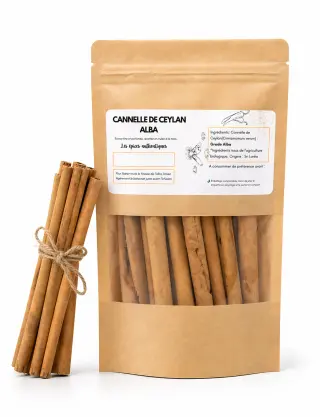
- Whole bark (sticks or quills): ideal for infusions, simmered curries and fragrant rice. It releases its aroma gradually during cooking and keeps longer, away from air and light.
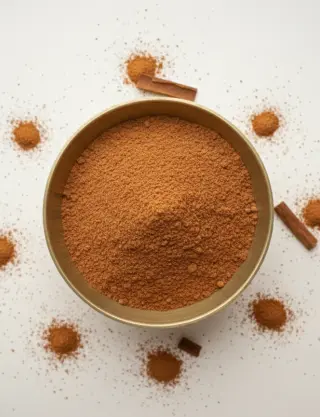
- Ground cinnamon: quick and convenient to measure, it dissolves instantly. Perfect for baking, hot drinks, and any dish you cannot fish a stick out of before serving.
A simple rule: whole bark for infusing and simmering, ground for anything that needs to dissolve fast.
In Kerala, the bark is traditionally harvested just after the monsoon, when the moisture makes it supple enough to peel off the trunk by hand. Still fresh, it is rolled around a thin rod and left to dry: this rolling is what gives Ceylon cinnamon sticks their characteristic thin layers, quite different from cassia's thick, compact bark.
How to use it in Indian cooking
Ceylon cinnamon suits both sweet and savoury dishes, as long as it is dosed with a light hand so it never overpowers the other spices.
- Masala chai: a stick simmered with tea, milk and spices adds warmth and roundness.
- Desserts: kheer, cakes and stewed fruit are lifted by a pinch of ground cinnamon.
- Curries and simmered dishes: a whole stick infuses throughout the cooking without dominating the other spices.
- Fragrant rice: biryani or pulao: just a stick dropped into the cooking water.
- Hot drinks: golden milk, herbal infusions and spiced hot chocolate.
Grown without pesticides, on a human scale
In Kerala, Ceylon cinnamon is often grown by small family farms, in agroforestry alongside other crops. Cultivation is done without pesticides, following traditional practices passed down through generations.
At Table Indienne
Whether you are after the whole bark or the ground spice, our Kerala cinnamon is sourced directly from these small farms. You will find it in our golden milk recipe and in our masala chai recipe.
Looking for an even finer bark, for true connoisseurs? Discover our Ceylon Cinnamon Alba sticks.